 Free To Play
Aion 2
MMORPGReleased
AION 2 brings NC's Elyos-versus-Asmodian war into Unreal Engine 5, with a seamless rebuilt Atreia, tactical flight combat, and faction sieges fought o...
Minimum and recommended PC specs to run the game
← Back to game reviewIf your PC can run this game, you'll also be able to play these:
Free To PlayAION 2 brings NC's Elyos-versus-Asmodian war into Unreal Engine 5, with a seamless rebuilt Atreia, tactical flight combat, and faction sieges fought o...
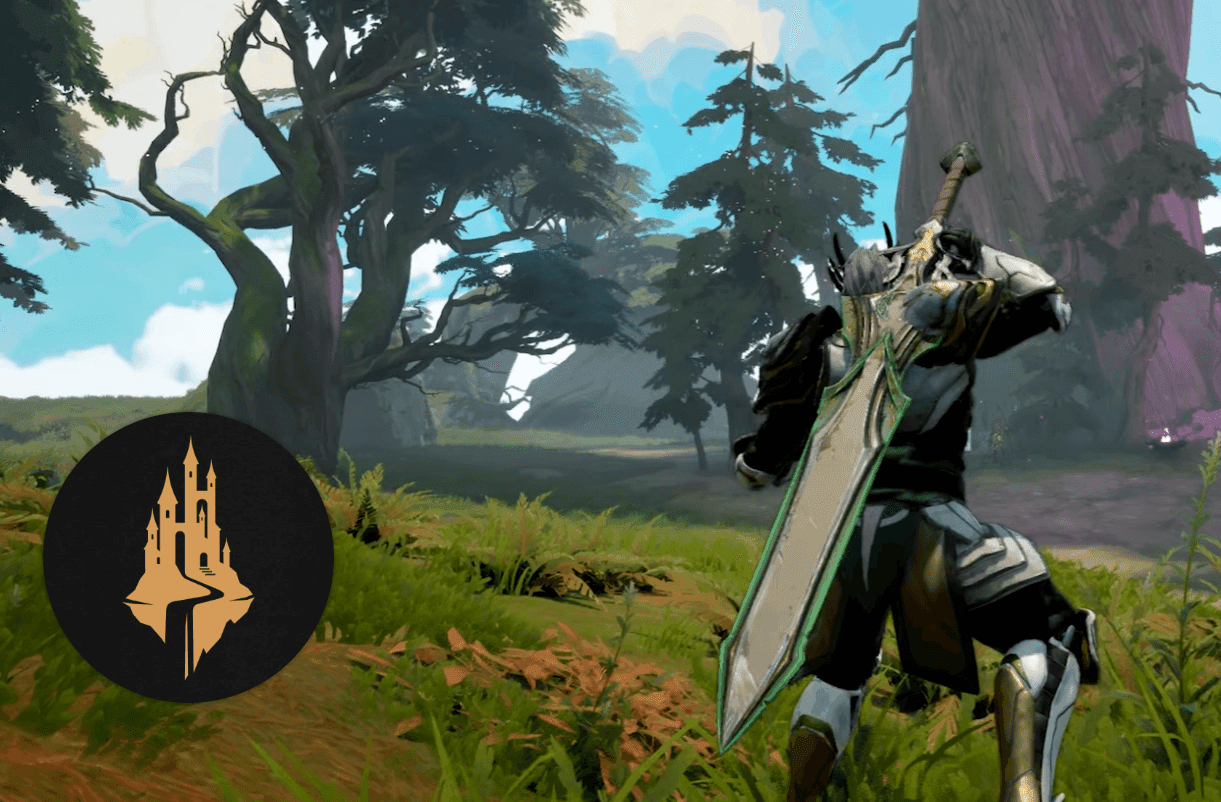
Project Ghost was an in-development MMORPG from Fantastic Pixel Castle, the studio founded by former World of Warcraft designer Greg "Ghostcrawler" St...
 Free To Play
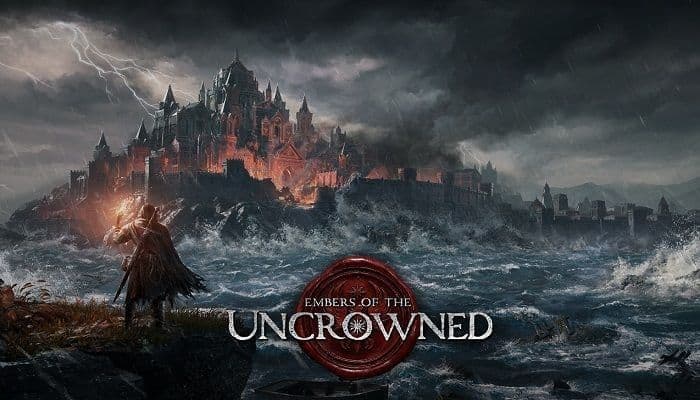
Embers of the Uncrowned casts you as the illegitimate heir of a fallen noble house, fighting to reclaim a kingdom torn apart by an elven invasion. Cho...
TARAE: The Unbound is engineered as a next-generation isometric technological benchmark utilizing Unreal Engine 5, purposefully targeted at modern high-performance PC hardware and current-gen consoles (PlayStation 5 and Xbox Series X|S). Unburdened by cross-platform mobile legacy, the architectural pipeline makes zero compromises in environmental geometry: the engine leverages Nanite virtualized micropolygon geometry, fully dynamic real-time global illumination via Lumen, and Chaos physics simulation for authentic fabric deformation and martial arts kinematic impact. While official hardware tables are slated closer to the targeted 2027 launch, the core architectural footprint already establishes clear computational expectations across desktop PC components.
The Central Processing Unit (CPU) sustains heavy computational throughput driven by simultaneous horde trajectory calculations, directional hit-box validations, and real-time elemental status synchronizations across four-player cooperative sessions. Sustaining uninterrupted frame pacing demands exceptional single-core instruction efficiency (IPC). Modern multithreaded processors featuring 6 to 8 physical cores based on AMD Zen 4 / Zen 5 or Intel 13th–15th Gen Core architectures with substantial Level-3 cache serve as the ideal foundation to mitigate 1% and 0.1% low framerate dips during cascading Link Attack detonations.
The Graphics Processing Unit (GPU) and Video RAM (VRAM) handle the heaviest workload imposed by next-generation rasterization and ray-traced lighting pipelines. Hardware-accelerated Lumen calculations for indirect diffuse reflection and volumetric fog require capable ray-tracing hardware. For reliable framerates at 1080p and 1440p resolutions, graphics cards in the tier of the GeForce RTX 3060 / 4060 or Radeon RX 6700 XT / 7600 XT equipped with 8 to 12 GB of VRAM establish the practical baseline. Insufficient video buffers under high-fidelity Nanite streaming will trigger texture thrashing and acute stuttering during rapid perspective shifts during intense boss encounters.
System Memory (RAM) serves as the primary high-throughput staging area for uncompressed world assets and intricate character animation state machines across Taegwido. An operating standard for modern Unreal Engine 5 deployments dictates a dual-channel memory configuration of at least 16 to 32 GB running high transfer frequencies (DDR4-3600 or DDR5-6000). This memory footprint maintains seamless zone transitions across the island and prevents operating system paging file bottlenecks under heavy particle loads.
Storage architecture dictates a non-negotiable prerequisite: installation strictly mandates high-speed NVMe SSD media running over a PCIe interface. Virtualized Nanite geometry requires continuous, high-bandwidth streaming of geometric clusters directly into memory without pre-decompression overhead. Running this technological stack from a traditional mechanical hard disk (HDD) will result in severe environmental pop-in, catastrophic stutter during boss phase transitions, and protracted loading delays between central hubs and endgame instanced realms.