 F2P · Live
Lineage 2
Aden's castles never stay in the same hands for long, and Lineage II has built an entire twenty-three-year…
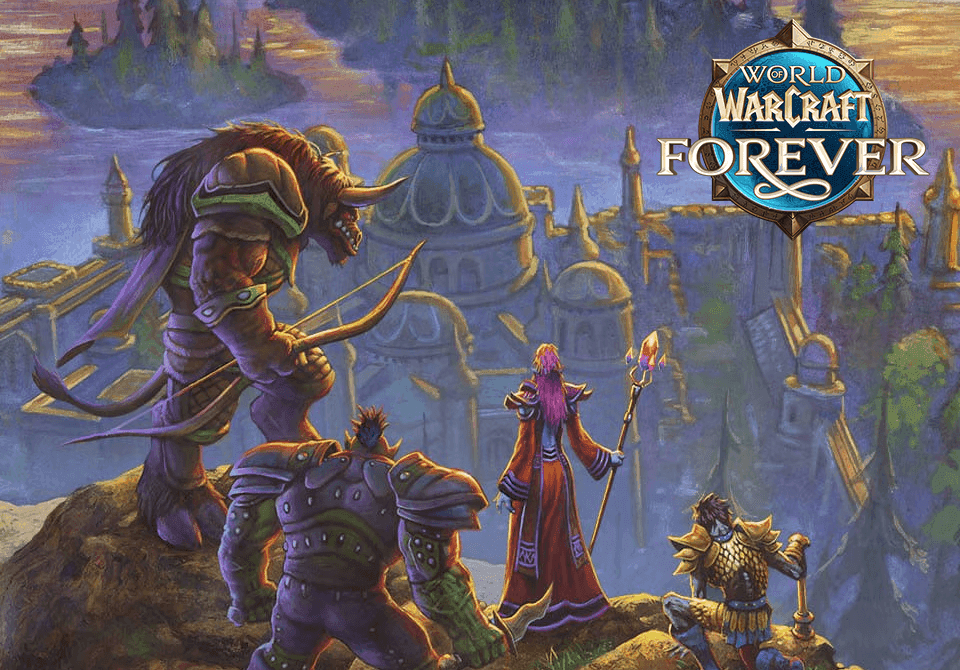
The definitive official Classic+ vision from Blizzard Entertainment, permanently preserving the iconic level 60 cap. Expanding Azeroth horizontally, World of Warcraft: Forever delivers over a thousand...
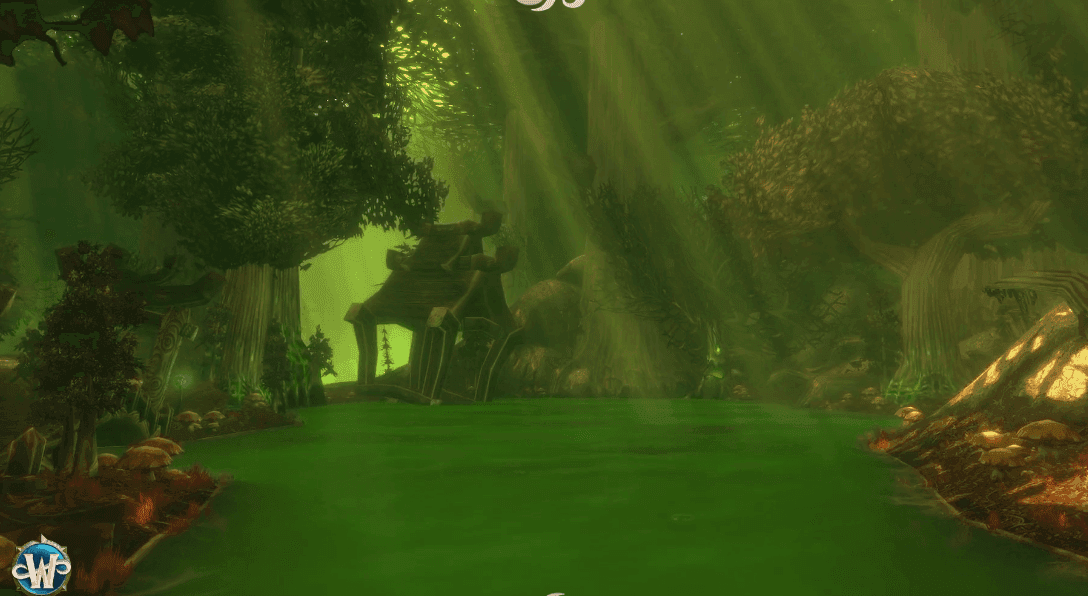
Quick Take: World of Warcraft: Forever marks a historic milestone in the legacy of the world's defining MMORPG as the official realization of the long-coveted Classic+ concept by Blizzard Entertainment. The project permanently cements the classic character level cap at Level 60, breaking away from the genre's twenty-year habit of incinerating legacy worlds and invalidating hard-earned gear every two years through expansion cycles. Instead of a vertical rat race toward inflated damage numbers, players are introduced to an expansive horizontal universe: uncharted territories across original Azeroth, over one thousand brand-new quests, parallel Level 60 raids, the new neutral playable race of the wind-touched Skyborne, and modernized visual rendering—all while strictly safeguarding the deliberate, tactical 2004 combat paradigm. The game caters to seasoned veterans exhausted by the hyperactive treadmill of modern expansions and newcomers yearning to experience a grounded, cohesive virtual world unburdened by two decades of layered systems. The title operates under the standard monthly World of Warcraft subscription ($14.99) on PC with no standalone client purchase required. Key risk factors center on the immense challenge of maintaining endgame balance without stat inflation and inevitable purist debates over vanilla canon.
For more than fifteen years, an unyielding dream echoed across the online role-playing community, evolving into near-mythical gaming lore: what if Blizzard Entertainment had never cracked open the Dark Portal to Outland in 2007, but instead chosen to expand the original realm of Azeroth horizontally? Known informally as Classic+, this concept long remained the exclusive playground of passion projects and private servers such as Turtle WoW. While the blockbuster launch of WoW Classic in 2019 proved the massive global appetite for old-school design, Blizzard initially followed the predictable path of re-releasing chronological expansions, while experiments like Season of Discovery served primarily as fleeting seasonal sandboxes.
The paradigm shifted definitively on September 12, 2026, on the main stage of BlizzCon, when executive leadership unveiled a permanent "third pillar" for the Warcraft franchise, standing alongside modern retail expansions (The War Within / Midnight) and legacy progression servers. Dubbed World of Warcraft: Forever, the game launched its closed beta on September 17, 2026 for pre-order bundle owners, lined up an unrestricted open stress test for October 21, 2026, and locked in its full commercial release for November 4, 2026.
For newcomers unfamiliar with the Warcraft universe or MMORPG conventions in general, understanding the fundamental philosophical divergence of Forever is essential. In virtually every mainstream online RPG, players are trapped on a "vertical treadmill": an expansion launches, the level ceiling rises, the epic armor you spent six months raiding for turns into vendor junk replaced by a common green quest reward, and 90% of the planetary map is rendered completely obsolete. In World of Warcraft: Forever, that endless cycle is shattered. Level 60 is not a temporary waiting room for the next paid box; it is an immovable bedrock foundation. Every earned reputation rank, every rare blacksmithing blueprint, and every legendary weapon retains its prestige and functional power indefinitely.
Crucially, classic veterans need not fear that the game will wither into museum stagnation. Forever is neither an untouched 2004 snapshot nor an airtight time capsule. It represents a bold alternate reality: flying mounts remain strictly forbidden to preserve the physical majesty of the continents, automated dungeon group finders do not exist to protect organic community bonds, yet the world is brimming with thousands of fresh quests, previously unfinished zones brought to life, perilous dungeons deep beneath historic capitals, and fresh raid challenges meticulously tailored to the vanilla ruleset.
The cornerstone and primary signature feature of World of Warcraft: Forever is its conceptual refusal to engage in vertical power escalation. To appreciate the magnitude of this design philosophy, a player new to the MMORPG landscape only needs to observe the traditional lifecycle of online role-playing games. In standard vertical progression models, developers regularly push expansion packs that inflate the level cap: first to 70, then to 80, and ever upward. In doing so, they unleash an uncontrollable mathematical spiral: while your warrior might begin their journey with four thousand health points dealing two hundred damage per strike, a few expansions later the floating combat text displays millions, while legacy zones, dungeons, and raids are reduced to ghost towns where once-terrifying world bosses collapse from a single casual blow.
In Forever, character development functions on a fundamentally different axis: the maximum level is permanently locked at the iconic milestone of Level 60. Rather than sprinting endlessly up a vertical ladder, adventurers are treated to deep horizontal progression. Brand-new raid citadels, dungeon wings, and quest chains never render existing gear obsolete overnight. High-tier armor and weapons from new content do not eclipse established classics from Molten Core or Blackwing Lair through sheer, exponential stat inflation. Instead, they provide specialized mechanics, unique class synergies, alternative stat itemization paths, and niche passive effects engineered to shine in tailored tactical encounters.
What does this architecture offer the everyday player? Above all else, an absolute respect for invested time. Within Forever, an adventurer who dedicates months to assembling the legendary Thunderfury, Blessed Blade of the Windseeker, leveling weapon masteries, or earning exalted status with classic factions is guaranteed that their achievements will never be made irrelevant by a patch. You can step away from Azeroth for six months, take a vacation, or explore other titles, and return knowing that your character remains viable for high-end raids and lethal on battlegrounds. This permanence restores to the MMORPG genre the rare sense of a true virtual home, where every earned trophy remains a permanent testament to your heroic journey.
Yet behind this elegant horizontal blueprint lurks a formidable design trap. The greatest vulnerability of a static power ceiling is the danger of rapid gear saturation and player apathy. When clearing a demanding new raid requires weeks of tactical preparation and dozens of wipeouts, but the boss drops only sidegrades to your existing armor, community motivation naturally begins to wane. Veteran raid leaders remember all too well the historical difficulty of sustaining attendance once a roster secures its "Best-in-Slot" (BiS) lists. To dismantle this threat, Blizzard Entertainment implemented a multi-faceted matrix of situational resistance gear, hybrid class relics, and dynamic encounter attributes. Raiders are actively encouraged to curate diverse wardrobes suited for distinct environmental threats, dungeon affixes, and PvP matchups—rekindling the thrill of the hunt without breaking the mathematical sanctity of the game's numbers.
The physical canvas of World of Warcraft: Forever unfolds across two colossal, unified continents—Kalimdor and the Eastern Kingdoms. To fully comprehend the stark contrast between this setting and modern releases, one must examine the spatial metamorphosis that transformed the genre over two decades. In a relentless drive toward friction-free convenience, contemporary MMOs gradually fragmented into isolated questing nodes: players are whisked across geography via instant teleportation, while open-world transit occurs miles above the clouds on supersonic flying mounts. As a consequence, the terra firma beneath loses all environmental relevance, becoming little more than a flat, blurred backdrop where neither geography nor hostile patrols pose any genuine threat.
In Forever, an absolute and unyielding ban on flying mounts remains in effect. Personal aerial steeds do not exist and will never be introduced; airborne travel is strictly confined to classic automated flight paths aboard griffins, wyverns, and bats moving between discovered flight masters. Progression follows old-school rules of physical presence: characters march on foot until reaching Level 40, scrimp together the immense fortune of 100 gold coins for their first 60% speed ground mount, and view the 100% epic steed at Level 60 as the pinnacle of prestige. A journey from Stormwind through the craggy passes of Khaz Modan to the sodden Wetlands, or an overland trek from Orgrimmar through the sun-baked expanse of The Barrens, becomes a legitimate expedition requiring provisions, healing potions, and constant vigilance against enemy ambushes.
What does this grounded topography restore to the open world? It reintroduces an awe-inspiring sense of scale and a dynamic social ecology. When adventurers must physically travel to dungeon portals across untamed wilderness, summoning stones and crossroads become vibrant hubs of emergent gameplay: rival factions clash in impromptu skirmishes, spontaneous trade blossoms, and a passing stranger on a mountain trail might save you from a lethal elite patrol. Crucially for lore enthusiasts, the world's geography has received careful, non-destructive expansions. Familiar frontiers across Elwynn Forest, Durotar, and the Western Plaguelands feature unmapped trails, hidden cavern complexes, expedition outposts, and dynamic world encounters seamlessly integrated into the pre-Cataclysm landscape.
The catch of this romanticized overland travel lies in its substantial time commitment and potential friction for modern sensibilities. In Forever, there is no magic button to instantly materialize outside a dungeon entrance; if a party member is stranded across the ocean, the entire group must patiently await their boat or zeppelin arrival. Furthermore, Blizzard's innovative regional Realm-less Architecture introduces its own technical tightrope. Designed to eliminate the ghost-town populations of legacy realms by unifying players into single regional environments, the system relies heavily on dynamic background layering. Calibrating these layers so that friends, guildmates, and rival combatants do not inadvertently phase apart during intense open-world brawls remains a persistent networking challenge, reminding players that modern technological compromises accompany old-school design.
At the beating heart of the Warcraft universe lies an unbridgeable ideological chasm—the eternal confrontation between the disciplined, conservative Alliance and the embattled, fierce coalition of the Horde. To an outsider, this split might seem like an ordinary aesthetic choice between humans and orcs. In practice, however, your faction allegiance dictates your entire social reality: opposing players cannot form groups, share dungeon lockouts, whisper across the faction divide, or even trade on common auction houses. Every message typed by an enemy player in local chat is automatically scrambled into indecipherable linguistic gibberish, cementing an atmosphere of profound mutual estrangement.
The foremost narrative and mechanical disruption introduced in World of Warcraft: Forever is the arrival of the classic timeline's first truly neutral race: the Skyborne, also known as wind-touched elves. Secluded upon the mist-shrouded Isle of Zephras deep within the Great Sea, these graceful scions of ancient Kaldorei lineage spent centuries drawing mystical energy from swirling gale-force currents and levitating ethereal crystals. When the catastrophic fallout of the Third War fractured the island's protective atmospheric barrier, the Skyborne were forced onto the global stage. Their integration operates on an unprecedented dualism: upon completing their isolated prologue arc on Zephras around Level 12, players face an irreconcilable civil crisis and must pledge allegiance either to The High Order, joining the Grand Alliance, or to the Windformers, journeying to Orgrimmar to swear fealty to Warchief Thrall.
What does this infusion of new blood contribute to the game's broader ecosystem? Above all, an exquisite tuning of faction identity without bulldozing historical lore. Vanilla WoW maintained an ironclad divide: Paladins were the sacred exclusive domain of the Alliance, while Shamans belonged solely to the Horde. Rather than mimicking the controversial homogenization seen in The Burning Crusade—where blood elves abruptly wielded holy librams and space-faring draenei dropped totems—Forever ties the Skyborne's class access directly to their political choice. Skyborne allied with the Alliance through The High Order specialize in Arcane Mages, Priests, and refined Spellblade Warriors, whereas those who join the Horde as Windformers immerse themselves deeply in primal Shamanism, predatory Hunting, and wind-guided Roguery. Furthermore, their innate active racial ability, Zephyr Burst, grants a brief forward dash coupled with snare resistance, instantly cementing their utility in tactical positioning.
The catch accompanying the arrival of the Skyborne manifests in fierce community pushback and the threat of demographic imbalance. For vanilla purists, introducing a ninth race into the pristine eight-race pantheon of 2004 feels like heresy capable of eroding the grim, rugged aesthetic of early Warcraft with overly polished high-fantasy flair. Moreover, their elegant acrobatic attack animations, striking visual silhouettes, and potent racial utility triggered an immediate exodus away from classic gnomes and trolls during beta testing. If Blizzard fails to bolster the passive perks of legacy races, major capitals risk being overrun by aristocratic wind elves, sidelining the battle-scarred veterans who built the world's foundations.
The combat architecture of World of Warcraft: Forever returns players to the undisputed gold standard of methodical, positioning-dependent warfare. To a newcomer raised on contemporary action-RPGs with dodge rolls, reticle aiming, and twitch-reflex parries, classic combat may feel deceptively calm on the surface. Here reigns the time-honored discipline of Tab-Targeting: you designate an enemy via the Tab key, engage auto-attacks, and queue abilities bound to an unyielding 1.5-second Global Cooldown (GCD). Within this arena, victory is not awarded to the player with the highest actions-per-minute (APM) button mashing, but to the strategist who commands situational awareness, resource economy, and flawless tactical timing.
Every group encounter rests upon the unassailable foundation of the Holy Trinity: Tank, Healer, and Damage Dealer (DPS). Unlike modern games where every specialization boasts self-healing, damage mitigation, and devastating AoE bursts simultaneously, Forever treats class roles as sacred and exclusive. A tank must manage enemy aggression (Threat / Aggro) with surgical precision, constantly ensuring that hulking brutes never divert their fury toward a fragile priest. Healers juggle finite mana pools, unable to waste costly healing spells without risking group wipeouts. Meanwhile, damage dealers are judged not merely by raw DPS charts, but by their mastery over Crowd Control (CC): if a mage misses a Polymorph on an enemy healer or a rogue fails to interrupt a lethal channeled spell, the entire party can perish within heartbeats.
What does this unyielding mechanical rigor offer? An exceptional gravity to every combat decision and genuine camaraderie forged through shared peril. Nine classic classes (Warrior, Paladin, Hunter, Rogue, Priest, Shaman, Mage, Warlock, and Druid) maintain vivid mechanical silhouettes, while sprawling talent trees granting one point per level from Level 10 to 60 reward deep build customization. Furthermore, Blizzard accomplished what players begged for across decades: a respectful recalibration of classic "meme specs." Retribution Paladins finally possess dependable mana regeneration mechanics woven into melee strikes, Balance Druids are no longer condemned to run out of mana thirty seconds into a boss fight, and Elemental Shamans hit with devastating sustained lightning—all without mutating into the hyperactive, overpowered outliers witnessed during experimental runs like Season of Discovery.
Yet within this tactical paradise lies a merciless trap for careless adventurers. The margin for individual error is unforgivingly razor-thin: a misjudged pull or broken crowd control spell leads to death in mere seconds, followed by the humbling reality of a lengthy "corpse run" as a disembodied ghost jogging across half a continent. Balancing hybrid classes remains an eternal high-wire act. If a hybrid warrior capable of healing and resurrection matches the pure single-target burst of a dedicated rogue or mage, pure damage classes immediately lose their identity. Consequently, Blizzard's designers must scrutinize every tenth of a percentage point in talent trees to ensure hybrid versatility never destabilizes the strict hierarchy of the vanilla ecosystem.
To grasp the cultural phenomenon of World of Warcraft: Forever, one must invert the prevailing dogma of modern MMORPG design: across modern releases, the leveling curve has been degraded into a tedious, disposable tutorial that players rush to bypass in a few evenings to unlock endgame content. In classic Azeroth, the voyage from Level 1 to 60 is not an introductory nuisance—it constitutes the vast majority (at least 70%) of the total gaming experience. This is an epic 150- to 250-hour odyssey where every single level gained feels like a monumental personal triumph, unlocking fresh talent points, new spell ranks from class trainers, and access to more dangerous frontiers on the world map.
The original 2004 launch suffered from a notorious flaw well-remembered by vanilla veterans: around Level 45–50, the structured quest reservoir dried up significantly, forcing players into monotonous mob grinding across bleak reaches like Silithus or the frozen wastes of Winterspring. In Forever, Blizzard's historians executed an exhaustive archaeological restoration, introducing over 1,000 brand-new quests. These tasks do far more than patch leveling deficits; they resurrect forgotten plotlines shelved in early design drafts. Adventurers can now pursue full-fledged quest arcs investigating the sealed gates of Karazhan in Deadwind Pass, mediate volatile diplomatic crises along the ravaged borders of Quel'Thalas, and uncover massive subterranean Titan excavation sites hidden deep within ancient mountain ranges.
What does this enriched narrative fabric offer the curious explorer? An authentic, emergent journey where the protagonist is not an omnipotent cosmic savior, but an ordinary mercenary or wandering adventurer navigating an indifferent, perilous realm. There are no glowing GPS arrows hovering over the landscape or sparkling trails painted upon the ground: the game demands that you read the quest journal carefully, deciphering organic geographical directions provided by local NPCs ("travel northeast along the dry riverbed until you reach the ruined watchtower"). This reliance on environmental storytelling transforms every assignment into an immersive mystery, driving active chatter in regional channels where players form spontaneous bonds, swap clues, and coordinate hunting parties for terrifying wandering elites.
The catch of this expanded leveling journey is its relentless demand for time management and its clash with modern short-form attention spans. Progress in Forever demands patience and tactical discipline: pull two equal-level wolves without preparation, and you will find yourself in an immediate fight for survival. Furthermore, infusing zones with over a thousand new quests presents an ironic temptation: players can easily overlevel familiar regions, accidentally skipping iconic milestones or skewing the intended regional narrative progression. Yet for those who crave deep virtual world immersion, conquering this arduous path delivers a sense of pride that modern automated quest tracks simply cannot replicate.
Dungeons in World of Warcraft: Forever restore to the term "instance" its original, grand subterranean majesty. In mainstream modern gaming, dungeons have devolved into sterile, linear corridors: five mismatched strangers are matched silently by an algorithm, sprint through hallways in ten minutes melting packs with area-of-effect spells, open a reward chest, and disband without typing a single word. In classic Azeroth, a dungeon is an sprawling, multi-layered underground citadel complete with branching pathways, locked iron gates, prisons, and even taverns. Legendary instances like Blackrock Depths, plague-ridden Stratholme, and necromantic Scholomance routinely demanded two to three hours of sustained group focus and meticulous logistical navigation.
The dungeon roster of Forever lovingly preserves this architectural monumentality while introducing brand-new 5-player instances crafted in the same unyielding mold. The crown jewel is the mysterious Hall of Thanes—an ancient megalithic crypt complex carved deep into the granite roots beneath Ironforge. Here, parties confront animated stone sentinels, navigate rhythmic flamethrower gauntlets, and solve interlocking runic locks. Complementing this dwarven labyrinth are the grim Ruins of Lordaeron, challenging groups to purge the desecrated palace catacombs of elite Scourge remnants, and the Excavation Site: Wetlands, where an unearthed Titan mechanism has driven an entire League of Explorers expedition into homicidal madness.
What does this dungeon philosophy bring to party dynamics? It elevates every run into a memorable, high-stakes cooperative expedition. There is no automated "Looking for Dungeon" (LFD) tool: you manually advertise in looking-for-group chat channels, vet potential companions, ensure someone holds the physical dungeon key, and embark on a perilous overland trek to the instance portal. Inside, progress relies on disciplined teamwork: the tank assigns target marks, mages cast Polymorph on dangerous casters, rogues stealth forward to sap patrollers, and the party pauses between difficult pulls so the healer can drink spring water to replenish their mana reserves.
The catch of this old-school design stems from the fragility of social cohesion and the punishing cost of party abandonment. If your tank or healer disconnects halfway through a grueling two-hour clear of the Hall of Thanes, replacing them is an excruciating ordeal: the newcomer must travel across continents on foot or horseback, braving hostile wilderness alone. Furthermore, the legacy loot system—where every party member rolls on blue-tier drops via Need or Greed dice—inevitably sparks social friction over ninja looting. In a world without personalized smart drops, players must actively cultivate trustworthy server reputations, knowing that selfish behavior will rapidly earn them a blacklisting across regional guild circles.
The endgame of original classic Warcraft historically suffered from a well-known behavioral ailment: the phenomenon of Raid-logging. Once a guild equipped its core roster in Tier 1 armor from Molten Core and placed boss encounters on farm, virtual world activity abruptly flatlined: forty guildmates logged on precisely at eight in the evening on Tuesday, cleared the raid within two hours, and remained offline until the following reset. To a newcomer, the concept of a classic 40-player raid is comparable to a major military operation: forty individuals commanded by a raid leader in voice chat, coordinating world buffs, setting up complex healing rotations, and listening with bated breath for the countdown to pull the boss.
To dismantle this stagnation and transform Level 60 into an evergreen hub of community activity, the architects of World of Warcraft: Forever redesigned the endgame from the ground up. Instead of a solitary, linear progression ladder, high-level content develops through parallel horizontal branches. Alongside the iconic lava corridors of Molten Core and the draconic halls of Blackwing Lair, Blizzard introduced alternative 20- and 40-player sanctuaries. These fresh raid instances showcase radically different encounter mechanics emphasizing mobile positioning, unique elemental vulnerabilities, and tailored gear sets. Guild officers are no longer locked into a single repetitive instance; their weekly schedules can accommodate diverse, equally challenging, and mechanically distinct raiding campaigns.
Yet the developers' greatest stroke of genius was a technological innovation that resurrects a long-lost virtue: mystery, delivered through the server-side Anti-Datamine Tooltips system. In the modern era, new raids lose their novelty months prior to launch: dataminers scrape game files to publish exact drop rates, mathematical stat weights, and optimal gear simulations long before bosses are faced on live servers. In Forever, new item attributes remain cryptically encrypted on Blizzard's servers until an item is physically looted by a live player character in the world. When a newly slain raid boss collapses and yields an unknown purple blade, the entire raid holds its collective breath as the item's true magical properties are decrypted for the first time in human history.
What does this synthesis offer the raiding community? An emotional thrill and a revival of classic guild romance unseen in two decades. Conquering a 40-player encounter without relying on pre-packaged YouTube video guides delivers the raw euphoria of authentic discovery. The catch, however, lies in the immense administrative burden placed upon guild officers. Organizing, equipping, and disciplining forty players without personal smart-loot systems is a monumental leadership trial. Distributing boss loot via DKP (Dragon Kill Points) or subjective Loot Councils inevitably ignites social drama over prioritization, serving as a stark reminder that the ultimate boss in classic raiding has always been human nature itself.
To understand player-versus-player conflict in World of Warcraft: Forever, one must strictly differentiate modern esports arenas from the lawless, tribal warfare of classic Azeroth. In current competitive MMORPGs, PvP is predominantly confined to sanitized, rating-controlled arenas where player stats are normalized and open-world griefing is eliminated. In classic design, PvP represents an unrelenting battle for territorial dominance across the open landscape, where an enemy player is never an honorable sparring partner, but an active threat to your leveling speed, resource nodes, and peace of mind.
The structure of open-world PvP hinges upon the geographical pressure points of contested territories. Around Level 30, both factions converge within the suffocating jungles of Stranglethorn Vale, historically nicknamed the "Vietnam of Azeroth." Here, hostile rogues lurk behind every fern, and harvesting a rare wildvine or collecting quest tiger pelts frequently escalates into an all-out faction brawl spanning dozens of combatants. The iconic frontline between Southshore and Tarren Mill in Hillsbrad Foothills once again rages with spontaneous army clashes, where hundreds of players push each other up and down the road for hours without arbitrary match timers or boundaries.
For organized warfare, the game delivers the venerated triumvirate of classic Battlegrounds: the high-stakes capture-the-flag intensity of Warsong Gulch (10v10), strategic resource domination in Arathi Basin (15v15), and the monumental, slow-burning siege warfare of Alterac Valley (40v40). Alterac Valley in Forever has been returned to its uncompressed, hours-long glory: teams cannot simply gallop past bunkers to kill the enemy general within six minutes. Victory demands capturing supply mines, upgrading cavalry patrols, liberating captured commanders, and summoning gargantuan elemental lords—Ivus the Forest Lord and Lokholar the Ice Lord—to turn the tide of battle.
What does this combat ecosystem offer gladiators? High-octane thrills coupled with a modernized progression model. The most predatory flaw of the 2004 original—an inhumane Honor System that required eighteen hours of daily playtime for three straight months to achieve Rank 14 (High Warlord / Grand Marshal)—has been rebuilt following the modern Classic Era standard. Rank milestones no longer decay punitively upon skipping a few days, allowing players to accrue honor through deliberate personal performance and objective battleground victories. Yet the catch of open-world PvP remains unyielding: opting into a PvP realm in Forever means accepting relentless ganking, high-level predation in neutral zones, and graveyard camping. This world offers no safe havens, compelling solo adventurers to seek shelter within organized military guilds.
The economic architecture of World of Warcraft: Forever plunges players into an austere environment defined by material scarcity and the tangible purchasing power of every single copper coin. In contemporary MMORPGs, currency has decayed into an abstract numerical surplus measured in millions, while crafting professions often serve as casual secondary minigames with minimal combat relevance. In classic Azeroth, economic survival is governed by rigorous manual labor: there is no passive health regeneration outside combat, class trainers demand substantial silver and gold for every new ability rank, plate armor repairs after a disastrous dungeon run can empty your coin pouch completely, and saving one hundred gold for your first riding mount represents an authentic financial triumph.
The trade skill framework operates under strict boundaries: each character may master only two primary professions alongside three universal secondary skills. Primary crafts are divided into gathering disciplines (Mining, Herbalism, Skinning) and production trades (Blacksmithing, Engineering, Alchemy, Tailoring, Leatherworking, Enchanting). Far from being optional hobbies, these trades are foundational to survival: engineering grenades, iron counterweights, and elemental reflectors are mandatory kit for competitive PvP gladiators, alchemical flasks and elemental resistance potions determine raid viability, and tailors weave 14- to 16-slot bags without which an adventurer's inventory fills within ten minutes of field combat.
A vital lifeline is provided by secondary professions accessible to every player without restriction—First Aid, Cooking, and Fishing. While newcomers might dismiss them as mundane chores, in Forever a well-timed heavy silk bandage can rescue a resource-starved warrior lacking innate healing spells, while a hearty meal cooked from river fish supplies an essential stamina buff before descending into a shadowy crypt. All of these commodities converge within the bustling commercial arteries of the realm—the factional Auction Houses of Stormwind, Ironforge, and Orgrimmar, where an organic, player-driven market flourishes free of artificial price controls or developer intervention.
What does this labor-intensive economy foster? A deeply interconnected social fabric where master crafters possessing rare recipes—such as the Lionheart Helm or Titanic Leggings—command immense cross-server prestige. The catch, however, lies in the grueling time commitment required and the ever-present menace of illicit real-money trading. Harvesting rare nodes like Black Lotus, rich thorium veins in Silithus, or elemental essences requires midnight patrols and cutthroat competition with rival collectors. Historically, this economic friction proved an irresistible magnet for automated bot farms and illicit gold sellers. In Forever, Blizzard must wage an unceasing, round-the-clock war against automated exploitation, because if rampant inflation floods the Auction House with botted gold, the delicate balance of prices and honest artisan labor will collapse overnight.
The technical architecture of World of Warcraft: Forever stands as an exceptional showcase of surgical restoration. The engineers at Blizzard Entertainment faced a daunting programming dilemma: migrating the legacy game to a completely foreign engine risked obliterating the unique kinematic weight of the 2004 original—the exact jump momentum, strafing angles, animation cancels, and weapon impact delays ingrained into the muscle memory of millions of players worldwide. Rather than rebuilding from scratch, the team engineered a sophisticated hybrid client: underneath runs the battle-tested classic simulation code, augmented by a modernized 64-bit rendering pipeline utilizing DirectX 12 and Apple Metal APIs alongside dynamic volumetric lighting and contact shadow shaders.
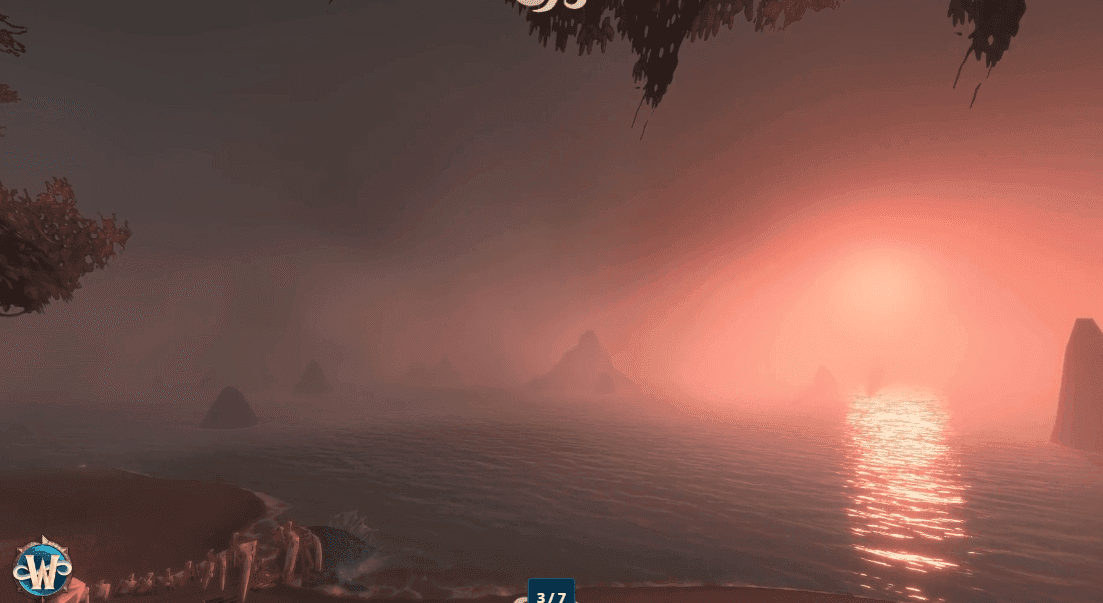
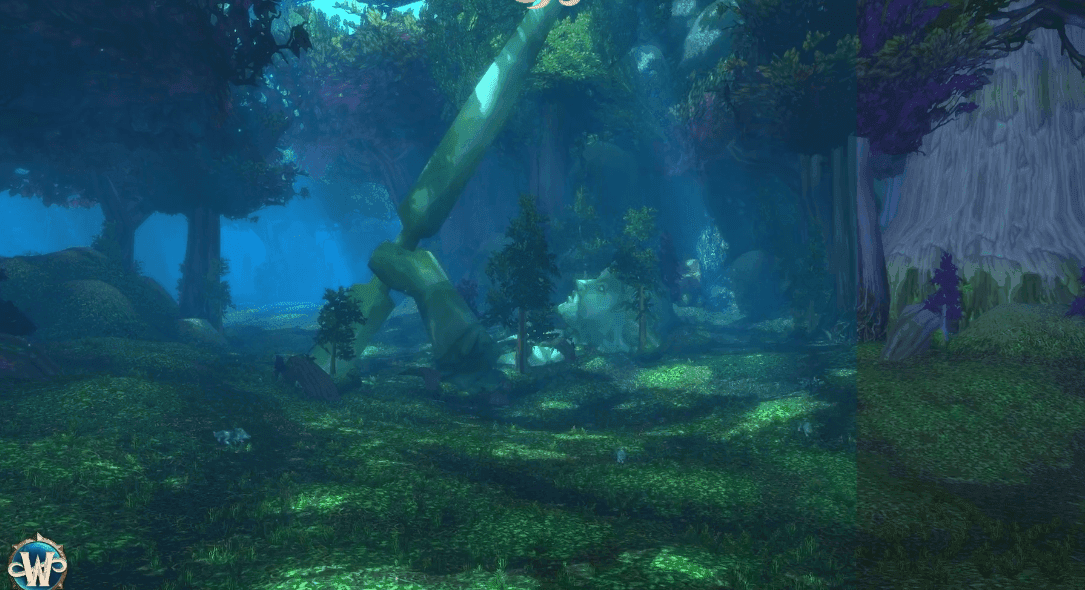
Visually, Azeroth has undergone an elegant renaissance while meticulously honoring its handcrafted, storybook art direction. Sunlight cascades realistically through the ancient canopies of Tirisfal Glades and Elwynn Forest, water surfaces across coastal zones now exhibit fluid wave dynamics and specular reflections, and horizon draw distances have been extended by a massive multiplier—standing atop the Cathedral of Light in Stormwind, one can now clearly gaze upon the snow-capped crags of Dun Morogh. Character models and environmental assets deliberately avoid uncanny photorealism: artists carefully refined polygon meshes and texture resolutions, eliminating jagged edges while preserving the timeless charm of early Blizzard character design.
What does this optimized architecture grant the user in practical terms? Unprecedented accessibility and velvety performance. Forever effortlessly sustains a rock-solid 60+ frames per second even on budget desktop rigs and aging laptops, while modern gaming battlestations can drive the game at native 4K resolution at 144 Hz without micro-stuttering. Even during massive 100-player world brawls across Hillsbrad Foothills or frantic 40-player raid boss encounters filled with cascading particle effects, the client demonstrates rock-solid framerate stability.
Equally transparent is the game's economic business model, which feels like a revitalizing breath of fresh air amidst today's landscape of predatory microtransactions. The game operates under the straightforward Pay-to-Play subscription standard: access to all servers is included under the unified World of Warcraft monthly subscription ($14.99 per month or via WoW Token game time). There is no box price for the base game, nor will players ever be charged for ongoing content updates. The in-game store is strictly barred from selling gear, level boosts, or competitive advantages: monetized offerings are confined to cosmetic deluxe bundles like the Skyborne Epic Pack, providing unique mounts, vanity pets, and tabards. While the ongoing cost of a mandatory subscription presents an initial hurdle for players accustomed to modern Free-to-Play models, for an adult gaming audience it represents the ultimate firewall protecting Azeroth from pay-to-win exploitation.
World of Warcraft: Forever represents a rare occurrence in modern gaming: a passionate community dream that successfully overcame corporate inertia to become an officially funded, high-profile reality. The team at Blizzard Entertainment achieved what once seemed impossible: they recaptured the magic of an unhurried, dangerous, and cooperative Azeroth circa 2004 and granted it a second life without fracturing its delicate internal mechanics through hyper-modernization or reducing it to static museum dust. This is an authentic alternate history for the genre, where player time is genuinely respected and every journey leaves an indelible emotional footprint.
Summarizing our critical evaluation, here are the defining pillars and systemic compromises of the project:
Core Strengths:
Vulnerabilities and Risk Factors:
Who will find hundreds of hours of pure delight in this world? Above all, players who yearn for genuine social camaraderie, where personal character reputation carries immense weight and guilds operate as tightly knit digital communities. It is tailor-made for adventurers who love exploring wilderness without automated GPS breadcrumbs, and for newcomers who wish to experience the foundational roots of Warcraft without climbing over two decades of accumulated expansion baggage. Conversely, who should steer clear? Fans of rapid, twitch-reflex action combat, dedicated solo players unwilling to socialize or coordinate in chat channels, and anyone unwilling to pay an ongoing monthly subscription fee for access to a virtual realm.
World of Warcraft: Forever does not attempt to please everyone—and therein lies its greatest triumph. It restores an Azeroth where the journey itself matters far more than the destination, and where true adventure begins the second you step beyond your hometown gates.