WoW Forever Beginner’s Guide: Key Differences from Vanilla, Leveling Roadmap & Starter Progression
What is WoW Forever: Classic+ Philosophy and the Spirit of Original Adventure
The World of Warcraft: Forever project is the long-awaited official realization of the Classic+ concept — an authentic expansion of the classic Warcraft universe built on the foundation of patch 1.12, yet powered by a modern, upgraded client engine (build 1.60). Unlike seasonal experiments or major expansions that render previous zones obsolete, Forever preserves the core ecosystem of classic Azeroth intact. It retains the deliberate, exploratory pacing, heavy social interdependency, the true value of every copper coin, and the unforgiving lethality of wild wildlife, where an accidental pull of two monsters can easily send your character straight to the graveyard.
Quick take: WoW Forever delivers the canonical classic Azeroth enriched with carefully curated content: a new neutral race, additional mid-level dungeons, a camping and field-crafting system, and account-wide meta-progression. It preserves the challenge of leveling and the value of gear from the original release while eliminating two decades of legacy engine limitations.
The primary goal of WoW Forever is to give both veterans and complete newcomers that forgotten thrill of an uncharted world, where exploring an off-path ridge might reveal a brand-new quest outpost, a secluded cave with a rare profession blueprint, or a hidden campsite with unique mechanics. The game does not artificially rush progression to endgame in a couple of evenings: the journey from level 1 to 60 remains an epic, self-contained RPG campaign that demands thoughtful gear choices, profession leveling, and deliberate travel planning across continents.
Key Pillars of the Project: Balancing Hardcore Roots with Modern Polish
The original 2004 release was renowned for its immersive atmosphere, but it also suffered from severe design flaws: non-viable hybrid talent trees, abrupt quest drought gaps, tedious logistics, and rigid class stacking requirements in raids. In WoW Forever, these issues have been meticulously addressed without diluting the core challenge:
- Surgical rebalance of hybrid classes — Druids, Paladins, and Shamans received viable resource recovery and threat generation tools, transforming their tanking and damage-dealing specializations into dependable dungeon and raid assets;
- Expanded race and class combinations — Lore-grounded combinations introduce Undead Paladins, Dwarf Shamans, Orc Mages, and Night Elf Mages, each featuring bespoke racial synergies and distinct visual identities;
- The neutral Skyborne race — Exiles from the Skywall elemental plane who begin their journey on the floating archipelago of Zephras Isle (levels 1–12) before pledging allegiance to either the Alliance or the Horde at level 10;
- The Legacy System — An account-wide meta-progression tree where zone exploration, achievements, and milestones award Legacy Points to unlock convenience perks, mobile banking, and early Dual Specialization;
- Field camps and campfires (Camping System) — The ability to pitch a personal campsite with a tent, fire pit, and crafting stations directly in hostile wilderness, granting tactical combat auras and mobile crafting utility;
- Organic dungeon integration — Addition of classic-style leveling dungeons (Ruins of Lordaeron for levels 32–38 and Hall of Thanes for levels 52–58) that naturally bridge historic leveling dead zones.
Side-by-Side Breakdown: Vanilla 1.12 vs World of Warcraft: Forever
To grasp the scope of quality-of-life enhancements and mechanical depth, examine the direct comparison of fundamental systems between both versions in the table below:
| Game System | Original Vanilla (1.12) | World of Warcraft: Forever (1.60) | Practical Benefit for Beginners |
|---|---|---|---|
| Graphics and network engine | Outdated 32-bit legacy client from 2004 with high-resolution scaling artifacts and UI stutter. | Modernized 64-bit client architecture with native 4K support, ultrawide aspect ratios, and modern API rendering. | Silky-smooth framerates, zero micro-stutter in dense capital cities, and seamless compatibility with modern operating systems. |
| Controls and input | Strictly mouse and keyboard, requiring clunky third-party cursor emulators for gamepads. | Native hardware controller support (Xbox, DualSense, Steam Deck) with seamless ConsolePort integration. | Complete comfort when questing, leveling, and grinding mobs from the couch or on handheld devices. |
| Racial roster | 8 fixed classic races with faction-locked classes (Paladin strictly Alliance, Shaman strictly Horde). | 9 playable races (introducing the Skyborne) and cross-faction class access (Undead Paladins, Dwarf Shamans). | Complete freedom to choose your preferred role without sacrificing aesthetic taste or faction allegiance. |
| Account meta-progression | None: every newly created character starts in complete vacuum with zero shared account progress. | Unified Legacy Tree with account-wide Legacy Points earned via world exploration and achievements. | Leveling a main character permanently unlocks travel speed perks, gathering boons, and conveniences for all alts. |
| Talent specializations | Single talent build; respecs require traveling to a class trainer and paying an escalating gold fee (up to 50g). | Full Dual Specialization unlocked at level 40 via the Legacy Tree, free of recurring respec fees. | Instant switching between solo questing builds and dungeon tanking or healing roles on demand. |
| Field crafting | Hard dependency on static city anvils and forges; impossible to smelt ore or craft plate gear in the wild. | Camping system featuring portable anvils, tanning racks, and alchemy cauldrons crafted via blueprints. | Complete autonomy on extended wilderness expeditions: smelt ore and repair gear without returning to town. |
| Mid-level quest progression | Severe quest droughts around levels 32–36 and 52–56, forcing hours of repetitive monster grinding. | Expanded quest lines, hidden library tomes, Waylaid Supplies, and two brand-new leveling dungeons. | Smooth, continuous progression without awkward level gaps or mindless mob grinding sessions. |
Server Rulesets and Choosing Your First Realm
When launching the game for the first time, your earliest strategic decision is selecting your home realm ruleset (Ruleset). WoW Forever offers three distinct server categories:
- Normal (PvE) Realms — The premier choice for beginners who want to explore lore, complete quest hubs, and run dungeons at their own pace without the constant threat of enemy faction ganks. Open-world PvP is entirely opt-in;
- PvP Realms — The classic battleground environment. Starting at level 20 in contested zones (Contested Zones), players of the opposing faction can attack you on sight, demanding constant vigilance and map awareness;
- Hardcore Mode — A permanent death challenge where falling in combat ends the character run permanently. In Forever, Hardcore is organically woven into standard realms via specialized trial mechanics, tracking survival milestones directly on guild rosters.
Regardless of which realm ruleset you choose, entering Azeroth prepared with proper client settings and interface addons will make your opening hours significantly more rewarding.
Technical Foundations: First Launch and Core Client Optimization
A seamless journey through World of Warcraft: Forever begins well before character creation — during the initial client configuration phase. Although the game operates on an upgraded 64-bit engine (build 1.60), it handles classic world geometry, legacy textures, and vintage lighting algorithms created over twenty years ago. Improperly configured rendering parameters or outdated UI scaling can compromise the visual splendor of the floating Skywall spires and cause abrupt framerate drops in bustling capital cities.
Quick take: Before venturing into the wild, eliminate the green map texture artifact via graphics settings, calibrate UI scale for your monitor resolution, bind gamepad controls through the ConsolePort profile, and install the Questie Forever and VoiceOver addon suite for complete immersion in classic storytelling.
Your primary graphic setting focus should be the graphics rendering API. On modern NVIDIA GeForce RTX and AMD Radeon RX graphics cards, toggle the renderer to modern DirectX 11 or DirectX 12. This ensures hardware-synchronized refresh rates, proper MSAA anti-aliasing, and smooth SSAO ambient occlusion in cavernous dungeons and crypts without micro-stutter when panning the camera.
Resolving the Critical Display Glitch: Green Map Bug
The most widespread technical hurdle confronting newcomers during their opening minutes is the sudden replacement of the world map and minimap textures with a solid neon-green or checkered canvas. Known across the community as the Green Map Bug, this glitch stems from incompatibilities between vintage texture compression formats and modern GPU driver texture caching pipelines.
A comprehensive step-by-step walkthrough covering every graphics artifact, manual `Config.wtf` tweaks, and color palette calibration is available in our dedicated guide: review the WoW Forever setup guide: green map bug fix, graphics, and addons for crystal-clear visuals without crashes.
Gamepad and Handheld PC Gaming: ConsolePort and Steam Deck
A hallmark feature of WoW Forever is native hardware controller integration. While playing Vanilla in 2004 required third-party mouse emulators and felt notoriously clunky, the updated engine supports modern controllers at the system level:
- Native controller recognition — The client natively detects Xbox Series, PlayStation DualSense, and Steam Deck inputs without third-party mapper software;
- ConsolePort interface — Overhauls the classic action bar into an intuitive console radial layout, mapping primary rotational strikes, jump, and interact commands to face buttons paired with trigger modifiers (LT/RT);
- Dynamic action camera and target scan — Action Cam automatically centers your camera behind your avatar and locks onto targets in front of you, enabling a relaxed, couch-friendly questing experience.
Essential Starter Addon Suite for Beginners
Classic gameplay traditionally leaves quest clues buried in NPC dialogue text, but for complete newcomers, the lack of quest destination indicators can lead to aimless wandering. A curated starter set of modifications saves dozens of hours of travel time:
| Addon Name | Category and Role | Why It Is Essential for Beginners |
|---|---|---|
| Questie Forever | Quest navigator | Displays available quests, monster spawn zones, objectives, and gathering nodes directly on your world map and minimap. Fully calibrated for Forever custom quests. |
| VoiceOver | AI narration module | Provides full voice acting for every quest prompt and dialogue interaction across all classic NPC encounters in English, transforming the world into an interactive audiobook. |
| Bagnon / OneBag | Unified inventory | Merges separate inventory bags and bank slots into a clean, searchable container with item quality color highlights and slot sorting. |
| LunaUnitFrames / ShadowedUF | Unit frames | Replaces bulky default player and target portraits with sleek, customizable health and resource bars displaying precise numbers and target cast bars. |
| ClassicCastbars | Spell cast display | Adds clear cast progress bars underneath enemy nameplates, enabling you to land precise interrupts («Kick», «Pummel», «Counterspell») in PvE and PvP. |
Addons are installed effortlessly via standard managers (CurseForge or WowUp) or by unpacking folder archives into your `Interface/AddOns` directory. With technical setup complete, you are ready to explore the vast expanse of Azeroth.
The Geography of Azeroth: Two Great Continents and Floating Zephras Isle
The world of World of Warcraft: Forever is vast, seamless, and uncompromisingly harsh toward unprepared wanderers. Unlike modern theme-park titles where players teleport instantaneously to quest objectives with a single click, classic Azeroth demands that you physically traverse immense landscapes on foot, by mount, or through public transit networks. Grasping the layout of both major continents, the positioning of faction capitals, and safe overland corridors is a fundamental survival discipline that protects beginners from sudden deaths to high-level roaming predators.
Quick take: The world spans the Eastern Kingdoms, Kalimdor, and the newly revealed floating Zephras Isle. Zones follow strict level ranges: safe racial nurseries (levels 1–10 and 10–20) gradually lead into contested borderlands (Contested Zones), where open-world PvP is enabled on PvP realms. Always unlock flight points and bind your Hearthstone to active quest hubs.
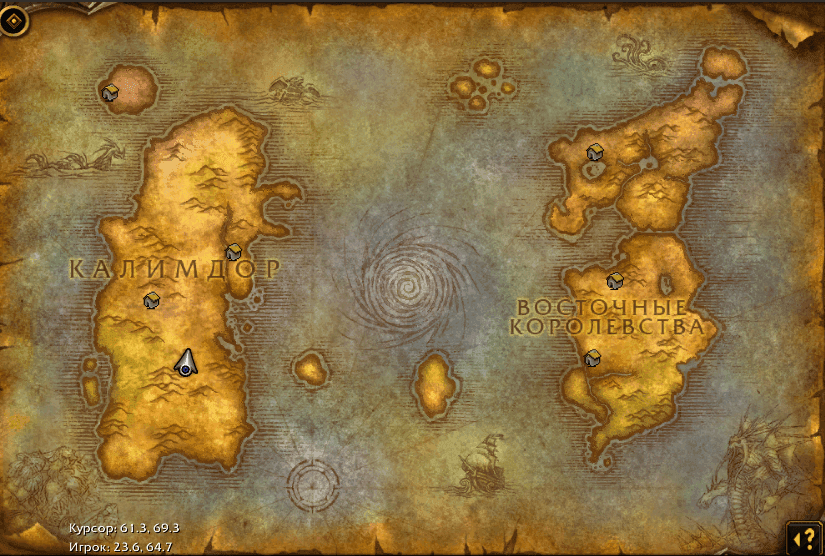
The primary faction conflict unfolds across two massive landmasses divided by the Great Sea:
- Eastern Kingdoms — The ancestral home of Stormwind humans, Ironforge dwarves, Gnomeregan gnomes, and the Undercity Forsaken. Its biomes range from temperate hardwood forests and mountain passes to haunted swamps and ruined lordships;
- Kalimdor — A wild, ancient frontier hosting the Orc and Troll citadel of Orgrimmar, the Tauren mesas of Thunder Bluff, and the Night Elf groves of Teldrassil. The continent encompasses arid savannahs, dense rainforests, and sun-baked salt flats;
- Zephras Isle — A floating archipelago suspended within the elemental plane of Skywall, serving as the starting sanctuary for the neutral Skyborne race (levels 1–12). Upon completing their introductory storyline, Skyborne adventurers pledge allegiance to either Stormwind (Alliance) or Orgrimmar (Horde).
Zone Leveling Gradient: From Starter Nurseries to Contested Territories
Every territory in Azeroth is calibrated for a specific level bracket. If a level 15 adventurer strays into a zone intended for level 40 players, roaming wildlife will detect the character from maximum distance and deliver lethal blows. Zones are categorized into three distinct security tiers:
| Zone Classification | Level Bracket | Alliance / Horde Examples | Security Rules and PvP Behavior |
|---|---|---|---|
| Starter Nurseries | Levels 1–10 | Elwynn Forest, Durotar, Tirisfal Glades, Teldrassil, Zephras Isle | Protected racial homelands. Opposing faction players cannot initiate attacks against you on any realm type. |
| Secondary Faction Hubs | Levels 10–20 | Westfall, Darkshore, Silverpine Forest, Loch Modan, The Barrens (North) | Friendly territory. Enemy incursions are scarce; local guards safeguard outposts and quest hubs surround nearby capitals. |
| Contested Battlegrounds | Levels 20–60 | Hillsbrad Foothills, Ashenvale, Stranglethorn Vale, Tanaris, Plaguelands | Shared wilderness. Alliance and Horde quest objectives overlap directly. On PvP realms, open combat flags automatically enable. |
Transit Infrastructure: How to Travel Across Azeroth
Because personal flying mounts do not exist in Classic+, players rely on an interconnected logistical transit grid:
- Flight Masters — Gryphon and Hippogryph handlers (Alliance) or Wyvern and Bat handlers (Horde). Whenever entering a settlement, locate the flight master with a green quest arrow and speak with them to unlock the node. Missing an intermediate outpost breaks flight continuity between distant hubs;
- Alliance Naval Vessels — Steamships operating between Auberdine (Darkshore) and Menethil Harbor (Wetlands), as well as Theramore Isle and Menethil, linking Kalimdor to the Eastern Kingdoms;
- Horde Zeppelin Towers — Goblin airships sailing from launching towers outside Orgrimmar, Thunder Bluff, and Brill (Undercity), providing safe cross-continental airlift;
- Neutral Ratchet-to-Booty Bay Ferry — Connects the central Barrens in Kalimdor to southern Stranglethorn Vale in the Eastern Kingdoms. Governed by goblin neutrality, though PvP ambushes frequently contest the docks;
- The Deeprun Tram — A subterranean engineering marvel linking Stormwind City directly to Ironforge in under two minutes without waiting for flight timers.
The Hearthstone: Setting Your Recall Hub
Every newly created character starts with a Hearthstone in their backpack. This bound artifact operates on a 1-hour cooldown, instantly teleporting you to whichever tavern innkeeper (Innkeeper) you last spoke with to bind your home point.
A classic beginner pitfall is leaving your Hearthstone bound to your starting racial capital. As soon as you deploy into an active quest hub (such as Southshore, Lakeshire, or The Crossroads), immediately visit the local tavern and re-bind your stone. This lets you quest deep into the wilderness, finish an objective loop, and recall back to turn in your rewards with a single button press.
Alliance vs Horde: Core Philosophies and Racial Boons
The character creation screen in World of Warcraft: Forever presents newcomers with a definitive allegiance that dictates not only character aesthetics and narrative progression, but your social network for months to come. The rivalry between the Alliance and the Horde in Classic+ represents a profound community barrier: opposing factions cannot communicate in chat, group for dungeons, share guilds, or trade items directly.
Quick take: Select your faction based on visual preference or existing friends, but weigh racial passives carefully. WoW Forever introduces the neutral Skyborne race starting on Zephras Isle, alongside ground-breaking combinations: Undead Paladins, Dwarf Shamans, and Orc Mages. For beginners seeking effortless solo leveling, Hunter, Warlock, and Paladin offer unmatched survival toolkits.
Each faction offers distinct gameplay and thematic flavors:
- The Alliance — Composed of Humans, Dwarves, Gnomes, Night Elves, and the High Order Skyborne. Renowned for orderly city architecture, smooth logistics across the Eastern Kingdoms, and commanding PvE utility (such as Human weapon skill bonuses and Dwarf stoneform);
- The Horde — A coalition forged in survival: Orcs, Tauren, Trolls, Forsaken, and the Windshaper Skyborne. Defined by rugged Kalimdor landscapes and formidable PvP passives («Will of the Forsaken», Tauren stun war stomps, and Orc stun resistance).
The Skyborne: Neutral Exiles of the Skywall
The marquee addition to the playable roster in WoW Forever is the neutral Skyborne race. Descendants of ancient Shen'dorei elves who sought shelter within the elemental plane of air, they begin their journey on the secluded floating archipelago of Zephras Isle, remaining neutral to both world factions until level 10.
The Skyborne racial kit emphasizes mobility and environmental maneuverability:
- Aerial Glide — A racial ability providing 10 seconds of controlled slow falling (1.5-minute cooldown), allowing you to leap from mountain cliffs and bypass winding canyon paths without falling damage;
- Wind Gust — A passive racial trait granting a +2% increase to melee attack speed, ranged attack speed, and spell casting speed;
- Faction Allegiance at Level 10 — After completing introductory trials on Zephras Isle, adventurers pledge fealty either to the Alliance under the High Order (unlocking Ley Reading) or to the Horde as Windshaper wanderers (unlocking Sky Sight).
A comprehensive walkthrough detailing the starting island, racial abilities, and unique druid animal forms is available in our feature guide: read the Skyborne race guide in WoW Forever: Zephras Isle, racials, classes, and quests.
Novel Race and Class Pairings: Shattering Vanilla Conventions
The original game enforced rigid racial boundaries: Paladins were exclusive to the Alliance, Shamans belonged strictly to the Horde, and class selections were heavily restricted. In WoW Forever, these barriers are re-examined through compelling lore justifications:
| New Combination | Faction | Lore Justification | Key Combat Synergy |
|---|---|---|---|
| Undead Paladin | Horde | Fallen Knights of the Silver Hand who wield the Holy Light through sheer discipline and agonizing martyrdom. | Pairing Holy armor defenses with «Will of the Forsaken» (charm, fear, and sleep immunity) creates an unstoppable juggernaut in PvP. |
| Dwarf Shaman | Alliance | Wildhammer Dwarves of the Hinterlands who have communed with storms, griffins, and earth for generations. | Delivers the iconic «Windfury Totem» to Alliance raid rosters, while «Stoneform» cleanses bleeds, poisons, and diseases. |
| Orc Mage | Horde | Former warlocks and shamans who adapted their intellect to master pure raw Arcane weave. | The «Blood Fury» racial ability augments spell power, enabling devastating burst damage rotations in Arcane and Fire specs. |
| Night Elf Mage | Alliance | Shen'dralar Highborne scholars from Eldre'Thalas reintegrating into Darnassian elven society. | «Shadowmeld» allows cloth-wearing mages to drop enemy pursuit instantly or safely drink mana water while stealthed. |
Starter Class Tier List for Solo Beginners
If you have never experienced classic WoW, your class choice profoundly influences your leveling speed, survivability, and repair costs. Unlike modern retail where every class features uniform sustain, classic leveling experiences vary drastically:
- S-Tier (Top-Tier Beginner Friendly): Hunter and Warlock — Gaining a dedicated combat pet at level 10 allows pets to absorb all enemy melee damage while you dispatch targets from safe range. Hunters sprint continuously with «Aspect of the Cheetah», while Warlocks trade health for infinite mana via «Life Tap»;
- A-Tier (Resilient and Versatile): Paladin, Mage, Druid — Classes boasting high defensive utility. Paladins wear durable mail/plate armor and self-heal with invincible «Divine Shield» bubbles; Mages conjure free food and water while freezing packs of foes; Druids switch into Cat and Bear forms without spending mana on basic attacks;
- B/C-Tier (Challenging Without Experience): Warrior, Rogue, Priest — Pure melee combatants without self-heals suffer grueling damage intake. Warrior is the most demanding class for solo leveling: missing an auto-attack or pulling two equal-level enemies frequently leads to the graveyard.
For an exhaustive breakdown of every talent tree, PvE raid viability, and leveling builds, explore our overarching companion guide: check the all classes and talents in WoW Forever: PvE/PvP tier list and build calculator.
Spells vs Talents: The Core Distinction of Classic Progression
For adventurers transitioning from modern retail MMOs, character progression in World of Warcraft: Forever often presents an initial shock. Abilities do not unlock automatically on your action bar as your level rises, nor can talent specializations be swapped at will mid-combat. In classic Azeroth, combat mastery is governed by two independent mechanical systems: active abilities bought for your Spellbook and passive specialization points placed within Talent Trees.
Quick take: Spells and attacks are rank-based abilities purchased with coin from Class Trainers every 2 levels. Talents award exactly 51 specialization points (one per level from 10 to 60) across three specialized trees. Avoid buying every trainer rank indiscriminately: overspending on situational spells leaves you bankrupt by level 40 without gold for a mount.
The operational roles of these two systems are strictly defined:
- Class Abilities (Spellbook) — Active buttons for dealing damage, restoring health, casting buffs, and crowd controlling. They feature ranks (Rank 1, Rank 2, Rank 3). Higher ranks hit harder or heal more, but consume more mana or energy and demand steep coin fees at your trainer;
- Talent Specialization (Talent Trees) — A flexible grid of modifiers organized into three distinct trees per class. Talents boost critical strike chance, reduce spell cast times, lower resource costs, or unlock iconic capstone spells.
Class Trainers: The Spell Rank System and the Bankruptcy Trap
Every two even levels (levels 2, 4, 6, 8, 10, and upwards to level 60), you must physically visit your Class Trainer in a racial settlement or capital city. A floating tome icon signifies newly available spells.
To preserve your finances for your mount, follow a disciplined spell-buying filter:
- Must-buy spells: Your primary rotational strike or nuke («Heroic Strike», «Frostbolt», «Sinister Strike»), primary healing spells, and crucial mobility or escape tools («Aspect of the Cheetah», «Sprint», «Blink»);
- Skip until level 60: Off-role situational buffs, defensive shouts when leveling in pure damage specs, niche elemental resistance wards, and spells tied to weapons you do not wield.
Talent Progression from Level 10 to 60: Specialization Trees
Upon reaching level 10, the talent interface unlocks (hotkey `N`). From that moment onward, each level grants exactly 1 talent point, yielding precisely 51 points by level 60.
| Level Bracket | Talent Point Pool | Strategic Build Milestone | Tactical Recommendation |
|---|---|---|---|
| Levels 10–19 | 10 points | Foundational core passives | Invest strictly in hit chance, cast pushback reduction, or flat damage increases for your core attacks. |
| Levels 20–39 | 30 points | Rotational backbone development | Avoid splitting points across trees: push deep down a single primary tree to reach potent 21-point and 31-point talents quickly. |
| Level 40 | 31 points | Capstone talent activation | Major leveling power spike. Unlocks iconic abilities like Warrior «Mortal Strike», Mage «Ice Barrier», or Paladin «Holy Shock». |
| Levels 41–60 | 51 points (total) | Secondary tree hybridization | Remaining points branch into a secondary tree to acquire utility, extra critical chance, or survivability bonuses. |
Respec Penalties, Escalating Gold Costs, and Dual Specialization
If you make mistakes while distributing talent points or wish to transition roles, class trainers provide a reset service (Respec). However, respec fees escalate rapidly:
- First reset costs a modest 1 gold coin;
- Second reset rises to 5 gold coins;
- Subsequent resets increment by 5 gold up to a punishing cap of 50 gold per single respec.
Respec decay requires months of inactivity to drop back down, making constant tinkering financially devastating. To resolve this classic bottleneck, WoW Forever enables Dual Specialization via the Legacy Tree at level 40, permitting free, instantaneous swaps between two saved talent profiles in the open world.
For an example of strategic talent allocation on a versatile hybrid class, review our class guide: inspect the Paladin guide in WoW Forever: builds, talents, Undead Paladin, and leveling.
Weapon Proficiency Architecture: Why You Cannot Equip Every Found Axe
One of the most bewildering systems for newcomers in classic Azeroth is weapon skill proficiency (Weapon Skills). In modern titles, looting an epic weapon upgrade allows you to equip it immediately and start hacking through foes. In World of Warcraft: Forever, your character must first possess the literal knowledge of that weapon archetype from a trainer, and then grind its proficiency rating from 1 to your level cap in active combat before it becomes effective.
Quick take: Every class begins with only 1–2 basic weapon proficiencies. Learning new weapon types (swords, axes, maces, polearms, bows) requires visiting capital Weapon Masters and paying 10 silver per skill. Newly learned weapons start at skill level 1/300: wielding a 1-skill weapon against equal-level targets causes 95% of attacks to miss, parry, or land as glancing blows.
If your Paladin or Warrior loots a rare two-handed battleaxe, the game will prevent you from placing it into your gear slot if your class has not learned the skill, displaying a red requirement message. Rectifying this demands a trip to a capital city weapon master.
Capital Weapon Masters: Training Locations and Weapon Specialties
No single trainer in Azeroth knows every weapon discipline. Each faction capital specializes in ancestral martial tools. Training each weapon type costs a flat fee of 10 silver coins, and trainers are accessible starting at level 10.
| Capital City | Weapon Master Name | Available Weapon Proficiencies |
|---|---|---|
| Stormwind City | Woo Ping | One-Handed Swords, Two-Handed Swords, Polearms, Daggers, Crossbows |
| Ironforge | Bixi and Buliwyf | One-Handed Axes, Two-Handed Axes, One-Handed Maces, Two-Handed Maces, Guns |
| Darnassus | Ilyenia Moonfire | Bows, Thrown Weapons, Daggers, Staves, Fist Weapons |
| Orgrimmar | Sayoc and Hanashi | One-Handed Axes, Two-Handed Axes, Bows, Guns, Daggers, Fist Weapons, Staves |
| Undercity | Archibald | One-Handed Swords, Two-Handed Swords, Daggers, Crossbows, Polearms |
| Thunder Bluff | Ansekhwa | One-Handed Maces, Two-Handed Maces, Staves, Guns |
The 1 to 300 Skill Progression: Mechanics and Skill Caps
Once you pay 10 silver to learn a new weapon discipline (such as two-handed axes), a new proficiency line appears in your character panel (hotkey `C`, «Skills» tab) set to `1/Current Cap`. Your maximum skill cap at any point is determined by an exact formula:
Proficiency advances exclusively when landing successful white auto-attacks against living, experience-granting enemies. Each clean hit carries an internal roll to grant +1 skill point. As your current skill approaches your level cap, skillups become progressively rarer.
Attack Table Combat Penalties: Misses, Parries, and Glancing Blows
The fatal rookie mistake is equipping a freshly learned weapon at level 40 with 1 skill point and immediately charging an equal-level quest mob. Classic combat operates on a strict single-roll Attack Table, where deficiency in weapon skill triggers crippling combat penalties:
| Combat Outcome | What Occurs Mechanically | Impact of Underleveled Weapon Skill |
|---|---|---|
| Miss | The swing whiffs completely, dealing zero damage and building zero rage or resources. | With a 50+ skill point deficit, your miss chance spikes up to 40%–60%. You simply cannot land hits. |
| Dodge and Parry | The target sidesteps or deflects your strike with their own weapon. | Enemy parries not only negate your attack, but accelerate the monster's next auto-attack by 40% (Parry Haste). |
| Glancing Blow | The strike clips the target obliquely, suffering a severe damage penalty. | An unavoidable outcome against higher-level mobs. Glancing blows shave off 30% to 70% of baseline auto-attack damage. |
| Critical Strike | The strike lands for double damage (200%). | With unranked weapon skill, your critical strike chance plummets to absolute zero against level-appropriate targets. |
Managing weapon swing timers and maximizing auto-attack value is particularly paramount for physical tanking classes. To understand weapon selection for sword-and-board gameplay, read our specialized guide: check the WoW Forever warrior guide: shield leveling meta, Arms, Fury, and Prot.
Your First Ten Minutes: Orientation and the Opening Quest Loop
Spawning into your starting racial sanctuary for the first time — whether the sunlit Northshire Valley for Humans, the crimson sands of the Valley of Trials for Orcs, or the floating sky-terraces of Zephras Isle — immediately conveys a visceral sense of vulnerability. Your backpack contains only your Hearthstone, two crusts of dry bread, a single skin of spring water, and a chipped gray-quality starter weapon. Without mini-map objective pins or automated pathfinding arrows, classic Azeroth requires complete self-reliance from second one.
Quick take: Immediately speak to the introductory quest NPC marked by a gold exclamation point, bind your rotational abilities onto reachable keys, and strictly fight one monster at a time. Never run away with your back exposed (which triggers daze and a 50% movement slow), always carry food and water to regenerate between pulls, and remember that each death chips 10% durability from your equipped items.
Follow a disciplined sequence during your opening minutes:
- Locate your first questgiver — An NPC bearing a bright yellow exclamation point stands within yards of your spawn location. Speak with them, read the dialogue prompt (or listen via VoiceOver), and accept the task;
- Configure your action bar — Open your abilities window (hotkey `P`) and drag your primary attack or damage spell to an intuitive combat key (such as `1` or `E`);
- Survey the terrain — Open your world map (hotkey `M`). With Questie Forever installed, objective locations and target monster spawns display directly on your screen. If running without addons, read the objective text in your quest log (hotkey `L`) for geographical cues.
The Golden Rule of Classic Combat: Aggro Radius and Single-Target Pulls
The primary shock confronting modern MMO players in classic Warcraft is the sheer lethality of common overland beasts. In Azeroth, even a level 2 boar or defias bandit possesses substantial health pools and inflicts heavy damage. Pulling two enemies simultaneously without a pet or crowd control guarantees a swift trip to the spirit healer for most classes.
If an encounter goes awry and additional enemies join the fray, retreat is your only salvation. However, classic mechanics introduce a deadly hazard:
- The Daze Mechanic — When a melee monster strikes a fleeing character from behind, there is a greater than 50% chance to trigger Daze, reducing movement speed by 50%. Escaping on foot once dazed is virtually impossible;
- Strafing to escape — Rotate your camera and flee sideways using strafe keys (`Q`/`E` or by holding right-click while running). Side hits are treated by the engine as frontal attacks: they never trigger Daze, allowing you to maintain full run speed until enemies reset (typically around 30–40 yards of pursuit).
Provisions and Sustain: Food, Water, and Bandages for Steady Tempo
Out-of-combat health and mana regenerate at a glacial pace in classic mechanics (natural spirit regeneration can take several minutes to fill resource bars). Standing idle after every single kill dramatically balloons your total leveling time. Successful wanderers treat food and drink as mandatory operational tools:
| Consumable Category | Restored Resource | Application Constraints | Sourcing Methods |
|---|---|---|---|
| Food | Health (HP) | Requires sitting motionless for 18–30 seconds. Taking damage, casting, or moving breaks consumption. | Purchased from innkeepers, butchers, or prepared via the Cooking secondary profession. |
| Water | Mana (MP) | Crucial for all mana-dependent classes (Priests, Mages, Druids, Shamans, Paladins, Warlocks). | Purchased from tavern keepers; Mages conjure free water stacks using «Conjure Water». |
| Bandages | Health (HP) | Channels over 8 seconds in or out of combat, does not consume mana, and works on short cooldowns. | Crafted from Linen, Wool, and Silk cloth drops via the First Aid secondary profession. |
Engaging a mob with under 70% health and mana is an invitation to die. Inculcate the habit of immediately sitting to eat and drink the moment combat drops.
The Mechanics of Death: Ghost Runs, Durability, and Resurrection Sickness
Eventually, your adventurer will fall — mortality is a foundational pillar of classic game design. When your health drops to zero, your spirit awakens at the nearest regional graveyard as an ethereal Ghost.
Navigating the revival process requires understanding three core penalties:
- The ghost run — In spirit form, you run 25% faster than normal and cannot be spotted or attacked by living monsters. A minimap compass arrow points directly toward your corpse. Upon reaching your bones, check that nearby roaming patrols have moved away before pressing «Resurrect»;
- Equipment Durability Loss — Every death exacts a flat 10% durability penalty from all equipped weapons and armor, as well as gear pieces in your bags. When an item hits zero durability, it turns red, breaking completely and offering zero stats or armor. Repairs must be purchased from blacksmiths or armorers with hard coin;
- The Spirit Healer Trap — The ghostly angel at the graveyard can revive you instantly on the spot, but at catastrophic cost. Accepting graveyard resurrection incurs an immediate 25% durability penalty across all equipment and inflicts Resurrection Sickness, crushing all character attributes and damage output by 75% for 10 full minutes (starting at level 11). Only accept this penalty if your corpse is lodged in an unreachable abyss.
The Sixteen-Slot Dilemma: Where to Acquire Your First Additional Bags
One of the most persistent bottlenecks confronting adventurers during their first twenty levels in World of Warcraft: Forever is chronic inventory starvation. Your permanent default backpack contains only 16 slots, which quickly become choked with your Hearthstone, food and water stacks, bandages, quest items, and mob trophies after just a few skirmishes. Because the primary backpack cannot be unequipped or enlarged, expanding inventory capacity relies exclusively on unlocking four supplementary bag slots.
Quick take: Prioritize filling all 4 open bag slots with 6-to-8-slot containers during your opening levels. Immediately vendor all gray-quality trash items, but strictly hoard white crafting reagents (cloth, ore, herbs, leather) to sell on the Auction House for multiple times their vendor value. Establish a level 1 Bank Alt in a capital city next to a mailbox to warehouse materials and accumulate 100 gold for your level 40 mount.
Acquiring your initial bags follows three dependable avenues:
- Introductory quest rewards — Starting racial zones feature 1–2 questlines that reward small 4-slot or 6-slot brown pouches;
- Random humanoid drops — Humanoid monsters (bandits, gnolls, kobolds) have a modest chance to drop 6-slot small bags;
- Tailoring — The most reliable method. Player tailors weave 6-slot bags from Linen Cloth, and 8-slot bags from Wool Cloth. Trade harvested cloth to friendly tailors in trade chat in exchange for bag sets.
Loot Quality Differentiation: Vendor Trash vs Auctionable White Reagents
Understanding item color coding is the difference between poverty and economic stability in Classic. Misjudging item value leads beginners to sell priceless crafting materials to NPCs for pennies:
| Border Quality Color | Category and Role | Correct Disposal Method | True Economic Value |
|---|---|---|---|
| Gray (Poor) | Vendor Trash | Sell directly to any merchant NPC without hesitation. | Broken teeth, bat wings, rusted daggers. Unusable for quests or crafting. The bedrock of early copper income. |
| White (Common) | Crafting reagents and raw trade goods | Hoard, mail to your bank alt, and post on the Auction House. | Cloth, metal ore, herbs, leather, cooking meats. Vendors offer copper, but players pay substantial silver on auction. |
| Green (Uncommon) | Magic gear with stat suffixes | Equip as upgrades, or auction high-demand weapons and stat combos. | Provides direct stat boosts («of the Eagle», «of the Bear»). Sell bind-on-equip pieces on the Auction House. |
| Blue (Rare) | Superior dungeon drops and world epics | Equip for massive leveling power spikes or auction for heavy gold. | Unbound blue BoE weapons can command 5 to 50 gold on the Auction House, funding entire mount purchases. |
The Auction House and the Bank Alt Strategy
Because personal bank vaults in capital cities cost escalating fees to unlock additional bag slots (10 silver, 1 gold, 5 gold), seasoned players immediately deploy a dedicated storage character (Bank Alt):
- Create any level 1 character on your account (Human or Orc is optimal due to immediate capital proximity);
- Run them into your faction capital (Stormwind or Orgrimmar) and park them permanently between the central mailbox and the Auction House;
- While questing on your main character in distant territories, simply visit any frontier postbox and mail all gathered cloth, ore, herbs, and BoE gear to your alt;
- Logging onto your bank alt every couple of days lets you retrieve parcels and list items on the Auction House, avoiding lengthy travel interruptions on your main.
The Level 40 Milestone: Saving 100 Gold for Your Mount
Purchasing your first mount at level 40 is the definitive financial test for every classic adventurer. Combining Apprentice Riding training and the mount purchase totals approximately 100 gold (reduced to 90 gold at Honored faction reputation). Unprepared players routinely arrive at level 40 with under 20 gold, doomed to walk on foot into their late forties.
The four fundamental rules for amassing 100 gold by level 40:
- 1. Loot everything — Strip every corpse clean of gray trash and meat. Copper builds silver, and silver accumulates into gold;
- 2. Leverage the Auction House — Post meat, leather, and ore regularly: leveling cooks and crafters consistently buy raw inputs;
- 3. Skip luxury class spells — As emphasized previously, do not buy unnecessary secondary spell ranks from your trainer (saving up to 40 gold);
- 4. Zero gear purchases — Never buy leveling armor or weapons on the Auction House before level 40. Quest rewards and dungeon loot are more than sufficient.
The Anatomy of Trade Skills: Two Primary Professions and Three Secondaries
The profession system in World of Warcraft: Forever is not an optional cosmetic diversion, but a crucial cornerstone of your economic independence and combat survivability. Unlike games where a single character can master every trade simultaneously, Classic enforces a strict structural limit: each character may learn at most two primary professions (Primary Professions), while being free to master all three secondary skills (Secondary Professions) concurrently.
Quick take: Beginners with zero starting capital should level two gathering professions (such as Skinning and Mining) to sell raw inputs on the Auction House and secure their level 40 mount fund. Every single class must level First Aid: linen and wool bandages restore heavy health without mana costs. Furthermore, WoW Forever's Camping System allows adventurers to erect field anvils, forges, and campfires directly in the wilderness.
The profession categories function under clear rules:
- Primary Professions (Limit: 2) — Divided into gathering (Herbalism, Mining, Skinning) and production crafts (Alchemy, Blacksmithing, Engineering, Leatherworking, Tailoring, Enchanting). Unlearning a profession resets all skill progress (from 1 to 300) to zero if relearned later;
- Secondary Professions (Available to all) — First Aid (First Aid), Cooking (Cooking), and Fishing (Fishing). These do not occupy primary slots, training freely from specialized mentors to bolster your sustain.
Primary Profession Strategies: Gathering vs Production Economics
The foremost dilemma for new adventurers is choosing between crafting finished gear or hoarding raw materials. Leveling gear-production trades (like Blacksmithing or Leatherworking) during your initial 1–40 run consumes massive volumes of raw mats and drains silver for trainer recipes, often yielding gear inferior to quest rewards.
| Strategic Approach | Profession Pairing | Beginner Advantages | Trade-Offs and Drawbacks |
|---|---|---|---|
| Maximum Wealth (Recommended) | Skinning + Mining (or Herbalism) | Hides are harvested from nearly every beast kill and sold for pure profit. Ore and herbs guarantee steady silver on the Auction House. | You cannot craft your own armor or potions: all consumables and bags must be purchased from player crafters. |
| Sustain and Autonomy | Herbalism + Alchemy | Constant supply of healing potions, mana draughts, and stat-boosting elixirs, drastically lowering leveling mortality. | Requires regular off-road detours for herb gathering; vial supplies must be bought from vendors for coin. |
| Combat Utility and Control | Mining + Engineering | Stun grenades for interrupt control, target dummy decoys to survive overpulls, and gun scopes for ranged damage. | The most coin-intensive profession in the game: generates almost zero profit during the 1–40 leveling bracket. |
| Armor Tailoring | Skinning + Leatherworking (or Tailoring) | Enables crafting your own armor pieces, armor kits (+16–40 armor), and extra inventory containers. | Quickly throttled by rare crafting bottlenecks (heavy hides, expensive vendor thread, elemental reagents). |
Secondary Skills: Why First Aid is Imperative for Every Class
Among secondary professions, First Aid (First Aid) reigns as the absolute undisputed priority. It converts humanoid cloth drops into field bandages:
- Zero-mana healing — Healers (Priests, Paladins, Druids, Shamans) preserve precious mana pools between pulls by applying bandages rather than spending mana on expensive heals;
- Essential lifeline for pure damage classes — Rogues and Warriors possess zero native healing spells. Stun-locking an enemy with «Gouge» or «Kidney Shot» allows you to channel a bandage, restoring 60%–80% of your maximum health mid-combat;
- Cooking and Fishing sustain — Fire-roasted beast meats grant the «Well Fed» (Well Fed) buff, increasing Stamina and Spirit for 15 minutes to enlarge your safety margin against crits.
Field Campsites (Camping System) in WoW Forever: Mobile Anvils and Fire Auras
A flagship innovation in WoW Forever is the field campsite system (Camping System). In original Vanilla, blacksmiths were shackled to static capital forges, and leatherworkers needed urban tanning racks. Forever empowers explorers to establish forward operating bases anywhere in the wild:
- Field Campfires (Campfire) — Sparked using simple wood and flint. Beyond rapid health and spirit regeneration, feeding campfires rare lumber grants tactical group auras (attack power, elemental resistances, or mana per 5);
- Camping Blueprints — Dungeon bosses and rare wilderness elites drop blueprints for portable crafting fixtures: portable blacksmith anvils, tanning racks, and brewing cauldrons;
- Wilderness Workshops — Setting up a portable anvil beside your tent deep within Stranglethorn Vale enables your blacksmith to smelt raw iron into bars and repair damaged party gear right outside dungeon entrances.
To inspect campfire buff tables, rare blueprint drop locations, and field workshop logistics, read our dedicated craft guide: explore the professions in WoW Forever: complete campsite and crafting guide.
Mount Riding: Why Level 40 Revolutionizes Gameplay Dynamics
Reaching level 40 in World of Warcraft: Forever represents the definitive mechanical watershed in your character's career. For your first forty levels, you navigate the massive geography of Azeroth entirely on foot, spending up to half of your total session time jogging along overland trails between remote quest camps. Acquiring your first ground mount (Mount) increases movement speed by 60%, slashing transit travel times nearly threefold and allowing you to evade pursuing wilderness predators without suffering dazes.
Quick take: The first ground mount (+60% speed) unlocks at level 40 and requires roughly 90–100 gold total for Apprentice Riding and the beast purchase. Paladins and Warlocks obtain their level 40 mounts virtually free via class spells. At level 60, epic mounts (+100% speed) demand 1,000 gold. Hunter combat pets require active feeding and Beast Training, while Warlock demons consume Soul Shards.
However, riding is an investment: classic riding mechanics divide the purchase into skill training and buying the physical mount from a racial vendor:
| Riding Skill Bracket | Level Requirement | Movement Speed Increase | Total Cost (Training + Mount) | Strategic Impact |
|---|---|---|---|---|
| Apprentice Riding | Level 40 | +60% ground speed | ~90–100 gold (100g baseline, reduced to 90g at Honored faction reputation) | Radically accelerates progression across vast level 40–60 zones (Stranglethorn Vale, Tanaris, Feralas). |
| Journeyman Riding | Level 60 | +100% ground speed | ~900–1,000 gold total | Armored epic war mounts. The definitive endgame status symbol and essential for competitive open-world PvP. |
Class Privileges: Free Steeds for Paladins and Warlocks
Two classes bypass this massive financial hurdle completely: the Paladin and the Warlock. Upon hitting level 40, they are not forced to fork over a hundred gold to racial beast handlers:
- Paladin Warhorse (Warhorse) — Learned directly from your class trainer in any capital for minor change as a standard Holy summoning spell;
- Warlock Felsteed (Felsteed) — Summoned from the depths of the Twisting Nether after completing a brief introductory pact quest from your demonology mentor;
- Epic Quest Chains at Level 60 — At level 60, both classes undertake elaborate, multi-stage quest sagas spanning Dire Maul and Scholomance to unlock epic mounts (Charger and Dreadsteed) at significant discounts compared to the standard 1,000 gold price.
Combat Companions: Hunter Pets and Warlock Demonology
Combat pets operate as independent party members, absorbing incoming monster threat and enabling their masters to dismantle targets from safe range. However, pet management requires adhering to vintage rules:
| Class and Pet Type | Unlock Level | Maintenance and Training Systems | Combat Specialization |
|---|---|---|---|
| Hunter Pets | Level 10 (taming questline) | Require active feeding (meat, fish, fruit, bread). Neglecting hunger causes happiness to drop, slashing damage by 25% until the pet abandons you permanently. New skill ranks («Bite», «Claw») are learned by taming wild beasts in the world. | Threat tanking («Growl»), target peeling, and spellcaster pushback harassment in PvP. |
| Warlock Demons | Levels 1, 10, 20, 30 | Summoning advanced demons consumes Soul Shards, harvested from dying targets using «Drain Soul». | Imp provides Stamina buffs and fire bursts; Voidwalker acts as an emergency tank with sacrifice shields; Succubus charms foes; Felhunter cleanses magic. |
| Companion Pets | Any level | Purely cosmetic, non-combat vanity pets that require no food or upkeep. | Cats, mechanical squirrels, dragon whelps, and parrots collected from rare vendor stocks or world drops. |
For an exhaustive breakdown of beast family abilities, training ranks of «Growl», and optimal pet diets, consult our class guide: explore the hunter guide in WoW Forever: BM, MM, and survival melee builds, pet training, and pre-raid BiS.
The Cozy Sleeping Bag: Secret Questline and Stacking XP Multipliers
Classic leveling has long been celebrated for its unhurried pace, yet the developers of World of Warcraft: Forever introduced clever environmental mechanics that reward observant explorers without trivializing the journey. The undisputed crown jewel of leveling efficiency is the Cozy Sleeping Bag — an account-bound discovery that bestows a powerful, stacking experience modifier.
Quick take: Embark on the secret Cozy Sleeping Bag questline starting around levels 14–16: resting inside the bag for 3 minutes grants a stacking experience buff (+5% per stack, up to +15% total for 2 hours). Loot Waylaid Supplies, pack them with requested trade goods before turning them in to supply officers, and read hidden library tomes across ruins for free, combat-free chunks of experience.
The mechanics of the sleeping bag are exceptionally streamlined:
- Where the chain begins — Alliance players locate a scorched note in an abandoned camp in Westfall or Loch Modan, while Horde adventurers discover a ransacked caravan in the northern Barrens. The quest unfolds as a detective trail following a doomed expedition;
- Resting procedure — The sleeping bag deploys onto the ground in any rested area or beside a campfire. Your character crawls inside and rests for exactly 3 minutes of real time;
- Stacking experience multiplier — Every 1 minute spent resting awards 1 stack of the «Invigorated» buff (+5% XP from monster kills and quest turn-ins). This stacks up to 3 times for a massive +15% bonus lasting 2 full hours of active gameplay;
- Refreshing the buff — When the 2-hour duration expires, simply pitch your bag again and rest for another 3 minutes to renew your maximum 15% experience rate.
Waylaid Supplies: Converting Trade Goods into Wealth and Standing
While exploring the wilderness, clearing bandit redoubts, or looting treasure chests, you will frequently recover sealed crates labeled Waylaid Supplies. Hovering over a crate displays an itemized list of missing logistical provisions (such as 20 copper bars, 10 linen bandages, or 8 portions of smoked bear meat).
Ancient Library Tomes: Combat-Free Discovery Experience
Another highlight of world exploration in WoW Forever is the distribution of interactive ancient library books hidden across both continents. Tucked away on dust-covered shelves in forgotten wizard towers, derelict chapels, and sunken ruins, these tomes reward curious adventurers:
| Geographical Territory | Where to Search for Tomes | Discovery Rewards Upon Reading |
|---|---|---|
| Westfall / Silverpine Forest | Lighthouse observation decks, ruined hillside chapels | Raw experience equivalent to completing a standard level 12–15 quest. |
| Hillsbrad Foothills | Manor libraries in syndicate estates, Dalaran fringe towers | Level 25 experience gains paired with intellectual buff scrolls. |
| Swamp of Sorrows / Badlands | Sunken temple nooks, abandoned Explorer's League digsites | Level 38–42 experience chunks and rare trade reagents. |
Interacting with these books requires no elite boss combat: carefully navigate around patrolling monsters, approach the glowing tome, and interact with it to absorb the lore and experience. For solo adventurers seeking to bypass the final 20% of a level bracket, scouting out hidden tomes is the fastest, safest technique in classic Azeroth.
The Legacy System Architecture: Account-Wide Progression
Historically, classic World of Warcraft enforced strict character isolation: every milestone, reputation, and flight point you earned remained locked onto a single avatar, making leveling an alt feel like starting over in an unyielding vacuum. The designers of World of Warcraft: Forever engineered a breakthrough in Classic+ philosophy by introducing a persistent account meta-progression framework — the Legacy System.
Quick take: The Legacy System converts your personal achievements, map exploration, and profession milestones into account-wide Legacy Points. These points unlock permanent convenience perks (such as out-of-combat movement speed boosts and mobile bank summoning) that apply to all characters on your account from level 1. At level 40, it unlocks full Dual Specialization for free role swapping.
How Legacy Points are generated across your account:
- Cartography and exploration — Fully revealing zone maps and clearing the fog of war across both continents;
- Storyline achievements — Completing regional quest storylines and clearing major faction quest hubs;
- Trade skill milestones — Crossing the 75, 150, 225, and 300 skill caps in primary and secondary professions;
- Dungeon conqueror laurels — Defeating final bosses in classic dungeons and Forever's new leveling instances;
- Leveling thresholds — Reaching levels 20, 40, and 60 on any character attached to your battle.net account.
The Legacy Perk Tree: Beginner Priority Allocation
The Legacy interface (accessed via the shield icon on your micro-bar) features an expansive perk tree bifurcated into three disciplines: «Wanderlust», «Craftsmanship», and «Utility». Beginning players should avoid scattering points aimlessly, focusing strictly on high-impact quality-of-life boons:
| Legacy Perk Name | Discipline Branch | Mechanical In-Game Effect | Leveling Priority |
|---|---|---|---|
| Swift Strides | Wanderlust | Passively elevates out-of-combat movement speed by +5% (Rank 1) and +10% (Rank 2). | Essential (First Priority). Saves dozens of hours of jogging across sprawling zones before level 40. |
| Traveling Banker | Utility | Summons a portable goblin bank vault anywhere in the open world for 5 minutes (1-hour cooldown). | Very High. Instantly empties overloaded bags without abandoning your wilderness camp. |
| Rest Well | Wanderlust | Accelerates the accumulation of rested experience bonus by 25% inside inns and campsites. | High. Maximizes rested XP generated during offline periods between sessions. |
| Bountiful Harvest | Craftsmanship | Grants a 10% chance to yield double ore or herbs when harvesting resource nodes. | Moderate. A lucrative asset for gathering professions generating startup gold. |
| Master of Craft | Craftsmanship | Speeds up gathering cast times and craft synthesis bars by 20%. | Situational. Ideal for mass-producing ammo, bandages, and bulk potions. |
Dual Specialization: Unlocked at Level 40
The pinnacle achievement of the Legacy Tree is the unlocking of Dual Specialization, which becomes available for purchase the instant any character on your account reaches level 40. Unlike Vanilla's punishing respec taxes that climbed to 50 gold per visit, Forever's dual-spec operates on modern flexibility standards:
- Two independent talent profiles — Maintain a primary Protection or Holy build for fast dungeon grouping, alongside an Arms or Shadow build for solo open-world questing;
- Independent action bar profiles — The UI automatically switches your action bar keybinds, macro setups, and spell ranks whenever you swap specs;
- Open-world switching — Swapping specializations requires a brief 5-second cast and can be executed anywhere in the world while out of combat;
- Zero recurring fees — Once purchased via Legacy Points, all subsequent profile swaps are entirely free forever.
For an exhaustive breakdown of the Legacy interface, perk point values, and alt leveling optimizations, explore our specialized guide: review the WoW Forever Legacy System guide: points, perk trees, and dual specialization.
Leveling Roadmap: Strategic Zone Transitions from Level 1 to 60
The journey from level 1 to 60 in World of Warcraft: Forever is an expansive RPG campaign requiring proactive continent hopping and zone planning. Unlike modern expansions where a single regional storyline carries you continuously to the level cap, classic design rarely provides enough quests within a single territory to gain ten complete levels. Attempting to anchor yourself in one zone until completion inevitably collides with high-level red quests, where enemies resist spells, parry weapon strikes, and crush your character in seconds.
Quick take: The key to swift, stress-free 1–60 leveling is rotating zones every 3–5 levels while incorporating dungeon quest runs along the way. WoW Forever's new leveling instances — Ruins of Lordaeron (levels 32–38) and Hall of Thanes (levels 52–58) — completely eliminate the historic quest droughts of original Vanilla, guiding adventurers cleanly to level 60 without monotonous grinding.
The optimal overland leveling sequence for both factions follows this progression track:
| Level Bracket | Alliance Progression Path | Horde Progression Path | Recommended Dungeon Runs |
|---|---|---|---|
| Levels 1–12 | Elwynn Forest, Dun Morogh, Teldrassil, Zephras Isle | Durotar, Tirisfal Glades, Mulgore, Zephras Isle | Racial nursery quests; zero dungeon runs needed. |
| Levels 12–20 | Westfall, Loch Modan, Darkshore | Silverpine Forest, The Barrens (North) | The Deadmines (18–22), Wailing Caverns (17–24). |
| Levels 20–30 | Redridge Mountains, Duskwood, Wetlands | The Barrens (South), Stonetalon Mountains, Tarren Mill | Shadowfang Keep (22–28), Blackfathom Deeps (24–30). |
| Levels 30–40 | Southshore, Stranglethorn Vale (North), Desolace | Tarren Mill, Stranglethorn Vale (North), Thousand Needles | Scarlet Monastery (30–42), Ruins of Lordaeron (32–38). |
| Levels 40–50 | Stranglethorn Vale (South), Badlands, Swamp of Sorrows, Tanaris | Stranglethorn Vale (South), Badlands, Tanaris, Feralas | Zul'Farrak (43–48), Maraudon (46–52). |
| Levels 50–60 | Un'Goro Crater, Western and Eastern Plaguelands, Winterspring | Un'Goro Crater, Azshara, Western and Eastern Plaguelands | Hall of Thanes (52–58), Sunken Temple (50–55), Blackrock Mountain. |
Brand-New Dungeons: Ruins of Lordaeron and Hall of Thanes
In original Vanilla patch 1.12, players frequently hit frustrating «quest voids» around levels 33–36 and 53–56, where regional quests were exhausted but higher-level zones proved too deadly. In WoW Forever, this deficit is bridged through two sprawling mid-level dungeons:
- Ruins of Lordaeron (Ruins of Lordaeron, Levels 32–38) — A subterranean crypt complex beneath Tirisfal Glades. Features four encounters: the stitchwerk abomination The Baron, the plague spider Witherfang, Cult of the Damned necromancer Viktor the Vile, and the crypt lord Rath'mael. Defeating them yields blue gear heavy with raw Strength, Agility, and Spell Power to smooth progression into your forties;
- Hall of Thanes (Hall of Thanes, Levels 52–58) — An ancient dwarven necropolis carved into the molten walls of Searing Gorge. Bosses Faldrim Anvilmar, magma elemental Magmatus, and Dark Iron houndmaster Plunder drop pre-raid quality weapons, elemental resistance rings, and rare field forge blueprints.
For boss abilities, trash skips, and full loot tables, consult our comprehensive dungeon guide: review dungeons and raids in WoW Forever: Ruins of Lordaeron, Hall of Thanes, and Tier 1 progression.
First Steps at Level 60: Pre-Raid BiS and Blackspear Strand PvP
Crossing the threshold to level 60 is not the end of your campaign, but the true inception of classic endgame. Reaching the level cap positions your adventurer before the gates of Tier 1 raid fortresses (Molten Core and Onyxia's Lair), which cannot be cleared in random leveling greens.
Your immediate priorities upon reaching level 60:
- Assembling Pre-Raid BiS — Systematically farming level 58–60 five-player dungeons: Stratholme (Living and Undead quarters), Scholomance, Lower and Upper Blackrock Spire (LBRS/UBRS), and Dire Maul (East, West, North);
- Raid Attunement Chains — Completing the attunement protocols for Molten Core (lava diving to the Core Fragment in Blackrock Depths) and the intricate political questline for the Drakefire Amulet to enter Onyxia's Lair;
- Blackspear Strand (Blackspear Strand) — A dynamic 15v15 island battleground off the coast of Kalimdor featuring point-capture beacons and relic control, rewarding faction honor that funds powerful blue PvP sets and weapons.
Top 5 Fatal Beginner Traps That Burn Time and Gold
By adhering to these battle-tested fundamentals, you will navigate the perilous journey from humble recruit to hardened veteran of Azeroth, fully prepared to conquer the legendary raid halls of World of Warcraft: Forever!