 F2P · Live
Lineage 2
Aden's castles never stay in the same hands for long, and Lineage II has built an entire twenty-three-year…
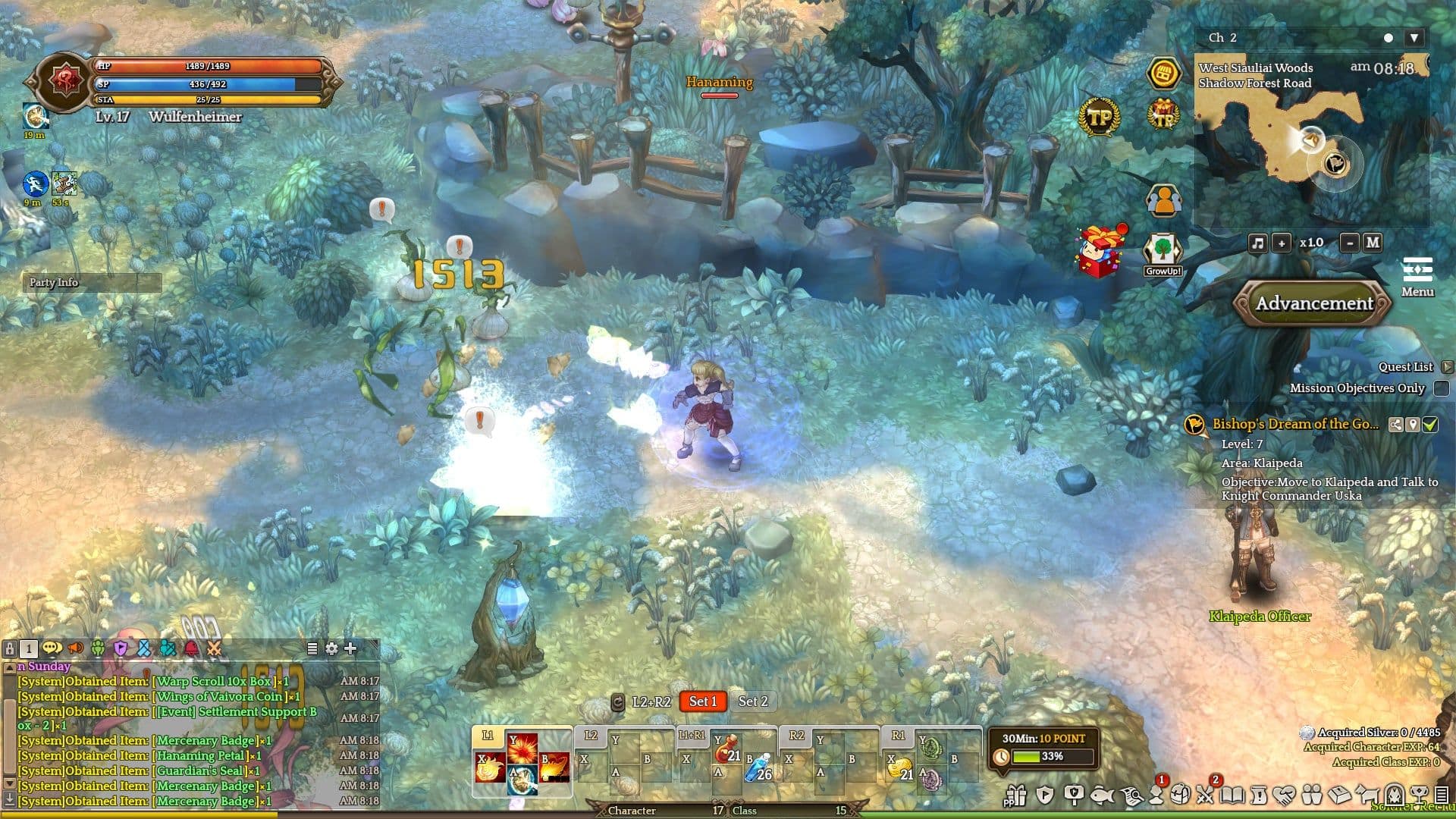
An atmospheric isometric MMORPG crafted by Ragnarok Online visionary Hakkyu Kim, steeped in Lithuanian mythology and rendered in a distinctive fairytale watercolor art style. Set in a fragmented realm...
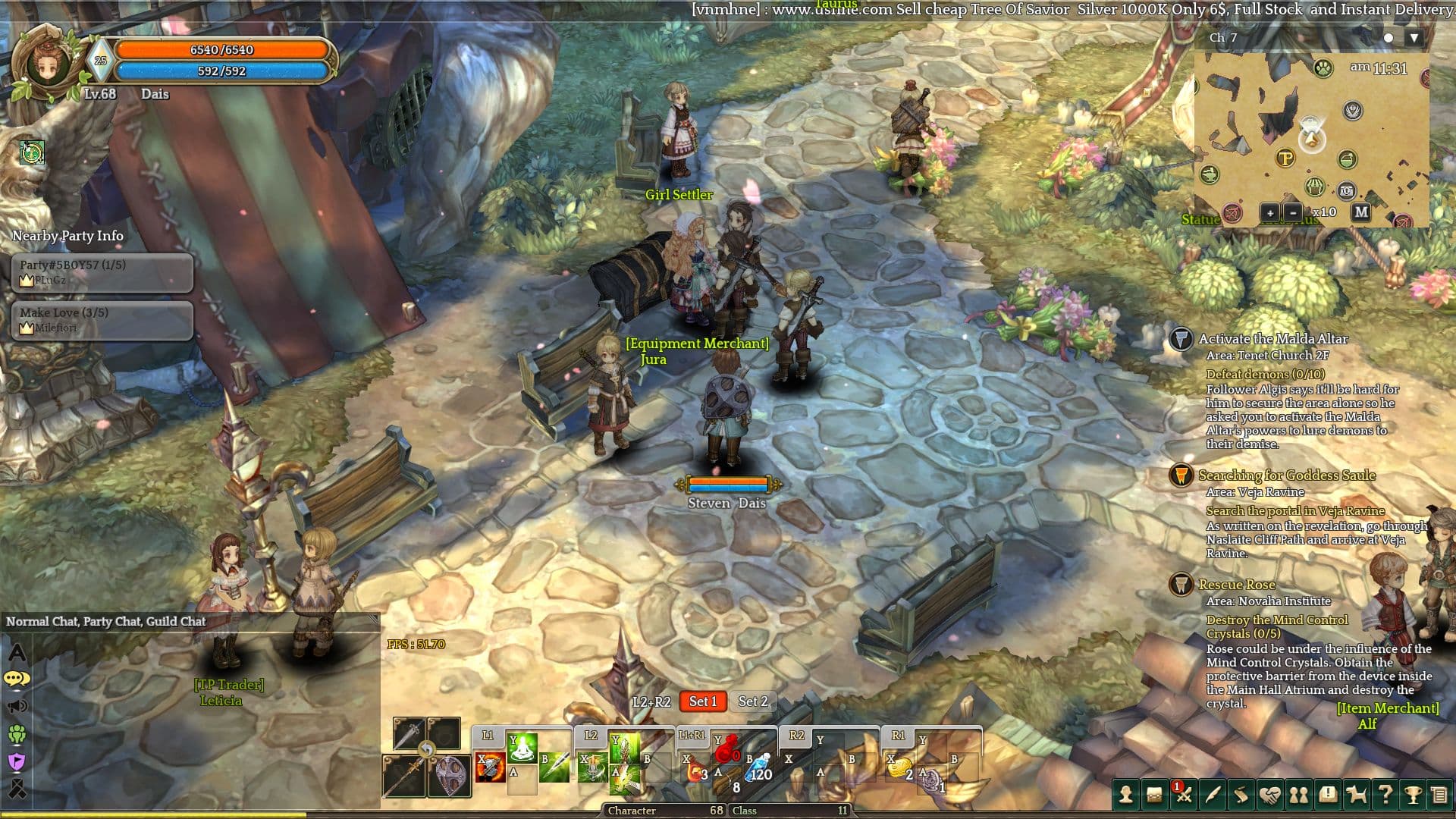
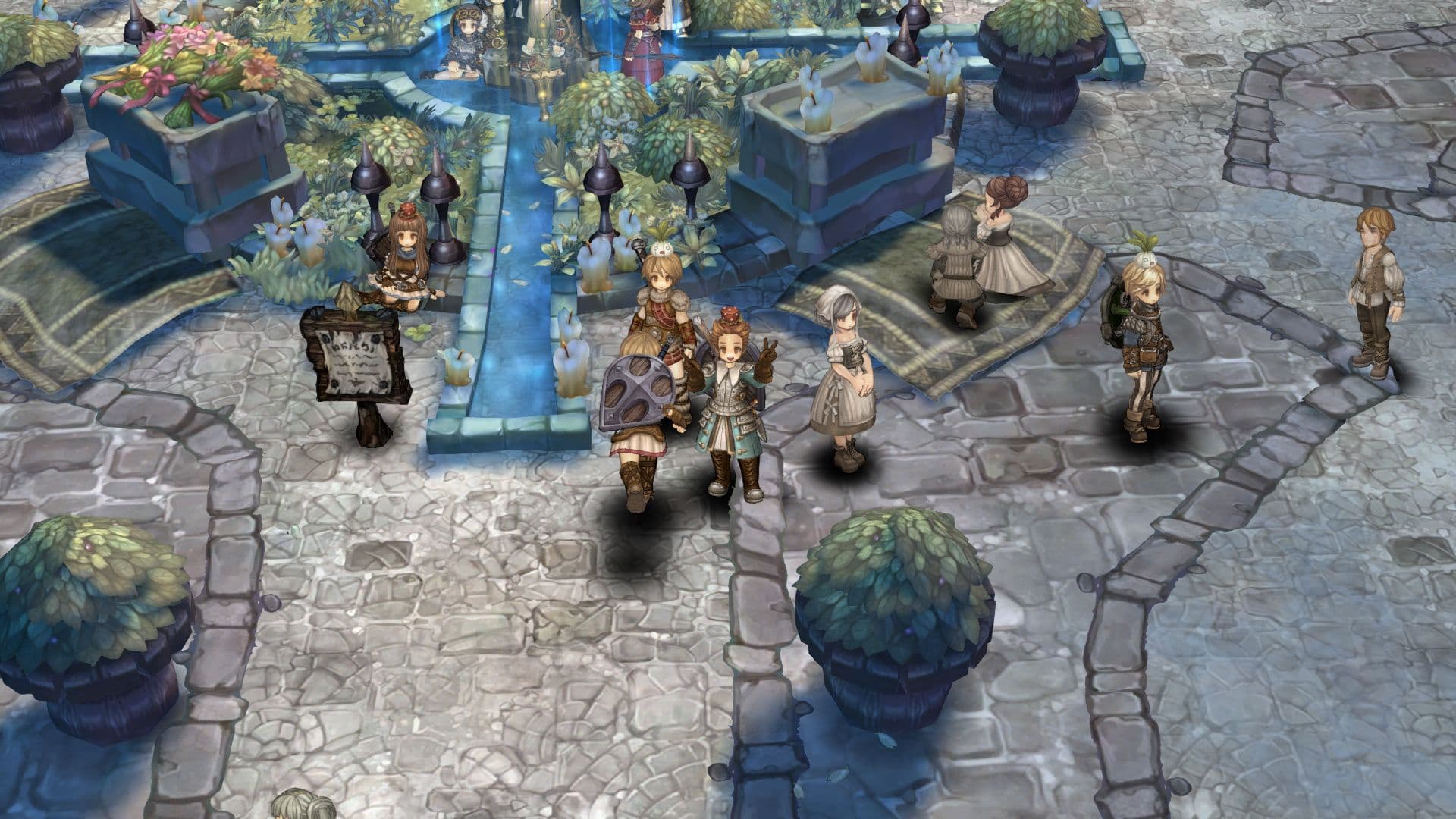
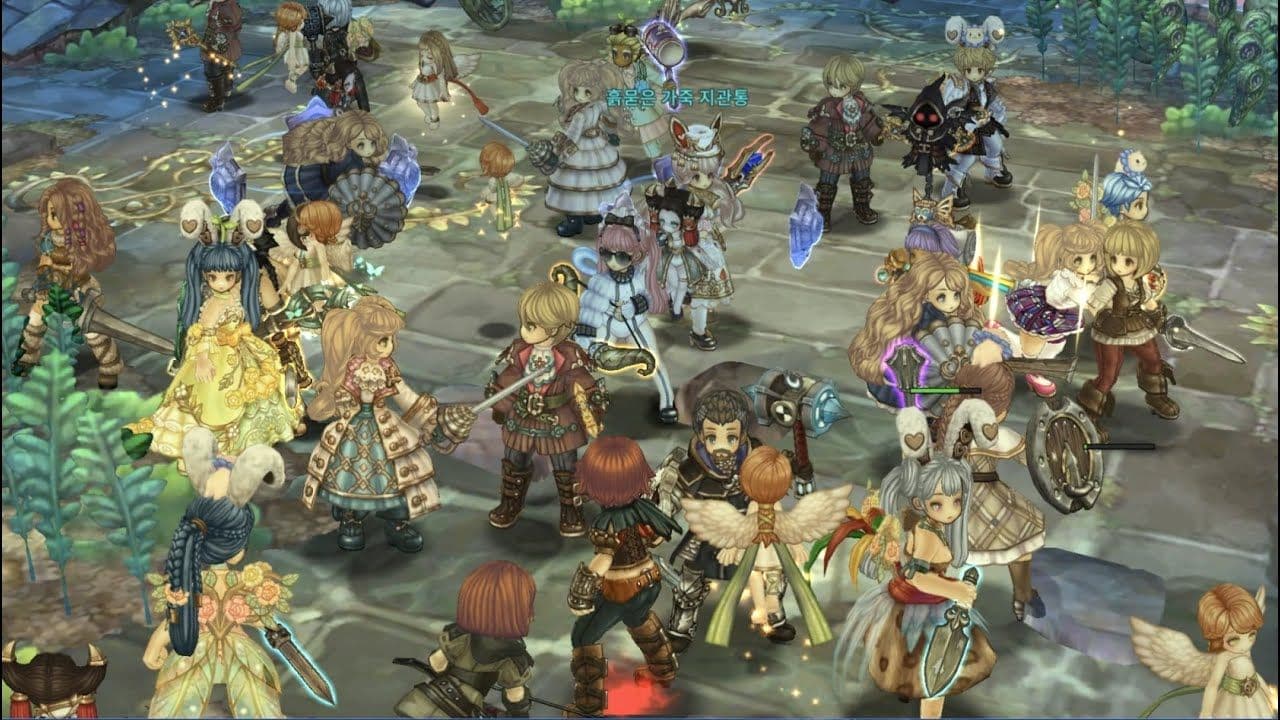
Tree of Savior is a South Korean isometric MMORPG developed by IMC Games under the visionary direction of Hakkyu Kim — the revered creator of the genre-defining Ragnarok Online. Launched globally on Steam in spring 2016, the game immediately distinguished itself amidst a crowded market through its enchanting "living fairytale book" art direction crafted by visual director MAGGI, an evocative symphonic-fusion soundtrack by the legendary collective SoundTeMP, and an unprecedented multi-branching class architecture boasting dozens of distinct specializations. Over a decade into its live service, the project continues to thrive, recently pushing its level progression ceiling to Level 560 alongside the high-stakes narrative campaign of Episode 18.
At the beating heart of the game's universe lies a cultural wellspring rarely tapped within Asian multiplayer role-playing titles: Baltic and ancient Lithuanian mythology, seamlessly woven into the tapestry of classic medieval dark fantasy. You will encounter no generic high-fantasy elves, subterranean dwarf clans, or boilerplate green-skinned orcs here. Instead, a serene kingdom once nurtured under the watchful eyes of a benevolent pantheon was violently shattered by an apocalyptic cataclysm etched into imperial chronicles as Medzio Diena — the Day of the Tree.
In the fateful year of 1091, a colossal Divine Tree, serving as the terrestrial axis of the world's spiritual mana, erupted violently from the bowels of the earth, swelling to cyclopean proportions. Its titanic, thorn-choked roots pulverized the royal capital, fractured ancient paved highways into jagged chasms, and swallowed cultivated fertile plains whole into suffocating primeval thickets. Simultaneously, the guardian goddesses vanished without a trace, leaving nature to warp and turn feral: innocent meadow flora and forest sprouts mutated into ferocious, predatory terrors. Seizing upon the existential vacuum, demonic legions led by Giltine, the Mistress of Death, launched a merciless crusade to eradicate the remnants of mortal civilization, seeking to siphon the planet's life-force and awaken an primordial elder chaos god.
Humanity's survivors barricaded themselves behind the fortified masonry of the few enduring settlements. The maritime haven of Klaipeda transformed into the primary sanctuary for displaced refugees, where wooden docks, cobbled plazas, and temporary tent encampments shelter the fragile hope of national restoration. To the south lies Orsha, a stern military stronghold jealously guarding the martial secrets of the royal aristocracy, while perched amidst the craggy highlands stands majestic Fedimian — an ancient stone redoubt inhabited by esoteric artisans, arcanists, and relic hunters. The player steps onto this devastated stage as a Revelator — a mortal marked by prophetic visions bestowed in dreams by Laima, the goddess of destiny. To avert total extinction, the Revelator must embark on a continent-spanning pilgrimage: recover the scattered Sacred Revelations, break the demonic chains binding Laima's divine sisters — including Saule the sun goddess, Medeina the mistress of forests, and Austeja the weaver of life — and spearhead humanity's counter-offensive against the abyssal tide.
Your pilgrimage begins devoid of the hollow cinematic bombast typical of contemporary AAA blockbusters. Awakening on a sun-dappled woodland verge just outside Klaipeda or the fortified gates of Orsha, armed with nothing more than a splintered training blade or a humble wooden staff, you take your first tentative strides along overgrown, root-twisted cobblestone trails. The initial assignments dispensed by anxious town guards and harried villagers are refreshingly grounded: cull aggressive bulbous plant-critters known as Kepa, forage medicinal herbs for convalescing soldiers, and escort supply wagons through goblin-infested clearings. Tree of Savior eases newcomers into its rhythmic cadence with pastoral charm, gracefully introducing its responsive isometric perspective and scenic, seamless zone transitions.
Yet this pastoral serenity swiftly yields to staggering geopolitical and metaphysical scale. The main campaign unfolds across an extensive chronicle of episodic chapters, guiding your Revelator across hundreds of hand-painted backdrops: from the gloom-shrouded shafts of the Crystal Mine and the echoing, sacred galleries of the Royal Mausoleum to scorched demonic battlegrounds and ethereal celestial shrines. Character progression traverses an immense vertical chasm spanning Level 1 all the way to the contemporary Level 560 ceiling. While the onboarding journey through the first 400 levels accelerates at a brisk, gratifying clip courtesy of generous quest experience, reward EXP Cards, and automated instanced leveling dungeons, crossing the Level 450–500 threshold fundamentally shifts the game's tempo. What was once an idyllic narrative tour transforms into an intricate, demanding endgame routine where micro-optimizations, skill synergies, and elite gear acquisition dictate survival.
The daily endgame loop revolves around a tightly synchronized cadence of solo rituals and cooperative milestones. A typical session kicks off on the cobblestone avenues of Klaipeda, where players purchase long-lasting stat enhancements from street vendor buff shops set up by Pardoner players. Freshly empowered, Revelators dive into multi-tier Challenge Mode instances to harvest millions in raw silver and primordial crafting reagents, descend into the chaotic rifts of Division Singularity, and rally guild comrades for high-tier Goddess Raids. Crucially, progression never truly stalls: even when hitting a temporary level milestone, account growth continues uninterrupted through accumulated Attribute points, skill Art unlocks, specialized socketed runes, and account-wide stat bonuses earned through the meta-progression of your personal Lodge.
The crown jewel and enduring signature of Tree of Savior has always been its staggering depth of character customization. During its initial 2016 launch, the game's progression was chained to a convoluted vertical "Circle" rank framework, which notoriously bred rigid meta lock-ins and left dozens of flavorful classes completely unviable in high-tier content. That all shifted dramatically with the historic rollout of the Re:Build overhaul — a foundational structural reform that dismantled the obsolete hierarchical ladder in favor of an elegant, modular horizontal framework.
Upon character creation, players pledge allegiance to one of five core archetypes: the steadfast Swordsman, the esoteric Wizard, the sharp-eyed Archer, the devoted Cleric, and the rogueish Scout — an independent branch dedicated to duelists wielding off-hand daggers, dual-wielding pistol gunslingers, and elusive stealth saboteurs. Each primary archetype serves as the sturdy trunk of a towering tree, onto which players graft up to three distinct advanced specializations chosen freely within that branch. With more than eighty fully realized specialized classes available across the roster, the system unlocks mathematical space for hundreds of synergized, viable archetypes.
Yearn to forge an indomitable frontline executioner cleaving ranks with a massive two-handed Zweihänder? Anchor your Swordsman with the parry-heavy Highlander, layer on the frenzy mechanics of the Barbarian, and cap it off with the whirling, relentless slaughter of the Doppelsoeldner. Prefer mastering temporal manipulation and apocalyptic celestial elements? As a Wizard, synchronize the crowd-controlling freeze spells of the Cryomancer, the haste and cooldown manipulation of the Chronomancer, and the crackling lightning seals of the Taoist. Adventurers seeking unorthodox hybrids can reinvent the holy Cleric as a bruising martial Monk, pulverizing demon skulls with blistering fist flurries while anchored under the defensive auras of intricately carved wooden idols from a master Dievdirbys. Crucially, the system respects player agency: specializations are never carved in stone. Thanks to the in-game Class Change Points system, you can hot-swap advanced classes directly within capital hubs without being forced to discard hundreds of hours of progress on a new alt whenever balance patches drop.
Layered directly atop this class matrix are the deep Attributes and Arts enhancement systems. These mechanics extend far beyond mundane numerical percentage buffs; they operate as transformative behavioral mutators. A single Art can convert the linear barrier of an Ice Wall into an explosive ring of piercing frost shrapnel, endow a restorative healing circle with the property to sear demonic fiends with radiant holy damage, or instantly reset combat dash cooldowns upon landing a lethal critical strike. I vividly recall the satisfaction of fine-tuning my battle Cleric: replacing a passive frontline stance with an explosive consecration Art instantly shifted my routine from sluggish, claustrophobic hallway slogs into an electrifying vortex of mobility, incinerating sprawling demon packs across glowing sacred glyphs.
Combat kinetics in Tree of Savior operate as an exhilarating, responsive hybrid. The control schema is thoughtfully tailored across three distinct input configurations: a nostalgic keyboard-only layout (where directional arrows dictate traversal while keys Z and X execute primary strikes and jumps), a modern mouse-and-keyboard scheme, and native gamepad support complete with intuitive radial skill palettes. The vast majority of physical cleaves and arcane spells utilize directional, non-target vector physics: Revelators must actively aim conical hitboxes into dense enemy clusters, execute precise animation timing, and dash clear of telegraphed crimson hazard zones projected by hostile monstrosities. Simultaneously, single-target projectiles and basic attack flurries utilize a responsive soft-target snapping system to ensure seamless engagement flow.
The equipment progression pipeline has undergone a profound structural evolution, decisively purging the punitive Korean MMO tropes of yesteryear where a single unlucky hammer blow at a blacksmith's anvil would permanently shatter a player's hard-earned legendary armaments. In the modern game ecosystem, the pinnacle of martial empowerment is embodied by Goddess Equipment — comprehensive armor sets and weapons forged in honor of deities like Vasilisa and subsequent seasonal tiers.
Forging and ascending these divine armaments is orchestrated through a transparent, centralized gear management interface accessed via the F2 menu. Enhancements and tier evolutions consume sacred currency such as Goddess Tokens alongside specialized alchemical catalysts, completely eradicating the fear of equipment destruction. The baseline chassis of your armor and weaponry is then brought to life through the multifaceted Ichor System:
In stark contrast to modern theme-park titles where crafting has degraded into sterile, solitary clicking through static menus at an NPC anvil, the economic infrastructure of Tree of Savior breathes with authentic social camaraderie. The developers engineered a captivating ecosystem anchored directly to the phenomenon of specialized service classes, embedding player professions straight into the civic fabric of major urban hubs.
Strolling through the bustling central plaza of Klaipeda, you will immediately encounter dozens of colorful personal vendor stalls pitched by players operating in automated offline merchant mode. Devout disciples of the Pardoner class establish sacred scroll dispensaries, allowing passing adventurers to purchase hours-long holy buffs (such as Blessing and Sacrament) for a modest fee of in-game silver, dramatically amplifying their combat output. Martial support specialists from the Squire class set up portable forges to temporarily hone weaponry beyond standard threshold limits and pitch cozy campfires with culinary banquet tables that grant long-lasting maximum health and recovery boosts to entire party rosters. Meanwhile, learned Alchemists erect astral workshops to awaken the dormant latent attributes of rare equipment through otherworldly micro-trials, roast monster gems to purge their negative stat penalties, and brew proprietary healing elixirs vastly superior to standard apothecary wares.
The centralized Auction House operates as the kingdom's financial circulatory system, circulating trillions of silver daily across a lively player-driven marketplace. The listings hum with high-value trade: esoteric crafting blueprints, luminous Monster Gems (which permanently bestow a precious +1 level bonus to specific class abilities), divine forging catalysts, and highly sought-after cosmetic scrolls. For adventurers seeking a tranquil respite from the adrenaline-fueled dungeon grind, a contemplative fishing system awaits along the tranquil riverbanks of Klaipeda and wild riparian waterways. Casting a line into the rippling current yields exotic aquatic catches for cooking recipes, alongside the occasional snagged treasure chest brimming with rare curios, seasonal tokens, and antique collectibles.
High-tier cooperative PvE in Tree of Savior is designed to rigorously test team communication, mechanical positioning, and encyclopedic boss telegraph knowledge. The absolute centerpiece of the endgame experience belongs to the Goddess Raids. Encounters against catastrophic deities like the demon queen Giltine and the crystal empress Vasilisa demand ruthless tactical discipline: players must coordinate damage-splitting meteor soak circles, evade instant-kill directional scythes, shatter impenetrable immunity barriers during tight DPS checks, and synchronize debuff purges. To ensure this spectacular content does not become the exclusive playground of hyper-hardcore guilds, IMC Games implemented a three-tier accessibility framework: a streamlined Solo mode for personal catalyst farming, automated matchmaking (Auto Match) for casual public squads, and an uncompromising Hard Mode where a single missed telegraph triggers an immediate party wipe.
To measure sustained burst damage and group survival against overwhelming numerical odds, Revelators venture into Challenge Mode and the harrowing dimensions of Division Singularity. These encounters lock parties within constricted arenas assaulted by relentless waves of elite monstrosities imbued with random defensive affixes and enrage timers. With every survived wave, the accumulated silver bounty and catalyst drop rates multiply exponentially — though wiping forfeits the accumulated jackpot. Solo purists test their mettle in Remnants of Bernice, an infinite time-attack trial tower whose speed-clearing leaderboards immortalize the finest players of each class archetype on the server's public monuments. An additional tactical highlight is the encounter against the blazing demonic spirit Tel Harsha, where players manually calibrate encounter difficulty prior to battle by toggling hazardous gameplay curses in exchange for vastly superior loot tables.
The competitive PvP ecosystem converges around grand guild rivalries. Every Sunday, servers erupt into total warfare during Guild Territory Wars (GTW) — territorial sieges waged across strategic regional choke points and sacred monuments. The most formidable alliances clash in pitched battles to seize control of lucrative urban hubs. Triumph in GTW secures regional hegemony, prestigious bragging rights, and a substantial dividend from server-wide Auction House tax revenues to fund guild fortresses. Furthermore, guild rivalries ignite in the cavernous lair of the ancient world dragon Boruta. In this open competitive field raid, rival alliances must simultaneously dodge the behemoth’s incinerating breath weapons while fiercely fighting off enemy squads to dominate the damage leaderboards and claim invaluable Boruta Seals.
In stark contrast to the sterile character select dropdowns ubiquitous in contemporary multiplayer titles, Tree of Savior constructs a remarkably charming meta-progression ecosystem. Logging into the game transports you not to an impersonal lobby, but into the welcoming ambiance of your personal Lodge. This rustic, atmospheric virtual parlor acts as a shared living room where every hero you have created sits side by side on wooden benches, lounges across woven carpets, and interacts with their loyal beasts. Every leveled adventurer contributes directly to your shared Team Level, which showers every character on your account with permanent passive multipliers to combat experience gains, baseline movement speed, and core attributes.
Upon achieving Team Level 10, Revelators unlock the doors to dedicated private estates through the Personal Housing feature. Within these private chambers, interior decorators can indulge their architectural passions: purchasing hardwood floorings, vintage tapestries, carved book alcoves, stone hearths, and historical oil paintings from the town's resident Kupole spirit assistants. Arranging furniture does more than merely provide aesthetic delight; curated layouts generate Cozy Points that unlock valuable auxiliary utilities and temporary restorative boons for your entire household roster.
Crucially intertwined with everyday traversal are your companions. Quadrupedal beasts — from feral canine Velhiders and tusked armored Hoglans to whimsical riding penguins and clockwork drakes — share every hardship on the trail. These creatures demand genuine domestic care: sprinting across rugged zones and soaking blows depletes their Stamina pool. Neglecting to nourish them with fresh rations acquired from the capital's Companion Master renders them exhausted, stripping their combat viability and causing them to outright refuse mounting. Far from superficial vanity pets, companions possess distinct defensive stats enhanced via silver investments, wear dedicated animal armors, and serve as the essential tactical backbone for mounted cavalry classes such as the Cataphract, the rapier-wielding Hackapell, and the gunslinging Schwarzer Reiter, all of whom unleash their most devastating combat maneuvers exclusively from the saddle.
Even a decade beyond its initial unveiling, Tree of Savior delivers a visually arrestive aesthetic tour de force. Art director MAGGI accomplished something genuinely miraculous by harmonizing a 2.5D isometric perspective with exquisitely detailed, hand-painted environmental backdrops. Stepping across its landscapes feels remarkably akin to traversing the illuminated parchment of an ancient medieval fairy tale: moss-carpeted stone ramparts, shafts of honeyed amber light piercing primeval canopy foliage, quaint wooden windmills, and melancholic, expressive character silhouettes cultivate an authentic folkloric mystique entirely divorced from the glossy, hyper-saturated neon plastic typical of modern mobile-first releases.
Yet the true beating heart of the experience is discovered in its legendary soundtrack. The acoustic architecture was composed by an elite constellation of musical maestros spearheaded by the iconic collective SoundTeMP — celebrated for their immortal work on Ragnarok Online — alongside luminaries such as Sevin (S.F.A), Symphonix, Questrosound, and ESTi. The dynamic acoustic duality is breathtaking: resting in the port town of Klaipeda envelopes you in delicate, bittersweet pastoral violin laments and warm acoustic guitar fingerpicking. Yet the instant you cross into a subterranean dungeon or engage an abyssal boss, the score erupts into a frenetic, adrenaline-charged fusion of acid jazz, progressive trance, symphonic metal, and blistering breakbeats. In Tree of Savior, music is never relegated to passive background white noise; it stands as an enduring acoustic masterpiece whose tracks players preserve in personal playlists for decades.
Any rigorous retrospective would be incomplete without an unflinching examination of the software's underlying technological foundation. The game operates on a proprietary in-house engine engineered by IMC Games, tracing its lineage back to the studio’s work on Granado Espada. During its 2016 launch epoch, this engine was notorious for its crippling reliance on single-core CPU throughput and an aging 32-bit DirectX 9 pipeline, which frequently triggered catastrophic frame-rate drops even on enthusiast-grade desktop hardware.
Credit must be extended to the engineering team for their aggressive technical remediation: the client underwent a monumental ground-up overhaul, migrating to a native 64-bit architecture and modern DirectX 11 rendering. This modernization enabled multi-threaded asset streaming, effectively eliminated memory fragmentation crashes, and radically smoothed micro-stuttering during zone traversal. Solo story campaigns and standard instanced dungeons now purr along at a rock-solid 60 to 120 frames per second. However, architectural lineage cannot be entirely rewritten: during high-congestion spectacles — specifically 50-player Guild Territory Wars and chaotic open-field Boruta clashes where hundreds of competing skill animations ignite simultaneously — performance metrics still buckle, necessitating the tactical toggling of client settings to hide third-party visual effects.
The game operates under an authentic Free-to-Play model. The entirety of the sprawling narrative campaign spanning Episode 1 through Episode 18, every geographical region, instanced dungeon, and class archetype is accessible completely free of charge, unburdened by arbitrary stamina or artificial energy paywalls. The internal cash shop functions via premium currency known as TP (TOS Points).
The operational nucleus of the game's monetization is the Token — a soft monthly VIP subscription pass. Rather than dispensing raw, unearned combat supremacy, the Token provides a comprehensive suite of convenience amenities: a permanent +3 boost to movement speed, expanded auction listing slots combined with significantly reduced marketplace transaction taxes, instant attribute learning without wait timers, and additional daily instance entries. The crowning virtue of this economic model is that Tokens are fully tradable on the player-driven Auction House. A diligent free-to-play Revelator can comfortably generate the required silver reserves within a few evenings of running Challenge Mode and purchase an active Token directly from fellow adventurers without ever spending real currency.
Pay-to-fast mechanisms primarily manifest through premium gacha vaults — notably Leticia’s Secret Cube and seasonal Goddess chests. These contain high-grade enhancement catalysts, transmutation reagents, and upgrade vouchers that allow affluent players to accelerate their gear progression without enduring the daily farming grind. However, the presence of guaranteed pity thresholds alongside the reality that virtually all pinnacle gear can be forged purely through in-game play smoothly bridges the competitive divide for players willing to invest dedicated playtime.
Tree of Savior leaves the lingering impression of a priceless antique tapestry into which a master craftsman has painstakingly fitted an intricate, precision clockwork mechanism. It stands as an exceedingly rare survivor from the golden era of Korean isometric role-playing games — a title that confronted its turbulent launch woes, radically reinvented its own archaic systems through the historic Re:Build reform, and fiercely guarded its unique artistic soul.
Here you will find none of the cynical auto-play toggles or sterile procedural generation that infect modern multiplayer experiences. Every stride through the autumnal pine forests of Orsha, every evening devoted to calculating attribute synergies by the glowing hearth of your private estate, and every spontaneous encounter around a Squire’s crackling campsite in Klaipeda to the bittersweet acoustic strains of SoundTeMP evoke an incomparable sense of warm, nostalgic wonder. For players who yearn for an era when character progression was an intellectual playground and virtual worlds possessed authentic, handcrafted soul, unraveling the mysteries of the Divine Tree remains one of the most rewarding adventures in modern MMO gaming.