 F2P · Live
Lineage 2 Essence
Lineage 2 Essence is NCSoft's free-to-play take on the classic Korean MMORPG Lineage II, built around faster…
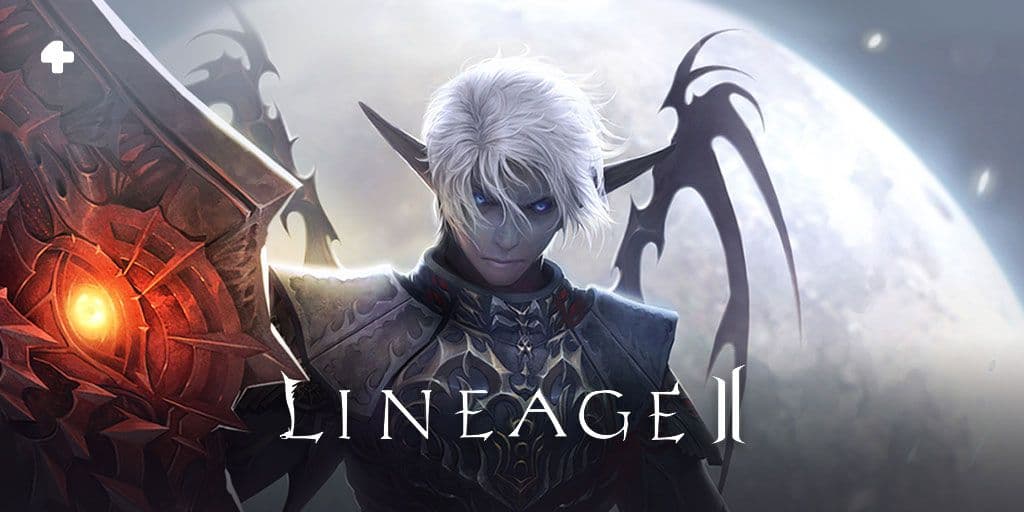
Aden's castles never stay in the same hands for long, and Lineage II has built an entire twenty-three-year game around the fight to take and hold them. NCSoft's original MMORPG runs on classic tab-tar...
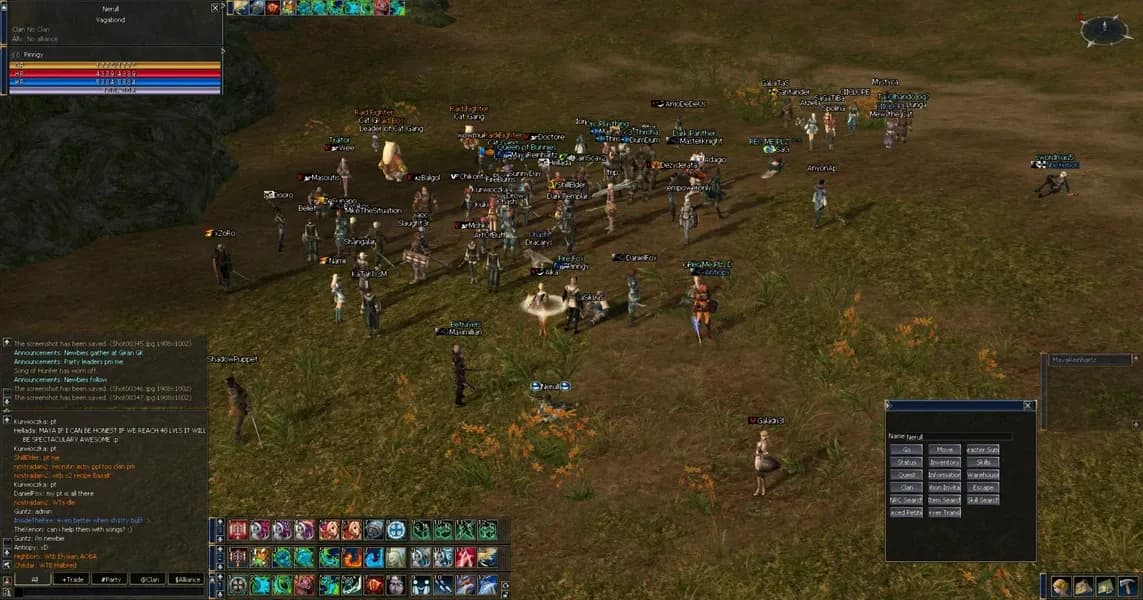
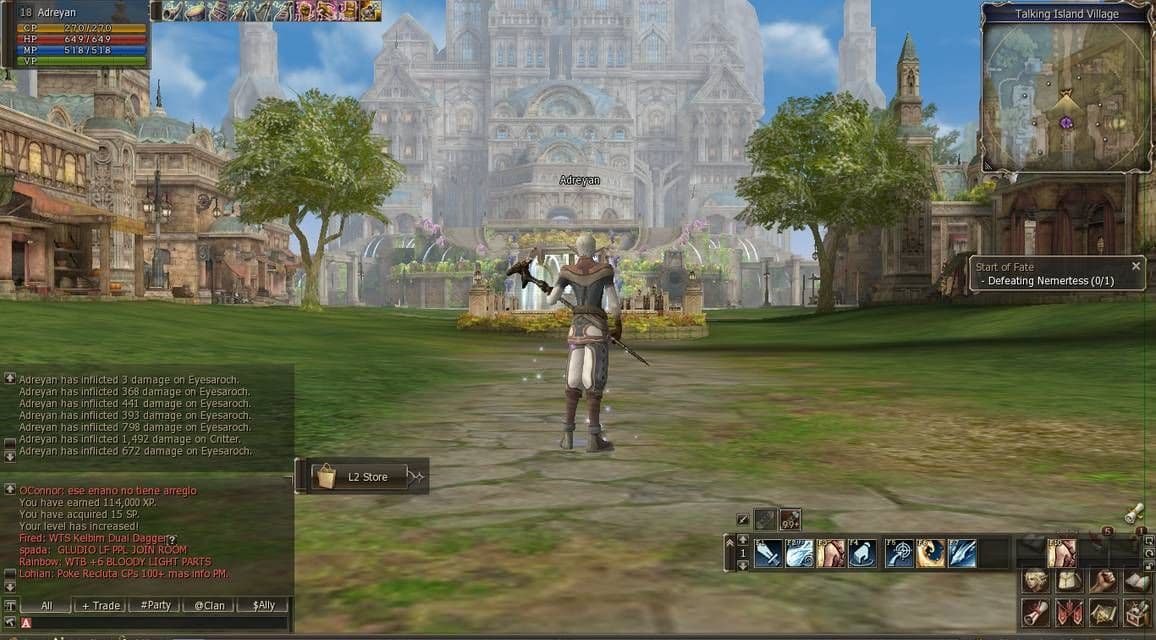
Lineage II is a South Korean MMORPG developed by NCSoft, first released in Korea on October 1, 2003 as a prequel to the original Lineage, set 150 years earlier on the war-scarred continents of Aden and Gracia. Over two decades the game split into several parallel official versions — Classic, which restarts old chronicles at a slower pace, and Essence, built around simplified auto-combat — but this review covers Main, the original, continuously updated service where castle sieges and clan wars have never stopped since 2003. NCSoft's Western arm, NCWest, still runs official Chronos (NA) and Naia (EU) servers alongside regional publishers elsewhere in the world.
Quick take: Lineage II is worth playing if you want a genuinely old-school MMORPG built around territorial war between organized clans, not solo content or a story. Twenty-three years in, the siege-and-karma formula still works better than almost anything built to replace it, but the cash shop meaningfully speeds up the climb to the top of that fight.
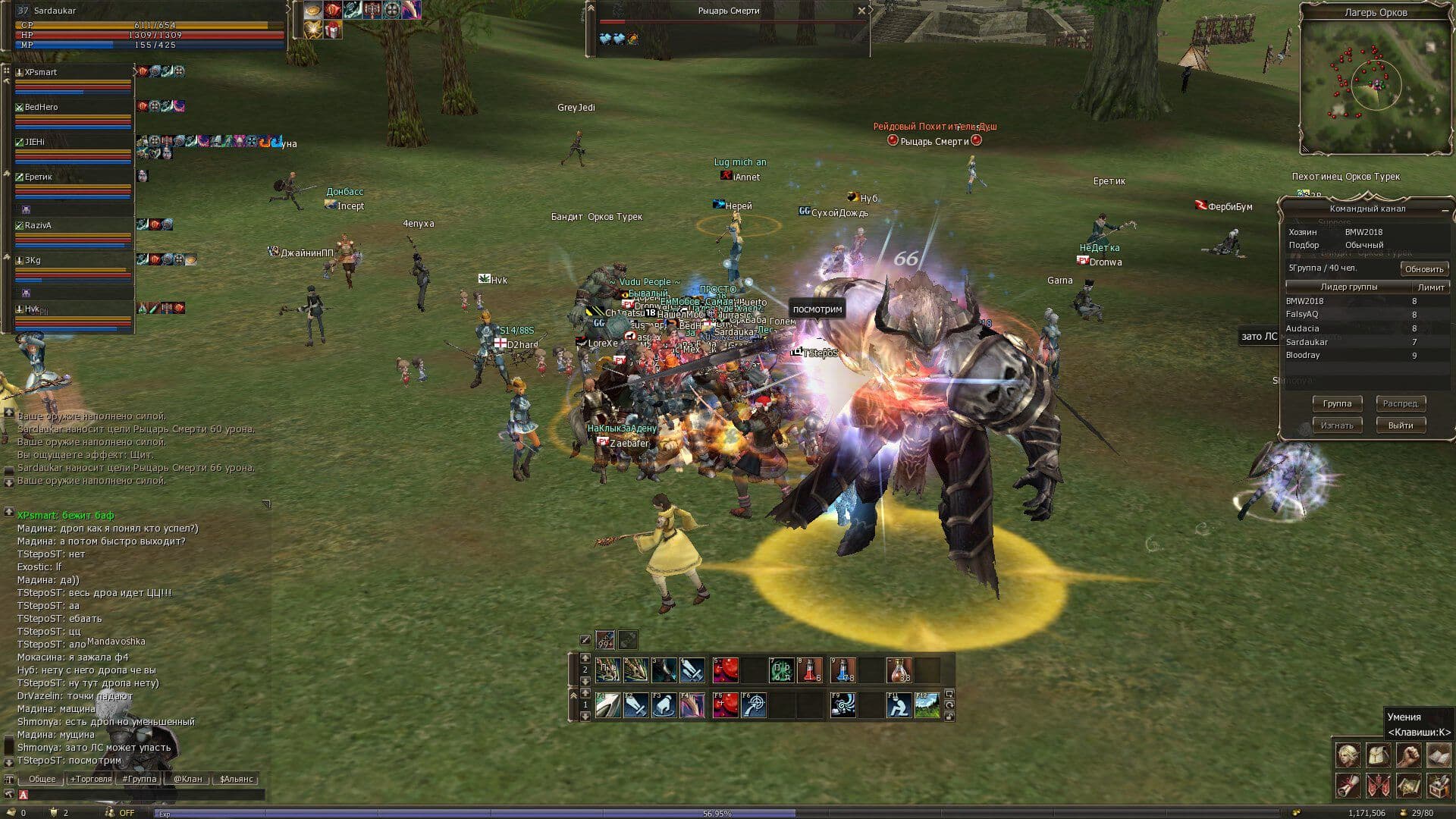
Everything in Lineage II points toward one activity: taking a castle away from whoever currently holds it. Any clan of level four or higher can register to attack, building siege weapons and hiring dwarven Warsmiths to summon mechanical golems, while the defending clan lines its walls with archers and mages and stations melee fighters at the bridge — the only approach to the gate that isn't a straight drop. Once the gate falls, the fight collapses into a narrow chokepoint where formation matters more than individual skill. It's chaotic, it's laggy on a crowded server, and it's the reason people still log in.
Below castle sieges in the territorial hierarchy sit fortresses — smaller holdings that clans not yet strong enough to challenge for a castle can still contest, with lighter costs and correspondingly smaller rewards: stat buffs for the holding clan, access to specific NPCs, and temporary control of the surrounding zone. It works as a proving ground, a way to practice siege logistics on a smaller scale before throwing a clan at a full castle assault.
Open-world PvP works without zones or flags: you can attack almost anyone almost anywhere, but killing someone who hasn't attacked you first raises your karma. High-karma characters get a visible marker over their head, become fair game for anyone, and risk dropping gear if they die themselves — a public reputation system built directly into combat, twenty years before "social features" became a marketing term. Above all of it runs the Olympiad, a periodic arena tournament that strips away gear differences and settles matches purely between characters of the same class archetype, crowning temporary "heroes" with cosmetic and gameplay perks for the season. Clans can also declare direct wars on each other outside any territorial content at all — no map restrictions, no time window, just an open-ended standing conflict that both sides can call off whenever they've settled whatever started it.
Character creation starts with a race — Human, Dark Elf, Elf, Orc, Dwarf, or the winged Kamael, added in a later classic-era chronicle — and race determines which classes are available from the start. Progression then runs through four job changes rather than the two or three common elsewhere in the genre: the first, around level 20, narrows a broad archetype into a real specialization; the second, around level 40, locks in the build and unlocks its core skill kit; the third, added with the Interlude chronicle, hands out a bonus tier of passives without any further choice; and the fourth — Awakening, introduced with the Goddess of Destruction chronicle — grants the strongest skills in the game and, notably, opens a basic crafting skill to every class, not only dwarves.
Leveling from scratch to level 105 is free and reasonably generous — the game hands out gear and quests fast enough that new characters rarely feel starved. A new character starts in a temple specific to its race — Humans in Talking Island, Dark Elves in the Shilen Temple, Dwarves in their own mountain village — and the first hour is deliberately concrete: kill a handful of weak monsters near the village, turn in a starting weapon quest, and get pointed toward the first hunting ground a level or two out. Past level 105 the curve steepens sharply, and the difference between a character backed by real time investment and one backed by real money starts to show.
Combat itself is old-school tab-target: select a target with a click or a key, then let range, cooldowns, and resource management decide the fight rather than reflexes. A typical skirmish plays out as a dance around positioning — an archer kites at range under a spirit-boosting shot, a warrior closes the gap with a dash skill, and a mage further back lines up a root spell with a cast delay long enough that a sharp opponent can dodge it by sidestepping behind cover. There's no active blocking or dodge-rolling; the tension comes from targeting, range, and timing rather than a reaction-testing minigame.
A separate subclass system lets a character bank a second profession entirely — a dwarf can keep a mage or archer in reserve, switchable at the right NPC — which is a rare case of the game actively encouraging more than one build per account instead of punishing it.
Equipment climbs through lettered grades, D through S, and each jump isn't a simple stat upgrade — it's a project, gated behind its own quest chain, rare materials, and often a coordinated group farm for a specific drop. On top of the grade sits enchanting: burning scrolls into a finished item for flat stat bonuses, with success chance dropping at each level and failure past a certain threshold destroying or downgrading the item outright. It's the classic Korean-MMO gear gamble, and Lineage II has run it longer than nearly anyone else in the genre — enchant scrolls have been a currency of their own on the game's markets for over two decades.
Visually, the game shows its age honestly. The Unreal Engine 2/2.5 foundation hasn't changed in twenty years, and while textures, lighting, and several character models have been reworked repeatedly along the way, older zones and base animations still read as noticeably boxier than anything built in the last decade. NCSoft has floated the idea of a full engine migration in interviews without committing to a timeline, so for now the visual patchwork — new content sitting next to areas barely touched since the early 2000s — is simply part of what the game looks like.
Real crafting in Lineage II is still mostly a dwarf's job. Since Awakening opened a basic crafting skill to every class, any character can put together something simple, but the serious gear — and the R-grade soulshots and spiritshots every serious build burns through in combat — still comes from dwarf crafters who've spent real time on the narrow branch. Base materials drop from monsters or come from spoil, a separate skill for cracking open a "loot chest" on a corpse; intermediate materials get refined from those; and finished items get assembled last, each tier gated behind its own recipe in the crafter's book. At the higher grades, the materials for a piece of gear can cost more on the open market than the finished item sells for, which is why most dwarves specialize in a narrow set of recipes that actually turn a profit rather than trying to cover the whole tree.
There's no formal auction house. Instead, every player can plant a private store directly on a city street and sell goods even while logged off, which turns the main cities into a permanent, slightly chaotic flea market of frozen characters with price tags floating over their heads. It's not efficient by 2026 standards, but it's kept the economy running on actual player-to-player trading for twenty-three years, which is more than most modern MMOs with a proper auction house can say.
Yes, to a real but not absolute degree. A Premium account subscription doubles experience, skill points, and drop rates and unlocks the solo and group Kamaloka dungeons, while the L2 Store sells a separate premium currency for gear, consumables, and cosmetics that can be bought without limit. Nothing is strictly locked behind payment — every piece of top gear can theoretically be earned through play — but the speed gap between a funded character and an unfunded one widens fast once leveling ends, and it's precisely at the top of that gap where sieges get decided.
PvE in Lineage II exists mostly to fund PvP. Open-world zones are tiered by level and dotted with raid bosses that whole alliances show up to fight, and instanced group dungeons — the July 2026 Throne update added a new one called Canon's Cathedral, complete with a multi-phase boss fight — give smaller parties something structured to clear on a weekly reset. A separate clan-scale mode called Throne of Heroes lets an entire clan tackle a boss encounter together for resources that feed directly into clan-wide upgrades rather than individual loot.
World bosses are the closest thing the game has to a unifying event: dozens of players from clans that would otherwise never cooperate show up for a shared kill, reward distributed by contribution rather than by whoever tags it first. A recently added field boss, Valuan, fights as a full-scale battle rather than a scripted one-on-one encounter, drawing enough players that rival clans regularly call temporary truces just to get through it. It won't replace a modern raid tier for anyone chasing mechanical complexity, but as a reason for a server to briefly stop fighting itself, it still works.
A clan hall — bought at auction or earned through content — gives a clan a resurrection point, shared storage, and, at higher tiers, its own teleport and buffs for every member, while alliances let several clans combine forces for sieges and territory wars too large for one clan alone. Playing without a clan is technically possible, but a meaningful slice of the game's content — sieges, territory wars, most large-scale raids — is effectively locked out, which isn't a design oversight so much as the entire point of a game built around organized group conflict rather than a solo path.
Pets round out the social layer: wolves, ridable striders, and other companions that level up separately from their owner through feeding and combat experience, functioning as genuine stat-contributing party members for certain builds rather than cosmetic follow-alongs. Movement stays grounded, too — there's no personal flight and no fast travel scattered across every zone in the early game, only mounts and, for whoever currently holds a castle, the privilege of a dragon to fly over their own territory. Distance between towns still means something as a result, including the risk of running into a hostile clan or something simply too strong along the way.
For English-speaking players, NCWest's official Chronos (North America) and Naia (Europe) servers are still live, still receiving the same content updates as the rest of the world — the July 2026 Throne update landed there on schedule — and still free to create an account on. That's the honest good news. The honest caveat is scale: the game's center of gravity has shifted heavily toward its Russian, CIS, and Korean communities over the past decade, and the official English-language servers now run a much smaller population than those regions.
None of that makes Chronos or Naia unplayable — sieges and territory wars still happen, and a smaller population means less competition for open-world spots — but anyone expecting the scale of a thriving MMO should go in with realistic expectations, or look at joining a CIS server through Innova's 4Game client instead, where the population is considerably larger.
Lineage II has outlived nearly every MMORPG that launched around it, and it didn't do that by chasing trends — it did it by refusing to stop being exactly what it was in 2003. That's either the whole appeal or an immediate dealbreaker, and there isn't much middle ground: if territorial warfare between real clans sounds more interesting than a solo campaign, this is still one of the only games in the genre actually built for it. If you're after modern combat or a story worth following, twenty-three years hasn't changed what Lineage II is, and it isn't going to start now.
Yes. Character creation and leveling to a high level cost nothing, though a Premium subscription and the L2 Store cash shop offer real speed and convenience advantages later on.
For players who want organized clan warfare and territorial control rather than solo content, yes — few current MMORPGs still build their entire endgame around it the way Lineage II does.
Yes, through NCWest's official Chronos and Naia servers, both fully in English and receiving the same content updates as the rest of the world, though with a considerably smaller population than the game's CIS or Korean versions.
Some — early leveling and certain dungeons work fine alone — but sieges, territory wars, and most large-scale raids require a clan, and that's by design rather than an oversight.
Main, covered in this review, is the original service with its full modern chronicle and systems intact. Classic restarts on older, slower-paced chronicles for players who want a harder early game, and Essence simplifies combat around auto-hunting for a faster, more casual pace.