 F2P · Live
Lineage 2 Essence
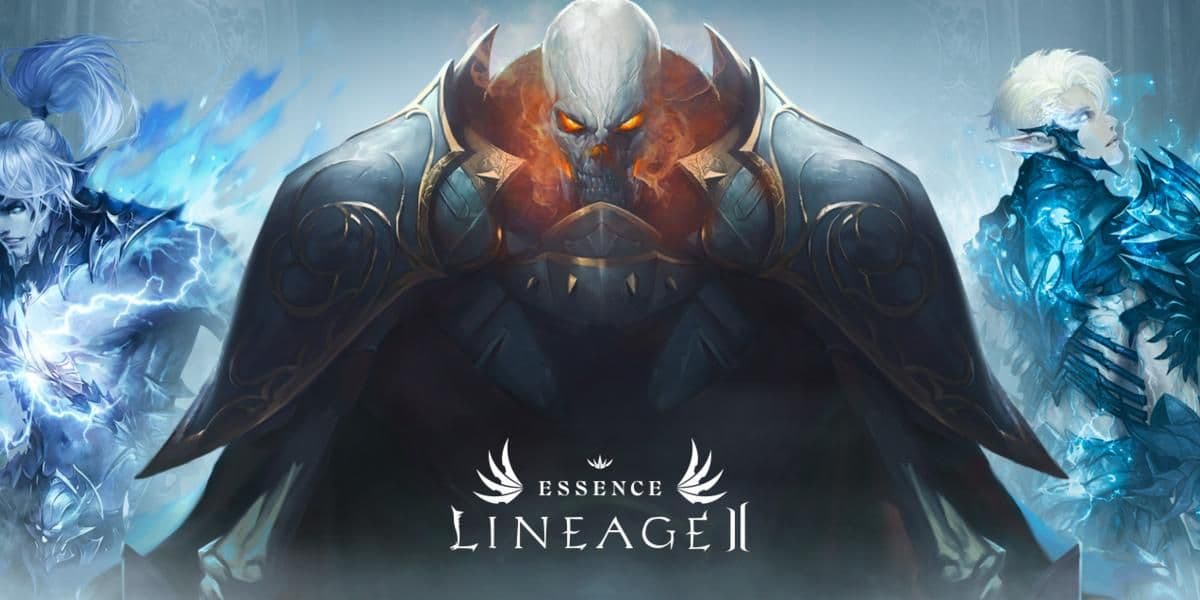
Lineage 2 Essence is NCSoft's free-to-play take on the classic Korean MMORPG Lineage II, built around faster…
Released by XL Games in 2013, ArcheAge built its reputation on sandbox freedom rarely matched since — housing, farming, shipbuilding, and open-ocean piracy running inside one connected world with no d...
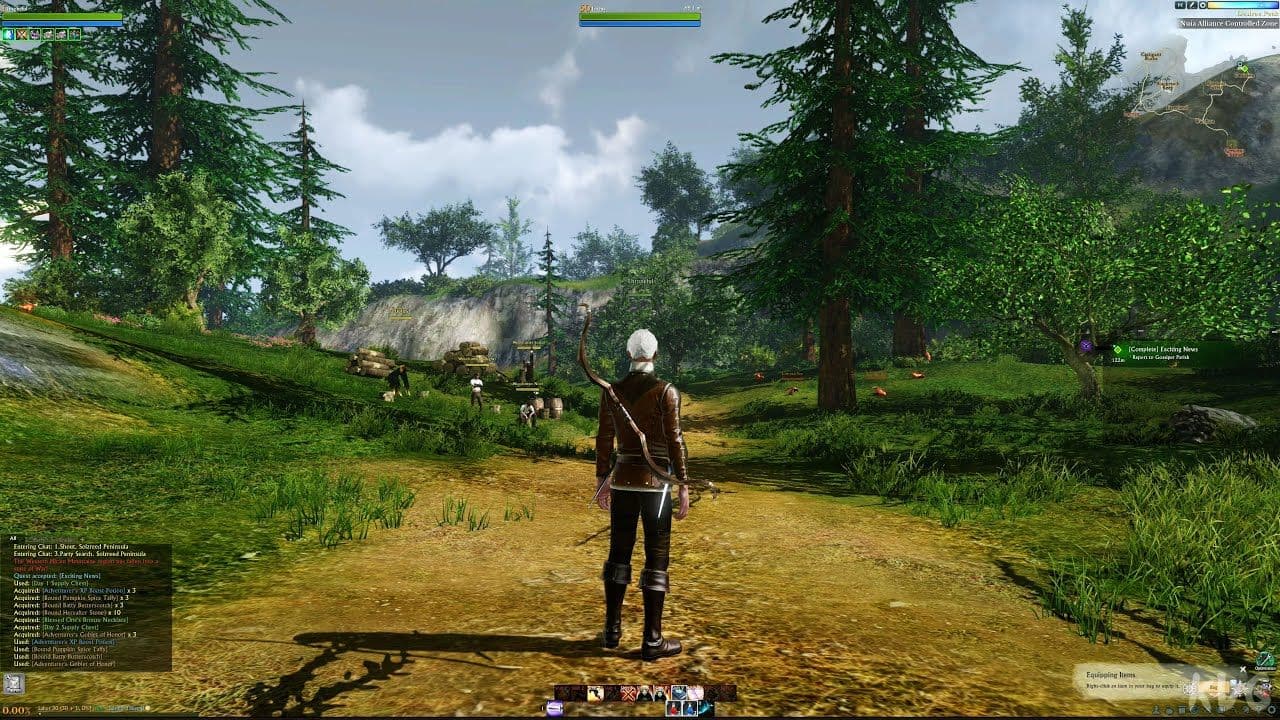
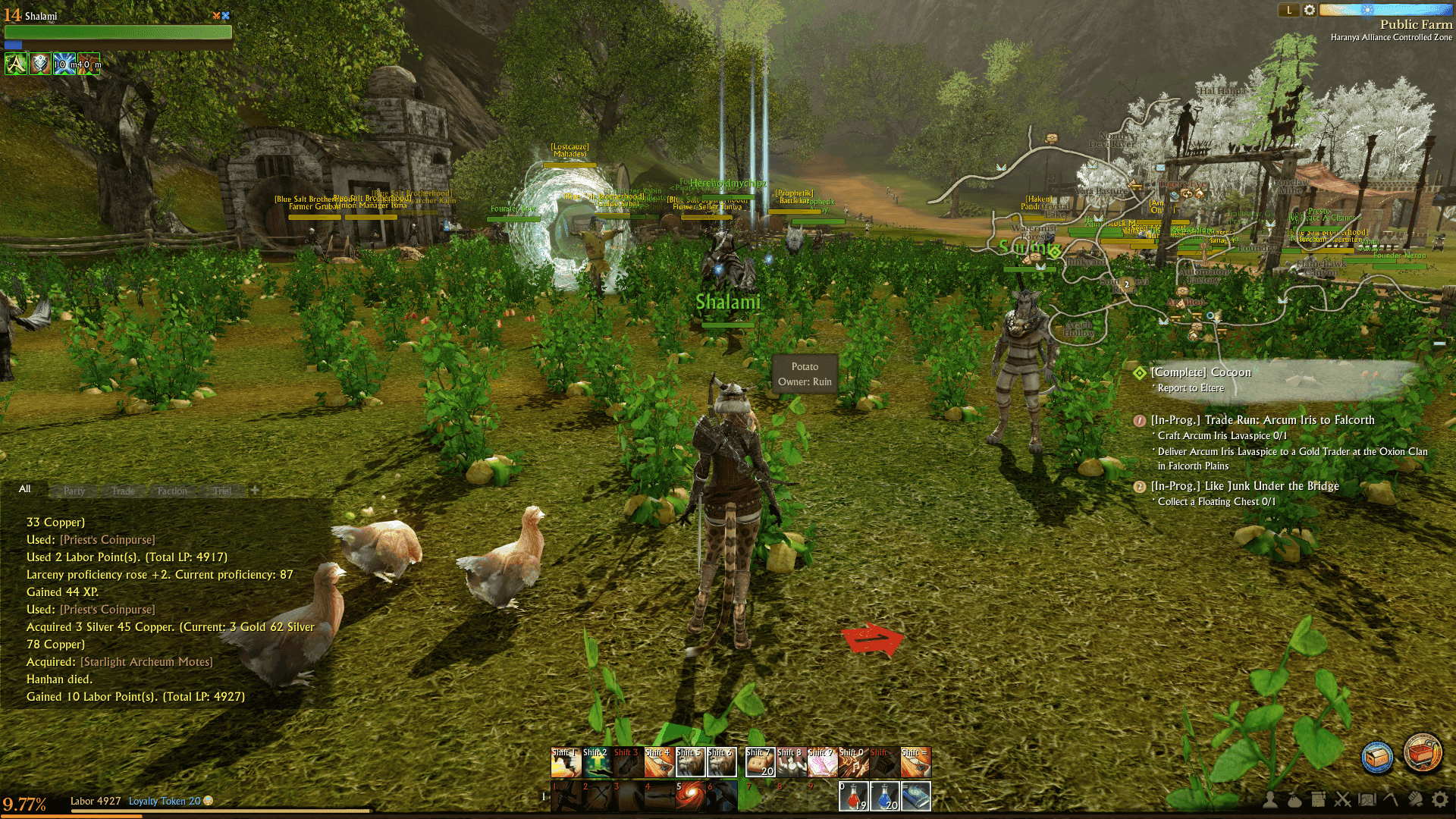
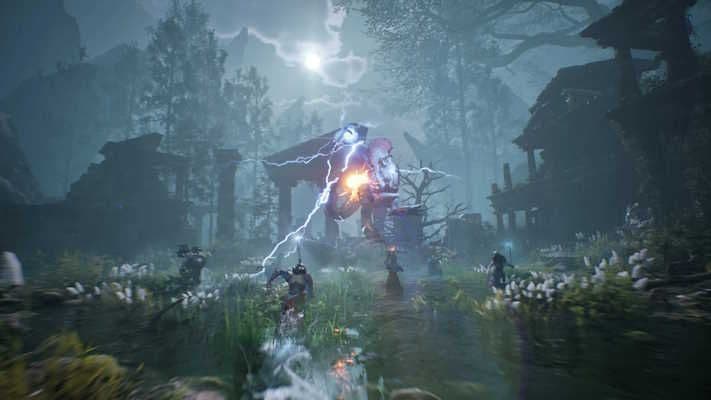
ArcheAge is a sandbox MMORPG developed by South Korea's XL Games and designer Jake Song, best known for his earlier work on Lineage. It launched in Korea in January 2013 and built its reputation on near-total freedom of role — house-building, farming, crafting, and open-ocean piracy all sat inside the same world with no wall between PvE and PvP. By 2026, after the shutdown of its global, Chinese, Japanese, and Korean services, only the Russian-language release keeps ArcheAge running at all.
Quick take: ArcheAge's sandbox systems — housing, naval trade, flag-based PvP — remain some of the deepest the genre has shipped, and the grind and monetization around them haven't gotten meaningfully gentler with age. In 2026 it's also the only version of the game still running anywhere in the world.
Ask a veteran what ArcheAge is actually about at max level, and they'll point past the raid tiers straight to the ocean. Guilds fight over trade routes, castle sieges run with hundreds of simultaneous participants, and full galleon fleets trade cannon fire over cargo that took someone real hours to grow and ship. That's the payoff the rest of the game builds toward, and it explains why so much of ArcheAge's design — labor points, housing, farming — exists to produce something worth fighting a pirate fleet to protect.
Ships aren't cosmetic here. A harpoon skiff chases down targets, a trade galleon hauls cargo with weak defenses, a war galleon carries a full cannon battery, and a pirate frigate — its blueprints assembled piece by piece from sea bosses — caps the tier. Crewing one splits into roles: someone holds the wheel, someone loads the cannons, someone hooks enemy hulls with harpoons, and someone leads the boarding party once the two ships close. Guild-run world bosses complicate the picture further — the Kraken alone needs dozens of coordinated players, and loot goes to whoever actually contributed, not whoever landed the last hit.
Land-side PvP runs on a flag system rather than open free-for-all: peaceful zones under a certain level are safe, contested territories require someone to provoke a fight on purpose, and open ocean plus parts of the mainland stay live at any moment. Guilds that win territory wars set local taxes and build fortifications — a form of GvG most current MMORPGs simply don't run anymore, and a full castle siege can pull in enough simultaneous attackers and defenders that the server's own performance becomes part of the fight, quite literally testing the engine's limits alongside the players'. Players who want PvP without open-world stakes can head to 1v1, 3v3, and 5v5 arenas instead, unremarkable but functional.
ArcheAge's world, Erenor, splits into two continents divided by ocean, wrapped in classic fantasy with a light steampunk edge — magic and steam machinery share the same skyline, and gliders let players jump off cliffs rather than walk down them. The western continent is home to the Nuian, Elves, and Dwarves; the eastern half belongs to the Harihar Empire, the secretive Ferre, and the battle-scarred Warborn. A seventh race, the winged Fae, arrived in August 2025 with its own zone and story arc in the "Chronicle of the Winged" update. Song has described the pitch as recreating the freedom of early Ultima Online — a world players change directly rather than one that changes around a script.
The engine underneath, CryEngine 3, hasn't aged gracefully — some textures show their age, and character animation is stiffer than 2026 players are used to. What still lands: ocean sunsets, storm-lit naval fights, and the sheer density of player-built villages, which newer MMOs with sharper graphics often can't match simply because they don't let anyone build at all. Appearance customization goes deeper than the engine's age would suggest, too — facial structure and body proportions are both adjustable, a level of freedom plenty of newer, flashier MMOs still don't bother offering.
Exploration rewards curiosity below the waterline as much as above it. Coral reefs, sunken wrecks, and underwater ruins sit hidden across both continents, reachable only with the right gear, and gliders let players launch off a cliff edge into open air instead of walking the long way down. None of it is marked with a giant exclamation point on the minimap — finding it is part of the point.
None of this demands a high-end rig, either. The client runs a little over 100GB on disk — the bigger ask is storage, not hardware — and the minimum GPU requirement sits well below what most current releases expect, a small mercy for anyone running the game on a PC that's a few years old.
A fresh character today starts with a mount, a combat pet, and an auto-loot bag, courtesy of Astrum Entertainment's periodic catch-up servers designed to let new players close the gap with veterans instead of chasing them forever. The latest, Mirr, launched on September 4, 2026, with a seven-stage leveling curve and heavy starting bonuses.
What that onboarding doesn't show is the labor point economy running underneath everything. Labor points fuel planting, house construction, and gear crafting — nearly every meaningful action in the game — and they regenerate slowly, faster only while sleeping in a bed a new player usually doesn't own yet. Early quests walk through the basics without much hand-holding beyond that: chop wood, plant a first crop, run a starter delivery between two towns, and the game trusts a new player to notice the labor meter draining the whole time. The result is a loop where progress is gated by patience as much as skill: by community estimates, reaching a competitive endgame level can take several months of daily play.
ArcheAge skips fixed classes for ten skill trees — covering melee combat, elemental magic, crowd control, healing, stealth, and bard-style support, among others — and lets players combine any three freely. The only hard rule: the first tree chosen has to come from the offensive category, the second unlocks at level 5, the third at level 10. That produces 120 possible combinations, and the practical gap between them is real — a tanky defense build paired with crowd control plays nothing like the same defense tree paired with a healing tree instead. Specializations can be reshuffled at any time for an in-game currency cost, without rerolling the character or losing gear progress in the process.
The trinity underneath all that choice is the familiar one — tank, healer, DPS — dressed up with an unusually wide bench of options inside each role, rather than the action-combat hybrids newer MMOs favor. Combat runs on classic tab-target: players lock onto a target rather than aiming freely, though positioning still matters (striking from behind is a mechanical requirement, not a bonus), and resource management — mana, rage, or a specialization-specific pool — shapes every rotation.
Housing is where ArcheAge still has no real peer even thirteen years on. A house isn't an instance — it's a structure on a visible plot, running from eight-by-eight-meter cabins to twenty-eight-by-twenty-eight mansions in regional architectural styles, plus workshop houses with built-in crafting stations and stilt houses with underwater plots attached. There's a catch: housing carries a weekly tax, and missing it means losing months of work within days.
Peaceful professions add up to a genuine side hobby on their own — mining, logging, skinning, herb-gathering, fishing, alchemy, blacksmithing, tailoring, carpentry, armorsmithing, and shipbuilding, each leveled separately and each drawing from the same labor point pool. The best gear in the game is player-made rather than boss loot, and the entire market economy runs on that fact.
The real ArcheAge starts with trade packs — bundles of goods that can't be teleported, only physically hauled from where they're made to where they sell. Cargo goes on a donkey, a tractor, or, for real money, a player-owned ship sailing across open water where actual pirates patrol the route, watching trade lanes the way a fisherman watches a known spot rather than randomly roaming the ocean. Abandon a pack on the ground or fail to collect it in time and it simply disappears — a sunk ship does the same. None of the tension is staged: guilds escort convoys, and pirate fleets ambush that specific route on purpose, not opportunistically.
Gold isn't the only currency that matters here — there's also an auction house on Mirage Island, handling the overwhelming majority of items in the game, with a 10 percent tax on every sale. Prices on popular resources move in something close to real time, the way a real market would, except the commodities are ferrite ore, cured lumber for shipbuilding, and enchant scrolls instead of stock, and a single bad harvest season for a specific crop can swing prices across the whole server within days.
PvE outside the ocean is unremarkable by design: five-player dungeons with boss mechanics, large-group raids, and guild-organized hunts for field bosses, where rival guilds regularly show up to the same spawn point and start a second fight before the first one even begins. The exceptions are sea bosses — sunken ships loaded with treasure and the legendary Kraken, which needs dozens of coordinated players at once and punishes a fleet for showing up under-geared — and story content that exists without pretending to be the reason anyone stays.
Guild systems have had thirteen years to get sharpened, from joint construction projects to siege coordination and territory wars. A lesser-known wrinkle is the family system — a group of two to twelve characters with its own progression and crafting-reputation bonuses, aimed at players who want a tighter circle than a full guild roster but still want shared benefits. Despite the name, it functions closer to a junior guild for a tight circle than a marriage mechanic between characters, though seasonal events like a spring wedding festival lean into similar roleplay energy. Pets, from combat companions to cosmetic mounts like that starting orca, are collected, raised, and fight alongside a build the same way a class ability would; players who hit certain milestones on the newer catch-up servers get a rideable dragon as a reward, not just a profile trophy.
Not in the way it was during the early 2010s, when the cash shop sold land plots outright and a currency that converted real money straight into gold, letting deep pockets skip the labor-point grind entirely — but the current shop still isn't clean. ArcheAge is free to enter, and the main paid pillar is a subscription running around 300 rubles (roughly $3–4) for 30 days or 800 rubles (roughly $9–10) for 90. It speeds up labor point regeneration, unlocks housing rights, and adds an experience bonus: real convenience, not a direct combat edge. There's also a battle pass and a cosmetics shop.
The cash shop, though, still sells enchant crystals and gear-upgrade consumables alongside costumes, and reaching a competitive level for free takes months of grinding against a shorter paid route — the gap the 2019 ArcheAge: Unchained launch promised to close with a one-time purchase and no subscription. That experiment didn't survive; Unchained eventually merged back into the main servers. Bots have also been a persistent, unsolved problem since Trion Worlds first published the game in North America and Europe back in 2014, and no publisher since — Gamigo, Kakao Games, or now Astrum — has managed to stamp them out for good, despite ongoing enforcement waves.
Since spring 2025, players from Europe, the US, and Asia have been showing up on Russian servers — people who lost their region but didn't want to lose the game. Astrum Entertainment built an English interface for exactly that crowd, and general chat now runs Russian, English, and occasionally Turkish side by side. Even China noticed: a classic-ruleset revival called ArcheAge Returns held its first test in June 2026, separate from the Western original entirely.
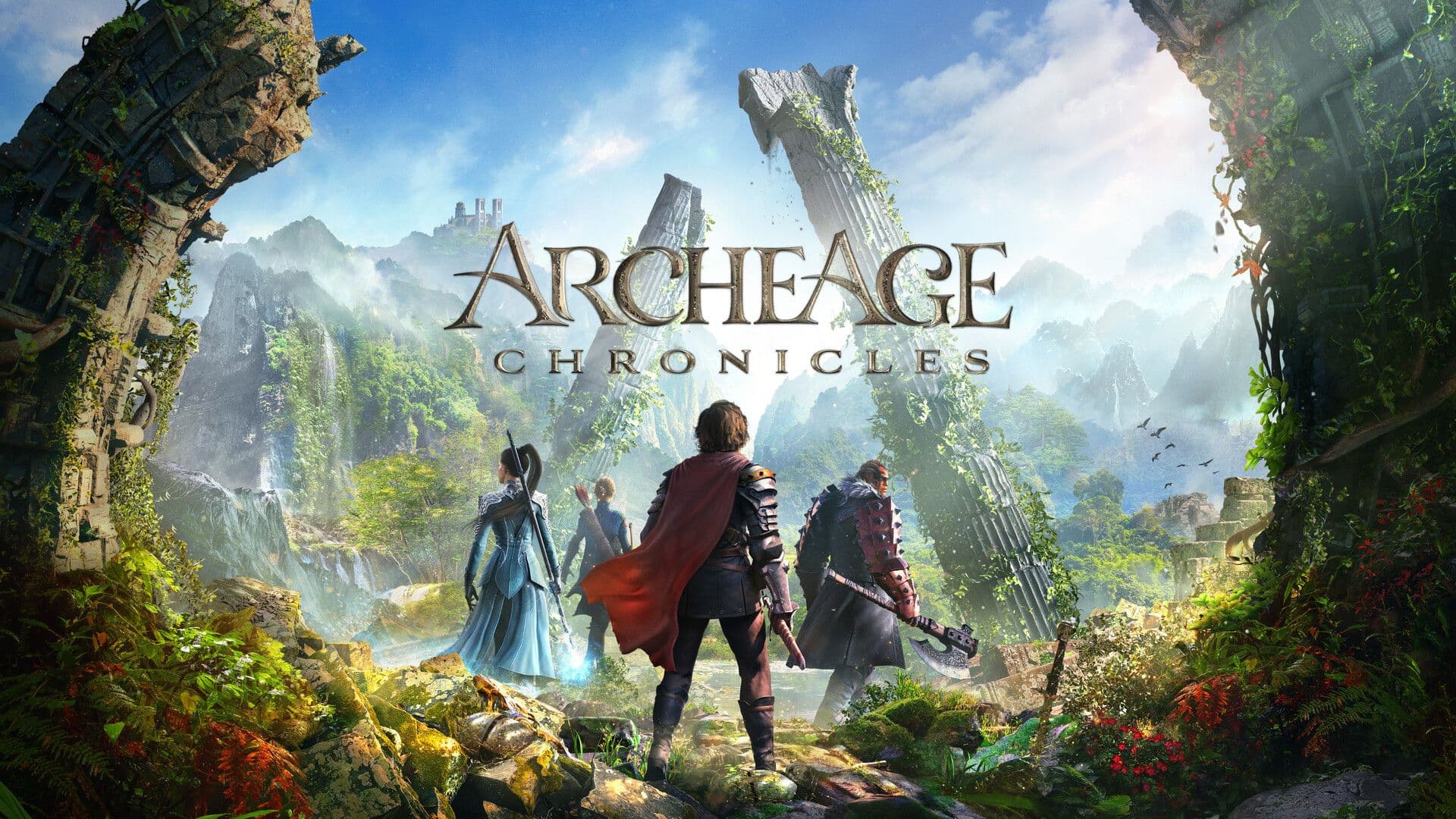
ArcheAge Chronicles, XL Games' Unreal Engine 5 reboot published by Kakao Games, is set to hit early access in Q4 2026 on PC, PlayStation 5, and Xbox Series X|S with a buy-to-play-plus-microtransactions model and no subscription — the version most players waiting on the sidelines are actually waiting for.
ArcheAge didn't get better with age, and its cash shop didn't get any more honest either. It got lonelier, and it kept running anyway — surviving past a decade of shutdown headlines that all predicted otherwise, outlasting three other regional publishers and at least one rebranded relaunch attempt along the way. Call that an achievement if you want. A more accurate word is luck: the building next door burned down first, and this one is still standing mostly because nobody's gotten around to it yet.
Yes — ArcheAge is free to download and play, with an optional subscription for convenience and a cash shop for cosmetics and some gear-upgrade items.
Yes, extensively: flag-based open-world PvP, guild sieges, naval combat, and small-scale arenas all exist inside the same game.
Yes. Since March 2025, the Russian-language client has offered a switchable English interface, originally added for players displaced from the closed Western servers.
If deep sandbox systems and player-driven risk outweigh a subscription-plus-cash-shop model and an aging engine, yes — otherwise, ArcheAge Chronicles is the safer bet to wait for.
Not in any working sense. The old North American/European Steam listing still exists as a store page, but the servers it connected to closed in June 2024 — the only live version now runs through Astrum Entertainment's own launcher, entirely outside Steam.