 F2P · Live
Lineage 2
Aden's castles never stay in the same hands for long, and Lineage II has built an entire twenty-three-year…
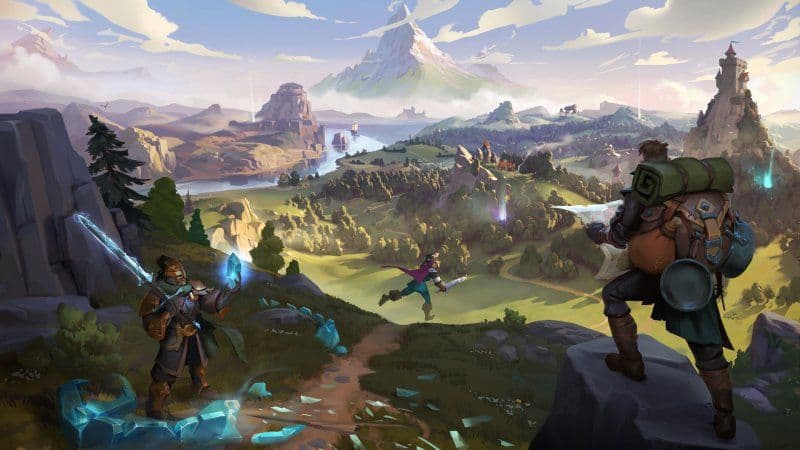
Albion Online runs on "you are what you wear," gear rather than a fixed class defining every build across farming, crafting, and PvP. Sandbox Interactive is having its biggest year yet: a full visual ...
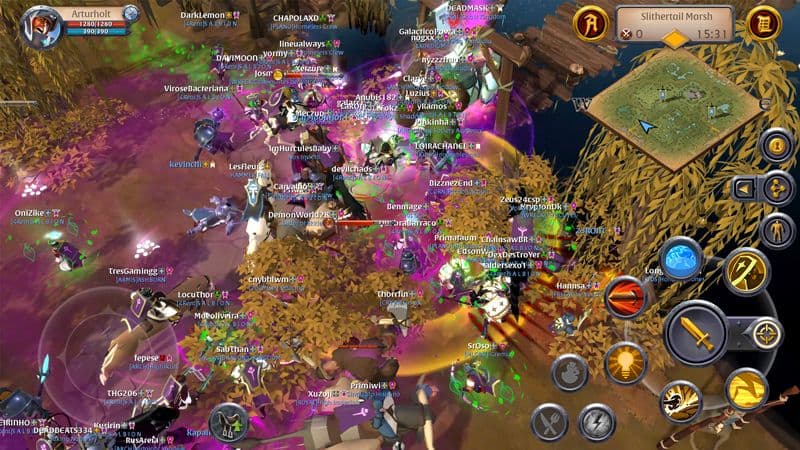
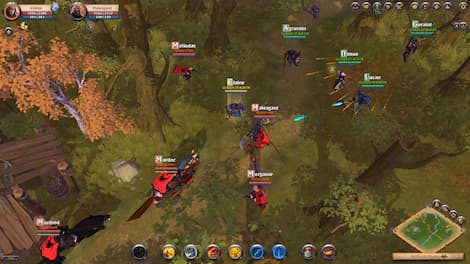
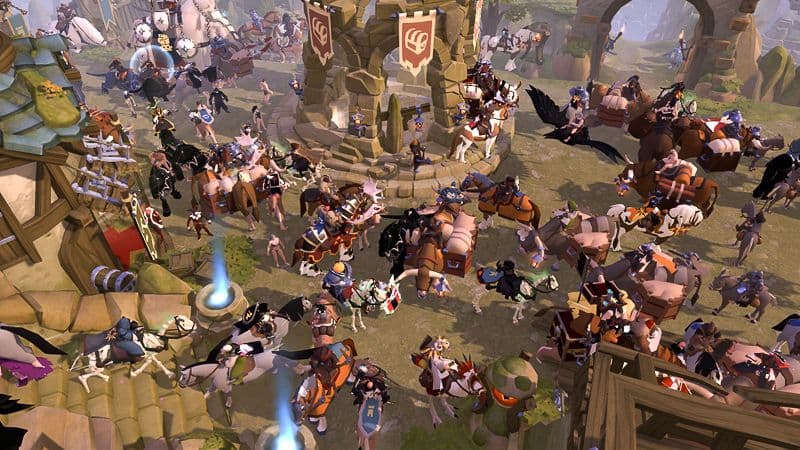
Albion Online is a cross-platform sandbox MMORPG developed and published by Berlin studio Sandbox Interactive, first released on PC in July 2017, ported to iOS and Android in 2021, and brought to Xbox Series X|S in April 2026. Built on Unity around a single shared world rather than sharded servers, it runs on a classless "you are what you wear" system, a fully player-driven economy, and full-loot PvP zones where death actually costs something. Nine years and dozens of major updates later, the game is heading into what its own developers are calling one of the biggest years in its history — a visual overhaul, a console launch, and an entirely new PvE threat arriving this summer. This Albion Online review looks at where all of that leaves the game right now.
Most MMORPG reviews save the endgame for the final third. Albion earns an exception, because everything the game is actually about — the reason its community has stuck around for nearly a decade — lives in the parts of the map most players won't see in their first week.
Past the safe Royal Continent, the world splits into color-coded risk tiers. Blue zones are consequence-free. Yellow zones flag you for PvP but stop short of full loot. Red zones start taking your gear when you die. Black zones, reached through realmgates in each royal city, remove the safety net entirely: there's no flagging system, no warning, just open PvP against anyone outside your own party, guild, or alliance, and a death that strips your inventory and equipped gear on the spot. Killers loot what they want, the rest scatters or feeds the game's Black Market, and you walk home in your underwear having learned an expensive lesson about scouting ahead. It sounds punishing because it is, but it's also the only place in the game where the stakes feel real instead of decorative — a fight in a black zone matters in a way a theme-park raid boss simply can't, because someone's hours of farming are sitting on the ground when it ends.
Guilds fight over the Outlands that make up most of this black-zone territory, and the structure is closer to EVE Online than to a typical MMO's guild-vs-guild mode. Owning territory grants resource bonuses and taxation rights over the local market, which means holding it is worth fighting for and losing it is a real setback, not a cosmetic one. Season 33 launched July 4, 2026 with reworked territory point costs and Hideout durability changes, and February's Realm Divided Part II update added Faction Battle Standards — carriable objectives players physically escort between contested Provinces and friendly Outposts, changing hands mid-fight if the carrier goes down. It's capture-the-flag layered onto a war for the map, and it's the clearest sign that Sandbox Interactive still treats faction warfare as a system worth actively renovating rather than a launch feature left to gather dust.
For players who want the risk without committing to a guild war, Hellgates and Corrupted Dungeons offer a smaller-scale version of the same tension — instanced PvP-and-PvE hybrids where the loot is real and so is the chance of losing it to another player who found the same portal. None of this is optional flavor bolted onto a PvE game. It's the spine Albion was built around, and the rest of the systems exist to feed it.
Albion doesn't lead with narrative, and it never has. The intro cinematic explains that a lost continent has resurfaced and factions are racing to claim it, and that's roughly the last time the plot asserts itself. There are five playable factions with their own starting cities and aesthetics, but faction identity here is mechanical rather than dramatic — it determines your starting position on the map and your access to Faction Warfare rewards, not a questline you'll remember. If you came looking for lore, look elsewhere; Albion's world exists to be fought over and built on, not read about.
A new character starts in one of the game's Royal cities — Martlock, Lymhurst, Bridgewatch, Fort Sterling, or Thetford — kitted with Tier 1 gear and pointed at the tutorial content that teaches gathering, crafting, and basic combat in a zone where nothing can kill you. The core progression system underneath all of it is the Destiny Board: a sprawling web of unlockable nodes for every weapon line, armor type, gathering profession, and crafting specialization in the game. There's no class select screen. Instead, spending time with a weapon or a resource node earns Fame in that specific line, which unlocks the next tier along that branch. Wear a fire staff long enough and you unlock better fire staffs; farm ore long enough and you unlock deeper tiers of ore gathering. The system is the game's answer to the "jack of all trades" problem other sandboxes struggle with: specialization is a real cost, because time spent leveling a mace build isn't time spent leveling a bow build, and a fully mature character is still a set of choices rather than a maxed-out everything.
The April 2026 Radiant Wilds update added an Armory system aimed squarely at this early confusion — a build-discovery tool meant to show new players viable weapon and armor combinations without needing a spreadsheet or a guild veteran walking them through it. It's a genuinely useful concession to a game that has historically thrown new players into a system with no in-game explanation of why a Quarterstaff build differs from a Fire Staff build beyond trial and error. Tier 2 gear unlocks every item of that type up to Tier 3 in one pass, but past that point each weapon and armor line splits into its own progression track, which is where the early game shifts from "try everything" to "pick a lane and commit."
Every skill a character has comes from equipped gear, full stop. Swap from a Fire Staff to a Bow and your entire skill bar changes along with your role in a fight — there's no talent tree sitting underneath the gear choice, no hidden class stats. This is what "you are what you wear" actually means in practice: a Fire Staff build burns groups down with area damage over time, a Quarterstaff build disrupts and displaces enemies, a Holy Staff keeps a group alive. Combat itself is real-time and skill-slot based rather than tab-target, with positioning, cooldown management, and gear matchups mattering more than reflexes alone.
Item Power is the number that actually governs whether a fight is winnable — a combination of gear tier and enchantment level that both sides can usually estimate before the first hit lands, which turns open-world PvP partly into a risk-assessment game before it's a combat one. May's balance pass nerfed several overperforming weapons like the Skystrider Bow and reduced healing output in the new 1v1 Arena mode specifically, a sign that Sandbox Interactive is still actively tuning a meta nearly a decade into live service rather than letting it calcify. That 1v1 Arena, along with a Crystal Arena map added for focused group practice, gives players a lower-stakes way to test builds without risking a black-zone death — a genuinely useful addition for a game whose entire skill ceiling has historically been taught the hard way.
Almost every piece of equipment in Albion is player-made, and the crafting chain is deep enough to support that claim. Gathering hide, ore, fiber, wood, or stone feeds into refining — turning raw hide into leather, ore into metal bars — which then feeds into crafting stations that turn those refined materials into weapons and armor. Each step has its own Destiny Board specialization, its own risk (higher-tier resources sit in more dangerous zones), and its own return calculation, because the Exchange Market prices everything according to actual supply and demand between players rather than a fixed vendor rate.
This is the part of the game where Albion's EVE Online influence shows most clearly. There's a single shared economy across the whole player base, no developer-set prices propping anything up, and no safety net if a resource glut or a war over a mining region tanks the price of a material you stockpiled. It rewards players who treat the game like a market as much as a battlefield, and it means a well-run crafting guild can be as economically dominant as a well-run PvP guild — sometimes the same guild is both.
Solo and group dungeons scale from beginner-friendly to genuinely demanding, and Expeditions offer safer, structured daily content with a Hardcore variant for players who want the risk turned back up. None of it is where Albion's reputation was built, and the developers have clearly known that — which is exactly why the upcoming Dragonfire update, launching August 31, 2026, matters. It adds Dragons as major world objectives rather than cosmetic set-pieces: high-end PvE targets tough enough to require serious coordination, sitting in a brand-new realm above Albion, with a specifically-designed toughest-fight-to-date encounter attached. It's the clearest attempt yet to give PvE-focused players a reason to log in that isn't just farming resources for someone else's war effort, and it's arriving alongside a new equipment tier and a dedicated mount for players who clear it.
The April 2026 Radiant Wilds patch also delivered a visual overhaul across the open world along with performance improvements — not a graphical reinvention, but a meaningful facelift for a game whose Unity-built environments were starting to show their nine years of age next to newer sandbox competitors.
You can play Albion entirely solo — gathering, crafting, and selling on the market doesn't require anyone else — but the game's actual center of gravity is guild life. Hideouts function as guild bases in the Outlands, alliances pool multiple guilds together for territory wars too large for one group to hold alone, and Faction Warfare gives smaller or more casual guilds a lower-commitment way to contribute to the broader conflict without signing up for nightly sieges. A solo crafter can make a comfortable living; a solo fighter competing for black-zone territory against organized alliances is playing a much harder game than the one a guilded player experiences, and that gap is worth knowing about before committing to Albion as a lone-wolf project.
Albion is free-to-play, and its monetization runs through two currencies that constantly interact: Silver, earned entirely through play and used for nearly everything in-game, and Gold, the premium currency bought with real money or earned as a referral reward. Gold's main purpose is Premium Status — a subscription-style bonus that boosts Fame and Silver gains and unlocks the higher tiers of gathering and crafting specializations. Here's the part that actually answers the pay-to-win question: Gold and Silver trade against each other on a fully player-driven Exchange Market, which means Premium can be bought entirely with in-game currency earned through normal play, and real money can't buy a single point of Fame, a specific weapon unlock, or a guaranteed drop. What money buys is currency, and currency still has to be spent inside a system every other player is also trading in.
That's a meaningfully different model from a loot-box gacha or a direct item shop, and it's the reason most of the game's own community lands on "not really pay to win" when the question comes up, even among players who are skeptical of monetization generally. The honest caveat is that Premium's bonuses are substantial enough that going without it puts a player at a real disadvantage in Fame gain and specialization speed, which makes it feel closer to a soft subscription than a cosmetic-only free-to-play model — you're expected to have it if you're playing seriously, one way or another. And because gear is fully player-crafted and tradeable, a player with deep pockets can still buy their way to strong equipment by converting cash into Silver and shopping the open market, even without ever touching a Destiny Board node themselves. It's not pay-to-win in the sense of buying stats no other player can reach, but it's not innocent of pay-to-progress-faster either.
Nearly a decade in, Albion Online is holding a Steam review score in the high 70s across more than 92,000 reviews — a "Mostly Positive" rating that's remarkably stable for a game this old, with roughly 6,000 to 10,000 concurrent Steam players on a given day and total cross-platform activity running considerably higher once mobile and the new Xbox player base are counted. That's down meaningfully from an April 2024 Steam peak north of 27,000, which is worth stating plainly rather than dressing up — some of that decline reflects a maturing sandbox with a hardened core rather than a casual audience, and some of it is simply the natural drift of a nine-year-old MMO competing for attention against newer releases. Either way, a game shipping a console launch, an engine-level visual overhaul, and a brand-new PvE pillar in the same calendar year isn't coasting on inertia.
The strongest case for Albion in 2026 is that its core systems — the Destiny Board, the fully player-driven economy, full-loot territory warfare — still work exactly as designed and are still being actively expanded rather than left on autopilot. The steepest cost is the learning curve: a new player dropped into black-zone politics with no guild and no build knowledge will bounce off hard, and the Armory tool introduced this spring helps but doesn't erase that problem. Combat balance also remains a moving target nine years in, which cuts both ways — it shows a live team still paying attention, but it also means whatever build guide you read might be a patch out of date by the time you finish reading it.
Albion Online has never been a game for players who want their MMO stakes simulated rather than real, and nine years in, it still isn't. The Destiny Board gives you genuine ownership over your character's identity, the economy runs on actual player behavior instead of developer-set prices, and the black zones deliver a kind of tension that theme-park PvP flags can't fake. None of that has softened with age, and the 2026 roadmap — the Radiant Wilds visual pass, the Xbox launch, reworked Faction Warfare, and Dragons arriving in August — suggests Sandbox Interactive still sees room to grow a game most of the genre would have long since put on life support. What has changed is the audience: this is a smaller, more committed player base than it was at its 2024 peak, and the game asks a genuine time investment before any of its systems pay off. Anyone drawn to EVE Online's stakes-first philosophy or Ultima Online's classless freedom will find a modern, still-evolving version of that idea here. Anyone who wants their progress protected from other players should understand exactly what they're signing up for before their first trip through a realmgate.