 F2P · Live
Lineage 2
Aden's castles never stay in the same hands for long, and Lineage II has built an entire twenty-three-year…
A legendary classless sandbox MMORPG delivering uncompromising progression, rich handcrafted narrative quests, and a fully player-driven economy. In the realm of Gielinor, every major update requires ...
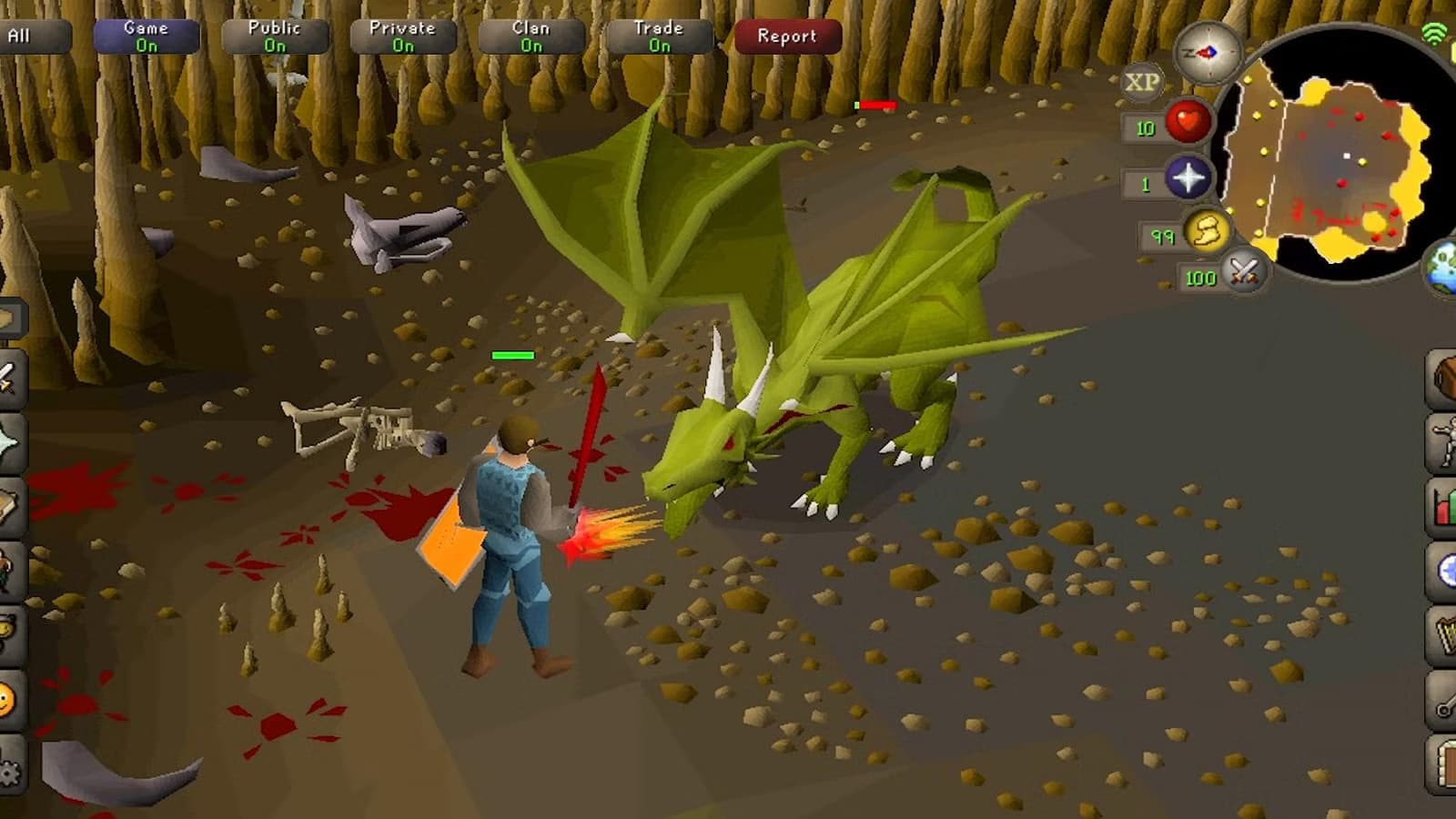
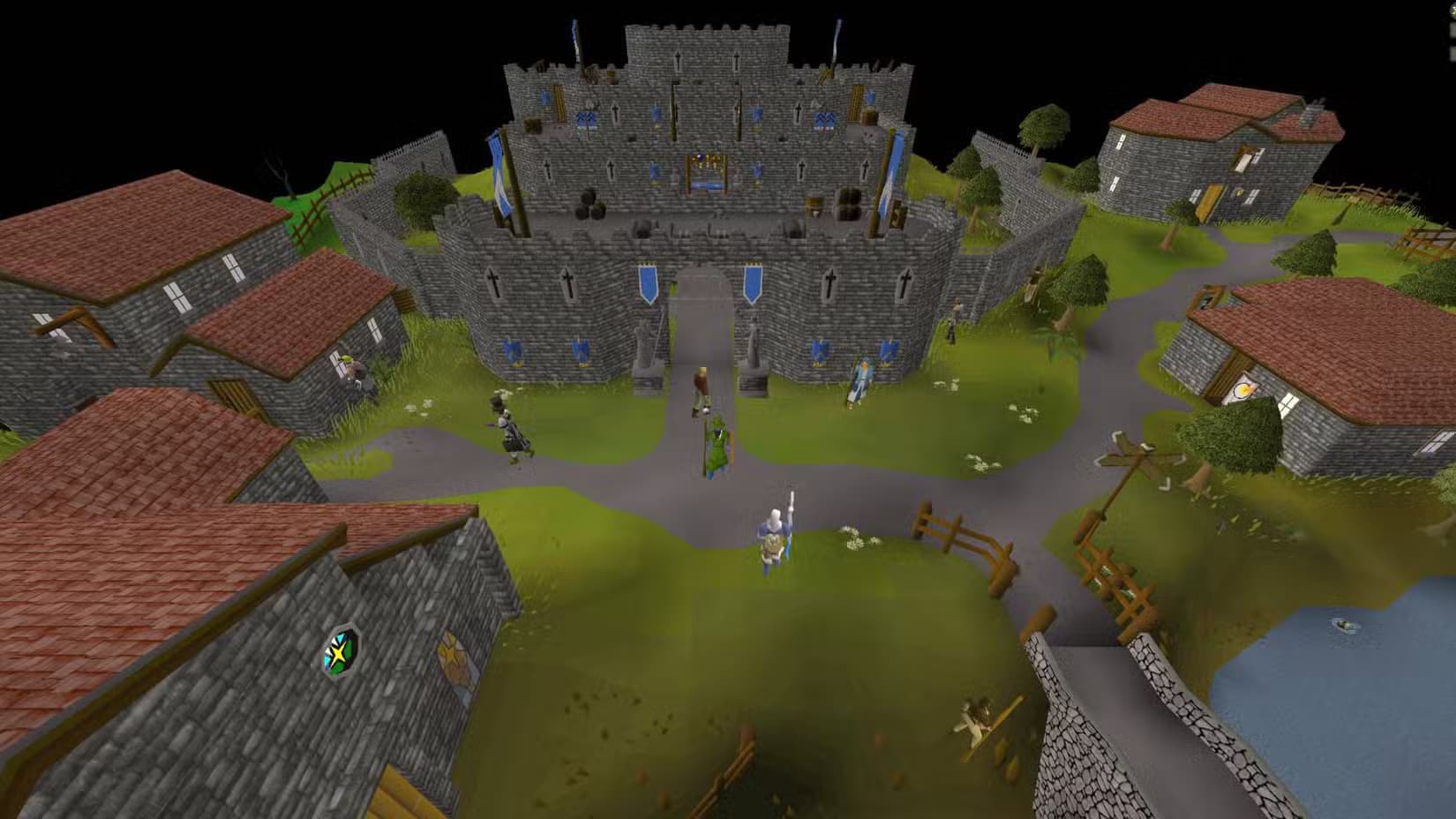
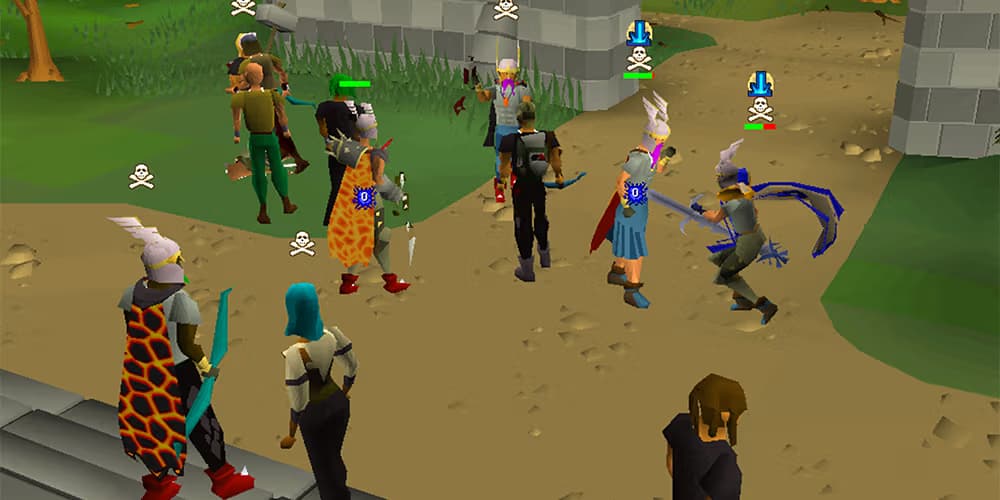
Few twists in modern gaming history match the improbable resurgence of Old School RuneScape. Originally launched by British studio Jagex as a temporary nostalgia sandbox for a handful of pining veterans, the project has defied every live-service lifecycle projection. In 2026, while multimillion-dollar Unreal Engine spectacles collapse into server shutdowns within months of release, this low-poly titan routinely commands between 120,000 and 180,000 concurrent players, standing shoulder-to-shoulder with the absolute elite of the global MMORPG market.
Unpacking the OSRS phenomenon requires revisiting the catastrophic events of 2012. Back then, Jagex executives pushed two consecutive corporate blunders that brought the franchise to the brink of collapse. First came the Squeal of Fortune—a shameless microtransaction wheel peddling direct XP lamps for cold cash, degrading years of dedicated player progression overnight. Hot on its heels arrived the infamous Evolution of Combat (EoC) overhaul, which gutted RuneScape's distinctive tick-based combat model in favor of generic, World of Warcraft-style ability action bars. The fallout proved catastrophic: active player numbers plummeted by over fifty percent, flagship content creators abandoned the platform, and hundreds of thousands of disenfranchised veterans migrated to illicit private servers.
Salvation emerged from a forgotten cold-storage archive. In early 2013, developers uncovered an intact, uncorrupted server snapshot dated August 10, 2007. An emergency community poll garnered nearly half a million verified votes, prompting Jagex to officially launch Old School RuneScape on February 22, 2013. No ability rotations, no buyable lamps, no predatory clutter—just the pure, uncompromising world of Gielinor from the golden age of browser-based online gaming.
Yet pure nostalgia proved a fleeting commodity. The initial launch surge faded rapidly, confronting developers with an existential reality: a static, frozen-in-time museum piece was doomed to slow attrition. It was here that Jagex executed the strategic masterstroke that defines modern OSRS. Rather than letting the game wither or adopting the bloated monetization of RuneScape 3, the studio committed to expanding the world along an entirely divergent development timeline.
Over the ensuing decade, OSRS grew by leaps and bounds with bespoke, community-vetted content. The sprawling western continent of Zeah with the kingdom of Great Kourend, the sun-drenched expansion of Varlamore, three monumental multi-boss raids, and dozens of cinematic Grandmaster questlines were built entirely from scratch, honoring the franchise's vintage low-poly aesthetic and rigid mathematical rulesets. Today, Old School RuneScape commands an active player base nearly five times larger than its nominally modern counterpart RuneScape 3, proving that respect for player agency and mechanical integrity will always triumph over superficial visual polish.
Ask any seasoned veteran what makes Old School RuneScape fundamentally unlike any other MMORPG in existence, and the answer arrives without hesitation: an unbending player-driven democracy and an unforgiving server heartbeat ticking once every six-tenths of a second. This unlikely marriage of direct crowd governance and rigid metronomic design transformed a retro archive into an impregnable bastion of player agency.
The foundational bedrock of the game is its Community Polling system. In an industry where corporate publishers routinely impose jarring balance shifts and aggressive microtransactions by fiat, Jagex voluntarily tied its own hands. No questline, dungeon boss, equipment tier, or system rebalance reaches the live servers without direct player approval. Any account meeting basic playtime requirements can walk up to an in-game polling booth inside any bank and cast their ballot. For nearly a decade, the pass threshold stood at an extraordinary 75% majority, before being recalibrated to a still-demanding 70%.
This democratic firewall provides airtight immunity against predatory live-service practices. No spreadsheet executive can shoehorn loot boxes or a paid battle pass into OSRS, because such proposals would disintegrate against a ninety-five percent wall of community rejection. Yet direct democracy carries its own liabilities—namely reactionary conservatism and tribal factionalism. For years, PvE-focused players routinely spite-voted against updates for the lawless Wilderness to deny advantages to predatory player-killers. Entire skill designs like Artisan and Warding were relegated to the development graveyard, until an exhaustive collaborative design loop finally cleared the path for Sailing.
Beneath the surface lies the engine's defining architectural pulse: the global Game Tick, fixed at precisely 0.6 seconds (600 milliseconds). The entire universe of Gielinor operates in lockstep with this rhythmic cadence. The terrain is structured as a discrete grid of tiles, and every mechanical interaction synchronizes to the server clock. Characters sprint at two tiles per tick, weapons cycle attacks at strict 3-, 4-, 5-, or 6-tick cadences, and potions apply their restorative effects on rigid cooldowns.
To an outside observer, this grid-locked flow resembles an archaic, turn-based point-and-click novelty. In practice, high-level OSRS gameplay is a lightning-fast rhythm game demanding esports-grade micro-precision. Veteran players navigate the battlefield not by following their avatar's visual render, but by reading their True Tile: the invisible coordinate where the server has already registered their position two paces ahead of the client's smoothed animation. Missing a single 600 ms window during prayer toggles spells instantaneous death against endgame encounters. This hypnotic metronome either repels casual newcomers within their first two hours or permanently captivates those who embrace its deep mathematical elegance.
Modern MMORPG progression has largely devolved into an accelerated sprint: games usher players through on-rails story corridors, shower them in disposable leveling gear, and deliver them to level cap in a weekend, insisting that the "real game" only begins at endgame. Old School RuneScape rejects this design philosophy entirely. Here, the leveling process is the core experience, and journeying toward absolute mastery is measured not in days, but in years of deliberate, meditative dedication.
In the world of Gielinor, there are no predefined classes, talent trees, or character archetypes on the character creation screen. Every avatar begins as a blank slate. Your role is governed strictly by the gear on your back and your proficiencies across 23 core skills. Character power is quantified through two overarching benchmarks: your combat bracket (Combat Level), calculated via a nuanced formula from 3 to 126, and your overall cumulative proficiency (Total Level), which caps out at an esteemed ceiling of 2277.
These disciplines divide cleanly into four interconnected branches:
The cardinal mathematical rule of progression in OSRS is an imposing rite of passage: Level 92 marks exactly halfway to Level 99. The experience curve escalates exponentially: reaching 92 requires roughly 6.5 million experience, whereas clinching that final level demands a colossal 13,034,431 XP. There are no paid double-XP weekends, no bought acceleration potions, and no cash-shop shortcuts. Maxing out any discipline awards a coveted Skillcape (Skillcape), granting practical teleport perks and community respect, while accounts that conquer all 23 skills earn the ultimate badge of veteran status: the mythical Max Cape.
What is the catch behind this design? The unvarnished 2007-era grind was notoriously grueling, and staring at a single rock outcrop for eighty hours is hardly sustainable for modern gamers. Recognizing this friction, Jagex has spent the past decade reinventing trade-skill training through dynamic minigames. Runecrafting evolved from a solitary treadmill into the frantic rift-defense gauntlet of Guardians of the Rift; smithing found vibrant life inside the massive catalytic forge of Giants' Foundry; agility gained an adrenaline-fueled parkour challenge inside the tomb of Hallowed Sepulchre; and fishing transformed into high-stakes maritime crisis management against Tempoross.
Furthermore, active development is well underway for the game's 24th skill—Sailing. Unlike the instanced, isolated corridors of RS3's Dungeoneering, Sailing in OSRS is being constructed as an expansive, seamless open-world system featuring wind physics, vessel modularity, naval combat against sea serpents, and uncharted island exploration. The game never cheapens its old progression; it steadily widens the horizon.
Mention the phrase "MMO questing" to any modern gamer, and their imagination instantly conjures yellow exclamation marks hovering over roadside NPCs, automated GPS pathfinding, and endless requests to exterminate ten wild boars in nearby shrubbery. Old School RuneScape occupies an entirely different artistic universe. Here, every single assignment is an artisanal, handcrafted narrative puzzle that routinely embarrasses full-priced single-player RPGs.
Gielinor is completely free of auto-generated radiant chores and daily task checklists. Quests in OSRS demand genuine deduction, environmental exploration, item problem-solving, and dialog interactions dripping with dry, biting British wit. One afternoon you might find yourself helping the royal chef bake a celebratory cake in the charming beginner task Cook's Assistant; the next, you are swept into the hilarious, agonizing barter rabbit-hole of One Small Favour—a legendary quest-meme where a simple request to fetch four pigeon feathers spirals into a continent-spanning logistical nightmare across three warring kingdoms.
Quest complexity follows a rigorous hierarchy, scaling from breezy Novice tasks to towering Grandmaster epics. Merely qualifying for these high-tier finales requires months of targeted skill grinding and dozens of prerequisite storylines. Yet the payoff is extraordinary: Grandmaster sagas like Dragon Slayer II, Monkey Madness II, Song of the Elves, and the brooding cosmic horror of Desert Treasure II: The Fallen Empire deliver cinematic set-pieces, divine betrayals, and complex multi-phase boss gauntlets.
Crucially, completing quests is not about farming pocket change; it serves as the primary gateway to foundational account progression. In OSRS, narrative milestones literally unlock the mechanical skeleton of the game:
The catch? Questing in OSRS is utterly unforgiving. The game provides no glowing breadcrumb trails on your minimap, puzzle solutions are subtly buried within character dialogue, and failing trap checks sends avatars plummeting into deadly spike pits. Before the advent of community tools like RuneLite's Quest Helper, conquering these challenges required physical notepads and extensive wiki study. For those who persevere through every narrative hurdle across Gielinor, the reward is the majestic blue-and-white Quest Point Cape—an irrefutable badge of lore mastery and geographical dominance.
At first glance, combat in Old School RuneScape looks like a dial-up relic: click an enemy, watch your character walk over, and wait as automated swing animations trade blows every few seconds. Yet this minimalist facade is deeply deceptive. Beneath its retro exterior lies one of the most mechanically demanding, mathematically exacting, and punishingly unforgiving combat models in multiplayer history.
The foundation of every engagement is the classic Combat Triangle, operating on a strict rock-paper-scissors dynamic:
Each discipline features microscopic depth. Physical damage is granularly categorized into Stab, Slash, and Crush. Trying to slash draconic beasts with a curved blade is exercise in futility—their scales are uniquely vulnerable to the thrusting punctures of a Dragon Hunter Lance, whereas armored gargoyles only shatter under heavy bludgeoning warhammers. Every weapon operates on a fixed attack cadence defined by server ticks: from the machine-gun velocity of the Toxic Blowpipe (2 ticks) to the earth-shattering downswing of a Bandos Godsword (6 ticks).
The player's vital survival shield in PvE rests on three Protection Prayers: Protect from Melee, Protect from Missiles, and Protect from Magic. In monster encounters, an active protection prayer mitigates 100% of incoming damage of that specific style. The balancing counterweight is prayer point drain: maintaining overhead wards rapidly bleeds your prayer pool dry, necessitating constant consumption of costly restoration potions. It is precisely here that mechanical mastery manifests through Prayer Flicking.
Because the game server registers combat calculations on the exact tick an enemy initiates its attack animation, skilled players toggle the required overhead prayer active for precisely one tick (600 milliseconds) and immediately deactivate it on the subsequent beat. Executed with flawless metronomic timing, this cancels all damage while consuming zero prayer points. Mastering this technique—known as 1-tick flicking—shatters normal encounter limitations, enabling elite adventurers to clear multi-hour dungeons without sipping a single drop of prayer restoration.
At endgame, the concept of a single-discipline loadout disappears. To survive high-tier bosses, players must become fluid multi-class hybrids through rapid Gear Switching. Within a single 600 ms window, you must execute four to eight pixel-perfect inventory clicks: swapping helmet, necklace, cape, torso, legs, shield, and weapon to transition from a full mage setup to a ranged kit without missing an attack turn. A single misclick on an adjacent potion or a momentary latency spike means facing a lethal boss projectile with the wrong defensive stats, sending your avatar straight to the respawn screen.
The persistent myth that Old School RuneScape is merely a relaxed second-monitor game about chopping willows while watching television instantly evaporates upon first contact with its high-tier PvE ecosystem. In terms of mechanical density, heart-pounding tension, and personal execution thresholds, Gielinor's endgame challenges outclass the raid encounters of most modern MMORPGs. There is zero forgiveness here: miss a single server beat, and your character is violently dispatched to the respawn screen.
Every adventurer's martial journey across the realm is mapped out by sacred developmental milestones:
Once solo encounters are mastered, the gates swing open to the Great Raid Triad—colossal cooperative complexes around which the entire high-tier economy revolves:
For solo purists, the indisputable summit of martial prestige remains The Inferno. This exhausting, two-hour trial spans 69 unforgiving waves where high-tier monsters combine simultaneous combat styles, demanding continuous 1-tick prayer flicking behind crumbling volcanic pillars. The final showdown against the magma colossus TzKal-Zuk can end your run in a single stray hit from beyond the screen boundary. Earning the coveted Infernal Cape—or conquering Sol Heredit inside the gladiatorial sands of Varlamore's Fortis Colosseum for Dizana's Quiver—represents an elite badge of honor that cannot be bought or carried without courting an immediate permanent account ban.
For millions of players, the boundary separating civilized society from unadulterated terror is marked by a modest crumbling stone wall just north of Varrock: the Wilderness Ditch. The moment an adventurer vaults over this barrier, the screen flashes with an ominous warning prompt, a skull-bracket threat gauge lights up the corner of the display, and all safe-zone guarantees dissolve into thin air. You have entered a lawless territory where every miscalculation is paid for in lost gear.
The PvP architecture of Old School RuneScape stands as one of the last bastions of genuine full-loot risk in the entire MMO genre. The northern reaches of the continent are divided into danger tiers scaling from level 1 to level 56. Deep in the wastes, target eligibility brackets widen dramatically: while standing near the ditch at level 100 permits duels only against combatants between levels 99 and 101, crossing into level 50 territory exposes you to lethal ambushes from anyone ranging between level 50 and max-tier 126.
The entire dynamic hinges upon the brutal mechanics of the skull (Skull):
To prevent the Wilderness from degenerating into a deserted wasteland, Jagex engineered a relentless predator-and-prey dynamic. Developers intentionally saturated these barren badlands with lucrative PvE incentives. The deep-tier Chaos Altar at level 38 doubles experience gains when sacrificing bones to train Prayer, saving players tens of millions of coins at the cost of running a gauntlet of camped assassins. Meanwhile, the subterranean Revenant Caves generate staggering millions of gold per hour, but roamers must navigate coordinated multi-combat clans wielding freezing spells and ballistas.
The region is also home to a trio of savage world bosses—the spectral bear Callisto, the arachnid queen Venenatis, and the undead champion Vet'ion. They drop weapon fragments needed to forge the coveted Voidwaker—a top-tier blade whose special attack inflicts guaranteed magic burst damage, radically warping the combat meta. Slaying these monstrosities requires acute situational paranoia: PvE hunters must balance boss mechanics while keeping eyes glued to the minimap, ready to execute triple-eat healing combos and snap a teleport tablet before getting snared by a Tele Block.
For organized competition, the game provides dedicated dueling avenues through Bounty Hunter contracts, high-stakes PvP Worlds, and the legendary seasonal phenomenon of Deadman Mode (DMM). During DMM servers, unrestricted full-loot PvP is activated across the entire planet, urban city guards execute criminals on sight, death strips away percentages of trained skill experience, and the final battlefield survivor takes home tens of thousands of dollars in real prize money. Few experiences in contemporary gaming match the primal rush of surviving a wilderness ambush with a full haul of rare loot in your backpack.
The economic ecosystem of Old School RuneScape presents one of the rarest specimens in the MMO landscape: a virtually unadulterated, self-regulating free market. The game features no artificial vendor floor prices, no soulbound auction locks, and no untradeable currencies that throttle personal commerce. Every yew seed, ruby amulet, and rune platebody in Gielinor commands whatever valuation another living human being is willing to pay for it.
The beating heart of global commerce pulses within the grand pavilion of the Grand Exchange (GE) just northwest of Varrock. Introduced during the original RuneScape 2 era, this centralized clearinghouse retired the nostalgic yet exhausting days of bank-floor spam ("selling cooked lobsters 200 ea!"). Adventurers post buy and sell orders, and the automated market engine matches bids at optimal market rates with instantaneous liquidity.
Yet an uninterrupted influx of gold minted from high-level PvE bosses inevitably triggers the bane of vintage MMO economies: rampant hyperinflation. Jagex tackled this systemic decay with the finesse of a central bank, introducing the Grand Exchange Tax (GE Tax). A modest 1% levy is shaved off every successful sale (capped at five million coins per transaction). Crucially, these billions in collected coin do not simply vanish into a vacuum. The game channels this capital into an automated stabilization fund that systematically buys elite, hyper-rare items—such as Twisted Bows, Bandos Chestplates, and Scythes of Vitur—straight off the order books and deletes them from the game world forever (Item Sink). This ingenious mechanism has preserved the astronomical value of pinnacle raid drops across nearly a decade of continuous farming.
This economic discipline extends directly into modern death mechanics. When a character perishes outside PvP danger zones, a temporary Gravestone materializes on the floor with a 15-minute real-time timer. Recovering valuable gear incurs a modest reclamation fee based on item value. For hoarders sitting on duplicate boss drops, Death's Coffer provides an elegant sink: sacrificing surplus high-tier gear credits the player's death coffer at a +5% premium over current Grand Exchange market prices, pre-paying future resurrection fees in perpetuity.
Yet the most culturally significant demographic within OSRS belongs to those who willfully rejected market capitalism entirely: the monastic adherents of the Ironman mode:
The Ironman phenomenon single-handedly redeemed the game's non-combat professions. While a normal account circumvents farming and alchemy by simply purchasing supplies off the Grand Exchange, an Ironman must cultivate every Ranarr Seed in their private plots, hunt down venomous beasts for secondaries, and hand-brew their own prayer draughts. For those seeking accelerated dopamine hits, Jagex hosts seasonal Leagues—time-limited standalone servers packed with 8x XP multipliers, instant teleports, and god-tier passive relics that routinely dominate gaming livestreams worldwide.
Concluding an anatomical dissection of Old School RuneScape is impossible without addressing two pillars that permanently anchor its peerless reputation: an unprecedented community client ecosystem and an uncompromisingly ethical monetization framework that modern gamers have all but forgotten exists.
Historically, the title debuted inside humble browser windows powered by Java applets. Today, OSRS runs on a responsive native C++ engine, resides on Steam, runs flawlessly on the Steam Deck, and features frictionless cross-platform parity across iOS and Android. You can harvest mahogany logs on your morning subway commute, slip your phone into your pocket, and sit down at your desktop rig that evening to jump straight into a raid—progression synchronizes instantaneously without a hiccup.
Yet the true technological revolution arrived from the community itself through the phenomenon of RuneLite. Rather than crushing this open-source client beneath legal cease-and-desist threats, Jagex took the visionary path of formally partnering with its creators and embedding RuneLite directly inside the official Jagex Launcher. Passionate developers transformed an austere retro visual presentation into atmospheric art. The community-standard 117 HD plugin injects dynamic multi-source illumination, soft real-time shadows, realistic atmospheric fog, and vastly extended view distances into the low-poly world while meticulously respecting the game's retro charm. Thousands of curated plugins provide ground-item loot highlights, precise boss cooldown timers, and True Tile boundaries, elevating interface usability to modern esports standards.
The financial model of OSRS stands as a towering breath of fresh air in an industry poisoned by predatory monetization. In an era where AAA publishers routinely pack sixty-dollar releases with battle passes, rotating FOMO cosmetic stores, and hundred-dollar early access tiers, Old School RuneScape maintains austere, puritanical transparency. There are no cosmetic cash shops. There are no paid loot boxes. There is zero ability to purchase character levels, experience multipliers, or combat stats with real money. The business model rests upon three clean pillars:
What is the lingering friction and darker underbelly of the project? The foremost struggle remains the endless arms race against automated bot farms. Because in-game gold maintains real-world liquidity on gray black markets, automated scripts perpetually siege gathering nodes, demanding ceaseless ban-waves from security teams. The second hurdle is psychological: for players conditioned on the instant gratification loops of contemporary action titles, wrapping one's head around spending forty hours training agility or fishing simply to satisfy an entry prerequisite for a single quest can feel profoundly alienating.
And yet, in 2026, Old School RuneScape stands as a triumphant testament to artistic and mechanical integrity. It remains an extraordinary sanctuary where accomplishments achieved half a decade ago never expire, where the economy obeys logical market forces, and where sporting an elite cape commands genuine awe from everyone around you. If you are yearning for a virtual world that refuses to treat you like a consumer metric and rewards raw patience with lifelong satisfaction, take the leap into Gielinor. You may never look at modern MMOs the same way again.