 Free To Play
Ragnarok Online
MMORPGReleased
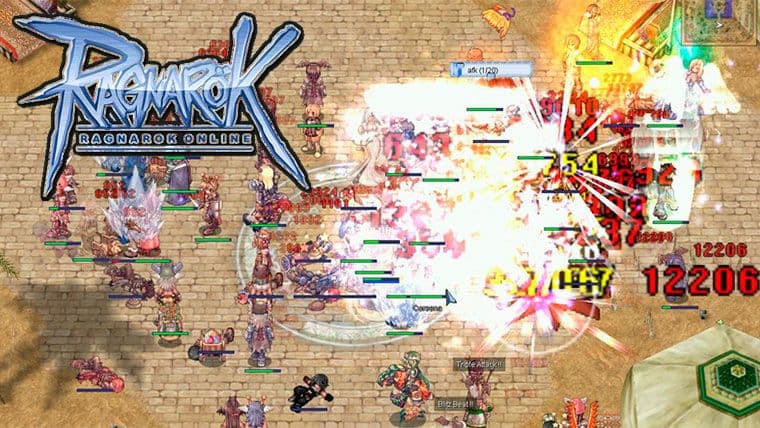
Ragnarok Online has been running since 2002, and the card system it introduced — socketing monster drops into weapons and armor — is still one of the ...
Minimum and recommended PC specs to run the game
← Back to game reviewIf your PC can run this game, you'll also be able to play these:
Free To PlayRagnarok Online has been running since 2002, and the card system it introduced — socketing monster drops into weapons and armor — is still one of the ...
 Free To Play
Tibia is the 1997 fantasy MMORPG that never stopped shipping updates — nearly 29 years in and still adding new classes, new bosses, and new content. F...
Old School RuneScape runs on Jagex's proprietary engine, with architectural roots tracing back to mid-2000s browser-based Java applets. Over the past decade, the client framework underwent significant modernization: the original Java codebase was supplemented by high-performance native C++ builds across PC, Steam, and mobile ecosystems. While baseline specifications appear remarkably lightweight by modern standards, real-world performance varies drastically depending on client choice and community visual extensions.
First, the Central Processing Unit (CPU) and core topology. Built on a 2007 codebase originally designed for single-core execution, engine performance hinges primarily on single-thread instruction throughput (IPC) and core clock frequencies. The processor continuously computes Gielinor's foundational 0.6-second (600 ms) simulation tick-rate, handles tile-based collision pathfinding, tracks multi-target aggression radiuses, and processes high-frequency networking packets. Recommending a contemporary 4-to-6 core CPU ensures the operating system's background background routines never starve the critical game simulation thread, preventing catastrophic micro-stutters during high-stakes boss encounters.
Second, Graphics Processing and Video Memory (GPU / VRAM). The vanilla client relies on lightweight rasterization and minimal hardware acceleration, operating comfortably on a modest 512 MB to 1 GB VRAM footprint. However, the overwhelming majority of veteran players interface through the open-source RuneLite client enhanced with the community-standard 117 HD plugin. This visual overhaul introduces dynamic multi-source lighting, soft directional shadows, procedural water shaders, weather atmospheric effects, and up to a 5x extended draw distance. In this configuration, graphical load scales significantly, making a dedicated GPU with 2–4 GB of VRAM essential for maintaining a rock-solid 60+ FPS when sweeping the camera across crowded trade hubs.
Third, System Memory (RAM). The nominal minimum threshold of 2–4 GB covers basic standalone C++ client execution. However, the realistic performance standard for 2026 sits at 8 GB of system RAM. Running JVM-based clients equipped with dozen of analytical plugins—such as live ground-item overlays, True Tile visualizers, boss timer trackers, and extended map pre-caching—demands generous memory headroom to prevent JVM garbage collection pauses or catastrophic out-of-memory crashes during multi-hour raids.
Finally, storage media and disk speed (Storage / SSD). The game client demands a compact footprint of merely 3–5 GB, an order of magnitude smaller than competing MMORPGs. Nonetheless, installing on a solid-state drive (SSD) is strongly advised. Fast random read I/O proves vital for two routine gameplay loops: seamless rapid world hopping during resource scouting and zero-stutter map chunk streaming when teleporting across distant provinces of the realm.