 F2P · Live
Lineage 2 Essence
Lineage 2 Essence is NCSoft's free-to-play take on the classic Korean MMORPG Lineage II, built around faster…
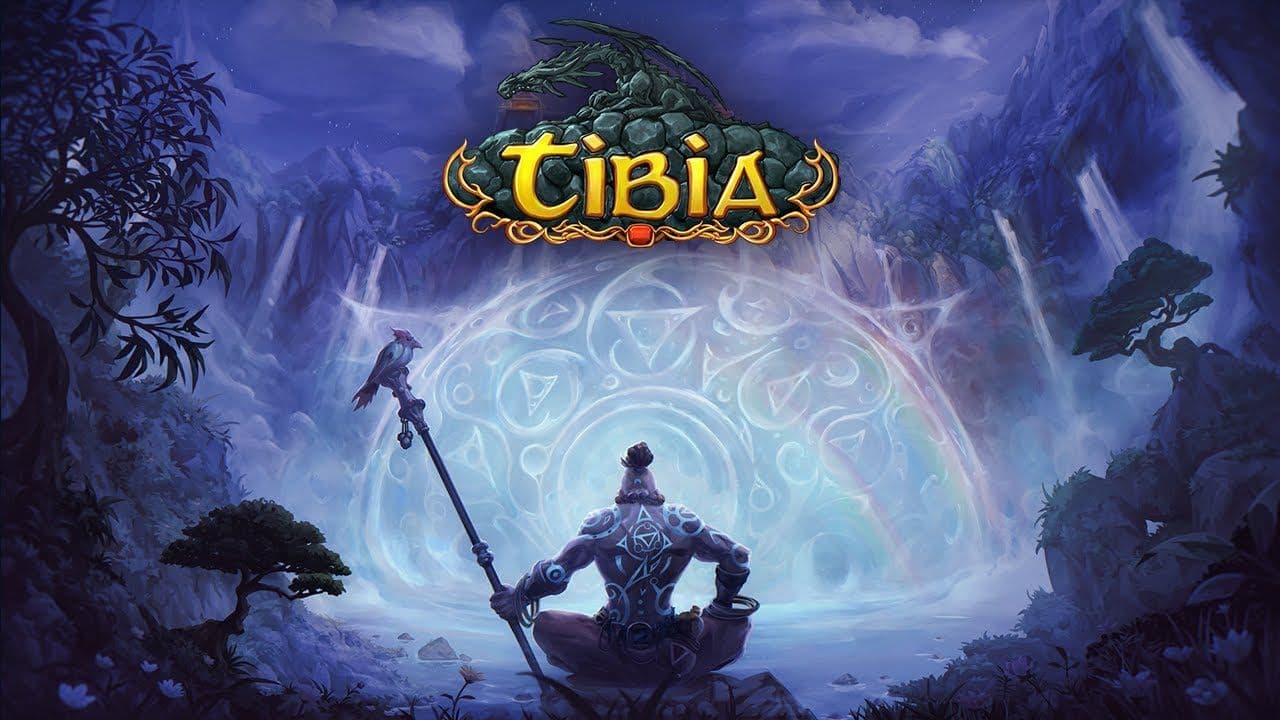
Tibia is the 1997 fantasy MMORPG that never stopped shipping updates — nearly 29 years in and still adding new classes, new bosses, and new content. Five vocations, an honest free-to-play model, a dec...
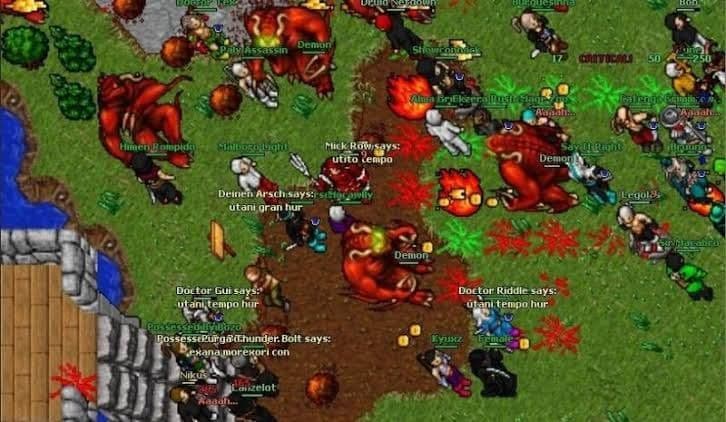
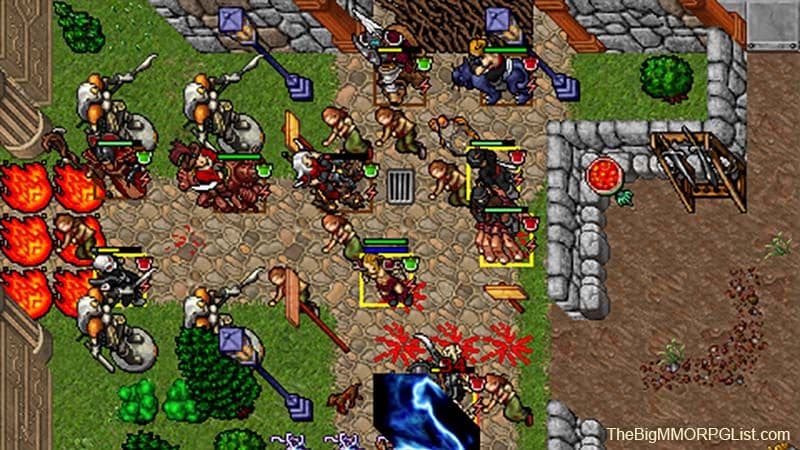
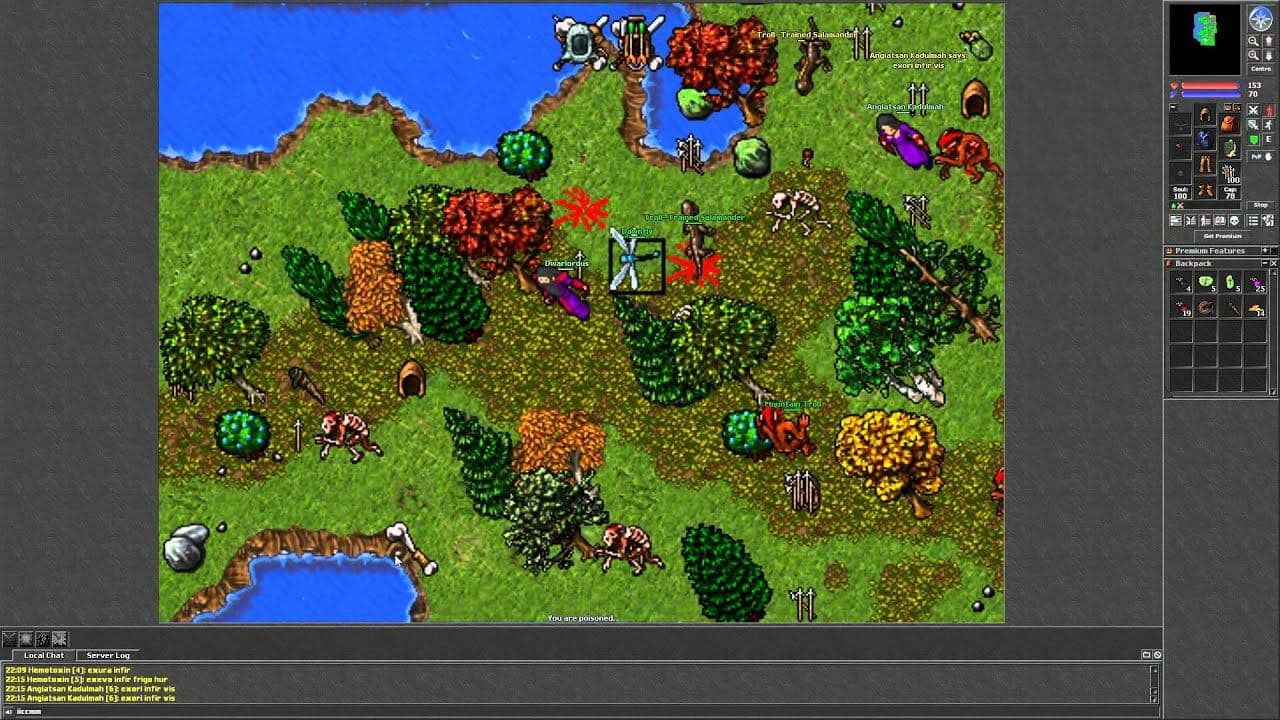
Tibia is a fantasy MMORPG developed by German studio CipSoft, released on January 7, 1997, and still receiving regular updates today. It predates World of Warcraft by seven years and stands as one of the earliest graphical MMORPGs ever shipped — a title that grew out of a university side project and never stopped running since. More than 32 million accounts have been created over its nearly 29-year run, and 2026 brought both a summer content patch and the game's fifth playable class, the first new one added since launch.
Quick take: Tibia is a genuinely old-school MMORPG — text-driven, tile-based, and unforgiving about death — still actively developed almost three decades later. It rewards patience and punishes carelessness rather than reflexes, and it's worth trying only if that specific trade sounds appealing rather than dated.
CipSoft, the German studio behind the game, is based in Regensburg and grew directly out of the university project that four students — Guido Lübke, Stephan Payer, Ulrich Schlott, and Stephan Vogler — built into Tibia in the mid-1990s. The idea to build a graphical interface rather than a text-only one was unusual for its time: most comparable online role-playing projects of the era were still plain-text MUDs. Beyond Tibia, CipSoft also runs mobile title TibiaME and browser game The Settlers Online, and is currently developing a new zombie-themed MMO called Persist Online — but Tibia remains the studio's flagship and the reason it exists at all.
Tibia's setting is dark fantasy without any cinematic ambition: the gods Fardos and Uman Zathroth, a continent split into islands, and dozens of towns linked by ship routes. CipSoft itself describes the game as a "hardcore-fantasy MMORPG in a timeless retro look," which is less marketing copy than an accurate summary. There are no voiced cutscenes — the entire story is delivered through NPC text, forum lore, and quest dialogue typed directly into the in-game chat, a holdover from the text-based MUDs Tibia grew out of.
Visually, the game has stayed loyal to its roots: tile-by-tile movement, sprite-based art, a slightly angled top-down view. Lighting, shadows, and a soundtrack (music didn't exist in the game before 2022) arrived over the decades, along with a modern renderer supporting DirectX 11, DirectX 12, Vulkan, OpenGL, and macOS Metal, but the silhouette is unmistakably the same pixel knight on the same pixel bridge that players remember from the 2000s. By CipSoft's own estimate, spending just one second on every walkable tile in Tibia's world would take nearly forty days straight — and that's before counting the dungeons underneath it.
New characters land on a training island — currently Newhaven — killing rats and crabs bare-handed for a level or two while the game explains its interface. At level 8, players commit to a vocation — knight, paladin, sorcerer, druid, or the monk added in April 2025 — and only then does the mainland open up, where the actual game takes place.
From there it's the genre's classic loop: find a monster spawn matched to your level, grind it for a few hours, bank the experience and gold, buy better gear, find a harder spawn. What separates Tibia from newer MMORPGs is how much a mistake costs. Experience has no level cap, but dying strips away a percentage of it, calculated from your level, how many blessings you're carrying, and whether the killer was a monster or another player. Without protective purchases, a single bad death can erase a meaningful chunk of recent progress, and on open-PvP worlds a character marked with a red skull loses every piece of equipped gear on death — blessings included.
Blessings, purchased at sacred sites across the mainland, each shave a few percentage points off that experience penalty. A separate mechanic called Twist of Fate specifically protects against PvP deaths and does nothing against a monster kill — a distinction typical of how thoroughly Tibia's systems have accumulated exceptions and edge cases over nearly three decades, rather than something a new player would guess intuitively.
Combat feels dated by current standards: click a target, your character auto-attacks, and spells are either typed as words into chat (casting "exura gran," the Greater Healing spell, for example) or bound to hotkeys. There's no aiming or dodging in the action-MMO sense — the tactics live entirely in positioning, target selection, and managing mana and health pools. Knights tank and carry the most gear, paladins mix ranged weapons with support runes, and sorcerers and druids lean almost entirely on spellcasting — one on offensive fire and energy magic, the other on healing plus ice and earth.
The monk's arrival gave sorcerers and druids their first real competition for the support role in years: rather than a dedicated heal spell, the monk's Harmony mechanic spends built-up resource on a melee strike that simultaneously heals the party's lowest-HP member as a side effect. Five vocations now cover the standard MMO trinity and then some — tank, ranged damage, two flavors of caster, and a melee-support hybrid. According to the developers, shipping the monk required adjusting more than 130,000 lines of existing code so the new class could interact properly with NPCs and quests written decades before it existed.
Before the monk's official April 2025 launch, CipSoft ran three separate rounds of open testing on a dedicated server — an unusually cautious approach for a game with such a long-standing, conservative player base. Feedback from those phases led to repeated balance passes, and the studio raised the maximum number of characters allowed per account so veterans would have room for a monk alongside their existing vocations. The class shipped alongside a new zone called Blue Valley, more than 70 unique items, and 25 new spells built specifically around its mechanics.
Bosses get their own dedicated attention: the site's library includes a "Boostable Bosses" section, and every day one monster and one boss are flagged as "boosted," granting bonus experience and loot for killing them. The 2026 summer update added the toughest bosses in the game's 29-year history, alongside the new Moonsilver swords, bows, and wands — currently the strongest weapons available, further upgradable through a skill-tree system. Difficulty on these fights scales without a ceiling as characters level up and as players raise the encounter's difficulty setting themselves, a sensible design choice for a game with no level cap, but one that demands the kind of team coordination usually associated with raid content in more modern MMOs.
Beyond combat, a handful of slower-paced activities have stuck around for decades: fishing as its own trainable skill, collecting rare items and house decorations, and World Quests, which temporarily unlock new zones or monsters for an entire server at once. An achievement system and leaderboards for experience, kills, and other stats give long-time players a reason to keep logging in even after clearing every available quest line.
Each of the five vocations also carries its own equipment identity rather than just a different spell list. Knights lean on swords, axes, or clubs paired with heavy plate armor and a shield; paladins split their loadout between bows or crossbows and a large stock of runes; sorcerers and druids both wear magic robes and carry spellbooks, differing mainly in which element and role they specialize in; and monks fight unarmed, relying on fist-fighting weapons and a martial-arts skill tree unique to the class. That equipment specificity is part of why switching vocations later in the game means, in practice, rebuilding a character's entire gear set from scratch.
Tibia doesn't have crafting in the 2026 sense of recipes and workstations. Instead, players rely on imbuing — upgrading gear with materials farmed from bosses and dungeons — and the Forge system, which transfers properties from one item onto another at the cost of consuming the source item. The economy runs on looting and trading rather than production: three trade channels exist — direct player trades, selling to NPCs, and the Market, where anyone can post a buy or sell order for an item at a chosen unit price, with trades clearing automatically even while the seller is offline. The Market has also been the stage for years of scams aimed at inattentive newcomers, like listing "10,000 boots for 90 gold" when the actual offer is 90 gold per unit, not for the whole stack.
Houses and guildhalls are one of Tibia's oldest and most enduring traditions: rentable across the mainland's towns, furnishable with décor, and useful as a storage point near a favorite hunting ground. There's no free building — plots are fixed by the developer — but the status and convenience of owning one means veteran players routinely track house auctions for years, willing to pay far above the going rate for equivalent gear.
PvE here mostly means farming spawns and dungeons of increasing difficulty, quest chains (often group-oriented and built around mixing vocations), and the boosted bosses described above. There's no dedicated raid content in the modern MMO sense, but the harder bosses often demand a coordinated team with clearly assigned roles — right down to separate strategies for individual fight phases.
PvP, on the other hand, has historically been Tibia's calling card. On open-PvP worlds, anyone can attack anyone, and the skull system keeps that in check — a colored icon over the aggressor's head that escalates from white to red to black with repeated unprovoked kills, eventually stripping the wearer of all equipped gear on death and barring them from attacking anyone they haven't already fought. Players who want more control can pick "optional" worlds where PvP only triggers under specific conditions, while players chasing nineties nostalgia can pick "hardcore" and "retro" servers, where the skull system doesn't exist at all and anyone can kill anyone, anytime, with zero restrictions.
Endgame as a distinct phase is fuzzy here: with no level cap, the closest thing to a "finish line" is status — top-tier gear, high leaderboard and achievement standing, rare mounts, a spot in a strong guild. Plenty of players settle into a couple thousand hours grinding one favorite spawn and never move past it, and in Tibia that's a completely normal, unstigmatized way to play rather than a sign of getting stuck.
Worth noting: unlike most modern MMOs running on a single shared server, Tibia splits its population across dozens of separate worlds, each with its own combination of PvP rules, region, and language mix. Characters are tied to one world, and transferring between them is a paid service — a setup that's barely changed since the early 2000s and still shapes distinct, locally recognizable communities on each server.
Guilds aren't a cosmetic feature — they're infrastructure: coordinated hunts, wars over territory and spawns, guildhalls as a home base. Chat in Tibia has historically functioned as much as a cultural meeting point as a gameplay tool — the game's largest player base has lived in Brazil for years, and multilingual conversation on the mainland is routine, even without a dedicated interface language for every region.
The game runs on Windows PC — the only officially supported platform — plus unofficial, unsupported Linux and macOS builds that CipSoft explicitly declines to patch or debug. Since April 2025, the client is also available through the Epic Games Store, and mobile players are served by a separate project, TibiaME, which borrows Tibia's universe and some mechanics but functions as its own standalone game rather than a port of the main client.
Tibia's fan community is a phenomenon in its own right: dozens of fan sites offering guides, calculators, and wikis have existed for nearly as long as the game itself. Some of the genre's now-standard PvP terminology — the "skull" shorthand for a player's aggression status — traces back to that community and has since been picked up by other online games, from Korean sandboxes to modern indie MMOs. That longevity extends to the studio itself: CipSoft marked its own 25th anniversary in June 2026, having spent every one of those 25 years developing Tibia in some form.
Tibia is free-to-play in the honest, unrestricted sense: create an account, download a compact client, and play indefinitely without spending a cent. Premium Time (bought with real money or the in-game currency Tibia Coins) unlocks additional islands, speeds up health and mana regeneration, reduces the experience penalty on death, and allows players to post their own Market orders — free accounts can only accept existing ones. There's no direct pay-for-power here: Coins buy convenience and access, not boss-tier weapons. By CipSoft's own account, that model has generated more than 250 million euros in total revenue over nearly thirty years — a rare example of a durable, non-predatory free-to-play economy.
It depends entirely on what you're looking for. Tibia doesn't offer glossy visuals or forgiving mechanics, and its interface will feel foreign even to players used to older MMOs. What it does offer is close to three decades of consistent development, a real economy built on scarcity rather than convenience purchases, and a death penalty system that makes every trip to the mainland carry actual weight — something a lot of modern MMOs have deliberately engineered away.
Yes. CipSoft shipped a summer content update on July 13, 2026, adding the toughest bosses in the game's history, and the monk vocation launched in April 2025 as the first new class since 1997.
No. Premium Time and Tibia Coins buy convenience — extra areas, faster regeneration, reduced death penalties, and Market access — not combat power beyond what any free account can eventually earn through play.
Windows PC is the only officially supported platform, available directly from tibia.com or, since April 2025, through the Epic Games Store. Unofficial Linux and macOS clients exist but aren't patched or supported by CipSoft.
Death costs a percentage of experience based on level, blessings owned, and whether the killer was a monster or another player. On open-PvP worlds, a character carrying a red or black skull loses all equipped gear on death regardless of blessings.