 F2P · Live
Lineage 2
Aden's castles never stay in the same hands for long, and Lineage II has built an entire twenty-three-year…
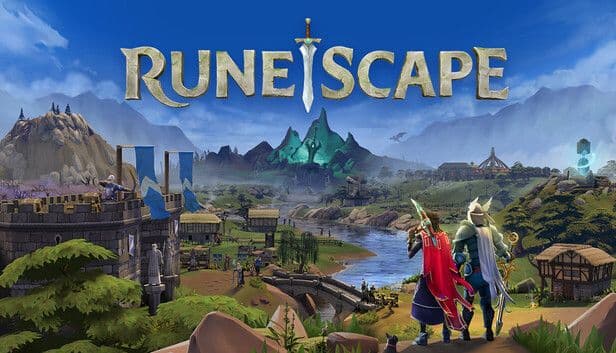
Log into Gielinor today, and you're stepping into a game rewriting its own rulebook after 25 years — RuneScape's community voted to kill off the Treasure Hunter loot box entirely, and Jagex followed t...
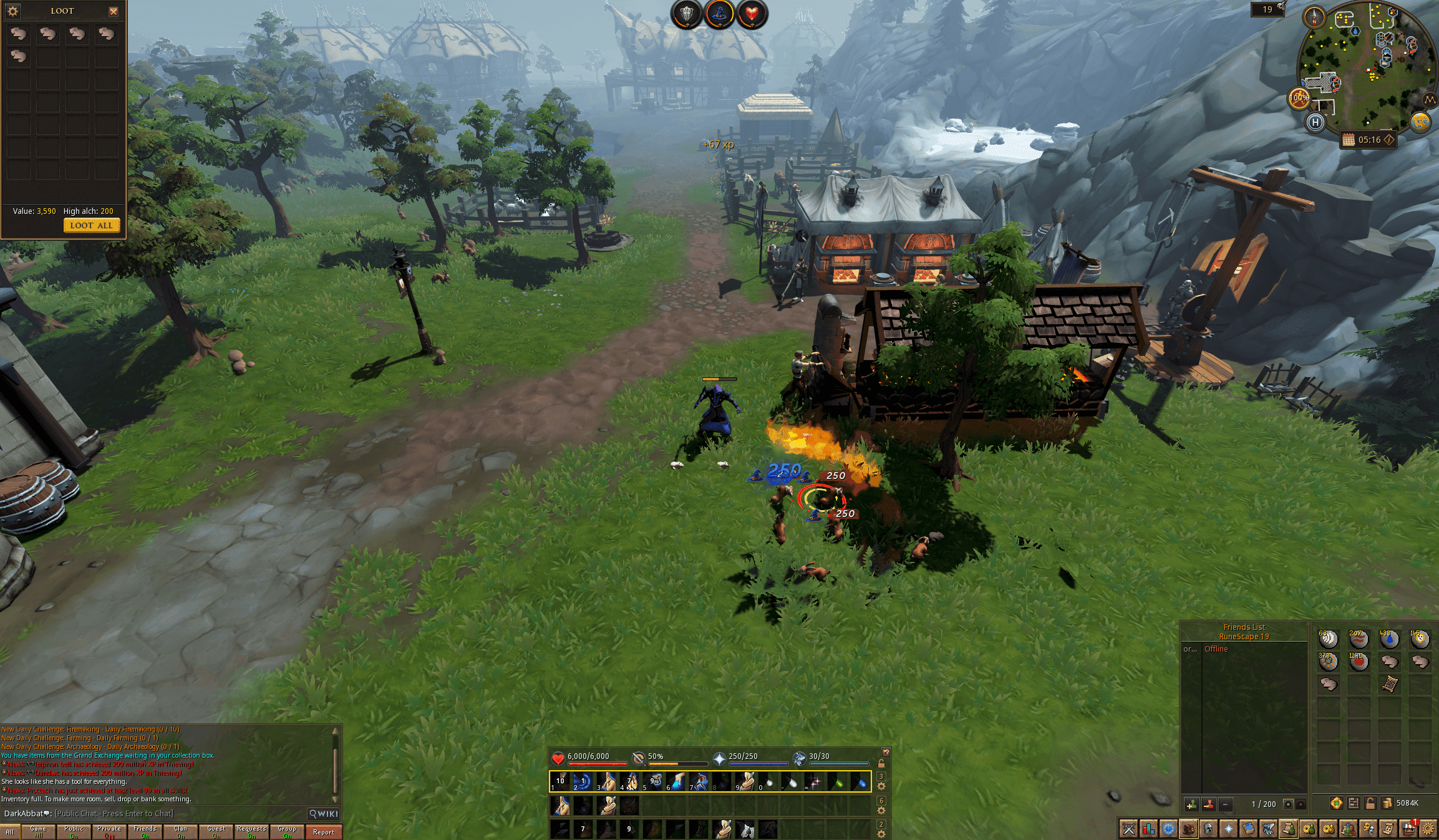
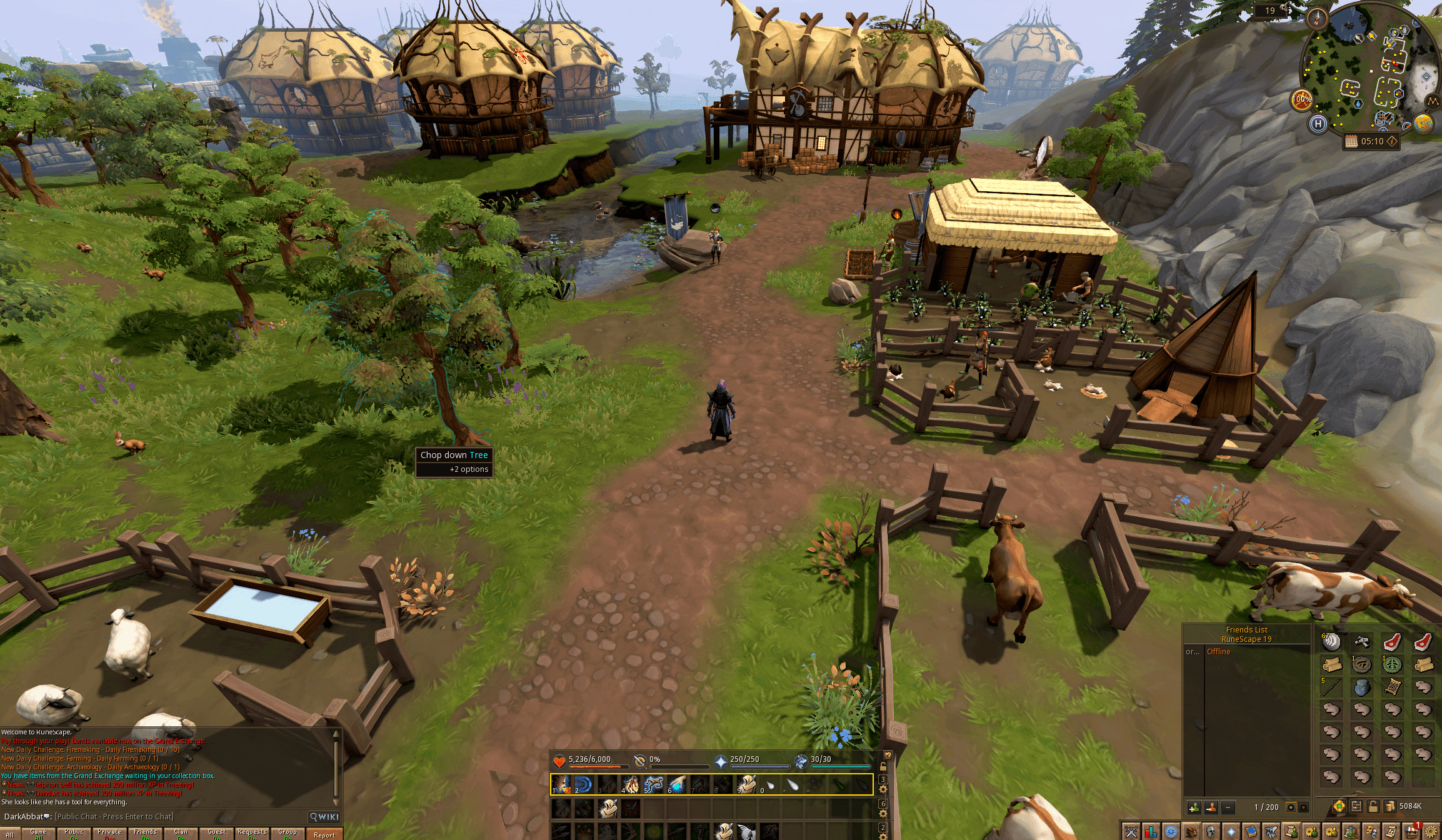
RuneScape is a browser-born, now standalone MMORPG developed and published by Jagex, first launched in January 2001 and rebuilt into its current form, commonly called RuneScape 3, starting in 2013. This review covers that modern, continuously-updated version — not Old School RuneScape, the separate, deliberately preserved 2007-era build Jagex runs in parallel for players who want the old formula frozen in amber. The two are siblings, not the same game: same world, same lore roots, completely different codebases, update teams, and design philosophies. In 2026, marking its 25th anniversary, RuneScape is mid-overhaul again, having spent the year stripping out its most disliked monetization system and rebuilding combat from the ground up under a banner Jagex calls the Road to Restoration.
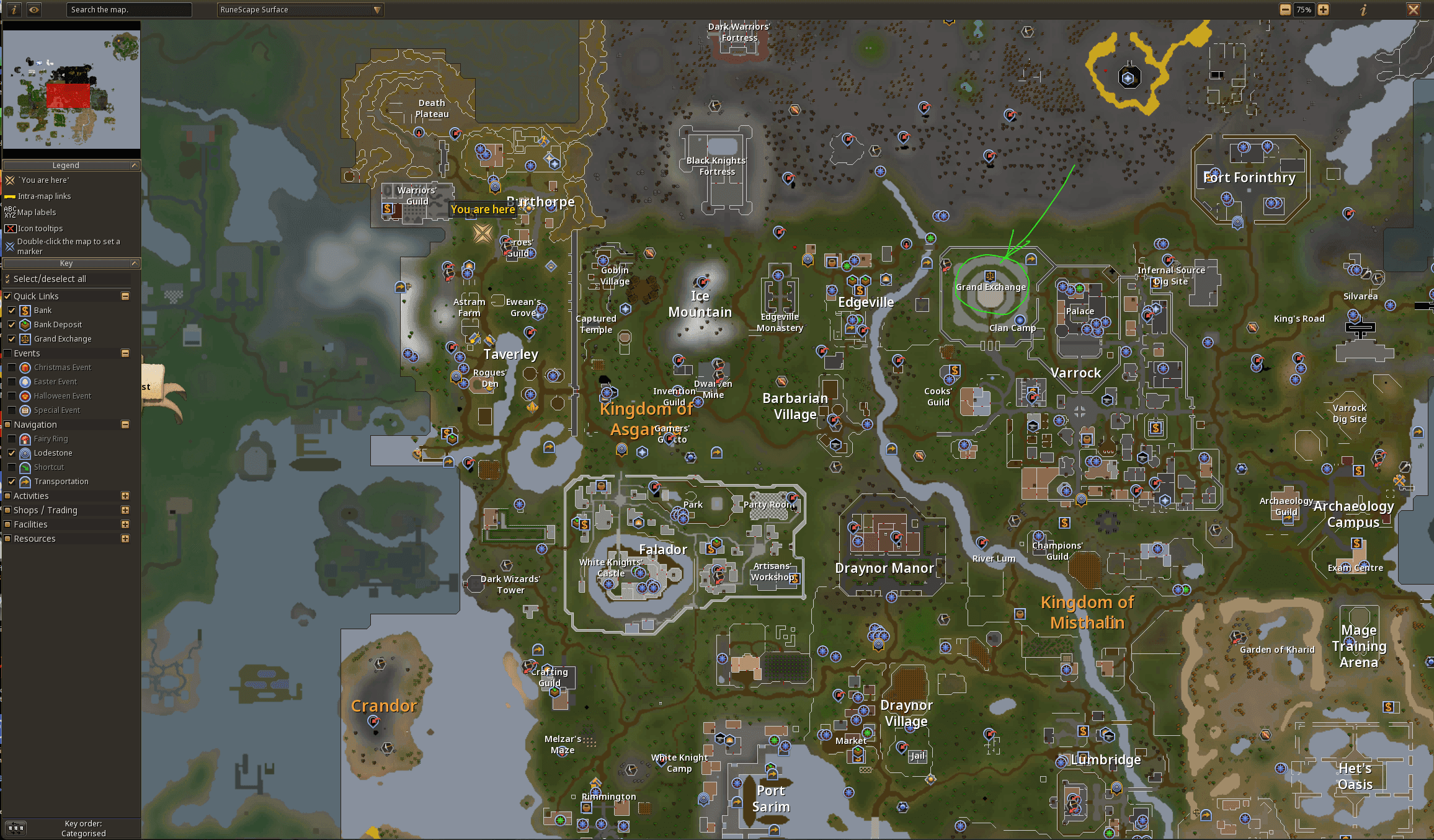
The world of Gielinor is the throughline connecting every version of this game, and it's aged unusually well for something originally rendered in flat 2D sprites. Continents like Misthalin, Kandarin, and Asgarnia sit alongside newer additions pushed out over two decades of updates — the God Wars fronts, the desert nation of Menaphos, the frozen north of Kourend and beyond. Where RuneScape distinguishes itself from most fantasy MMORPGs is narrative continuity: quests written in 2003 and quests written this year reference the same gods, the same wars, the same player character's accumulated history, because Jagex has never rebooted the story to fit a new engine. The God Wars — a conflict between Saradomin, Zamorak, Guthix, Bandos, Armadyl, and Zaros that has shaped the setting since the earliest lore drops — is still the backbone of the plot in 2026, and a veteran account's quest log reads less like a checklist and more like a personal chronicle spanning a quarter century of in-game events.
Character creation is almost aggressively minimal — pick a name, adjust a face and a set of starting clothes, and you're standing in Lumbridge with no class, no faction, and no obligation. Tutorial Island walks a new account through the absolute basics: chop a log, light a fire, cook a shrimp, swing a sword at a giant rat. It's brief and functional rather than cinematic, and it ends with the game doing something few MMORPGs still do — it simply lets go. No forced main-quest arrow, no glowing waypoint dragging you toward the next story beat. A quest journal, a skills panel, and an entire continent are handed over, and what you do with the first hour is genuinely up to you.
That openness is disorienting if you've spent years in theme-park MMORPGs that hold your hand through act one. Some players head straight for the Grand Exchange, RuneScape's central auction house, to see what the economy looks like. Others open the quest list and start Cook's Assistant, one of the oldest quests in the game, because an NPC baker in Lumbridge asked for an egg, some milk, and a pot of flour. There's no wrong answer, and that's the point — the first hour of RuneScape isn't a tutorial for a specific build, it's an orientation to a sandbox with twenty-five years of accumulated content sitting behind every door in town.
RuneScape has no classes. Instead, it has skills — currently around thirty of them, spanning combat styles like Melee, Ranged, and Magic alongside gathering and crafting disciplines like Woodcutting, Fishing, Smithing, and Herblore. Most cap at level 99, a small handful push to 110 or 120, and every skill levels independently through repeated, hands-on practice: you don't unlock Fletching by picking a class, you unlock it by carving your first batch of arrow shafts. Within the first ten hours, a new player typically has half a dozen skills started, a completed low-level quest or two, and a rough sense of which of RuneScape's four skill categories — Combat, Gathering, Artisan, and Support — actually interests them.
Quests deserve special mention here, because RuneScape has published more of them than almost any MMORPG in the genre — well over 200 at this point, ranging from ten-minute fetch errands to multi-hour Grandmaster-tier stories with real difficulty spikes and skill-level gates. Early quests like Restless Ghost or Prince Ali Rescue are short and largely comic, but they establish a pattern the game keeps for its entire runtime: quests are where RuneScape's actual writing lives, while skilling and combat are the systems that let you access it. A new player who ignores quests entirely is playing a much shallower version of the game than one who works through the questlist alongside their skills.
Money matters early, and RuneScape handles it two ways: earn gold in-world through skilling, questing, or the Grand Exchange, or buy a Bond — a tradeable item purchasable with real money that grants game time and can also be sold to other players for in-game gold. Bonds are how RuneScape has quietly let free-to-play accounts fund a full membership without ever spending a cent, provided they can earn enough gold to buy one off the market — a system that's aged into one of the more player-friendly monetization ideas in the genre, even as other systems around it have not.
By hour fifty, most players have crossed from freeform exploration into deliberate character-building, and this is where RuneScape's combat identity — a genuinely contentious piece of MMORPG history — comes into focus. In 2012, Jagex replaced the original point-and-click, largely automatic combat with the Evolution of Combat, introducing an action bar of unlockable abilities, dual-wielding, and a much more hands-on rotation-based fight loop. It split the community for years and is the single biggest reason RuneScape and Old School RuneScape diverged into separate games in the first place.
In March 2026, as part of the anniversary Road to Restoration, Jagex reworked combat again with what it calls Combat Style Modernisation — merging the old Attack and Strength ability books into one unified Melee kit, raising Melee, Ranged, and Magic's level caps to 120 to match the newer Necromancy combat style, and adding contextual pop-up tutorials that explain each ability the moment it unlocks. The stated goal was to make the system's foundations legible again after fourteen years of abilities, perks, and relics layered on top of each other, and early feedback suggests it's closer to that goal than the notoriously rocky original 2012 rollout. Combat still runs on three interchangeable modes — Full Manual for players who want to trigger every ability by hand, Revolution for a mostly-automated rotation, and Legacy for a full return to pre-2012 point-and-click combat — so the game accommodates wildly different appetites for hands-on play without forcing a single style on anyone.
This is also roughly where Slayer and Dungeoneering enter a typical account's routine — Slayer assigning specific monster-killing tasks that gate access to some of the game's toughest single-target fights, Dungeoneering generating procedural dungeons that reward a completely separate leveling track. Neither is mandatory, but both are the clearest signal that RuneScape has stopped being a beginner's game by this point and started asking players to specialize.
Endgame in RuneScape is boss-centric rather than instance-centric, and the roster runs deep. The two God Wars Dungeons remain foundational — the original pits players against generals like Kree'arra, General Graardor, and Nex herself, while the sequel adds Vindicta, Helwyr, Gregorovic, and the notoriously difficult solo encounter Telos, the Warden, whose fights scale in intensity the longer a player's win streak runs. Above those sit the game's hardest group content: Solak, Vorago, and Araxxor and Araxxi push six-to-eight-player teams through mechanically dense fights, while the Liberation of Mazcab — RuneScape's first and, so far, only ten-player Raid — pits a full team against Beastmaster Durzag and Yakamaru in a genuinely coordinated, instanced encounter. Three Elite Dungeons round out the group-PvE offering with a more traditional dungeon-crawl structure: normal mobs between boss rooms, closer to what a WoW player would recognize as a "dungeon" than most of RuneScape's standalone boss fights.
PvP exists mainly in the Wilderness, a large, dangerous, unrestricted zone where players can attack each other and risk their carried items — a legacy system RuneScape has never removed, even as most of the genre moved toward opt-in arenas. It's a niche pursuit next to the game's PvE-heavy identity, but it's still there for players who want it, alongside safer minigame-style PvP for anyone who wants the risk without the full-loot stakes.
The most recent headline update, launched on 13 July 2026, reworked Player-Owned Houses from top to bottom alongside an overhaul of the Construction skill, raising its level cap to 120 and adding a new recipe system that unlocks furniture tied to specific in-game achievements rather than a flat gold-and-materials shop list. It's a quality-of-life-and-identity update more than a power-progression one, but it's indicative of where the 25th-anniversary roadmap has been focused: revisiting old, sometimes-neglected systems and giving them the attention a newer MMORPG would have baked in from day one.
Is RuneScape pay to win? For most of the last decade, the honest answer was "somewhat" — Treasure Hunter, a daily loot-box minigame launched in 2014, sold keys that could return experience boosts, gold, and gameplay-relevant items, and it was one of the most consistently disliked systems in the game's history. In November 2025, Jagex put its removal to a community vote; players said yes overwhelmingly, and as of 19 January 2026, Treasure Hunter and every currency tied to it were pulled from the game entirely as the first major move of the Road to Restoration.
The catch, and it's worth stating plainly, is that removing Treasure Hunter also removed a chunk of what premium membership tiers used to include, and Jagex followed the change with a subscription price increase in March 2026 — its second hike in under two years, and one that's drawn criticism for landing membership costs closer to a full MMORPG subscription than the genre's usual free-to-play-with-perks model. RuneScape today is free to start and fully playable without spending, thanks in large part to the Bond system letting in-game gold cover a membership, but a subscriber paying full price is getting a cleaner, less predatory game than the one that existed in 2025 — at a noticeably higher monthly cost than the one that existed in 2024.
Clans remain RuneScape's primary social structure, ranging from casual skilling communities to dedicated PvM clans that organize around specific bosses and raids. The Grand Exchange functions as a genuine player-driven economy rather than a vendor-price sink, and minigames — from the safe PvP of Castle Wars to cooperative activities tied to specific skills — give groups something to do outside quests and bosses entirely. None of this is flashy by 2026 standards, but it's been running, largely unchanged in structure, for the better part of two decades, and that stability is itself part of the pitch.
Population figures are worth a caveat: RuneScape's Steam concurrent player counts sit in the low thousands, but that number badly understates the real playerbase, since most veteran accounts run through the standalone Jagex Launcher rather than Steam. Exact total population figures aren't publicly disclosed by Jagex, and third-party trackers disagree meaningfully depending on methodology — treat any single number here as a rough signal rather than a precise count.
If you want an MMORPG where your character's history is measured in real years rather than expansion cycles, where there's no class to lock you in and no wrong way to spend an evening, RuneScape in 2026 is arguably in its healthiest state in a decade — the worst of its monetization is gone, and combat finally has a coherent foundation again after years of patchwork. If what you're after is a tightly directed story campaign or a raid calendar stacked with fresh instances every season, look elsewhere; RuneScape's pacing is measured in skill levels and quest points, not weekly reset timers, and its raid roster is genuinely narrow next to the genre's current leaders. Come in expecting a game that rewards patience and self-direction over hand-holding, and the 25-year investment Jagex has made in this world starts to look like exactly what it is: one of the only MMORPGs still standing that can prove it.