 F2P · Live
Lineage 2 Essence
Lineage 2 Essence is NCSoft's free-to-play take on the classic Korean MMORPG Lineage II, built around faster…
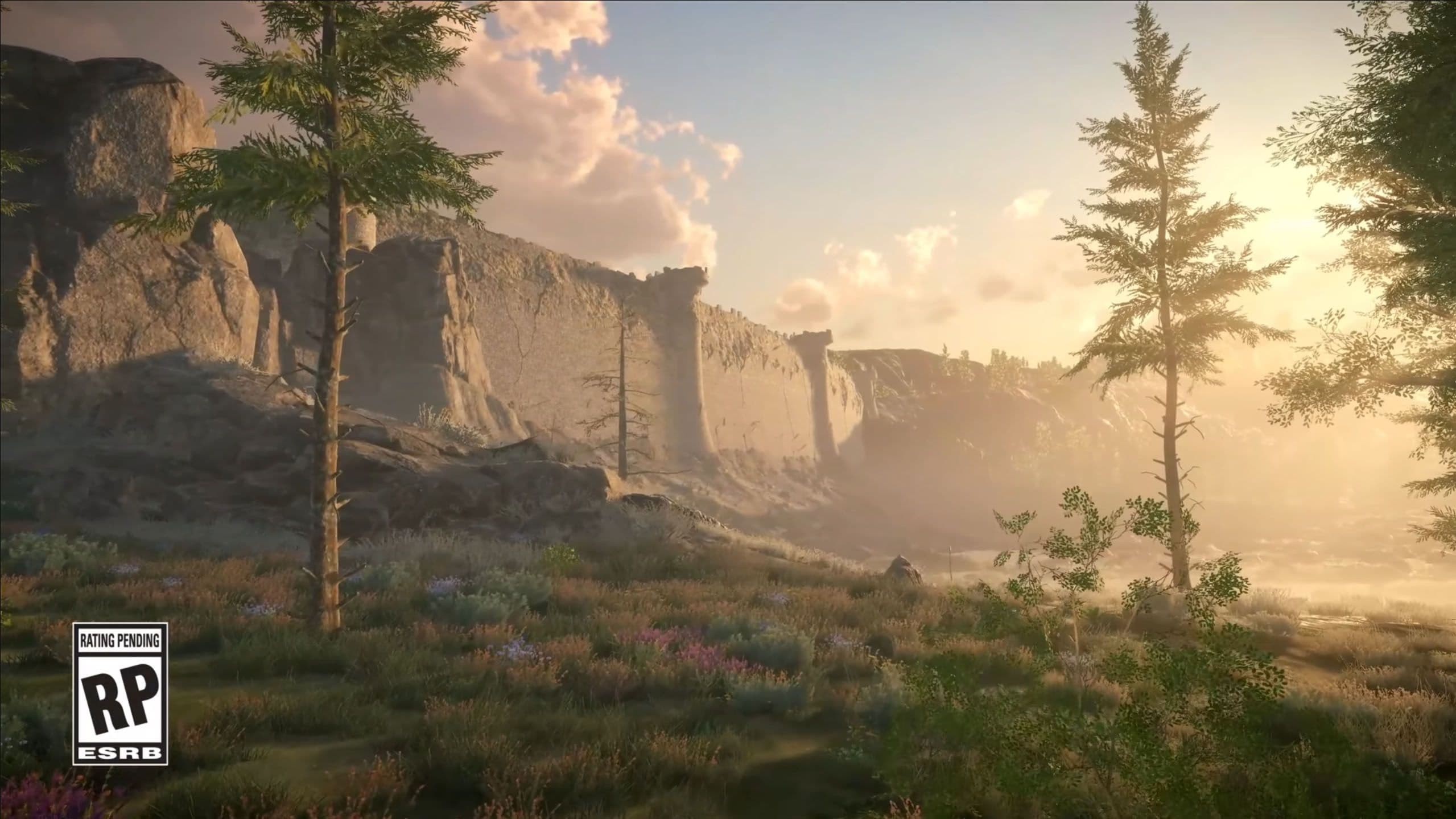
Embers Adrift is a group-focused PvE MMORPG from independent studio Stormhaven Studios, built on classic MMO principles: no quest markers, no minimap, and a dark world where a torch is equipment rathe...
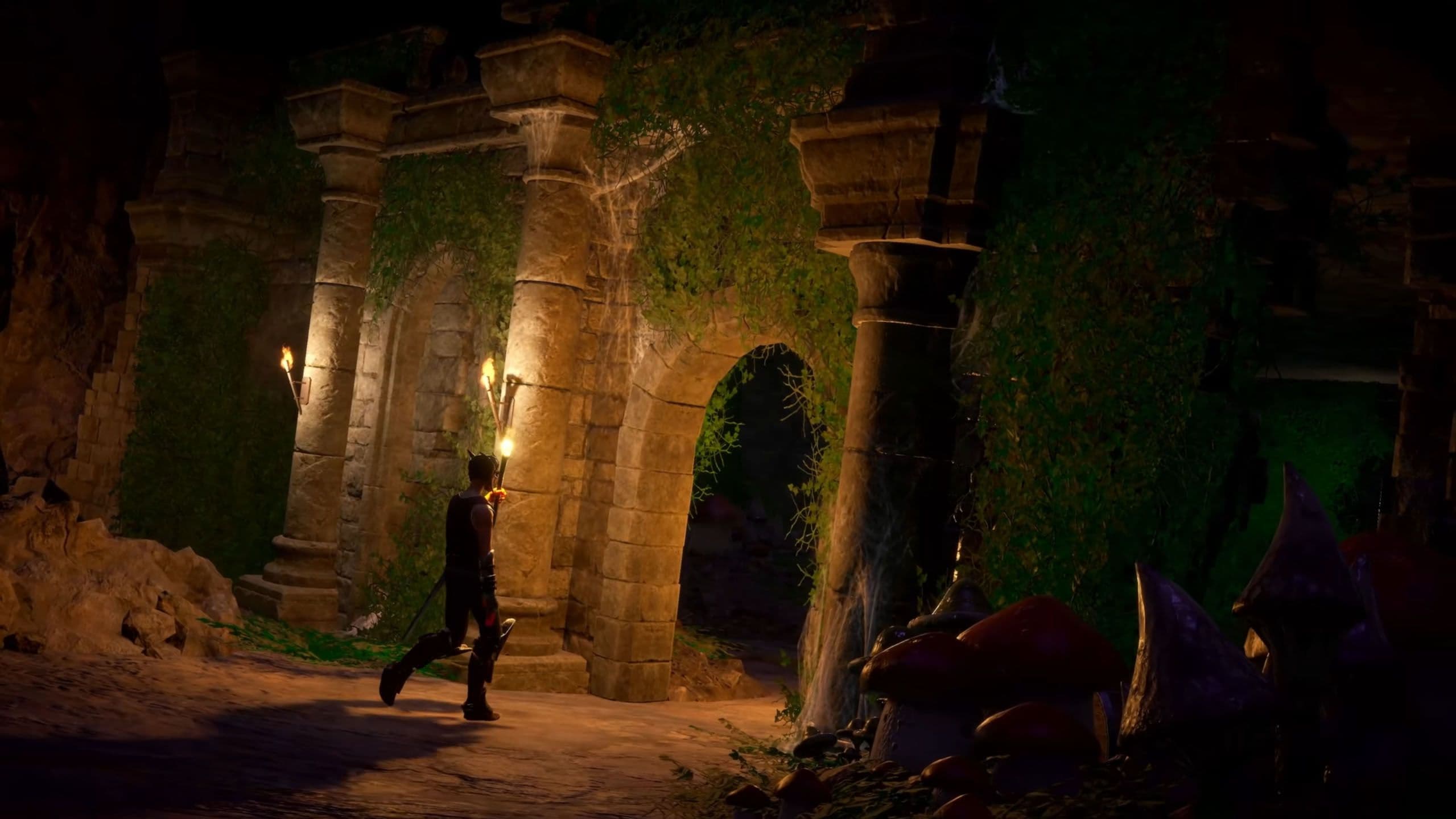
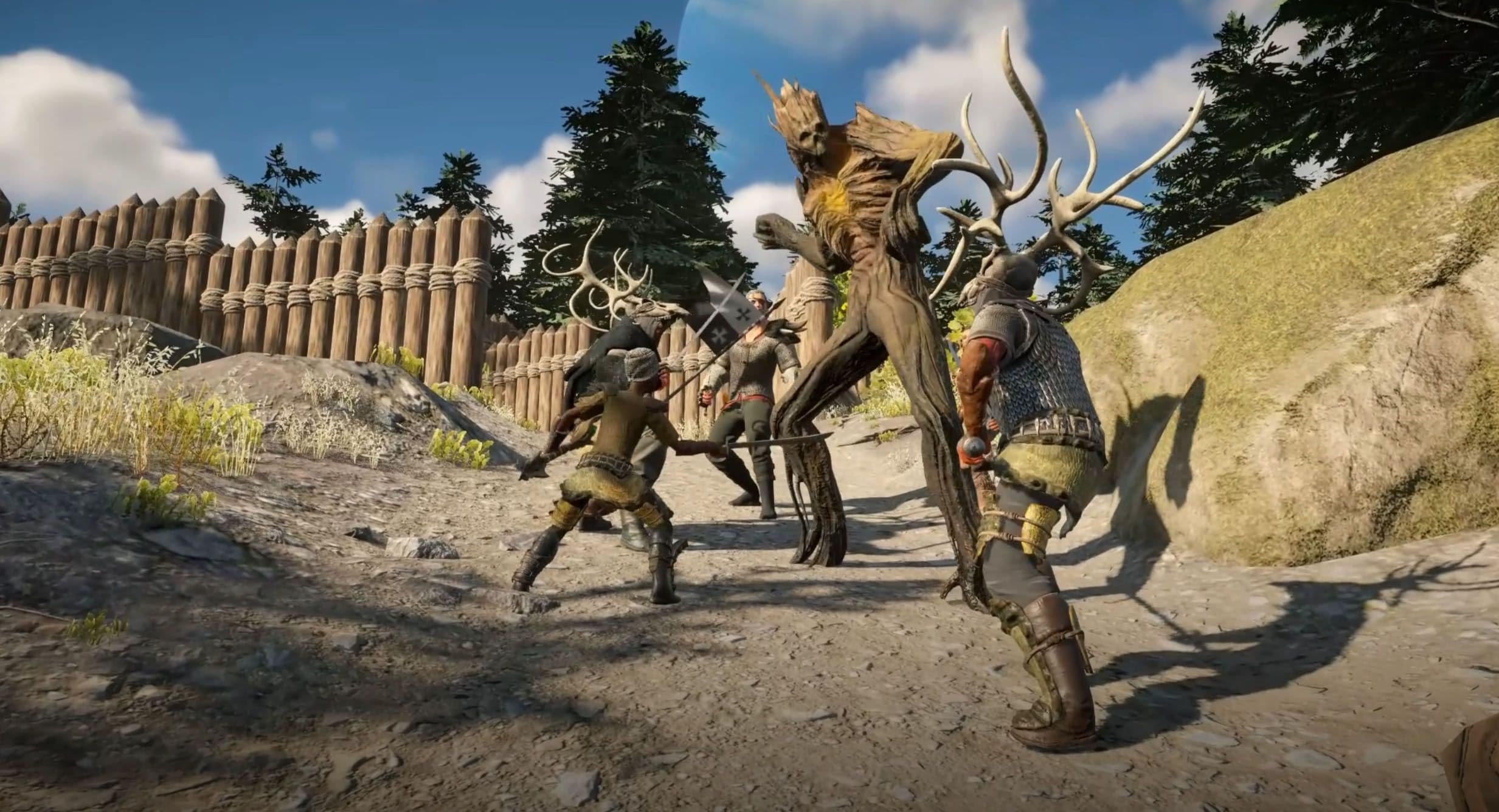
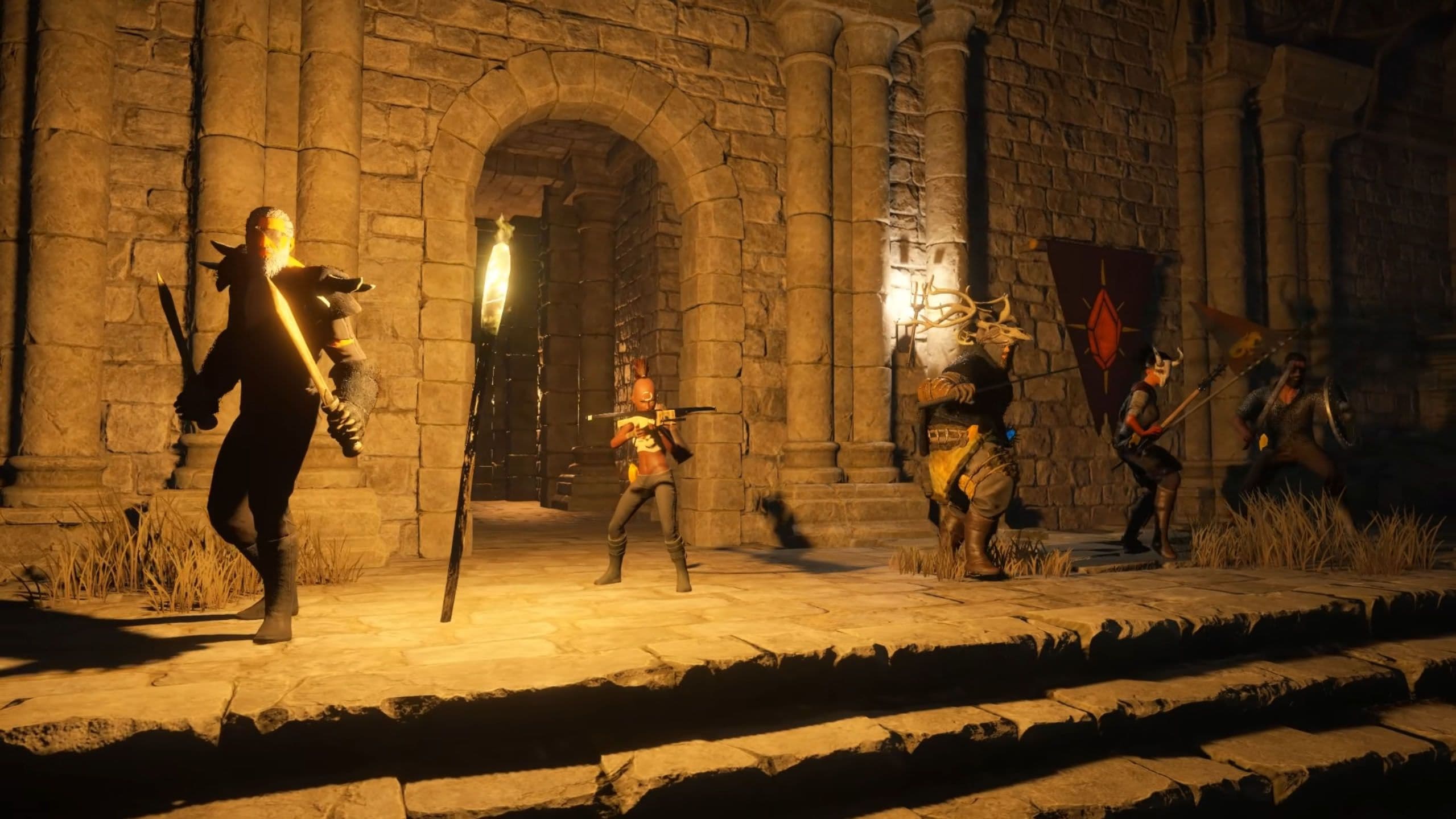
Embers Adrift is a group-focused PvE MMORPG from the independent team at Stormhaven Studios, released in October 2022 after a Kickstarter campaign under its earlier name, Saga of Lucimia. It was built on classic-MMO principles most of the genre discarded two decades ago, and it has since survived a mandatory subscription, a payment processor that stopped paying out, and a second launch on Steam in April 2025. The game is still live, still patched every month, and still very small.
Quick take: Embers Adrift is worth its twenty dollars if you want a slow, cooperative PvE MMORPG and you already have people to play it with. The systems have grown steadily since 2022 — an Ember-powered magic layer, a level 50 zone, monthly patches — but Steam concurrency rarely clears the mid-thirties, so finding a group is the real difficulty setting. Buy it as a small persistent RPG with no subscription hanging over it, not as a populated MMO.
The opening hour is unguided on purpose: no minimap, no quest markers, no arrow pointing at the next objective. Character creation offers humans and only humans, with a spread of body types that includes shapes most MMOs politely pretend don't exist, plus a hairstyle system assembled from three separate pieces. Then you walk into Newhaven and start talking to strangers.
Any NPC might have work for you, and none of them advertise it. A quest journal keeps track of what you've accepted, but finding the job in the first place means reading dialogue rather than scanning for punctuation floating over heads. The writing is unhurried and there's no voice acting, so the first hour asks for more reading than most modern MMOs ask for in their first ten.
Navigation runs on the same logic. You orient by roads, ridgelines and Blupiter — the enormous planet parked in the sky that players use as a compass. After dark the world goes genuinely black, and light becomes equipment rather than atmosphere: torches, lanterns, and ground torches you can plant as a beacon while a group works through a camp.
The setting explains the design more than the lore does. Your character escaped a war in the south, crossed the Darklands, and arrived at a struggling frontier city that needs hands more than it needs heroes. Ember is the substance everything fought over — a natural phenomenon that surfaced with the Great Sundering, and now the source of the world's magic.
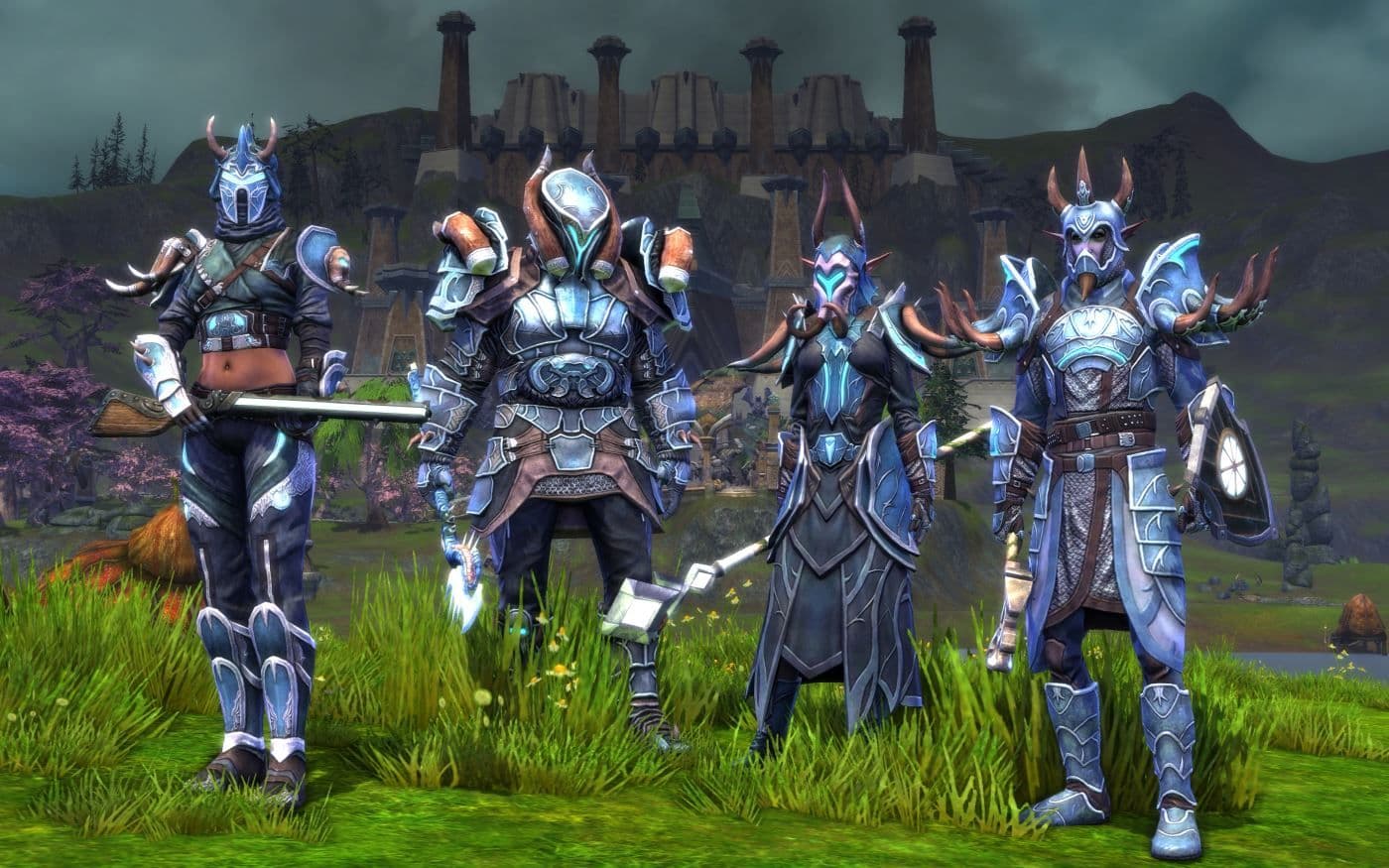
Stormhaven originally pitched all of this as low fantasy, and early critics found the result thin: humans only, a bestiary heavy on deer, bears and bandits, and armour that reads as functional rather than memorable. That position has softened over the years. Ember Veins, Ember Rings, mutated ashen creatures and the Alchemy system have pushed the game closer to conventional fantasy than the 2022 marketing suggested, and Steam's own tag cloud now includes Dragons and Magic alongside Old School and Realistic.
The environment has picked up detail as well. A February 2026 update added precipitation driven by per-biome temperature, humidity and precipitation probability, with separate rates for how quickly ground wetness dries and snow melts. Whether it rains or snows in a given region depends on that region's current temperature. Day/night cycles and seasonal changes already affected which creatures you meet and how far you can see.
By hour ten you have picked a role and discovered that kills are the only source of experience — quests hand out items, currency and story, but never levels. Characters start as one of three base classes: Defender, Striker or Support. At level six a specialisation quest splits each into three, producing nine endpoints in total.
Defenders become Juggernauts, Knights or Marshals. Strikers split into Berserkers, Brigands and Wardens, while Support covers the Duelist, the Sentinel and the Warlord — the last of which buffs and debuffs through songs. It is a straight trinity, and Stormhaven spent a September 2025 update pulling generic shared abilities out of the roles to make the nine feel less interchangeable — an acknowledgement that early builds all played a bit like melee with a job title attached.
The level cap sits at 50 and the climb is long. Experience curves above level 25 were cut back in 2023, armour weights were loosened so characters could stack more pieces, and a 2024 bulletin board system gave solo players repeatable tasks. None of that changes the underlying arithmetic: the game expects six people, and the difficulty of most content assumes them.
Both, depending on how many people are standing next to you. Embers Adrift uses tab-target combat paced for a six-person group to talk mid-fight — call a target, land crowd control, react to an add — and that pacing is the single most divisive thing about the game. Played alone it can feel like a metronome. Played in a competent group it works closer to a tabletop encounter where each round has a decision in it.
Pulls matter because the world fights back. Creatures call for help, wander into fights that don't concern them, and outnumber a careless player quickly, which is why torch placement and pull positioning get discussed seriously by the community. The 2025 engine update to Unity 6 added clearer visual tells for enemy wind-ups, addressing a long-running complaint that big incoming hits were hard to read.
Alchemy is the system that gives combat its ceiling. Introduced in 2023 and now unlockable at level one, it lets any character spend Ember Essence to empower a non-aura skill, at a cost. The first tier consumes ten Essence, adds a second of channel time and locks the skill behind a two-minute cooldown; the second tier costs fifty Essence, two seconds of channelling and a ten-minute cooldown. Advantage Strike normally grants advantage on a single attack — empowered, it grants advantage on every attack for ten seconds. The trade is always time for effect, in a game where an extra second of channelling is a real decision.
Crafting in Embers Adrift is a parallel grind rather than a side activity. Three gathering roles — Forester, Hunter, Prospector — feed six crafting professions: Armorsmith, Outfitter, Provisioner, Tinkerer, Weaponsmith and Woodworker. A character can train a maximum of three professions, which forces trade rather than self-sufficiency.
Materials carry their properties into the finished item, so the same recipe produces different results depending on what went into it. Crafted gear can then be imbued with Ember and pushed further through weapon and armour augmentation, which is where the level 50 crafting profession added with the Ibaxus zone comes in. Storage has been the friction point: Stormhaven has been rolling out stopgaps including a city gathering bank that mirrors the gathering bag, with guild banks still listed as in development as of mid-2026.
The economy that all this feeds is small. Players posting on Steam describe an auction house they can skim in seconds and trade chat as the more reliable venue, which is the predictable consequence of the population figures below rather than a flaw in the crafting systems themselves.
Level 50 leads into world bosses, raid encounters and the Ibaxus zone, released alongside the full Steam launch in June 2025 as the legendary lost city of the Vehueramen. It brought new raid content, a level 50 crafting profession, quests and an item progression system aimed at capped characters. A May 2026 patch added the Mire in Forgotten Depths as an instanced challenge boss, and monthly patches have continued adding encounters at a steady, modest rate.
Most endgame targets are open-world, which makes raiding a scheduling exercise built around respawn timers. Players in the Steam forums describe a single high-level raid group drawn from one guild plus friends, running loot rules aimed at even distribution. Stormhaven's store page advertises 24-player raids; the game's own Steam community has pointed out, bluntly, that 24 players is more than the game's daily concurrent peak.
Those numbers are worth stating plainly. Since the migration completed, logins run through Steam, so Steam tracking now covers most of the playerbase rather than a slice of it. Third-party trackers put the all-time concurrent record at 86, with recent peaks of roughly 25 to 35 players across a 24-hour period and single digits during quiet hours. Lifetime Steam reviews sit at 70% positive across 233 reviews, and recent review samples are too small to read as a trend.
Embers Adrift is buy-to-play at $19.99 on Steam, with no cash shop, no loot boxes and no microtransactions of any kind. Sales run deep and often — the game has been discounted by 75% to $4.99 — which puts the entry cost below most of what it competes with.
The monetisation history is messier than the current model. The game launched in October 2022 at $30 with a mandatory subscription, dropped the requirement in June 2023 after community pressure, and in 2025 replaced monthly subscriptions with purchasable blocks of perk time following the payment problems described below. Non-subscribers keep full access to the world, every class and specialisation, and their full inventory space.
Perks are mostly convenience: seven extra character slots, expanded bank storage, more mail attachment slots, double auction house limits, expanded emotes and titles, a subscriber chat channel, and a portable crafting station any nearby player can use. One perk does touch combat — an Ember Ring healing enhancement bonus that applies to nearby players, subscriber or not. It is a group-wide buff rather than a personal power spike, but it is the one line in the perk list that isn't purely cosmetic or organisational.
Stormhaven has spent the last two years absorbing hits that would have closed most studios of its size. In October 2024 it told players that its payment processor, Digital River, had withheld revenue since that June, that its payment agreement had been altered without consultation, and that a legal demand letter sent on 11 October had gone unanswered. The studio terminated the contract, cancelled all subscriptions running through the processor, and made the game temporarily free so players wouldn't lose access.
Recovery took the better part of a year. Embers Adrift soft-launched on Steam in April 2025, switched from subscriptions to perk-time blocks in May after Steam payment issues of its own, and fully launched on 24 June 2025 — the point at which Stormhaven said it expected its first revenue payment in twelve months. It marked the occasion with a 50% sale and a new zone.
Infrastructure has been the more recent problem. In March 2026 a hardware failure took the live service offline for over 24 hours and forced through a host migration the team had already scheduled, returning with a small rollback for anyone online when it failed. Development has continued regardless: the June and July 2026 patches were deliberately content-light, focused on shader removal, grass mesh complexity and shadow rendering to help players on lower-end hardware.
Embers Adrift stopped working as a massively multiplayer game some time ago, and the honest way to recommend it starts by saying so. Four years of layered systems, a studio that keeps shipping patches through circumstances that would justify quitting, and a twenty-dollar price have produced a persistent cooperative RPG for a few dozen people at a time.
Set against the MMO market, it loses on population before the conversation reaches design. Judged as the thing it actually is — a slow, dark, group-dependent PvE game with no store attached — it holds up better than its concurrent numbers suggest. The people still playing after 300 hours are not confused about what they bought. They bought a small world with a handful of neighbours, and they got exactly that.
The recommendation follows the maths. Bring people, or bring patience for finding them in a game where the trade channel is the population. Everything else Embers Adrift asks for — reading quest text, learning a zone without a map — is the part its players came for.
No. It costs $19.99 on Steam with optional perk time on top, though it frequently goes on sale for far less. The free period that ran from late 2024 was a temporary measure during the studio's payment dispute and ended with the Steam launch.
Steam trackers show recent 24-hour peaks in the mid-twenties to mid-thirties, against an all-time record of 86. Because account logins now run through Steam, those figures reflect close to the whole playerbase.
You can, using bulletin board tasks, solo dungeon entrances and open-world grinding, but it is slower and considerably more dangerous than grouping. Most dungeon content and all raid content assumes a full party of six or more.
Only in the arena. The world itself is entirely PvE, with no open-world flagging, no territory control and no full-loot mechanics anywhere in the game.
Stormhaven lists an Intel Core i5-9300H or AMD Ryzen 7 processor, 12 GB of RAM, a GTX 1060 or RX 580 with 6 GB of video memory, and 20 GB of storage. macOS on Apple Silicon is supported, and Linux support is labelled experimental.