 F2P · Live
Lineage 2
Aden's castles never stay in the same hands for long, and Lineage II has built an entire twenty-three-year…
Ashes of Creation was a crowdfunded fantasy MMORPG from Intrepid Studios built on a settlement system where player activity grew cities from wilderness to metropolis — and rival players could besiege ...
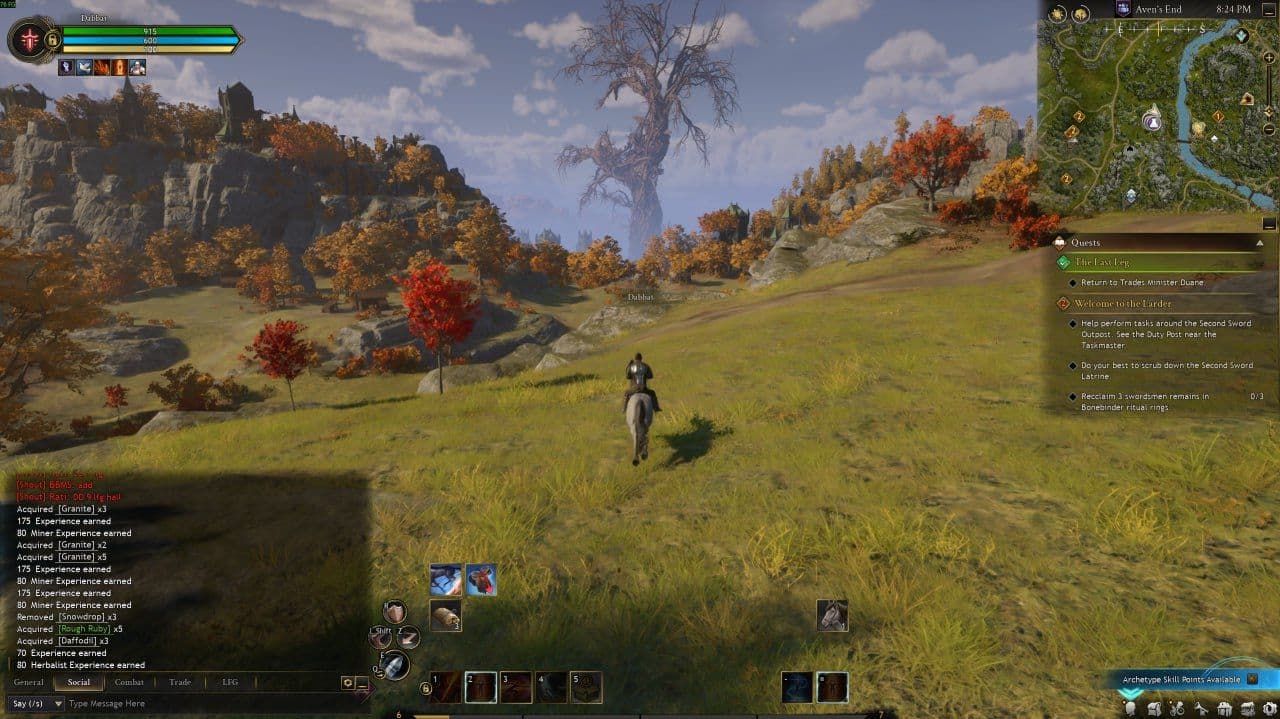
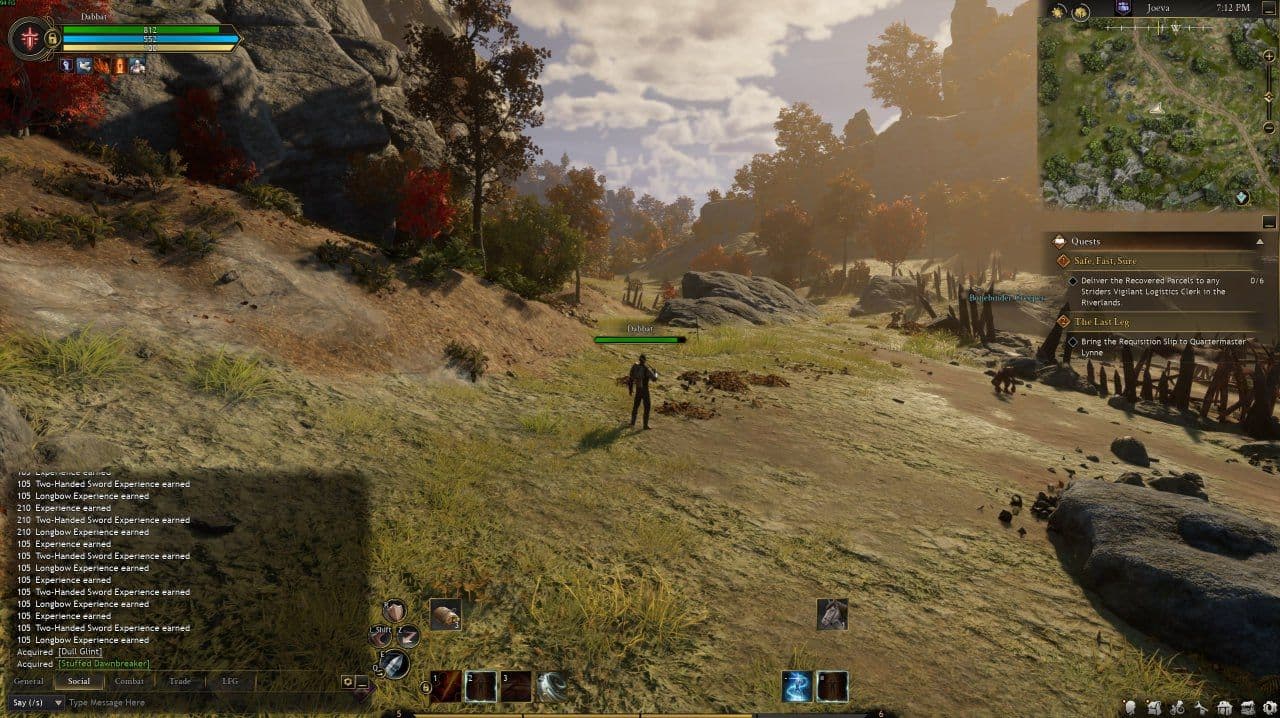
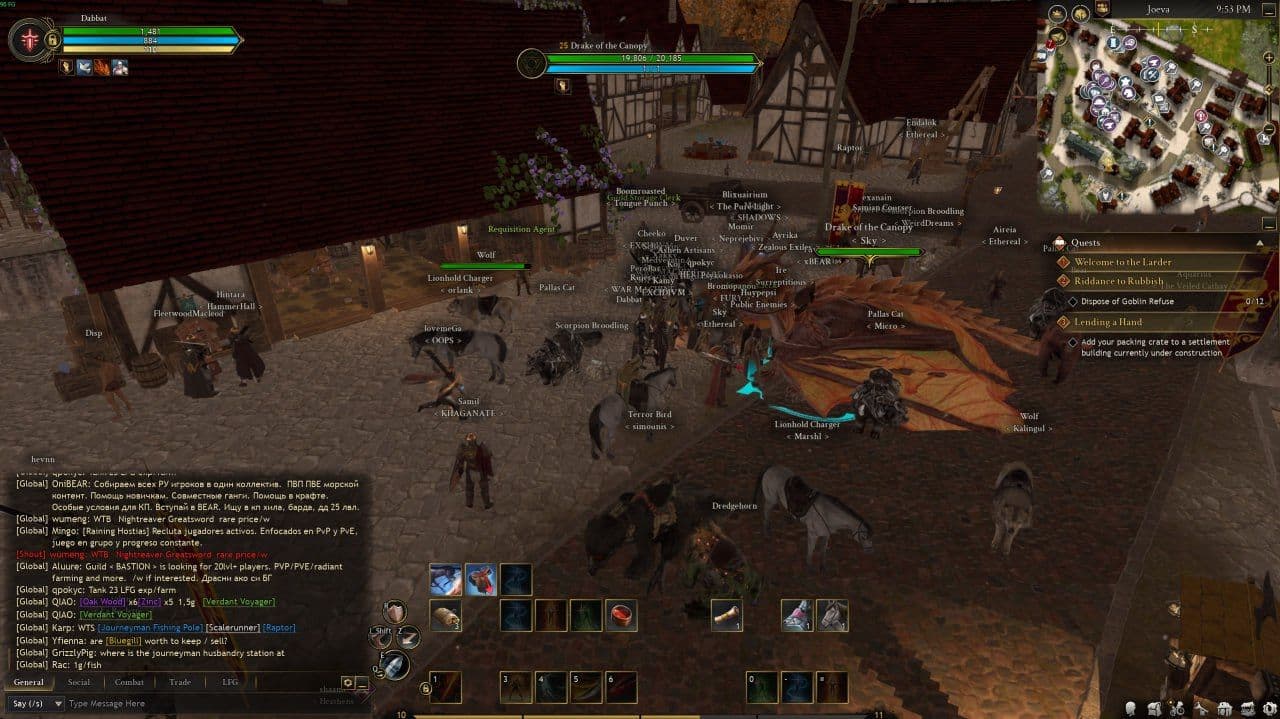
Ashes of Creation was a crowdfunded fantasy MMORPG from San Diego developer Intrepid Studios, announced in December 2016 and built around a system that let players raise, govern, and burn down cities on a shared server. It entered Steam Early Access on December 11, 2025 at $49.99 after nearly a decade of development, and ceased to be a going concern 52 days later, when founder Steven Sharif resigned and the studio dismissed its entire staff. This is a retrospective rather than a review, because the game is no longer sold, no longer running, and currently the subject of litigation in California.
The node system was the whole pitch. Verra's map was divided into a fixed set of predetermined settlement sites, and every quest completed, mob killed, and ore vein mined inside a site's zone of influence fed experience into that site rather than only into the player. Enough activity in one place and a wilderness clearing became an encampment, then a village, then a town, and eventually one of a handful of metropolises the server could support at once.
Each site carried a fixed personality that survived every rebuild: Divine, Economic, Military, or Scientific. That type decided which services the settlement could offer and how it picked its mayor — an election in some, a last-man-standing arena tournament in others. From the village stage onward the settlement gained a player government with real levers: tax rates, which buildings got constructed with the citizens' hauled resources, which neighbouring nodes it signed trade agreements with, and which it declared war on. A mayor who built a stable but skipped the marketplace shaped the local economy for everyone within a day's ride.
Growth had a cost attached, and that was the clever part. A settlement advancing far enough locked its smaller neighbours into vassalage, capping their development and redirecting their taxes. Those neighbours had one obvious answer: declare a siege and raze the city back to wilderness, taking the mayor's building projects and the citizens' houses with it. Nothing in the design protected a player's investment. That is unusual enough in a modern MMO to explain why so many people watched this project for nine years, and why the promise that no two servers would look alike did so much heavy lifting in the marketing.
Character building started with nine playable races and eight primary archetypes — Tank, Cleric, Mage, Fighter, Rogue, Ranger, Bard, and Summoner — and opened up at level 25, when a secondary archetype produced 64 possible class combinations. The secondary pick did not hand over a second toolkit. It modified the abilities already owned, so a Fighter who took Mage augmented existing strikes with elemental damage rather than learning fireballs, and the resulting class carried its own name.
Combat sat between the two traditions the genre usually forces a choice between: templated ground effects and dodges from the action camp, target locking and rotation discipline from the tab-target camp. Reactions from testers were split roughly along the lines you would expect, with action-combat players finding it stiff and older MMO hands finding it readable. The Rogue only reached the build in March 2025, which meant one of the eight foundational archetypes spent most of Alpha Two absent from a game whose class identity depended on all eight being present.
The early game was a group grind, and the build made no effort to disguise it. After a character creator with the kind of slider depth that eats an hour before you see the world, players landed near a low-stage settlement and went looking for other players, because the fastest progression came from coordinated pulls on camps of elite mobs rather than from quest chains. Community levelling guides during Early Access read like fishing spot reports — which beach, which courtyard, which ruin, and which of them the zergs had already claimed.
Experience came from quests, gathering, artisanship and PvP as well as combat, but the efficiency gap was stark: player-written guides in December 2025 put the run to the cap at a handful of hours in a good group against something closer to a hundred hours solo. The Alpha Two cap sat at level 25, the point where the secondary archetype unlocked, with a planned rise to 50 during the final phase that never arrived.
Dying cost something, which is rarer than it sounds. There was no de-levelling, but a death produced experience debt worth roughly three to four percent of the current level's total, a stacking debuff that got worse the more often you died, and the loss of a fifth to a third of the gathered materials and currency being carried. Combined with a map where hauling goods across open country was the whole point of the economy, that gave every trip back from a resource node a genuine risk of ending badly.
Yes, though not the free-for-all its reputation suggested. Ashes of Creation allowed players to attack each other almost anywhere in the open world, and then wrapped that permission in a corruption system designed to make casual ganking expensive. Kill someone who never fought back and the killer accumulated corruption, which degraded their combat stats, raised their own death penalties, and marked them for bounty hunters. Kill someone who fought back and nothing happened.
The sanctioned conflict formats sat outside that system entirely. Node sieges, caravan raids, guild wars, and node-versus-node wars all counted as consensual by design, so a siege participant could fight for hours without accruing a point of corruption. That split — punished for opportunistic murder, unpunished inside declared conflict — was the design's attempt to keep a PvP-driven world habitable for players who mostly wanted to gather herbs and level a profession.
Whether it worked at scale was never really established. Early Access ran for under two months on a single build, with organised sieges only beginning to appear before the servers stopped.
The economy leaned on physical distance in a way almost no contemporary MMO does. Ashes of Creation had no global auction house and no general fast travel, aside from the network a Scientific metropolis could unlock inside its own region. Goods moved between settlements on player caravans, slow vehicles that had to be escorted across open terrain and could be flagged for attack by anyone willing to take the risk. A regional shortage of a crafting reagent stayed a regional shortage until somebody physically hauled the reagent there.
Crafting split into gathering, processing, and production trees, with progression deep enough that no single character could master all three. That forced dependency between players — the miner who could not smelt, the smith who could not mine — and gave the caravan system something to carry. Freeholds, the player housing built on open land rather than inside a settlement, were tied to the nearby node's development stage, which meant a losing siege could take a player's farm along with the city walls.
It was a coherent set of systems on paper. The catch is that economies like this need years of live tuning and a large, stable population to prove themselves, and this one got neither.
The launch went badly in public and sold well anyway. Ashes of Creation opened on Steam on December 11, 2025 to account-linking failures, login queues past 900 players, and crash reports, and peaked at 31,882 concurrent Steam players three days later. Intrepid's own newsletter counted more than 200,000 new testers in the first week. Reporting after the collapse put sales somewhere between 250,000 and 300,000 copies at the $49.99 price, which would mean the studio's worst month of press coincided with the best revenue it had ever seen.
Buyer sentiment did not follow the sales. The Steam page settled at a Mostly Negative rating across roughly 19,000 reviews, with the recurring complaints being technical instability, the gap between a nine-year development cycle and the state of the build, and the $50 price on a product still officially labelled alpha. Players also accused Intrepid of deleting critical posts on its forums and Discord, which turned a rough launch into a trust problem.
Worth being precise about what buyers were told they were purchasing: the $50 bundle granted Alpha Two access, all planned beta phases, the full launch, and a month of subscription time once the game went live. The pitch was never "here is a finished game." It was "here is a seat for the rest of the journey," which is a different promise and one that became worthless faster than anyone expected.
Intrepid ran out of money and out of agreement about who controlled the company, and the two failures arrived in the same week. On January 29, 2026, a letter on the official site promised fixes and a development stream on February 13. On January 31, Sharif announced on Discord that he had resigned "in protest" over decisions he said the board had directed and he could not carry out. Within days the studio issued WARN Act notices describing a permanent closure, senior leadership departed, and roughly 210 developers lost their jobs without final paychecks. A WARN filing put the formally notified figure at 123.
Financial pressure predated the launch. Cloud provider SADA Systems had sued in late 2025 over more than $850,000 in unpaid Google Cloud fees stretching back years. Former staff described delayed payroll going back to late 2024. Whatever the December revenue was, it did not arrive in time or in a form that kept the lights on.
From there the story split into two irreconcilable accounts. Investor Jason Caramanis alleged in a YouTube interview that Sharif had misused company funds across years and that total money raised approached $140 million; Sharif responded with a lawsuit accusing lead investor Robert Dawson and the reconstituted board of a "loan to own" scheme intended to push the company into distress and take its assets, and denied the financial accusations in detail. A judge granted Sharif a temporary restraining order in March 2026 protecting the source code from sale. The board's own suit against him was dropped in May; a cross-complaint from Intrepid followed in June, alleging among other things that former IT staff removed hardware from the game's data centre after being terminated. Riot Games sits oddly in the middle of it: Sharif's filings reference a large acquisition offer that Dawson allegedly advised against, while Riot co-founder Marc Merrill has said publicly that Riot looked at investing or acquiring years ago and chose not to proceed.
None of this has been resolved. Anyone telling you they know which account is true is reading the same public filings everyone else is.
There is still no official cancellation announcement, which is its own kind of answer. The game was delisted on February 2, 2026, the servers stopped shortly after, and the studio never posted the shutdown notice that normally closes an MMO's life. Valve granted refunds to some buyers well outside the standard two-hour, two-week policy and refused others, with outcomes depending largely on which support agent picked up the ticket. The 2017 Kickstarter's promise to refund backers if the game never launched has proved unenforceable in practice, since it technically launched.
Former developers have filed WARN Act suits over the terminations. Sharif has said publicly that he intends to see the game finished and delivered to the people who waited for it. That intention currently has no studio, no funding, and no settled ownership behind it, and the litigation that would establish ownership is expected to run well past this summer.
Ashes of Creation should be remembered as the strongest design pitch the genre produced in a decade and the clearest demonstration that a design pitch is not a game. Nine years of streams, a node system other studios will quietly borrow from, and a world where player politics could genuinely reshape the map — all of it reachable for 52 days by anyone who paid fifty dollars, and now reachable by nobody. The people who lost the most here were not the buyers. They were the developers who built it and were sent home without their last paycheck.
If a court eventually hands the source code to someone with the money to finish it, the systems described above are worth finishing. That is a genuinely open question rather than optimism. What is not open is the lesson for the next crowdfunded MMO that asks for money against a promise: a studio's transparency about its game tells you nothing about its solvency, and Ashes of Creation streamed its development for nine years while its cloud bills went unpaid.
No. The game was removed from sale on Steam on February 2, 2026, and its servers were taken offline that month. There is no publicly available way to play it.
No formal cancellation was ever announced. Intrepid Studios issued WARN Act notices describing a permanent closure and laid off its staff, but the studio never published a shutdown notice for the game itself.
Some did and some did not. Valve approved refunds for a number of buyers outside its normal eligibility window in February 2026, while rejecting others, and the original Kickstarter's refund pledge applied only if the game never launched — which, technically, it did.
The 2017 Kickstarter brought in over $3.2 million, followed by years of pre-order pack sales, private investment, and loans. An investor has claimed the total across all sources approached $140 million, a figure disputed by founder Steven Sharif.
It is possible but not currently funded or scheduled. Sharif has said he intends to complete the game, and a court order has so far blocked any sale of the source code, but ownership of Intrepid's assets remains contested and no development team exists.