 F2P · Live
Lineage 2
Aden's castles never stay in the same hands for long, and Lineage II has built an entire twenty-three-year…
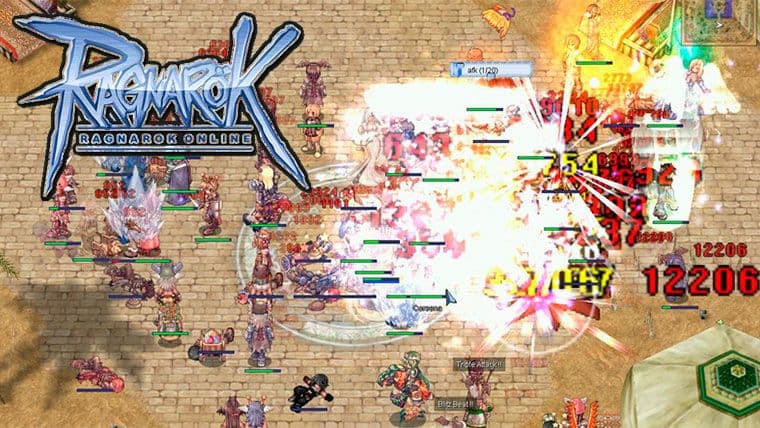
Ragnarok Online has been running since 2002, and the card system it introduced — socketing monster drops into weapons and armor — is still one of the more distinctive gear-progression ideas in the gen...
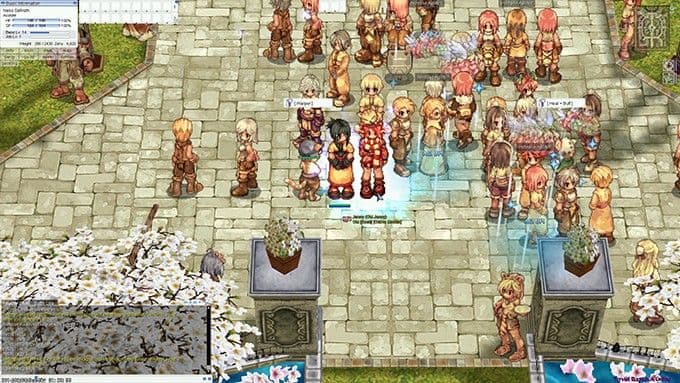
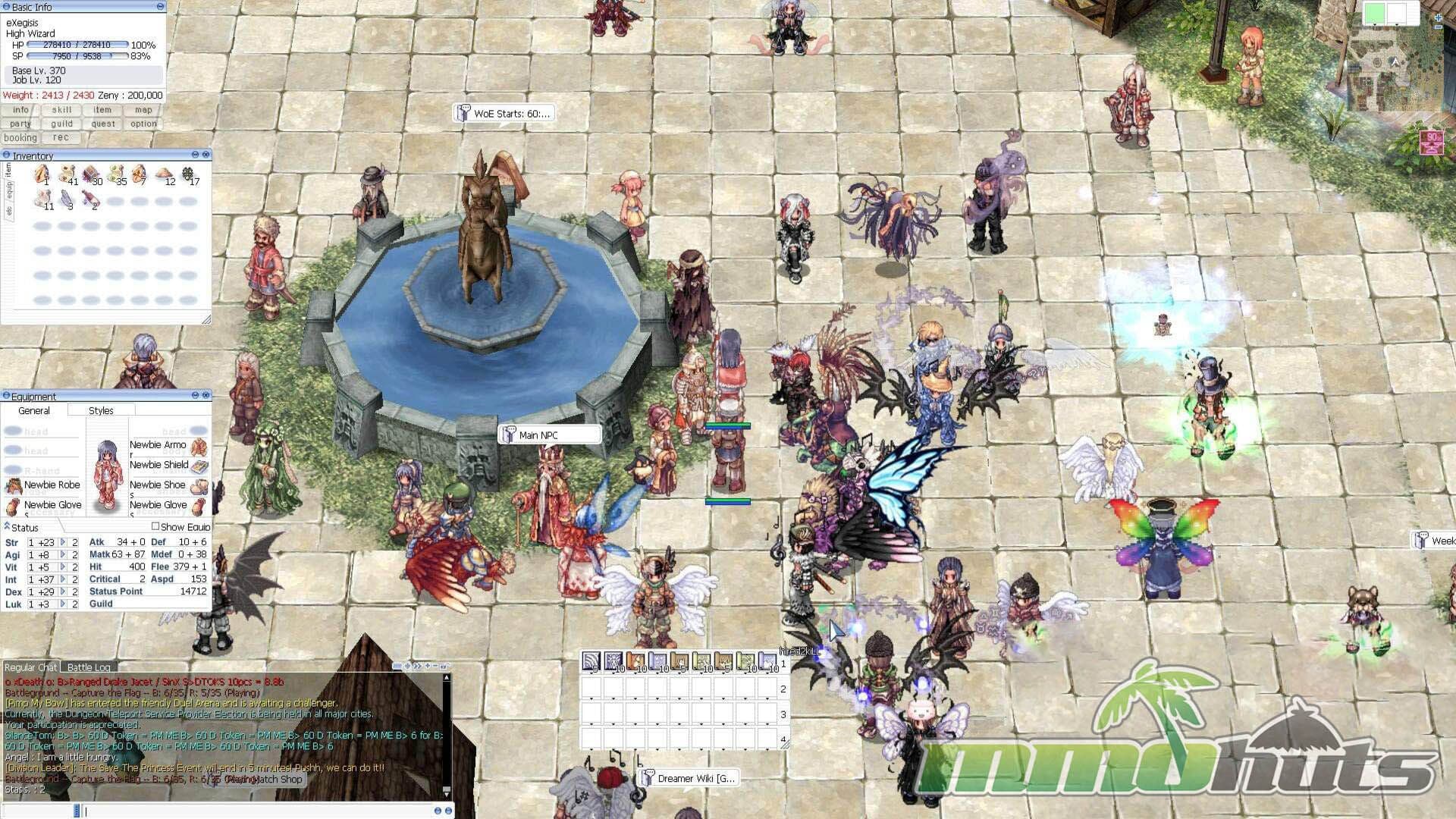
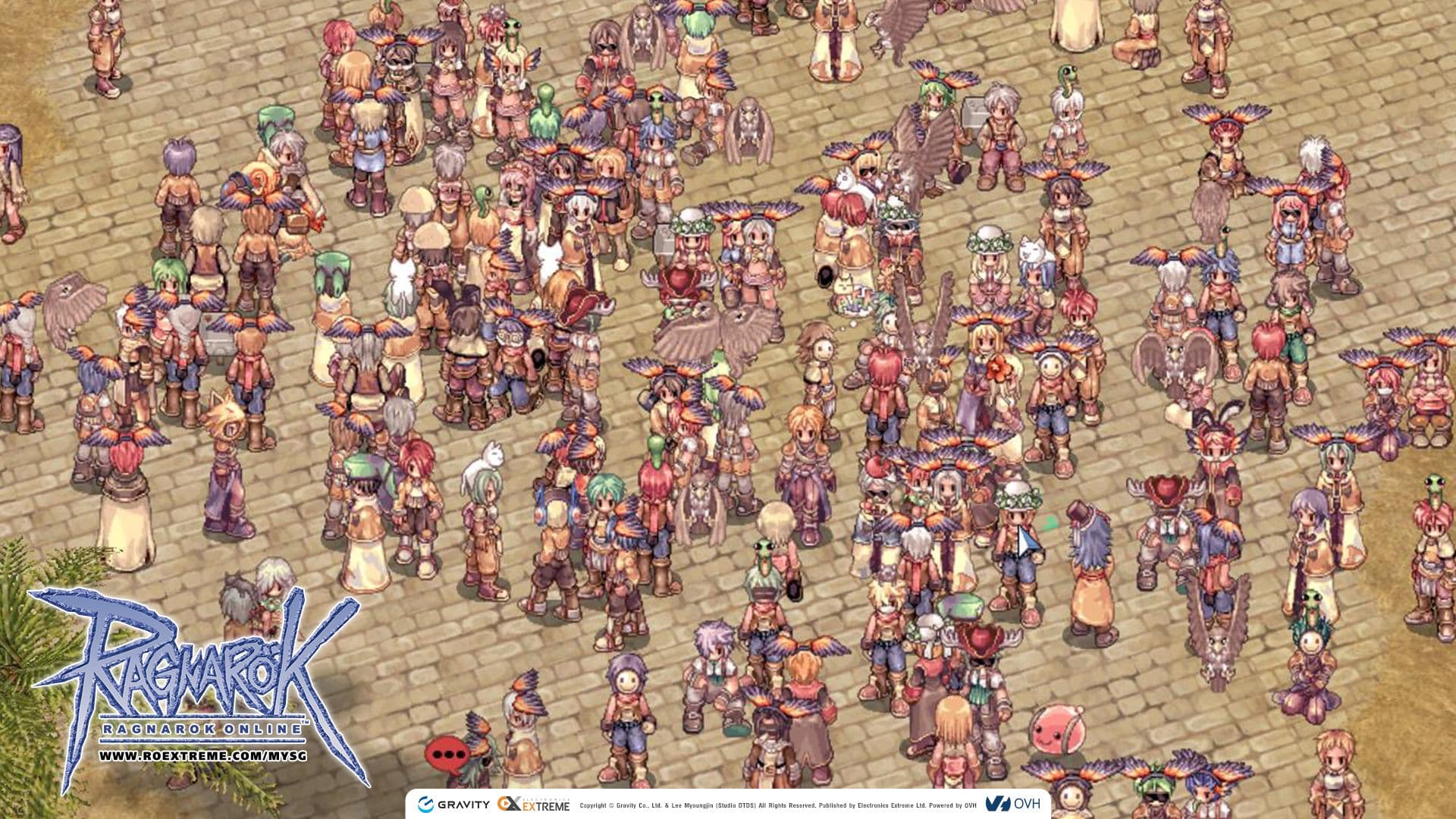
Ragnarok Online is a South Korean MMORPG developed and published by Gravity, first released domestically in 2002 and internationally the following year, and it has run continuously ever since across more than ninety regions. It paired 2D sprite characters with hand-painted 3D environments, a card system built around slotting monster drops into equipment, and a sprawling class tree that eventually branches into fourth-job specializations. The version most players reach today runs on the Renewal ruleset under Gravity Interactive's official servers, though a large ecosystem of privately operated servers keeps earlier eras of the game's balance alive for anyone who wants them.
Quick take: Ragnarok Online is still a fully functional, actively patched MMORPG in 2026, and the card system it popularized remains one of the more distinctive gear-progression models in the genre. It's not a game that will convert someone chasing modern production values, but for anyone willing to learn a dated interface, it rewards that patience more than most 2002-era MMOs still online.
The world of Rune-Midgarts draws on Norse mythology filtered through a Korean manhwa aesthetic — the source material began as a webcomic by Lee Myung-jin before Gravity adapted it into a game. Towns like Prontera, Payon, Geffen, and Alberta serve as the social hubs where trading, job changes, and party formation actually happen; the fields and dungeons between them are where the grinding does. Maps are separated by loading screens rather than a single continuous landmass, and travel between distant towns usually means paying for the Kafra teleport service instead of walking.
A newcomer's first impression is usually visual dissonance: chibi-proportioned character sprites standing in front of comparatively detailed 3D backdrops, a combination that reads as charming to returning players and dated to anyone raised on newer engines. Veterans tend to stop noticing the mismatch within an hour; it becomes part of the game's identity rather than a flaw that needs explaining away. Dungeons like Glast Heim, Bio Labs, and Thanatos Tower have stayed in rotation for two decades because their layouts and monster placements were tuned around specific class strategies, not because nothing newer replaced them.
Ambient sound design leans into the same duality. Town themes are upbeat and a little repetitive after enough hours logged in Prontera, while dungeon tracks slow down and thin out, doing more with a smaller instrument set than the budget probably allowed for in 2002. None of it is going to win an audio award in 2026, but it's consistent, and returning players tend to recognize a dungeon's theme before they recognize the map layout.
A new character begins as one of six base classes — Swordsman, Mage, Archer, Acolyte, Merchant, or Thief — each stuck on Novice grounds until job level 10 opens the first class change. For someone new to the game, that first hour is mostly menu literacy: learning what a slot on a piece of gear does, how status points get allocated between STR, AGI, VIT, INT, DEX, and LUK, and why a Merchant with the Discount skill is quietly one of the more useful early picks rather than a joke class.
Concretely, that first hour looks something like this: kill a handful of Poring-tier monsters outside a starting town for job experience, sell the drops back to an NPC to fund a first weapon upgrade, then take a job-change quest that hands out a class-specific skill point pool the moment it's completed. There's no cinematic tutorial walking a player through any of it — the game expects a wiki tab, a habit it never really breaks.
Veteran players skip past all of that friction and go straight to the part that actually matters to them: which second-job build feeds cleanly into a third job, and which third job feeds into the 4th Job Expanded update that landed in November 2024. That update pushed the endgame class ceiling out again, and a returning player who quit before it shipped is effectively looking at a new progression tier bolted onto a game they thought they'd already finished.
Both groups run into the same wall eventually: Ragnarok Online's interface was designed in 2002 and has been patched around rather than rebuilt from scratch. Tooltips are sparse, several mechanics are documented only on community wikis, and a newcomer without a guide open in a second window will misread more than one system in their first ten hours. That friction is real, but it's also the reason player-run wikis for this game are unusually thorough — two decades of collective frustration produced some of the better community documentation in the genre.
Combat is tab-target, with skills bound to a hotbar and a stat allocation system that shapes how a build performs more than gear does at low levels. What separates Ragnarok Online from most tab-target MMOs of its era is the card system: monsters drop cards on death, and cards socket into slotted weapons or armor to grant that monster's signature trait. A Poring card adds a small chance to find extra loot; rarer MVP-boss cards can define an entire build on their own.
The catch is permanence. Cards cannot be removed once socketed without destroying either the card or the item, depending on the method used. A newcomer treats this as a minor inconvenience worth double-checking before committing gear to a slot. A veteran treats it as the entire reason low-level equipment with the right card attached can outperform something several tiers higher — a design quirk that's shaped two decades of item economy and still explains why certain cheap base-level weapons sell for absurd prices on any given server.
Job trees branch from the six base classes through second, third, and now fourth jobs, and the game doesn't pretend every path is equally viable everywhere. Some builds are dramatically stronger in guild sieges than in solo leveling, and the reverse is just as true — part of the appeal for veteran players is theorycrafting around that asymmetry instead of chasing a single "best" build the way newer MMOs with tighter balance patches tend to encourage.
Weapon type matters as much as class in practice. A Swordsman-line character wielding a two-handed sword trades attack speed for raw damage per hit, while the same base class carrying a one-handed sword and shield leans defensive — the animation, the skill pool, and the card slots available all shift with the choice. Stat allocation compounds on top of that: a heavy-DEX Archer build hits more reliably but caps lower on raw damage than a AGI-focused alternative, and neither is objectively correct outside the context of what content the build is aimed at.
Crafting isn't universal across classes the way it is in sandbox MMOs — it's tied to specific job trees. Blacksmiths forge weapons from ore and refine existing gear through a system with real failure risk: pushing a weapon's refine level too high without the right materials can break it entirely rather than simply fail safely. Alchemists brew potions and can create homunculus companions, a pet-adjacent system with its own leveling and skill tree layered on top of the owner's.
Trading runs through player-operated vending shops set up in towns rather than a centralized auction house, so prices vary by server population and by which items happen to be in demand that week. A newcomer usually first encounters this economy as a buyer, picking up starter gear from a Prontera vendor row. A veteran with a maxed Merchant alt treats the same vendor row as a business — undercutting competitors on refined weapons or rare cards is its own minigame that has nothing to do with combat.
The refine system deserves a specific callout, because it's one of the sharper risk-reward hooks in the whole game. Pushing a weapon past its safe refine threshold without protective materials means a real chance of destroying it outright, not just failing to improve it — a mechanic that would read as brutally unforgiving in a modern MMO and instead reads, on Ragnarok Online's own terms, as one of the reasons a fully refined weapon actually means something when someone's wearing it into War of Emperium.
PvE content ranges from open-field grinding to instanced dungeons scaled to a party's job tier, with MVP bosses spawning on timers across various maps as high-value group targets. A newcomer's endgame usually starts with the instance content built for their current job bracket; a veteran's endgame is almost entirely defined by one weekly event instead.
War of Emperium is Ragnarok Online's guild siege system, and it's the closest thing the game has to a single reason to stay in a guild rather than play solo. Guilds attack and defend castles on a weekly schedule, and castles change hands during War of Emperium based on who can hold the emperium room when the timer runs out. Winning grants guild dungeon access, a shot at MVP card drops inside it, and enough prestige on most servers to matter socially even on weeks it doesn't matter mechanically.
Instance content sits underneath WoE as the more consistent weekly loop for most players — party-scaled dungeons that reward tokens or gear tied to a specific job bracket, structured so a fresh third-job character isn't competing for the same drops as a fully geared fourth-job one. For a newcomer, WoE is mostly spectacle for the first several months — something to work toward rather than participate in meaningfully, since a fresh character in starter gear against a geared guild loses fast and learns little from the exchange. Veterans built their entire late-game around exactly this event, and guilds that stop showing up to WoE tend to quietly dissolve within a season or two. Gravity's continued investment in fourth-job content suggests the studio still sees War of Emperium as the game's core retention loop, not a legacy system left to run on autopilot.
Guilds are the organizing unit for anything beyond casual play. War of Emperium requires one, guild dungeons are locked behind castle ownership, and most higher-value trading happens through guild or server-wide chat rather than an anonymous marketplace. A solo-friendly path exists — leveling, most dungeons, and a fair amount of the item economy don't strictly require guild membership — but it caps out before War of Emperium, and Ragnarok Online was never designed around solo play being the whole experience.
Newcomers who skip guild recruitment early tend to plateau faster than they expect, usually around the point where solo dungeon content stops scaling with their gear. Veterans, by contrast, often judge a server's health by one number: how many guilds show up for WoE on a given Sunday, not the total login count for the week.
A long-running pet-taming system sits alongside all of this as a quieter, mostly cosmetic layer — tamed monsters follow the owner around town and can be evolved through feeding items, and a specific subset of pet cards even carry small combat bonuses. It's not central to progression the way the card system or War of Emperium are, but it's the kind of long-tail feature that gives collectors something to chase long after their main build is finished.
Not in the way the term usually implies. Ragnarok Online has been free to play since 2011, and its Kafra Shop sells convenience rather than raw stat advantages: a VIP subscription with a 150% EXP and drop bonus, reduced death penalties, extra storage, and additional character slots. None of that hands a paying player gear that a free player can't eventually earn through drops or trading.
Where it gets murkier is time compression. A VIP account levels and farms cards noticeably faster than a free one, and in a WoE guild where gear tiers matter, that head start compounds over months of play. It's a soft advantage rather than a hard wall — closer to a season pass than a pay-to-win item shop — but it's not something to wave away entirely if the point of comparison is a strictly subscription-free MMO with no cash-shop EXP boosts at all.
It's also worth separating the original PC game from Gravity's newer spin-offs when weighing the studio's priorities. Mobile-first titles carrying the Ragnarok name — including entries that launched into new regions as recently as early 2026 — run on different monetization models and different engines entirely. The original client's Kafra Shop has stayed comparatively restrained by comparison, which says something about which audience Gravity is still trying to keep happy with the 2002 version specifically.
So who is Ragnarok Online actually for in 2026? Not someone looking for a modern MMO with a guided first hour and an interface that explains itself — that player will bounce off within a session. It's for someone who remembers what a card socket meant the first time they got one, or someone curious enough about MMO history to sit with a dated interface long enough to see why War of Emperium guilds still show up every week after twenty-four years. The 4th Job Expanded update shows Gravity hasn't stopped iterating on the original client, and the sheer size of the private-server ecosystem shows the design still has enough pull to sustain itself well outside the official servers. Whether that's worth your time depends less on the game's age than on whether you're willing to open a wiki tab before you open the client.
Is Ragnarok Online free to play? Yes — the game has been free to play since 2011, with an optional VIP subscription and Kafra Shop cosmetics and conveniences layered on top of a free account.
Is Ragnarok Online still alive in 2026? The official servers remain active with ongoing content like the 4th Job Expanded release, and a large private-server ecosystem runs alongside them with its own separate populations and rulesets.
Does Ragnarok Online have PvP? Yes, primarily through the weekly War of Emperium guild sieges, along with smaller-scale PvP maps and events outside the castle system.
Is Ragnarok Online pay-to-win? Not directly — the cash shop sells convenience and time savers like EXP bonuses rather than exclusive power, though that time advantage compounds for guilds competing at a high level.
Should I play official Ragnarok Online or a private server? Official servers run the default Renewal ruleset with Gravity's ongoing updates, while private servers let players choose Pre-Renewal balance, custom rates, or specific eras of the game's history the official version no longer runs.