 F2P · Live
Lineage 2 Essence
Lineage 2 Essence is NCSoft's free-to-play take on the classic Korean MMORPG Lineage II, built around faster…
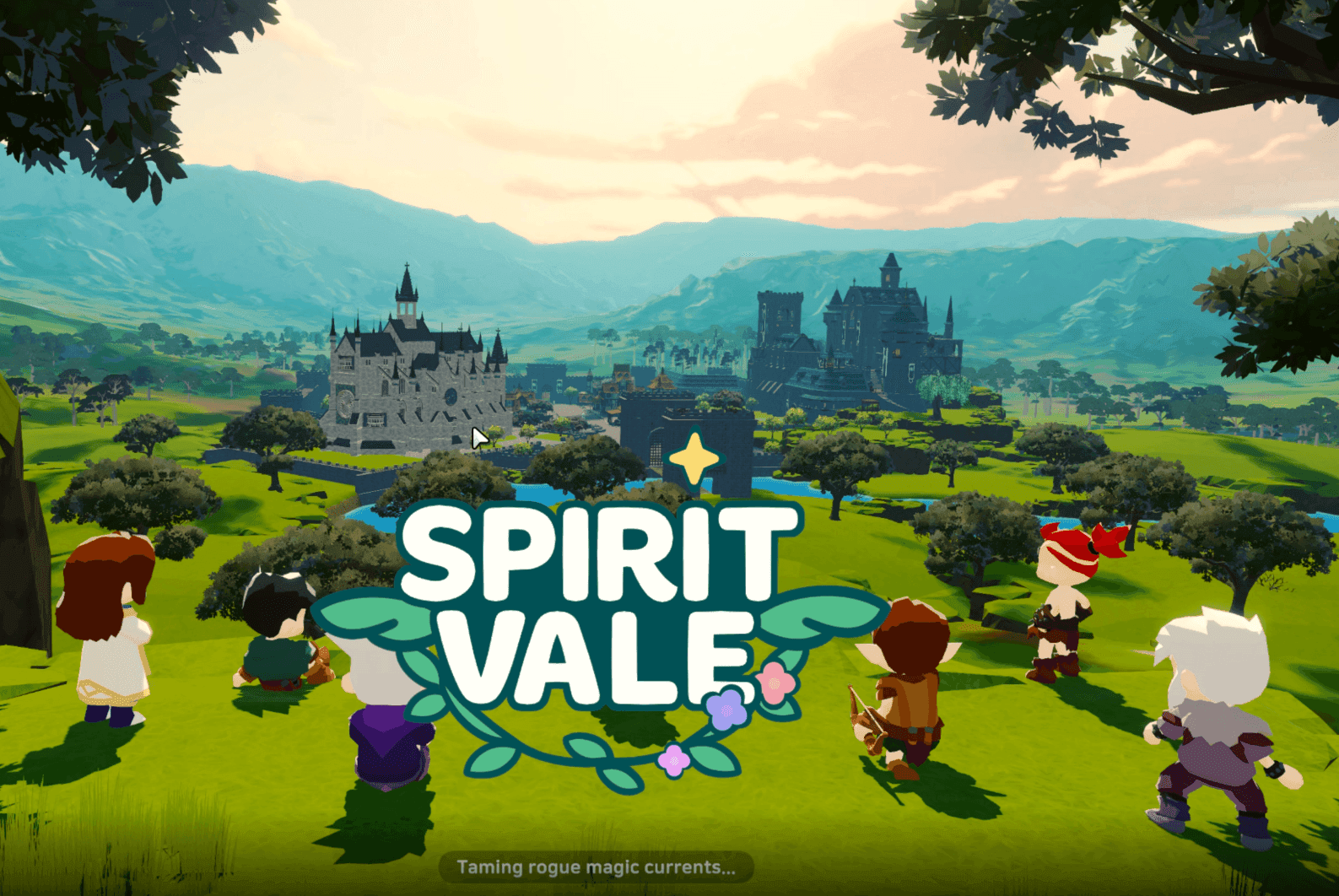
SpiritVale is a class-based action MMORPG from Australian indie studio Baikun Interactive, set in the fractured world of Nevaris. Choose from seven classes, grow into advanced specializations, hunt mo...
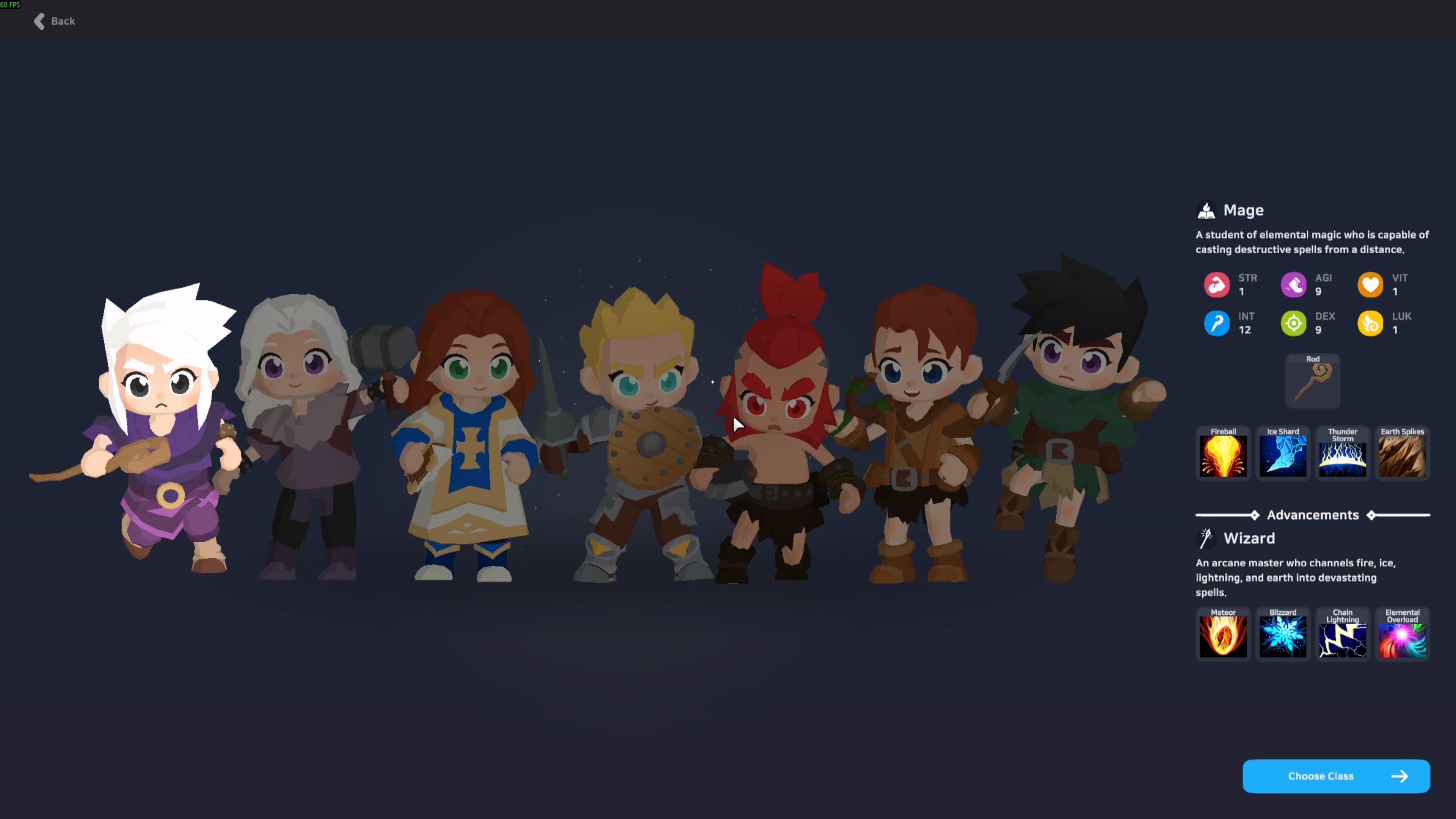
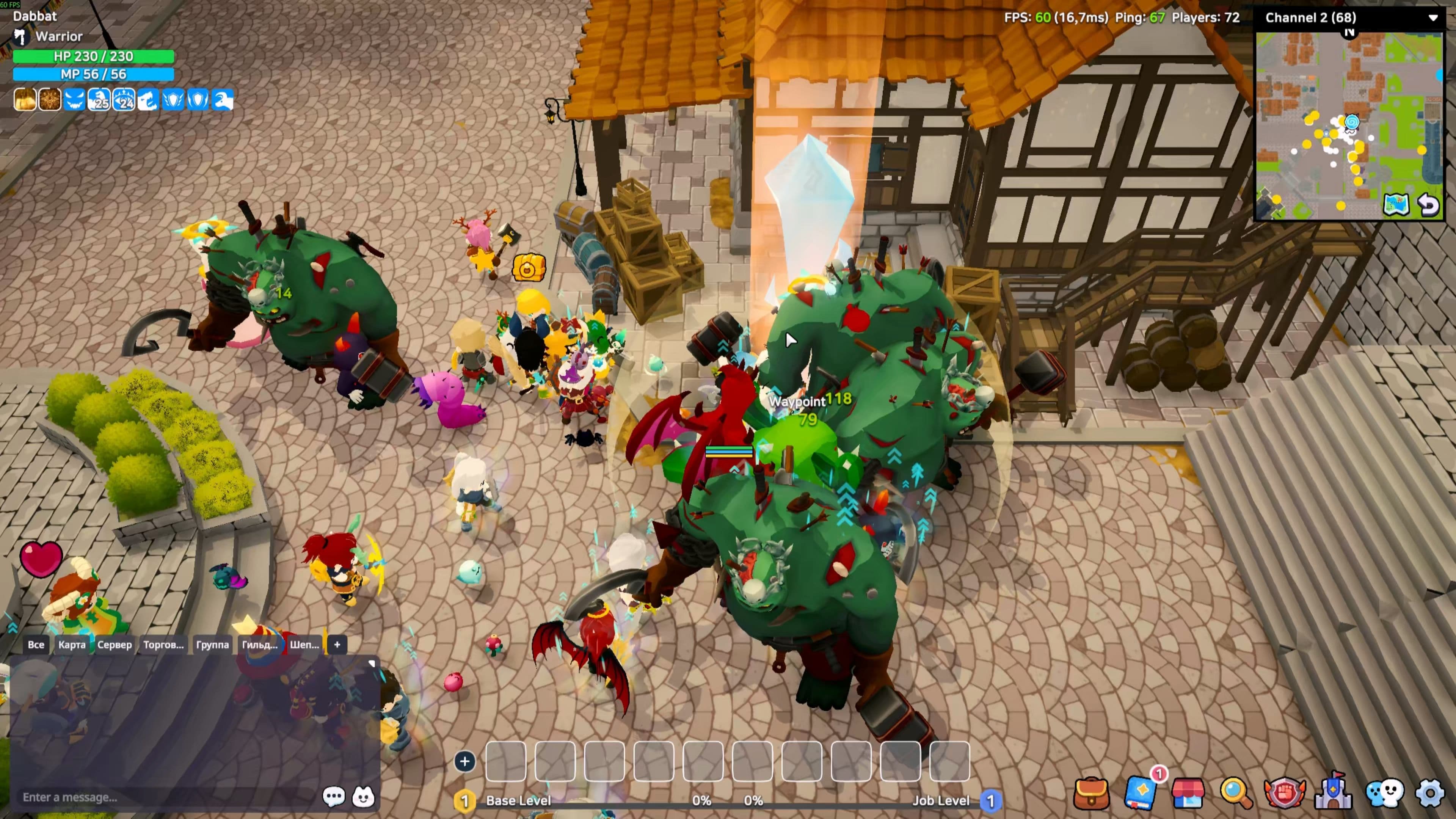
SpiritVale is a class-based action MMORPG from Baikun Interactive, an Australian outfit built around solo developer Phil Yum and a crew of community volunteers. Its Kickstarter cleared a modest AU$75,000 goal in under a day and closed at AU$357,436 from 3,066 backers, and the game entered Steam Early Access on July 15, 2026 — barely two weeks after the campaign ended. It sells as a one-time purchase of around $15 with a cosmetic-only shop, and it draws openly on the old job-system school of MMO design that players will recognize from Ragnarok Online.
Two weeks after launch, the game sits in an odd spot: a peak of over twenty thousand concurrent players, a Mixed rating on Steam, disabled trading systems, and a developer publicly banned from pushing his own updates by his moderation team. This review covers what the game actually offers, what broke, and whether the current state justifies the price of a lunch.
Quick take: SpiritVale is a genuinely charming throwback MMORPG whose launch infrastructure collapsed under ten times the expected audience. The class system, party grinding, and world bosses already deliver; server stability, trading, and bot control do not yet. At around $15 with no wipe planned, buying now means paying a fair price to watch a one-man studio learn backend engineering in real time.
Nevaris is a fractured fantasy world assembled from more than 30 hand-built maps, and its structure follows the classic field-and-dungeon template rather than one continuous open world. Zones range from starter meadows to underwater areas, each stocked from a bestiary of over 230 monster types and more than 20 world bosses. The tone leans cute rather than grim — stylized proportions, bright palettes, corrupted-but-adorable creatures — which puts it visually closer to a Saturday-morning take on fantasy than to the dark-fantasy crowd.
Exploration here works the way it did in the genre's early-2000s heyday: you clear a map, learn its spawns, find the route to the next one, and gradually build a mental atlas of where the good grinding spots and boss arenas sit. There is no quest-arrow conveyor pulling you across the continent. Players who grew up on that structure will settle in immediately; players raised on theme-park questing should expect to navigate by curiosity and party chat instead.
A new character's opening hours set the tone honestly. You pick a base class, spawn into a starter meadow, and go kill things — the early monsters die fast, drops start flowing immediately, and within the first session you are already slotting your first card into a piece of gear and deciding whether it beats a raw stat upgrade. The game does not hold your hand past the basics, and the first real decision point arrives quickly: which farming map suits your class, and whether to solo it or shout for a party.
Parties form fast in practice, because the experience math rewards them and because support classes need groups to level at all. An Acolyte's whole early game is attaching to a grind party, keeping it alive, and riding shared experience toward the Priest specialization — a loop lifted straight from the genre's Korean-classic era and executed without apology. By the time Job Level 50 unlocks your specialization, you have usually met your future guild in a farming spot, which is exactly how these games used to build their communities.
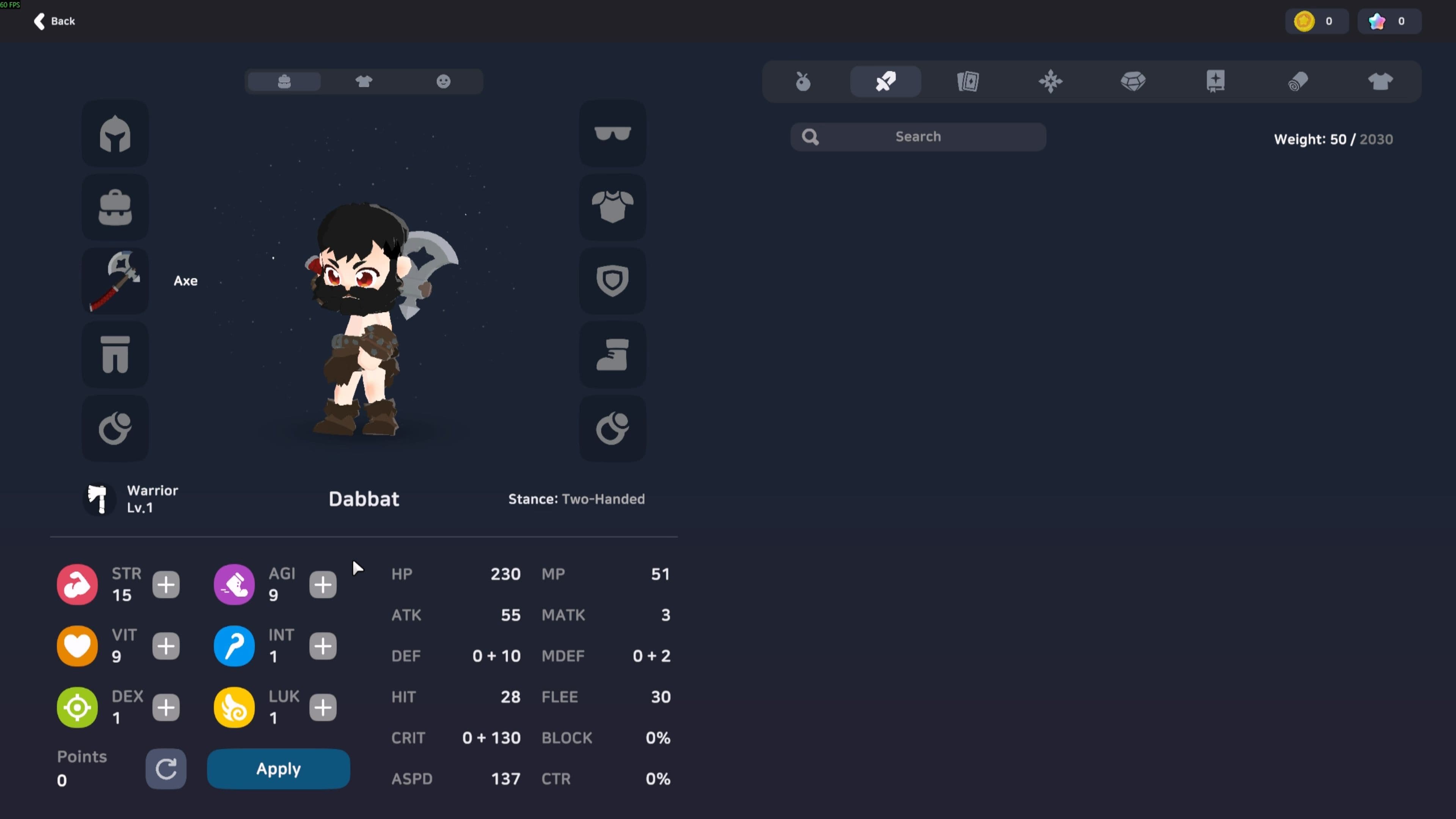
Character progression is SpiritVale's strongest and most confident system. You start as one of seven base classes — Knight, Warrior, Mage, Rogue, Scout, Acolyte, or Summoner — and at Job Level 50 branch into one of eight advanced specializations: Paladin, Berserker, Wizard, Priest, Gunslinger, Shinobi, Necromancer, or Weaver. Anyone who put years into Ragnarok Online's job tree will recognize the shape of this instantly, down to the way a support Acolyte grinds toward Priest while leeching party experience.
Each class carries its own skill tree, and builds diverge further through two overlapping layers. Cards drop from monsters and slot into gear, granting stat lines and effects tied to the creature they came from. Artifact sets add a second axis of customization on top, and both layers can be swapped freely rather than locked in — the community's theorycrafting simulators already let players test combinations against specific bosses before spending a single item in-game. The result is a build economy where a rare card from an unremarkable field monster can matter more than a level.
Leveling itself is grind-based and honest about it. Experience comes from killing things, mostly in parties, and the curve is tuned so that finding an efficient farming spot with a balanced group is the actual gameplay, the way it was before daily quests took over the genre. Whether that reads as meditative or as archaic depends entirely on which decade of MMOs formed you.
Combat in SpiritVale is real-time action with manual aiming and positioning, and it is built around groups more than soloists. Melee classes manage aggro and spacing, casters commit to positioning before big spells, and a party wipes or thrives on how well its healer reads the room. It is straightforward rather than deep — no dodge-cancel tech, no combo meters — but boss encounters demand enough coordination that voice chat starts mattering around the first world boss your party genuinely cannot out-level.
World bosses anchor the PvE endgame such as it exists this early. More than 20 of them roam the maps, and the game supports crafted boss lures that summon fights on demand — a system popular enough that Baikun quadrupled the lure crafting cost in a launch-week patch, from 5 materials to 20, after players industrialized it. A ranked PvP arena shipped at launch as well, complete with rank icons that were already being polished in the first patch cycle, though open-world PvP is not the game's center of gravity — Nevaris is a cooperative world first, and the arena reads as a side dish for players who want to test builds against something smarter than a boss script.
One structural decision deserves specific praise: characters are not tied to a region. You can log the same character into NA, EU, OCE, or SA servers, which quietly solves the oldest social problem in MMOs — friends scattered across timezones being told to reroll. For a genre that still routinely region-locks characters in 2026, a solo developer shipping this by default says something about priorities.
SpiritVale's player economy is, at the time of writing, switched off almost entirely. The launch build shipped an ambitious trading stack for an indie MMO — a server-wide auction house, player vending stalls run through a Stallmaster NPC, direct trades, and guild storage — but in the v0.30.8 patch window, Baikun temporarily disabled all player-to-player trade, citing backend issues and groups of players exploiting them for market advantage. NPC shops and personal loot still function.
The bot situation feeds directly into that decision. Steam forum reports describe stationary characters auto-attacking spawns around the clock, and players luring bosses onto human farmers to protect botting spots. Baikun runs a volunteer bot-hunter team that reports directly to GMs, and the free demo — which sat at 96% positive during Steam Next Fest — was shut down entirely, in part because unrestricted free access made bot accounts disposable. Killing your own best marketing tool to choke off bots is a real cost, and the studio paid it.
The honest read: an MMO inspired by card-drop economies lives or dies on trading, and for now the game is running with its circulatory system clamped. Baikun has committed to restoring the auction house, trading, and guild storage on new item infrastructure, and to date its pattern has been slow but truthful communication rather than silence. Until that ships, every rare card you find is yours alone — which changes the reward loop more than any single disabled feature normally would.
SpiritVale's social layer extends past the guild system that shipped at launch. The project began as one developer making the game he wanted to play, and volunteers accreted around it — artists, moderators, writers, testers, backend contributors — until the community held a genuinely unusual amount of design influence. Features and pacing were voted on through Discord polls before implementation, early testers broke rough builds on purpose so they could be fixed, and the Kickstarter succeeded largely because a playable demo was sitting there the whole time as proof.
That structure survived contact with launch. Player-built theorycrafting simulators, drop-table wikis, and build trackers went live alongside the game itself, and the volunteer bot-hunter team is community-staffed. Even the moderators publicly grounding Phil from deploying updates mid-crisis reads less like dysfunction and more like a working relationship with unusually honest power dynamics. In-game, guilds carry the usual functions — shared identity, group content organization, and storage, though the storage half is caught in the same infrastructure freeze as trading.
SpiritVale's launch problems came from success, and the numbers make the case plainly. The game peaked at just over 20,000 concurrent Steam players in its first week — roughly ten times what the demo period suggested — and the backend architecture rewritten between demo and Early Access buckled. Players hit lag spikes, disconnects every few minutes at the worst points, a party bug, rolled-back premium currency purchases, and repeated emergency maintenance. Baikun's own postmortem was unusually specific: server capacity was never the issue, since the NA 1 machine never reached full CPU load even on launch day. The architecture was.
The studio's response has been half endearing, half alarming. Phil Yum is hiring the project's first full-time backend developer with the Kickstarter money, the moderation team publicly barred him from deploying further updates until the backend stabilizes, and the studio confirmed in writing that there will be no wipe or account rollback. Two weeks in, concurrency still holds between roughly 10,000 and 16,000 players daily — retention that most funded studios would take for a launch this rough.
The review split tells the sharper story. The English-language Steam rating sits at Mixed, around 63% positive, while Brazilian Portuguese reviews are Very Positive — and Traditional Chinese, Simplified Chinese, and Thai reviews are all Mostly Negative, dragged down by latency to distant servers and the trading shutdown hitting regions where vending culture matters most. One game, four verdicts, depending on where you log in from.
No. SpiritVale is a buy-to-play game at around $15 with regional pricing, and every microtransaction in the shop is cosmetic — no boosts, no gear, no convenience items that touch progression. Power is earned in the field or, once trading returns, bought from other players with in-game currency, and everyone starts at level 1 regardless of backer tier.
That stance is easy to declare and harder to keep, and the early signs are that Baikun means it. The premium currency exists solely for skins, the launch bug that rolled back some currency purchases was fixed within days, and the trading freeze — commercially painful as it is — was imposed specifically to stop a minority from gaining unfair economic advantage. A fair-market position defended at the developer's own expense is worth more than any storefront promise.
Here is the uncomfortable truth the Mixed rating hides: SpiritVale's launch failed in exactly the way every MMO player claims to want. A solo developer promised a fair, old-school, buy-to-play MMO with no cash-shop power — and delivered precisely that, to an audience ten times larger than his servers were built for. The genre spent two decades punishing studios for greed; this one is being punished for popularity.
That does not excuse the disconnects or the frozen economy, and nobody should pretend a game with its trading system switched off is finished. But the parts that cannot be hotfixed later — the class design, the party culture, the pricing philosophy — are the parts SpiritVale already gets right. Backends get rebuilt every year in this industry. A studio that would rather shut down its own marketplace than let cheaters keep an edge is rarer, and it is the better predictor of where this game lands in twelve months.
No — SpiritVale is buy-to-play, priced around $15 USD with regional pricing on Steam. The free demo that ran during Steam Next Fest has been discontinued.
Baikun Interactive has stated directly that no wipe or account rollback is planned; characters made now carry forward.
Yes, though the leveling curve and world bosses are tuned around parties, so solo players progress noticeably slower. The Paladin specialization is the community's usual pick for self-sufficient play.
A ranked PvP arena shipped with the Early Access launch. Open-world PvP is not a core feature; the game is primarily a cooperative PvE MMORPG.