 Free To Play
Kron Wars
MMORPGStrategySimulatorsCBT
A hardcore browser-based sci-fi sandbox MMO inspired by the 1987 classic TradeWars. Set across a living Frontier of thousands of interconnected sector...
If your PC can run this game, you'll also be able to play these:
Free To PlayA hardcore browser-based sci-fi sandbox MMO inspired by the 1987 classic TradeWars. Set across a living Frontier of thousands of interconnected sector...
 Free To Play
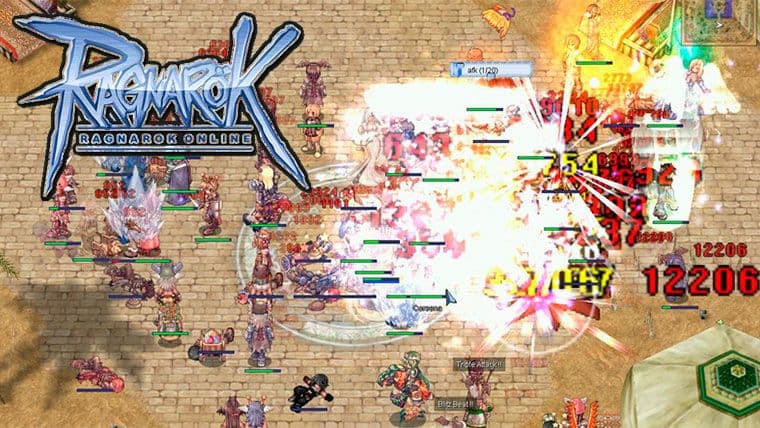
Ragnarok Online has been running since 2002, and the card system it introduced — socketing monster drops into weapons and armor — is still one of the ...
 Free To Play
Tibia is the 1997 fantasy MMORPG that never stopped shipping updates — nearly 29 years in and still adding new classes, new bosses, and new content. F...
SpiritVale, the class-based action MMORPG from solo Australian developer Baikun Interactive, asks for surprisingly little hardware for a game running 12-player parties and 20-plus world bosses. The minimum tier is a decade-old GTX 660, and the recommended tier — a GTX 1060 — has been budget-shelf hardware for years. That follows directly from the game's stylized art direction and a netcode model that leans on the server, not the player's GPU, for the heavy lifting.
SpiritVale runs on a GTX 660 because its combat and world rendering prioritize readable silhouettes over high-fidelity lighting — a stylized, third-person art style that skips the ray-traced reflections and dense foliage that push modern GPU requirements up. The minimum tier is a GTX 660 (2 GB VRAM) or Radeon HD 7870 (2 GB VRAM); the recommended tier is a GTX 1060 (6 GB VRAM), which was already mainstream, not high-end, when it launched in 2016.
Community benchmarks on a GTX 1660 report roughly 50–60 FPS at 1080p on medium settings, which tracks with a GPU that comfortably clears the recommended spec with room to spare. One optimization gap worth knowing about before buying: SpiritVale currently renders in a fixed 16:9 aspect ratio, and ultrawide monitors get letterboxed rather than a wider field of view — an Early Access limitation, not a hardware one.
Not on the client side. SpiritVale's action combat — real-time dodges, positioning, and up to twelve players sharing a screen — asks more of a CPU than a tab-target MMO would, which is why the recommended tier steps up to a Core i7. But Baikun Interactive has been unusually specific about where the actual load lands: during the rocky Early Access launch, the studio stated that its NA server never hit 100% CPU utilization, even on the day concurrent players spiked past twenty thousand. That points the bottleneck toward server-side architecture and database handling rather than raw processing power, on either end.
Steam doesn't specify a CPU generation for the "Core i5 or equivalent" minimum, and Baikun hasn't clarified which end of that performance range it's targeting. The rest of the minimum bundle is a useful clue: GTX 660 and Radeon HD 7870 are both 2012-era cards, and CPUs typically paired with that GPU generation in a minimum-spec template were quad-core parts — a Core i5 with 4 cores and no Hyper-Threading, a Core i7 with 4 cores / 8 threads. Treat that as an informed estimate from context, not a confirmed number. For a smoother experience today, a modern 6-core i5 or better is the safer target — in line with the roughly 6-core-class CPU that third-party tools like PCGameBenchmark estimate as an equivalent.
SpiritVale's launch problems traced back to a new backend architecture rolled out between the demo and Early Access — one built to route trading, guild data, and matchmaking across what the studio calls "linked servers," letting characters on one world interact with players on adjacent ones. That design keeps a small playerbase from spreading too thin across empty shards, but it also means more cross-server calls have to succeed for basic actions like opening the auction house.
When over 20,000 concurrent players hit Steam on day one, that shared backend — not any single player's CPU or connection — became the chokepoint, triggering the lag spikes, auction house outages, and bot problems the studio has since apologized for publicly.
They don't, usually — and SpiritVale's current listing, where both the minimum and recommended tiers ask for exactly 4,000 MB of RAM and 4,000 MB of storage, is the outlier here. Identical minimum and recommended figures for memory and disk space are unusual enough that it reads more like an unfinished spec sheet than a deliberate design choice, especially given that the demo build asked for double or quadruple those numbers just weeks earlier. Treat the current 4 GB figures as a floor that's likely to be revised as Early Access continues, not a permanent ceiling.