 F2P · Live
Lineage 2 Essence
Lineage 2 Essence is NCSoft's free-to-play take on the classic Korean MMORPG Lineage II, built around faster…
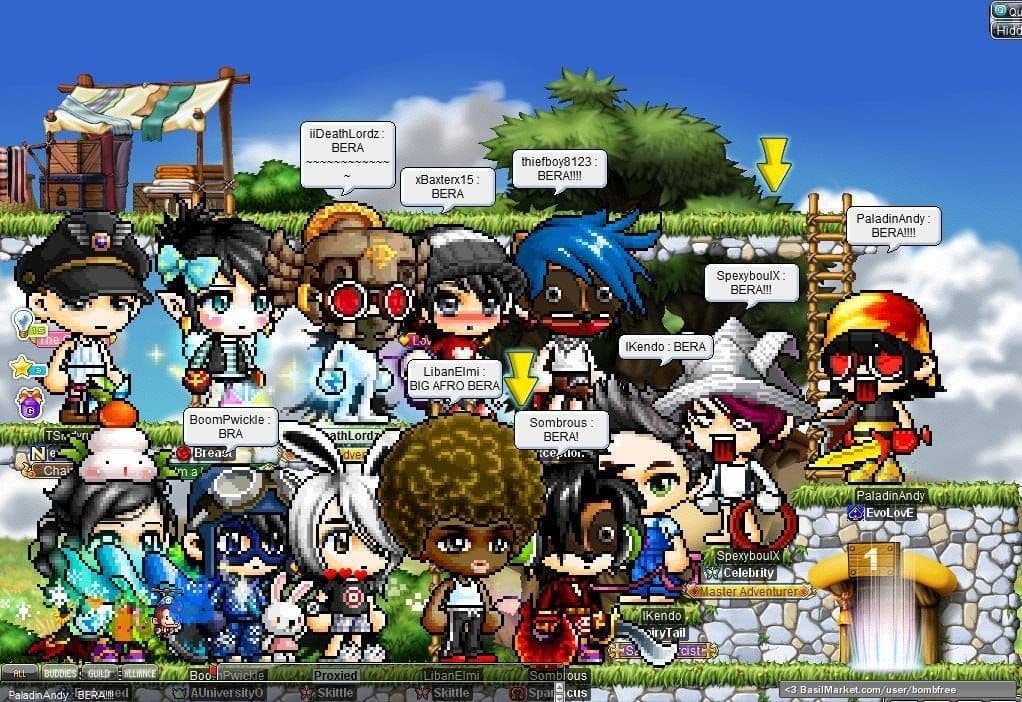
MapleStory is a free-to-play 2D side-scrolling MMORPG from Nexon that has run continuously since 2003, now home to more than 260 million registered accounts and over fifty playable classes. Its 2026 O...
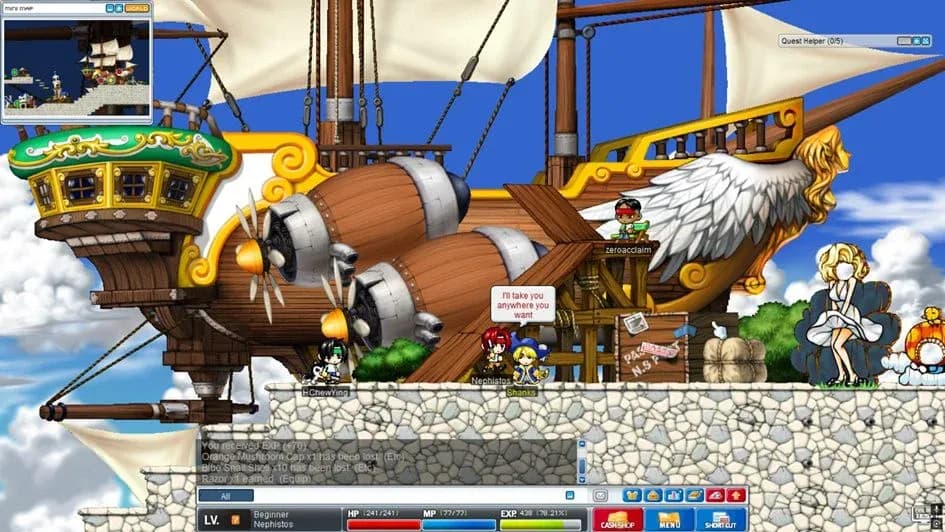
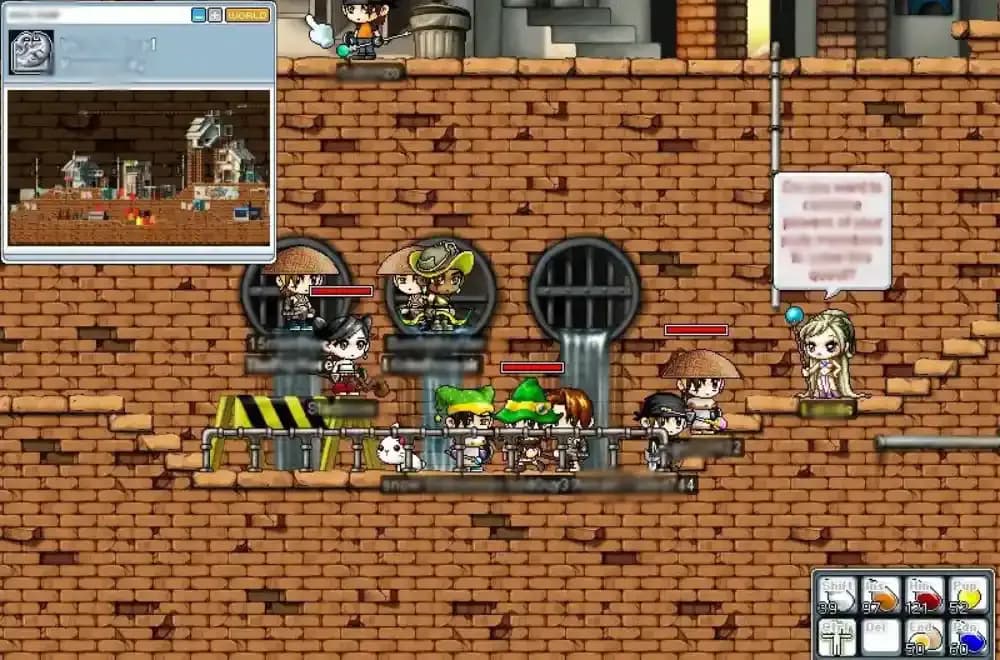
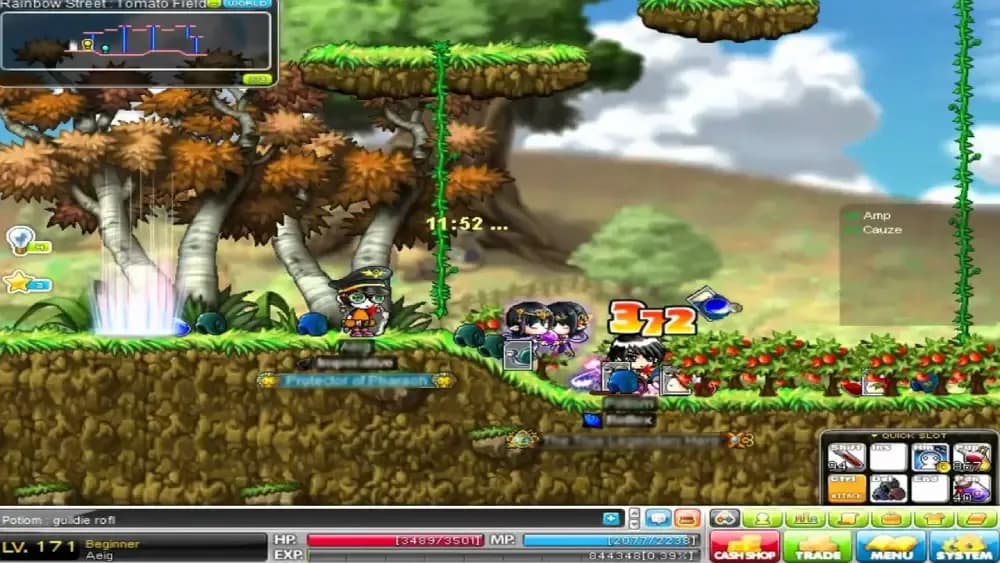
MapleStory is a free-to-play 2D side-scrolling MMORPG developed by Wizet and published by Nexon, first released in South Korea in April 2003 and still receiving major content updates more than two decades later. It runs on a proprietary engine built for platformer-style combat rather than the tab-target or action-camera systems common in most modern MMOs, and it remains one of Nexon's core revenue drivers, with the franchise posting 42% year-over-year growth in early 2026 alongside a summer content update and a from-scratch classic server currently in testing.
Quick take: MapleStory is still worth starting in 2026 if you don't mind a game with no native controller support for its keyboard-driven combat and zero real English-to-anything localization gap, since it's built for English from the start. The first 200 levels are fast, generous, and genuinely fun; everything after that is a long-term commitment to daily systems, and whether that commitment appeals depends entirely on how you feel about grind as a genre, not as a flaw.
Maple World looks like a children's picture book — mushroom fields, candy-colored towns, a floating island shaped like a slice of cake — but its lore runs darker than the art style suggests. The setting was shaped by beings called the Transcendents of Time, Life, and Light, until one of their own, the Black Mage, turned against the system he helped build. Chasing him down became the spine of MapleStory's story content for the better part of a decade.
The map has grown in layers rather than all at once. New players start on Maple Island, a small tutorial zone, before graduating to Victoria Island's eight interconnected towns. From there the world opens into Ossyria's snowfields and deserts, then past level 200 into Arcane River, a set of tonally darker zones that includes a city stuck in eternal sleep and a slowly rotting forest. Grandis, unlocked at level 260, adds a further continent with its own factions and conflicts. Each layer plays like a distinct game skinned onto the same engine, and the soundtrack backing them is genuinely beloved in Korea — some tracks have made it into school music textbooks.
A new character begins on Maple Island with nothing more than a starter weapon, fighting slimes and snails that die in one or two hits while NPCs walk through the interface at a gentle pace. At level 10, the game asks its first real question: which of the five original Explorer archetypes — Warrior, Magician, Bowman, Thief, or Pirate — to commit to, each branching later into several final specializations with almost nothing in common beyond a shared starting point.
Reaching level 200 in 2026 takes a couple of weeks of casual play rather than the months it once did, largely thanks to recurring events like Tera Burning, where every level gained is multiplied and free gear is handed out on the way. That's a deliberate design choice — Nexon wants new accounts through the early game and into the systems that actually define the mid-to-late experience.
Past level 200, the pace changes completely. Arcane River is structured around collecting Arcane Symbols in each zone — without them, a character simply doesn't hit hard enough to matter there, and the only way to earn them is through daily quests. That daily cycle, repeated across zones like Vanishing Journey and Lachelein, becomes the actual rhythm of mid-game MapleStory. Grandis Symbols pick up the same role past level 260. Progress slows sharply after level 250, where each additional level can mean hours of dedicated farming, and the current soft ceiling sits well past 300 — a target measured in months, not weeks.
MapleStory's class list isn't a handful of archetypes with cosmetic variants — it's a catalog of more than fifty specializations, each with its own weapon, mechanic, and identity. A Night Lord throwing shuriken and a Kanna commanding foxfire spirits share almost nothing beyond both being playable characters, and the gap only widens as characters level up.
Every class advances through six tiers known as Job Advancement, at levels 10, 30, 60, 100, 200, and 260. The last two unlock the V-Matrix and then the Hexa Matrix skill systems, and the jump between tiers is dramatic — a magician limping through early levels on a weak Magic Claw is, by level 200, clearing entire screens of enemies with a single button press.
The five original Explorer archetypes are only the entry point. Cygnus Knights add elemental fighters serving under an Empress banner; the Heroes group includes legendary characters like Aran, a spear-wielding warrior with a distinct combo system, and Evan, who fights alongside a dragon that grows alongside him. Beyond those sit Resistance, Nova, Flora, and Anima, plus a long tail of standalone classes that don't fit any family — a telekinetic fighter, a beast-taming archer, a swordsman permanently bound to a living shadow. Between them, no two classes play quite the same way, which is unusual for a genre where "different class, same rotation" is the norm.
Combat itself isn't tab-target or an action camera. It's platforming: characters run and jump across 2D maps, chaining keyboard-bound attacks, with the mouse doing little beyond menu navigation. Routine farming boils down to finding a map at the right level range and clearing waves on repeat, which the game doesn't try to dress up as anything more than what it is. Boss fights are a different animal entirely — Zakum's independently-attacking arms, Lucid's phase transitions, and the Black Mage's climactic fight all demand pattern recognition and tight timing that the everyday grind never asks for.
Most MMOs treat alternate characters as a side hobby. MapleStory builds an entire meta-progression system around them. The Legion board totals up the levels of every character on an account and converts that sum into permanent account-wide bonuses — extra attack, critical damage, defense penetration — with higher-level alts covering more of the board.
Link skills stack on top of that: leveling Mercedes to 120 grants a passive experience bonus to every other character on the account, while a leveled Demon Avenger adds bonus boss damage across the board. The practical result is that serious players maintain a roster of a dozen or more characters pushed to the 140–200 range purely to feed a main character's numbers — a genuinely unusual metagame that turns what looks like linear progression into a branching investment strategy.
Equipment progression layers several systems on top of each other, and any one of them can either double a character's power or erase the resources poured into it. Base gear generally drops from bosses or story quests — the four-piece Chaos Root Abyss set remains a workhorse for mid-level characters years after its introduction.
Star Force adds flat stat bonuses through a star-by-star enhancement process, with failure chances starting at star 12 and a chance of outright destroying the item past star 15. Potentials — randomized bonus stat lines rolled through cash-shop cubes — determine whether a piece of gear is worth billions of mesos or worth deleting. Getting a clean roll can take dozens of attempts, and in 2024 Nexon was fined roughly $8.9 million by South Korea's Fair Trade Commission for misrepresenting the actual odds behind those rolls without disclosing it to players — not the franchise's first monetization controversy, and likely not its last.
Server choice changes the game more than almost any other decision a new player makes. Interactive World, the standard server type, runs a full player economy: an auction house, open trading, and the ability to buy cubes with real money and sell enhanced gear for mesos. Wealth converts directly into power here.
Heroic World strips that out entirely. Trading between players is disabled, cubes can only be bought with in-game currency, and every piece of progress comes from personal effort rather than a marketplace. Nobody can buy their way past you, but nobody can help you either — every upgrade gets earned the slow way. For players put off by Interactive World's pay-to-win ceiling, Heroic World is the honest alternative.
Weekly bosses are the main group-content loop, pulling together four-to-six-player teams that coordinate schedules, pick support classes like Bishop or Kain, and drill boss mechanics until they stick. Access resets weekly, and the crystal a boss drops is one of the primary sources of mesos in the game — assembling a reliable "boss party" is a social achievement in its own right. Summer 2026's Overdrive update added three new high-level encounters, including a berserker boss aimed at strong-but-not-elite characters over level 280, alongside a raised damage cap that jumped from 700 billion to 10 trillion to accommodate the new numbers those fights generate.
Guilds sit at the center of MapleStory's social structure — shared boss runs, guild skills, and internal hierarchy all revolve around them, and the Guild Castle system added late in 2025 gave guilds their own customizable, progression-linked space. PvP, by contrast, has never really landed here. Nexon has tried competitive modes more than once, and none of them stuck; this is a PvE game through and through, and looking for arenas or open sieges is a dead end.
On Interactive World, yes, to a meaningful degree — cubes, experience boosters, and loot-pulling pets are all sold for real money, and spending accelerates both gear quality and grind efficiency in ways free players can't fully match. On Heroic World, the answer flips: trading is off, cubes are meso-only, and spending has no path to skipping the grind. Which answer applies to you depends entirely on which server you roll on, which makes this less a single yes-or-no than a choice the game hands you at character creation.
The wider Cash Shop leans hard into cosmetics — hairstyles, outfits, weapon skins, chairs, pets — and for a large slice of the playerbase, character customization is the actual draw rather than a side activity; the community runs regular outfit contests, and rare cosmetics trade for eye-watering sums. Crafting professions exist alongside all of this, unlocking at level 30 with gathering and production lines like alchemy and smithing, but they stay firmly secondary: the best gear still comes from bosses or the market, and professions mostly supply consumables rather than a real progression path.
2026 has been a genuinely active year for MapleStory rather than a maintenance-mode one. The summer Overdrive update added a new summoner-style job, a full rework of the Kinesis class, three new bosses, and an overhauled auction house with web and mobile access. Separately, Nexon has spent the year testing MapleStory Classic World, a from-scratch server recreating the pre-2010, pre-Big Bang version of the game with its original four starting classes. A second closed test ran in early August 2026 adding a third job tier and macOS support, and Nexon still hasn't committed to a release date — late 2026 or early 2027 is the working estimate.
Overdrive's changes go beyond new content, too. Skill points are now auto-distributed instead of manually assigned, the Sol Erda holding cap has increased for high-level characters, and a new "Monster Park Hands" feature lets subscribers run automatic hunting sessions remotely through mobile — a small but telling concession to players who can't sit at a keyboard for hours every day. None of it changes the fundamentals, but it signals a studio still actively tuning a twenty-two-year-old game rather than coasting on nostalgia.
Two more experiments run in parallel without touching the core game directly: MapleStory N, a blockchain spinoff under Nexon's Nexpace division, and MapleStory: Idle RPG, a mobile title that launched globally in late 2025. Neither has reshaped the main PC game, but they show a franchise still willing to bet on new formats after twenty-two years.
Every autumn, a maple tree drops one set of leaves and grows another. MapleStory has been doing something similar for twenty-two years — Overdrive and Classic World look nothing like the game that launched in 2003, but the roots underneath, the platformer combat, the job tiers, the daily grind loop, haven't actually moved. That's either the most reassuring thing about it or the most exhausting, depending on how you feel about games that never fully let go of what made them work in the first place.
New and returning players get the better end of that deal right now: the path to level 200 is fast, well-supported by events, and free of the friction that used to define it. What happens after is a separate question the leveling curve doesn't answer for you, and it's worth going in knowing that the real game — Arcane River symbols, boss parties, Star Force, a small army of alts — only starts once the tutorial-feeling part ends.
Yes. The entire game, including endgame bosses and both server types, is playable without spending money, though Interactive World's cash-shop-driven cube economy gives paying players a real edge there.
For new or returning players, yes — the 2026 Overdrive update and frequent leveling events make the first 200 levels faster and more rewarding than at almost any earlier point in the game's history.
Not in any meaningful sense. Nexon has experimented with competitive modes over the years, but none has become a real part of the game, and there are no arenas, sieges, or open-world PvP to speak of.
It's a separate, from-scratch server Nexon is currently testing that recreates the original pre-2010 MapleStory experience, with the four original starting classes and old-era leveling design. No release date has been set as of August 2026.
On Interactive World, yes, mainly through cube purchases that speed up gear enhancement. On Heroic World, trading and cash-shop cubes are disabled, removing that advantage entirely.