 F2P · Live
Lineage 2
Aden's castles never stay in the same hands for long, and Lineage II has built an entire twenty-three-year…
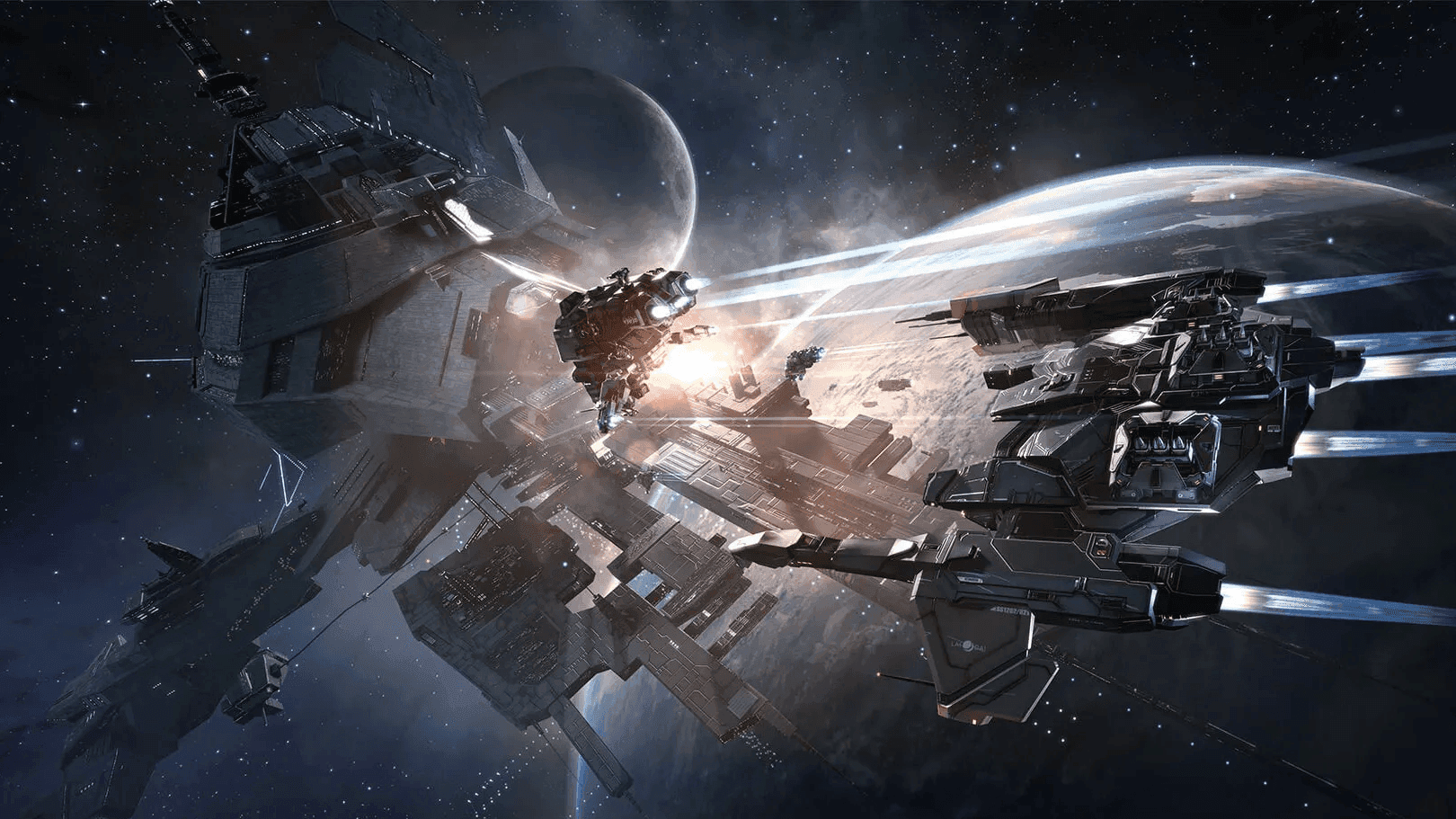
EVE Online has run continuously since 2003, and the studio behind it just went through its biggest change in years: CCP Games split from parent company Pearl Abyss in May 2026 and rebranded as Fenris ...
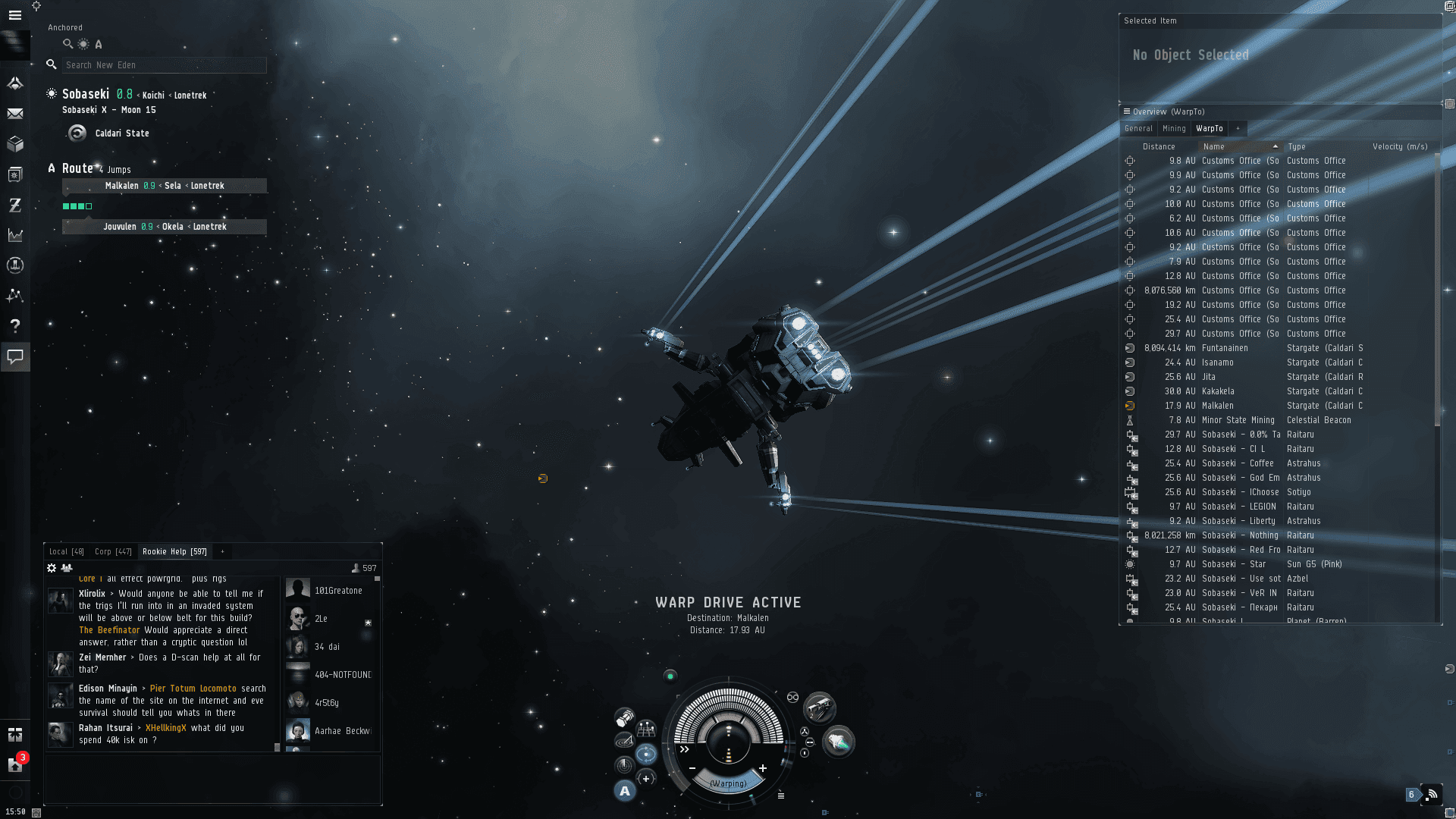
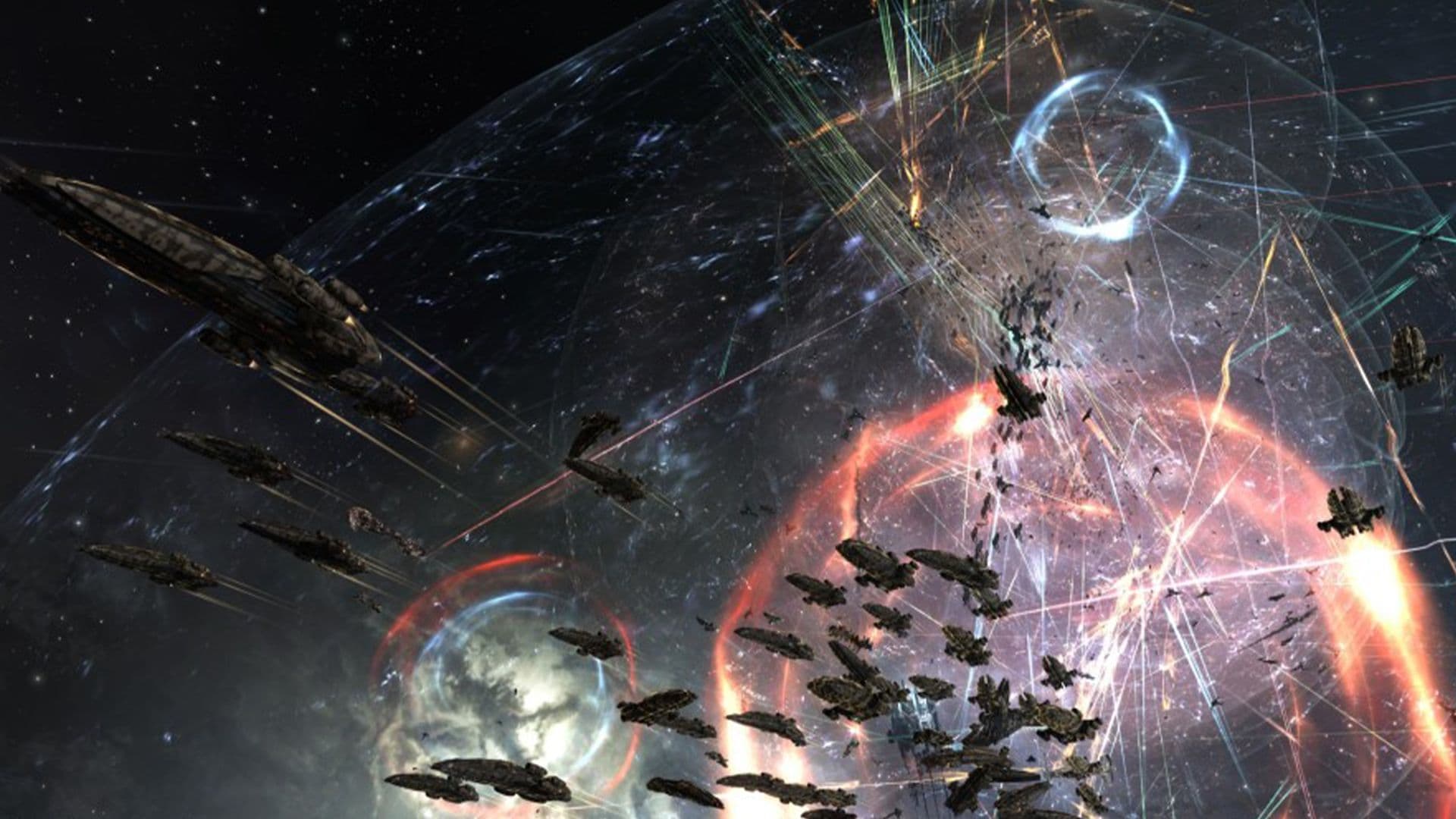
EVE Online is a science-fiction sandbox MMORPG developed and published by Icelandic studio CCP Games, released on May 6, 2003, and now owned by Pearl Abyss following a 2018 acquisition. Twenty-three years on, it remains the standard-bearer for player-driven MMO economies and emergent, consequence-heavy warfare, running on a single persistent server cluster called Tranquility where every capsuleer shares the same universe, the same market, and the same politics. This EVE Online review is written for two different readers at once, because the game genuinely plays as two different experiences depending on how long you've been flying — and pretending otherwise would flatten what actually makes it worth talking about.
The setting is New Eden, a single connected cluster of roughly 8,000 star systems split between high-security empire space, contested lowsec, lawless nullsec, and the anomalous wormhole systems that connect to nowhere on the regular map. Four playable empires — the Amarr Empire, the Minmatar Republic, the Gallente Federation, and the Caldari State — carry a genuine ideological weight rare in the genre: Amarr theocratic slavers, Minmatar ex-slaves rebuilding a shattered culture, Gallente libertarian capitalists, Caldari corporate authoritarians. None of it is delivered through voiced cutscenes or a hand-holding main quest. The lore lives in agent dialogue, in-universe news articles, and, more than anything, in the actual behavior of the alliances that have fought over the same regions for two decades. There's no server list to choose from, no shard to pick — everyone plays in the same universe at the same time, and that single fact underwrites almost everything else about how EVE feels different from other MMORPGs.
The newcomer's view: character creation is fast and almost anticlimactic — you pick a race, a bloodline, and a starting career path, and you're immediately in a rookie ship with a fitting screen that looks like a spreadsheet crossed with a cockpit. The tutorial and the career agent missions that follow do real work: mining a belt with a starter Venture, running a combat mission against pirate rats, hauling a contract between two stations. None of it is hard, and none of it hides EVE's real hook, which is that everything you do banks a small return in ISK, standing, or skill points toward a character build that will still exist in ten years. A new player who reads the tutorial pop-ups and tries a Career Agent chain can be flying a cruiser and running Level 2 missions within a first weekend.
What the tutorial doesn't fully prepare you for is the scale of the decision space once training opens up. There's no class to pick. Instead, EVE runs on a real-time skill training system: you queue skills, and they train in the background whether you're logged in or not, at a rate set by your character's attributes and, if you've paid for it, whether your account is Alpha or Omega. This is the single most misunderstood mechanic in the genre — new players sometimes assume more playtime equals more power, when in EVE a character who logs in twenty minutes a day to manage a skill queue can eventually out-train one who plays eight hours a day but never bothers to plan a queue.
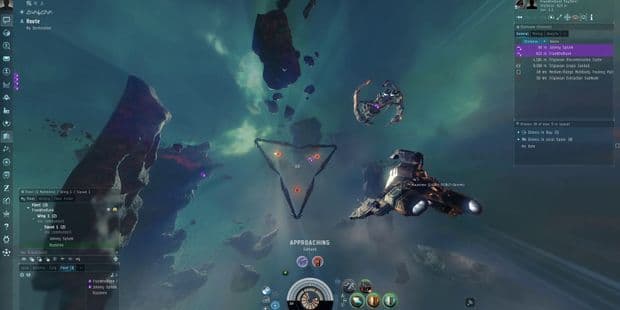
The veteran's view: after a few months, the actual game reveals itself to be fitting screens and spreadsheets as much as flying. Every ship is a hull with high, mid, and low module slots, plus rig slots for permanent modifications, and the real skill in EVE is knowing which combination of tank, damage, and utility modules turns a hull into a coherent ship for a specific job — a Ferox fit for solo roaming plays nothing like a Ferox fit for a fleet doctrine, even though it's the same hull. Over 350 ships exist across frigates, cruisers, battleships, and the capital-class dreadnoughts and titans that anchor the largest fights in the genre, and a veteran's mental model of the game is built almost entirely around which of those hulls solves which problem.
Combat itself is not twitch-based. Locking a target, orbiting at optimal range, managing capacitor and heat, and calling primaries in a fleet voice channel matter far more than aim. That's a deliberate design choice that keeps EVE's combat legible at the fleet scale it's actually built for — a hundred-person fleet fight is coordinated through range control and target calling, not reflexes, and that's precisely what lets fights scale to thousands of players without collapsing into chaos the way a twitch-combat MMO would at the same population.
Nothing in EVE drops from a vendor. Every module, every ship hull beyond the starter frigates, every piece of ammunition is built by a player somewhere in the supply chain, from raw ore mined out of an asteroid belt to a finished battleship rolling off a manufacturing job in a player-owned structure. Mining ore into minerals, refining minerals into components, and building components into hulls and modules is its own multi-week specialization, and CCP's 2025 Catalyst expansion leaned hard into that loop — reworking mining sites so that fewer, larger asteroids yield more ore, adding capital-scale mining sites, and streamlining the UI for players running planetary industry colonies across dozens of planets at once. The market itself is entirely player-set, region by region, and the largest trade hub, Jita, functions as the closest thing New Eden has to a real capital — prices there move on player supply and demand the way a real commodity market does, not on a developer-set price table.
This is where the newcomer/veteran gap widens the most. A new player's first real ISK-making loop looks like: mine ore in a Venture, sell it on the market or refine it into minerals, buy a slightly better ship, repeat. A veteran running an established industry operation is coordinating ore imports from null-sec mining fleets, running dozens of parallel manufacturing jobs in a player-owned Sotiyo or Raitaru structure, and pricing finished hulls against a market they've watched move for years. Both loops are honestly "the same game," just at wildly different scales — and that scalability, rather than any single system, is probably EVE's most durable design achievement.
PvE in EVE exists, though it was never the point and doesn't pretend to be. Agent missions scale from Level 1 courier runs to Level 4 combat missions worth running in a well-fit battleship, and Incursions bring roaming NPC fleets that require coordinated multi-ship response for solid ISK payouts. Exploration sends players hunting relic and data sites scattered across the galaxy, hacking derelict structures for loot while watching for other players who'd happily turn the site into a PvP encounter instead. Abyssal Deadspace, added several years back and still a staple, pockets a single ship into an instanced pocket dimension against escalating NPC waves for fifteen-minute, high-tension runs. None of it approaches the depth of a dedicated PvE MMORPG's raid tier, and it isn't meant to — PvE here mostly exists to fund the ships that get lost doing the things EVE is actually about.
Where the two perspectives fully diverge: a newcomer's first PvP experience is usually small — a duel in a low-sec system, a skirmish over a mission site, losing a frigate to a stealth bomber and shrugging it off because the ship cost less than a coffee. A veteran's PvP experience might be a null-sec sovereignty campaign involving a Theatre of War-scale coalition fight, the kind of engagement that pulls in thousands of pilots and can run for real-world hours, with capital ship losses running into the billions of ISK. CCP's 2026 roadmap has leaned directly into this gap with a saga of three war-themed expansions — beginning with EVE Evolved in February and continuing through the Cradle of War expansion revealed at Fanfest in May — built around what CCP calls Theatres of War and formalized Military Campaigns, an explicit attempt to give Factional Warfare persistent stakes and give newer pilots a reason to get pulled into a fight on day one rather than needing years of null-sec politics to find one.
Wormhole space sits apart from all of this as its own subgame: unscanned, unpredictable connections between systems that collapse after enough mass passes through them, home to small, tight-knit corporations who live entirely off what they can scan, hack, and defend without any stargate connection to known space. It's the purest expression of EVE's philosophy that geography itself should be a resource worth fighting over, and it rewards a specific kind of player who wants isolation and constant vigilance over the sprawl of null-sec politics.
Solo play is fully viable in EVE — mining, exploration, and small-gang PvP all work without a group — but the game's most famous stories, the multi-year null-sec wars and the four- and five-figure real-money battles that make mainstream gaming news every few years, only happen because corporations band into alliances and alliances band into coalitions that hold sovereignty over regions of space. Joining a corporation isn't cosmetic the way a guild tag can be in other MMOs; it determines your access to null-sec staging systems, your cut of moon mining and ratting income, and whether you have backup when a hostile fleet shows up on your doorstep. CCP's December 2025 Legion update leaned into this social layer directly, introducing Freelance Jobs and Access Control Lists that let corporation leadership delegate specific permissions without handing over full trust — a quiet but meaningful quality-of-life shift for the mid-sized corporations that make up most of New Eden's actual population.
EVE runs on a free-to-play Alpha tier alongside a paid Omega subscription, and the honest answer to whether EVE Online is pay to win is: less than it looks, and more than CCP would probably like to admit. Alpha accounts can fly a genuinely wide slice of the game — enough ships and skills to mine, mission, explore, and fight competently — but they're capped at roughly 5 million usable skill points without alpha injectors, train at half the speed of a subscribed account, and lose access to some ship classes and Triglavian hulls entirely. Omega, priced around $15 a month or discounted further on longer terms, removes the skill cap, doubles training speed, and unlocks the full 350-plus ship roster. Skill points can also be bought outright with real money through skill injectors, and PLEX, the game's tradeable premium currency, can be bought with cash and sold to other players for ISK, which means anyone with a card can buy their way into wealth without ever training a skill personally.
The mitigating factor, and it's a real one, is that raw wealth in EVE doesn't automatically translate into combat power the way gear score does in a typical MMORPG — a well-flown Alpha frigate can and does kill a poorly flown Omega battleship, because fitting knowledge, positioning, and fleet coordination matter more than account tier. But a veteran with a decade of accumulated skill points, industry infrastructure, and market capital has genuine, durable advantages a new subscriber can't buy their way past in a weekend, no matter how much PLEX they convert. That's less a pay-to-win problem than a time-to-win one, and it's worth going in with clear eyes about which kind of gap you're actually facing.
Population figures for EVE are genuinely harder to pin down than for most MMOs, since Tranquility runs largely outside Steam and third-party trackers disagree meaningfully with each other — Steam concurrency alone sits in the 4,000 to 5,500 range, while broader tracking that includes the direct CCP client puts monthly active players closer to 30,000 to 35,000 as of mid-2026, down from a Revenant-driven daily peak near 49,000 in November 2025. Parent company Pearl Abyss reported $82.7 million in EVE-related revenue for 2025, the strongest year for the game in over a decade, which points to a smaller but financially healthy playerbase rather than a game in decline. 2026 has brought the Catalyst-era industry overhaul, the Legion update's Freelance Jobs system, and the opening chapter of a three-expansion war saga running through EVE Evolved and Cradle of War, with a further expansion due in the final quarter of the year. EVE Vanguard, CCP's planned ground-combat companion shooter meant to connect to the main game, has slipped past its original summer 2026 Early Access target, which is worth knowing if that crossover is part of your interest in trying EVE now.
EVE Online in 2026 is still, fundamentally, a game about consequence — every ship you lose was built by someone, every system you fight over was claimed by someone, and every skill you train shapes a character that exists on the same timeline as everyone else's. That's a genuinely rare thing in modern MMOs, and it's worth experiencing at least once even if you never touch null-sec. A new player willing to spend a few weeks on Career Agents, a fitting guide, and a starter corporation will find a free-to-play Alpha account that opens far more of the game than the reputation for hostility suggests. A veteran, or someone chasing the specific thrill of thousand-person sovereignty warfare, is getting a genuinely active year out of CCP, with an industry overhaul already landed and a war-themed expansion arc still unfolding. The honest caveat sits in the middle: EVE rewards patience and planning far more than it rewards raw hours or raw spending, and if neither of those appeals to you, no amount of lore or scale will make the spreadsheet screens click. For the player who wants a universe rather than a theme park, though, New Eden remains the genre's most convincing argument that one still exists.