 F2P · Live
Lineage 2
Aden's castles never stay in the same hands for long, and Lineage II has built an entire twenty-three-year…
400 billion star systems, each one flyable without a loading screen — that scale is still Elite Dangerous's calling card more than a decade after launch. Frontier Developments' space sim blends open-e...
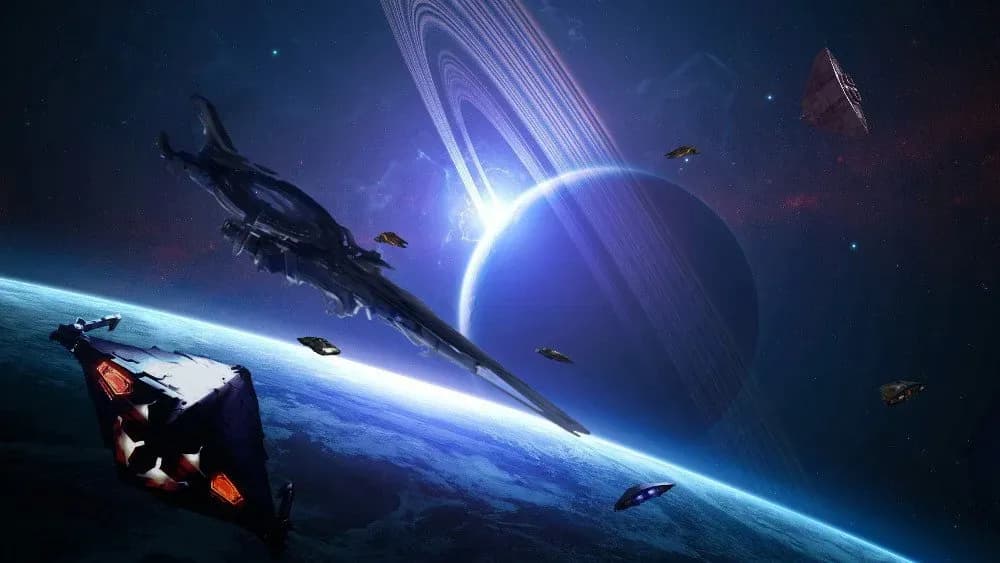
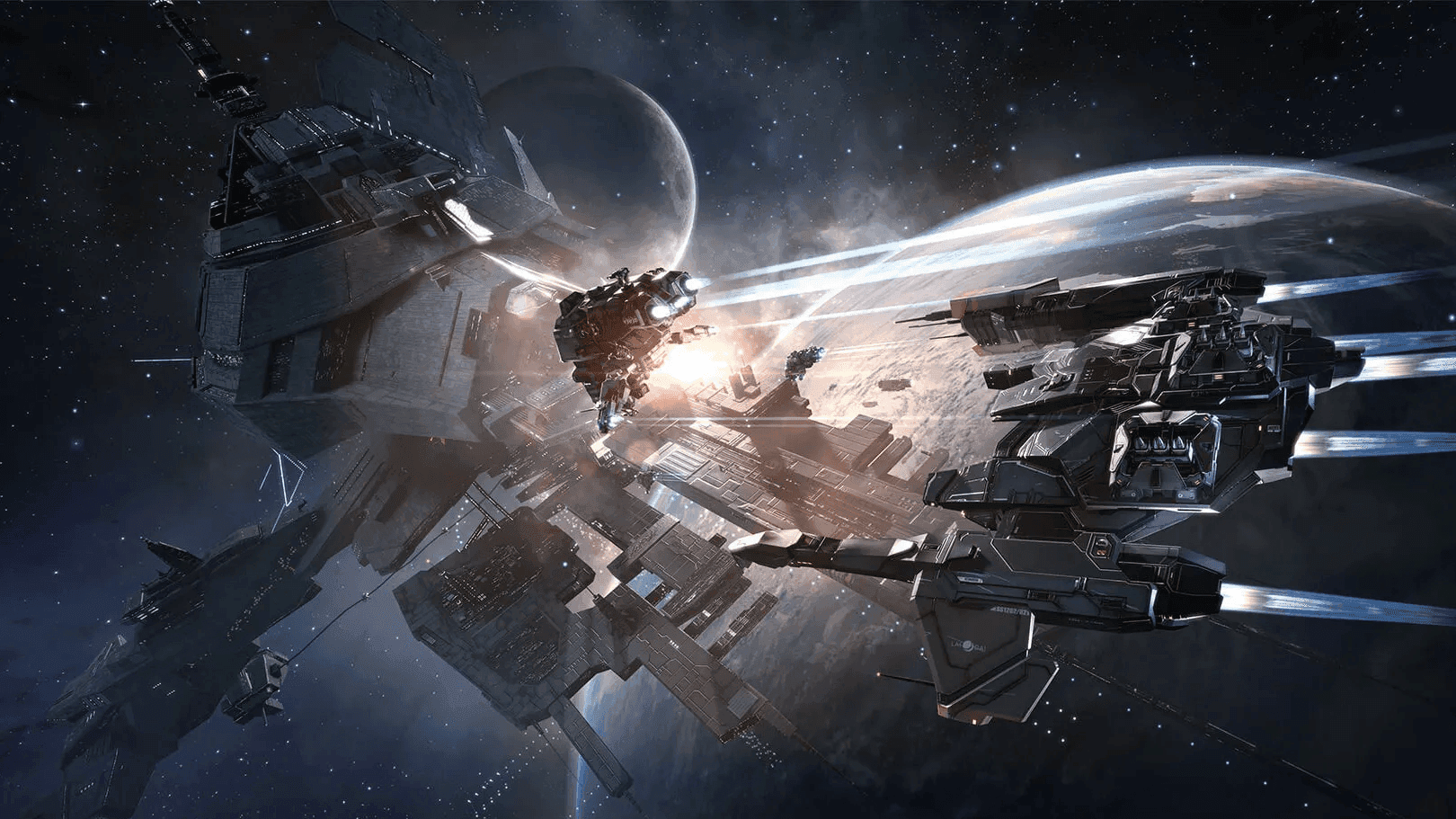
Elite Dangerous is a space simulation MMO developed and published by British studio Frontier Developments, released for PC on December 16, 2014, and later brought to PlayStation and Xbox. Built on Frontier's own Cobra Engine, it renders the entire Milky Way as a single persistent galaxy shared by every player — an estimated 400 billion star systems, each one flyable, most of them never visited by a human commander. Eleven years on, and well past the 2021 on-foot Odyssey expansion and 2025's System Colonisation update, it's still adding ships, rewriting its metagame, and asking a question few other MMOs even attempt: what does it feel like to actually pilot a spaceship across a galaxy this size? This Elite Dangerous review looks at where that question stands in 2026.
There's no single villain in Elite Dangerous, no central quest chain, and for long stretches, no story pushed at you at all. What exists instead is a political map: the Federation, the Empire, and the Alliance carve up human space between them, each with its own government style, its own capital ships, and its own reputation ladder to climb. Beyond the three superpowers sit independent systems, pirate factions, and — further out, past the galactic frontier — the Thargoids, an insectoid alien species whose recurring invasions of human systems have supplied most of the game's actual narrative momentum since 2017. None of this is force-fed through cutscenes. It surfaces in station news tickers, in faction standings that shift because of what players did last week, and in community write-ups after a battle most of the galaxy never noticed happened. The tone is closer to hard science fiction than space opera — cockpits are dense with switches and readouts, distances are measured in light years that actually take time to cross, and the closest thing to magic in the setting is a still-unexplained species of alien engineers called the Guardians.
Every new commander starts the same way: docked at a station in a Sidewinder Mk I, a small, slow, thoroughly unglamorous starter ship, with a handful of credits and a set of tutorial missions that teach the controls one system at a time. The first real task is leaving the station without hitting anything, which sounds trivial until you're managing throttle, yaw, pitch, and a flight assist toggle simultaneously while a mail slot the size of your ship rushes past on both sides. From there, the tutorials walk through supercruise — the faster-than-light travel used within a system — and the hyperspace jump that carries you between star systems entirely.
The actual loop of the first hour is small and deliberately unglamorous: accept a short-range delivery or bounty-hunting mission from the station's mission board, fly it, get paid, repeat. A new pilot might scan a nearby resource extraction site, take a pot shot at a wanted pirate, or just haul a few tons of cargo between two stations three light-minutes apart. None of it looks like much on paper. What sells it is the flight model itself — full six degrees of freedom, momentum that has to be fought against rather than ignored, and a docking computer you can buy to skip the hardest part of piloting once you've proven to yourself you can do it manually. Nobody forgets their first unassisted docking, mostly because of how many collision warnings precede it.
By the ten-hour mark, the Sidewinder usually gets traded up — a Hauler or an Adder for cargo runs, a Cobra Mk III or the newer Cobra Mk V for a jack-of-all-trades combat-and-exploration hybrid, or an Eagle for players chasing bounties from day one. This is where Elite Dangerous stops being a tutorial and starts being a choice of career: trading, bounty hunting, mining, or exploration, each with its own economy, its own ship fittings, and almost no mechanical overlap with the others.
This is also roughly when a new commander meets the Engineers — a network of specialist NPCs scattered across the galaxy, starting with Farseer Inc., who can modify ship modules for real performance gains: a longer-ranged frame shift drive, a faster-charging shield, a plasma accelerator with genuinely nastier bite. Unlocking an Engineer means tracking down specific materials, which pushes players into mining asteroid belts, scavenging wrecks, or hunting down rare data drops depending on what that Engineer wants. It's a grind by design, and an honest one: nothing about ship performance in Elite Dangerous can be bought outright with real money, only earned through in-game material collection and credits.
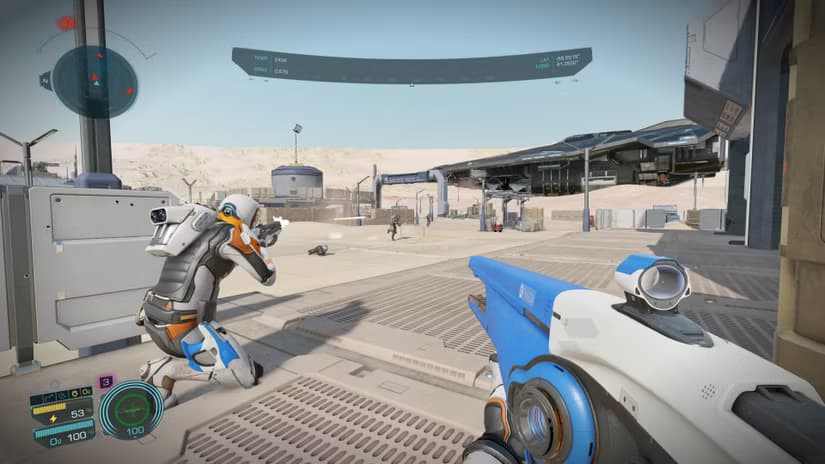
Somewhere past the fifty-hour mark, most commanders who bought the Odyssey expansion step out of the cockpit for the first time. Odyssey added first-person, on-foot gameplay: landing near a settlement, suiting up in an EVA suit, and walking the surface of a planet with actual gravity, weather, and atmosphere modeled per world. Combat here is a different game entirely — three suit archetypes (Maverick for assault, Dominator for heavy armor, and Artemis for stealth and long-range work) each handle differently, and a firefight against settlement security guards plays more like a tactical shooter than anything in the ship-to-ship combat loop.
Odyssey also introduced exobiology, a slower, quieter counterpoint to the gunfights: scanning alien flora and fauna on planet surfaces for scientific credit, which rewards patient explorers who'd otherwise have nothing to do once a system's been mapped. It's not a system every player will touch, but for the ones drawn to Elite Dangerous specifically for its exploration fantasy, walking up to a genuinely novel organism on a planet nobody else has ever scanned is one of the few moments in the genre that can't be replicated anywhere else.
The single biggest shift in the game over the past year has been the overhaul of Powerplay, the faction metagame where commanders pledge to one of eleven Powers — real named figures like Federation President Zachary Hudson or the independent pirate-baron Archon Delaine — competing for control of systems. The original version launched alongside the base game and was widely considered opaque and disconnected from everything else players actually did. Powerplay 2.0 rebuilt it so that Merits, the currency used to rank up and unlock Power-exclusive modules, now accrue from nearly every activity a commander already performs: bounty hunting, trading, mining, even routine exploration, provided it happens in the right systems. Community reaction has been strongly positive, and the weekly cycle of contested systems has given the galactic map a genuine sense of motion it lacked for years.
Running alongside Powerplay is System Colonisation, introduced in 2025, which lets player groups establish entirely new populated systems from scratch — claiming an uninhabited system, building out its first stations and outposts, and watching it grow into a functioning part of the galaxy's economy. It's the closest Elite Dangerous has come to letting players leave a permanent, visible mark on the setting rather than just influencing faction standings behind the scenes. Frontier's 2026 roadmap layers five content phases across the year — new ships in February, April, summer, fall, and winter, with April's Phase 2 also introducing "Operations," an upcoming set of instanced cooperative activities meant to be accessible without the long travel times bigger group content usually demands. The Thargoid war, meanwhile, hasn't gone away: Anti-Xeno Initiative fleets still organize player-run defenses against Thargoid Titans, capital-scale alien warships that require dedicated anti-xeno weapons and, realistically, a coordinated squadron rather than a solo pilot.
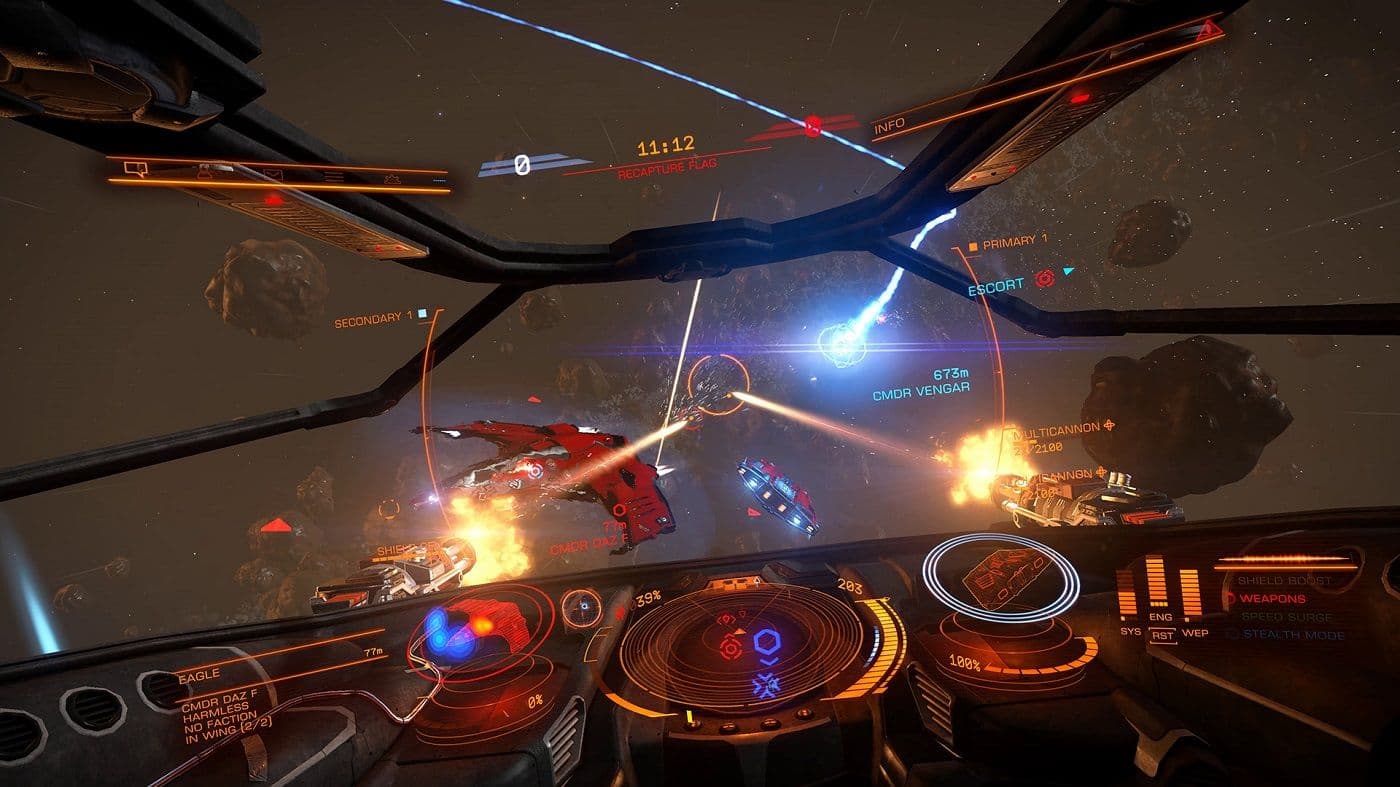
What makes Elite Dangerous unusual among online games is how little these four pillars share mechanically. Combat is built on shields, hull integrity, and heat management as much as raw damage — a well-engineered ship can out-turn something twice its size, and the difference between a good and bad pilot shows up in energy distribution between weapons, engines, and systems long before it shows up in gear score. Trading is closer to a spreadsheet game played through a cockpit: buy commodities cheap in one station, haul them across systems in a cargo-rigged hauler, sell where demand and price are highest, and watch the galaxy's simulated economy actually respond to what you and thousands of other commanders are doing.
Mining has grown from a fringe activity into one of the game's more lucrative careers, using mining lasers or the more involved core-mining technique — cracking an asteroid open with seismic charges to expose a payload of valuable minerals, then vacuuming it up with collector limpets before it drifts away. Exploration is the odd one out: there's no combat, no traditional reward loop, just first-discovery tags on unscanned systems, a slow trickle of credits from selling exploration data, and — for the truly committed — organized community expeditions like the annual Distant Worlds trip to the galactic core, a months-long journey that draws thousands of participants purely for the experience of having gone.
Elite Dangerous doesn't have a guild system in the traditional MMO sense, and that's a deliberate design choice rather than a gap. Squadrons let groups of commanders coordinate under a shared banner and track collective activity, and pledging to a Power in Powerplay gives that structure a galaxy-scale political dimension. Beneath both sits the Background Simulation, or BGS — the invisible engine that tracks every minor faction's influence in every system, shifting based on aggregate player activity whether or not anyone's paying attention. The result is a social layer built more around emergent community groups than formal in-game structures: the Fuel Rats, a volunteer rescue organization that tows stranded explorers back to civilization, and the Anti-Xeno Initiative, which organizes the galaxy's defense against Thargoid incursions, both function as real, player-run institutions that predate any tool Frontier built to support them.
No, and it's one of the more straightforward answers in this genre. The base game is a one-time purchase, frequently discounted well below its original price, and the Odyssey expansion — once priced near $40 — now regularly sells for a fraction of that. There is no subscription. The only real-money currency is ARX, capped at 400 earned per week through normal play and usable exclusively on cosmetic ship kits, paint jobs, and commander customization; Frontier has been explicit that ARX will never buy pay-to-win advantages, and nothing in the current cash shop contradicts that. Ship upgrades, Engineer unlocks, and even the game's priciest capital-scale fleet carriers are all purchased with credits earned in the game itself, not real money. The honest caveat is elsewhere: Frontier has never found a robust long-term monetization model for the game, which shows up less as predatory design and more as a slower pace of major content than some players would like, funded largely by one-time sales and ship-focused DLC rather than a steady live-service revenue stream.
If what draws you to a space game is the idea of a galaxy that actually behaves like one — real distances, a simulated economy, factions that shift because of what pilots collectively did last week — Elite Dangerous is still doing something almost nobody else attempts, and Powerplay 2.0 plus System Colonisation make this a genuinely better moment to start than most of the last decade. If you want a tight narrative campaign, fast onboarding, or combat that rewards reflexes over patience, this isn't that game, and no amount of new ships will change what it fundamentally is. Commanders who already own it and drifted away after Odyssey's rocky launch have real reason to come back; newcomers should go in knowing the first ten hours are a filter, not a preview, and that the payoff sits several systems past the tutorial rather than in it.