 Buy To Play
SpiritVale
MMORPGEarly access
SpiritVale is a class-based action MMORPG from Australian indie studio Baikun Interactive, set in the fractured world of Nevaris. Choose from seven cl...
Minimum and recommended PC specs to run the game
← Back to game reviewIf your PC can run this game, you'll also be able to play these:
Buy To PlaySpiritVale is a class-based action MMORPG from Australian indie studio Baikun Interactive, set in the fractured world of Nevaris. Choose from seven cl...
 Free To Play
MapleStory is a free-to-play 2D side-scrolling MMORPG from Nexon that has run continuously since 2003, now home to more than 260 million registered ac...
 Free To Play
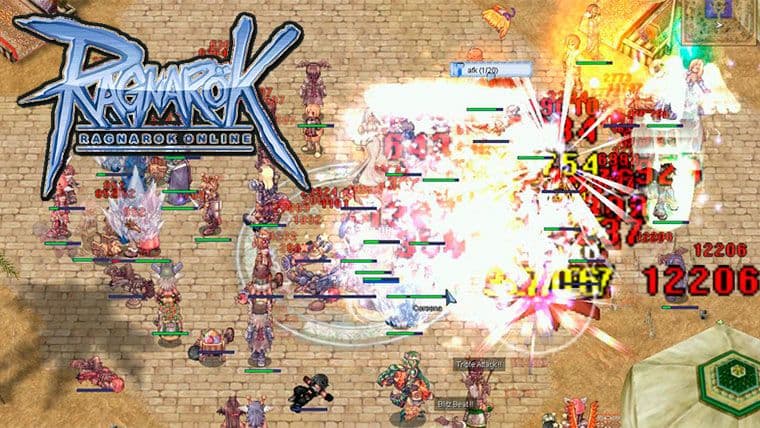
Ragnarok Online has been running since 2002, and the card system it introduced — socketing monster drops into weapons and armor — is still one of the ...
Elite Dangerous (incorporating the unified Live 4.0 codebase and the Odyssey expansion) operates on Frontier Developments' proprietary Cobra engine leveraging the DirectX 11 rendering pipeline. The architectural foundation relies on the Stellar Forge procedural generation engine, which simulates the entire Milky Way galaxy at a 1:1 scale across 400 billion star systems with scientifically grounded orbital physics and seamless drop-outs from supercruise to planetary surfaces without discrete loading screens.
The Central Processing Unit (CPU) bears substantial computational overhead: evaluating Newtonian 6-DOF flight dynamics, real-time procedural terrain synthesis, dynamic stellar lighting calculations, and peer-to-peer networking replication. While deep-space flight is relatively lightweight on CPU resources, entering massive orbital starports like Coriolis stations or engaging in on-foot combat across planetary settlements with dozens of AI combatants rapidly exposes single-thread throughput (IPC) and L3 cache bottlenecks. A modern 6-core processor such as an Intel Core i5-8600 or AMD Ryzen 5 2600 is strongly advised to maintain consistent frame pacing during chaotic ground-conflict zones.
The Graphics Processing Unit (GPU) and Video Memory (VRAM) workload scales dynamically across exploration modes. In deep space, rendering focuses on physically based star illumination, complex ring shadow projections, and volumetric nebula nebulae, where a 3–4 GB VRAM card sustains 60 FPS at 1080p. Conversely, planetary descents involving thin atmospheric scattering, settlement geometry, and combat particle effects dramatically inflate draw call frequency. Smooth 60 FPS gameplay on high presets at 1080p requires at least 6 GB of VRAM (such as a GeForce GTX 1060 or Radeon RX 580), while 1440p, native 4K, or virtual reality (VR) headsets demand an 8–10 GB framebuffer to prevent texture thrashing.
While the baseline specification notes an 8 GB RAM minimum, the modern 4.0 architecture with integrated ground mechanics effectively treats 12 to 16 GB of dual-channel RAM as the true operational baseline. The engine actively caches planetary heightmaps, settlement structural blueprints, dynamic audio banks, and celestial surface shaders in system memory. Ample RAM headroom eliminates severe frame-time spikes and prevents aggressive Windows page file paging during multi-hour exploration sorties across the core bubble systems.
Installing the game onto a Solid State Drive (SSD) is critical for optimal stability. With the install footprint demanding upwards of 75 GB, the procedural streaming engine continuously streams voxel terrain meshes and texture hierarchies during planetary approaches and orbital drop transitions. Legacy mechanical hard drives (HDDs) suffer from protracted witchspace jump transitions, stuttering when dropping out of supercruise, and jarring pop-in of planetary geometry directly beneath the landing gear.