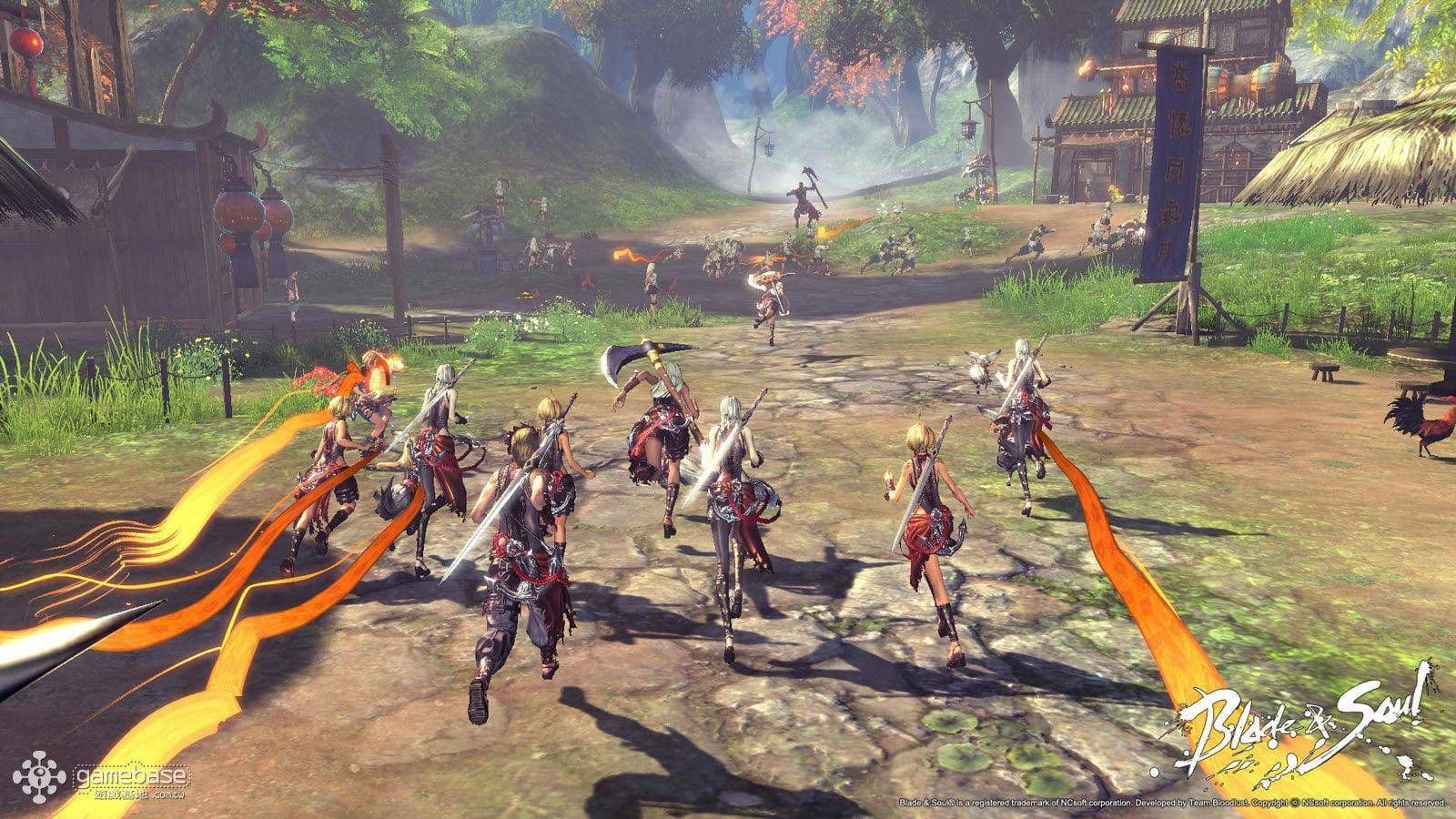
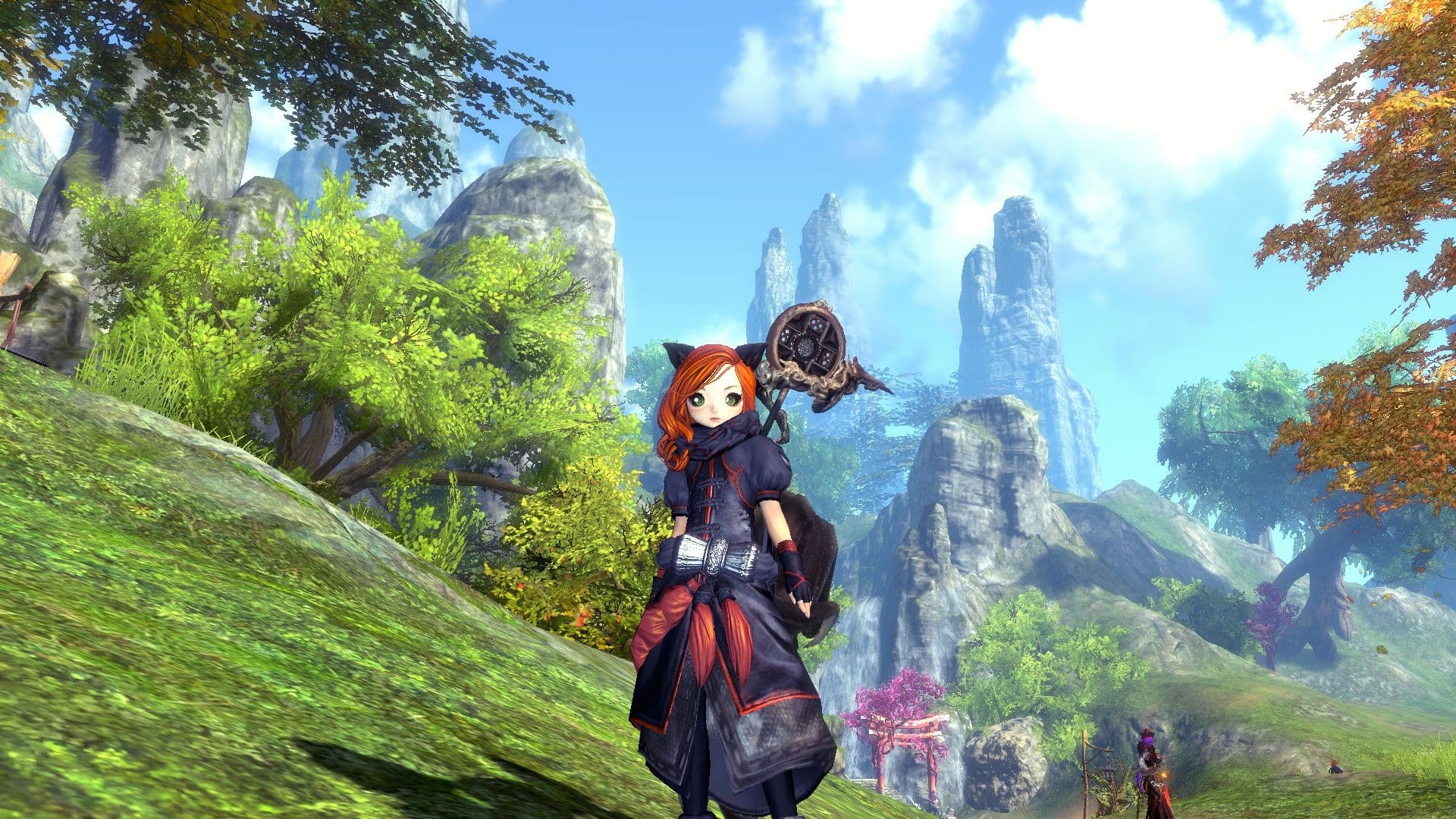
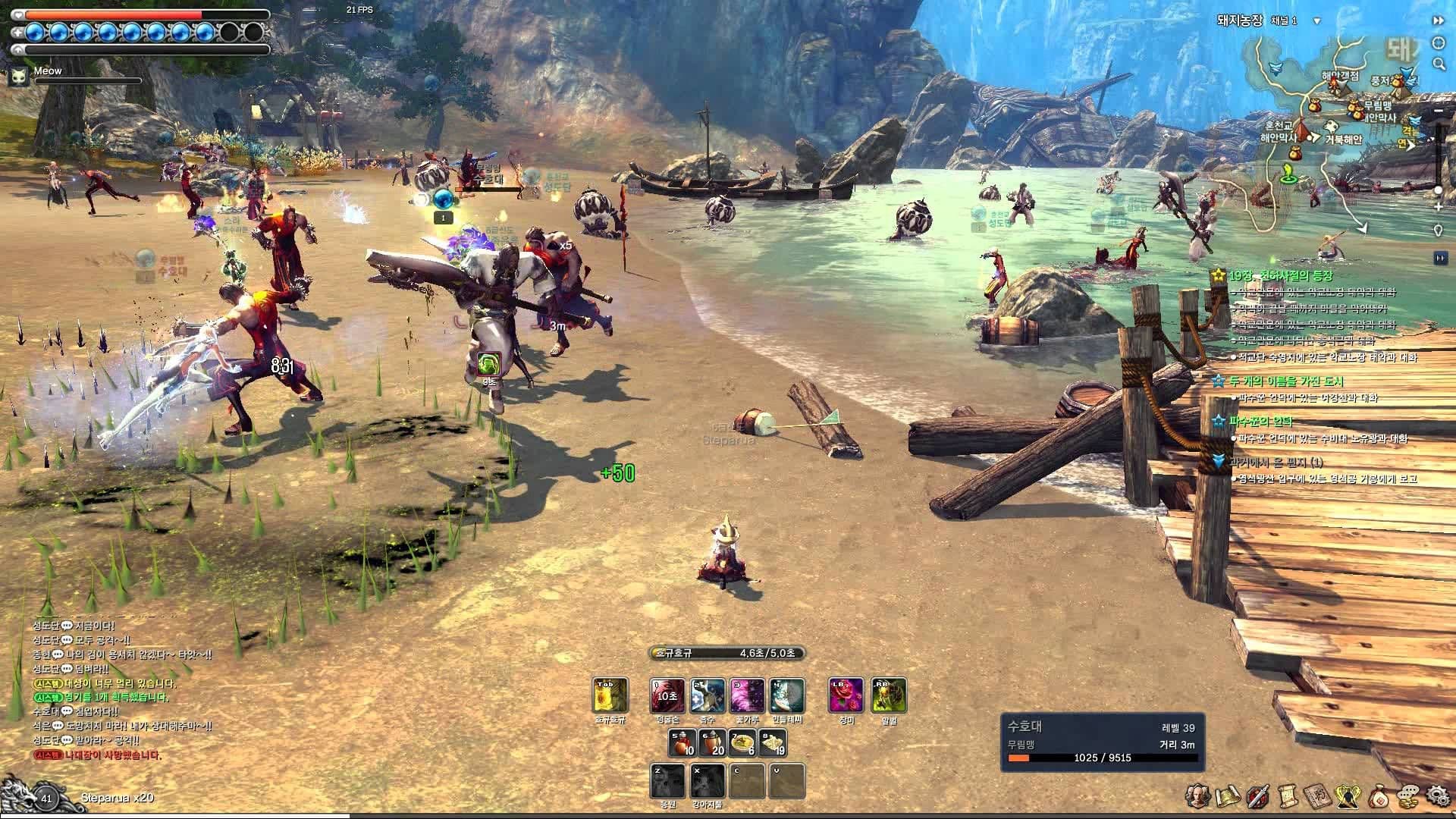
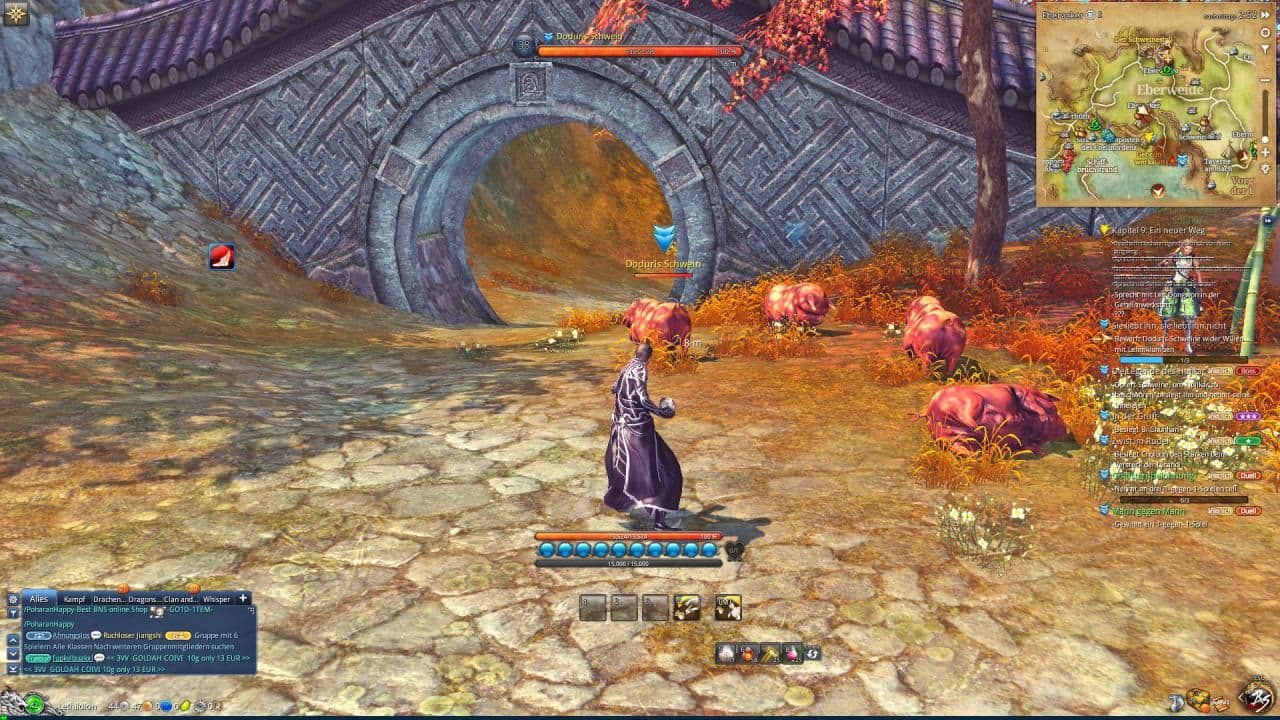
Quick take: Blade & Soul is a flagship martial arts action MMORPG developed by Team Bloodlust and published by NCSOFT. Debuting in South Korea in 2012 before expanding to Western markets in 2016, the game forever etched its place in multiplayer history through a genre-defining combat system that seamlessly bridges 3D fighting games with large-scale online encounters, the breathtaking aerial mobility of "Windwalk", and the bold aesthetic vision of renowned illustrator Hyung-Tae Kim. Operating under a Free-to-Play model, upgraded to Unreal Engine 4, and offering 15 deeply specialized classes, the modern Live version remains an exhilarating masterclass in action mechanics, even as it navigates the burdens of vertical gear progression, aggressive monetization, and a boutique veteran population on contemporary live servers.
The Swallow's Flight Across an Eastern Epic: The Defining Identity of Blade & Soul
In the early 2010s, the massively multiplayer online role-playing landscape was experiencing a prolonged crisis of identity. The genre had grown suffocated by endless variations of conventional tab-target design, where the outcome of every skirmish was predetermined not by human reflexes or spatial awareness, but by cold spreadsheet mathematics and the repetitive cycling of hotbar rotations. Against this backdrop of creative stagnation, the South Korean unveiling of Project M from NCSOFT's internal division Team Bloodlust felt like a thunderclap across the industry. The studio pledged to erase the boundary separating sprawling persistent worlds from the uncompromising kinetic intensity of competitive 3D fighting games, drawing deep thematic inspiration from Hong Kong martial arts cinema and classic wuxia literature.
When Blade & Soul officially opened its servers in South Korea on June 30, 2012, it caused an immediate seismic disruption, amassing hundreds of thousands of concurrent players and unseating entrenched giants like World of Warcraft in the domestic market. Western audiences endured a grueling four-year wait until January 2016, when NCSOFT finally launched the game across North America and Europe, accompanied by regional publishing across the CIS. Despite the multi-year latency, the title immediately commanded cult status, transforming into a televised esports sensation and establishing itself as one of the most visually mesmerizing spectacles the medium had ever witnessed.
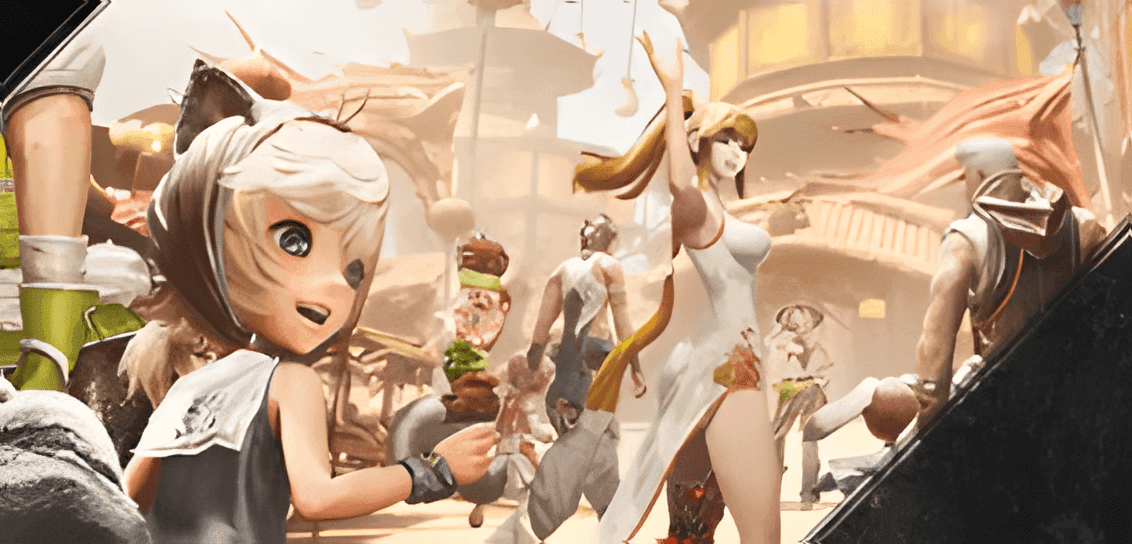
The visual soul and aesthetic lodestar of Blade & Soul was art director Hyung-Tae Kim, whose instantly recognizable illustration style elevated the game into a breathtaking canvas of kinetic fantasy. Kim's design philosophy openly discarded grounded European realism in favor of heightened, theatrical wuxia extravagance: statuesque figures with exaggerated anatomical silhouettes, multi-layered silks that rippled dynamically against gale-force winds, and fluid martial acrobatics that balanced on the fine edge between martial grace and overt sensuality. The realm of the Earthen Realm was not an assemblage of generic high-fantasy tropes, but a living tapestry of mist-veiled bamboo canopies, sky-piercing cliffside monasteries, cascading mountain waterfalls, and the subterranean steampunk machinery of the ancient Naryu Empire.
Equally revolutionary was the team's total rejection of traditional MMO mounts. You will find no armored steeds, mechanical gyrocopters, or winged beasts roaming the landscape; instead, physical transit was reimagined around a mystical martial art known as Windwalk:
- How it works: by engaging the sprint key followed by a leap, characters enter an exhilarated high-speed glide, sprinting vertically up sheer ninety-degree cliffs, riding currents of celestial chi across massive chasms, and skimming across water surfaces while kicking up violent plumes of spray.
- What it delivers: an exhilarating sensation of absolute spatial freedom. Mountains, fortresses, and abysses cease to function as impassable geometry, transforming leveling into a thrilling parkour sequence ripped straight from the cinematic choreography of Crouching Tiger, Hidden Dragon.
- The catch: in the original Live framework, this poetic acrobatics is strictly governed by a dedicated green stamina bar. To unlock higher jumps, cross wider canyons, or scale the highest peaks in the realm, players must undertake an eccentric multi-stage questline under the tutelage of the hermit Old Man Cho, gathering rare talismans, fans, and chi-amplifying draughts to systematically expand their stamina pool.
Equally audacious was the decision to sever visual character design from defensive combat attributes. In Blade & Soul, traditional armor pieces do not exist: whether your warrior dons an immaculate silk changshan, an assassin's battle-worn keikogi, or an avant-garde futuristic ensemble, every outfit is entirely cosmetic. Defensive stats, critical ratings, and attack power are instead channeled through concealed spiritual relics—most notably the eight-piece Bagua Soul Shield. This structural decoupling birthed a passionate community subculture centered on high-end fashion, transforming the pursuit of rare dungeon drop costumes and seasonal event attire into a premier endgame ambition.
Fighting Games Reborn in an MMO: Signature Combat Mechanics
Strip away the lavish wuxia lore, the cinematic cutscenes, and the arresting character designs of Hyung-Tae Kim, and Blade & Soul would still stand as an extraordinary triumph of game engineering. The fundamental anchor of its legacy is a combat engine that, more than a decade post-launch, remains an unmatched gold standard for kinetic action in multiplayer gaming. While the majority of its contemporaries leaned on faux non-target targeting with soft magnetic homing, Team Bloodlust engineered a authentic 3D fighting game seamlessly grafted into a massively multiplayer architecture.
Control revolves around a rigid central reticle. The mouse cursor is permanently locked to screen center, with primary mouse buttons managing fundamental strikes, offhand swings, and fluid combo links. Rather than presenting a static wall of dozens of hotkeys, a class's interface dynamically shifts depending on player-to-target distance, current weapon stance, the target's physical vulnerability (upright, stunned, knocked down, or airborne), and the precise animation frame of the preceding blow. Passive damage trading does not exist: survival demands split-second spatial awareness, precise hitbox calculation, and the ability to read telegraphs before enemy strikes connect.
The mechanical depth of personal micro-play rests upon three interlocking pillars:
- Invulnerability frames (i-frames) and flanking: primary evasive actions are mapped to Q, E, and a double-tapped S (backstep). Striking Q or E executes a lightning-fast blindside flank behind the target, granting complete invulnerability to incoming damage and control effects during that fractional sliver of a second. Skill ceiling is directly expressed by a player's ability to trigger this blindside precisely as a lethal cleave or energy projectile occupies the same physical coordinate.
- Active blocking and split-second parrying: martial classes do not rely on passive evasion percentages rolled behind the scenes. Holding the defensive key on 1 for a Blade Master or executing a parry on a Kung Fu Master physically intercepts the blow with an aura of hardened chi. Executing that parry within the razor-thin initial 0.5-second activation window not only negates the incoming hit entirely, but stuns the attacker, opening a lethal window for immediate retaliation.
- Status vulnerability and airborne juggles: foes are systematically dismantled through four core crowd-control states: Stun, Daze, Knockdown, and displacement knockbacks. Once a target is stunned or dazed, specialized abilities can launch them skyward into an Airborne Combo. While suspended helplessly mid-air, the target is subjected to a rapid sequence of aerial strikes before being slammed into the earth. Because airborne targets cannot invoke defensive escape breakaways, landing an aerial launch is the crown jewel of any competitive engagement.
To elevate group boss encounters beyond mindless damage races, the developers pioneered the legendary Joint Attack crowd-control system:
- How it works: formidable world and dungeon bosses possess specialized crowd-control vulnerability bars segmented into two, four, or six cells. During distinct telegraph phases, these cells illuminate in specific colors: blue (requiring Stun), green (requiring Knockdown), or red (requiring Daze).
- What it delivers: perfectly synchronized group execution. Filling all cells simultaneously with the matching status effect interrupts wipe mechanics, brings the behemoth crashing to its knees, and allows a Destroyer or Blade Dancer to hoist the boss aloft in a phantom grip, granting the entire party an uncontested window for maximum burst damage.
- The catch: total intolerance for mistakes. If an inattentive party member applies a green knockdown when the raid leader called for a blue stun, the boss's CC meter becomes contaminated with mismatched statuses, the interrupt fails instantly, and the boss completes an unblockable arena-wide cataclysm that obliterates the entire party. In endgame content, one errant keypress from a single player spells catastrophic failure for everyone.
Rounding out this combat opera is the iconic Near Death state. Depleting your health pool does not immediately send your soul to a respawn point. Instead, your warrior collapses face-down in the dirt, able to slowly crawl across the battlefield away from residual area-of-effect hazards. Once in safety, you can initiate Chi Recovery: your martial artist adopts a meditative lotus posture, spending twenty agonizing seconds gathering spiritual energy to self-revive. If a stray hit clips you during this state, death is final; however, a vigilant ally can channel their own chi to accelerate your recovery, creating thrilling battlefield moments where half-dead players crawl out from beneath towering colossi while allies desperately hold aggro.
Four Lineages and Fifteen Martial Schools: Races, Classes, and Awakening Paths
The class architecture of Blade & Soul is deeply rooted in ancient Chinese mythology, drawing spiritual essence from the Four Benevolent Beasts that govern the cosmos. Unlike Western conventions, where racial choices typically provide negligible mathematical passives or token aesthetic variations, here your chosen lineage dictates physical mass, movement animation cadence, and strictly circumscribes which martial traditions your warrior can pursue:
- Jin — descendants of the Black Tortoise, embodying boundless perseverance, intellectual acumen, and adaptable pragmatism. Open to both sexes, the Jin represent the quintessential mortal lineage, commanding core swordsmanship, shadow assassination, and sharpshooting disciplines.
- Gon — colossal juggernauts bearing the primal bloodline of the Ancient Dragon. Possessing towering statures, hyper-muscular frames, and fierce unyielding spirits, both male and female Gon naturally excel in brutal, earth-shattering melee destruction.
- Yun — an exclusively female lineage blessed by the ethereal grace of the Fenghuang (Phoenix). Characterized by otherworldly poise and intimate alignment with terrestrial harmony, the Yun focus on graceful blade mastery, elemental spells, and celestial music.
- Lyn — a diminutive people adorned with oversized animal ears and sweeping tails, tracing their heritage to the mythical Kirin. Despite their playful stature, the Lyn possess an innate sixth sense that allows them to converse with nature spirits, command familiars, and distort gravitational fields with ease. Open to both sexes.
While the game launched in 2012 with a curated roster of seven classes, continuous live-service development has expanded the modern Live ecosystem into an extraordinary library of fifteen fully realized martial schools, each governed by its own rhythm, stance mechanics, and input flow:
- Blade Master — the foundational duelist, seamlessly transitioning between an impenetrable defensive parry stance and the devastating, high-velocity draw stance (iaido).
- Kung Fu Master — an intensely demanding hand-to-hand brawler requiring split-second parry reactions, brutal ground-and-pound pins, and an unbroken rhythm of alternating punch-kick cancels.
- Force Master — the classic ranged caster, dynamically juggling twin vortexes of icy crowd control and incendiary conflagration damage.
- Destroyer — an unstoppable berserker wielding a colossal two-handed battleaxe, capable of hoisting enraged bosses high above the battlefield with one arm while allies unload burst damage.
- Assassin — a tactical shadow operative manipulating landmines, venomous clouds, wire traps, and uninterrupted teleporting stealth cycles behind enemy lines.
- Summoner — a charming Lyn caster fighting in seamless synergy with an armored feline familiar, blending protective pollen curtains, party resurrections, and persistent nature damage.
- Blade Dancer — an agile Lyn spin-master combining high-speed sword cyclones with phantom blade telekinesis to grip targets from range.
- Warlock — a dark talisman practitioner commanding floating paper wards, summoned demonic thralls, and the game's ultimate party steroid: Soulburn, which erupts ethereal spirit wings across the raid and unlocks devastating hyper-abilities.
- Soul Fighter — a versatile hybrid that fluidly shifts between close-quarters kung fu combinations and ranged frost volleys, equipped with full-party life resurrection.
- Gunslinger — a cinematic dual-pistol acrobat utilizing omnidirectional grapple wires to vault over combat hazards while emptying high-velocity magazines.
- Warden — a heavy greatsword bulwark generating an impenetrable divine resilience shield that shrugs off crowd control while shielding party members in an aura of celestial blades.
- Archer — a tactical sniper prioritizing meticulous ground positioning, charge-shot firing arcs, and rapid directional somersaults.
- Astromancer — an energetic Lyn spellcaster channeling the cosmic resonance of constellations, localized black holes, and thunderous celestial tempests.
- Dual Blade — a hyper-kinetic dual-wielding specialist requiring meticulous stamina management across frantic berserker and defensive dueling stances.
- Musician — an elegant female-only combatant weaving acoustic shockwaves and impenetrable harmonic barrier songs through the strings of a classical zither.
High-level class identity reaches its pinnacle through the Awakening progression, which granted most disciplines an entirely distinct Third Specialization:
- How it works: upon reaching level 60 and completing an epic Hongmoon spiritual questline, characters gain access to three distinct specializations. Rather than applying a superficial elemental skin, these branches thoroughly reconstruct the skill bar, resource economy, stance choreography, and combat pacing.
- What it delivers: profound tactical reinvention. A Blade Master can master classic Fire bursts, lightning-quick Flashing strikes, or step into the Way of the Spectral Blade, conjuring phantom blades that levitate autonomously behind the warrior. Recent Live updates deepened this verticality by elevating the Skill Level Cap from level 30 up to Level 40, allowing precise investment into prime rotational nukes.
- The catch: modern third-tree rotations were designed around blistering APM (actions per minute) and rapid skill animation cancels. Sustaining top-tier theoretical DPS demands low network latency: a connection exceeding 60–80 ms causes input queuing delays, clipping critical animation links and shedding 30% to 40% of baseline damage output.
The Way of the Hongmoon and the Thirst for Vengeance: Narrative Canvas and the Naryu Legacy
In an era when the vast majority of Asian MMORPGs relegated storytelling to sterile quest log text wedged between repetitive grinding fields, Blade & Soul constructed its world around a grand, cinematic theatrical narrative. The writing team drew directly from the timeless conventions of classical wuxia epics—such as Jin Yong's The Legend of the Condor Heroes—where cosmic salvation takes a back seat to deeply personal, emotionally searing sagas of blood vengeance, betrayal, and the moral descent of the protagonist.
The journey opens on the serene, mist-cloaked sanctuary of Heaven's Reach, the secluded monastery of the Hongmoon School. The player begins as a novice disciple cultivating inner chi under the gentle guidance of Master Hong, a diminutive elder of peerless martial virtue. That dawn tranquility is violently shattered when storm clouds gather and black flames engulf the mountaintop. Walking through the ash is Jinsoyun, a ruthless warrior draped in mourning black. Aided by the deceitful infiltrator Yura and a treacherous student, Jinsoyun slaughters the school. Master Hong surrenders his life to shield his students, yielding the sect's sacred relic—the celestial Twilight's Edge. Pierced by dark chi and cast into the churning ocean below, the protagonist miraculously survives, animated by a singular obsession: track down Jinsoyun and avenge the fallen master.
The character arc of Jinsoyun endures as one of the most compelling antagonist journeys in multiplayer role-playing history:
- How it works: throughout the first four acts, the narrative presents Jinsoyun as an avatar of unrelenting, merciless cruelty. She corrupts imperial courts, razes provinces, and orchestrates the opening of the Dark Gate to invite demonic corruption into the mortal realm. Yet as the Northern campaign nears its climax, the veil of history parts: players discover Jinsoyun's devastating past, revealing that she was framed, disgraced, and murdered thirty years prior by the very Four Guardians of the Earthen Realm—including Master Hong himself.
- What it delivers: a sharp philosophical reversal that transforms a conventional revenge fantasy into a tragic examination of grief and cycle-breaking. Players are forced to choose between the intoxicating pull of the Dark Chi or honoring the true spiritual mandate of the Hongmoon School: mercy, spiritual purification, and redemption. The emotional resonance of the confrontation within the celestial palace of Kangdo remains a high watermark for MMO storytelling.
- The catch: the dramatic momentum reaches its apex at the conclusion of Act IV in the Silverfrost Mountains. Subsequent expansions journeying westward across Solak and down into the buried vaults of the Naryu Empire struggle to replicate that narrative tension, frequently lapsing into serialized tropes of kidnapped allies, repetitive spiritual rituals, and disconnected demonic threats that dilute the personal stakes of the original saga.
Geographically, the Earthen Realm is laid out as a classic "theme-park" progression meticulously synchronized with the narrative chapters:
- Bamboo Village and the Viridian Coast — sun-drenched coastal bluffs where players align with the local militia captain Dochun, clash with the Blackram pirate armada, and encounter the first manifestations of the Dark Chi.
- Cinderlands — a scorching desert badland populated by dust caravans, wandering mercenaries, subterranean Naryu tombs, and bitter skirmishes over precious oasis springs.
- Silverfrost Mountains — a monumental northern expanse of subarctic pine forests, alpine monasteries, and the gilded palaces of the imperial capital Kangdo, serving as the crucible for the main storyline's climax.
- Solak — a lush, mystical western continent defined by ancient mangrove marshes, primeval deities, and long-abandoned imperial outposts.
In modern Live service, this journey has been drastically streamlined: superfluous side quests have been swept aside, allowing players to focus entirely on the yellow mainline story quests over an engaging 15-to-20-hour campaign. The story operates as an exhilarating high-speed express that catapults newcomers straight to the level 60 baseline, showering characters with introductory legendary gear and upgrade materials to prepare them for the demanding endgame gauntlet.
The Endgame Labyrinth: Demonsbane Tiers, 12-Player Raids, and Solo Trial Towers
While completing the narrative campaign of Blade & Soul resembles an accessible sprint through a martial arts cinema epic, the endgame greets players with an uncompromising baptism by fire. Here, the game sheds its welcoming tutorial facade to become a ruthless audit of personal reaction speeds, frame-perfect rotation uptime, and group coordination. The modern Live PvE ecosystem is anchored around three primary structures: the escalating dungeon ladders of the Demonsbane system, complex 12-player raids, and punishing solo trial towers.
The centerpiece of contemporary dungeon progression is the Demonsbane tier framework:
- How it works: rather than locking dungeons into static normal/heroic difficulties, flagship instances such as The Aerodrome and Namdo Shrine are segmented into multi-tiered ascending stages. With each ascending tier, boss health pools and lethality increase exponentially, defensive parry windows tighten, and the combat arena becomes afflicted by dynamic environmental distortions—such as creeping poison miasmas, sweeping laser arrays, localized meteor storms, and chi-sapping auras.
- What it delivers: an ever-present ladder of character and player progression. Groups need not wait for bi-annual content expansions to test the absolute limits of their builds: each conquered Demonsbane tier unlocks access to purer gildstones, superior Bagua Soul Shield plates, and crucial catalytic essences needed to reforge top-tier accessories.
- The catch: an unforgiving DPS check. While lower tiers can be conquered through flawless execution and defensive evasion, higher stages introduce strict enrage timers. If total party damage output fails to beat the clock, the boss enters an Enrage frenzy, instantly obliterating the party. This establishes a formidable barrier between fully optimized veterans with maxed relic enhancements and casual dungeoneers.
The second pillar of the endgame is the 12-Player Raid, which replaced the chaotic 24-player instances of the game's earliest era. The evolution of raid design—spanning the historic halls of Skybreak Spire and Nightfall Sanctuary to modern sanctuaries—elevated synchronized execution to an art form:
- How it works: raid bosses in Blade & Soul function like delicate, high-speed clockwork machinery. Every encounter demands rigorous role specialization: a designated tank must hold absolute position while directing lethal frontal cleaves away from the raid, designated runners guide lethal directional laser pulses into dimensional rifts, assigned interceptors catch airborne soul orbs, and the remaining roster prepares to execute synchronized six-man joint crowd-control interrupts on command.
- What it delivers: the pinnacle of prestige and power. Clearing an active raid tier awards the most coveted prizes in the game: pinnacle weapon upgrade materials, class-defining 8-piece raid Soul Shield sets with massive ability multipliers, and exclusive cosmetic regalia that announce your standing across server hubs.
- The catch: absolute zero tolerance for personal error. There is virtually no mechanism to "face-tank" mistakes or bruteforce through through overwhelming burst healing. If an assigned runner misses an i-frame dodge by a fraction of a second, dies prematurely, or clips an ally with a redirected beam, the entire 12-man raid is wiped instantly. This structural severity has historically bred an elitist community culture with demanding DPS parses and voice-chat trial interrogations.
For players weary of relying on party execution, the game offers a brilliant solitary gauntlet: Solo Trial Towers. The multi-floor ascent of Mushin's Tower, the grueling duels of the Circle of Sundering, the divine trials of Shrouded Ajanara, and the treacherous Den of the Ancients pit the player in pure one-on-one combat against master martial artists. Within these solitary sanctums, there are no allies to revive your fallen warrior or absorb boss mechanics: triumph hinges entirely on your personal ability to decipher telegraphs, weave Q/E blindside dashes into incoming strikes, and maintain unrelenting damage uptime. Conquering the highest solo trial floors remains the definitive badge of individual class mastery across the entire community.
Gears of Power: Bagua Soul Shields, Relics, Gildstones, and Reforging
Gear progression in modern Blade & Soul Live stands as an intricate monument to classic South Korean character engineering. While Western RPG design frequently streamlines advancement into a singular Item Level aggregate, Team Bloodlust created a multi-tiered architecture composed of dozens of interdependent systems. Simply securing a legendary weapon or ring from a fallen raid boss represents barely one percent of the journey: the true endeavor begins through iterative reforging, gem socketing, spiritual fusion, and continuous parameter polishing.
The beating heart of any character's foundational combat matrix is the Bagua Soul Shield (Trigrams):
- How it works: because character outfits carry no innate defensive stats, defensive armor is replaced by a mystical octagonal disc assembled from eight individual triangular Soul Shield plates. Each numbered plate rolls base and randomized secondary attributes—such as Critical Rate, Accuracy, Piercing, and Maximum HP. Assembling set milestones of 3, 5, and 8 pieces from the same set activates monumental passive multipliers, slicing cooldowns off key abilities and magnifying core rotational damage by hundreds of percent.
- What it delivers: granular min-maxing freedom. Players frequently hybridize sets—such as combining five pieces of an active raid Soul Shield with three pieces from a Demonsbane dungeon set—while undertaking the critical process of Fusion. By sacrificing crafted artisan primer shields using fusion powder, players systematically force-cap the critical rating of every single plate to its theoretical ceiling.
- The catch: layered layers of RNG. Every unsealed Soul Shield box rolls randomized stat ranges and can easily deliver undesirable defensive stats, such as Block or Evasion, instead of coveted Critical values. Perfecting an 8-piece bis (best-in-slot) set with maximum primary and secondary rolls requires grinding identical raid encounters for months on end.
Layered above the Soul Shield is a complex constellation of Hongmoon spiritual relics, occupying dedicated auxiliary equipment slots:
- Soul — an immense energetic capacitor that pulses periodically, granting colossal short-duration surges to Attack Power and Critical Damage. It evolves across dozens of ascending stages, graduating from rudimentary origins into cosmic "True" tiers.
- Heart and Talisman — sacred talismans providing continuous baseline combat efficiency, passive chi regeneration, and reactive defensive barriers upon absorbing critical strikes.
- Pet Aura — a protective relic bound to the player's vanity pet, inflating base health pools by hundreds of thousands of hitpoints to prevent instant decapitation from incoming spike damage.
- Splendor Stones — specialized spiritual tablets slotted into the account-wide Unity showcase. Recent Live updates expanded this system up to 96 available slots, allowing players to micro-tune the output of specific rotational attacks.
The pinnacle of gear refinement culminates in gem cutting and the modern Gildstone polishing system:
- How it works: weapons and accessories feature sockets for precious cut gems (rubies, diamonds, amethysts, obsidians, and garnets). In contemporary Live play, gems are fused into multi-starred octagonal and nonagonal forms, then polished with Gildstones to awaken auxiliary secondary procs—such as stackable venom burns, life-leech on critical hits, or explosive shields.
- What it delivers: staggering character synergy. A fully refined and polished warrior unleashes astronomical damage numbers—measuring in the billions of damage over a single minute—vaporizing introductory dungeon bosses in the blink of an eye.
- The catch: monumental resource taxation. Progressing a weapon or Soul into higher echelons demands mountains of rare transformational materials: radiant energy, dragon scales, moonstones, soul crystals, and millions of gold. Scaling these heights organically necessitates either a grueling daily regimen of multiple alt characters running daily challenges, or significant financial investment via the in-game cash shop.
Colosseum of Martial Arts: Esports 1v1 Arenas and Battleground Chaos
For hundreds of thousands of competitive enthusiasts worldwide, Blade & Soul evolved beyond a traditional role-playing game into an uncompromising, high-stakes esport. While the broader MMO market frequently struggles to balance competitive player-versus-player modes due to the insurmountable chasms created by gear progression, Team Bloodlust adopted a radical structural divergence, cleaving its PvP ecosystem into two distinct dimensions: fully normalized gladiatorial duels and chaotic, gear-dependent objective battlegrounds.
The crown jewel of competitive martial arts is the 1v1 Duel Arena and the 3v3 Tag Match:
- How it works: crossing into the arena triggers absolute Stat Equalization. Every value for health, attack power, defense, and critical rate is normalized to a fixed competitive archetype for your class. Gear differences are completely erased: victory is determined purely by class knowledge, frame analysis, and the twitch reflexes of the player. In 3v3 matches, combatants duel sequentially, but teammates can execute two limited interventions per round—either tagging in to disrupt an opponent's juggle combo or launching a synchronized double-strike assist.
- What it delivers: an uncompromised, fighting-game-grade competitive experience on par with Street Fighter or Tekken. Engagements hinge on microsecond mindgames: baiting your opponent's universal "Tab" breakaway stun-break, timing ground tech-rolls, punishing whiffed defensive stances, and executing flawless airborne juggling strings. This pristine purity birthed the Blade & Soul World Championship, an esports phenomenon that packed arenas in Seoul for years with broadcast spectacles and lucrative prize pools.
- The catch: hyper-sensitivity to network latency. When parries and evasive window frames measure between 0.2 and 0.3 seconds, any connection latency climbing above 50–70 ms severely impairs defensive execution. High-ping players physically cannot react in time to unstealthed Assassin openers or interrupt a Blade Dancer's spin, erecting an invisible barrier to entry for international competitors.
Standing at the opposite extreme are the 6v6 Battlegrounds—Whirlwind Valley, Beluga Lagoon, and Nova Core:
- How it works: twin squads of six warriors collide in objective-driven contests to capture braziers, escort sacred beluga statues, or control pulsing energy pulsars. Crucially, stat normalization is entirely disabled: players enter with their full PvE and specialized PvP gear configurations, fully socketed Gildstones, maxed-out Souls, and defensive pet auras.
- What it delivers: exhilarating tactical skirmishes and power-trip dominance. An organized squad with coordinated party utility—such as a Force Master's ice flower freeze, a Summoner's stealth dandelion, and a Destroyer's iron fortress—can orchestrate dramatic comebacks through precise territory rotation and choke-point defense.
- The catch: brazen, unchecked "pay-to-win" gear disparity. Facing an opposing squad containing whale veterans equipped with capped offensive Souls and optimized battleground Soul Shields means ordinary players are routinely deleted in under two seconds through impenetrable defensive barriers, converting 6v6 matchmaking into a demoralizing slaughterhouse.
Finally, the open world of the Earthen Realm sustains a unique opt-in ideological war between the Cerulean Order and the Crimson Legion. Open-world player killing (PK) does not exist in a vacuum: as long as your character wears standard civilian attire, you are immune to hostile attacks. However, donning the celestial white robes of the Cerulean Order or the crimson battle attire of the Crimson Legion instantly flags your avatar for free-for-all open-world warfare against the rival faction. The historical faction bases of the Misty Woods and Soulstone Plains remain fondly remembered by veteran players as crucibles of spontaneous army-scale clashes, prestige-point farming, and desperate guerrilla ambushes over precious soulstone mining deposits.
Crafting Guilds, Marketplace Auction, and Dungeon Loot Splitting
The economic blueprint of Blade & Soul was engineered from inception to eliminate tedious manual gathering while fostering tight financial interdependence directly within adventuring parties. The design team purposefully rejected traditional gathering tropes that force players to wander pastoral valleys swinging pickaxes or scythes at static mineral nodes. Instead, the economy operates on an automated guild commission framework, anchored by a legendary real-time dungeon bidding system that transformed loot distribution into a high-stakes social spectacle.
The defining centerpiece of group reward distribution is the In-Dungeon Bidding Auction:
- How it works: the moment a climactic dungeon or raid boss falls, an interactive auction interface flashes onto the screens of all party members. The slain behemoth's spoils—be they rare costume chests, weapon upgrade catalysts, or sealed Bagua Soul Shield plates—are presented one by one. Players place live gold bids, counter-offering in real time against their comrades. When the countdown timer expires, the winning bidder receives the item directly into their inventory, while the entire sum of gold spent (minus a nominal system tax) is divided equally and paid out immediately to the remaining party members.
- What it delivers: an ingenious structural solution to "ninja-looting" and bad luck streaks. Even if an exotic gem or coveted costume drops and you are outbid, you never leave empty-handed: when an affluent teammate wagers a thousand gold for a rare cosmetic, every other player receives an instant windfall of hundreds of gold into their pouches. This dynamic historically incentivized geared veterans to carry newcomers through daily dungeon rosters solely for the loot payout.
- The catch: psychological bidding traps and inflationary runaways. In the early days, bad actors engaged in "bid-baiting"—artificially driving bids sky-high at the final split second to trick an inattentive party member into misclicking and overpaying catastrophic sums for worthless junk. Furthermore, in high-end raids, pinnacle progression materials routinely sell for astronomical sums, transforming loot acquisition into a playground for the server's wealthiest players.
Manufacturing in Blade & Soul Live departs radically from standard MMORPG crafting, operating through six specialized Crafting Guilds:
- How it works: players join up to two artisan societies—such as Forgekeepers, Merry Potters, Soul Wardens, Earthseers, Silver Cauldron, or Radiant Ring. Rather than standing over an anvil, you simply open a commission ledger, select a crafting order (such as transformation stones, purification broths, or Bagua fusion primers), pay the base material fee, and queue the order. The guild operates completely autonomously behind the scenes—taking anywhere from hours to an entire day—processing the contract even while your character is logged out.
- What it delivers: peerless quality of life and time efficiency. Players are never torn away from raiding, dungeon climbing, or PvP arenas just to keep their consumable stockpiles replenished. You simply log in, claim your finished shipments from the delivery tab, sell excess stock on the market, and return directly to the fight.
- The catch: historical dependency bottlenecks. Crucial intermediary reagents, such as refined refiner's jars, were monopolized by the Merry Potters guild, without which other artisan guilds could not execute their high-tier recipes. This frequently led to market price manipulation and cartel pricing on foundational crafting components.
Inter-server trade is coordinated through the unified Marketplace (accessible via key F5). Millions of raw refinement assets—moonstones, soul crystals, sacred orbs, and transformation stones—change hands continuously. However, a foundational tenet of the Blade & Soul economy is the soulbound nature of high-end equipment: it is impossible to buy a fully geared endgame warrior off the auction house. The market supplies the raw catalytic fuel for upgrades, but the underlying weapon shells, raid accessories, and high-tier Soul Shields must be personally won through combat in Demonsbane dungeons and raid sanctuaries.
Monetization, the Trove Debacle, and the Burdens of Live-Service
The history of monetization in Blade & Soul is an instructive case study in the clash between Western player expectations and South Korean commercial publishing realities. Prior to the game's Western and regional launches in 2016, publishers repeatedly made solemn public commitments to clean, cosmetics-only monetization: "No pay-to-win; the shop will focus solely on fashion, convenience, and inventory expansions." For the first several months, that social contract held firm, drawing hundreds of thousands of enthusiastic players. However, as the initial launch fervor waned, NCSOFT's commercial posture shifted decisively toward aggressive progression monetization.
The foundation of the game's business model rests upon Free-to-Play with an optional Premium Membership:
- How it works: the game client is entirely free to download with no upfront box cost or mandatory subscription. The optional Premium Membership confers a host of convenience perks: enhanced gold drops from monsters, discounted auction house commission fees, accelerated Windwalk stamina recovery, priority login server queues, and access to an infinite personal wardrobe to house hundreds of cosmetic costumes.
- What it delivers: meaningful everyday quality of life. An active subscriber never suffocates under backpack space constraints and accumulates baseline currency noticeably faster. During the game's prime, this tier of monetization was accepted as a reasonable, fair exchange for ongoing server maintenance.
- The catch: a tiered VIP rank hierarchy tied directly to lifetime cash spent. The more real-world currency poured into the F10 shop, the higher your account rank climbed (up to Rank 10), unlocking permanent discounts on weapon evolution costs that quietly baked long-term financial favoritism into the game's bedrock.
The true turning point that permanently alienated a substantial portion of the community was the introduction of the seasonal Daily Trove event:
- How it works: every few months, the Trove interface activates. Free players receive one daily roll to open a mystery lockbox. However, the cash shop offers keys and slot expanders by the hundreds and thousands. The Trove houses an extraordinary bounty of apex progression catalysts: pristine endgame gems, Sacred Vials, Moonstone bundles, and ready-made legendary evolution reagents.
- What it delivers: the ability to directly purchase months of progress. An affluent player investing hundreds or thousands of dollars into Trove keys could assemble an apex gear loadout in a single evening—achieving in hours what an active, unpaid player had to grind toward for six to nine months across an army of alts.
- The catch: the destruction of competitive integrity and PvE prestige. Watching newly minted characters with zero mechanical aptitude dominate 6v6 battlegrounds simply because their purchased offensive Souls obliterated seasoned veterans caused profound disillusionment, triggering the first major wave of Western player departures.
In modern Live service, the monetization paradigm has stabilized around the Hongmoon Soul Pass (Battle Pass):
- How it works: a seasonal progression track fueled by completing daily challenges, clearing Demonsbane dungeons, and logging arena wins. The pass features both a free track and a premium paid tier offering doubled material yields.
- What it delivers: an indispensable catch-up lifeline for new and returning players. Soul Pass rewards allow players to accelerate past obsolete historical content in a matter of weeks, bridging the gear gap directly into mid-tier Demonsbane dungeons and entry-level 12-player raids.
- The catch: the pass functions primarily as a stepping stone, failing to bridge the monumental chasm at the apex. Scaling the final stages of high-tier Gildstone polishing, True Souls, and max-tier Heart relics still requires astronomical resource sinks, leaving the ultimate endgame gated behind a formidable wall of either exhaustive vertical grinding or heavy cash expenditure.
Unreal Engine 4 Overhaul, Technical Scars, and Verdict in 2026
The technical odyssey of Blade & Soul is as rife with dramatic turbulence as its martial storyline. The game originally launched on a heavily modified iteration of Unreal Engine 3, which by the late 2010s had completely exhausted its architectural viability. The client suffered under severe single-thread processor bottlenecks, hitching texture streaming in congested cities, and disastrous frame drops during large-scale raid encounters. NCSOFT's grand answer arrived in September 2021 with the transformative "Revival" update, executing a total engine migration of the Live client onto Unreal Engine 4.
This generational overhaul breathed vital new life into the aging martial arts epic, though not without lingering architectural trade-offs:
- How it works: the engineering team re-engineered the rendering pipeline, implementing physically based rendering (PBR), dynamic volumetric lighting, atmospheric fog, and refined aquatic shaders. Horizon draw distances and foliage density multiplied, while zone transitions on modern NVMe SSDs were reduced to nearly imperceptible pauses.
- What it delivers: a magnificent visual renaissance. The wuxia landscapes of the Earthen Realm burst with renewed vibrancy: embroidered silk robes display authentic specular sheen, spell particle bursts no longer collapse into muddy pixelation, and modern gaming rigs comfortably achieve 120+ FPS across open landscapes and standard 4-to-6-player dungeons.
- The catch: Epic Games' engine lineage continues to struggle with massive multiplayer draw-call densities. During 12-player raids and open-world boss encounters where dozens of characters simultaneously discharge volumetric spell sequences, CPU render threads choke. For serious raiders, the sacred shortcut key Ctrl+F—which instantly hides all other player character models—remains the mandatory life preserver to sustain an indispensable 60 FPS.
A second deep scar across the Live legacy was the historic war against automated bots. During the game's commercial peak, swarms of gold-farming bots and chat spammers overwhelmed early zones to such a degree that the community bitterly coined the acronym "Bots & Spam". Periodic ban waves from NCSOFT and regional publishers offered only transient respite. By 2026, the bot crisis has effectively dissolved, primarily due to the natural attrition of the original version's population. Today, the Live servers host a passionate, close-knit veteran enclave—ranging from several hundred to a few thousand active warriors—organized into cohesive guilds where raid rosters know each other by name, and high-end dungeon matchmaking is orchestrated via dedicated Discord channels.
Verdict: Is Blade & Soul Live Worth Playing in 2026?
Blade & Soul Live stands as an enduring monument to the golden era of Korean action game design, harboring what is quite possibly the most kinetic, deeply responsive, and intellectually rewarding combat engine in MMORPG history. It is a rare game where triumphing over an enraged raid boss or toppling a rival on the dueling arena feels like an undeniable victory of superior reflexes, spacing, and martial intellect rather than mere gear supremacy. The inimitable wuxia visual signature of Hyung-Tae Kim, the intoxicating verticality of Windwalk sprint, and the operatic emotional resonance of the Hongmoon revenge campaign deliver a classic experience modern automated titles simply cannot match.
Who will find an unforgettable experience:
- Aficionados of high-octane action fighting games who cherish micro-spacing, precision i-frame dodges, and intricate airborne juggle combos.
- Lovers of authentic eastern wuxia aesthetics, flowing multi-layered silks, and bold, stylized character illustration.
- Solo adventurers looking for an engaging, 20-to-30-hour cinematic story campaign packed with excellent theatrical cutscenes.
- Hardcore competitive duelists eager to hone their reflexes in completely stat-equalized 1v1 arenas devoid of gear disparity.
Who should steer clear:
- Players operating on high or unstable network connections (above 70–80 ms latency), where the unforgiving combat rhythm becomes frustratingly unresponsive.
- Casual explorers unwilling to confront the dizzying vertical spiral of relic enhancements, Bagua fusions, and daily challenge chores.
- Those vehemently opposed to Pay-to-Progress cash shop acceleration and tiered battle pass models in the deep endgame.
- Enthusiasts seeking seamless, borderless open worlds and unrestricted open-world player-killing (PK) sandboxes.
For a newcomer in 2026, entering the modern Blade & Soul Live service is an exhilarating solo journey along the Way of the Hongmoon, offering dozens of hours of cinematic martial arts drama and an encounter with an all-time great combat engine. However, if your ambition lies in scaling the summit of high-tier Demonsbane instances and clearing apex 12-player raids, prepare to either integrate into a dedicated veteran guild with strict schedules or endure the formidable grind of a decade-old live-service ecosystem.
 F2P · Live