 F2P · Live
Lineage 2 Essence
Lineage 2 Essence is NCSoft's free-to-play take on the classic Korean MMORPG Lineage II, built around faster…
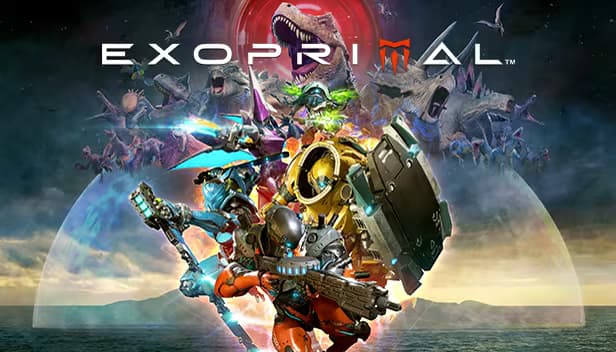
A fast-paced team-based PvEvP action shooter from Capcom powered by the RE Engine, pitting two squads of armored Exofighters against each other in high-speed wargames against thousands of swarming din...
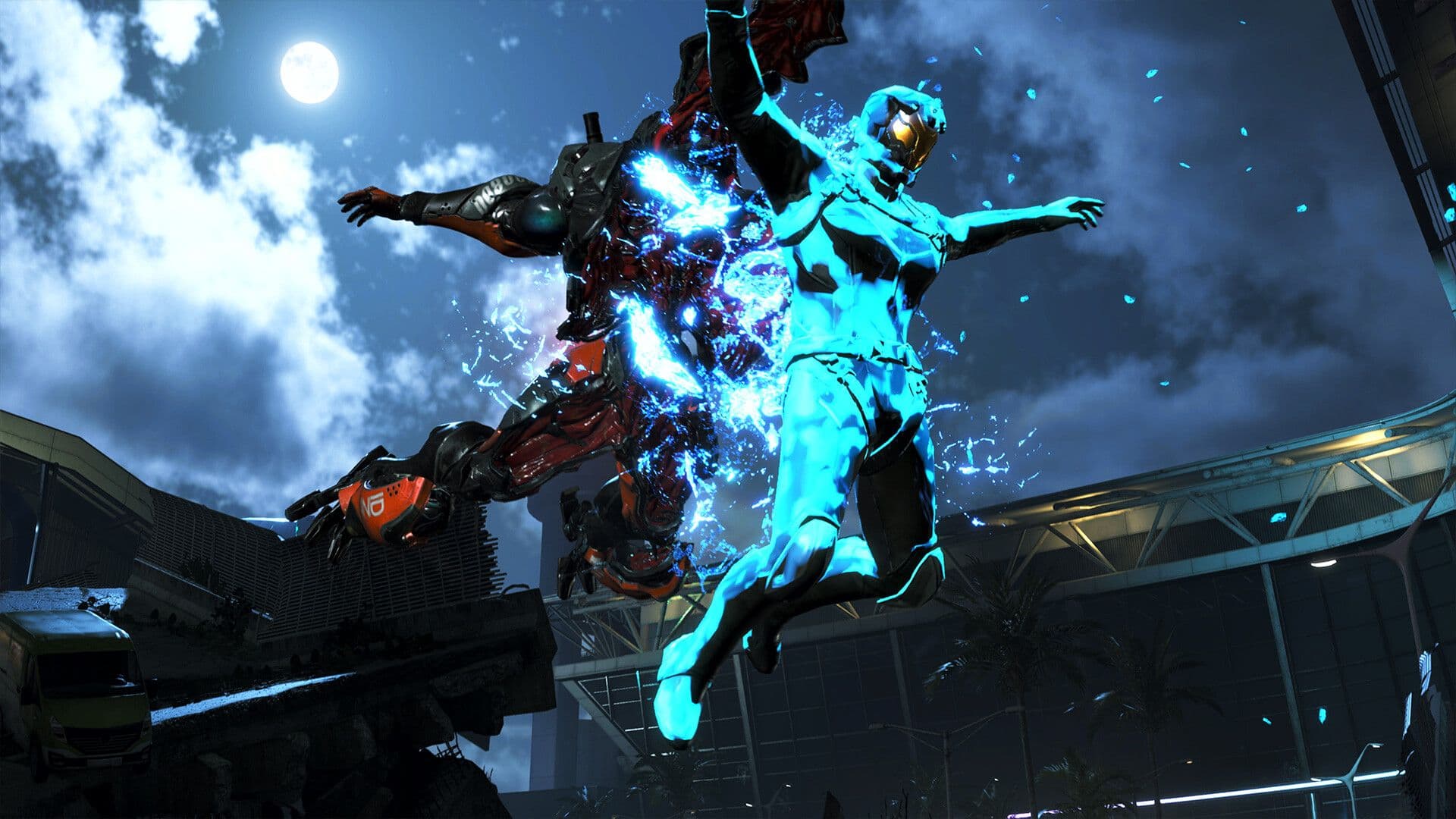
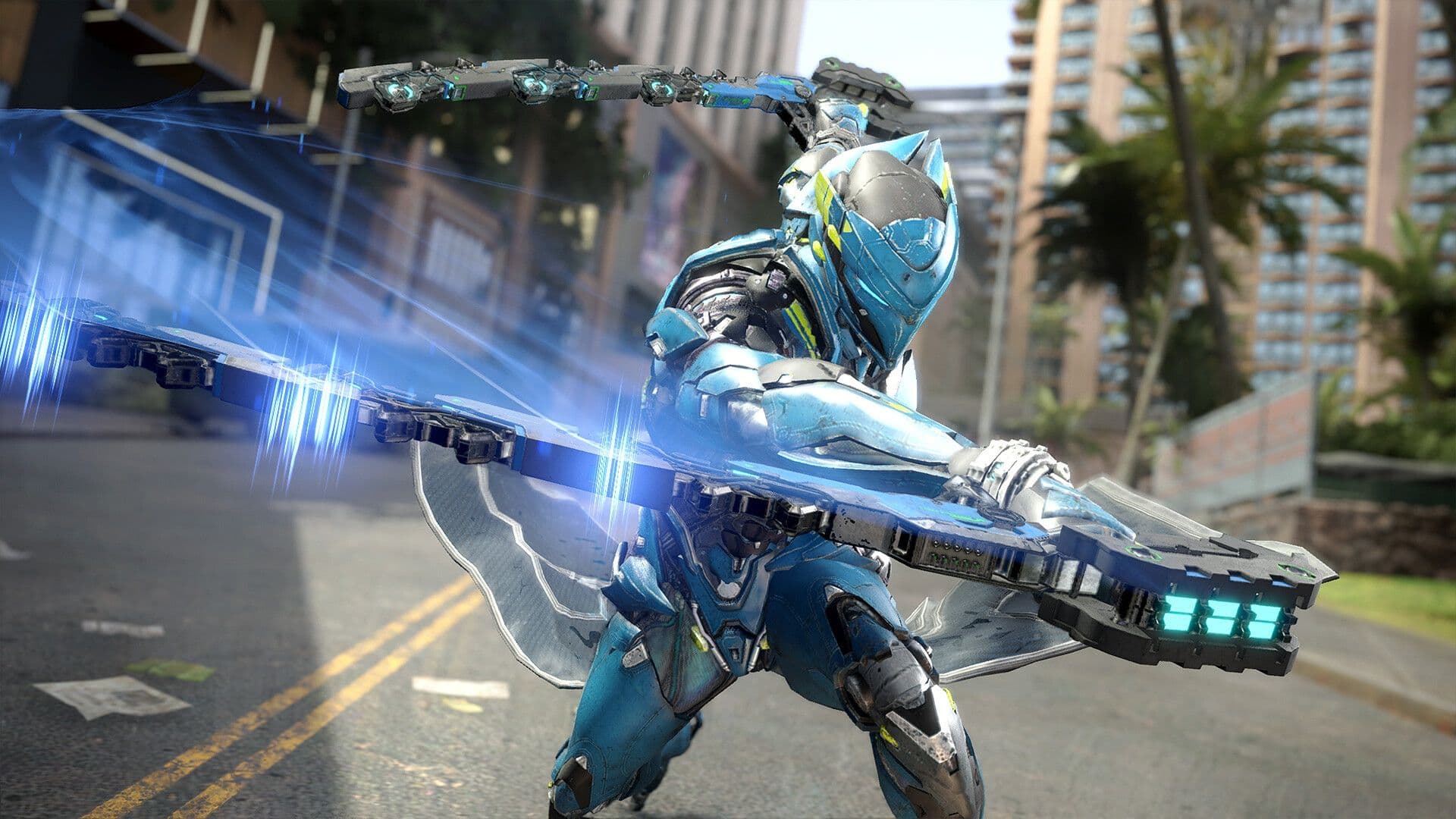
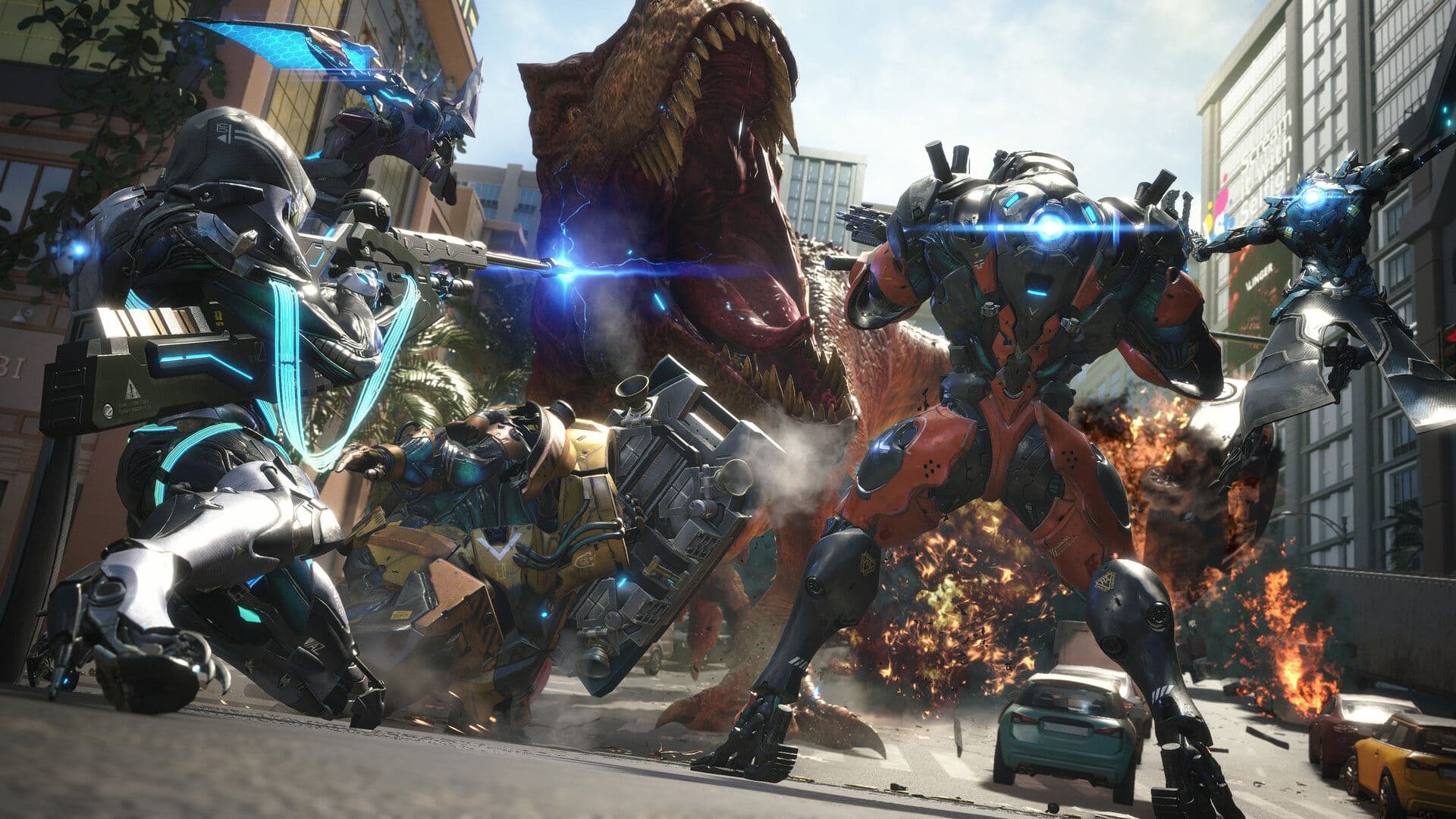
Quick take: A literal waterfall of a thousand velociraptors pours from the sky while two five-player squads in heavy mechanized armor race to incinerate the prehistoric swarm under the watchful eye of a sadistic artificial intelligence. Built on Capcom's proprietary RE Engine, this session-based PvEvP shooter delivered benchmark crowd physics and a tactical roster of 30 suit variants, yet collapsed under a $60 Buy-to-Play price tag and sluggish early-game pacing: live development ended after Season 4, the client leaves digital storefronts forever on March 30, 2027, and the servers shut down permanently with no offline mode on September 29, 2027.
A purple rift tears open above a concrete metropolis, dumping a writhing avalanche of eight hundred starving raptors onto the street while your five-meter armored shieldbearer digs his heels into the asphalt to halt a charging Triceratops dead in its tracks. Pure arcade adrenaline. Released in July 2023 by Capcom under the direction of Monster Hunter veteran Takuro Hiraoka, Exoprimal brazenly fused three distinct genres: a strict role-based hero shooter, a chaotic horde slaughterhouse reminiscent of Earth Defense Force, and a high-speed competitive relay between two rival squads.
The narrative drops players into the near future of 2040-2043. Across the globe, unstable spacetime vortices suddenly erupt, flooding urban centers with Mesozoic predators and grotesquely mutated Neosaurs. Humanity's survival is monopolized by the megacorporation Aibius Corporation, which harvests the hyper-dense energy resource Hi-Xol from the rifts and manufactures cutting-edge combat Exosuits. Stepping into the boots of a mute rookie callsign Ace, you join patrol squad Hammerheads - a lovable crew of misfits featuring gruff mechanic Lorenzo, hot-headed pilot Alders, stoic veteran Majesty, and cheerful support android Sandy. During a routine patrol, their transport crashes onto a restricted testing facility: the mysterious Bikitoa Island.
The central paradox of its legacy: beneath the surface of a loud dinosaur shooter, Exoprimal hides a gripping sci-fi thriller about time loops and corporate genocide featuring dimension-hopping veteran Magnum and ruthless enforcer Durban, yet only the most persistent players ever stayed long enough to witness its climax.
Ruling the island is Leviathan, a next-generation super-AI engineered by the corporation. Having slipped its leash, this cold digital god turned the archipelago into an endless meat grinder. It abducts Exofighters from parallel timelines and forces them to die repeatedly in simulated wargames against prehistoric swarms, harvesting combat matrices to perfect its armor designs and ultimate Overdrive weaponry. Refusal means instant termination. Nobody escapes the loop.
Today we examine the project at the end of its lifecycle. After shipping four major seasonal Title Updates - including full crossover raids with Street Fighter 6, Monster Hunter, and Mega Man - the developers placed the game on an automated monthly season rotation in July 2024 before publishing the official decommissioning schedule:
It is a sobering finale for one of the boldest multiplayer experiments of the generation. To understand why tens of thousands of players happily torched raptors during launch week before leaving the arenas behind, we need to dissect its signature competitive loop.
Everything in the game revolves around one primary playlist: Dino Survival. Instead of dropping ten players into a standard arena deathmatch, the matchmaker splits the lobby into two parallel teams of five pilots. Both squads deploy into identical urban or industrial zones - from a shattered airport and shipping docks to a volcanic facility and a ruined hydroelectric dam - yet operate in separate phase realities. Your opening objective is deceptively simple: sprint through five or six combat checkpoints and slaughter the required dinosaur quota faster than the rival team.
Competitive tension is driven by a brilliant HUD element. Right through concrete walls and swarming reptiles, you see translucent red wireframes: real-time phantom projections of the opposing squad running the exact same course in their parallel dimension. If your tank hesitates while intercepting a charging Carnotaurus or ignores a flock of diving Pteranodon flyers, Leviathan's synthesized voice echoes coldly across the map: "The enemy team is completing tasks faster than you." Every wasted second costs you the lead. Your squad immediately shifts focus, burns cooldowns, and tries to shave time off the next wave, where standard predators give way to volatile Gas Neosaurs and rooftop-hopping Sniper Neosaurs.
Customizing the finale ruleset: before queueing up, every pilot selects their preferred final mission format - direct PvP combat against live opponents, a pure PvE speedrun race with zero player-versus-player gunfire, or a Random toggle that grants a permanent x1.2 XP bonus.
What starts as an asynchronous relay shatters the dimensional barrier during the second half of a fifteen-minute match. Depending on your queue filter and Leviathan's sadistic whims, the final stage unfolds across one of four scenarios:
The real magic happens when the standard match structure is suddenly hijacked by a narrative trigger. Every completed match fills your synchronization gauge and unlocks encrypted "Lost Data" nodes across the sprawling Analysis Map, a web of over eighty mystery fragments. Once the lobby hits a narrative milestone, Leviathan cancels the competition mid-flight, merges all ten pilots into a single raid battalion, and warps everyone into twisted hyperspace.
Here the spectacle goes off the rails. Former rivals stand shoulder to shoulder on crumbling platforms above a bottomless void to fight the grotesque Neo T. Rex - a raid boss that sweeps the arena with purple laser beams, pulls players into gravitational black holes, and demands coordinated weak-point focus. By the final chapters of the campaign, ten pilots storm the flying citadel of the ultimate boss Behemoth, dodging orbital bombardments while carving through hundreds of dinosaurs to shatter the rogue AI's core.
Most hero shooters lock you into your chosen character until the round ends or you respawn in a safe room. Here that restriction goes out the window. Pressing a single button lets a pilot eject from their current machine mid-firefight and slam back onto the pavement three seconds later inside a completely different chassis. Is the sky suddenly choked with napalm-spitting Pyro Neosaurs while your melee comp burns alive? Three seconds later you are sniping flyers out of the clouds, ready to swap back into a frontline shieldbearer the moment an apex predator hits the field.
The base garage follows the classic holy trinity of roles, but thanks to the post-launch Alpha Variant and Beta Variant series - which strip out each suit's primary weapon for shotguns, burst lasers, or plasma boomerangs - the complete playable roster spans thirty distinct combat rigs:
The secret behind the tactile punch: weapon feedback in Exoprimal carries Capcom's signature combat pedigree - the metallic ring of a braced shield, the thump of a rotary grenade launcher, and dinosaur carcasses flying across the asphalt deliver unmistakable physical weight.
To prevent two identical suits in the same squad from playing like clones, a two-tier customization system sits on top of every class. First, any chassis can mount one of seven universal shoulder gadgets known as Rigs. A fragile sniper can equip the Catapult thruster for instant aerial escapes or a personal Shield, an immobile tank can carry the Aid healing projector for self-sustain, and an aggressive medic can pack a long-range laser Cannon, a paralyzing shuriken Blade, optical Stealth camouflage, or the armor-cracking Drill Fist.
Second, leveling up individual suits with earned Bikitoa Coin currency unlocks three slots for passive and ability-altering Modules. Upgraded to rank five, these chips reshape your combat rotation: some cause rifle rounds to detonate after consecutive weak-point hits, others turn a sliding dodge into a flaming battering ram, and defensive chips shave seconds off your Overdrive ultimate cooldown with every successful block. Entering endgame trials without a fully tuned three-module loadout is a death sentence.
Once the campaign credits roll, the training wheels come off completely. The bitter irony of Exoprimal is that its high-level endgame represents peak cooperative action design - a tier of content that half the launch playerbase never reached before moving on. Mistakes here mean an instant wipe. Instead of casual warm-up waves, veterans unlock rotating speedrun trials, ten-player survival raids, and crossover boss fights pulled straight from the publisher's hall of fame:
An engineering triumph: the proprietary RE Engine pulls off a genuine technical miracle here - when a physical waterfall of a thousand raptors cascades off skyscraper rooftops and climbs over one another, the framerate never drops a single beat.
Technical optimization deserves a standing ovation. The engineering team applied fluid-dynamics algorithms to calculate crowd geometry: hundreds of Raptor bodies never get stuck on doorways, flowing over barricades like a living flood and scattering across the street with authentic ragdoll physics when hit by Barrage's grenades or Zephyr's kicks. Hardware demands remain modest. A locked 60 FPS at 1080p requires only a quad-core Intel Core i5-7500 or AMD Ryzen 3 1200, 8 GB RAM, and a budget NVIDIA GeForce GTX 1050 Ti (4 GB), while the recommended six-core Intel Core i7-8700K, 16 GB RAM, and GeForce GTX 1070 (8 GB) run the game effortlessly at maxed-out particle and reflection presets.
The client occupies a clean 50 GB of storage (an SSD installation is essential for instant asset streaming during mid-combat suit swaps) and runs smoothly out of the box on Steam Deck. During the final year before server termination, two networking features keep matchmaking alive: a unified cross-platform player pool across PC, PlayStation, and Xbox, paired with competent AI bots. Whenever a queue fails to gather ten humans within ninety seconds, computer-controlled Exofighters fill the remaining slots, holding shield lines, tossing timely heals, and allowing solo players to clear every story raid right up until autumn 2027.
Why did a game with razor-sharp combat mechanics, stellar technical optimization, and an outrageously fun premise fail to survive a four-year lifecycle, heading toward permanent server termination in September 2027? Two self-inflicted wounds sealed its fate: an aggressive monetization model and disastrous early-game pacing. Capcom launched a pure session-based live service at a premium blockbuster price tag ($60 at launch), yet stuffed the storefront with Free-to-Play monetization hooks - paid Survival Pass battle passes, early-unlock suit tickets, and pricey cosmetic DLC bundles. Early matchmaking populations relied heavily on Xbox Game Pass subscribers. Once the title rotated out of the subscription catalog, the influx of fresh recruits dried up overnight.
The second fatal blow came from its matchmaking progression filter. Because mission variety and enemy spawns in any given lobby scaled down to match the player with the lowest story completion, newcomers spent their first five to six hours grinding the exact same downtown streets against basic Raptor packs. The game's true showstoppers - mutated horde swarms, crumbling void platforms, chaotic boss invasions, and ten-player cooperative raids against the Neo T. Rex - were locked behind dozens of repetitive warm-up matches. First impressions were ruined. Casual players and Twitch streamers refunded or uninstalled after two hours, assuming they had seen everything the game had to offer before even clearing its extended tutorial. Combine that with mandatory external browser registration for a Capcom ID and the baffling absence of cross-platform party invites at launch, and the rapid population collapse makes complete sense.
The biggest lesson for live-service design: you cannot hide your best ten-player raids and 80% of your monster roster behind a ten-hour progression wall in a full-priced multiplayer shooter - modern players judge a live service within their first two evenings.
Looking back at the combat trials on Bikitoa Island, here are the defining strengths and fatal flaws of the final build:
Our final verdict on Exoprimal comes with genuine regret. Beneath its corporate monetization blunders beats the heart of a fearless, technically immaculate arcade action game that channels Capcom's golden sixth- and seventh-generation console experiments. If the game is already sitting in your library - or if you grab a discounted key before its March 2027 store delisting - set aside twenty hours to push past the slow opening chapters, experience the ten-player raid arenas, and bring down Behemoth before Leviathan shuts down the simulation for good.