 F2P · Live
Lineage 2
Aden's castles never stay in the same hands for long, and Lineage II has built an entire twenty-three-year…
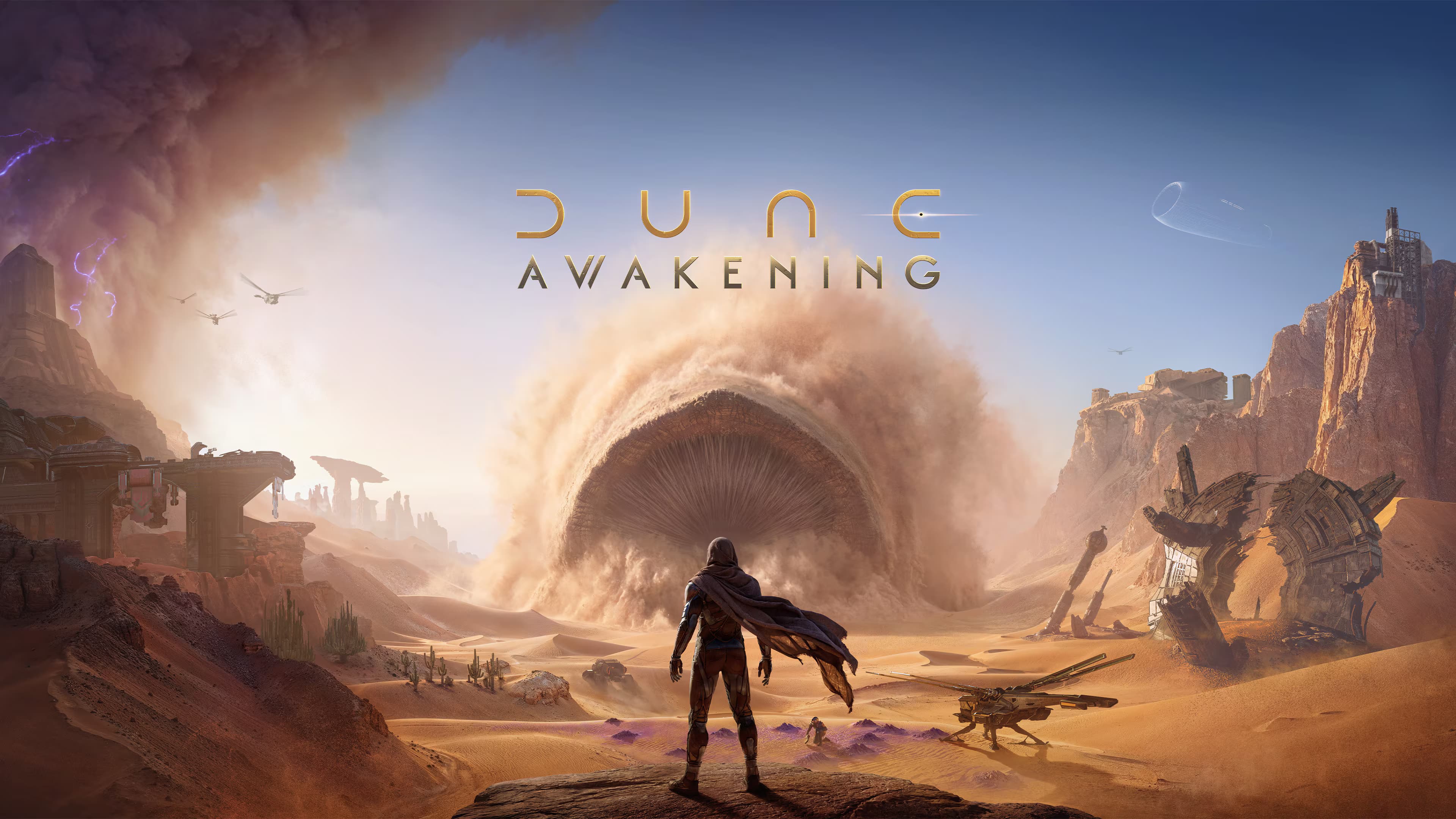
Dune: Awakening drops you onto Arrakis in a timeline where Paul Atreides was never born and the Fremen have vanished without explanation. Extract water from dew and from your enemies, learn to cross o...
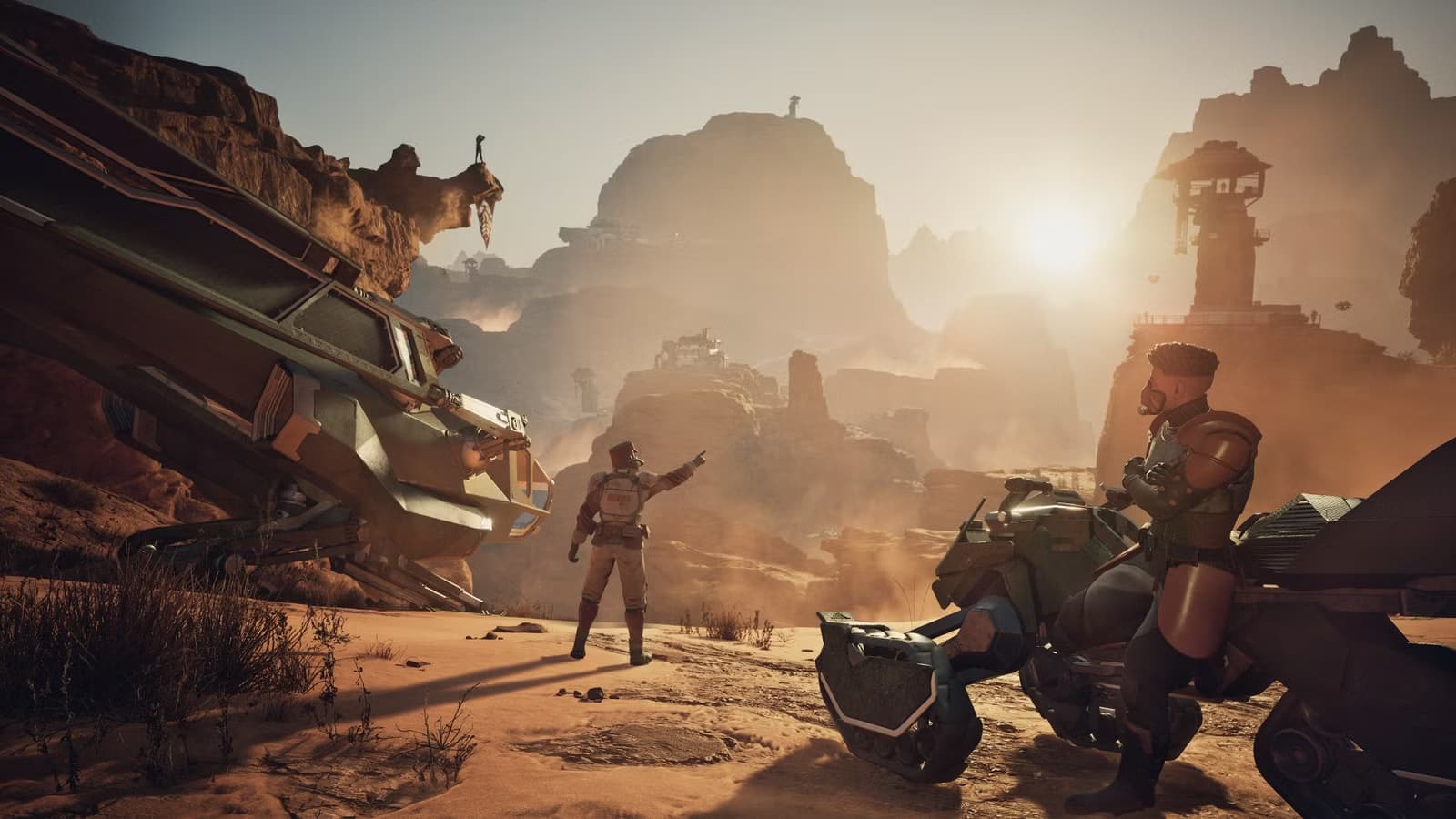
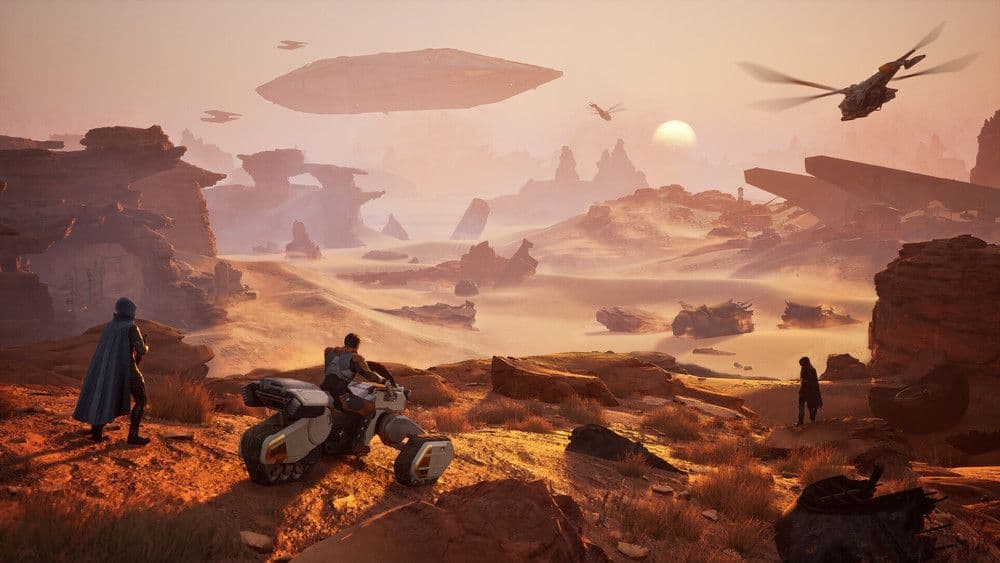
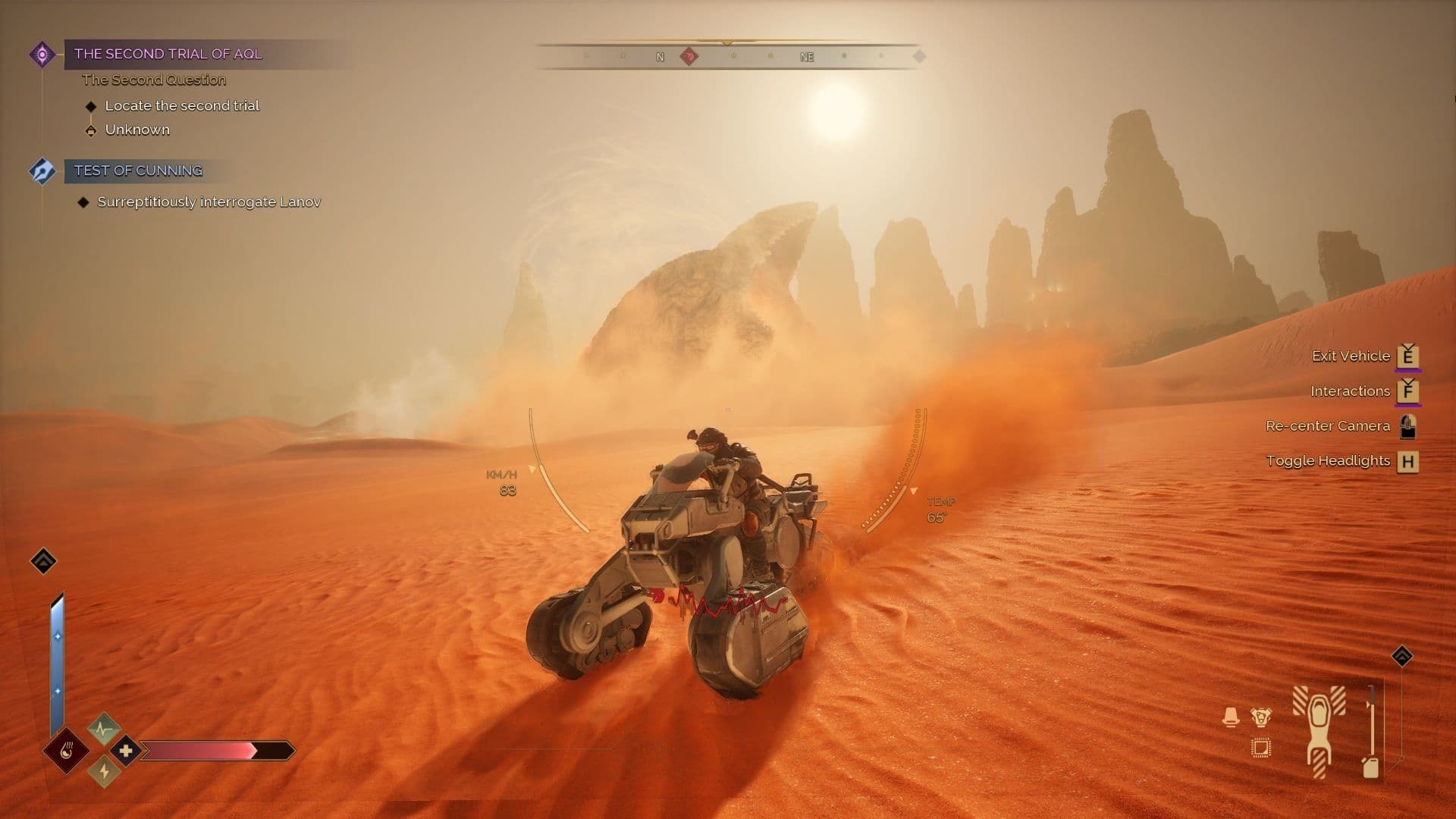
Dune: Awakening is an open-world survival game built on MMO-scale servers, developed by Funcom and released on PC in June 2025. It runs on Unreal Engine 5 and takes place in an alternate timeline where Paul Atreides was never born and the Fremen have disappeared from Arrakis. On September 22, 2026 it reaches PlayStation 5 and Xbox Series X|S, arriving with a full single-player mode and the closing act of its Book One story.
Funcom has made a long list of specific promises about this game over the past four years, and has publicly reversed several of them. That makes it a good candidate for a different kind of review: take the claims one at a time and check them against what the game actually does in August 2026.
Yes, in every way that affects a purchase decision, despite Funcom spending eighteen months arguing otherwise. Dune: Awakening puts hundreds of players on a shared persistent world, runs a server-wide player auction house, and hands server-wide law-making to a political system those players vote in. The studio quietly dropped the MMO label from its store description in January 2025, then repeated the argument again in May 2026, and the reasoning is the survival-crafting loop at the centre of the game rather than anything about the multiplayer.
The distinction Funcom is reaching for does exist, it just doesn't land where the marketing puts it. There are no raid tiers here, no dungeon queue, no holy trinity of tank, healer and DPS. What there is instead: a persistent world with hundreds of neighbours, guild permission systems, a market driven by supply, and a weekly territorial contest. That is an MMO with a survival loop bolted to its spine, and a player arriving from Black Desert or New World will recognise nine tenths of the furniture.
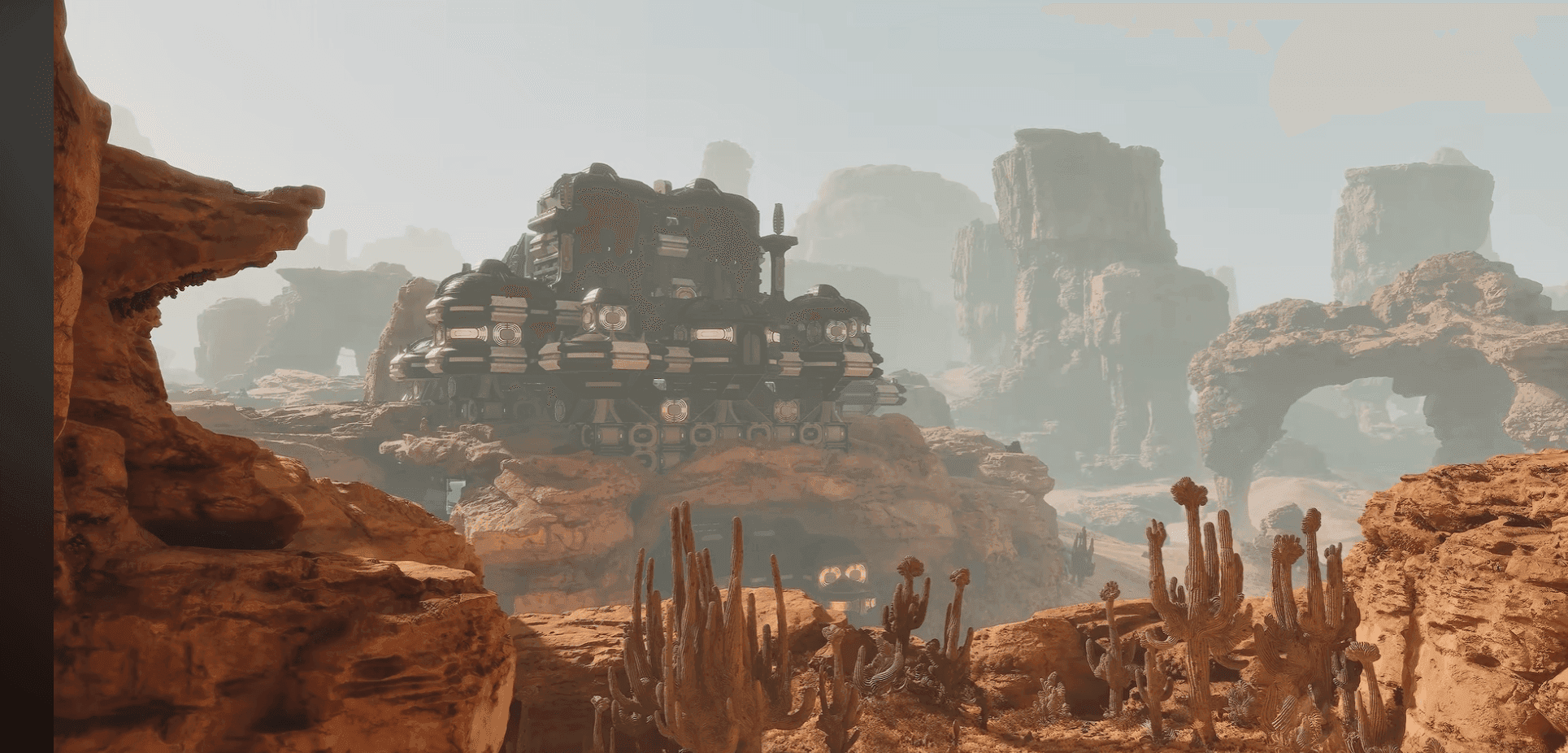
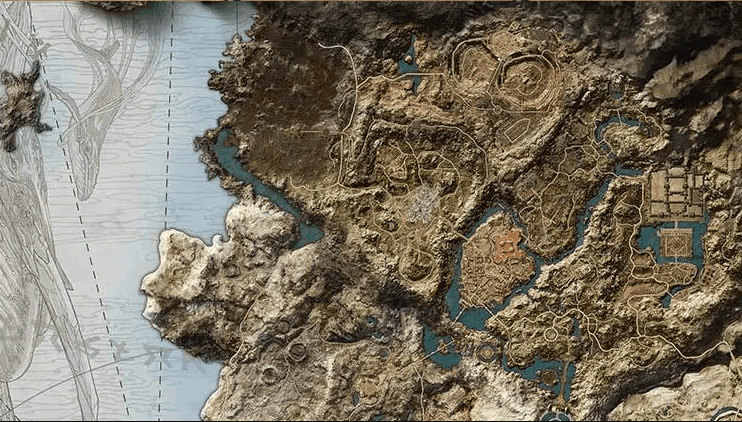
The store copy's promise of one unbroken Arrakis takes a bigger hit. This is not a single continuous planet. It is a set of regions connected by an overland map: Hagga Basin as the persistent PvE homeland, Arrakeen and Harko Village as social hubs, and the Deep Desert behind the Shield Wall as endgame territory. Movement inside each region is uninterrupted and the sense of scale holds up. Crossing between them is a menu and a loading screen.
The survival layer is the strongest thing Funcom built, and it earns the "most dangerous planet in the universe" line more than any other system. Water is not a bar that ticks down while you look for a river. There are no rivers. Hydration falls fastest under direct sun, so the first lesson Arrakis teaches is to move along shadow lines and stay off open ground at midday.
Three sources cover you early, and you will need all three within the first hour. A dew reaper scrapes moisture off desert plants at dawn. The stillsuit reclaims what your body loses, at the cost of some armour protection while you wear it. And after your first fight with scavengers, a hand extractor pulls blood from the corpses, which a purifier at your base turns into drinkable water. It reads as grim on paper. In play it becomes routine within twenty minutes, which is exactly the point Herbert was making. Later, after all eight Trials of the Aql, Fremen deathstills produce 25 litres of water from a single corpse.
Then there is the walk. Any steady rhythm on open sand builds vibration, and vibration brings Shai-Hulud. You learn to move in broken steps, stop, change pace, read the rock line ahead. The worm is closer to weather than to a boss fight: nothing to defeat, only something to be somewhere else for. The penalty structure sells the danger honestly. An ordinary death costs you carried resources and gear durability, and you can walk back and reclaim the pile. Dying inside a worm deletes everything worn and carried, with no recovery of any kind.
Nights are the quieter half of the same problem. Heat gives way to cold that drains you on its own schedule, and a shelter without a roof is a container that a sandstorm empties overnight.
Combat delivers on the promise of adapting Herbert's rules rather than pasting a generic action system into a licensed skin. Holtzman shields absorb fast impacts, which means emptying a magazine into a shielded opponent achieves very little, and lasguns disable themselves rather than reproduce the nuclear interaction from the books. What gets through is the slow blade: a charged heavy attack, pushed through the field deliberately, ideally after you have knocked the target off balance. Quick strikes and parries exist to buy that opening. The unhurried thrust is what kills.
Alternatives keep the system from collapsing into one button. Poison bypasses shields at range and works over time, disruptors overwhelm them under sustained fire, scatter guns stagger. In the Deep Desert an active shield draws worms, so protection becomes a decision with a cost attached. Stamina runs off hydration, so a dehydrated character dodges worse and recovers slower, and your water supply quietly rewrites your combat performance.
Classes are Schools of the Imperium, chosen through a mentor at character creation along with a homeworld and caste, all three permanent. The Swordmaster of Ginaz plays around parries and counters, the Mentat drops shield walls, gravity traps and power generators for allies, the Trooper works angles with rifles, mines and grenades, the Bene Gesserit leans on Voice and precision, and the Planetologist unlocks later around desert survival. Trainers scattered across the map open every other tree, and the level 200 cap comes with 200 skill points, so a Mentat carrying a Trooper's grapple and a Swordmaster's dash is ordinary rather than exotic.
Enemies are where this falls short. Scavengers and Sardaukar patrols read the same after thirty hours, and clearing camps settles into stagger-then-execute. The Imperial Testing Stations and the wrecked ships are the only places where the combat system gets a partner worth the trouble.
Construction is tied to a claim rather than a free-placement toy, and the difference shapes the whole midgame. A Sub-Fief console marks your plot, and inside its radius you raise walls, generators, fabricators and storage containers with routing circuits so machines pull materials from the right chest without you shuffling them. Nothing about that is unusual for the genre. The tax is.
Every claim charges upkeep in Solari, and every additional claim raises the bill. Stop paying and the shields drop, the structure begins to decay, and any passing stranger can plant their own console inside your walls and empty your chests. Looting dead bases has become a small profession in Hagga Basin, with players sweeping the region for unpowered consoles and hauling off ingots and schematics. It is one of the few survival economies where absence has a price.
The crafting chain runs from a cutteray on an ore vein to ingots to components to gear and vehicles, and water crosses over from life support into industry at the halfway point. A single aluminium ingot costs 200 units of water, and an ornithopter needs a great many ingots, which is the moment players start farming scavenger camps for blood rather than loot. Progress splits across two tracks: character levels buy skills, while Intel points earned from camps, ruins and stations buy the research tree that decides what you are capable of building at all.
This stretch is also the game's weakest hour-for-hour. The distance between a first base and a first ornithopter is measured in repeated supply runs, and Funcom's year of quality-of-life work has trimmed the edges without changing the shape. Gathering still eats more of the clock than everything else combined.
The player economy is real, and it runs through the CHOAM Exchange in Arrakeen and Harko Village. Players set their own prices on resources, schematics and finished gear, NPC vendors pay badly by comparison, and money left on your body is money at risk, so banking before a run is a habit worth forming early. A taxi from any trading post costs 2,500 Solari one way with the return trip free, which keeps the hubs reachable before you can fly yourself.
By the hundred-hour mark most active players have drifted into a role without being assigned one. Some run water, some stamp out vehicle components, some flip rare schematics they will never install. The market moves on what the server is currently drowning in, which is the quiet difference between an economy and a vendor list.
Guilds are built around shared property rather than shared schedules. Base permissions run in tiers, from associates who can open doors and use workstations up to owners with access to everything, and a mature guild base stacks by floor: workshops and a bike garage at ground level, specialist production above, locked storage higher still, generators and an ornithopter pad on the roof. Only two activities genuinely require a group, and both are worth the coordination: a sandcrawler working a large spice field, and Testing Station bosses whose health scales with party size. Everything else, including the story and most of the dungeon content, is soloable. Rented private servers and self-hosted ones (live since May 2026, and demanding enough that they suit hobbyists rather than a group of friends) cover players who want their own rules, and character migration between worlds means leaving a quiet server no longer means starting over.
The Deep Desert is the endgame, and until April 2026 it was also the reason a large part of the audience stopped playing. Tier six and seven materials — titanium ore, strontium, jasmium crystals, the inputs for plastanium and best-in-slot gear — live out there, and so did mandatory open PvP. Everything a player built or hauled into that zone was also exposed to the Coriolis storm, which sweeps the region and leaves nothing behind. Bases, vehicles, containers and scouted terrain are wiped clean every Tuesday, and the map reassembles with new resource nodes, new spice fields and relocated wrecks.
A run out there follows a shape. You deploy into a sector, drop a forward base for storage and respawn, put survey probes up, and go looking for what you came for. Spice harvesting is the set piece: a thumper placed away from the field to pull the worm off your position, a crawler brought onto the sand, a countdown, and a straightforward question about whether the haul clears the field before the ground starts giving way underneath it. Layered on top is the Landsraad, where faction work for the Atreides or the Harkonnen converts into votes, voting closes on Sunday, and the winning decrees take effect with the storm on Tuesday — altered taxes, harvesting bonuses, travel restrictions, applied to everyone on the world.
In April 2026 Funcom conceded the argument. The studio's developer update stated that PvP conflict must be "optional and incentivized rather than required for progression", backed by an internal figure that more than 80% of lifetime players had only ever engaged with PvE. Patch 1.3.20.0 on April 28 split the Deep Desert into separate PvE and PvP instances, made Hagga Basin peaceful across its entire map including the shipwrecks, and gave the PvP version 2.5 times the mining and spice yield as compensation for the risk.
For most of the playerbase this repaired the single largest problem with the game. For the minority who came for territorial conflict, it hollowed out the thing they came for: without forced overlap, the PvP instance is thinly populated, and a trip out there can end without meeting anyone. Funcom made the correct commercial call and paid for it in a specific kind of tension the game will not get back.
No. Dune: Awakening is a one-time purchase with no subscription and no in-game currency store, and nothing sold for real money grants power. The base edition is $49.99, with $69.99 and $89.99 tiers adding a season pass and cosmetics, and discounts around 40% have appeared regularly through 2026. Paid additions cover appearance, building sets and self-contained story content, with gameplay items designed as sidegrades — the DLC treadwheel sits beside the sandbike rather than above it.
The season pass is a different conversation, and it is where Funcom damaged trust. The first content pack, Lost Harvest, advertised a building set that turned out to contain four pieces, and the studio apologised publicly. The pass then shifted toward cosmetics that buyers had not signed up for, and Funcom changed course entirely, stating that gameplay content would no longer sit behind a paywall. The commitment has held so far. The Steam reviews on the pass itself still carry the bruise.
The console launch is also the largest update in the game's history, and it lands on every platform at once. PS5 and Xbox Series X|S get performance and quality modes, day-one Game Pass on Xbox and Play Anywhere support. PC and console both receive the Book One finale, an endgame rework that turns Landsraad progression into missions instead of resource deliveries, and the feature that has topped the request list since launch: a full single-player mode covering the entire game, Deep Desert included, with three difficulty presets and manual control over survival settings down to disabling worms altogether, while rival faction activity is simulated so the politics still move. A free Polar Cap map is scheduled for later in 2026.
None of that can be assessed yet, and it is worth being plain about which parts of this review are load-bearing. Everything above describes the game as it plays today. The September package is a set of stated intentions from a studio with a mixed record of keeping them — good on the PvP reversal and the DLC correction, poor on the original season pass pitch.
The audience arithmetic is less ambiguous. The game peaked at roughly 189,000 concurrent players on Steam at launch, the strongest opening in Funcom's history, and settled through 2026 into the low thousands at any given hour. Around 75,000 reviews sit at a positive overall rating with recent months hovering at mixed, and the Russian-language segment scores it harder than the average. The servers are populated, the hubs are busy, and a console launch plus Game Pass is the kind of event that redraws that curve.
If you want a survival game that treats its systems as an argument rather than a checklist, this is the one to buy, and the fourteen months of patches mean you are buying a considerably better version than the people who showed up at launch. If you read Herbert and have spent thirty years watching adaptations borrow the sandworms and skip everything else, the same applies with more force: this is the rare licensed game that took the mechanics out of the book instead of the imagery.
If you play alone, September removes the last reservation. If you play on console, you are getting a year of corrections for free and walking straight into the finished story. If you were waiting for a reason to come back after quitting over the Deep Desert, the reason arrived in April and it is a real one.
And if what you wanted was a war over territory, with fleets of ornithopters contesting a spice field because there was nowhere else to farm it, look elsewhere. Funcom has committed to a PvE-first game and will not be reversing that decision. Arrakis will still kill you for carelessness. It will just no longer be another player holding the knife.