 F2P · Live
Lineage 2 Essence
Lineage 2 Essence is NCSoft's free-to-play take on the classic Korean MMORPG Lineage II, built around faster…
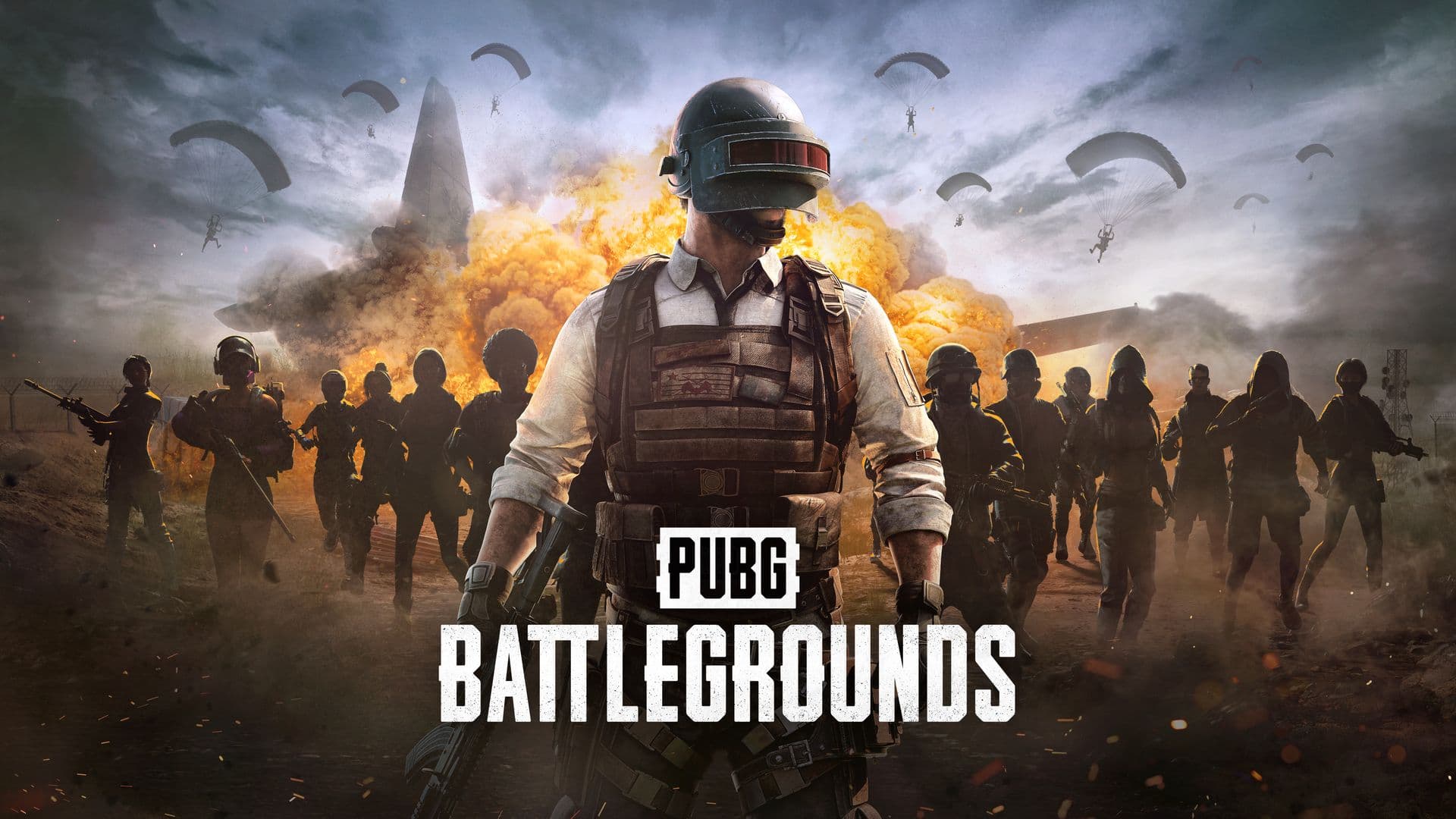
The seminal tactical multiplayer shooter that pioneered the battle royale genre. One hundred unarmed survivors parachute onto expansive battlegrounds spanning up to 8x8 kilometers, scavenging weapons ...
Quick Take: PUBG: BATTLEGROUNDS is the seminal tactical multiplayer shooter that birthed the modern battle royale genre and remains the uncompromising benchmark for realistic military survival. The game delivers an intense, hundred-player competitive experience defined by authentic projectile ballistics, massive open battlegrounds spanning up to 8x8 kilometers, and ruthless positional control. Built for players who crave deliberate gunplay and squad coordination over arcade reflexes, it rewards calculated risk-taking while mercilessly punishing mistakes. The core client operates under a Free-to-Play model, though unlocking the competitive Ranked ladder requires a one-time BATTLEGROUNDS Plus upgrade. Primary hurdles include a steep learning curve, zero tolerance for positioning errors, and occasional netcode desync.
Few milestones in competitive gaming history match the seismic impact of an amateur mod radically reshaping the entire interactive entertainment landscape. In the early 2010s, Irish photographer and web designer Brendan Greene, working under the handle PlayerUnknown, began experimenting within Bohemia Interactive's hardcore military simulator ArmA 2. Inspired by Kinji Fukasaku's cult dystopian film Battle Royale, Greene sought an antidote to predictable arena shooters where victory hinged on memorizing medkit timers and pre-firing narrow corridors. He envisioned total unpredictability: an enormous open sandbox, zero starting gear, and the raw psychological terror of permanent elimination with no second chances.
After migrating his concept as a mod into DayZ, refining it as an official game mode for ArmA 3, and consulting on H1Z1: King of the Kill, Greene's vision achieved its definitive standalone realization in 2017. Partnering with South Korean developer Bluehole under parent publisher KRAFTON, Greene directed PLAYERUNKNOWN'S BATTLEGROUNDS (later rebranded as PUBG: BATTLEGROUNDS). Its Early Access debut on Steam in March 2017 shattered industry expectations: despite unpolished netcode and severe client-side bottlenecks, the gritty shooter set an all-time concurrent player record on Valve's platform with an astounding 3,257,248 peak simultaneous users.
The core loop proved hypnotic in its simplicity and psychological tension:
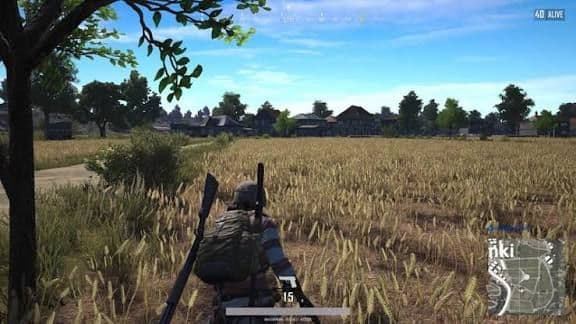
As the wider industry scrambled to copy the formula—pivoting toward instant fortification building in Fortnite, agile hero-shooter movement in Apex Legends, or arcade-paced respawn loops via the Gulag in Call of Duty: Warzone—KRAFTON held the line. The game resisted the temptation of arcade mobility and superhuman abilities. Instead, PUBG solidified its identity as a methodical military simulation defined by a deliberate tactical cadence, where an ill-advised sprint across an open wheat field invites instant death from a sniper nested four hundred meters away.
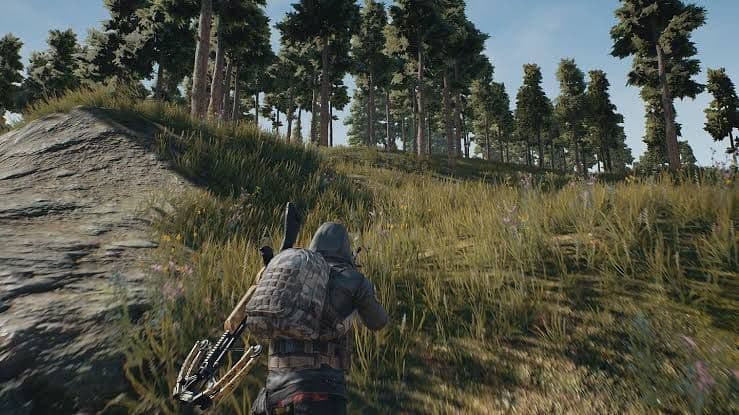
Approaching its ninth anniversary, the game stands tall as a battle-hardened veteran of the genre. Weathering its 2022 free-to-play transition, comprehensive visual overhauls, map modernizations, and the addition of tactile terrain destruction, the title consistently commands a massive global community exceeding 1.3 million concurrent peak players. Its longevity is simple: no arcade competitor has ever successfully replicated the suffocating, physical tension of four veterans belly-crawling through tall grass in the final twenty-meter circle, holding their breath to avoid rustling their backpacks.
While mainstream arcade shooters prioritize twitch reflexes and frictionless movement, PUBG: BATTLEGROUNDS treats ballistics as its absolute mechanical core. Hitscan mechanics are entirely absent: bullets do not instantly register where the crosshair points upon trigger pull. Every round fired exists as a physical projectile in simulated space, governed by muzzle velocity, air friction, bullet mass, and a pronounced gravitational downward curve (Bullet Drop).
Engaging targets beyond one hundred meters demands instant mental trigonometry. Spotting an enemy sprinting perpendicular to your position at three hundred meters requires total restraint: a 5.56mm round takes nearly half a second to bridge that distance, while heavier 7.62mm ammunition travels even slower. Players must lead their shots (Lead) by two to three full body lengths ahead of the running target while aiming distinctly above the head. Miscalculating elevation by even a fraction turns a high-stakes sniper shot into a harmless dirt puff at the opponent's feet, immediately compromising your concealment to every hostile squad in the valley.
Automatic fire introduces jarring physical friction. Unlike shooters with predictable, scripted spray patterns, weapon recoil in PUBG combines massive vertical climb with aggressive horizontal variance. Holding a burst on a Beryl M762 assault rifle within a thirty-meter silhouette requires physically pulling down hard across the entire mousepad while constantly counter-strafing micro-drifts left and right. Full-auto spraying at fifty meters without disciplined muscle memory (Recoil Control) sends twenty rounds harmlessly into the skybox.
Hitbox distribution and protective gear dramatically alter the effective Time-to-Kill (TTK):
Tactical attachments complete the modular weapon ecosystem. Freshly looted firearms handle like wild, untamed beasts. Fitting a compensator significantly curbs muzzle rise and horizontal bloom; a vertical foregrip stabilizes sustained bursts; and an angled grip or thumb grip sharply accelerates Aim-Down-Sights (ADS) transition speed. Adding a dedicated tactical stock to the M416 transforms it from a jumpy carbine into a surgical laser beam, elevating attachment hunting into a vital survival objective.
A fundamental philosophical divide separates the player base across perspective preferences:
Capping off the combat model is the indestructible cast-iron frying pan (Pan). Originally intended as a humorous melee novelty, an accidental coding quirk granted the pan absolute projectile deflection. Strapped to a player's belt, it physically bats away incoming bullets from behind, turning what should have been a fatal rear flank into a comical metallic clang as the shooter's high-caliber round bounces harmlessly into the dirt.
Environmental scale stands as the second cornerstone distinguishing PUBG: BATTLEGROUNDS from session-based rivals. While contemporary battle royales crowd players into compressed, high-density arenas featuring exaggerated verticality to guarantee violent clashes every thirty seconds, PUBG Studios champions sprawling 8x8 kilometer theaters of war. Here, the landscape itself—its micro-ridges, treelines, wheat fields, and isolated farmsteads—dictates the tactical tempo of survival.
The timeless gold standard of level design remains Erangel, a fictional post-Soviet military enclave situated in the Black Sea. Its identity weaves together drab concrete housing blocks, abandoned hospitals, communal farmland littered with hay bales, and the imposing southern island housing the Sosnovka Military Base. Erangel excels in structural readability: wide-open expanses are gently segmented by subtle topographical depressions where salvation often comes not from concrete walls, but from lying flat in a shallow roadside ditch.
In stark contrast lies Miramar, an expansive Mexican desert scarred by jagged caliche canyons, sun-bleached plateaus, and skeletonized multi-story construction sites. Miramar offers no lush grass for stealthy prone maneuvers: survival hinges entirely on reading ridgelines and mastering long-range marksmanship. Firefights routinely ignite across four to six hundred meters, turning reckless foot rotations across open desert basins into outright suicide.
Over the years, the active map pool evolved to encompass distinct environmental cadences:
Drop site selection splits the lobby into two warring philosophies. Adrenaline junkies flock to infamous «Hot Drops»—chaotic meat grinders like the central rural hub of Pochinki and the echoing halls of School on Erangel, or the buzzing casino town of Pecado and the walled estate of Hacienda del Patrón on Miramar. Dozens of parachutes descend simultaneously; early survival is decided by pure looting fortune: who grabs a pump shotgun first off the living room floor. Conversely, disciplined tacticians prioritize quiet peripheral landings, securing dedicated road vehicles, amassing pristine loadouts in peace, and orchestrating methodical rotations along the edge of the zone.
The pacing arbiter throughout every match is the relentless Blue Zone. With each successive phase, the safe playable boundary shrinks, forcing squads out of entrenched compounds. While initial circle phases deal negligible chip damage—easily counteracted by first-aid kits and energy drinks outside the perimeter—late-stage blue walls deal devastating damage that can melt a player's health pool within seconds. Late-game psychological tension is suffocating: gunshots ring out directly ahead, natural cover is virtually non-existent, and an electrifying wall of death hums behind you, mercilessly herding survivors straight into enemy crosshairs.
For years, conservative multiplayer purists viewed PUBG: BATTLEGROUNDS as an immutable monument to hardcore fundamentals, cautioning against any mechanical deviations from its initial design. Recently, however, PUBG Studios demonstrated that the shooter can modernize dynamically without forfeiting its grounded military soul. The most significant technological and tactical breakthrough arrived in the form of Destructible Terrain. On massive battlegrounds like Rondo and the refreshed Erangel, barren open fields are no longer automatic death traps for squads stranded without vehicle cover.
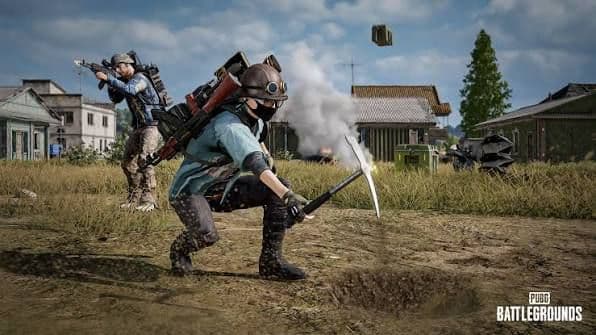
Detonating C4 explosive bricks, landing mortar strikes, firing a Panzerfaust rocket, or striking dirt with the melee Pickaxe physically gouges out realistic craters up to 1.3 meters deep into dirt and grassy terrain. This elevates explosives from pure lethal tools into rapid field-engineering assets: a squad pinned down in a bare meadow can reshape the topography in seconds, digging custom trenches to shelter wounded comrades from interlocking machine gun fire. The ability to manufacture organic cover out of thin air fundamentally redefined late-game positional warfare.
A parallel leap forward upgraded smoke utility into fully reactive volumetric smoke (Dynamic Smoke). Smoke grenades have always served as a player's primary lifesaver, but the modern smoke cloud now behaves with genuine physical agency:
Yet the most influential quality-of-life evolution is the second-chance revival mechanic—the Blue Chip System. In early PUBG history, an early elimination forced a player into thirty minutes of passive spectating while their teammates played out the match. Developers solved this without diluting the game's unforgiving stakes. A knocked and eliminated teammate leaves behind a personal digital Blue Chip inside their death crate. Surviving squadmates must fight their way to the box, retrieve the chip, and carry it to a stationary Blue Chip Tower or broadcast it via a portable Blue Chip Transmitter.
The catch? Executing a revival is a high-risk special operation rather than a trivial arcade respawn:
Squad logistics have similarly expanded through specialized tactical mobility. Grueling cross-map foot marches can be bypassed using an Emergency Pickup balloon kit: the deployed tether is snagged mid-air by a passing C-130 transport plane, lifting the entire squad skyward to glide into the center of the zone. Combined with amphibious BRDM-2 armored vehicles that shrug off ambushes, ultra-light motor gliders for aerial scouting, and collapsible mountain bikes that stow away in a backpack, PUBG provides an expansive toolkit for tactical improvisation, ensuring no two deployments unfold the same way.
While public matchmaking in PUBG: BATTLEGROUNDS often turns into an unpredictable sandbox filled with chaotic motorcycle stunts and melee skirmishes, Ranked Mode greets players with the icy gravity of high-tier competitive militarism. Casual safety nets are discarded: AI bots are disabled, thermal scopes and heavy rocket launchers are removed, and the lobby count is compressed from one hundred to 64 players structured exclusively around coordinated 4-man squads.
The ranked ruleset closely models professional tournament standards under SUPER (Standard and Universal PUBG Esports Ruleset). Loot tables are deliberately enriched—yielding reliable spawns of high-tier attachments, 4x/6x optics, and military Level 2 vests—to minimize initial drop RNG. In exchange, Blue Zone phase timers shift to an aggressive, unforgiving schedule. Hesitating on a vehicular rotation for even fifteen seconds invites catastrophic failure, running headlong into gatekeeping squads holding bridge choke points or high mountain ridges.
Years of competitive optimization forged an uncontested loadout hierarchy: «Assault Rifle (AR) for close-quarters engagements + Designated Marksman Rifle (DMR) for mid-to-long-range harassment»:
Squad cohesion overwhelmingly trumps individual marksmanship. Seasoned rosters operate under rigid tactical roles: the IGL (In-Game Leader) constantly projects circle shifts, designates compounds, and dictates rotation windows; the Entry Fragger leads room breaches and trades early damage; the Scout/Sniper controls elevated sightlines and tracks hostile vehicle movement; and the Support packs surplus smokes, deployable cover, and emergency medical kits.
The grind for Ranking Points (RP) generates unrelenting tension. In Platinum and Diamond tiers, early eliminations carry catastrophic penalties: wiping during initial drops without kills can erase fifty points, undoing the progress of two hard-fought top-three finishes. This fosters a distinct late-game phenomenon: by the fifth circle, thirty to forty heavily armed survivors remain squeezed into tight ridgelines, exchanging pin-point frag grenades and coordinating layered smoke corridors while waiting for rival squads to make the fatal first mistake.
The transition of PUBG: BATTLEGROUNDS to a Free-to-Play framework in early 2022 was a calculated, necessary pivot by publisher KRAFTON. By that era, multiplayer shooters had normalized zero-dollar entry points, and an upfront price tag throttled the influx of fresh players. However, tearing down the paywall carried an existential risk: a surge of disposable burner accounts operated by cheaters would have devastated the game's competitive credibility. The studio answered with a bifurcated account architecture.
Anyone can download the game free of cost to access unranked standard matches, rotating arcade modes, and custom lobbies. Yet the gateway to the elite proving ground—Ranked Mode—is barricaded behind a paywall. Unlocking competitive queues demands a one-time purchase of BATTLEGROUNDS Plus (roughly $12.99). This upgrade serves as an effective anti-cheat deterrent: malicious actors hit by hardware (HWID) or account bans cannot simply generate a free throwaway profile and re-enter the ranked leaderboards within minutes. Alongside ranked eligibility, Plus grants a baseline stipend of premium G-Coin, a permanent 100% boost to Survival Mastery XP, and custom match creation privileges.
The internal live-service economy revolves around a three-tier currency architecture:
Driving seasonal engagement is the recurring Survivor Pass. Each season delivers extensive tracks of military apparel, tactical weapon skins, themed vehicle wraps, and contraband coupons. Crucially, KRAFTON adheres strictly to competitive integrity: PUBG has never featured Pay-to-Win (P2W) mechanics. No microtransaction boosts weapon handling, reduces recoil, or shortens reload speeds. If anything, extravagant crossover outfits—such as luminous dinosaur costumes or neon helmets—actively penalize the wearer by destroying environmental camouflage across open terrain.
The catch lies in the hyper-aggressive monetization surrounding the Contraband system and Progressive Weapon Skins. Unlocking the base skin from a randomized crate is merely step one. Evolving its visual tiers—unlocking custom holographic inspection animations, unique red-dot sight housings, muzzle flash smoke rings, and personalized killfeed banners—demands enormous quantities of rare polymers and blueprints. Maxing out a progressive weapon to Level 10 can demand hundreds of dollars in gacha crate openings or months of dedicated grinding, cementing the Workshop as a playground for high-spending cosmetic collectors.
The technical evolution of PUBG: BATTLEGROUNDS reads like a long saga of rigorous engineering overhauls. Back in its 2017 Early Access infancy, the client functioned as an unoptimized prototype assembled on Unreal Engine 4, where stock marketplace assets struggled alongside severe framerate drops and infamous «marshmallow buildings» during parachute descents. Over years of dedicated live-service maintenance, PUBG Studios refactored its core codebase and steadily paved the architectural foundation for an ambitious migration to Unreal Engine 5, aimed at introducing modernized global illumination and heightened environmental fidelity without disrupting the franchise's sacred ballistics.
PC optimization for PUBG diverges sharply from hallway shooters. The game places enormous strain on the nexus between the Central Processing Unit (CPU) and System Memory (RAM):
The primary technical friction point throughout the game's lifecycle remains its netcode and latency desynchronization (Desync). Due to massive open-world scales, server tickrates typically operate around 30–60 Hz, dipping lowest during initial drop clusters. The game relies on a client-authoritative hit registration model. In close-quarters duels, this amplifies Peeker's Advantage: an aggressive rusher swinging around a doorway registers the target and lands fatal shots on their client before the host server transmits their movement to the stationary defender. Against high-ping opponents, this manifests as frustrating «dying behind solid cover» moments, where a player believes they safely ducked behind a concrete pillar on their monitor while remaining exposed on the shooter's lagged client stream.
The second ongoing conflict is the war on illicit third-party software. The punishing cost of defeat and the thrill of victory inevitably lure cheat developers producing triggerbots, wallhacks, and recoil-smoothing scripts. PUBG Studios maintains an aggressive, multi-layered defensive matrix: the client integrates BattlEye alongside its proprietary Zakynthos machine-learning heuristics to flag anomalous ballistic vectors, backed by hardware-level HWID bans to lock banned machines out of production servers.
The console ecosystem across PlayStation 5 and Xbox Series X|S completed a redemption arc of its own. Unlike the last-gen era (PS4 and Xbox One) marred by jagged resolutions and 30 FPS limits, modern consoles sustain a locked 60 FPS performance mode. Controller gunplay requires steep acclimation: because PUBG completely omits artificial aim-assist (Aim Assist), thumbstick marksmanship feels as raw, unforgiving, and authentic as keyboard-and-mouse shooting. A unified console cross-play ecosystem merges PlayStation and Xbox players into a shared matchmaking pool while strictly walling them off from PC lobbies to preserve competitive fairness.
Years after founding the battle royale phenomenon and outlasting countless fleeting industry trends, PUBG: BATTLEGROUNDS firmly retains its crown. Where the vast majority of competitors drifted toward arcade simplifications, superhero abilities, and frictionless mobility, PUBG Studios remained fiercely loyal to its grounded military pedigree. It remains a heavy, deliberate, and deeply demanding survival shooter where every hard-fought elimination registers as a genuine tactical triumph.
The development team accomplished an extraordinarily delicate feat: modernizing an aging framework with sophisticated tactical mechanics—tactile Destructible Terrain, reactive volumetric smoke, and the team-saving Blue Chip System—without corrupting the sacred tension and pacing of Brendan Greene's foundational vision. The title avoided degrading into an arcade playground while decisively curing the lingering malaise of premature eliminations and hopeless open-field rotations.
Key Strengths of PUBG: BATTLEGROUNDS:
Weaknesses and Caveats:
Final Verdict: In 2026, PUBG: BATTLEGROUNDS is no nostalgic relic—it is a thriving, premier competitive titan. If you are burned out by hyperactive arcade shooters filled with knee-sliding, wall-running, and jetpack stunts, and instead crave an authentic military multiplayer crucible where cold calculation, squad discipline, topographical positioning, and mastering raw weapon recoil dictate victory—KRAFTON's flagship remains the unmatched number-one choice.