 F2P · Live
Lineage 2
Aden's castles never stay in the same hands for long, and Lineage II has built an entire twenty-three-year…
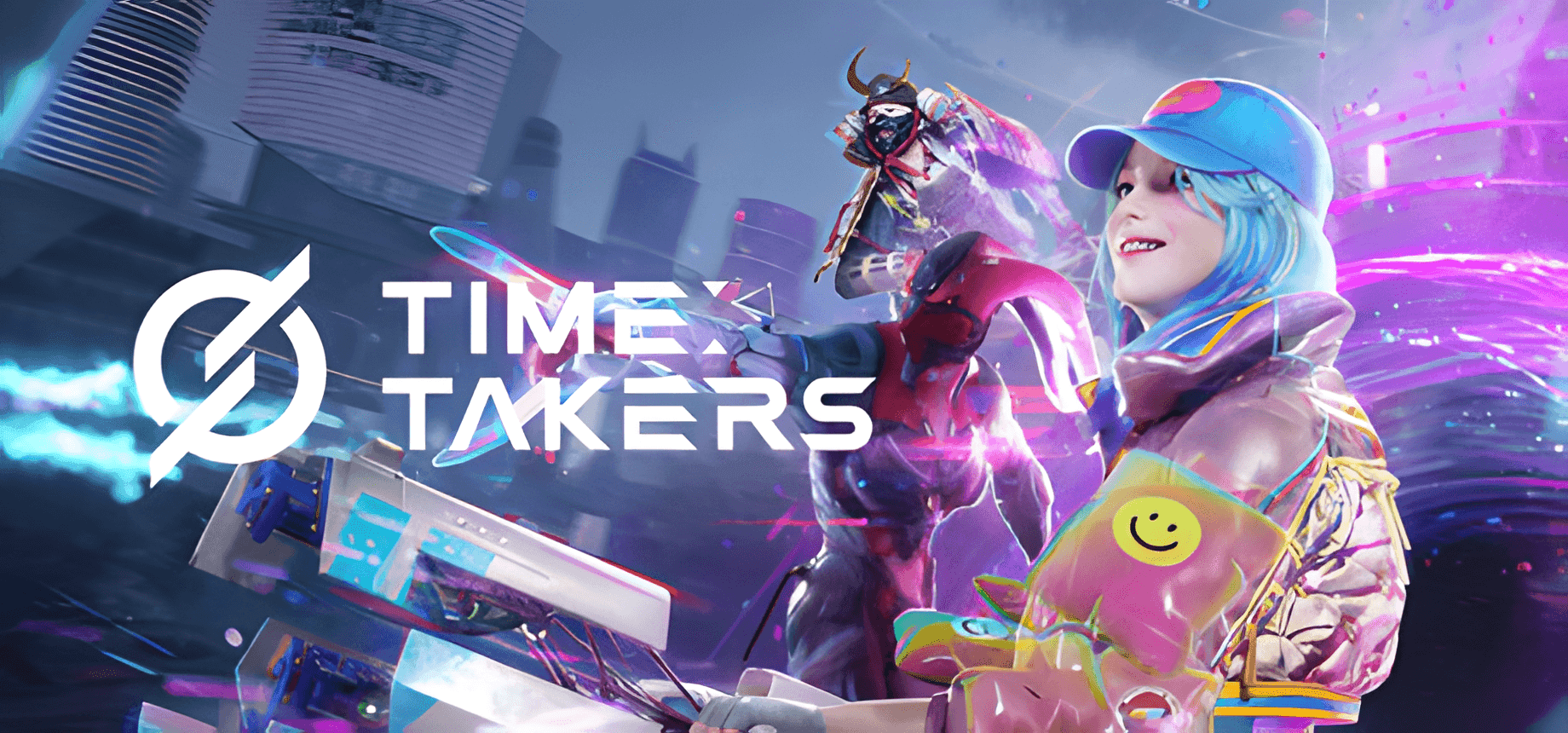
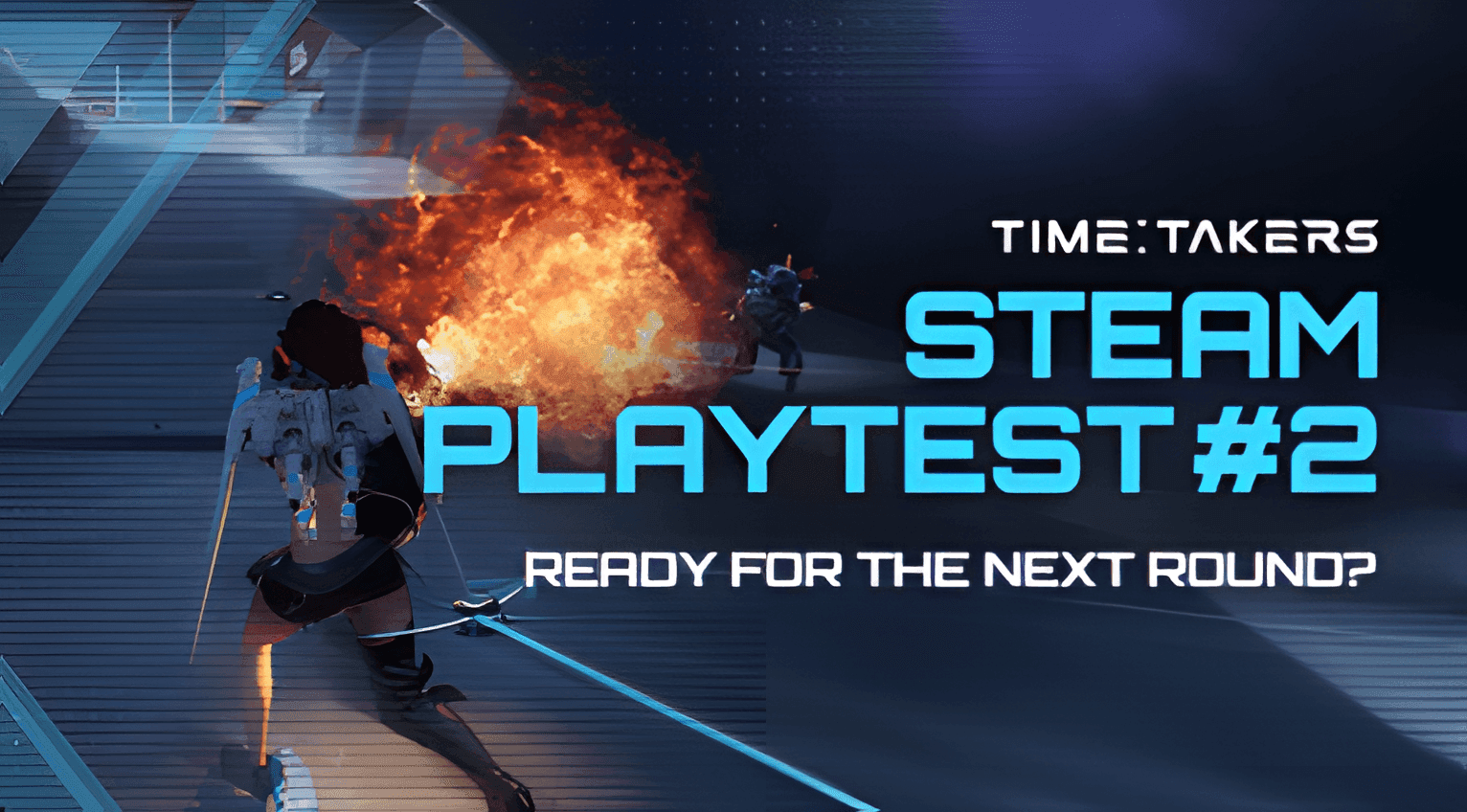
A 3v3v3v3 team-based tactical survival shooter built on Unreal Engine 5 by Mistil Games and NC. Time functions simultaneously as your health bar, an economy currency to buy combat Apps, and a resource...
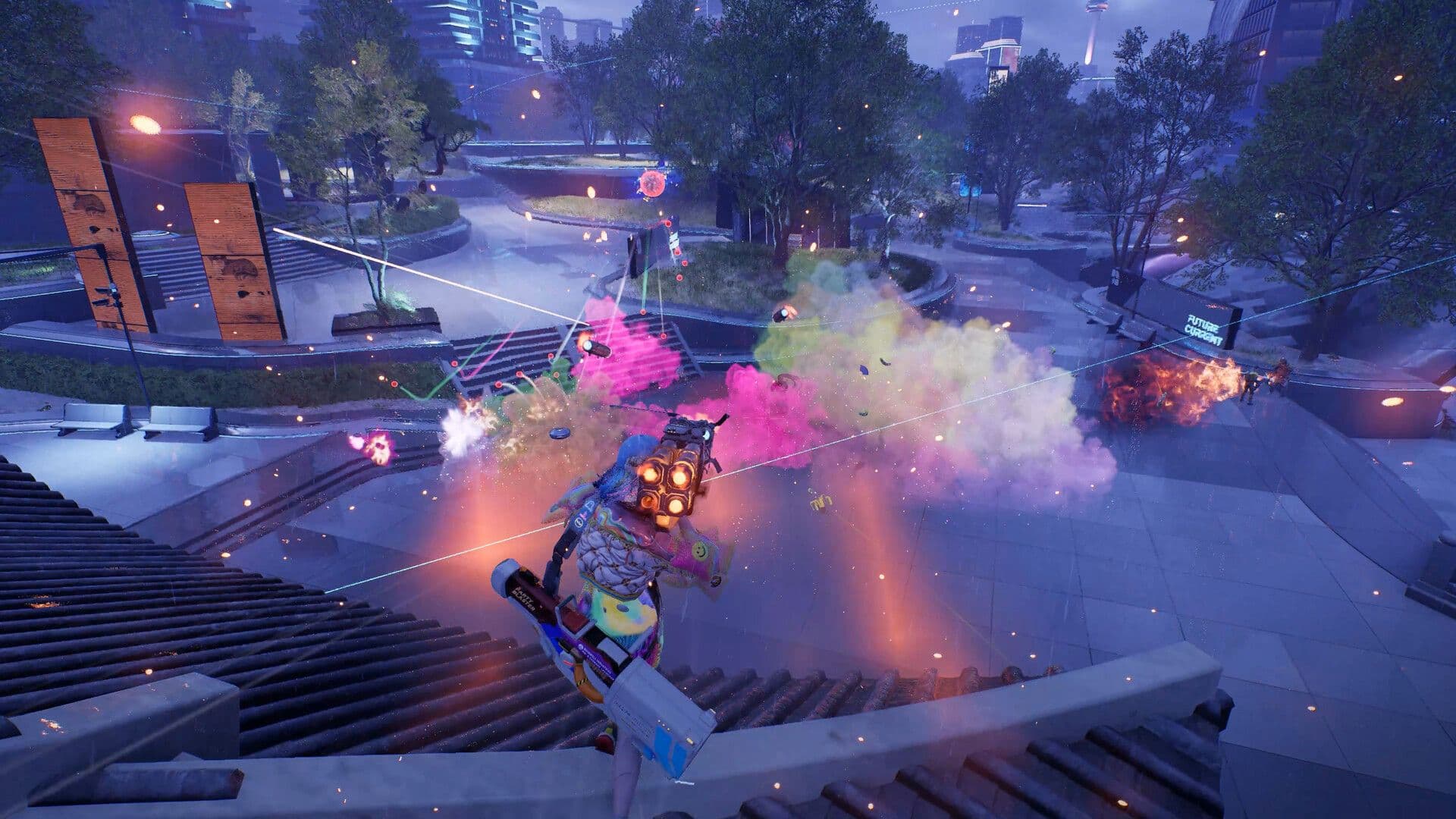
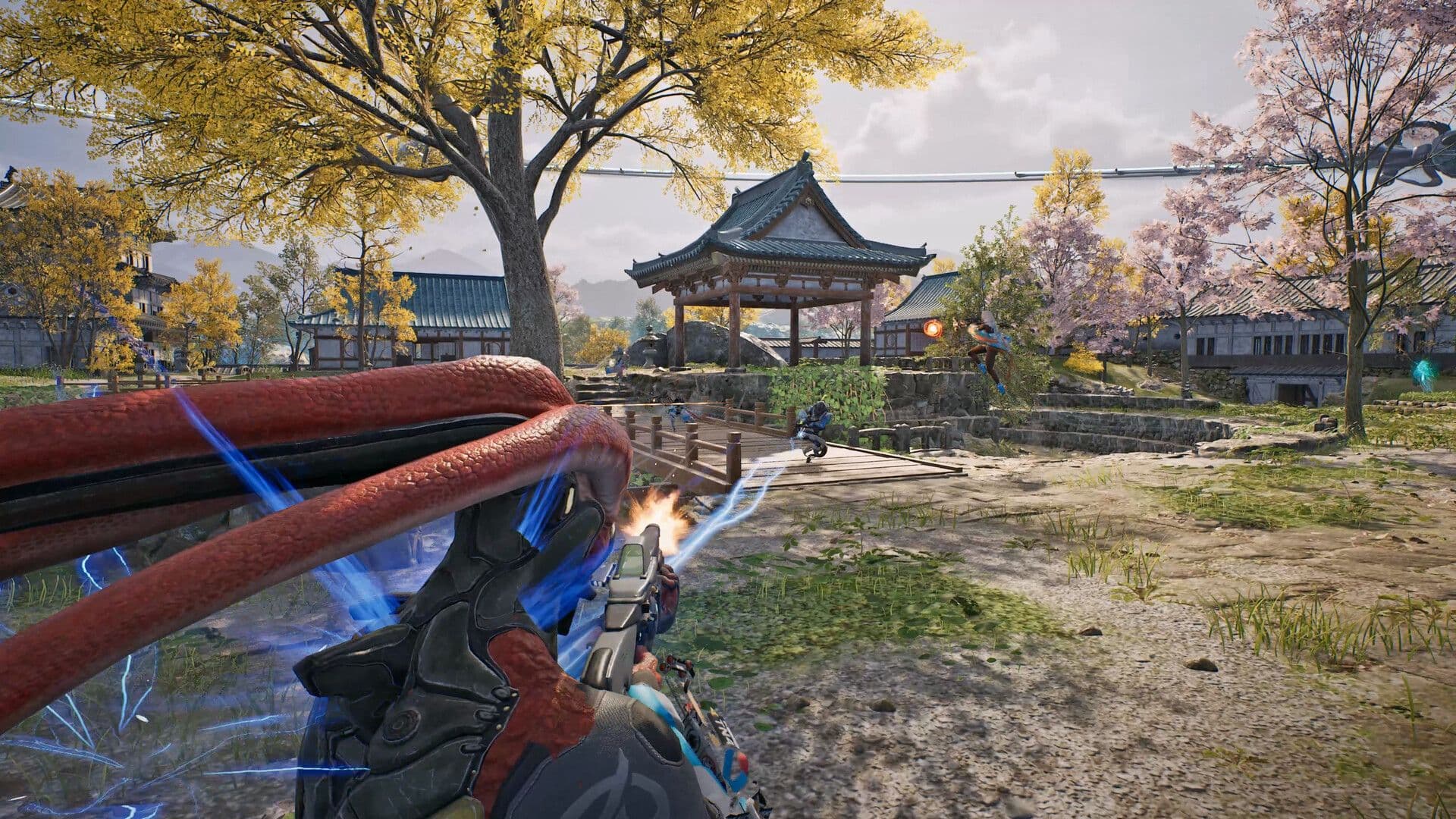
Quick Take:Time Takers is a competitive 3v3v3v3 third-person tactical survival shooter powered by Unreal Engine 5, developed by Mistil Games and published by South Korean powerhouse NC. Its defining mechanical innovation discards traditional hit-point health pools entirely in favor of Time Energy, turning remaining lifespan into the sole currency for purchasing combat apps, leveling abilities, and reviving fallen squadmates. Aimed squarely at fans of dynamic hero shooters and tactical battle royales seeking deep mid-match build crafting without rigid class locks, the game operates under a Free-to-Play model across PC and consoles. Primary competitive risks center on fierce market saturation within squad action shooters and the delicate tuning balance between high-skill manual tracking and smart-lock weapons.
For publisher NC, a titan historically synonymous with monolithic Asian MMORPG empires like Lineage, AION, and Blade & Soul, greenlighting Time Takers represents a seismic operational pivot. Instead of demanding endless vertical gear grinds, grueling daily guild attendance, and hundreds of hours of mob farming, subsidiary studio Mistil Games doubles down on fast-paced, session-based competitive action. This is a lean tactical combat loop where the complete character progression arc — transitioning from scavenged survival to an overwhelming late-game loadout — plays out inside a high-intensity 15-to-20-minute match.
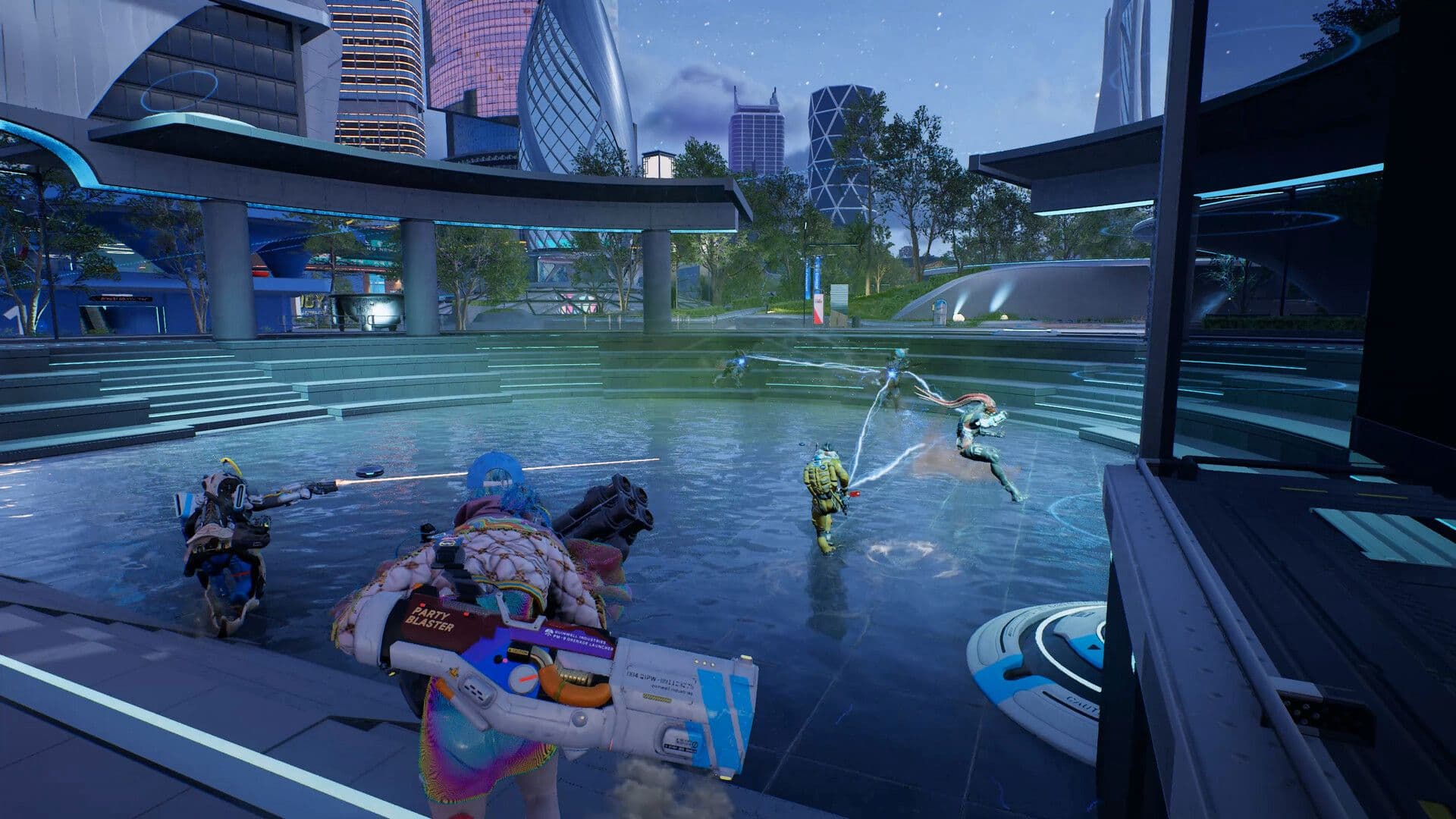
Contrasting bloated 100-player battle royales that suffer from protracted, barren looting phases, Time Takers deliberately compresses confrontation into a tightly wound 3v3v3v3 format. Four trios deploy across compact, multi-tiered arenas fractured by temporal cataclysms. There is zero opportunity to camp the fringes of the ring: engagement density across every square meter forces continuous rotation, proactive scouting, and split-second counterplay against sudden third-party ambushes.
Anchoring this combat dynamic is the visual and technical backbone of Unreal Engine 5. The chronological collapse allows the world designers to seamlessly weave gloomy European medieval stonework, classical Eastern shrines, and neon-drenched cyberpunk skylines into a cohesive battlefield. Across these fractured landscapes, split-second timing and calculated clock management dictate survival far more than rote hitscan muscle memory.
The definitive gameplay pillar separating Time Takers from conventional arena shooters is the complete elimination of standard hit points (HP). In place of medkits, bandages, and consumable armor plates, Mistil Games positions a relentlessly ticking stopwatch at the heart of the HUD: Time Energy. A player's remaining time is quite literally their biological lifespan on the battlefield. Catching a burst of plasma fire directly shaves seconds off the clock; absorbing an explosive grenade blast burns away an entire minute of survival.
The brilliance and palpable psychological tension of this design stem from Time Energy doubling as the match's sole economic resource. Eliminating wandering neutral creeps, hacking chrono-caches, and executing rival operatives awards raw seconds. This creates a relentless tactical dilemma on every rotation: do you preserve your accumulated time bank as a defensive buffer against protracted firefights, or aggressively gamble it away to purchase immediate offensive upgrades?
Every combat enhancement — from equipping specialized Apps modules to unlocking weapon abilities — draws directly from your life expectancy. Committing to a top-tier lifesteal app or a ricochet trajectory module priced at 45 seconds voluntarily pushes your avatar toward critical mortality. Consequently, high-level engagements operate on a razor's edge. Greedy players who over-invest in end-game tech risk dropping dead to stray crossfire, whereas overly cautious hoarders clutching five-minute life pools find themselves hopelessly outgunned against heavily augmented opponents in the final circle.
Trio synergy undergoes an equally radical reinvention. Squadmates remain connected via a visible tether when operating within close proximity, automatically pooling collected chrono-energy and unlocking a fluid revival loop. If an ally is downed by an enemy salvo, teammates are spared the vulnerability of kneeling in place for ten agonizing seconds under heavy fire. In Time Takers, reviving a comrade is an act of deliberate temporal sacrifice: players channel chunks of their own life clock directly into their fallen partner, instantly bringing them back into the fray at the expense of their own survival threshold.
Escalating this pressure is the inexorable collapse of the Safe Zone. The encroaching temporal vortex does not merely tick for chip damage; it voraciously drains seconds at an exponential pace. As the boundary tightens, the final showdown transcends standard cover-to-cover peek battles. It devolves into a desperate melee for every sliver of dropped chrono-energy, where victory belongs to the squad that calibrated the cleanest upgrade trajectory without bankrupting their own lifespan.
The narrative premise of fractured spacetime granted Mistil Games complete artistic freedom when assembling the playable roster. Operatives in Time Takers are known as Travelers, debuting with twelve distinct fighters ripped from wildly divergent historical eras and speculative future timelines. Shunning the sterile uniformity of generic military shooters, the arena pairs 13th-century partisans and feudal samurai alongside cybernetic commandos and spacesuited primates.
Leading the historical faction is Raven, a rebel leader from the thirteenth century who escaped the gallows to spearhead the Ravenwing Resistance. In combat, Raven embodies relentless forward momentum and rapid gap-closing. Her signature skill, Vengeful Leap, unfolds mechanical raven wings across her back, launching her in a target direction while generating an instantaneous energy shield. This makes her an unmatched point-entry operative, capable of fracturing enemy defensive lines or disengaging cleanly across contested rooftops.
Contrasting Western medieval grit is Rokuro, a lethal swordsman whose traditional kenjutsu strikes are honed with surgical precision. Rokuro's core technique, Asura Execution, unleashes a ferocious flurry of high-speed slashing blows that shred proximate targets. During early playtesting, this skill delivered such oppressive burst damage that developers had to introduce a slight post-activation recovery delay, ensuring the duelist could not immediately turtle behind evasive maneuvers after securing an elimination.
The cast leans into unapologetic sci-fi audacity with Bertie, a genetically uplifted chimpanzee astronaut arriving from an advanced era of deep-space exploration. Bertie injects vertical disruption into the trio through zero-gravity propulsion modules and jetpack bursts, confusing sightlines and dropping unexpected aerial crossfire on unsuspecting teams. Rounding out this eccentric lineup are operatives including Alis, marksman Curtis, synthetic operative Ep0ch, combat support specialist Cassie, heavy-duty enforcer Andrei, alongside Arthur, Yuna, and the flamboyantly volatile Zsa Zsa.
Crucially, Time Takers departs from the rigid hero-shooter structures of Overwatch or Apex Legends by refusing to lock characters into inflexible roles. A chosen Traveler dictates innate biomechanical stats and a core mobility kit, but the operative's combat identity, engagement range, and team contribution remain entirely fluid, sculpted on the fly through mid-match loadouts and app modules.
Abolishing the traditional holy trinity of tank, healer, and damage dealer compelled Mistil Games to engineer an alternative progression system. That solution materialized as a classless architecture powered by Apps — software combat modules downloaded directly into an operative's neural interface during matches. While a Traveler's base chassis establishes basic agility and an innate traversal skill, their functional contribution within the squad is forged entirely through weapon loadouts and software load orders.
Combat Apps split into passive stat amplifiers and triggered combat routines. By expending required seconds of Time Energy, players can augment their exo-suits with vampiric time-siphon protocols on critical hits, reactive damage-reflecting barriers, or cooldown reductions for traversal skills. Nothing prevents a squad from transforming medieval duelist Raven into a fortified frontline tank equipped with armor plating apps and an automatic shotgun, or pivoting space-chimp Bertie into a long-range recon assassin optimized for high-penetration sniper rounds.
The firearm sandbox mirrors this tactical freedom, fundamentally divided across two targeting philosophies:
This duality forms the contested battleground of Time Takers' competitive balance. Early alpha tests sparked heated debate across the community: casual players celebrated the accessibility of smart-lock weapons on gamepads during frantic close-quarters chaos, while PC shooter purists decried the dilution of raw tracking skill. At higher MMR brackets, optimal squads lean into hybrid compositions, pairing smart-lock suppression to strip shielding while a manual ballistics marksman executes the decisive finishing shot.
The freedom to pivot loadouts mid-match introduces rare tactical depth to each round. If your squad detects that the leading trio heavily invested into damage-mitigation apps and continuous regeneration, you can immediately counter-strat at the next temporal relay, channeling your clock into armor-piercing apps and corrosive debuffs that unravel their defensive bunker.
Level geometry across Time Takers adheres to two uncompromising mandates: extreme verticality and the absolute elimination of dead transit space. Arena scale is tuned so that the distance separating all four trios shrinks to active contact within the opening minutes of a drop. Rather than sprawling flatlands, Mistil Games architects complex spatial puzzles, with every environment capturing a fragment of a distinct civilization preserved in the instant of chronological rupture.
The first confirmed battleground, Morstadt, immerses contenders in a brooding medieval European citadel fortified by towering stone ramparts. Claustrophobic alleys, vaulted archways, and fortress courtyards dominate the layout. It serves as a paradise for close-quarters duelists and ambush specialists: restricted sightlines handicap long-range marksmen, forcing squads into grenade-range engagements while utilizing parapet overhangs for sudden aerial drop attacks.
Contrasting this medieval confinement is Yokogawa, an Eastern locale steeped in feudal Japanese architecture. The topography features multi-tiered pagodas, curved tiled roofs, tranquil bamboo thickets, and sprawling shrine terraces. Controlling high ground here represents a decisive operational advantage: high-mobility Travelers like Raven can vault onto ridgelines, establishing crossfire over lower paths to cut off retreating squads from valuable chrono-caches.
The third jewel in the map rotation, Miraesi, drops squads into the heart of a hyper-technological neon metropolis inspired by futuristic Seoul. Staggering verticality defines every skirmish: dual-tiered elevated highways, hovering holographic billboards, transparent skybridges between high-rises, and narrow maintenance sub-tunnels. On Miraesi, positional play resembles 3D hide-and-seek, where a rival trio can dive down upon your flank straight from the rooftop of an adjacent monorail hub.
Crucially, the map design denies static camping positions. The Safe Zone does not constrict in predictable concentric rings; instead, it shears away entire city sectors, herding surviving Travelers into exposed plazas and tight traffic intersections. Within a dynamic 3v3v3v3 ecosystem, this systematically encourages opportunistic third-partying: while two squads exhaust their clocks in a prolonged shootout, a disciplined third team claims an elevated vantage point to sweep up weakened survivors with concentrated crossfire.
Adopting Unreal Engine 5 equips Time Takers with cutting-edge visual presentation: dense geometric meshes, reactive particle physics, and volumetric global illumination. However, this high-end pipeline sets a steep hardware barrier. The client runs exclusively on 64-bit Windows 10 via low-level DirectX 12, establishing a minimum configuration around an Intel Core i5-9600K, 16 GB of RAM, and an NVIDIA GeForce RTX 2070 with 8 GB of VRAM. For fluid competitive frame rates, the developers recommend stepping up to an Intel Core i5-11600K, an NVIDIA GeForce RTX 3070, and mandatory installation on a high-speed Solid-State Drive (SSD) with at least 20 GB of free space.
Early playtest builds exhibited typical UE5 growing pains, notably transient shader compilation hitches during initial match loads and occasional frame pacing dips when all four squads clashed simultaneously amid a storm of particle effects and laser beams. Conversely, the netcode and input responsiveness show encouraging stability. Hit registration for manual skillshot weapons operates reliably, while spatial desync remains minimal — a vital prerequisite for tracking twitch abilities like Raven's Vengeful Leap.
A Free-to-Play publishing model naturally sparks skepticism among veteran players familiar with publisher NC's aggressive monetization history in legacy MMOs. With Time Takers, however, the publisher targets global esports standards. Monetization centers entirely on seasonal battle passes and vanity cosmetics: distinctive Traveler skins, weapon patterns, revival animations, and custom chrono-energy VFX. Current test environments feature zero direct power-selling or Pay-to-Win mechanics, laying solid groundwork for an authentic competitive scene.
Ultimately, Time Takers emerges as a refreshingly bold and energetic hybrid. Mistil Games effectively solves the core fatigue of the Battle Royale genre by stripping away tedious downtime and turning survival into an active countdown against the clock. Spending your own lifespan to purchase combat upgrades forces immediate, high-stakes tactical choices that fuel incredible adrenaline in every round. If the development team polishes performance across mid-tier PC hardware, refines the balance between manual aim and auto-targeting, and delivers a steady roadmap of new maps and Travelers, the game stands poised to become NC's breakout competitive surprise of the year.