 Buy To Play
SpiritVale
MMORPGEarly access
SpiritVale is a class-based action MMORPG from Australian indie studio Baikun Interactive, set in the fractured world of Nevaris. Choose from seven cl...
Minimum and recommended PC specs to run the game
← Back to game reviewIf your PC can run this game, you'll also be able to play these:
Buy To PlaySpiritVale is a class-based action MMORPG from Australian indie studio Baikun Interactive, set in the fractured world of Nevaris. Choose from seven cl...
 Buy To Play
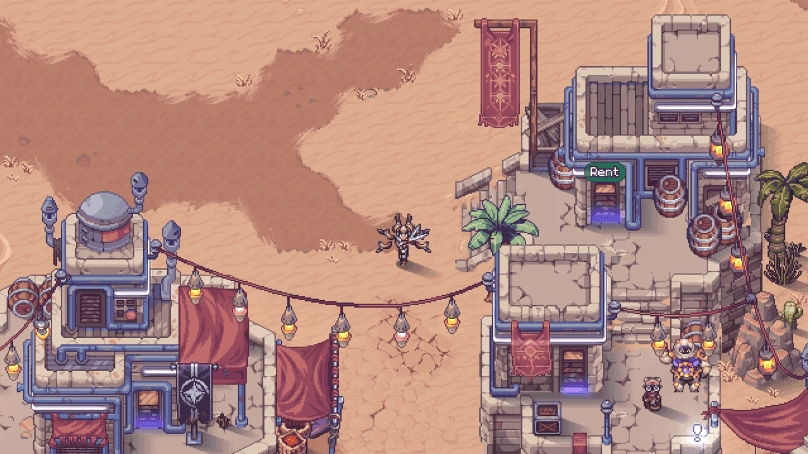
Soulbound: Online is a pixel-art action MMO where fast bullet-heaven dungeon runs sit alongside a peaceful overworld of mining, fishing, cooking and c...
 Free To Play
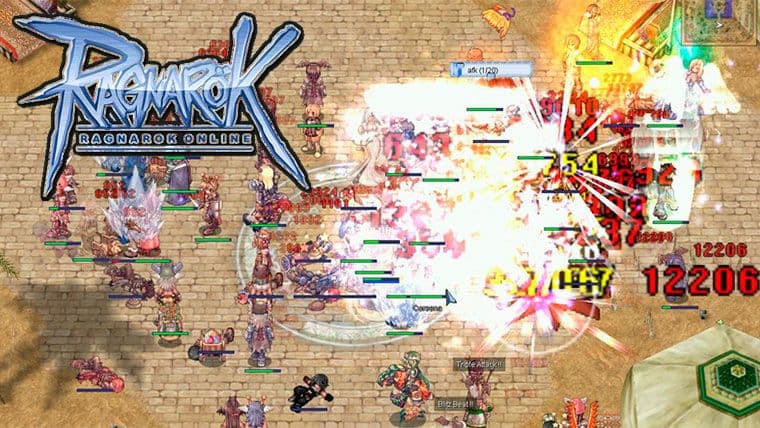
Ragnarok Online has been running since 2002, and the card system it introduced — socketing monster drops into weapons and armor — is still one of the ...
Time Takers is built on the modern technological architecture of Unreal Engine 5 utilizing low-level DirectX 12 API calls. The game engine emphasizes dense environmental geometry, dynamic volumetrics, and real-time physical calculations across vertical arena layouts. This demanding visual pipeline establishes strict hardware baselines: the client executes exclusively on 64-bit operating systems and completely phases out legacy DirectX 11 architectures.
The Central Processing Unit (CPU) handles continuous simulation tick-rates across twelve live players, predictive projectile physics, and wandering neutral objective AI. A baseline 6-core processor like the Intel Core i5-9600K manages standard mid-range skirmishes. However, recommended processors such as the Intel Core i5-11600K featuring higher single-core instruction throughput (IPC) and robust multithreading become essential during chaotic late-game collapses, where all four surviving trios clash simultaneously within confined choke points.
Graphics rendering and video memory (GPU / VRAM) bear the heavy brunt of high-polygon Traveler assets, volumetric chrono-storms, and multi-layered draw calls across vertically stacked urban environments like Miraesi. The demanding entry bar of an NVIDIA GeForce RTX 2070 equipped with 8 GB of VRAM prevents asset thrashing when processing complex particle shaders and reflections. Upgrading to the recommended NVIDIA GeForce RTX 3070 provides the frame pacing stability needed for high-refresh competitive monitors, ensuring that precision tracking remains fluid during intense mobility maneuvers.
System memory (RAM) demands a unified 16 GB threshold for both minimum and recommended tiers. The intense pace of match progression requires caching complete Traveler models, audio libraries, and localized collision meshes directly in system memory. Allocating anything less would trigger heavy pagefile swapping, manifesting as severe micro-stutters whenever an enemy team suddenly ambushes from an overhead flank.
The 20 GB storage footprint mandates deployment on a high-speed Solid-State Drive (SSD). Unreal Engine 5's asynchronous background asset streaming pipeline depends heavily on low-latency NVMe or SATA read speeds. Running the game from a legacy mechanical hard drive risks texture pop-in upon initial deployment and spatial desync during high-velocity traversal abilities.