 F2P · Live
Lineage 2
Aden's castles never stay in the same hands for long, and Lineage II has built an entire twenty-three-year…
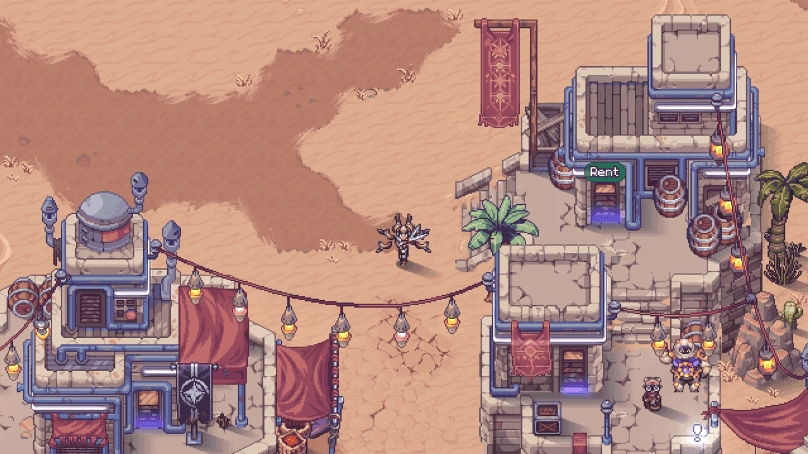
Soulbound: Online is a pixel-art action MMO where fast bullet-heaven dungeon runs sit alongside a peaceful overworld of mining, fishing, cooking and crafting. Build a Pioneer from a dozen abilities an...
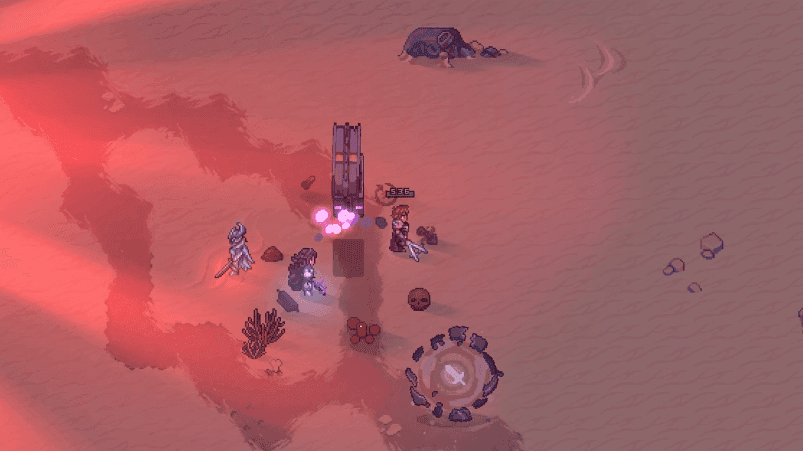
Soulbound: Online is a pixel-art action MMO from SpiderWare, a small London studio, and it reached Steam Early Access on 21 July 2026 after roughly four years of life as a browser and Discord game. It pairs a shared, monster-free overworld with instanced bullet-heaven dungeon runs, and it arrives on Steam carrying the reputation of its earlier incarnation as the Web3 project Worldwide Webb. Ten days in, its Steam rating sits at Mixed and its concurrent player count is measured in hundreds rather than the million-plus figure quoted in the studio's press material.
Quick take: Soulbound: Online is worth $14.99 if you want a sharp solo-or-trio dungeon grinder with old-school skilling bolted onto it, and it is not yet worth it if you came for the MMO half — guilds and the auction house are still items on a roadmap. The dungeon loop is the best-built thing here and the reason anyone is still logging in after launch week. Whether the studio's Web3 history disqualifies the game is a separate question, and answering it with a flat no is a defensible position.
Soulbound's fiction is a digital world that has gone wrong, and the game leans on that premise more than most pixel-art MMOs bother to. You wake up as a Pioneer with no memory, get flattened almost immediately by the Anima — a set of malevolent entities that run the hostile side of this reality — and are dragged to safety by a robot. From there the world opens outward through Virelda, then Arcadia, Neo-Tilus, Everdune, Farpoint and the regions past them.
The opening is brisk by MMO standards. New Pioneers start on Beginner's Bay, learn the movement and combat basics against a pair of scripted bosses called Bulkatron and Scrapclaw, and are through to Virelda proper inside half an hour — where the bank, the contract board and the first real dungeon beacons all sit within a short walk of each other. Nothing is padded, and nothing is explained twice.
The art carries it. Sprite work is dense and readable at speed, the animated cutscenes have real character, and the writing is happy to be strange: one early armour vendor is a fish in a robot suit. Voice acting exists but only covers part of the script, which is a common indie compromise and lands as an unfinished seam rather than a deal-breaker. English is currently the only language, with localisation sitting on the roadmap and no date attached.
The rhythm of a session is set by two daily allowances, and understanding them explains most of what the game asks of you. At midnight UTC you receive 800 Yoku energy and ten Pioneer Permits. Yoku is spent opening the chest at the end of a dungeon run — higher difficulty tiers cost more per chest. Permits are spent taking contracts from guild boards in Virelda, Everdune and Farpoint, which pay skill experience, gold, materials and, usefully, more Yoku.
So a typical evening starts at a board rather than a dungeon. You hold up to five contracts at a time, they come in rarities up to Mythic, and you can reroll a board for gold if the offers don't match what you were planning to do anyway. Permits bank up to sixty if you skip days, which quietly forgives a week away — a small mercy that plenty of larger MMOs never manage.
The system is also the game's most contested piece of design. A daily energy cap on loot claims is standard in free-to-play mobile RPGs and unusual in a game you bought for $14.99, and Steam forum threads made that point loudly during launch week, with several players reading it as groundwork for a future convenience purchase. SpiderWare has not announced anything of the sort. The concern is reasonable all the same, because energy caps historically exist to be sold back, and a studio with this particular past does not get the benefit of the doubt for free.
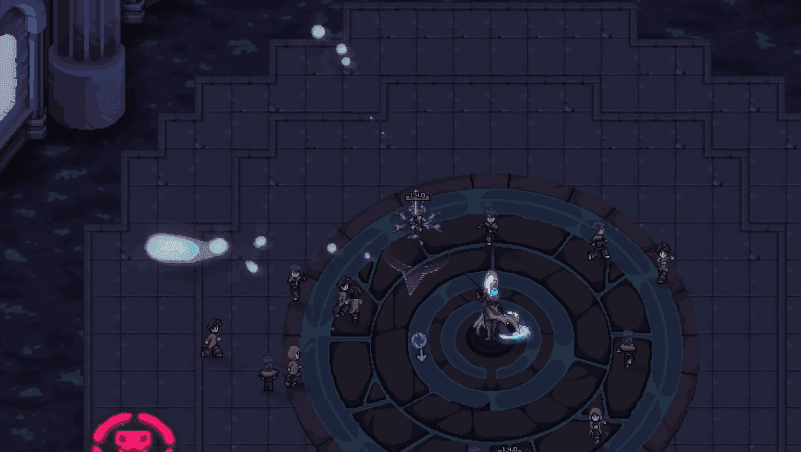
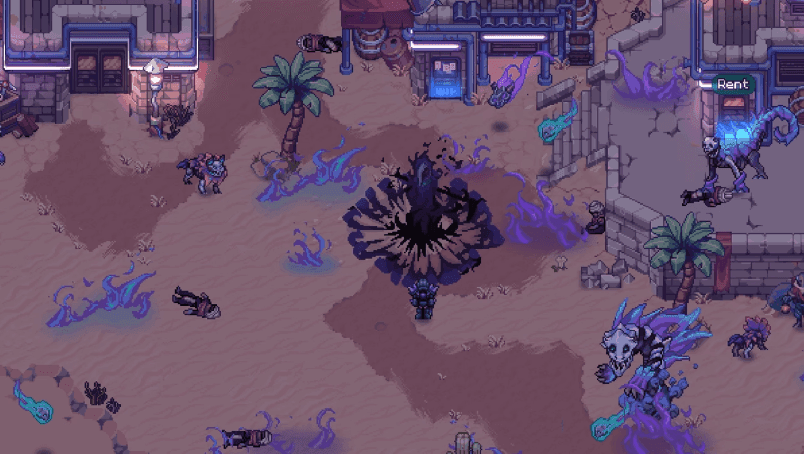
Partly — the moment-to-moment play is closer to positioning than to aiming. Soulbound's dungeons are bullet-heaven arenas: enemies pour in, your weapon fires on its own by default, and survival comes down to where you stand, when you burn a cooldown, and which relics you took three rooms ago. A manual aim mode exists for players who want the extra control, and it does meaningfully change how weapons feel. The skill ceiling lives in build decisions under time pressure rather than in twitch execution.
Those decisions come from relics. Each run hands you a stream of temporary upgrades — weapon relics, ability relics, passives, capped at four passives per run — and they vanish when the run ends. Take Pyrosphere with a couple of burn multipliers and you clear packs by walking through them. Take Fortify and a shield relic and you hold ground for a party that would otherwise get shredded. The pool is deep enough that two runs with the same three abilities can play differently, and shallow enough that you'll recognise your favourite lines within a few hours.
Permanent power sits outside the run, at Fritz's Lab in Arcadia, where crafted components and rare drops buy upgrades to the abilities themselves. That's the loop that gives the roguelite half an MMO spine: a run is disposable, a Lab upgrade is not. Difficulty scales through Easy, Hard and Extreme tiers at each beacon, plus an arena north of Virelda that drops you straight onto a boss.
One design choice cuts against the tension. Dungeons no longer punish death — the bag-and-gear loss that once made a bad run genuinely expensive has been disabled, so a failed attempt costs time and nothing else. Guides written before the change still describe an extraction-style risk that isn't in the live game. The runs are more relaxing for it and less interesting.
Step out of a dungeon and the game becomes something else entirely: a quiet, mob-free overworld built around gathering and crafting. Mining, foraging, fishing, cooking, chemistry, farming, hacking and gearforging each level independently, each consumes stamina rather than Yoku, and each feeds the others. Fish become food, food restores stamina, stamina buys more gathering. It is very close to an old-school skilling MMO wearing a roguelite as a coat.
The connection between the two halves is gear requirements, and it's the sharpest idea in the game. Weapons and armour gate behind skill levels, and not only combat skills — a tier-2 greatsword can require Fishing 13 and Foraging 10 alongside Strength, Dexterity and Gearforging, as the Virelda Slab-Blade does. You cannot dungeon your way into your next weapon. Somebody has to fish.
Your home base is where the crafting stations live, with a room-layout editor for players who care about that, and it doubles as the storage hub the rest of the loop depends on. Crafted gear rolls variable secondary stats, so two copies of the same chestpiece are worth comparing side by side — a small detail that keeps salvaged loot relevant well past the point where most games would have you vendoring it.
Long-term progression in Soulbound: Online runs through account-wide ladders rather than a level number, which is both its strength and the clearest sign of how unfinished the top end is. More than 800 achievements feed a scored ladder that pays out teleports, storage space and drop-table bonuses, so chasing them is real progression instead of a trophy case. Allegiance standing with each region and faction gates some gear on top of the skill requirements.
The ceiling arrives sooner than the systems suggest. Early Access stops at Tier 4 of a planned nine, with the studio quoting roughly 100 hours of content and around fifty handwritten quests at launch. Players hit the first raid faster than SpiderWare expected — the studio said so in a launch-week post, and shipped the raid earlier than planned in response. That reads as an honest reaction to a live population, and it also tells you how thin the end of the current build is.
The multiplayer on offer today is three-player co-op, and calling the result an MMO takes some generosity. Dungeon Finder queues you into solo or trio beacon runs with a region selector, the overworld shards dynamically by population so towns feel inhabited, and direct player trading works within early-game restrictions meant to curb spam. That's a functional social layer.
It is also most of the social layer. Guilds are on the roadmap in their first form — creation, rosters, ranks, a shared home base — and the auction house is described as imminent rather than live, which leaves the player-driven economy the studio advertises running on hand-to-hand trades. There is no PvP of any kind, and nothing suggests there will be. For a game whose community organised itself in Discord voice channels for four years, shipping without guild tools is an odd order of operations, though not a fatal one if the roadmap holds.
No, not in the current build — there is nothing to buy. Soulbound: Online costs $14.99 with no subscription and no cash shop live at the time of writing. SpiderWare has committed publicly to a cosmetics-only store selling outfits, pets and furniture through a premium currency, due to launch within weeks of Early Access, and has stated it does not intend to sell power.
The price itself was set by asking demo players what they'd pay and taking the median, which is an unusually transparent way to arrive at a number, and $14.99 for a hundred hours of content is generous by any Early Access standard. Launch week ran a discount that put it near $12.74.
What deserves watching is the gap between "cosmetics only" and the Yoku system already sitting in the game. A daily cap on loot claims is exactly the shape of a system that later grows a refill button. Nothing in the announced plan crosses that line. The plan is also a promise from a studio whose promises are the whole controversy.
Soulbound: Online is a rebuild of a Web3 game, and that history explains its review score far better than its gameplay does. The project launched as Worldwide Webb, an Ethereum-based MMO selling avatar and virtual-apartment NFTs, drew venture funding reported to include a round led by Pantera Capital, then shut down its original build, reset player data, rebranded to Soulbound in mid-2024 and relaunched on Steam as a conventional paid game. The Steam build contains no blockchain, tokens or NFTs. Former holders were offered Founder Packs, retained cosmetics and balances rather than the assets they originally bought.
The reaction has been loud and split. MassivelyOP reported accusations from former backers of a "slow rug" that cost the original community substantial money; Steam reviews from that group are numerous and furious, and separate complaints allege undisclosed AI-generated art, moderation of criticism, and suspiciously uniform press coverage. None of those allegations has been independently verified, and SpiderWare has not addressed them publicly in detail. What is verifiable is the score: 60% positive across 413 Steam reviews as of late July, up from 51% in the first days, with the review pool visibly divided between people reviewing a game and people reviewing a studio.
Both groups have a point worth taking seriously. If your objection is that the current product contains crypto mechanics, that objection is answerable and the answer is no. If your objection is that a studio which abandoned one economy might abandon another, no amount of pixel art settles it — only the next twelve months of development cadence will. The buying decision comes down to which of those two questions you were actually asking.
The most telling number in Soulbound: Online's first fortnight is neither the review score nor the roadmap. It's the concurrency: a Steam peak of roughly 1,200 players, against a claimed million-plus browser audience that the studio retired the browser and Discord clients to move here. Most of those players did not follow. Some of that is the controversy doing its work; some of it is what happens when a free thing becomes a paid thing.
What's left is a genuinely well-made small game with an MMO label it hasn't earned yet. The dungeon runs are fast and legible, the relic system produces builds worth talking about, and the skilling economy underneath is more considered than most projects with ten times the budget manage. The world is pretty, the writing has a pulse, and $14.99 buys a lot of hours. Against that: the guild tools and the auction house both missed launch, PvP isn't planned at all, progression stops four tiers up a nine-tier ladder, and there's a daily energy cap sitting inside a game you paid for.
In the used-car trade, a salvage title doesn't mean the engine is bad. It means the history is permanent, the discount is real, and every buyer after the first gets to decide for themselves whether the paperwork outweighs the drive. Soulbound: Online is that car — the engine runs well, the price reflects the damage, and the documents are sitting on the dashboard where anyone who wants to read them can.
No. It costs $14.99 on Steam as a one-off purchase, and the free browser and Discord versions were retired before the Early Access launch.
Not any more. Both clients were shut down ahead of the Steam release, and guides that still describe them are out of date.
The Steam version has none. Those elements belonged to Worldwide Webb, the game's earlier Web3 form, and were removed during the rebuild.
Neither is in the game today. Guild creation, ranks and a shared base are announced for a future Early Access update; player-versus-player content is not on the roadmap at all.
For co-op dungeon runs and life-skill grinding, yes — the core loop is finished and holds up. For anything that depends on large-scale player organisation, wait for the guild and auction house updates.