 F2P · Live
Lineage 2
Aden's castles never stay in the same hands for long, and Lineage II has built an entire twenty-three-year…
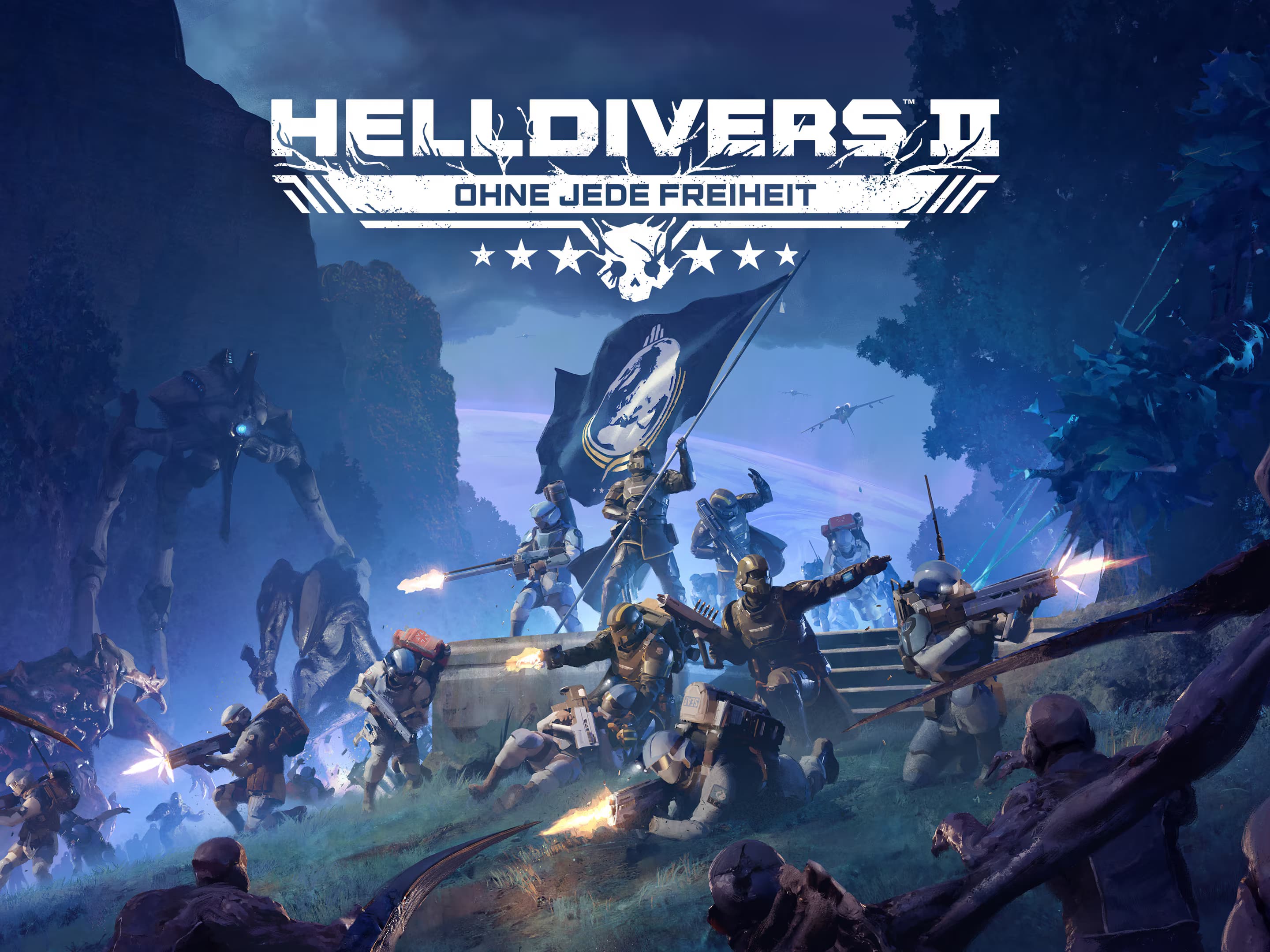
A critically acclaimed third-person squad-based tactical shooter developed by Arrowhead Game Studios and published by Sony Interactive Entertainment, establishing itself as a generational multiplayer ...
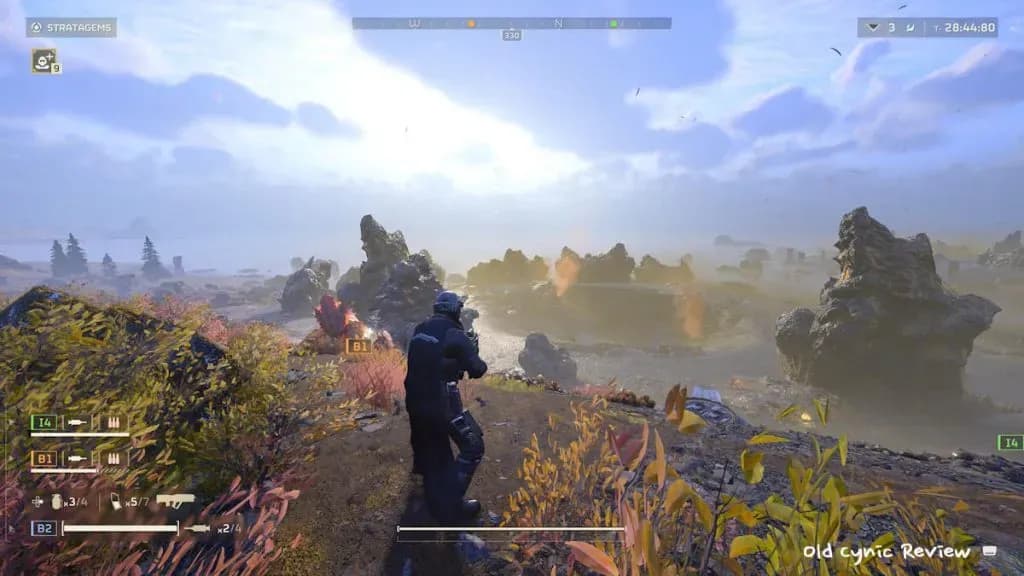
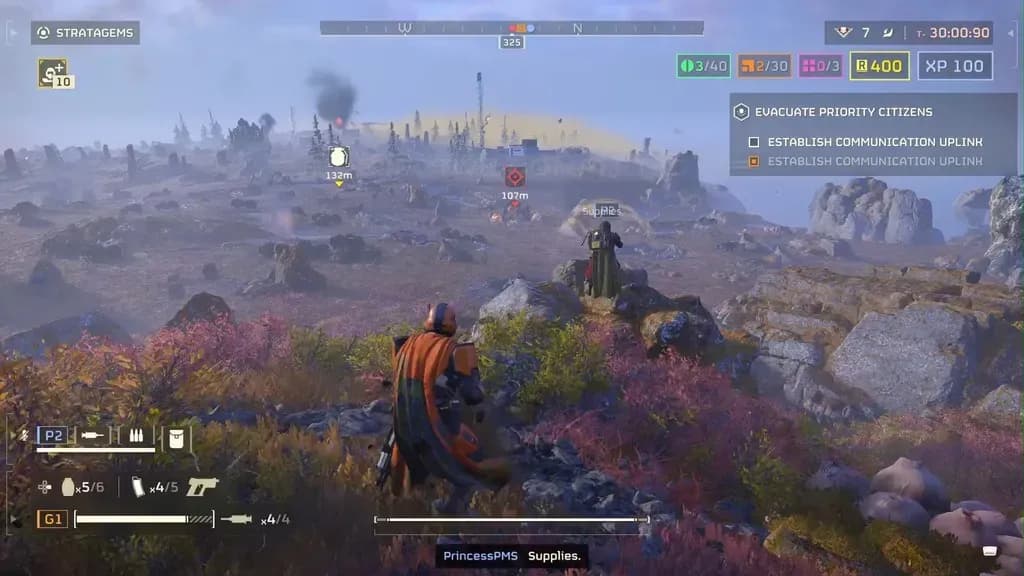
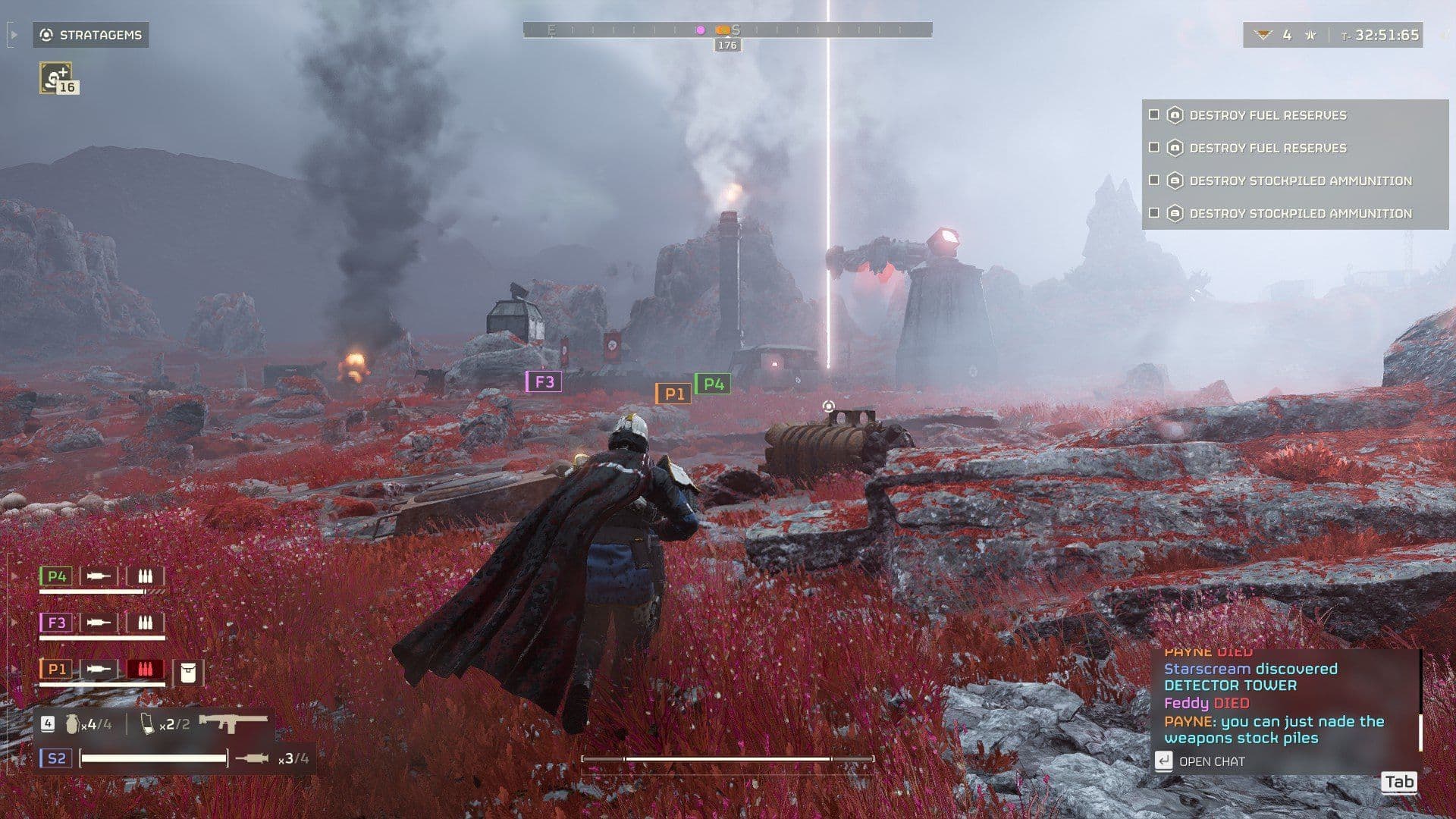
Helldivers 2 is a squad-based third-person tactical shooter developed by Swedish outfit Arrowhead Game Studios and published by Sony Interactive Entertainment in February 2024 for PC and PlayStation 5. The game delivered a seismic jolt to the multiplayer landscape, immediately overwhelming Sony’s backend infrastructure under an avalanche of nearly 460,000 concurrent players on Steam alone and becoming the fastest-selling release in PlayStation history. Years into active live-service operations, the title has matured into a monumental cooperative sandbox where a continuous, community-driven Galactic War unfolds in real time before hundreds of thousands of active combatants.
At the bedrock of its universe lies a biting, absurdly heightened anti-militarist satire taking direct inspiration from Paul Verhoeven’s cinematic masterpiece Starship Troopers. The planetary superpower of Super Earth operates as a hyper-bureaucratic totalitarian war machine thinly disguised behind a veneer of gilded prosperity and patriotic liberty. Its citizenry marches beneath the banner of Managed Democracy — a political framework wherein predictive government algorithms automatically cast citizens' election ballots based on a state questionnaire, ensuring the populace's "ideal" desires are fulfilled without the messy inconvenience of actual choice.
Any hint of dissent or hesitation regarding military directives triggers immediate re-education by the Ministry of Truth. State propaganda saturates every waking hour: bombastic news reels, recruitment posters displaying square-jawed troopers, and jingoistic rhetoric turn human lives into disposable ammunition for imperial conquest. Fresh recruits endure a comically brief ten-minute basic training course, ink a lifelong combat contract, don a ceremonial cape, and are immediately frozen inside cryo-pods — loaded onto Super Destroyers as literal ordnance. The average combat lifespan of a deployed Helldiver is measured in single-digit minutes, yet Super Earth's bureaucratic machinery repackages this endless meat grinder into an immortal victory parade.
The underlying economic motives behind this cosmic crusade are as ruthlessly cynical as they are pragmatic. Humanity wages war across two expansive galactic flanks, cloaking corporate asset grabs under righteous liberation dogma. Along the eastern galactic rim, Super Earth hunts the Terminids — a ravenous swarm of predatory space insectoids. While high command broadcasts tales of brave pioneers defending frontier worlds from savage beasts, the reality is far colder: decomposing Terminid carcasses synthesize Element 710, an indispensable hydrocarbon compound that fuels Super Earth's faster-than-light warp engines (flip the "710" designation upside down and the developer's sardonic punchline reveals itself: "OIL"). In truth, Super Earth deliberately seeded and harvested bug farms across frontier planets; whenever swarms break containment, high command simply deploys millions of Helldivers to purge the outbreak and fill their fuel tankers.
Along the western frontier rages a radically different theater of war. Here, Super Earth’s expeditionary fleets contest the Automatons — legions of crimson-eyed combat machines marching to industrial cadence and heavy synthesized battle anthems. The Automatons represent the ideological successors to the original game's Cyborgs, fully devoted to collective mechanical socialism. To Super Earth’s ruling oligarchy, a society of thinking machines rejecting unfettered capitalist consumption and private enterprise represents an unforgivable heresy that must be systematically dismantled. The resulting backdrop delivers an exhilarating theater of the absurd, where players gleefully embrace their roles as expendable cogs in a maniacal military machine.
A Helldiver’s deployment begins not in a frontline foxhole, but with an unceremonious defrosting sequence aboard a personal Super Destroyer. The vessel serves as an immersive personal hub and operational command center: through the sweeping panoramic viewports of the bridge, players look out over contested planetary orbits blanketed in ash clouds, punctuated by the silent thunder of allied orbital bombardments and the majestic silhouettes of hundreds of dreadnoughts. At the center of the deck hums the holographic Galactic War table, projecting the real-time heartbeat of the conflict: contested operational sectors, shifting community liberation percentages, and live galactic casualty counters.
The gameplay loop is structured around combat Operations consisting of linked mission sequences, scaling across ten distinct difficulty tiers from introductory reconnaissance runs to the brutal meat grinder of difficulty 10, Super Helldive. While lower tiers function as brisk shooting galleries, higher difficulties demand meticulous tactical discipline where a single misstep cascades into a catastrophic squad wipe. Dynamic planetary hazards compound the chaos: sudden ion storms scramble radar arrays and disable stratagem beacons, wandering fire tornadoes scorch planetary flora and choke off retreat paths, while dense acid fog reduces visibility to five meters while steadily corroding personal armor.
Planetfall occurs via orbital Hellpod drops. The fireteam marks deployment coordinates on the tactical map, aiming to land either on clear high ground far from enemy red zones or directly onto an outpost for an aggressive hot drop. The pods impact the planetary crust at hypersonic speed, blasting open armor hatches to propel troopers instantly into battle. The mission clock immediately starts ticking — typically giving the squad forty minutes to execute primary objectives, wipe secondary tactical targets, and extract. The fireteam operates on a shared Reinforcement budget of twenty lives (plus additional reserves per deployed trooper). If this pool runs dry, reinforcements recharge on a grueling, single-unit cooldown, elevating every skirmish into an exercise in high-stakes survival.
Each drop deposits players into an expansive, procedurally seeded semi-open sandbox spanning several square kilometers. There are no invisible walls or scripted corridors: the squad moves at will across the terrain, systematically clearing Terminid bug nests and fortified Automaton fabricators. Diligent exploration yields immense tactical dividends: booting up abandoned radar towers unmasks all hidden points of interest across the map, loading artillery shells into dormant SEAF emplacements grants powerful ordnance calls (ranging from smoke screens to mini-nukes), and destroying Automaton jamming towers restores offline stratagems. Along the way, players scavenge precious research samples — green Common Samples, orange Rare Samples, and glowing pink Super Uranium spheres nestled beside distinctive rock monoliths.
The finale of every successful operation culminates in the extraction sequence, engineering an unmatched crescendo of cinematic tension. With primary objectives cleared — whether launching an ICBM, collapsing a nursery colony, or routing fuel tankers — the fireteam consolidates at the landing pad. Activating the extraction beacon summons the heavy gunship Pelican-1 on a grueling two-minute flight timer. The engine roar of the landing beacon acts as an acoustic flare, drawing every wandering patrol and heavy detachment on the map straight to the squad’s perimeter. An uncompromising last stand erupts: ammunition runs dry, stim supplies dwindle, Bile Titans and heavy tanks breach the tree line, and teammates frantically blanket the approaches with sentry turrets and landmines.
The ultimate tension stems from the physical nature of loot: all collected samples reside in dropped containers whenever a carrier perishes. If a comrade carrying the squad’s Super Uranium is crushed in a mob swarm thirty seconds before the shuttle touches down, a survivor must make a suicidal dash into the fray, recover the container, and dive through Pelican-1’s boarding ramp. The sample haul is shared identically across the entire fireteam, but only if at least one living Helldiver crosses the shuttle threshold with the vials intact. Watching Pelican-1 fire its thrusters and blast into orbit under the cover of its heavy autocannon while the charred surface burns below delivers one of the purest adrenaline rushes in modern gaming.
Strip away the stratagem system, and Helldivers 2 would remain a competent, if conventional, squad shooter. It is the tactical interplay of real-time orbital ordnance that elevates every skirmish into an electrifying psychological high-wire act. A Super Earth infantryman is not an invulnerable super-soldier with a regenerative shield pool; rather, the trooper functions as a fragile ground spotter coordinating the terrifying destructive potential of an orbiting warship.
Stratagem execution relies on a deliberately tactile, analog mechanic: holding the call-in modifier requires the player to punch directional sequences on the controller D-pad or keyboard WASD, evoking classic fighting game combos. There are no single-click macro shortcuts. Requesting emergency reinforcements for fallen teammates requires inputting the rhythm "Up, Down, Right, Left, Up" on the dead run. When a three-meter armored behemoth thunders five paces behind and artillery shells crater the soil, fingers inevitably fumble under adrenaline. Instead of calling a screening smoke screen, a panicked trooper drops a high-explosive orbital beacon at their own boots. The physical beacon itself obeys authentic momentum and collision physics: the glowing sphere ricochets off sloping chitin carapaces, bounces off deflecting armor plating, and not infrequently sticks to a sprinting squadmate's personal shield generator, turning an ally into a walking target marker for orbital saturation.
The fireteam wields an expansive ordnance hierarchy categorized across specialized operational roles:
Yet the true engine of emergent theater is unapologetic, non-negotiable friendly fire. There is no menu toggle in Helldivers 2 to disable team damage. Every stray bullet, fragmentation grenade shrapnel, bouncing mortar shell, sweeping laser drone, and incoming Hellpod pod landing carries lethal consequences for squadmates.
I vividly recall a desperate holdout against an Automaton fortress where our squad leader tossed a 380mm barrage beacon over a defensive barricade, only for the orb to bounce off a charging berserker's chainsaw and land squarely in our defensive trench. Within seconds, the heavens opened: three out of four troopers were blown into the stratosphere, ragdolling across the skybox in true slapstick fashion, while our lone surviving scout — cape ablaze — frantically hammered out reinforcement codes while the entire voice channel erupted in helpless laughter. Friendly fire is not a mechanical oversight; it is the game's greatest narrative catalyst, fostering hard-earned discipline, situational awareness, and unforgettable emergent comedy.
Few cooperative shooters achieve such stark tactical polarity between enemy factions as Helldivers 2. Jumping from the eastern galactic rim to the western theater feels like switching entire genres: a kinetic creature feature about surviving an overwhelming biological swarm gives way to a grinding, mechanized trench warfare nightmare fought under relentless laser bombardment. Instincts honed fighting one faction prove instantly fatal when facing the other.
Warfare against the Terminids hinges on constant mobility, kiting discipline, and crowd-density management. The insectoid threat lies in numerical volume and terrifying behavioral synergy:
Tactics against the bugs are brutal in their simplicity: never stop running. Attempting to bunker down behind a rock formation guarantees encirclement, while dive-bombing Shriekers decapitate exposed troopers from above. Bug missions prioritize area denial — flamethrowers, gas strikes, cluster munitions, and firing over the shoulder on a dead sprint.
The Automaton front demands an antithetical mindset. Troopers enter a grim, cybernetic World War I meat grinder where battle droids lay down suppressive fire with pin-point ballistic precision from hundreds of meters out, forcing Helldivers to hug craters and concrete trenches:
If perpetual motion means survival against Terminids, sprinting across an open field against Automatons is suicide. Overcoming the bot legions requires disciplined cover-to-cover movement, smoke screens, EMP strikes, and precision grenade lobs down fabricator heat vents. This duality ensures Helldivers 2 never grows stale: whenever the squad tires of kiting bug swarms, re-deploying to the trench warfare of the western front delivers a sharp, adrenaline-drenched masterclass in tactical combat.
While the modern gaming industry has largely reduced the term "live service" to cynical battle pass treadmills and pre-scripted seasonal roadmaps, Arrowhead revived the foundational ethos of tabletop role-playing games on a multi-million-player scale. Behind the curtain of the Galactic War sits an actual human being — the studio’s narrative director, affectionately and reverently known across the community as Game Master Joel.
Operating as a galactic-scale Dungeon Master, Joel orchestrates the conflict in real time. Rather than relying on automated background timers, he dynamically calibrates planetary decay rates, redirects Automaton counter-offensives, seeds unexpected fleet mobilizations, and responds directly to community maneuvers. When players blitz through an entire sector ahead of schedule, Joel can spring a surprise invasion along an adjacent supply line, endangering the logistics of an entire front. This emergent unpredictability transforms the galactic map into a living, reactive theater that players monitor via companion smartphone apps and community tracking dashboards even while away from their consoles and PCs.
This communal interaction has forged an unprecedented tapestry of gaming folklore. The definitive monument to this shared history remains the grueling campaign for Malevelon Creek, swiftly christened by the internet as "Robot Vietnam." For weeks, dense alien jungles cloaked in permanent blue mist, shredded by crimson laser volleys and pounded by relentless Automaton battalions, chewed through countless Helldiver divisions. Players defied broader strategic orders to hold the line, composing dedicated metal anthems, painting propaganda murals, and producing viral battle tributes. When the combined forces of Super Earth finally shattered the red tide and hoisted the flag over the scorched canopies, high command proclaimed an official galactic holiday, awarding every player the memorial Fallen Hero's Cape.
Equally iconic was the moral litmus test staged on the planet Vernen Wells. High command presented the community with an absurd utilitarian ultimatum via a Major Order: liberate an arms testing depot to unlock a long-awaited anti-tank landmine stratagem, or redirect forces to evacuate thousands of trapped, terminally ill children from an orphanage hospital. Displaying remarkable solidarity and deadpan humor, the player base overwhelmingly abandoned the heavy ordnance to save the fictional children from the Automaton butcher squads. Moved by the collective gesture, Arrowhead's leadership made a real-world donation of $4,311 to the global charity Save the Children, honoring the community's choice.
The zenith of this collaborative storytelling occurred during the cleansing of Meridia. Overrun by a hyper-mutated Terminid supercolony, the world became fundamentally unsalvageable through standard munitions. In an epic global campaign, troopers deployed to tectonic drill sites under suffocating swarms to inject unstable Dark Fluid directly into the mantle. The culmination delivered a staggering spectacle: the tectonic crust fractured, planetary gravity collapsed in on itself, and Meridia imploded into a yawning black hole before the fleet’s viewports. Today, that gravitational singularity still looms on the galactic war table, broadcasting ominous low-frequency radio transmissions and serving as an unsettling harbinger of the inevitable return of the psionic Illuminate. This brand of reactive, player-authored narrative elevates Helldivers 2 far above the static, scripted questlines of traditional online gaming.
Character progression in Helldivers 2 eschews rigid class restrictions in favor of complete modular freedom. There are no predetermined archetypes, skill trees, or talent resets: tactical identity is shaped entirely on the fly by combining specialized armor sets, primary and secondary firearms, and four interchangeable stratagem slots. A player transitions seamlessly from an elusive reconnaissance infiltrator to a heavily fortified anti-tank gunner between drops simply by adjusting their armory loadout.
Armor configurations are divided across three weight profiles, establishing mathematical trade-offs between sprint velocity, stamina regeneration, and armor rating:
Integral passive traits further distinguish armor sets. The Fortified trait reduces incoming explosive damage by 50% while dampening weapon recoil by 30% when crouching or prone, effectively shielding troopers from stray rocket barrages. The Engineering Kit expands grenade capacity to six, turning the wearer into a walking demolition crew. Meanwhile, the revered Democracy Protects perk grants a 50% coin-flip probability of surviving outright lethal trauma with exactly one health point remaining — a miraculous piece of patriotic RNG that has saved countless lives from point-blank 500kg detonations.
Gunplay and ballistics reflect an obsessive attention to physical detail rarely found in cooperative shooters. Projectiles possess calculated mass, muzzle velocity, and angle-of-incidence penetration curves. Firing an armor-piercing round against a tank's sloped glacis plate or a Charger's armored skull at too shallow an angle results in a ringing metallic ricochet that inflicts zero damage and can deflect into nearby squadmates. Enemies are mapped with dozens of discrete damage zones: chipping heavy chitin exposes tender biological flesh, while shearing limbs from Automaton walkers strips their weapon hardpoints.
Yet the journey of weapon balance proved tumultuous. In mid-2024, following the release of the Escalation of Freedom expansion, the title plunged into an acute crisis of player confidence. Arrowhead’s balance team fell into the trap of habitual nerfs, continuously scaling back the effectiveness of fan-favorite armaments — from the Breaker shotgun and safe-mode Railgun to the complete rework of flamethrower armor penetration. The core power fantasy evaporated as high-tier enemies devolved into tedious bullet sponges, sparking fierce community backlash and driving concurrent player counts downward.
Confronting this existential threat, Arrowhead executed a radical leadership pivot. Studio CEO Johan Pilestedt stepped down from administrative duties to assume the mantle of Chief Creative Officer (CCO), seizing direct command of game design. The studio committed to a comprehensive "60-Day Overhaul Plan", culminating in the monumental patch 01.001.100 in September 2024.
The overhaul revitalized the game by fundamentally reframing its design philosophy: enemies remained lethal, but the Helldivers' arsenal was transformed into an instrument of devastating destruction. Thermite grenades received massive damage buffs, allowing them to reliably melt Hulks and Bile Titans. Recoilless rifles, autocannons, and quasar cannons reclaimed their status as devastating anti-tank hammers capable of one-shotting heavy armor through precision hits, while the Eagle 500kg bomb's explosive kill radius was finally aligned with its titanic visual fireball. Arrowhead demonstrated rare industry humility, proving that listening to player feedback and prioritizing pure kinetic joy over punitive spreadsheet balance can resurrect a live service to peak form.
The economic framework of Helldivers 2 stands as an extraordinary counterweight to the predatory monetization trends pervading modern live-service titles. In an era where mainstream multiplayer games aggressively milk player attention through manipulative time-gating and manufactured FOMO (fear of missing out), Arrowhead engineered a transparent, respectful progression economy that genuinely values player time and financial agency.
Progression revolves around a closed loop of distinct resource streams, each capped by strict upper limits to insulate the economy from runaway hyperinflation:
Scavenging rare samples and super uranium fuels the definitive meta-progression track: commissioning ship modules for the Super Destroyer. Six primary operational bays — Bridge, Hangar, Orbital Cannons, Engineering Bay, Robotics Workshop, and Patriotic Administration Center — each feature five successive upgrade tiers. These represent qualitative gameplay modifiers rather than negligible stat bumps. Upgrading the hangar awards the Eagle-1 strike fighter an additional sortie per payload payload cycle. Upgrades to the orbital bay tighten artillery barrage spreads by 15%, while advanced robotics modules immediately deploy sentry turrets fortified with 100% additional armor-piercing ammunition. Crucially, purchasing upgrades physically transforms the vessel: the hangar fills with motorized bomb dollies and robotic crane arms, the bridge bristles with advanced telemetry consoles, and the armory walls line with heavy weaponry.
However, the studio’s crowning structural triumph is the design of its battle passes, known as Warbonds. In direct contrast to industry titans like Fortnite or Call of Duty, Helldivers 2 Warbonds **never expire**. A new recruit enlisting in 2026 possesses unfettered, permanent access to every historical catalog ever released: from the massive base catalog "Helldivers Mobilize" to premium tracks including "Steeled Veterans," "Cutting Edge," "Democratic Detonation," "Polar Patriots," "Viper Commandos," "Freedom's Flame," and "Chemical Agents." Players unlock gear at their own leisure, liberated from seasonal stress and countdown anxiety.
The premium currency, Super Credits, is required to unlock premium Warbonds (priced at 1,000 Super Credits per catalog) and acquire cosmetic suits from the rotating Superstore. The miraculous subversion is that Super Credits spawn directly on the procedural maps! By blasting open shipping containers, salvaging downed cargo probes, and opening two-man buddy bunkers requiring synchronized door-button presses, fireteams routinely uncover caches of 10, 20, or even 100 Super Credits. An active squad easily banks 1,000 Super Credits through regular evening play every few weeks, securing premium Warbonds without ever opening their real-world wallets. It is a stunning display of developer generosity, transforming the in-game storefront from a tool of coercion into a celebratory, non-intrusive showcase of player camaraderie.
The technical pedigree of Helldivers 2 presents an extraordinary engineering paradox. In an era where the overwhelming majority of modern studios migrate to the homogenized pipeline of Unreal Engine 5, Stockholm-based Arrowhead forged one of the most visually stunning, tactile, and physically volatile shooters of this generation atop the carcass of a discontinued, officially abandoned game engine.
The title runs on an extensively modified, in-house fork of Autodesk Stingray (originally developed in Sweden as Bitsquid). Autodesk ceased all development and official support for the engine back in 2018. However, because Arrowhead was already deep into early prototyping and had built its 16-year lineage on the technology (powering Magicka, The Showdown Effect, and the original Helldivers), the team chose defiance over a costly engine reboot. The studio's engineers took ownership of the engine's source code, systematically rewriting its rendering pipelines, modernizing its multithreaded networking architecture, and constructing bespoke physics and volumetric systems from scratch — a heroic feat mirrored in modern development only by fellow Swedish studio Fatshark with Warhammer 40,000: Darktide.
The visual payoff is extraordinary. The game exhibits a visceral, cinematic atmosphere: shafts of sunlight pierce dense curtains of volumetric fog and smoke, sandstorms physically coat troopers' armor in grime, and detonating 500kg bombs physically deform the terrain, blasting deep craters into the crust that serve as tactical firing pits. Environmental physics are uncompromising: explosive shockwaves calculate authentic kinetic impulse vectors, launching troopers into jagged rock outcroppings with bone-snapping consequences, flattening charging bugs, and sending severed Automaton limbs spiraling across the skybox via ragdoll simulation.
Yet this bespoke architecture exacts a heavy toll on the Central Processing Unit (CPU). Helldivers 2 is aggressively CPU-bound. The performance bottleneck stems not from graphical rendering, but from complex real-time physical simulation: during intense horde breaches on difficulty 10, the processor must evaluate navigation meshes and reactive pathfinding for hundreds of independent swarmers, calculate ballistic trajectories and armor deflections for thousands of bullets, track localized limb destruction, and synchronize physical debris across four networked clients. Aging 4-core, 8-thread processors (such as the Core i7-4790K) choke under the computational strain, resulting in frame stutter. To maintain fluid 60+ FPS during maximum enemy saturation, modern 6- or 8-core CPUs boasting high IPC and generous L3 cache (such as AMD’s Ryzen 7 5800X3D / 7800X3D or Intel’s Core i7-13700K) are vital.
On the GPU front, requirements scale more predictably. A dedicated card with 4–6 GB of VRAM suffices for 1080p, whereas native 1440p and 4K demand 8–12 GB of VRAM. Volumetric fog, particle density, and dense Automaton laser barrages generate heavy draw call spikes. Without leveraging built-in render scale options or FSR upsampling, running at native 4K can humble even heavyweight GPUs like the RTX 4080. The game occupies a substantial 100 GB storage footprint, and a Solid State Drive (SSD) is strictly mandatory: the supersonic Hellpod drop sequence relies on rapid background streaming of terrain meshes, and legacy mechanical hard drives (HDDs) suffer from severe hitching and world geometry pop-in.
A point of ongoing community discussion remains the integration of the nProtect GameGuard anti-cheat suite. Operating at the kernel level, this Korean software initially provoked severe pushback regarding digital privacy and background resource consumption. While early launch builds occasionally clashed with background hardware monitoring software, Arrowhead stabilized its execution over subsequent patches. Crucially, through collaborative optimization alongside Valve, the anti-cheat runs smoothly via Proton on the Steam Deck. The portable console holds a respectable 30–40 FPS on customized medium presets, enabling players to deliver Managed Democracy on the go, albeit at the cost of draining the handheld’s battery within ninety minutes of active combat.
The chronicle of Helldivers 2 would be incomplete without documenting the most dramatic corporate showdown in modern multiplayer history. In May 2024, publisher Sony Interactive Entertainment abruptly decreed that all PC players on Steam must link an active PlayStation Network (PSN) account to continue playing, citing security and player moderation standards.
The announcement triggered an immediate catastrophe. Sony’s PSN ecosystem is officially unsupported in more than 170 countries and territories worldwide (encompassing vast swathes of Eastern Europe, the Baltic states, Africa, and Asia). Legitimate players who had purchased the title at full price and invested hundreds of hours were suddenly confronted with total account termination, while Valve was forced to de-list the game across all non-PSN jurisdictions. The community’s counter-offensive was swift and unprecedented: within 72 hours, a deluge of over 200,000 negative Steam reviews drove the game’s rating into "Overwhelmingly Negative" territory, while payment processors were swamped with refund requests. Crucially, the developers at Arrowhead openly stood in solidarity with their player base, coordinating with community leaders against the publisher’s shortsighted mandate.
Faced with catastrophic brand erosion, Sony surrendered. In an extraordinary public reversal, the corporation rescinded the mandatory PSN linking requirement, conceding defeat to the organized consumer front. The event marked a historic watershed moment, demonstrating that a united gaming community can overturn corporate overreach. Players immediately launched an organized counter-campaign to restore positive ratings, while Arrowhead immortalized the chart of crashing-and-recovering review spikes as a satirical commemorative cape pattern in the armory.
By 2026, Helldivers 2 has solidified its position as an exceptionally mature, bedrock cooperative institution. It remains blissfully immune to the systemic burnout afflicting traditional MMOs: the Galactic War continuously delivers emergent narrative twists, planetary orbits stage colossal starship fleet battles, and the community stands poised for the impending arrival of the mysterious psionic Illuminate. The project stands as undeniable proof that respectful monetization, authentic developer humility, and genuine reverence for player time build an enduring foundation of cultural devotion.
Helldivers 2 is a monumental orchestra of controlled chaos, ringing across the gaming landscape like a deafening chord of ballistic rock. In an industry oversaturated with sanitized live-service shooters burdened by predatory battle passes and algorithmic engagement traps, Arrowhead Game Studios’ masterpiece feels like a defiant, triumphant homecoming to the raw, unadulterated joy of video games.
Every deployment to an alien world writes a brand-new page of emergent combat drama. These are stories of punching a 500kg bomb code with trembling thumbs a split-second before a Bile Titan's claws crush your ribs. Stories of an entire squad collapsing into roaring laughter as a ricocheting autocannon round wipes out the extraction trench, and of the lone surviving trooper diving into Pelican-1’s shuttle bay under a barrage of lasers with seconds on the clock, clutching a haul of Super Uranium samples. If you seek a squad-based tactical shooter capable of delivering hundreds of hours of heart-pounding teamwork, pitch-black humor, and genuine frontline camaraderie, your cryo-pod is waiting on the hangar deck. For Super Earth! For Managed Democracy!