 F2P · Live
Lineage 2 Essence
Lineage 2 Essence is NCSoft's free-to-play take on the classic Korean MMORPG Lineage II, built around faster…
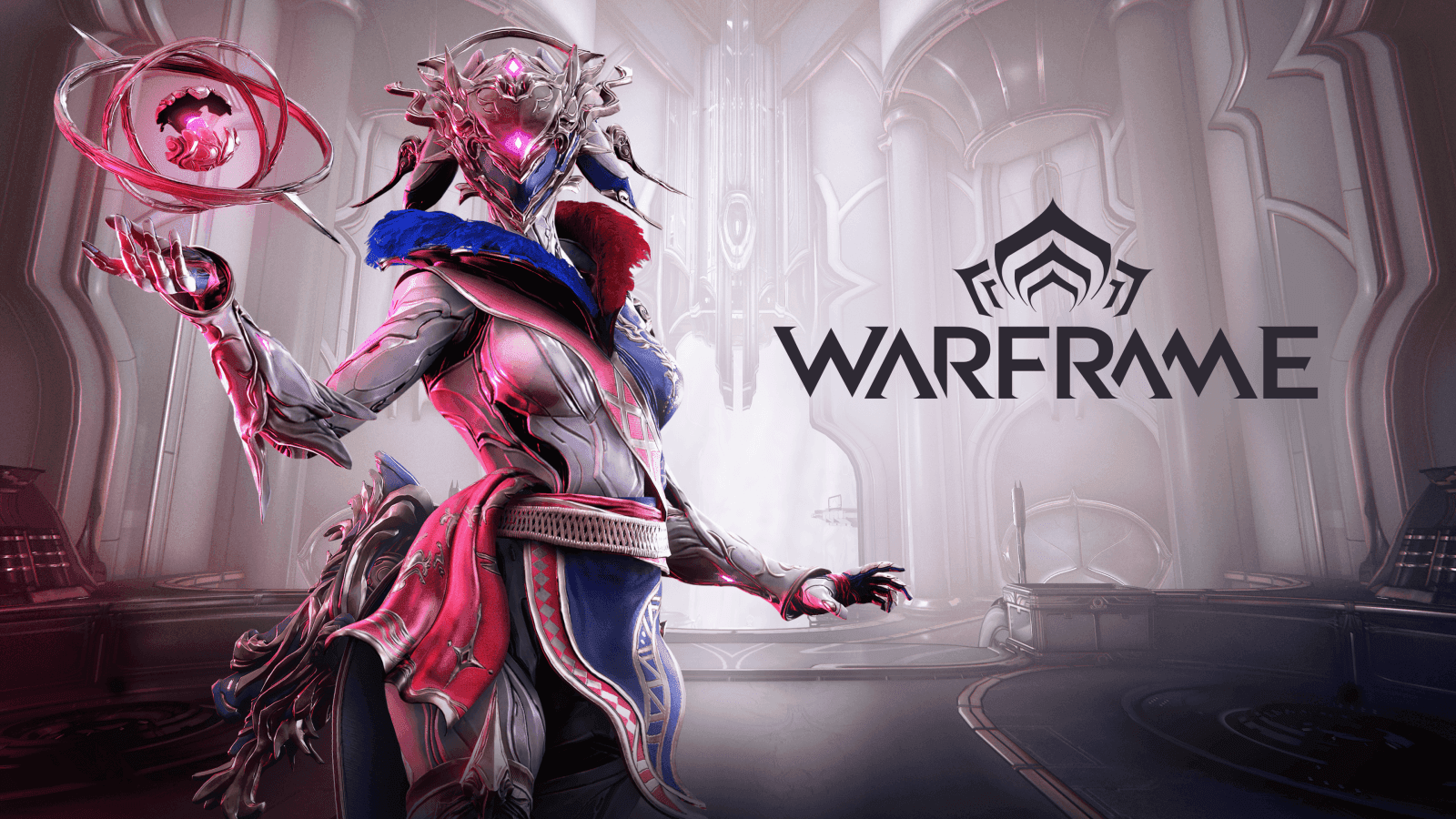
Slip into a Warframe, grab a squad, and cut through enemies as one of the Tenno — Digital Extremes' free-to-play co-op shooter has spent over a decade adding new biomechanical suits, weapons, and open...
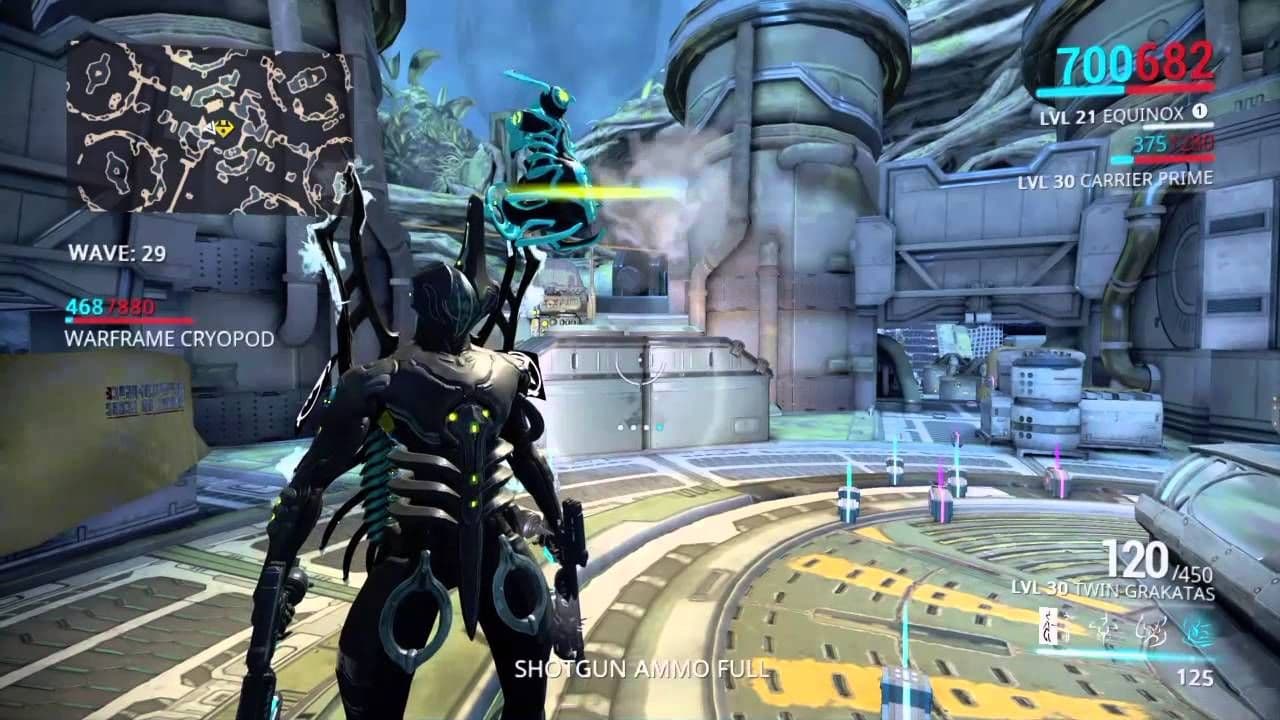
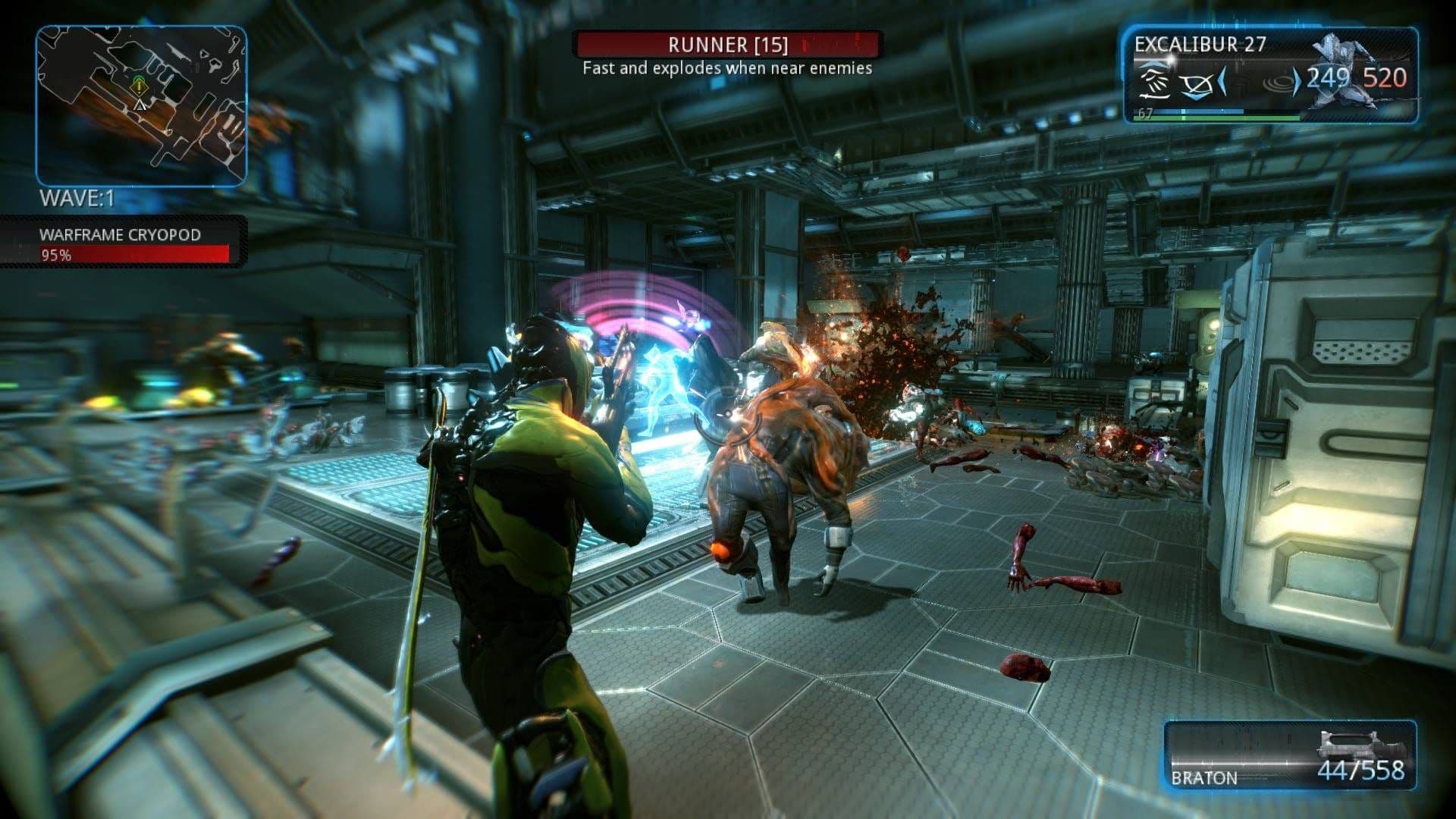
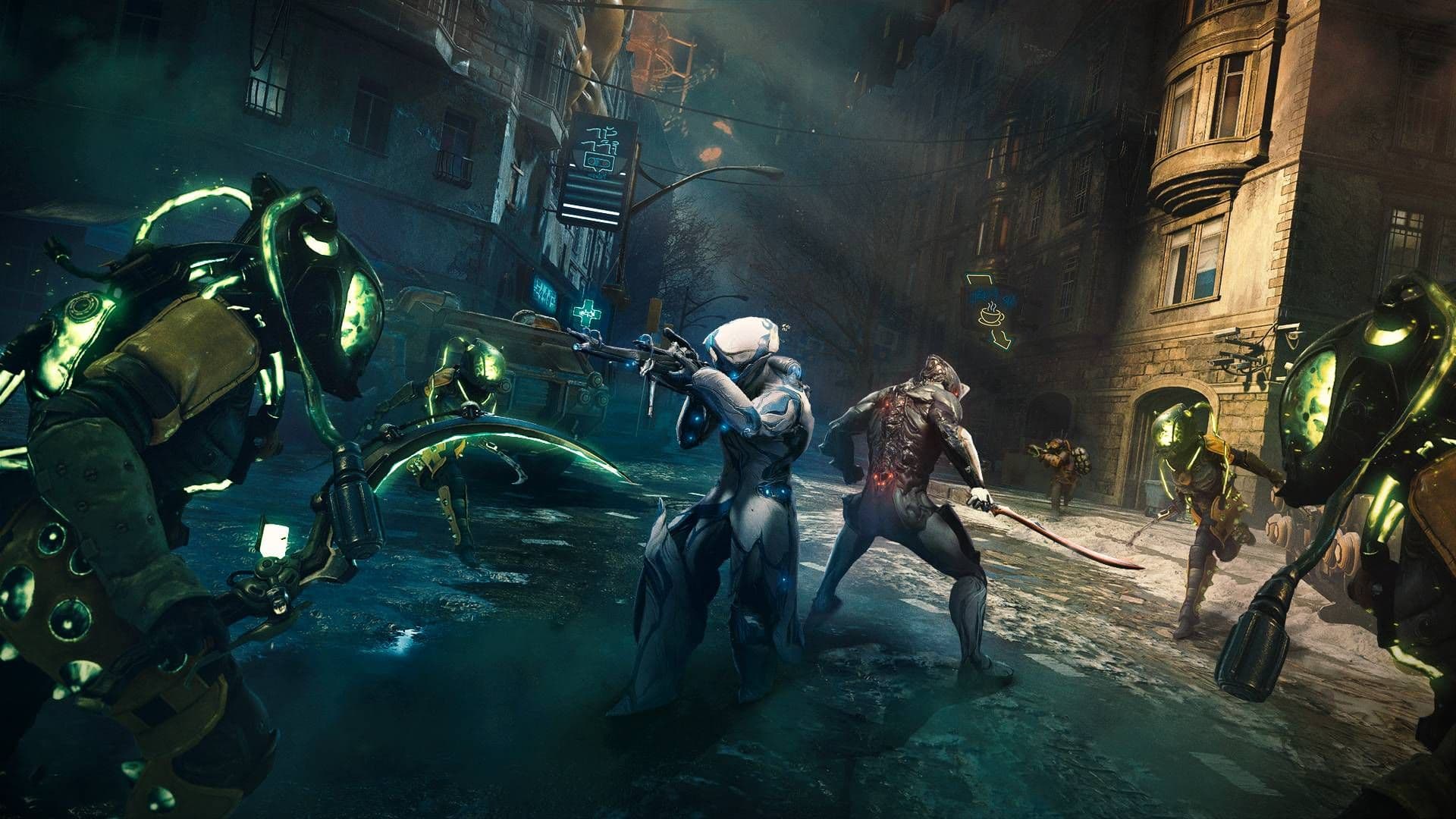
Warframe is a free-to-play, third-person co-op action game developed and published by Digital Extremes, a studio based in London, Ontario. It launched on PC in March 2013, and thirteen years later it's still expanding: an Android release landed in February 2026, a Nintendo Switch 2 port arrived that same March, and at July's TennoCon the studio announced that the game has crossed 85 million registered accounts since launch. This Warframe review looks at where the game actually stands right now, not where it started.
The setting is the Origin System, a solar-system-spanning war between three main factions: the cloned soldiers of the Grineer Empire, the corporate militias of the Corpus, and the mutated, hive-minded Infested. You play a Tenno, an ancient warrior race woken from centuries of cryosleep to pilot bio-mechanical Warframe suits, guided early on by a mysterious figure called the Lotus. None of that lore is delivered through cutscenes up front — it's scattered across item descriptions, side quests, and the occasional Cinematic Quest, which means the setting rewards curiosity rather than handing you a codex on day one.
Visually, Warframe has aged in the opposite direction most thirteen-year-old games do. The custom Evolution Engine was built in-house specifically so Digital Extremes could keep pushing lighting, particle effects, and animation work without waiting on an outside engine's roadmap, and it shows: Orokin ruins glow with layered gold light, Grineer galleons look industrial and lived-in rather than generic sci-fi grey, and Warframe designs themselves range from armored knights to insectoid horrors, each with a silhouette distinct enough to recognize at a glance across a crowded mission.
Most reviews of a game like this start at the tutorial. Warframe makes more sense read backward, because the entire first fifty-plus hours exist to get you to a point most other looter-shooters call the ceiling and Warframe treats as a second floor. Once you finish the main Star Chart — the branching map of Grineer, Corpus, and Infested-controlled planets that makes up the base campaign — the game quietly unlocks the Steel Path, a harder mirror of that entire map with tougher enemies, better drop tables, and its own currency for late-game upgrades. This is where Warframe's actual design philosophy lives: nothing is ever really finished, it's re-run at a higher difficulty with better rewards attached.
From there the ladder keeps climbing. Archon Hunts rotate weekly boss fights against story-relevant Archons and hand out the resin needed for Arcane upgrades. Netracells, added alongside the Whispers in the Walls update, are Steel Path-exclusive strike missions built around cracking open corrupted data caches for some of the game's best mods. The Duviri Paradox, a 2023 expansion, added an open psychological dreamscape plus the Circuit — a roguelite mode where you build a randomized loadout run by run and cash in the points for Incarnon Genesis adapters, which turn base-tier weapons into scaling endgame options. Layer in Railjack space combat, Necramech piloting across the open-world zones, and Sanctuary Onslaught for Focus farming, and you get a genuinely unusual structure: a live-service shooter whose endgame isn't one raid tier, it's six or seven parallel systems that all feed back into each other.
The honest caveat sits right here too. None of this is approachable from a cold start. A brand-new Tenno reading "crack open a Netracell for an Amalgam mod set" understands roughly none of those words, and that opacity is Warframe's oldest, most deserved criticism.
The path to that endgame runs through Mastery Rank, an account-wide level built by trying new Warframes and weapons rather than grinding a single build. Leveling gear to its cap awards Mastery experience once, which pushes you to constantly rotate your loadout instead of parking on one favorite — an unusual incentive structure that quietly explains why the game hands out dozens of starter weapons rather than three.
For years, the single biggest obstacle for new players wasn't the shooting, it was the modding. Warframes and weapons gain power almost entirely through mod cards slotted into a capacity-limited grid, with polarities that discount specific mods if you match them up correctly. Digital Extremes finally addressed this directly in October 2025 with a new tutorial quest built with Sumo Digital, replacing the old introductory mission with one that actually walks through capacity, polarity, and build synergy instead of assuming players would look it up on a wiki. It's a late fix for a problem the community had been flagging for the better part of a decade, but it's a real one — new accounts created after that patch report a noticeably smoother first ten hours than the ones before it.
The story campaign itself escalates in a way few free-to-play games attempt: 2021's The New War quest recontextualizes the entire setting, introduces a second playable character in the Drifter alongside your existing Operator, and closes out roughly eight years of accumulated narrative setup in a single extended cinematic mission. It's the point where Warframe stops being "the game with the parkour" and starts being a story people actually recommend finishing.
None of this runs on a fixed clock, which cuts both ways. There's no subscription timer forcing weekly logins and no energy system rationing how much you can play in one sitting — progress is bounded only by resources on hand and how much of the Star Chart you've cleared. A dedicated weekend can carry a new account through the early planets and into a first real boss fight; a player logging in for twenty minutes a few nights a week will take considerably longer to reach the same point, and the game is entirely comfortable letting them.
Warframe's identity was built on its movement before anything else. Bullet jumping, wall-latching, and aim-gliding turn every tileset into a three-dimensional playground, and a competent player crosses a level closer to a parkour runner than a soldier clearing rooms. Combat sits on top of that momentum: each of the roughly sixty-five Warframes carries four unique powers built around a theme — Excalibur's blade-focused burst damage, Wisp's mobile buff auras, Mag's magnetic pulls and shields — and the best kits use movement itself as part of the combo, chaining a slide attack into a bullet jump into an ability cast without ever fully stopping.
Gunplay and melee sit underneath the ability layer rather than above it. A concrete loop from a mid-game mission looks like this: bullet jump across a Corpus gas city rooftop, aim-glide into a group of enemies to trigger a slam attack, cast an ability to strip their shields, then finish with a modded rifle tuned for crit chance and status procs. None of these systems are gated behind separate currencies — they're gated behind mod capacity and, eventually, Forma, a resource that resets and re-polarizes a weapon or frame's slots so a build can be pushed further than its base capacity allows.
There's no open player-run marketplace inside the game client, but the Foundry is where nearly everything gets built: blueprints for weapons, Warframes, and Necramechs consume resources gathered from missions and open-world zones, then sit in a build queue for anywhere from twelve seconds to three full days depending on what's being made. Void Fissure missions let you crack open Relics for Prime parts — higher-fidelity, better-statted versions of base gear — which double as the backbone of the player economy, since those parts (and rare mods) are what get traded for Platinum, the premium currency, on the community-run pricing site Warframe Market.
That trading loop is the mechanism that keeps the free-to-play model honest: rather than buying Platinum outright, a patient player can farm Prime sets and Riven mods and sell them to other Tenno for the currency instead, then spend it on inventory slots or cosmetics. It's slower than paying, obviously, but it's a real path, not a theoretical one.
Past the mission-based Star Chart, three semi-open zones — the Plains of Eidolon, Orb Vallis, and the Cambion Drift — layer in fishing, mining, bounty boards, and their own signature world bosses: towering Eidolon Teralysts that require coordinated squads with specific weapon and Amp builds to bring down before dawn breaks. Railjack missions hand a full squad a spaceship to crew and fly through open-space combat, while clans provide a dojo to build in, research trees to fund, and a home for the small slice of the playerbase that wants coordinated group content rather than solo runs.
Social systems stay deliberately light outside of that. There's an optional Conclave PvP mode, but it's a niche corner of the game that most Tenno never touch — Warframe answers "is it worth playing for the PvP" with a fairly clean no, and it isn't trying to be anything else. This is a cooperative PvE game through and through, comfortable being played solo or dropped into with three strangers via matchmaking, and it doesn't punish either choice.
Clans themselves scale from a handful of friends to sprawling alliances with hundreds of members, and the research trees inside a dojo gate some of the game's more unusual gear — certain weapons and the Necramech blueprints, for instance, are locked behind clan-funded research rather than solo farming, which nudges even confirmed solo players toward joining at least a small, low-pressure clan at some point.
The direct answer: no, not in any meaningful sense, and it's one of the more frequently cited reasons the game has held its audience for thirteen years. Warframe is entirely free to play, and its premium currency, Platinum, is genuinely tradable between players — every Prime part, mod, and Riven roll that changes hands for real money could just as easily change hands for Platinum earned by farming. Prime Access bundles, released roughly every few months alongside a new Prime frame and two Prime weapons, are the main paid product, and they bundle cosmetics and a currency discount around gear that will eventually be farmable for free once it leaves rotation. Community-made Tennogen cosmetics, with revenue split between the creators and Digital Extremes, round out the shop alongside pure Platinum packs.
What you're actually paying for is time, not power: skipping a Foundry build timer, buying extra Warframe or weapon slots instead of farming for them, or picking up a bundle instead of grinding its components. There are no energy timers, no stamina systems, and no purchase required to access a single mission, boss, or story quest. The predatory edge that does exist is subtle rather than aggressive — slot costs add up for a new account with no Platinum cushion, and Prime Access pricing isn't cheap if you want it immediately rather than patiently. But nothing in Warframe locks content behind a wall that money is the only key to, and that's a rarer claim in 2026 than it should be.
Steam's user reviews sit at Very Positive overall, with roughly 91% positive across more than a quarter-million English-language reviews, and recent 30-day sentiment holds close behind that. Concurrent player counts on Steam alone have swung through the tens of thousands across 2026, with third-party trackers disagreeing on exact peaks but agreeing on the shape: steady baseline traffic that spikes hard around major content drops. At TennoCon 2026 the studio laid out a full back half of the year — the Iceblade of Narin update this fall brings the game's 66th Warframe alongside a Banshee rework, and the free Tau expansion later in the year moves the story out of the Origin System entirely for the first time, into a new star system built around the noir-flavored ring city of Fornax. That's not the roadmap of a studio coasting on a decade of goodwill.
If you want a shooter where movement itself is a skill to master, and you don't mind a genuinely long on-ramp before the best systems open up, Warframe rewards that patience better than almost anything else in the genre — and the price of finding out is zero dollars and however many hours you're willing to give it. If you bounced off it years ago specifically because nobody explained the mods, the game finally fixed that problem, and it's worth another look. But if you're chasing tight PvP, a short campaign, or a game that respects your time on day one rather than day fifty, look elsewhere — Warframe has never pretended to be either of those things, and thirteen years in, it isn't about to start.