 F2P · Live
Lineage 2 Essence
Lineage 2 Essence is NCSoft's free-to-play take on the classic Korean MMORPG Lineage II, built around faster…
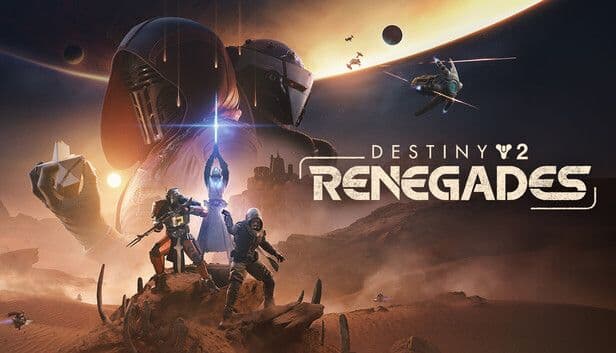
Precise, satisfying gunplay and a loot chase built around Exotic weapons and armor defined over a decade of Destiny 2, and as of June 9, 2026, that active development chapter is officially closed. Bun...
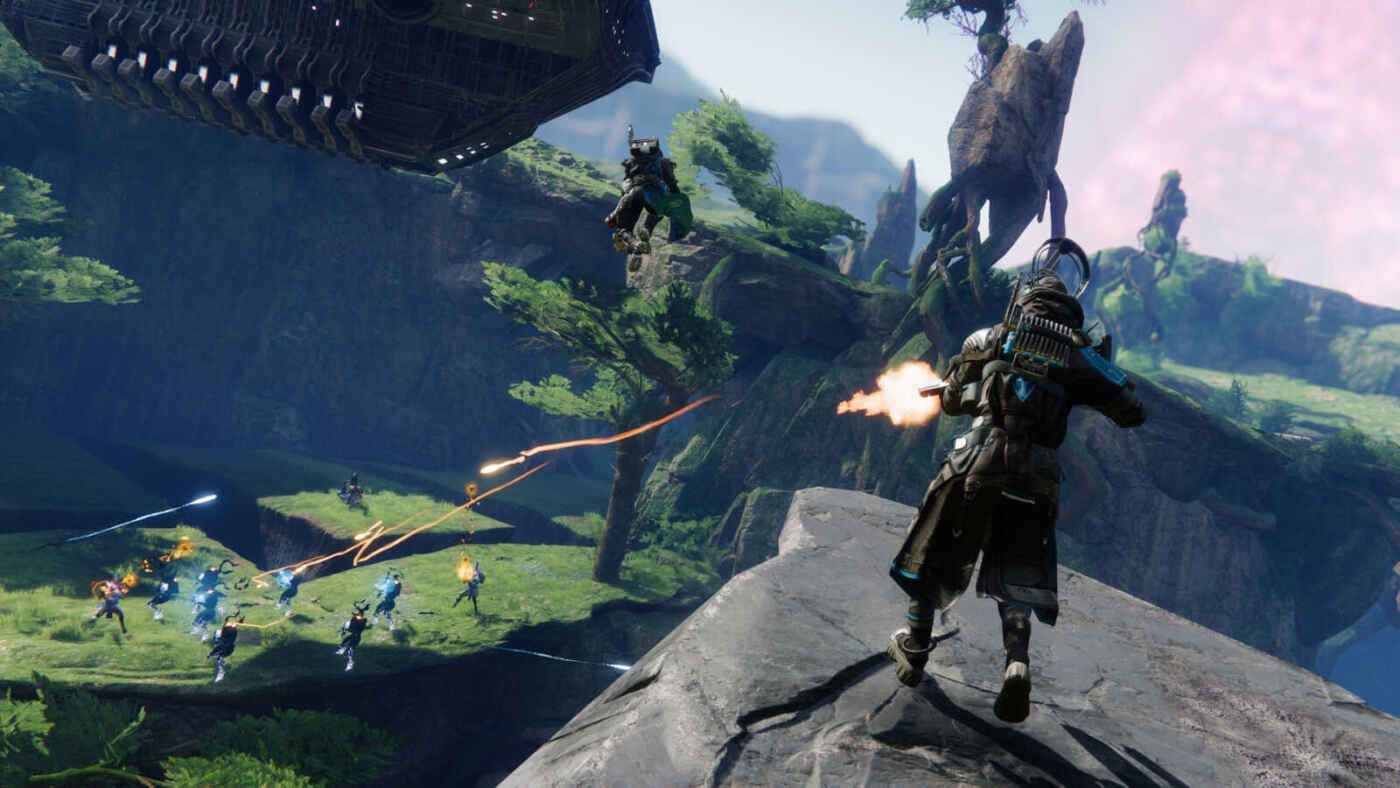
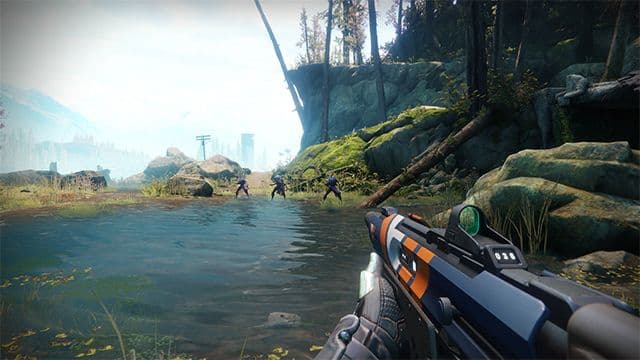
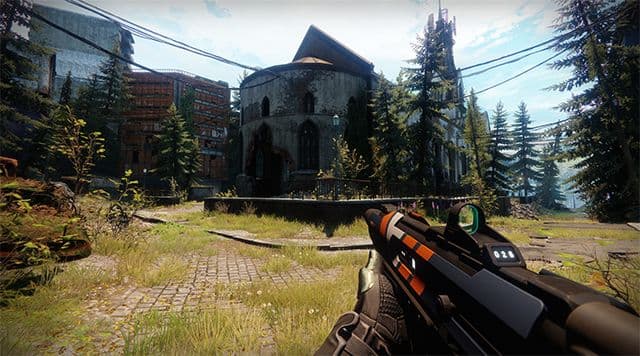
Destiny 2 is Bungie's online first-person shooter, released September 6, 2017 on PlayStation 4 and Xbox One and later expanded across PC, PlayStation 5, and Xbox Series X|S. It combines FPS gunplay with MMO-style character building — classes, subclasses, raids, and nine years of accumulated story — and it did all of that as a live-service game supported by Bungie itself since the studio split from Activision in 2019. That history now has a firm final chapter: on June 9, 2026, Bungie shipped Monument of Triumph, the last major content update the game will ever receive, closing the book on active development while leaving the servers running. This Destiny 2 review looks at what's actually left to play, and whether it's worth stepping into a game whose story is now, officially, complete.
Most reviews build up to the endgame. Here it makes more sense to start there, because Destiny 2's raids are the reason people who quit years ago keep coming back, and the reason the servers are worth logging into at all in 2026. Vault of Glass, a rebuilt version of the very first raid from the original Destiny, remains the gentlest introduction — clean mechanics, a forgiving damage phase, and a Vex-temple setting that still looks sharp despite predating most of the hardware it now runs on. From there the ladder climbs through Deep Stone Crypt's clean-room puzzle logic, Garden of Salvation's Vex-simulation abstraction, Vow of the Disciple's Witness-cult horror, Last Wish's sprawling six-encounter length, and King's Fall, a returning Destiny-1 raid widely regarded by the community as one of the toughest and most memorable fights Bungie has ever built.
Dungeons sit a tier below raids in scale but not in craft — three-player instances built for tighter, faster teams. Prophecy, Shattered Throne, Grasp of Avarice, and Duality each ask for a different kind of coordination, from timed puzzle rooms to boss phases that punish anyone standing in the wrong spot. None of it is casual content. A blind raid clear with strangers can eat an entire evening, and Bungie has never pretended otherwise — this is where the game asks the most of you and, when a mechanic finally clicks for a six-person team that's been wiping for an hour, gives back the most in return.
Raids also scale after their initial release rather than sitting still. Contest Mode locks power level for the first twenty-four hours so the fastest teams race for a World's First title under genuinely harder conditions, and a Master difficulty tier persists afterward for groups chasing the best-in-slot version of a raid's weapons and armor. That layered difficulty is part of why raids stay relevant years after launch: a Guardian who first cleared King's Fall on normal can return to the same encounters on Master and find a meaningfully different fight waiting.
Loot is the other half of the pitch. Each raid and dungeon carries its own themed weapon set, and several — Touch of Malice from King's Fall, for instance — are Exotic-tier drops with mechanics unlike anything sold in the Eververse store. Chasing a specific roll off a specific encounter, week after week, is its own extended game layered on top of simply clearing content, and it's the loop that's kept veteran clans running the same raids years after the story around them stopped moving forward.
The context matters, so it's worth stating plainly rather than burying it. Destiny 2's last two paid expansions, The Edge of Fate and Renegades, underperformed against Bungie's internal targets, and Sony — which acquired Bungie in 2022 — has since reported a large impairment loss tied to the studio's recent projects. Rather than continuing to fund a shrinking annual content cycle, Bungie chose to end it cleanly: Monument of Triumph folded a reworked Pantheon activity, exotic armor updates, and a full weapon-loot refresh into one send-off update, and bundled every expansion and dungeon key the game has ever sold into a single package, Destiny 2: The Collection. Sony separately added most of that content to the PlayStation Plus library the same week. There is no Destiny 3 in development, and no successor has been announced — Bungie's public statement pointed toward new, unrelated projects instead.
What that produced, oddly, was a spike rather than a fade. Steam's concurrent player count hit a two-year high around the final update, driven partly by lapsed players returning for one last look and partly by a coordinated community push to show Sony there's still commercial demand for the franchise. Whether that translates into a sequel is out of any reviewer's hands. What it does mean for you, right now, is that the entire nine-year story — every vaulted destination, every previously paywalled expansion — has effectively been consolidated into its most complete and most accessible state ever, at the exact moment Bungie stopped adding to it.
Underneath the MMO scaffolding, Destiny 2 is still, at its core, a very good shooter. Three classes — Titan, Hunter, and Warlock — each carry six elemental subclasses: Arc, Solar, Void, Stasis, Strand, and the composite Prismatic subclass introduced with The Final Shape, which lets a character mix Light and Dark abilities freely once its Transcendence meter fills. A Titan barricades and punches; a Hunter blinks between cover with knives and smoke; a Warlock floats, casts, and heals through Rifts. None of the three is objectively stronger, and the genuine depth is in buildcrafting — stacking specific exotic armor pieces, aspects, and fragments into a loop that turns a grenade toss into a chain of explosions, or a melee into an army of decoys.
That depth cuts both ways. A new Guardian's first few hours of gunplay feel immediately good — weapon handling, movement, and enemy readability are still some of the best in the genre nine years on — but the buildcrafting layer underneath is dense enough that most players lean on community guides rather than working it out cold. It's a system built by iteration over almost a decade, and it shows: rewarding for veterans who've watched it evolve, a lot to absorb for someone starting from zero.
A fresh account starts under New Light, the free entry point Bungie carved out in 2019, and lands in the Last City's Tower with a starter subclass, a handful of low-power weapons, and a quest marker pointing toward whichever activity is currently framed as the "current" story. That framing is the honest catch: several early campaigns — The Red War, Curse of Osiris, Warmind, Forsaken — were removed from the game entirely during past content-vaulting cycles and are no longer playable at all, meaning a new player's understanding of who Ghaul, Cayde-6, and the Red Legion actually were comes secondhand, through lore pages and other players, rather than through the missions that introduced them.
Everything from The Witch Queen onward is intact and, as of Destiny 2: The Collection, available in one purchase rather than scattered across a decade of separate expansion listings. A new player working through that stretch in 2026 gets a genuinely different pace than veterans did: no seasonal grind competing for attention, no FOMO clock counting down before content vanishes, just a fixed, complete backlog to work through at whatever speed suits them. It's arguably the friendliest Destiny 2 has ever been to newcomers — the irony being that it took the game ending its active development to get there.
The first ten or so hours follow a familiar shooter-RPG shape: clear patrol zones on the Cosmodrome and Europa, pick up bounties from vendors in the Tower, and slowly replace starter gear with drops that push your Power level higher. Power gating is Destiny 2's version of a level cap — most patrol content and story missions barely require it, but the moment a player looks toward a raid or a Nightfall strike, that number becomes the thing standing between them and the door. Exotic quests, hidden triggers that unlock a specific weapon or armor piece through a multi-step questline, are sprinkled throughout this stretch too, and they remain some of the best-written, most rewarding side content in the entire game.
Destiny 2's social layer has always been lighter than a traditional MMO's, and that hasn't changed. Clans provide a shared banner, a modest set of perks, and a place to organize raid nights, but there's no open-world player interaction beyond patrol zones and public events — matchmaking and LFG tools (in-game and third-party) are how most raid and dungeon groups actually form. Guardian Games and other recurring seasonal events still run as scheduled community activities, giving clans and casual groups something to log in for even without new story content arriving behind them. None of this requires a permanent commitment the way a themepark MMO's guild structure often does — a fireteam can be three strangers from an LFG post who never speak again after the loot drops, and the game is built comfortably around that kind of transient cooperation.
Crucible is Destiny 2's standard competitive PvP, a rotation of 6v6 and 3v3 modes across control points, team deathmatch variants, and objective play, with Iron Banner running as a periodic higher-stakes event on its own reward track. Trials of Osiris sits above it as the weekend tournament mode — win streaks matter, losses send you back to the start of a card, and a flawless run rewards some of the sharpest-looking weapon ornaments in the game. Gambit splits the difference between PvE and PvP: two four-player teams race to clear enemy waves and bank motes, with the option to invade the opposing team's arena and disrupt their progress directly.
None of it is beginner-friendly in the way a fresh Crucible match in a brand-new shooter would be. Nine years of weapon and ability power creep mean a new account will get outgunned by veterans running finely tuned exotic loadouts well before they understand why. It's not pay-to-win in the traditional sense — nothing in Crucible is purchasable — but it is experience-to-win, and that gap doesn't close quickly.
The short answer is no, not in the sense that matters to competitive integrity. The base game is free under New Light, and paid content has always meant story expansions, dungeon keys, and the Eververse cosmetic storefront — shaders, emotes, ships, ornaments — none of which grant a direct stat advantage. The fairer criticism, made by plenty of the game's own community over the years, is that some of the strongest exotic weapons and armor pieces have historically been locked behind specific expansions, which counts as a soft power gate even if it isn't a literal pay-for-stats system. With Destiny 2: The Collection now bundling every piece of paid content that ever existed, that gate has effectively been removed for anyone buying in today — a new or returning player in 2026 can own the entire arsenal for one purchase, rather than piecing it together expansion by expansion the way longtime players had to.
Steam's review numbers reflect a game that's made peace with its own history rather than one still fighting for goodwill: 82% positive over the last 30 days against a 79% positive lifetime score across nearly 390,000 reviews — a number weighed down by rockier stretches years ago more than by anything happening now.
If you've bounced off Destiny 2 before and always meant to see a raid through to the end, now is arguably the best moment there's ever been to try — the full story is finally in one place, there's no season pass clock pressuring you to keep up, and Destiny 2: The Collection removes the years-long tax veterans paid to get here. If you're chasing a game that's still being actively shaped, still adding classes and destinations and answering community feedback with new systems, look elsewhere — that chapter of Destiny 2 is closed, and no amount of nostalgia changes what Bungie has already said out loud. What's left is a complete, polished, occasionally brutal shooter-RPG with some of the best co-op encounters ever built into the genre, running on momentum rather than a roadmap. Whether that's still worth your time depends entirely on whether you're here for what comes next, or for what's already there.