 F2P · Live
Lineage 2 Essence
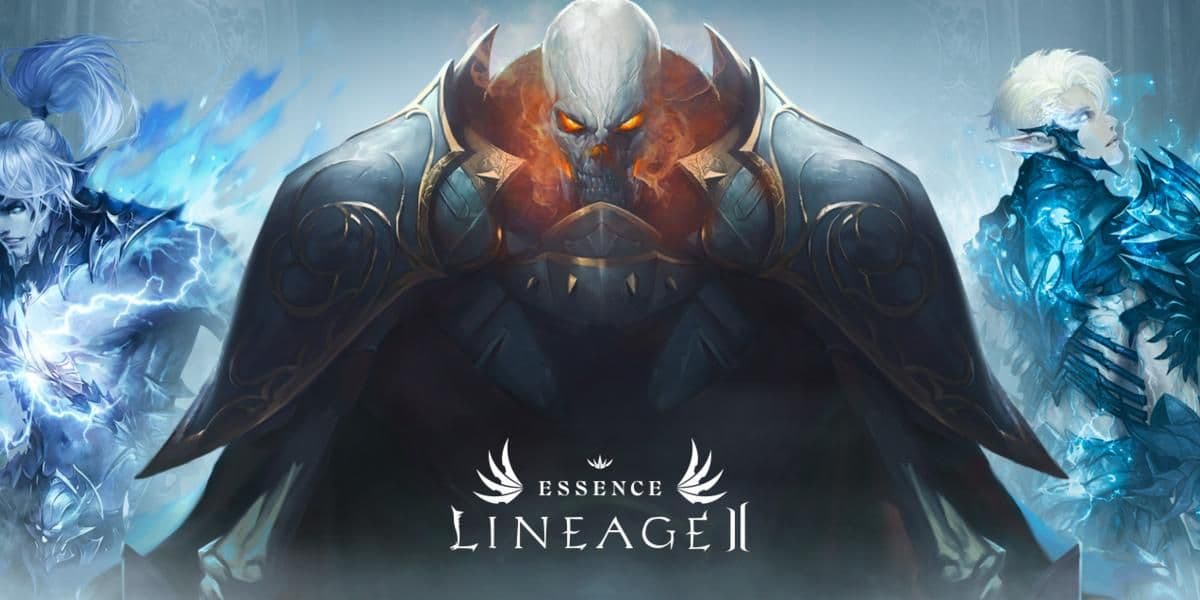
Lineage 2 Essence is NCSoft's free-to-play take on the classic Korean MMORPG Lineage II, built around faster…
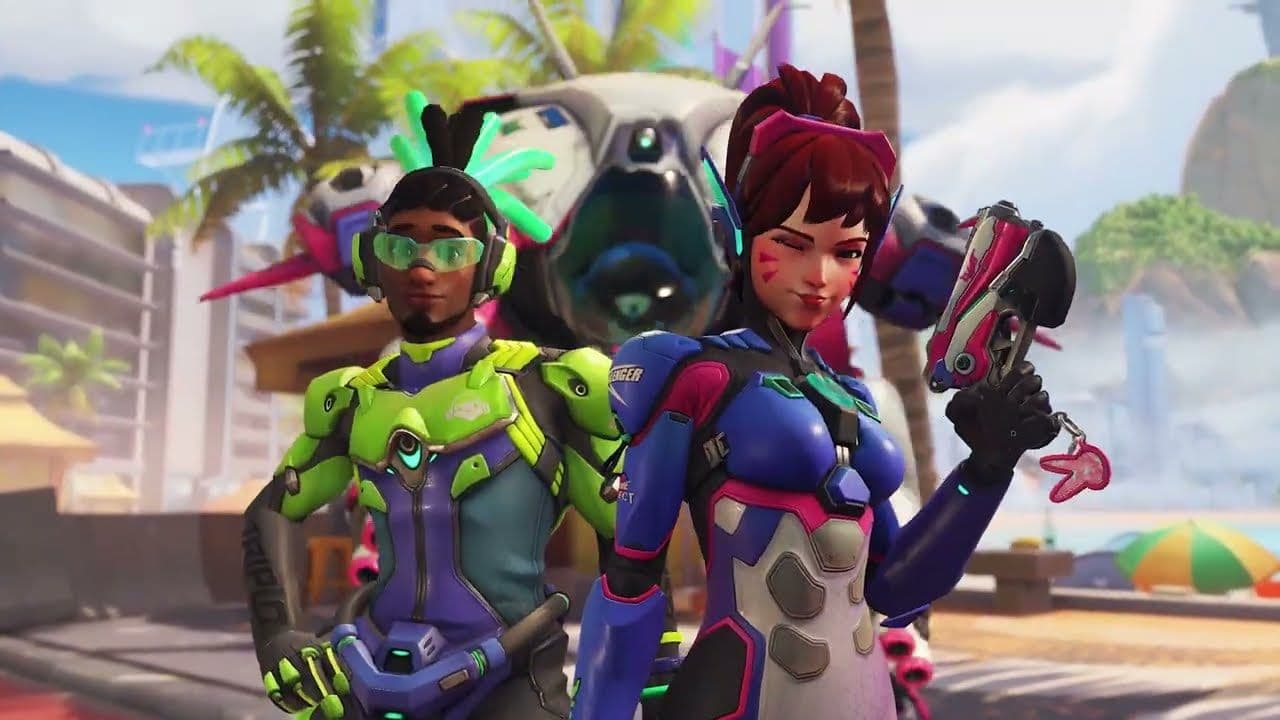
Overwatch is Blizzard's free-to-play team shooter, where five heroes a side fight over a concrete objective instead of just racking up frags. In 2026 the game dropped the "2" from its name and kicked ...
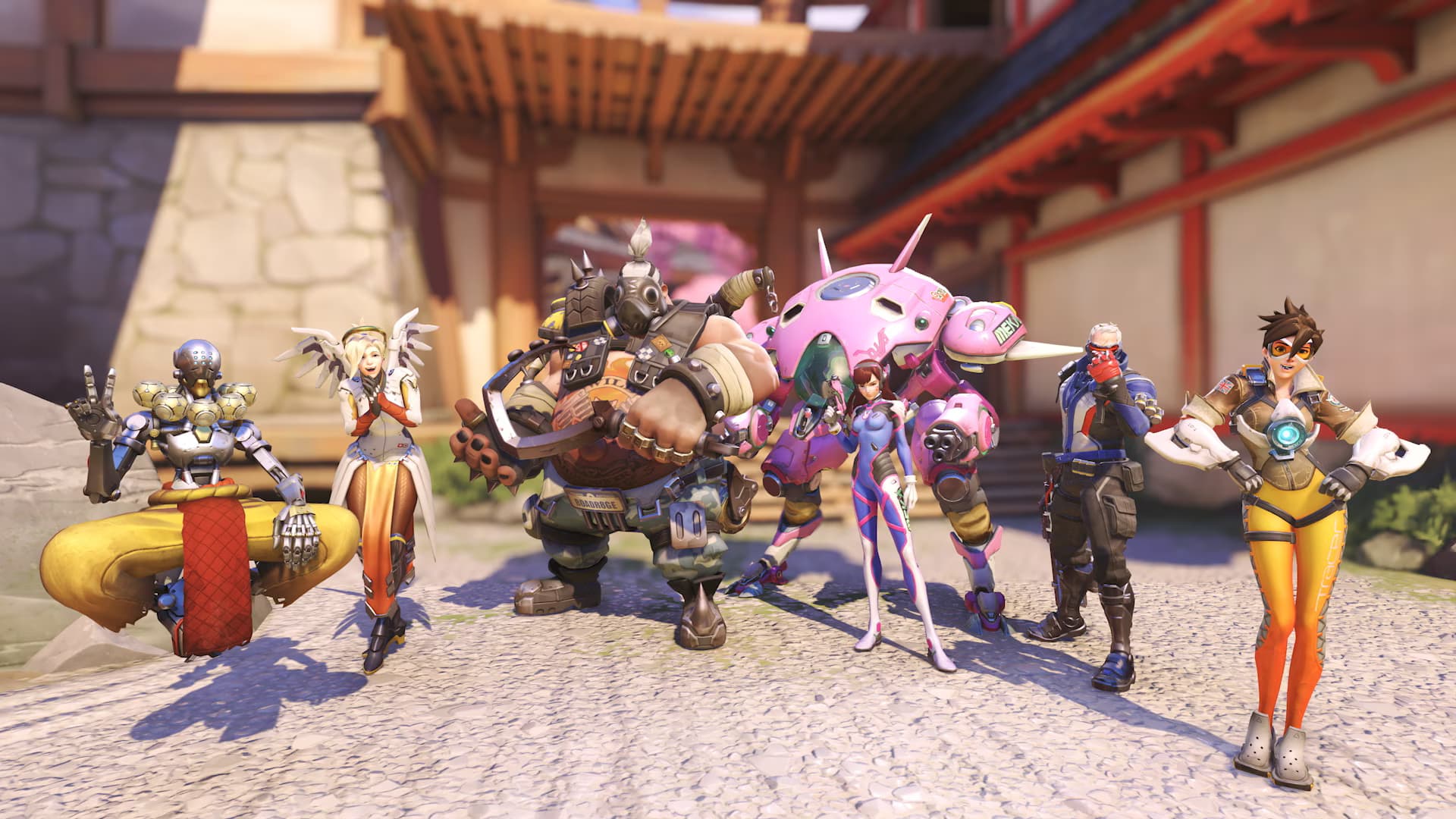
Overwatch is Blizzard Entertainment's team-based shooter, first launched in 2016 and rebuilt from the ground up as Overwatch 2 in 2022. In February 2026, Blizzard dropped the "2" from the name entirely and kicked off a year-long story arc called Reign of Talon, shipping five new heroes at once alongside a reworked interface and a new sub-role system. Nearly a decade in, it's still one of the most recognizable hero shooters around, and the rebrand pushed it to a new all-time Steam concurrent-player record.
Game director Aaron Keller's explanation for cutting the "2" was blunt: players had spent years wondering when a hypothetical "Overwatch 3" might arrive, and Blizzard wanted to say plainly that this is one continuous game, not a numbered franchise waiting on its next installment. The commitment behind that isn't just branding — instead of the usual one new hero per season, Blizzard confirmed ten new heroes across 2026 alone, more than the previous three years combined.
Quick take: The core shooting in Overwatch hasn't changed much since 2016 — what has changed is Blizzard finally committing to a content cadence worth following. Ten new heroes in a single year and a mode as substantial as Stadium make a real case for coming back, even if the promised PvE campaign never showed up.
The story takes place roughly sixty years from now, in the aftermath of the Omnic Crisis — a global robot uprising the UN barely managed to put down by forming an elite task force called Overwatch. That force succeeded, then got disbanded years later amid accusations of overreach. Now its former members are back in the field, this time against Talon, a criminal network quietly consolidating power under new leadership.
Since February 2026, that backstory finally has a spine. Reign of Talon runs across six seasons and follows Talon's new leader, Vendetta, as she wrests control from former boss Doomfist and pushes the organization toward open confrontation with the world. The plot moves through small, specific beats rather than one big cinematic dump: a siege on Watchpoint: Grand Mesa, Genji going solo to investigate why Tokyo's Hashimoto clan has thrown in with Talon, skirmishes in the back alleys of Istanbul. Familiar maps — Numbani, King's Row, Hollywood — now double as settings for that ongoing story instead of just battle arenas with a coat of paint.
The new hero releases are tied directly into that plot rather than dropped in as isolated content updates. Emre, a Damage hero built around a burst rifle, was introduced specifically as part of a heist storyline involving a stolen serum from the Naughton vault. Domina, a heavy shield tank, is written as a corporate rival to Symmetra from Vishkar — a detail that does double duty for both gameplay identity and lore. Every new face this year arrived with a reason to exist in the story, which hasn't always been true of Overwatch's hero drops in past seasons.
New players land in a training range and an unranked quick-play queue where every hero is available from the first login — no currency grind standing between you and any character on the roster. Matches slot players into three roles (tank, damage, support), and as of the 2026 update, each role now carries an internal sub-role tag as well. Tanks, for instance, are now explicitly split between shield-anchors who hold a chokepoint and dive tanks who push solo through aggressive positioning. None of the actual ability kits changed because of the label — it's purely a signal that helps new players find heroes matching their instincts and helps the matchmaker avoid stacking a team with five snipers by accident.
From there, progression splits into two separate tracks. The seasonal Battle Pass hands out cosmetics and in-game currency just for playing — up to 80 tiers, plus prestige tiers on top for anyone who finishes a season early and wants more to grind toward. Competitive rank runs on its own system entirely: a numeric score, division tiers from entry-level up to the top leaderboard, and a seasonal reset. It's the standard climb-the-ladder structure the genre has used for years, and Overwatch hasn't touched the formula much.
The sub-role split touches all three main roles, not just tanks. Among support heroes, the game now distinguishes between characters built for direct, sustained healing and characters that lean on buffs and utility while barely touching a healing cooldown. Among damage heroes, it's close-range flanking aggression versus steady ranged output. None of it changes a match on its own — ability kits stayed identical — but the team-composition screen now flags a lineup that's heavily skewed toward one sub-role, and that single warning has visibly cut down on matches where all five players lock in a sniper at once.
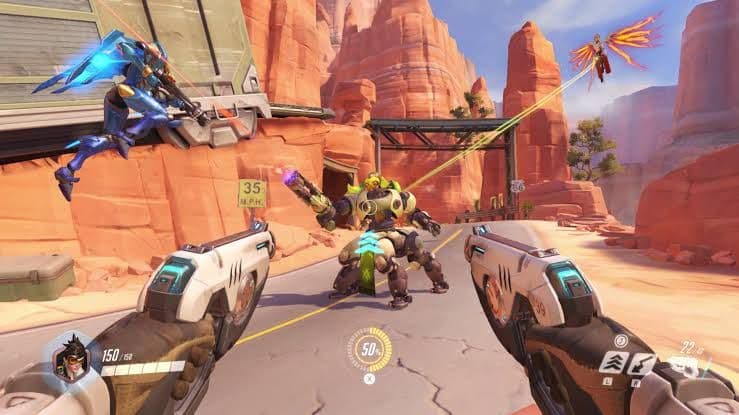
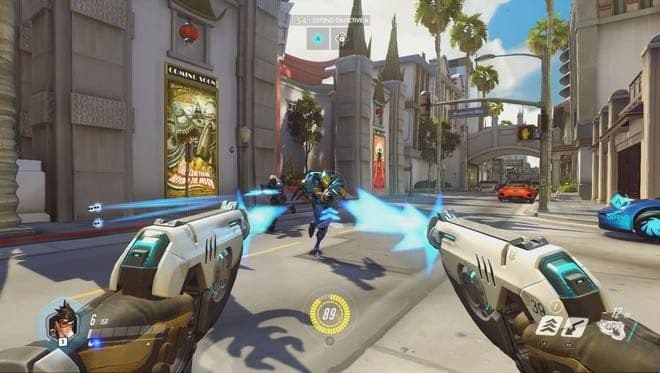
The base formula hasn't moved since Overwatch 2 launched: two five-person squads fight over a concrete objective — escort a payload, hold a point, split the difference in a hybrid map, or shove a shared robot across the map in Push. Each of the more than forty heroes carries a pair of active abilities, a passive, and an ultimate that charges off damage, healing, or just staying alive under fire. It reads surprisingly clearly even in the middle of a teamfight — sharp character silhouettes and distinct ultimate audio cues mean you can usually tell what just happened even when three abilities detonate at once.
The standout addition of the past few seasons is Stadium, and it changes the formula more than a first glance suggests. Matches run best-of-seven, first to four round wins, with a locked comp of one tank, two damage, two support — and whichever hero you pick at the start, you're stuck with for the entire match. After every round, players spend Stadium Cash in the Armory on items that buff their specific hero, and on rounds one, three, five, and seven, they also get a free pick from a pool of Powers — modifiers that meaningfully rewrite how an ability functions (Kiriko can pick up a clone ability, Reinhardt's Firestrike can spread molten ground across the whole arena). The camera flips to third person by default, though classic first-person is one toggle away. It's essentially a MOBA economy grafted onto a familiar shooter, and it genuinely plays like a distinct mode rather than a cosmetic overlay.
Stadium's economy is built around a deliberate greed-versus-safety tension. Everyone starts each match with 3,500 Stadium Cash — enough for exactly three common items — and earns more from kills, assists, damage, and simply surviving a round. If a player pulls noticeably ahead on the scoreboard, a bounty marker appears over their head, making them worth extra cash to whoever eliminates them next — the mode's one built-in comeback mechanic when a match already looks lopsided. Selling off a bad item purchase back for full value carries no penalty, so mid-match experimentation costs nothing but a little cash.
Workshop, the mode's custom scripting system, is still around too, and the community continues to use it for everything from arena-survival variants to platformer-style minigames that have nothing to do with shooting at all.
Maps still fall into four objective types, and each carries its own particular tension. Escort forces the attacking team to push a payload down a fixed route while the defense hunts for any gap to stall it. Control is a straight three-round fight over a single central point — the cleanest test of raw team-fighting without much else to think about. Hybrid stitches both formats together, point first, then payload. Push, the most recently added type, turns the match into tug-of-war: both teams shove the same robot in opposite directions, and the map itself physically shifts as the fight goes back and forth. Quick play and ranked don't always share the exact same map pool — new maps sometimes cycle through arcade playlists first before joining the competitive rotation.
The core of the game is competitive PvP — unranked quick play, ranked with division tiers and a shared leaderboard, weekly arcade modes, and Stadium sitting off to the side as its own thing. Cooperative PvE in the story-campaign sense never really materialized: Hero Mode, the pre-launch promise of narrative missions with hero progression between them, was cancelled in 2023 and replaced by a handful of one-off story missions from the Invasion update. The 2026 rebrand doesn't fill that gap directly, but it compensates a different way — the story now unfolds through cinematic shorts and limited-time events like Conquest, a seasonal faction skirmish with its own rewards tied to the Reign of Talon arc.
Hero Mode's cancellation was, at the time, one of the more painful moments in the game's history — cooperative PvE had been sold for years as the entire reason to wait for a sequel, and its disappearance from the final release fueled a real wave of accusations that Blizzard had misled anyone who'd bought the founder's pack. Three years later, that door hasn't reopened: Blizzard's energy has gone into the live seasonal model instead of a single big PvE drop, and that priority shift clearly hasn't sat well with a chunk of the original game's fanbase.
At the very top of the food chain sits the ranked ladder and esports. With the Overwatch League gone, the tournament scene now runs through the Overwatch Champions Series, which defines what "endgame" even means for anyone who's outgrown standard ranked. The clearest read on how alive the game is comes from Steam's own numbers: after the February rebrand, the game hit an all-time concurrent-player record — 165,651 players on February 10, 2026 — and August broke six figures for the third time this year. That's Steam alone; Battle.net and the console player base are, by most independent estimates, considerably larger, though Blizzard has never published exact figures.
Third-party trackers paint an even bigger cross-platform picture: independent estimates put monthly active players somewhere between 13 and nearly 19 million depending on the month, with a peak in December 2025 — before the rebrand even happened. Blizzard neither confirms nor denies those figures, but the seasonal swing pattern (a dip every January after the ranked reset, a bump with every major content drop) is familiar territory for any live shooter operating at this scale.
The other endgame track is a steady drumbeat of limited-time events — a Halloween horror event, a winter festival, and, in recent seasons, outside crossovers as well: Reign of Talon shipped alongside a Sanrio collaboration, which lands as a genuinely charming tonal left turn for a game this preoccupied with grim faction warfare.
There's no persistent guild system — Overwatch is still a lobby shooter, not a living shared world — but the basics for playing together are all in place: party finder for ranked and arcade queues, a friends list synced through Battle.net or Steam, team voice chat, and map pings. Most of the actual community life around the game happens outside the client entirely, on Discord servers and tournament platforms the game itself never touches.
The spectator side is bigger than most team shooters manage: Overwatch has held a steady spot in Twitch's top 15 categories, and viewer spikes line up directly with season launch dates — this is a community that watches patch notes unfold on stream, not just reads them. The built-in endorsement system, letting you flag a good teammate right after a match, remains one of the few structural nods toward positive social feedback in a genre where voice-chat toxicity is a near-universal complaint.
Overwatch has been free-to-play since October 2022 — no cost for the game itself, and none of the hero roster is locked behind a paywall. Monetization runs on the seasonal Battle Pass (free and premium tracks; premium runs about a thousand Overwatch Coins, roughly $10) plus direct cosmetic purchases in the same currency, including Mythic skins that use their own separate currency, Mythic Prisms. There's no pay-to-win in any meaningful sense here — everything on sale is appearance, not power.
Premium pass owners can buy back missed tiers with the same coins, but the system deliberately caps that: tier skips past level 80 don't apply to the current season — they bank and auto-redeem at the start of the next one, so there's no way to instantly buy out an entire pass on day one. Blizzard's own developers have acknowledged an awkward structural fact about systems like this: pass content physically can't cover every player's favorite hero in a given season, and a character you've mained for months can go an entire season without a single new skin. That's a documented design tension, not a hypothetical complaint.
Is Overwatch worth returning to in 2026 if you quit back in the original game's era? Probably, for one reason above all: for the first time in a while, Blizzard is working from an actual year-long plan instead of a string of disconnected patches. Whether the studio and its community can hold that pace for the rest of the arc without losing the readable-chaos feeling that made the game click back in 2016 is a separate question — and one this season alone can't answer.
No, not in any meaningful sense. Every hero has been free since the game switched to free-to-play in 2022, and everything sold in the shop — Battle Pass cosmetics, skins, Mythic Prisms — changes appearance only. Nothing purchasable affects a hero's stats or abilities.
No. Overwatch 2 and Overwatch are the same free-to-play game under a new name — Blizzard simply dropped the "2" during the February 2026 rebrand. Anyone who already had the game or downloads it fresh gets the current version automatically.
Yes, if fixed hero kits have started to feel stale. Stadium's item and Powers system meaningfully changes how a hero plays round to round, and matches are self-contained enough that it doesn't require a separate long-term commitment the way ranked does.
Direct purchases of the Battle Pass and cosmetics through Battle.net have been unavailable for accounts using Russian payment cards since 2022 — the game itself remains free to download and fully playable regardless.