 F2P · Live
Lineage 2
Aden's castles never stay in the same hands for long, and Lineage II has built an entire twenty-three-year…
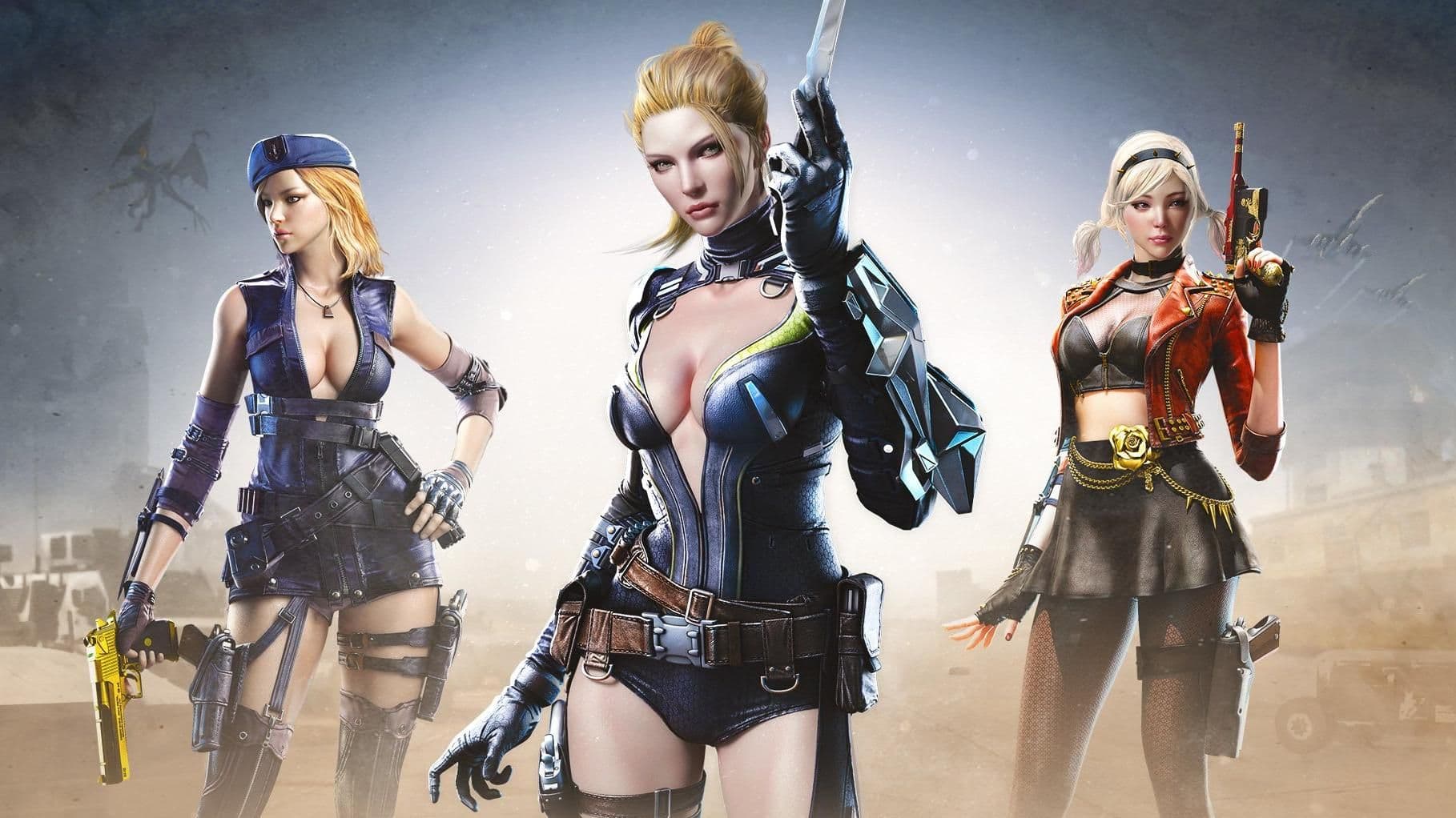
CrossFire is a South Korean tactical shooter where two mercenary factions clash across objective-based modes with no classes — your weapon choice decides your role each round. Released in 2007, it wen...
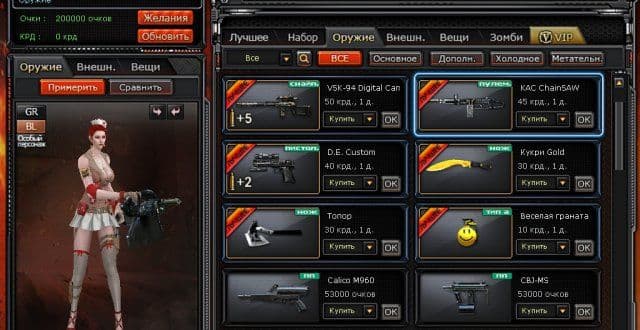
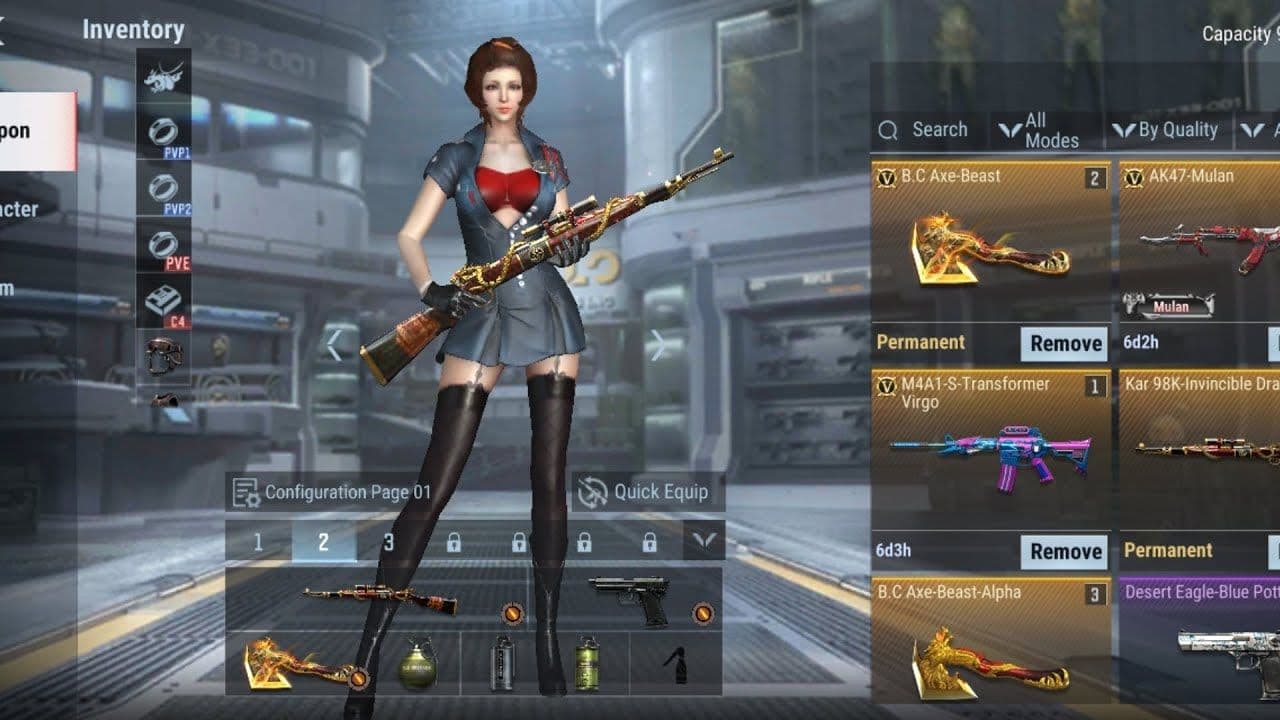
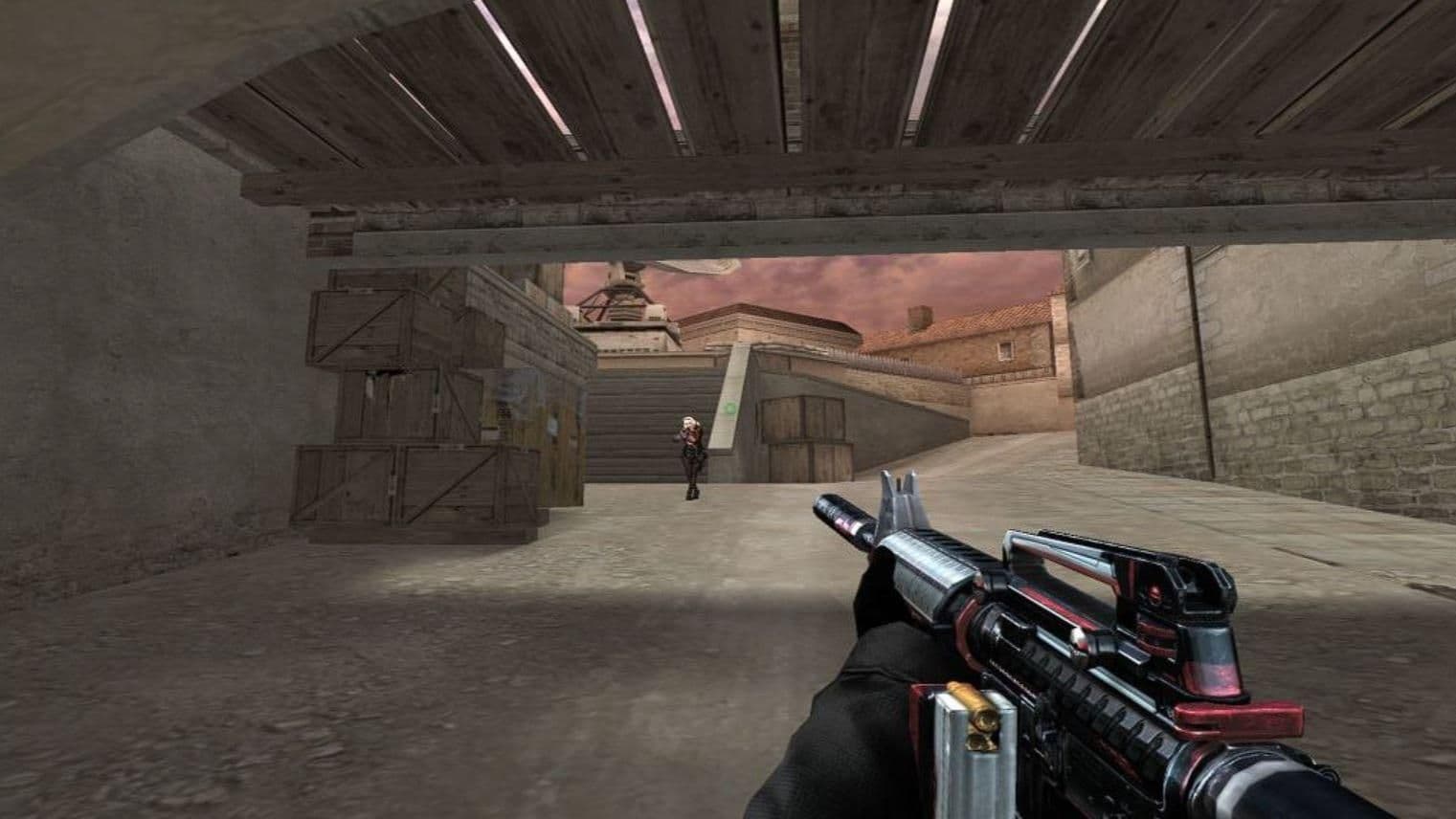
CrossFire is a South Korean free-to-play tactical shooter developed by Smilegate Entertainment, first launched in 2007 on the Lithtech Jupiter EX engine. It pits two mercenary factions, Global Risk and Black List, against each other across objective-based modes with no class system — your loadout, not your character, decides your role. Nearly two decades later, CrossFire is still one of the highest-grossing video games ever made, though its story now splits sharply by region: thriving in China, Vietnam, and Brazil, effectively gone for players in Russia and North America.
Quick take: CrossFire's shooting still holds up — clean hit registration, short rounds, and a weapon-defines-your-role system that needed no patching to stay relevant. Whether it's worth playing in 2026 depends entirely on where you live, since the answer ranges from "thriving esports scene" to "no official server exists anymore."
There isn't much of a story to CrossFire, and that's by design. Global Risk openly recruits mercenaries to serve powerful nations, while Black List works for whoever the rest of the industry won't touch — nobody, including the games themselves, seems to know exactly where Black List's headquarters is. That's the entire premise: two logos on a loading screen, no cutscenes, no dialogue trees, no quest journal. Smilegate later tried to give the setting an actual narrative through CrossfireX's console campaign, and in 2020 a CrossFire film adaptation was announced at Sony — news that's gone quiet since, which fits a franchise that has always sold itself on the moment-to-moment shooting rather than the lore wrapped around it.
Smilegate has repeated this figure for years, and the surrounding numbers back it up rather than inflate it. CrossFire surpassed one billion registered accounts with a peak of roughly six million concurrent players around 2020, according to the developer, and its cumulative revenue crossed six billion dollars by 2015 — putting it alongside a small handful of games that have ever reached that mark. In individual years, CrossFire ranked among the world's three highest-grossing PC games, sitting next to League of Legends and Dungeon Fighter Online rather than trailing them.
None of that revenue came from a Western audience buying box copies. It came almost entirely from China, where Tencent has published the game since 2008, supplemented by long runs in South Korea, Vietnam, and Brazil. The claim checks out, but it's worth being precise about where that billion actually plays.
This one is exactly as advertised, and it's the most defining thing about CrossFire's design. Characters differ only in appearance — Korean SWAT, British SAS, German GSG9, Brazilian BOPE — with identical stats across the board except for a handful of limited-edition heroes carrying small passive perks like better vision through smoke. Before every round, not every match, players spend Game Points on a pistol, shotgun, or rifle from scratch, meaning the same player can run assault rifle duty one round and switch to a sniper rifle or a combat knife the next.
Progression is limited to a rank system running from Private to Marshal, tied to accumulated experience and largely cosmetic in terms of power. A ten-year veteran and a brand-new account draw from the same weapon pool once they've earned the Game Points to afford it — the skill ceiling in CrossFire sits almost entirely in aim and map knowledge, not in anything a leveling system can buy for you.
The arsenal itself is split into plain, readable categories: pistols and revolvers for finishing kills, shotguns for close corridors, submachine guns for fast rounds, assault rifles as the default pick in most matches, sniper rifles for long sightlines, machine guns for holding a point, and melee weapons for the firearm-free modes. There's no hidden damage modifier or invisible stat buried in a tooltip — range, fire rate, and recoil are all visible on the weapon description before a single Game Point changes hands, which is part of why new players can read the system in a match or two rather than a week of trial and error.
CrossFire's mode list earns its reputation for variety. Team Deathmatch is the standard entry point, but Search and Destroy adds a plantable bomb, and Hunting Mode flips one side into a defending target and the other into pursuers. The stranger modes are where the game separates itself from its Western contemporaries: Ghost Mode arms one team with knives only, near-invisible as long as they hold still, against an opposing team that's fully geared but has to track them by sound and silhouette alone. Mutation Mode turns one infected player into an oversized zombie who spreads the infection on contact — a mode Asian audiences liked enough that it's survived multiple reworks over the years rather than being quietly retired.
Specialist rounds round out the list: Special Weapons hands both teams identical loadouts so the outcome comes down to reflexes rather than gun balance, Elimination strips the bomb-planting from Search and Destroy for a leaner objective mode, and Duel offers straightforward 1v1s for players who'd rather skip the team coordination entirely. Breakthrough asks one side to sprint across open ground while the other holds sniper positions, turning a single dash into the entire round's tension, and Free-for-All throws teams out the window for a pure every-player-for-themselves scramble. The range genuinely matters for session length — switching modes resets the pace faster than most shooters manage.
Yes, in a soft and openly acknowledged way. Premium weapon variants pulled from capsules — CrossFire's gacha-style loot system — fire more accurately and recoil less than their free counterparts, and part of the arsenal is locked behind either that lottery or a direct purchase. A separate category, VIP weapons, grants an experience bonus to the entire lobby just for being carried in a player's inventory, whether or not it's ever fired — turning ownership into a social flex almost as much as a combat edge.
The free currency, Game Points, still covers a baseline weapon in every category without spending a cent, and tournament organizers have historically had to hand-restrict the allowed weapon pool for competitive play specifically because of this gap. That's the honest tension at the center of CrossFire's economy: casual play is fully playable for free, but competitive integrity depends on rules layered on top of the base game rather than the base game itself.
This is where the numbers stop being marketing copy. CrossFire Stars, the game's flagship tournament, has run continuously since CrossFire became the headline discipline at the World Cyber Games in 2012, and the 2026 season landed a slot at the Esports World Cup in Paris with a two-million-dollar prize pool. Sixteen teams from five regions competed, with reigning champions AG.AL of China facing real pressure from Brazil's Natus Vincere and the Philippines' Team Stallions — a lineup that reflects exactly where the game's competitive weight sits today.
That regional concentration isn't an accident of history; it's the current market. Vietnam and Brazil both still register CrossFire near the top of local online game charts, and China alone keeps the exclusive CrossFire HD remaster — a 2018 visual upgrade on Unreal Engine 3 that never released anywhere outside the country. None of this reads as a game in decline. It reads as a game that picked its territory decades ago and never needed to leave it.
The roots of that competitive scene go back further than most currently-running esports leagues. CrossFire became the headline first-person shooter discipline at the World Cyber Games in 2012 — at the time one of the most prestigious tournament circuits in the world — and it hasn't skipped a major competitive season since. That continuity matters more than any single prize pool: a scene that's run uninterrupted for over a decade has produced generational rivalries and regional dynasties that a newer shooter simply hasn't had time to build.
Social structure outside the tournament stage is comparatively light. Clans let players group under a shared tag with a dedicated chat channel and coordinated events, but there's no territory, base, or progression system attached to them the way there might be in an MMORPG guild — it's a label for a standing team more than a system in its own right. Smilegate has also kept the brand alive on mobile through CrossFire: Legends, a Tencent-developed spin-off that compresses the familiar modes, including Elimination and Mutation, into shorter matches built for touchscreens — a natural move in markets where mobile esports is already mainstream rather than a novelty.
Two attempts to extend CrossFire's reach beyond Asia and South America both ended the same way: closure. Mail.Ru ran the Russian localization for nearly thirteen years, from June 2010 until an announced shutdown on February 20, 2023, citing an expired publishing contract rather than any single scandal. Players in the CIS are now limited to community-run fan servers or connecting to European and Asian clients with no translation — options that carry obvious risk, since neither comes with official account protection or any guarantee of staying online.
The Western console push fared no better. CrossfireX, a 2022 Xbox exclusive built with Remedy Entertainment handling a single-player campaign, drew largely negative reviews and was shut down in May 2023, barely a year after launch. Between the two, the pattern is hard to miss: CrossFire has never successfully translated its formula into a market it didn't already dominate at launch.
Not every region outside the current top three collapsed the same way, though. Indonesia and the Philippines each cycled through multiple publishers and technical relaunches over the years, but unlike Russia, both held onto at least a niche, ongoing player base rather than losing the game entirely. Spain and the broader European launch, which arrived later than most other regions, never built comparable traction in the first place — CrossFire existed there more than it thrived, and it left little mark on the local competitive scene.
No — and this is worth spelling out clearly, because the name is about to get confusing. At Summer Game Fest 2026, Smilegate unveiled a completely different project also called CrossFire, developed by California-based studio That's No Moon, whose team includes veterans of Uncharted and Call of Duty. It keeps the Global Risk vs. Black List setting but abandons the multiplayer shooter format entirely in favor of a single-player, third-person action-adventure following a mercenary named Leila. Nothing about that upcoming release changes anything covered in this review; it's a separate game trading on a recognizable name after the CrossfireX console attempt didn't land.
The visuals are the most obvious giveaway. Outside the China-only HD remaster, the base game still runs on a twenty-year-old engine, and it looks it next to anything released after roughly 2015 — flat environments, dated smoke and fire effects, reload animations that repeat across weapon categories with little variation. Cheating is the other long-running issue that a lifecycle this long inevitably accumulates: anti-cheat enforcement varies noticeably by region, tighter in China and Korea, looser in markets Smilegate treats as lower priority, and forum complaints about suspiciously precise aim are a recurring fixture rather than an occasional flare-up.
The capsule weapon system compounds that competitive-integrity problem rather than sitting separately from it. Because part of the strongest arsenal is genuinely locked behind gacha odds or a direct purchase, tournament organizers have had to manually restrict the allowed weapon pool for serious play for years — a workaround that treats the symptom without touching the underlying gap between what free and paying players can access. It's a fair trade for a company that needs revenue from a fifteen-year-old free game, but it's not a design decision the game hides, either.
None of that touches the core loop, though. The shooting itself, the round pacing, and the readability of CrossFire's maps play about as well now as they did at launch — which is exactly why millions of players across Asia and South America keep logging in daily without waiting for a graphics overhaul that isn't coming to their region.
CrossFire earns its billion-user reputation honestly: the shooting is sound, the mode variety keeps sessions from going stale, and the weapon-as-role system remains one of the cleaner solutions the genre has produced for letting players change their job mid-match without touching a class menu. For players in China, Vietnam, Brazil, or the Philippines, this is a live, well-supported competitive shooter with real prize money behind it. For everyone else — and especially for Russian-speaking players, who lost their official server in 2023 — the honest recommendation is closer to a warning than an invitation: what's left is fan servers of uncertain longevity and clients in languages you may not read, not a game anyone can point to and simply say "go play it."
Yes, but unevenly by region. China, Vietnam, and Brazil continue receiving content and running an active competitive circuit, while regions like Russia and North America no longer have an official server to update at all.
Yes — Game Points earned through matches cover baseline weapons in every category. Premium and capsule weapons offer a mechanical edge, but they aren't required to play the core modes competitively at a casual level.
No to both. CrossFire HD is a 2018 remaster exclusive to China running on a different engine, and the CrossFire announced for 2026 by That's No Moon is an unrelated single-player action-adventure sharing only the name and setting.
Not officially. Mail.Ru's localization closed in February 2023, leaving only unofficial fan servers or unlocalized regional clients as options.
Yes — CrossFire Stars has run continuously since becoming a World Cyber Games discipline in 2012, and its 2026 season carried a two-million-dollar prize pool at the Esports World Cup, with teams from China, Vietnam, Brazil, and the Philippines among the strongest contenders.