 F2P · Live
Lineage 2
Aden's castles never stay in the same hands for long, and Lineage II has built an entire twenty-three-year…
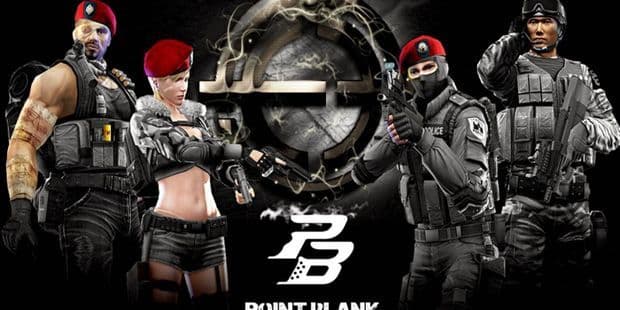
Point Blank's home server in South Korea shut down back in 2018 — the game itself didn't. Zepetto's fast, arcade-style tactical shooter has spent nearly two decades splitting into separate regional li...
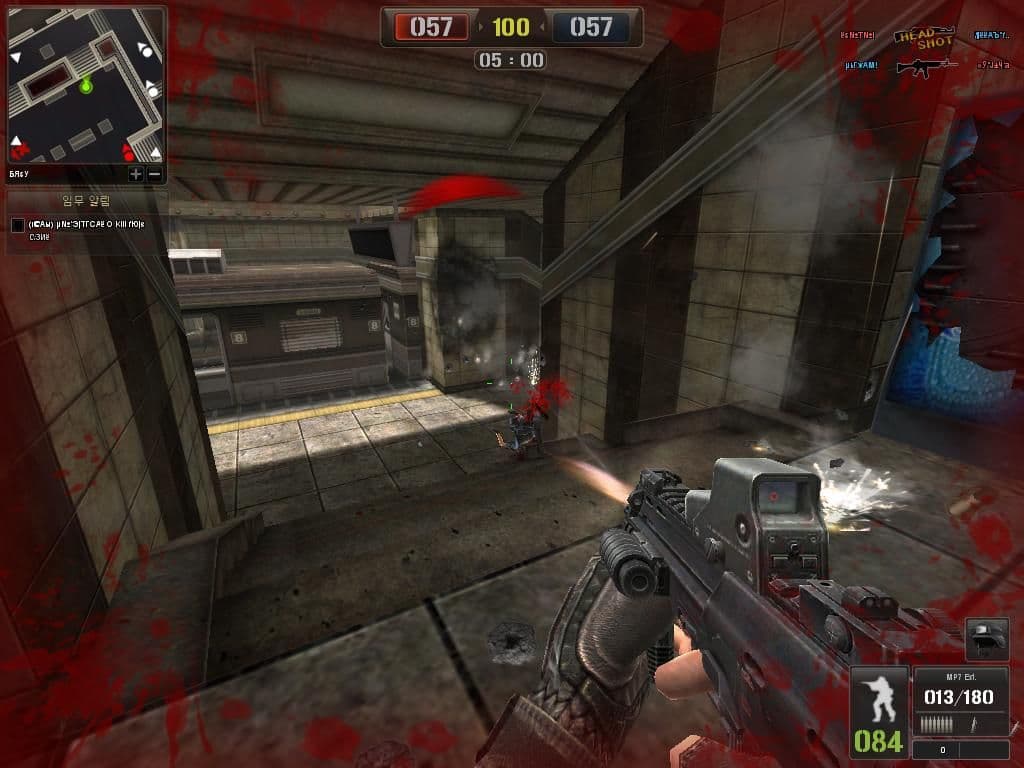
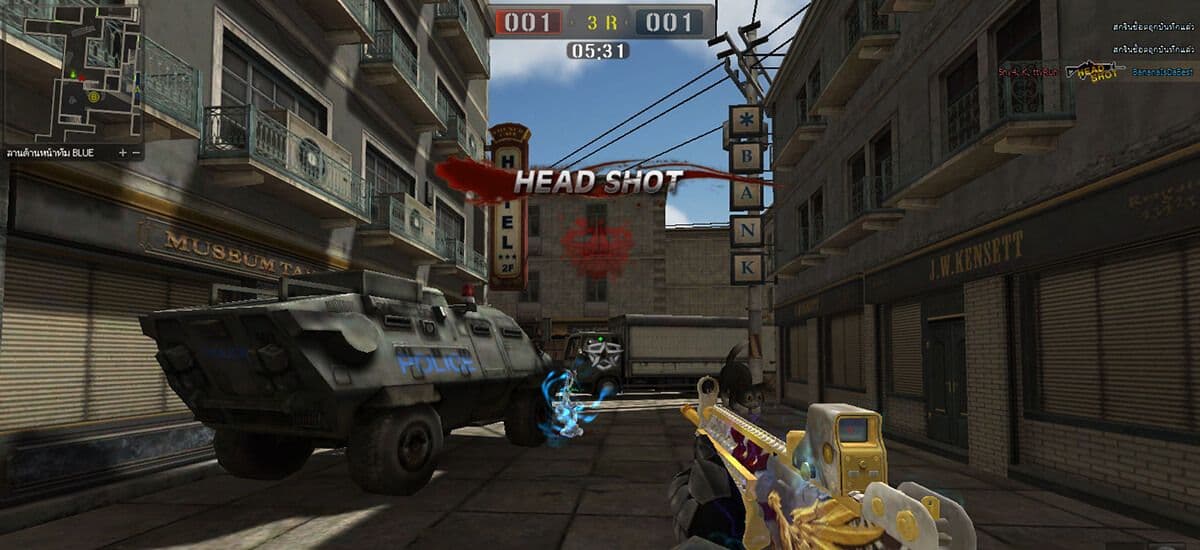
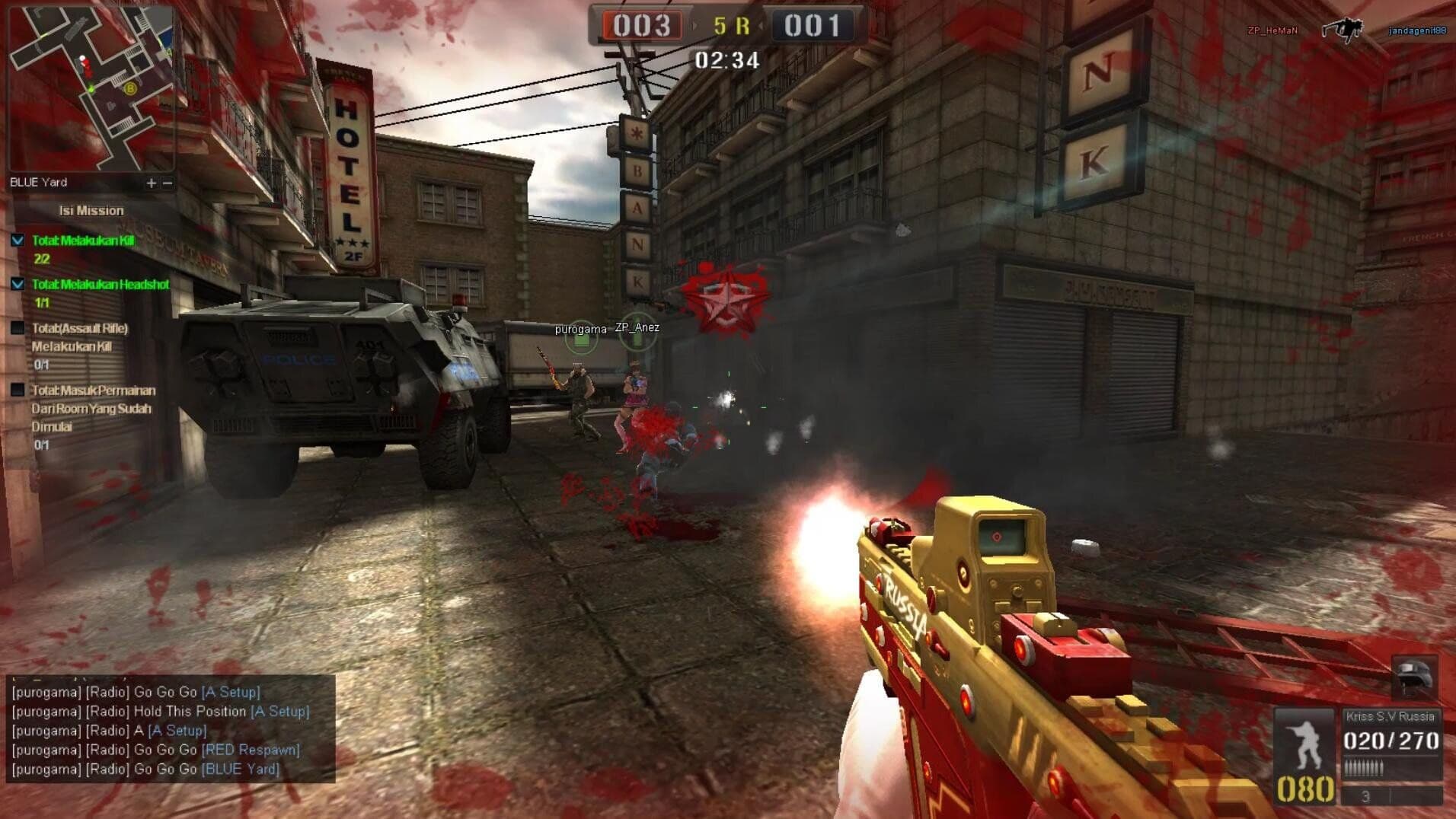
Point Blank is a free-to-play tactical first-person shooter developed by the South Korean studio Zepetto, first released in October 2008 on the company's own I3Engine. It plays like a faster, looser cousin of Counter-Strike: two teams, small maps, and rounds that live or die on positioning rather than long-range gunplay. Nearly eighteen years later, the game is still running — just not where you'd expect, and not as one single game anymore. Its Southeast Asian versions run active esports leagues in 2026, while its original Korean home and North American release both shut their doors back in 2018.
Quick take: Point Blank is a genuinely dated shooter that most Western players have never heard of, yet it's still fielding real esports tournaments with real prize money in Indonesia and Thailand. If you want a museum piece with a live pulse, it's worth a look; if you want modern production values, it isn't.
Skip ahead to 2026 first, because that's where the interesting part of this story actually lives. In Indonesia and Thailand, Point Blank isn't a relic — it's a functioning competitive discipline with a season structure. The Point Blank International Championship ran its 2026 edition in late March, feeding from national qualifiers and a Rising Star circuit that narrows sixteen teams down through regional offline rounds. A separate collegiate league runs alongside it with its own prize pool, and the sixteenth season of the Point Blank National Championship kicked the year off in January with tie-in weapon skins. None of this is nostalgia marketing — it's a functioning annual calendar, the kind most 2008-era shooters gave up on a decade ago.
The client itself got a real technical overhaul to match. Early in 2026, the operator retired the old launcher entirely in favor of a new one built around tighter file verification, aimed squarely at the cheating problem that's dogged the game since its first year. Seasonal battle passes still ship on schedule — a winter-themed pass in early 2026, an autumn harvest pass by September — which is a level of live-service discipline you don't usually associate with a game this old.
Not every region got the same ending. The game's home Korean server and its North American client both shut down in September 2018, unable to compete with a wave of shooters offering modern hit registration and destructible environments Point Blank simply couldn't match. It wasn't really a loss to one specific rival — by 2018 the whole free-to-play tactical shooter category had moved on technically, and static maps with a decade-old aiming model started reading as broken rather than charmingly retro. Russia's version, still running through the 4game platform under publisher Innova, survives in a smaller, quieter form — the local scene marked sixteen years of service in December 2025, and a Russian team competed at the 2026 international championship, but the audience is a fraction of what Southeast Asia sustains. Point Blank didn't die in 2018. It just stopped being one game.
Rewind further and the current split identity makes more sense. Zepetto started licensing Point Blank across Asia within a year of the Korean launch — Thailand and Indonesia both got localized versions in 2009, with Brazil, China, the Philippines, and the UAE following over the next couple of years. Russia's version launched on 4 December 2009 under what's now the Innova label, the same publisher that later brought Lineage II and Aion to the region. For a lot of these markets, a free tactical shooter with modest system requirements landed at exactly the right moment — plenty of players simply didn't own PCs capable of running the era's more demanding alternatives, and a game that ran acceptably on a five-year-old machine had a real advantage over anything built with a higher hardware floor in mind.
The weapon roster and the competitive scene grew together over those years. What started as a modest launch lineup expanded into the over 140-weapon arsenal the game carries today, alongside new modes like Zombie and the cooperative PvE Scenario format. International tournaments like the Point Blank World Challenge pulled in real numbers — the 2017 event alone drew a recorded peak of nearly 39,000 concurrent viewers, and across its history the game has run roughly seventy competitive tournaments with a combined prize pool north of a million dollars. That's the foundation the current Southeast Asian scene is still building on: not a revival, but a continuation of infrastructure that never actually stopped.
Strip away the history and the moment-to-moment loop hasn't changed much since 2008. You pick a class and a weapon in a short buy window, spawn at one end of a compact map, and the first gunfight usually starts before you've had time to look around — on several maps the distance between spawns is barely a dozen steps. Death is cheap: rounds run a minute or two, respawn is near-instant in Team Match, and the next round starts before you've finished being annoyed at the last one. That pacing is deliberate. Point Blank was never trying to be a slower, more patient Counter-Strike; it borrowed the team-versus-team objective structure and ran it at arcade speed.
Four base classes — Assault, Sniper, Engineer, and Medic — carry the whole weapon roster, which has grown to over 140 individual weapons across rifles, shotguns, sniper rifles, and knives. A typical Bomb Mission round breaks down simply: thirty seconds to buy gear, a push toward the map's central corridor, and then either a successful plant followed by a defense, or a straight elimination fight if the plant never happens.
Survival mode strips away mid-round respawns entirely, so the last two players standing often end up hunting each other with pistols and knives once the rifle ammo runs dry — the closest the game gets to Counter-Strike's slower tension. Zombie mode flips the format: one random player turns infected at the start, and every bite adds another attacker until the survivors are cornered with a single magazine left. A separate PvE Scenario mode lets a squad run cooperative missions against bots instead — a lower-pressure warmup for players who want gunplay without the risk of a live opponent punishing every mistake.
A single Bomb Mission round tells you most of what you need to know about the game's rhythm. Thirty seconds of buy time — grab a rifle, a couple of grenades, maybe a spare knife. The team pushes toward the map's center, trading fire around corners while someone tries to sneak the bomb toward a plant site. If the plant lands, the defenders spend the last forty seconds trying to retake the site before it goes off; if it doesn't, the round usually just comes down to whoever's left standing. Start to finish, that's a minute or two, and then it happens again with the sides sometimes swapped.
Weapon variety works the way it does in most long-running shooters: a handful of rifles have stayed viable for years on raw stats, while dozens of cosmetically flashy alternatives never quite earn a permanent slot in competitive loadouts. Categories cover the usual ground — assault rifles for general-purpose mid-range fights, shotguns for the game's tight indoor corridors, sniper rifles for the handful of maps with long sightlines, submachine guns for aggressive rushes, and knives that double as both a last resort and a dedicated throwing weapon for a couple of classes.
Progression runs on a straightforward points system: wins, losses, kills, and in-round objectives like a successful bomb plant or a no-death kill streak all add up toward rank. Higher ranks unlock additional weapon slots, profile badges, and clan-related perks, and the same point economy funds clan wars — organized matches between rival clans with their own internal standings and a shared treasury, which turns casual wins into part of a longer competitive thread rather than one-off matches.
Customization extends past the gun itself — masks, armor sets, and character skins range from tactical gear to seasonal costumes, and experienced players tend to pick the least visually noisy option rather than the flashiest one, since silhouette blending matters more than looking sharp on a compact map.
Not in any meaningful sense. Every class's default weapon is free from the moment you install the game, and it kills just as effectively as anything in the shop — there's no armor or ability that money buys and skill can't beat. What money does buy is speed: premium weapons and mods that would otherwise take a long grind of match points are available instantly for cash, and random-drop weapon cases sit at the center of the cosmetic economy, which is a soft form of gambling grafted onto a game that otherwise plays fair. Seasonal battle passes layer on a second track — a paid tier moves cosmetics, character skins, and boosters through a set schedule two full seasons a year, while the free tier crawls along noticeably slower with fewer rewards. It's a structure that's become standard across free-to-play shooters rather than something unique to Point Blank, but it's worth naming plainly rather than glossing over.
The technical side of the cheating problem got real attention in 2026 rather than a patch note. The old launcher's file-verification system was easy to route around, which is part of why cheating complaints go back to the game's first year online. The new Z-Launcher checks client integrity automatically before every match — a genuinely structural fix to a problem the game has carried for a decade and a half, not just a ban wave that quietly reverses itself in a few months. It's not a total solution, particularly on less closely moderated regional servers, but it's the first fix aimed at the actual mechanism rather than the symptoms.
Clans sit outside the core loop entirely, and plenty of players never touch one — you can log in for years of casual matches and never join. For the players who stick around, clan structure is what turns a rotation of anonymous lobbies into something closer to a community: shared chat, an internal rank ladder, and clan-versus-clan wars for standing. It's also the quiet infrastructure behind the esports calendar described above — collegiate and regional leagues in Indonesia recruit through established clans rather than open matchmaking, because a roster that's spent months training together in clan wars shows up to an official bracket already knowing how to talk to each other.
That connection between casual clan life and organized competition is easy to miss from the outside, but it explains a lot about why the Southeast Asian scene has stayed intact for this long. A tournament format only works year after year if there's a steady supply of teams that already exist as functioning units before the bracket gets announced, and clan wars are effectively free scrimmage practice that happens whether or not a tournament is on the calendar. Take the clan system away and the annual championship structure would have to be rebuilt from scratch every season instead of drawing on rosters that have already spent months training together.
Yes. Installation, registration, and every core match mode are free. Optional purchases cover premium weapons, weapon cases, and battle pass tiers, but none of it locks a player out of ranked matches or basic progression.
A limited amount. The Zombie mode and the cooperative PvE Scenario mode both let players fight AI rather than each other, but the game's core identity and its esports scene are built entirely around player-versus-player team matches.
It depends heavily on the region. Southeast Asian servers, especially Indonesia and Thailand, run a full annual tournament calendar with real prize pools. Other regions, including Russia, keep smaller but functioning player bases; the original Korean and North American servers closed in 2018.
Modest by any current standard. The game was built to run on hardware that was already several years old back in 2008, so a current mid-range PC handles it without any tuning — one of the few areas where the game's age is a genuine advantage rather than a drawback.
Here's the flat answer: Point Blank isn't a game you play because it's good by 2026 standards — it's a game you play because it refused to stay dead on schedule. Most shooters from 2008 are either shut down entirely or running on life support with a few hundred loyal holdouts. Point Blank instead found a second career in Southeast Asia that looks, on paper, like a functioning modern esports discipline — season structure, sponsorships, prize pools, and a client that got a real security fix in 2026 rather than another skin drop. That's a genuinely unusual outcome for a shooter this old, and it's worth acknowledging on its own terms rather than dismissing the game as a curiosity that outlived its welcome.
None of that changes what the game feels like to actually play. The animations, the sound, the flat maps — all of it sits exactly where you'd expect an eighteen-year-old shooter to sit, and no amount of tournament prestige changes that first impression. A player coming in from a modern battle royale or a hero shooter will notice the gap within the first match, not after a few dozen hours of acclimation.
Play it for the history, the low barrier to entry, or a look at what a genuinely surviving Southeast Asian esports scene looks like up close — the low system requirements mean almost any current PC handles it without a second thought, which is one area where the game's age works in its favor rather than against it. Don't play it expecting anything close to a modern shooter's production values, because it was never going to catch up, and at this point it's stopped trying to. What it's doing instead — running an actual tournament calendar eighteen years after launch, in a market most Western outlets never cover — is a stranger and more interesting achievement than a graphics update would have been.