 F2P · Live
Lineage 2
Aden's castles never stay in the same hands for long, and Lineage II has built an entire twenty-three-year…
War Thunder is a free-to-play military combat game from Gaijin Entertainment that puts aircraft, ground vehicles, and ships from ten nations into the same matches, with a component-based damage model ...
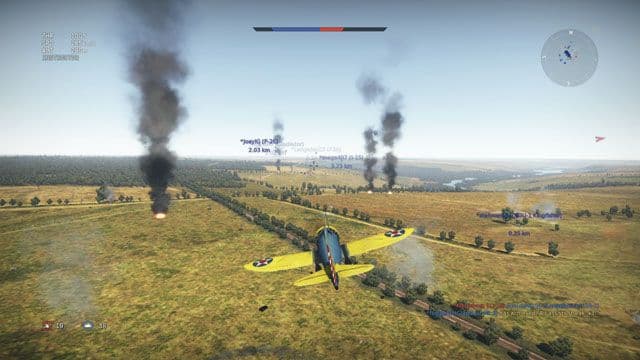
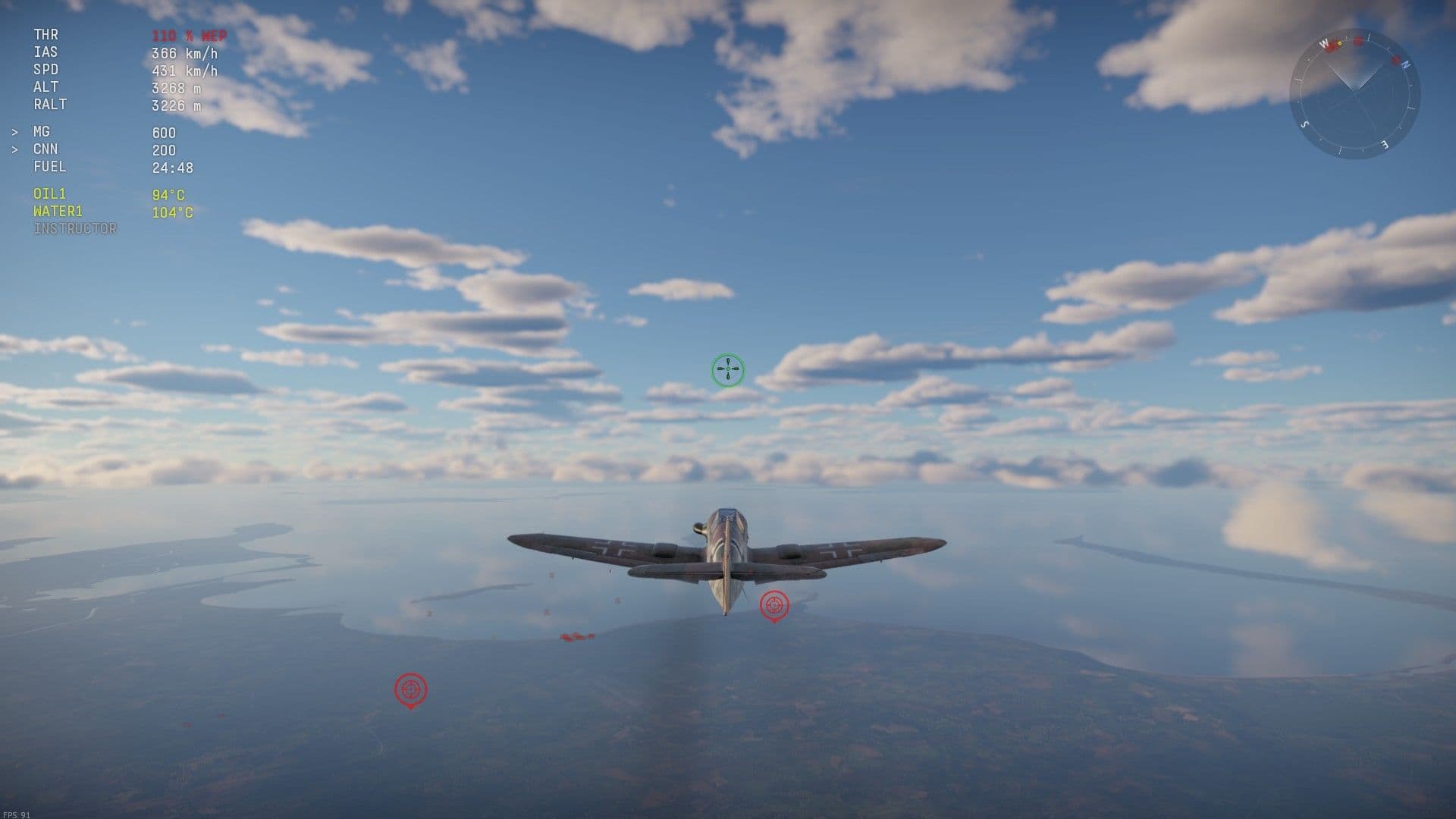
War Thunder is a free-to-play military combat game from Gaijin Entertainment that puts aircraft, ground vehicles, and ships into the same matches. It moved out of open beta in November 2012, launched fully in August 2013, and reached all major platforms with a full cross-platform release in December 2016. More than a decade later it is still receiving major content updates several times a year, and in 2026 it is testing a fourth combat domain built around controllable infantry. The game picked up a Best Simulator award at gamescom in its debut year and four awards at Russia's KRI show the same year, and it has kept adding hardware ever since — the collection now runs well past a thousand distinct vehicles across every era from early monoplanes to fifth-generation jets.
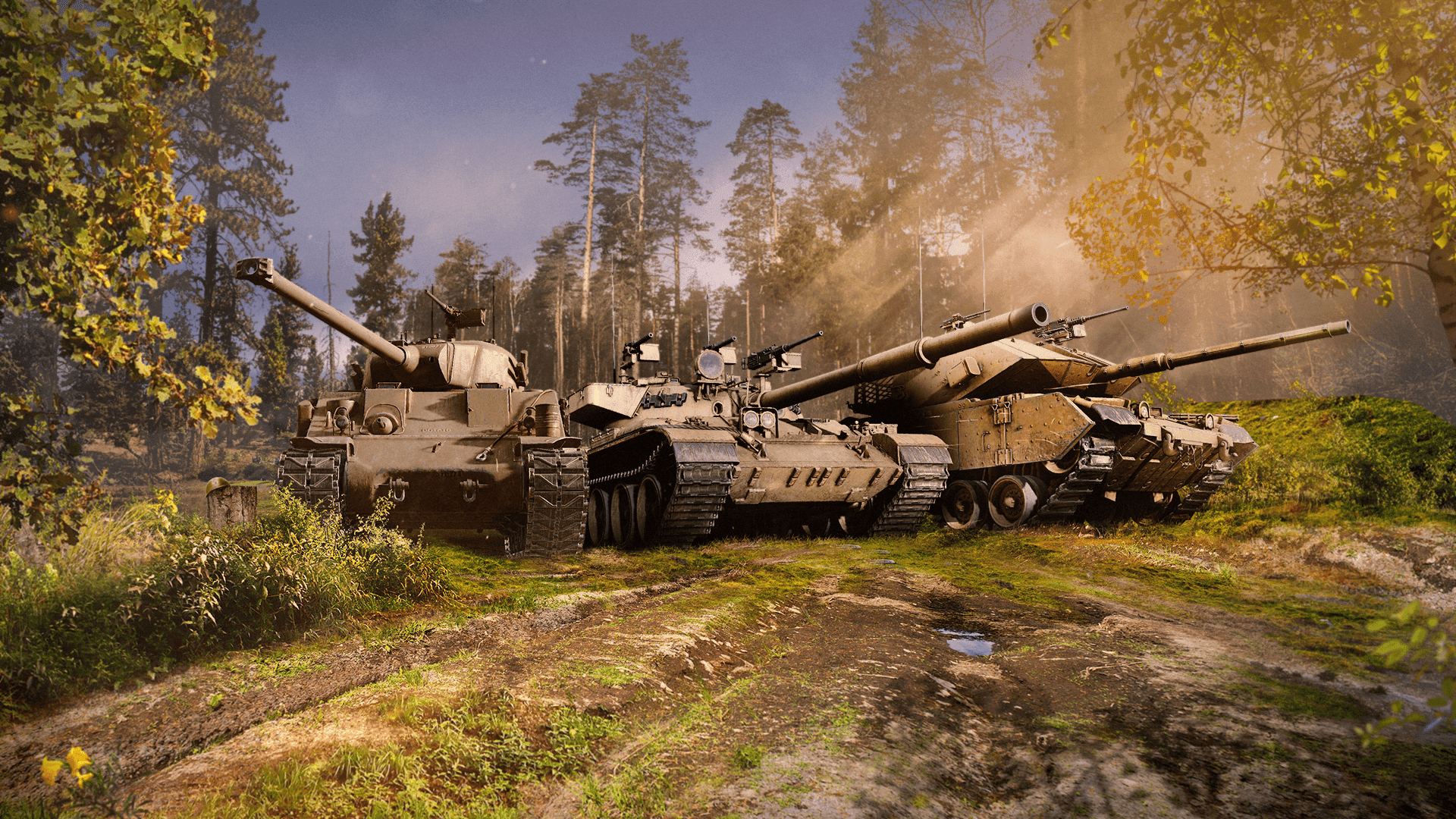
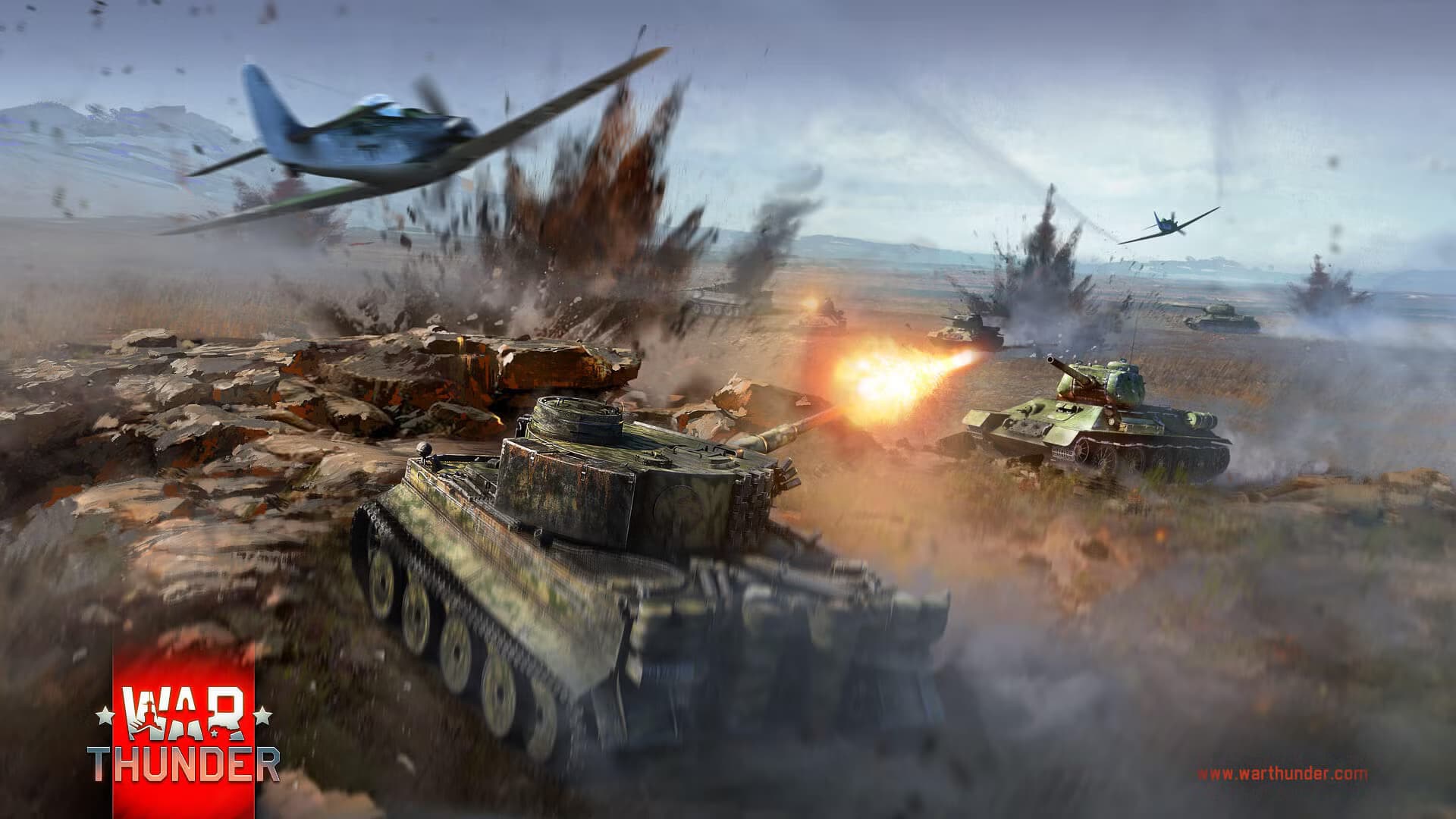
There is no invented setting here — the entire twentieth and twenty-first century of military hardware is the setting, split across ten researchable nations: the USA, USSR, Germany, Britain, Japan, Italy, France, Sweden, Israel, and China. Each nation is its own research tree, built from hundreds of tanks, aircraft, and ships reconstructed from blueprints and real testing data, ranging from prototypes that never entered service to mass-produced machines familiar from any history textbook. Matches mix nations freely — a German Tiger might face a Japanese Chi-Ha and an American Sherman in the same battle — because the game never promised a historical reconstruction of specific campaigns, only fidelity to the hardware itself.
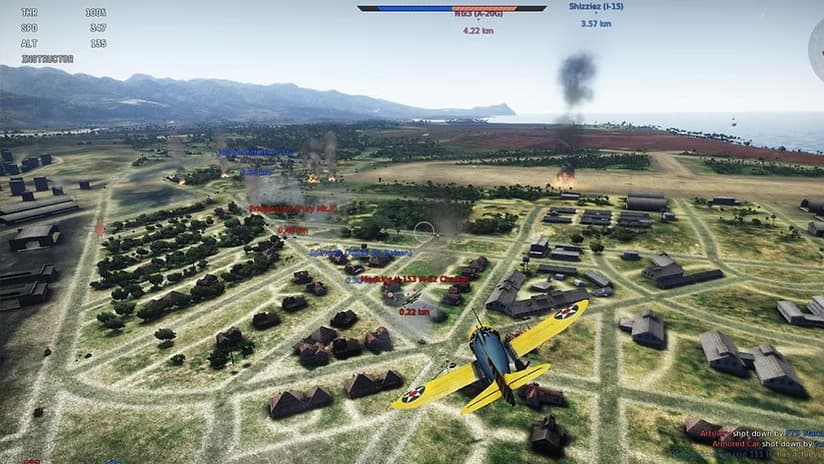
A new player starts at the bottom of that research tree, in the lightest vehicles the game has: a lightly armored tank, a biplane with a pair of machine guns, a small destroyer. Every vehicle carries a Battle Rating, and at this stage that number rarely climbs above one — matches are short, mistakes are forgivable, and the interface itself helps compensate for inexperience. Kills and objectives earn two things at once: Research Points toward the next vehicle, and Silver Lions, the base currency spent on purchases, repairs, and crew training. Ground forces and ships climb through eight numbered ranks; aviation reached a ninth rank in March 2026, when an update nicknamed "Ninth Wave" added the tier's first jets, including an Australian F/A-18F Super Hornet and a Russian Su-30SM2.
That accessibility is deceptive, because War Thunder's damage model is doing real work underneath it from the first minute. Every vehicle is modeled component by component: a shell that penetrates a tank's armor can jam the turret, sever a track, kill the gunner, or detonate the ammunition rack outright, and where exactly it lands decides whether the vehicle limps to cover or burns in place. Aircraft wings lose lift in real time as they take damage rather than simply subtracting from a health bar. Dozens of maps with destructible structures and terrain that actually affects ballistics and sightlines reinforce the same idea — this isn't an abstract shooter wearing a military skin, it's an attempt to model how the hardware actually behaves.
The same tank or plane plays completely differently depending on which mode carries it. Arcade Battles are the softest entry point: damage is generous, aim assist helps line up shots, and destroyed vehicles can be respawned mid-match in something else from the lineup. Realistic Battles strip away most of that assistance and allow only one life per vehicle per round, which shifts the skill test from reflexes to positioning. Simulator Battles go further still — cockpit view by default, manual engine start, real projectile ballistics with no aiming reticle to lean on — and attract players who care more about flight physics than winning percentage.
These three modes run in parallel across three domains — ground, air, and naval — and 2026 added a fourth: an experimental infantry mode, now in its third closed test phase on a map called Kivu built for battles of up to 128 players. Infantry here are individually controlled soldiers fighting alongside tanks and helicopters rather than an abstract support unit, and FPV kamikaze drones have become one of the mode's defining new threats — spawning expensive armor suddenly carries real risk, since one accurate drone strike sends it straight to the repair bay. The naval domain runs on its own logic entirely: coastal fleet vessels win on speed and maneuvering, while bluewater battleships and cruisers settle fights with main-gun salvos at kilometer-plus range. Ground battles have included helicopters since 2018, used less as tank replacements and more for precision anti-tank strikes against dug-in vehicles, provided the crew survives long enough to get airborne before air defenses catch them.
None of these domains exist as a checkbox feature bolted onto the others — each one carries its own progression, its own community of specialists, and its own learning curve. A player who has spent hundreds of hours mastering naval gunnery arcs can still be a complete beginner the first time they take an unfamiliar aircraft up, and that overlap of expertise is part of what keeps veteran players coming back to branches of the tech tree they haven't touched in years.
Hundreds of hours separate a first match from the top of any research tree, and the Battle Rating along that path eventually climbs into double digits. Up there, players fly jets carrying medium-range guided missiles, drive main battle tanks with modern fire-control systems, and crew ships with automated air-defense suites. A single well-placed shot decides most engagements — there's no forgiving arcade interface left to lean on, and the gap between not knowing a tank's weak points and knowing its armor diagram by heart is the difference between a hangar full of wrecks and a crew that survives to fight again. The most common complaint about War Thunder traces directly to this stretch: every newer vehicle Gaijin adds raises the Research Points and Silver Lions required to catch up on the vehicles around it, so the grind that's barely noticeable at low ranks compounds steadily by the time a player reaches the top.
Unlocking a vehicle is only the starting point, too. Every tank and plane carries its own modification tree — armor-piercing rounds with better ballistics, a forced-induction engine, an anti-aircraft machine gun, guided missiles on later variants of the same airframe. Until those modifications are researched, a vehicle fights in a stripped-down state, and the gap between an unmodified tank without APDS rounds and the same tank fully upgraded is often the difference between penetrating a target and bouncing off its front plate. Newer players tend to research modifications in whatever order the points accumulate; veterans know exactly which branch to prioritize on a new vehicle, because that choice decides whether it survives its first few matches or simply pads the enemy's score.
War Thunder's obsession with authenticity has produced one of the stranger footnotes in the genre. Players have argued on the official forum for years about armor thickness, rate of fire, and flight performance, and every so often that argument escalates into someone posting a document with a real classification marking as proof. The forum has recorded at least nine such incidents in recent years, involving manuals for the Challenger 2, the Leclerc, China's J-8B, the Eurofighter Typhoon, and the AV-8B Harrier, among others. Each time, the material gets removed, the poster gets banned, and Gaijin's community team publicly reminds everyone not to upload classified material — and each time, a portion of the community treats the reminder as background noise rather than a boundary. No comparable game's fixation on realism has produced quite the same recurring headline, and it says more about who this level of detail actually attracts than any marketing line could.
Progression runs on two currencies and one resource. Silver Lions are earned in battle and spent buying unlocked vehicles, paying for post-match repairs, and training crews. Research Points, also earned in matches, unlock the vehicles themselves along with their modification trees — armor, shells, engines, missiles. Golden Eagles, the premium currency bought with real money, speed up both processes and unlock premium vehicles that earn more Silver Lions and Research Points per match without granting stats beyond what a researched vehicle at the same Battle Rating already has.
Crew training runs on its own track: the higher a crew's proficiency, the faster its gun reloads, the tighter its aim, and the more resilient the vehicle is when things go wrong. Repair costs add a separate wrinkle — patching up damaged or destroyed hardware after a match costs Silver Lions, and the higher a vehicle's rank, the more noticeably that bill eats into what was just earned. At the bottom of the tree repairs are nearly free; keeping a top-tier jet or main battle tank running through a string of losses can eat income faster than it accumulates, which is part of why play at the top tends to look more cautious than play at the bottom, where losing a vehicle costs almost nothing. A premium account softens that gap by boosting income across the board, without erasing the math entirely.
Talismans — permanent boosts applied to a specific vehicle — sit alongside crew training as another long-term investment: once attached, they raise that vehicle's earnings for as long as a player keeps using it, which rewards sticking with a favorite machine instead of constantly rotating through the newest unlock. None of it changes what the vehicle can actually do in a fight, only how quickly the next one arrives.
Most of the content is simply the random matchmaking queue — battles across every mode and domain with barely any wait at any hour. On top of that sit more organized formats. Squadron Battles pit standing player teams against each other under a fixed vehicle lineup and an agreed Battle Rating, and this is where War Thunder's competitive scene actually lives, complete with regular tournaments and broadcasts featuring professional lineups. Separately, cooperative missions against AI let players get comfortable with new hardware without a live opponent punishing every mistake, and time-limited events tied to historical anniversaries or a specific vehicle's release round out the calendar.
New players tend to stay in the random queue for a long stretch — there's enough there to fill the first several hundred hours without needing anything else. Veterans eventually hit that queue's ceiling and move either into organized squadron tournaments or into simulator battles with voice-coordinated teammates, where a single well-executed sortie matters more than a night's overall win count. A squadron functions as War Thunder's version of a guild: members pool squadron experience for shared discounts, and large squadrons maintain rosters built for specific tournaments, coordinating over their own voice channels. For a new player, joining an active squadron is often the fastest way through systems that look opaque from the outside, like picking the right modification order or calculating a lineup's effective Battle Rating.
Time-limited ranked events run every few months on top of the regular calendar — fixed vehicle lineups, a dedicated leaderboard tracking individual and squadron results, and season-end rewards tied to final standing. They give the competitive scene a recurring rhythm beyond squadron tournaments, and they're usually where the community's attention concentrates for a few weeks at a time before settling back into the normal mix of random matches and organized play.
Not in any meaningful sense — premium vehicles and Golden Eagles buy speed, not stats. War Thunder is free-to-play with no mandatory subscription: every mode, every nation, and every vehicle can be unlocked without spending a cent. A premium account and Golden Eagles accelerate that process, and premium vehicles skip a chunk of the research grind, but none of it grants combat statistics unavailable to a fully researched vehicle at the same Battle Rating. That makes the model closer to pay-to-progress than outright pay-to-win.
In practice, though, the gap between paying and not paying widens with every major update. The Research Points and Silver Lions required to unlock new vehicles creep upward with each patch, and for a portion of the community that creeping cost — not the sticker price of any individual purchase — is the actual complaint. Premium vehicle bundles and Golden Eagle packs appear regularly around major updates, and some vehicles are only available through time-limited event objectives rather than direct purchase; a new player is more likely to simply buy the premium version, while a veteran more often grinds the event tasks, knowing the end result performs about the same either way.
It's worth separating this from War Thunder Mobile, a standalone spin-off built for phones that runs its own economy. That mobile version has been moving away from a traditional premium account toward subscriptions bundling extra perks like fewer forced ads — a change specific to the mobile client. The PC and console version reviewed here still runs on the same premium-account-plus-Golden-Eagles model it has used for years, with no comparable subscription overhaul announced.
Is this worth your time if you care about military hardware for its own sake and want to feel the difference between flying, driving, and sailing in one game? Then yes — War Thunder offers thousands of hours of that, free from the very first match. Anyone chasing an arcade-style evening of fun should stay in Arcade Battles and avoid climbing past the mid ranks, where the game is still fast and forgiving. Anyone drawn specifically to simulation-grade accuracy, and unbothered by a top tier that takes months of regular play to reach, will find Realistic and Simulator Battles waiting at the higher ranks built exactly for that kind of patience.
Anyone looking for a short session with no long-term time commitment, or anyone who finds the entire idea of a years-long progression system exhausting before they've even started, should probably look elsewhere. The grind never actually disappears at any stage here — it just changes shape depending on which rank a player happens to be sitting at. What doesn't change is the trade a new player and a ten-year veteran end up making in exactly the same way: how much time either of them is willing to put toward a specific machine they want right now, instead of the one that's three hundred hours away.