 F2P · Live
Lineage 2 Essence
Lineage 2 Essence is NCSoft's free-to-play take on the classic Korean MMORPG Lineage II, built around faster…
Mir Tankov is Lesta Games' free-to-play tank MMO for Russia and Belarus, built on the same Core engine and vehicle roster as World of Tanks after the two split into separate projects in 2022. Ten nati...
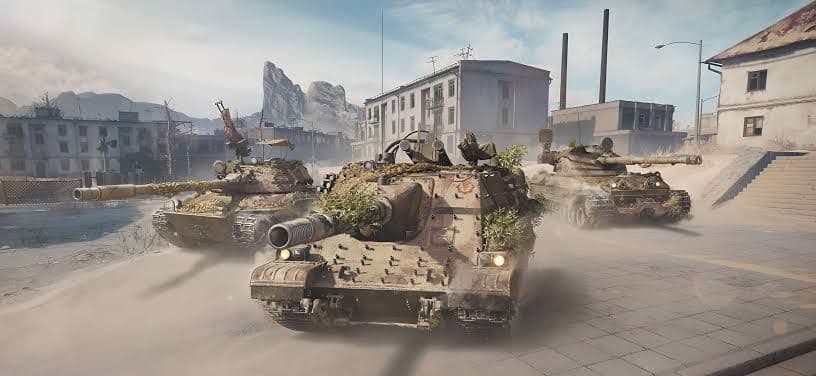
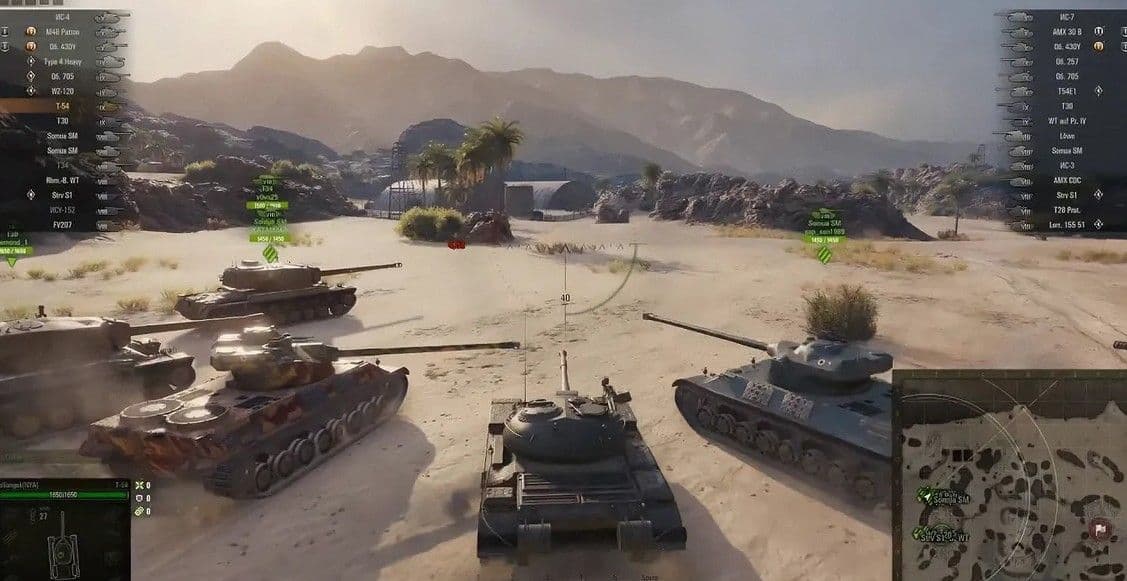
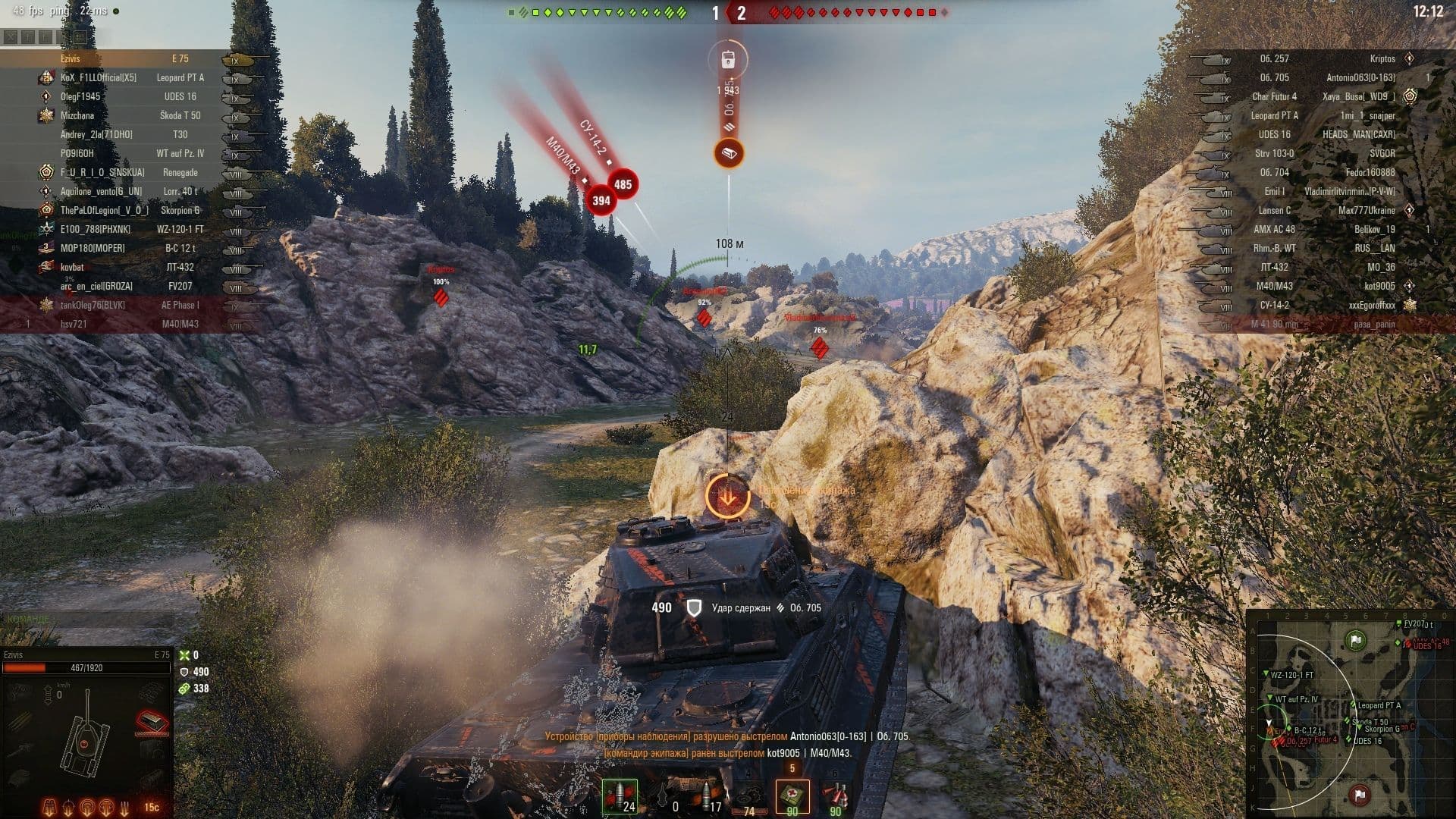
Mir Tankov ("World of Tanks" in Russian) is a free-to-play tank-combat MMO developed and published by Lesta Games out of Saint Petersburg, launched on October 12, 2022 for players in Russia and Belarus. It runs on the same Core engine and the same decade-plus catalog of vehicles as Wargaming's World of Tanks, because it started life as that exact game before the two split into separate, unconnected projects. As of September 2026 it's a live service on its own patch schedule, currently testing update 1.45 and running a battle pass season that closes December 2.
Mechanically, yes — organizationally, no. Wargaming withdrew from Russia and Belarus in April 2022 and handed its live services there to Lesta Studio, a former Wargaming-owned effects house, at zero cost and with no ongoing stake. Wargaming's own statement at the time put the company's losses from the exit near €240 million in lost 2021 profit alone. The two games have run as separate businesses ever since: World of Tanks continues under Wargaming everywhere else, while Mir Tankov serves only Russian, Belarusian, and, via a separate licensing arrangement with EAST-GAMES, Uzbek players.
The split widened further in June 2025, when a Moscow court seized Lesta's Russian assets over an extremism case tied to a Wargaming-run charity fundraiser for Ukraine, effectively bringing the studio's ownership under state control. None of that shows up in a match — the tanks, the maps, and the interface are the ones World of Tanks veterans already know — but it explains why the client only installs through Lesta's own launcher, why it isn't on Steam, and why the two versions no longer share an account system, a store, or a development roadmap. A player who logs into one from muscle memory built on the other will feel almost no friction at all; the divide is entirely at the business level, not the game-design one.
The premise hasn't changed from its Wargaming original: ten-versus-ten armored combat drawing on real and prototype vehicles from the mid-20th century, organized into ten playable nations — the USSR, Germany, the USA, China, France, the UK, Japan, Czechoslovakia, Sweden, and Poland — plus a newer "combined" tech tree that mixes hardware from smaller arsenals like Italy and Israel into a single branch. Vehicles run from tier I trainers up through tier XI, the top bracket a Lesta-specific addition layered on top of the original game's tier X ceiling and reserved for a small set of specially balanced machines rather than a full tenth tech-tree row.
Maps stay grounded in recognizable European and Eastern-front terrain — town squares, river crossings, industrial ruins, open steppe — rather than anything stylized or fantastical, and the tone throughout is procedural rather than narrative. There's no campaign to follow and no story beats to sit through between battles. The setting exists to give each of the game's five vehicle classes a concrete reason to behave the way it does: a heavy tank pushes through a narrow street because the map was built with a narrow street for it to push through, not because a quest marker told it to.
A new account starts in the garage with a handful of tier I vehicles and the game's core loop already exposed: fight a battle, earn silver and experience, spend both to research and mount the next module up the tree — a new gun, a new engine, a new turret, each one unlocking the next. Early tiers are forgiving and fast; a tier II or III match rarely runs past five minutes, and most of what a new player loses there is time, not standing. The game also runs a separate matchmaking queue for brand-new accounts, so a first hundred battles aren't spent getting outgunned by veterans piloting fully-upgraded tier V machines.
Progression past that point slows the way every gear-driven MMO's does. Modules get more expensive, unresearched tanks get harder to evaluate blind, and by tier VIII a player is expected to already understand positioning, armor angles, and which of their shells actually penetrates what they're shooting at rather than learning it live in a ranked-adjacent match. Premium time and premium — fully-upgraded, non-research — vehicles compress that curve without technically skipping it: more silver and experience per battle, not a shortcut around learning to play well.
A crew system runs in parallel to vehicle research. Every tank carries named crew members who level up skills tied specifically to that vehicle — camouflage, repair speed, sixth sense — so switching to a new tank resets some of the value built into the crew that trained on the old one, unless the player spends currency to retrain them. It's a system carried over unchanged from the pre-split game, and it still functions as the main soft cost behind trying something new instead of grinding one familiar line to the top. A crew member who's spent months earning perks on a tier IX medium tank starts back near zero the moment they're moved to an unrelated tier IV light, which is exactly the kind of friction that keeps most accounts specializing in one or two nations instead of spreading thin across all ten.
Mir Tankov's five vehicle classes still define its combat identity more than any single mechanic does. Light tanks scout and flank, trading armor for speed and view range; medium tanks flex between the front line and objective plays depending on what a battle needs; heavy tanks absorb damage at chokepoints and force the pace of an engagement; tank destroyers trade mobility and turret rotation for concealment and, at most tiers, the highest alpha strike per shot in the game; and self-propelled guns fire indirectly from the back of the map, a role that stays the most divisive in the community for the reason it always has — a single well-aimed artillery shell can end a full-health tank's battle in one hit, with no counterplay beyond staying out of its sightline.
Combat itself runs on hit-point pools and armor geometry rather than twitch reflexes. Shells can bounce, overmatch, or ricochet depending on the exact angle and thickness they strike, which means reading a silhouette matters as much as tracking a crosshair — angling a hull thirty degrees off the shooter can turn a penetrating hit into a harmless deflection, and a shell caliber large enough relative to armor thickness ignores angling entirely and punches through regardless. A team that understands sightlines, flanking routes, and which of its own tanks can actually bounce return fire beats a team with faster reflexes more often than not.
The newest matchmaker, rolled out through the 1.4x update line, builds teams against fixed vehicle-composition templates rather than the looser tier-spread system the game used for most of its history. That change has smoothed out some of the format's worst historical mismatches: a lone tier VIII heavy no longer regularly ends up as the only tank in its bracket, carrying a battle nobody actually built the team to support. It isn't a perfect fix — uneven tier-VIII-versus-tier-X matchups still happen often enough to be a recurring community complaint — but the spread of outcomes is narrower than it used to be.
Random Battles remain the default queue and the game's actual population center — most players, at any given tier, spend the bulk of their time here regardless of what else is running that week. A standard match caps at fifteen tanks per side and ends on base capture, full team elimination, or a fixed time limit, and it's still the mode every other system in the game is ultimately balanced around. Beyond that, Mir Tankov keeps several of the format's established side modes alive. Frontline runs large-scale 30-versus-30 combined-arms battles on a single oversized map, structured around a slower attack-and-defend objective push rather than Random Battles' base-capture-or-eliminate format — it rewards a more patient, position-holding style of play that the standard queue rarely allows for. Steel Hunter strips the format down to a battle-royale-style last-tank-standing mode with a shrinking play area and scavenged upgrades, a deliberate change of pace from everything else in the client.
Periodic limited-time events layer on top of both standing modes, typically built around a specific new vehicle line or a historical theme; the current cycle runs alongside the Combined Nation tech-tree expansion tied to update 1.45's public test, plus a clan season and a themed event built around captured Waffenträger prototypes. None of these run continuously — they rotate on a schedule tied to the broader patch cycle, so the roster of available modes on any given week depends on where the game is between major updates.
Clan Wars is the closest thing the game has to a structured endgame: scheduled, territory-holding clan-versus-clan battles fought over a persistent map, with rewards tied to how much ground a clan controls at any given moment rather than to any single match's outcome. It asks for a coordinated group and a standing time commitment in a way Random Battles never does, and it's where the game's most mechanically demanding, formation-based play actually happens — voice coordination, pre-planned pushes, and dedicated scouting all matter here in a way an average pub battle never rewards. Ranked seasons run in parallel for players who want competitive, higher-stakes solo queue without committing to a clan roster at all.
Clans handle most of the game's organized-play structure. A clan's barracks provide passive bonuses to every member, clan reserves buff an entire platoon or company for a set window during a battle, and the territory-control system that feeds Clan Wars runs entirely at the clan level rather than the individual one. Joining one is optional and costs nothing beyond an invitation, which keeps the social layer from gatekeeping any of the game's core content — a solo player can research every tank in the game and never join a clan roster.
Platoons — Mir Tankov's term for a pre-made group, capped at three players — carry into every queue including Random Battles, and the matchmaker's newer composition-based templates make platooning meaningfully less disruptive to match balance than it used to be, back when a strong three-stack of veteran players could distort an entire battle on its own regardless of the other eighteen tanks in the match. A post-battle satisfaction survey, added in a recent patch, feeds player feedback on match quality directly back to the matchmaking team, which is one of the more direct lines between community sentiment and balance changes the game has had in years.
The game is free to play, and its economy runs on the same three-currency structure World of Tanks established years before the split: silver for ordinary research and repairs, gold for premium vehicles and currency conversion, and free experience that can be spent on research in any nation's tech tree regardless of what vehicle earned it. A subscription-style premium account speeds up silver and experience gains for every battle without touching combat power directly — it buys progression speed, not a stat advantage.
The current seasonal system, a battle pass called "Полоса препятствий" ("Obstacle Course," running September 2 through December 2, 2026), sells an upgraded reward track for faster pacing and — for the first time in the format's history on this game — offers 3D vehicle styles as chapter rewards alongside the usual crew members, consumables, and experimental equipment. None of the battle pass's paid tiers grant stat advantages beyond what free progression eventually reaches on the same track; the premium tier buys speed and cosmetics, not a better tank in a fight. Loot-box-style containers exist in the in-game store for cosmetics and crew members, layered on top of the main currency system rather than replacing it.
Strip away the corporate history and Mir Tankov plays like a well-maintained, actively patched continuation of a game that already proved its combat system over more than a decade before the split ever happened. The question that actually matters for anyone outside its three licensed territories isn't whether it's worth playing — it's whether they can play it at all, and the honest answer is no. For the audience it does serve, is that a fair trade: familiar tank combat, the same armor geometry and the same crew grind, under a studio now answerable to the Russian state instead of an independent developer? That's not a question a review can settle for someone else.
What can be said plainly is that the tanks still fight the way they always did, module by module, angle by angle, and nothing about a Random Battle or a Clan Wars push asks the player sitting in the gunner's seat to think about who signs the studio's paychecks.
Yes. Every vehicle and tech tree is reachable through silver and experience earned in battle; premium accounts, premium vehicles, and the battle pass all speed up progression or add cosmetics without a paywall blocking core content.
Not officially. The client and account system are licensed for Russia, Belarus, and, through a separate deal, Uzbekistan; players elsewhere who want this style of tank combat need Wargaming's World of Tanks instead, which is a legally and technically separate product since the 2022 split.
Every mode described above — Random Battles, Frontline, Steel Hunter, Clan Wars, and Ranked — is player-versus-player. There's no PvE campaign or co-op mode against AI-controlled opponents built into the current client.
For its licensed audience, yes on gameplay terms: the update cadence is real, the matchmaker keeps improving, and the core armor-geometry combat hasn't been diluted by any of the changes since the split. Whether the studio's ownership situation matters to a given player is a separate question the game itself doesn't answer.