 F2P · Live
Lineage 2
Aden's castles never stay in the same hands for long, and Lineage II has built an entire twenty-three-year…
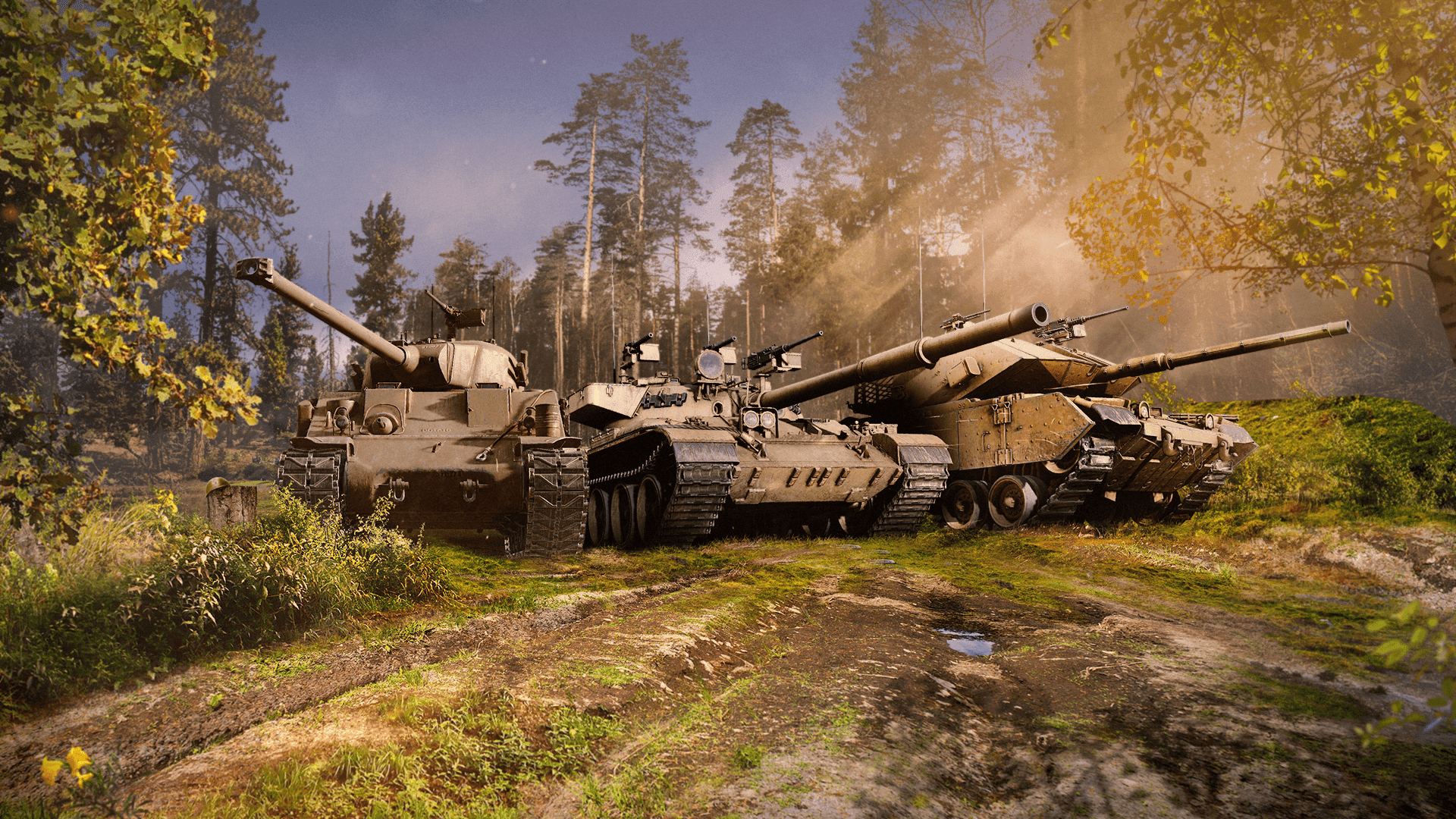
World of Tanks puts you behind the controls of hundreds of historical and prototype armored vehicles across ten-plus nations, fighting 15-versus-15 battles that reward positioning, teamwork, and patie...
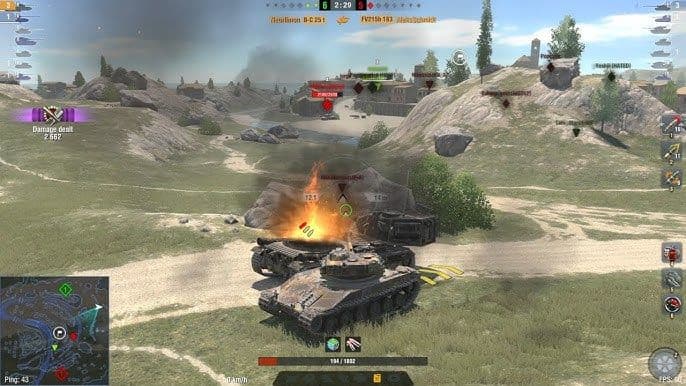
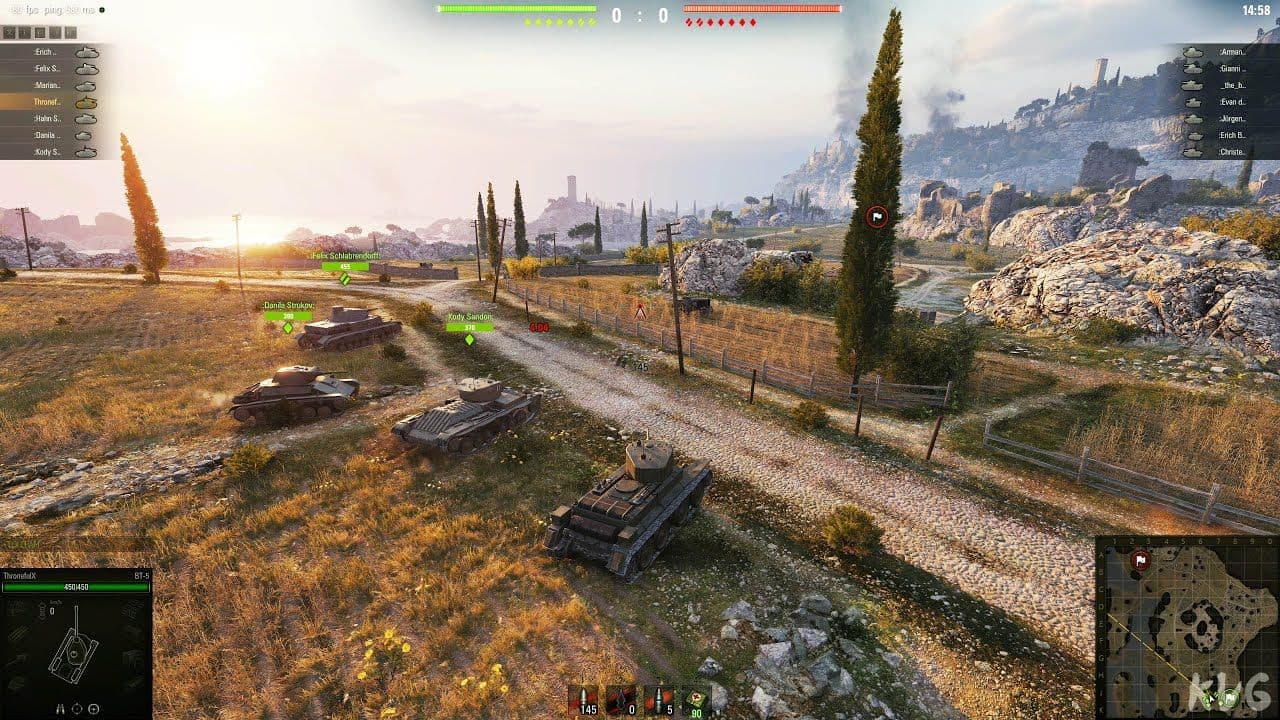
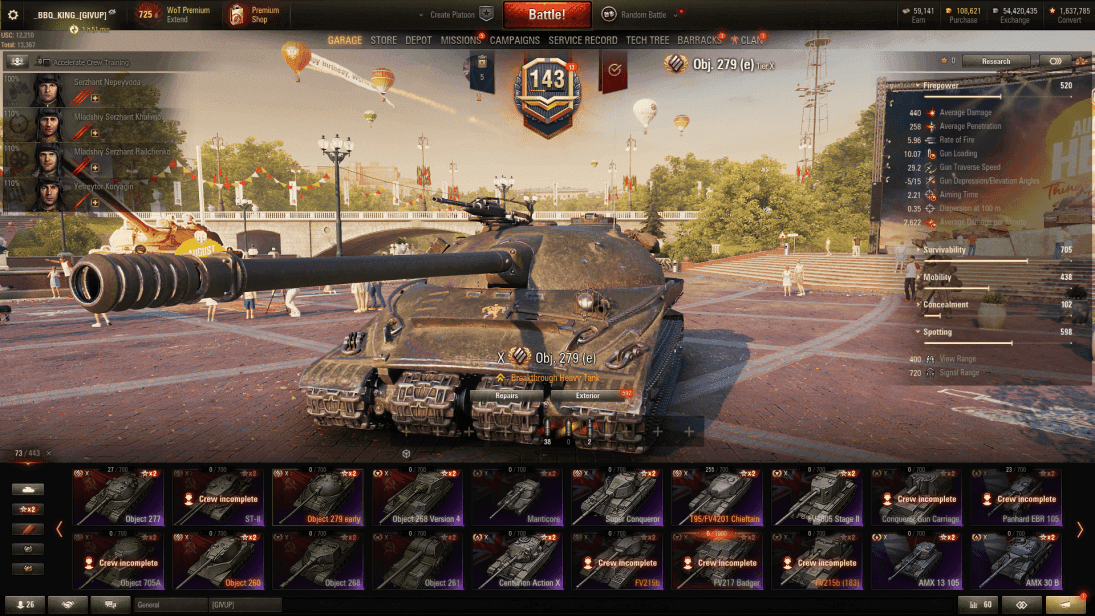
World of Tanks is a free-to-play, team-based armored combat game developed and published by Belarusian studio Wargaming, released in Russia in 2010 and internationally in April 2011. Built around 15-versus-15 battles between historical and prototype vehicles from the 1930s through the 1960s, it turned tank-on-tank gunnery into one of the defining free-to-play franchises of its era, and this World of Tanks review looks at what's left of that game a decade and a half later — a title that has crossed $7 billion in lifetime revenue while somehow still adding entirely new tiers to its tech tree in 2025.
There's no story here, and Wargaming has never pretended otherwise. World of Tanks is a curated slice of 20th-century military hardware — American Shermans, Soviet KVs, German Tigers, British Churchills, and increasingly obscure prototypes that never left a design office — rendered with a level of detail that borders on obsessive. Rivets, weld seams, and period-correct camouflage patterns are all modeled with the kind of care you'd expect from a military history documentary rather than a shooter. Maps lean the same way: reworked coastal towns, snowbound mountain passes, and industrial ruins that double as both battlefield and diorama.
The presentation has been rebuilt more than once. The original BigWorld-derived renderer gave way to the in-house Core engine with the 1.0 update in 2018, and Wargaming is now mid-transition into another overhaul under the banner of Update 2.0, which brought new lighting, shadow, and terrain tech alongside a redesigned Hangar. None of this turns World of Tanks into a graphical showcase — the fixed top-down garage menus and largely static environments still read as a browser-era holdover in places — but the vehicles themselves, which is what the camera actually lingers on, look better than they have any right to for a 15-year-old game.
A new account starts with a handful of Tier I vehicles handed out for free, and the first few battles are less about winning than about learning where your tank's weak spots are relative to everyone else's. You queue into a Random Battle, get dropped onto a map with 14 teammates and 15 opponents, and spend ten to fifteen minutes maneuvering, spotting, and trading shots until one side's base falls or one team is wiped out. Win or lose, you walk away with experience and credits, which is the entire economic engine of the game: experience unlocks new modules and vehicles along a nation's tech tree, credits pay for ammunition, repairs, and the tanks themselves.
The early tiers are forgiving by design — thin armor, weak guns, and forgiving matchmaking that rarely throws a Tier I player against anything much stronger. That changes fast. By Tier IV or V, players are expected to understand angling armor, using terrain for cover, and reading a minimap rather than just aiming and firing, and the jump in difficulty around Tier VIII — where premium ammunition, well-drilled clans, and genuinely skilled opponents start showing up in force — is where most new players either commit to the game or bounce off it entirely.
Every vehicle falls into one of five roles, and understanding them matters more than memorizing any single tank's stats. Heavy tanks soak damage and push chokepoints with thick, well-angled armor. Medium tanks are the generalists — fast enough to relocate, tough enough to brawl, accurate enough to snipe. Light tanks trade armor and firepower for speed and view range, existing to spot enemies for their team rather than to trade shots directly. Tank destroyers hit hard from concealment, often at the cost of a stationary turret or none at all. Self-propelled guns lob high-arcing shells from the back of the map, more a tactical nuisance than a frontline threat.
Combat itself runs on a mix of ballistics and probability: shells have penetration values, armor has thickness and angle, and a shot that should penetrate can still bounce or shatter depending on where and how it lands. That randomness is deliberate — it keeps a good positioning read from guaranteeing a kill every time — but it's also the single most argued-about system in the game's community, since a well-aimed shot that inexplicably misses or a clean bounce off flat armor feels arbitrary in the moment even when the underlying math is sound. Crew skills layer on top of the hardware: a Commander, gunner, driver, and loader all gain individual perks over time — camouflage, repair speed, sixth sense, and dozens of others — that quietly reward keeping the same crew in the same tank rather than hopping between vehicles every match.
Each of the ten-plus nations in the game — the USA, USSR, Germany, France, UK, China, Japan, and others — has its own tech tree branching from Tier I light scouts up to Tier X super-heavies and tank destroyers, and 2025's Update 2.0 pushed the ceiling even higher with the introduction of Tier XI vehicles, the first new top tier the game has added in its history. Grinding a single line from bottom to top can take dozens to hundreds of battles depending on the branch, and free experience, gained slowly or bought outright, lets players skip a stubborn module or two when the grind stalls.
Premium tanks exist alongside the tech tree as a parallel track: vehicles bought outright with real money that earn more credits per battle and don't need research, which makes them the fastest way to fund a garage without selling tech-tree tanks. They're also the game's most persistent point of community friction, since several premium vehicles have historically punched above their tier in ways their tech-tree counterparts can't match — a tension the monetization section below covers directly. Personal Missions and periodic campaigns give another route to rare vehicles and crew-boosting rewards without a straight purchase, for players willing to grind toward a specific, often lengthy checklist instead.
Random Battles are the default and the backbone of the population, but they're far from the only thing on offer. Frontline scales the format up to 30-versus-30 on oversized maps with artillery strikes, tactical vehicles, and a slower, more objective-driven pace than a standard match. Onslaught shrinks things to 7-versus-7 with special abilities layered on top, aimed at players who want competitive structure without a full ranked ladder. Steel Hunter flips the formula entirely into a battle-royale mode played in special, non-tech-tree vehicles on a shrinking map, a genuinely odd fit for the franchise that's stuck around since 2020 because it works. Ranked Battles cap the competitive side with Tier X-only matches and season-based rewards for players chasing a leaderboard rather than a grind.
Above all of this sits Clan Wars, played out on a persistent global map where clans capture and hold provinces for resource income and bragging rights, plus a separate ladder of Clan Wars tournaments for organized 7-versus-7 and 15-versus-15 competition. It's the closest the game gets to a genuine metagame beyond individual matches, and it's also almost entirely invisible to a casual player — you can put a thousand hours into Random Battles and never once touch the global map, which says as much about how compartmentalized World of Tanks' systems are as anything else about it.
World of Tanks is comfortably soloable — queue up, fight, repeat — and the vast majority of its player base does exactly that. Platoons let two or three friends queue together into the same battle, which is the easiest and most common form of coordinated play. Clans are the deeper commitment: they gate access to the Clan Wars map, run their own internal training and tournament scenes, and for a lot of long-term players are the actual reason the game still gets opened after a decade. The wider community around the game, though, has a well-earned reputation for hostility in text and voice chat, and Wargaming's moderation of that hasn't kept pace with the tools other live-service shooters now take for granted.
This is the question that follows the game everywhere, and the honest answer is: partially, and in ways the community has never fully stopped arguing about. Premium ammunition — shells with better penetration than the standard type, purchasable with real money or an unfavorable exchange of in-game credits — lets a player punch through armor that would otherwise bounce a standard round, and at higher tiers using it consistently is close to mandatory rather than optional. Premium tanks compound the issue: several of them have historically outperformed their tech-tree equivalents at the same tier, and a Premium account subscription accelerates the credit and experience grind that everyone else has to earn the slow way.
The counterargument, made just as loudly by veteran players, is that none of this buys raw skill, and a well-piloted stock tank still beats a poorly-played premium one far more often than the discourse suggests — premium ammo can also be earned with credits rather than cash, if slowly. Both things are true at once: free-to-play progression is real and the game is fully playable without spending, but the ceiling for a paying player is measurably higher than for one who isn't, which is a fair definition of pay-to-win even if it isn't the cartoonish version some critics describe. Steam and Trustpilot user reviews skew heavily toward this complaint, with recurring frustration over premium ammo costs, expensive vehicle bundles, and a WoT Plus subscription layer that's added another paid tier on top of the existing ones.
World of Tanks isn't the cultural juggernaut it was in the early 2010s, but calling it dead misreads what a 15-year-old free-to-play game's population actually looks like. Independent tracking puts the game at somewhere between four and six thousand concurrent Steam players on an average day in mid-2026, on top of whatever volume flows through Wargaming's own launcher, which historically dwarfs Steam numbers for this title. That's a fraction of its peak, but it's a stable fraction, propped up by a loyal core that has stuck around through engine changes, crew reworks, and matchmaking overhauls, plus a fresh wave of interest from Update 2.0's Tier XI launch and its accompanying rebalance of more than 350 vehicles. Development is not coasting: new tank lines, mode reworks, and now an entirely new tier of vehicles all arrived within the last twelve months, which is more structural change than most decade-old live-service games attempt at once.
Picture an old tank sitting in a motor pool: the paint's faded, a few panels have been swapped for newer parts, but the engine still turns over every time someone climbs in, and it still puts a round on target when it needs to. That's World of Tanks in its sixteenth year — dated in places, argued over constantly by the people who love it most, and still fundamentally capable of delivering the thing it was built for the moment a match loads. It won't win over players who bounce hard off gacha-adjacent premium economics or who need a story to stay invested, and the grind past the midgame will test anyone unwilling to either pay or be patient. But for a player who wants ten to fifteen focused minutes of positioning, patience, and the occasional perfectly-angled bounce, the tank is still running, and there's no sign Wargaming plans to park it for good.