 F2P · Live
Lineage 2
Aden's castles never stay in the same hands for long, and Lineage II has built an entire twenty-three-year…
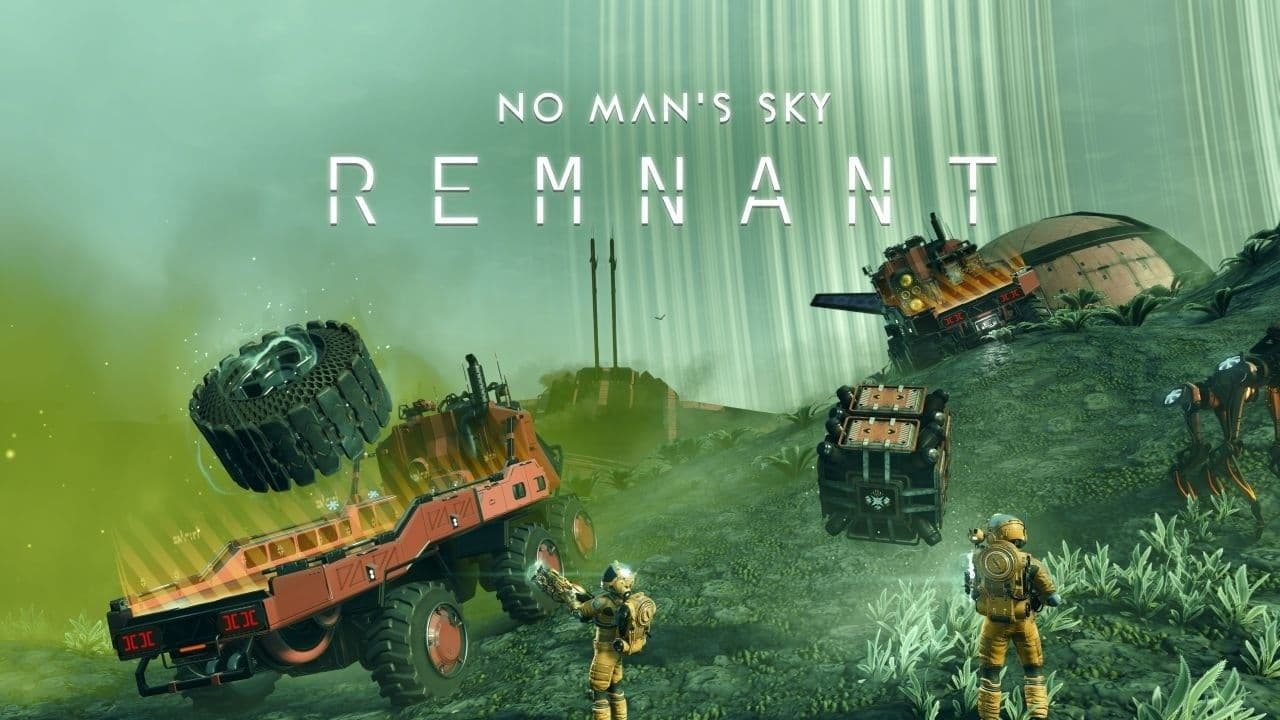
No Man's Sky's galaxy holds quintillions of procedurally generated planets, each one landable with no loading screens breaking the illusion. Hello Games has turned a famously rocky 2016 launch into a ...
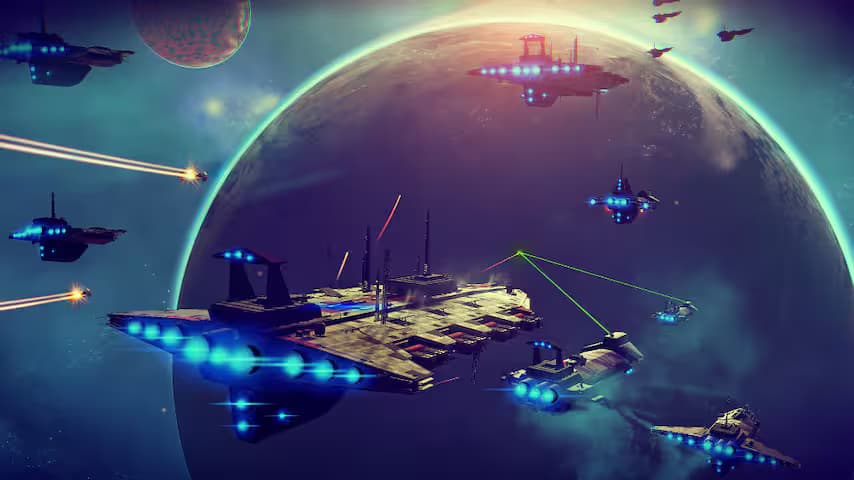
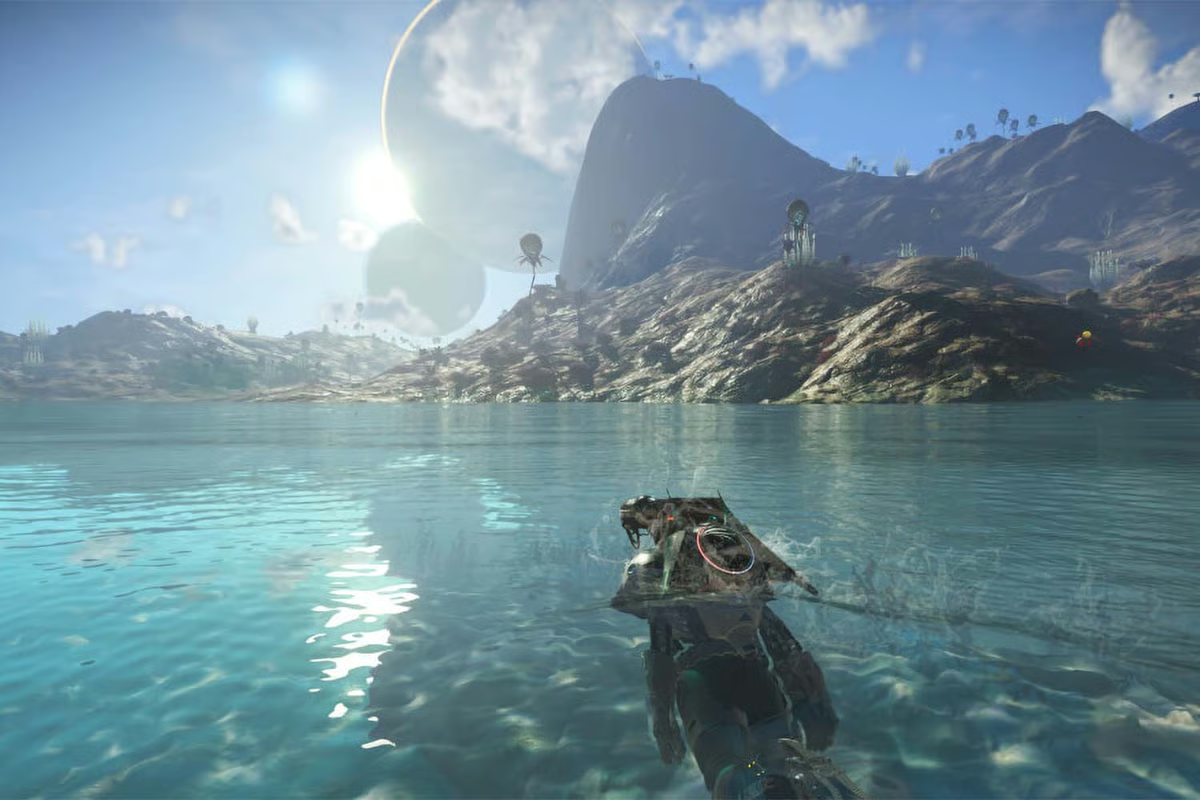
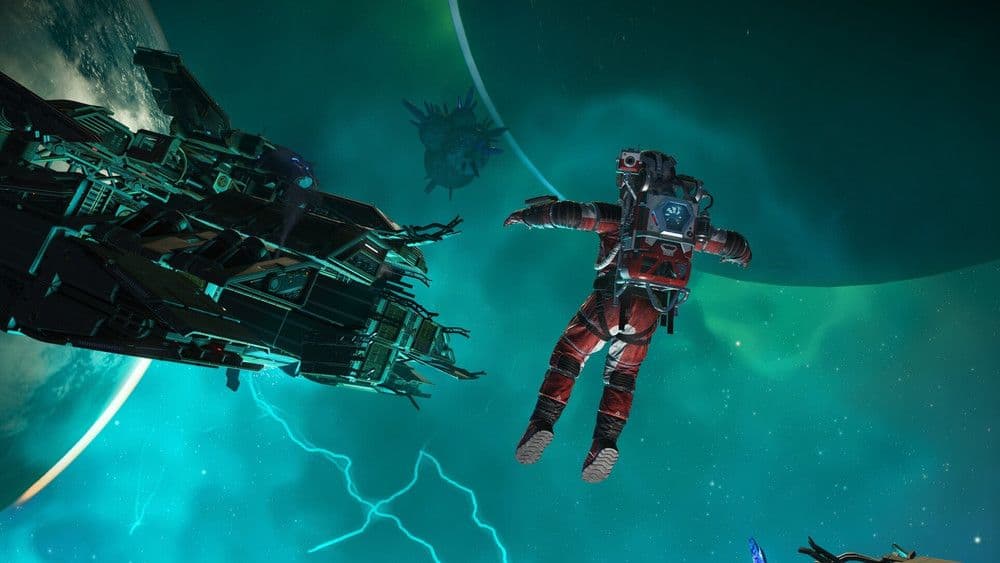
No Man's Sky is a space exploration and survival game developed and published by the British studio Hello Games, released on PlayStation 4 and PC in August 2016 and now running on nearly every platform that matters, from Steam Deck to Nintendo Switch 2. It launched as one of the most infamous disappointments in modern gaming, promising features it didn't ship and drawing a reputation it spent the better part of a decade clawing back. A hundred-plus free updates later, that clawback is more or less complete: the game just passed its tenth anniversary, Steam's all-time review rating has climbed into Very Positive territory, and Hello Games shipped its most experimental system yet, Xeno Arena, in April of this year. Whether that decade of goodwill translates into a game worth your time in 2026 depends heavily on who's asking.
The premise hasn't changed since launch, because it didn't need to. You wake up beside a broken starship on a planet you've never heard of, in one of over 18 quintillion procedurally generated worlds that make up a single shared universe. Every player technically exists in the same galaxy, discovering and naming the same planets, though the sheer scale means running into another explorer by accident is close to a statistical impossibility. A soft narrative thread — the Atlas, a cosmic intelligence pulling every traveler toward the galactic core — sits underneath everything, doled out through terminals and derelict signals rather than cutscenes, and it's easy to play for a hundred hours without engaging with it directly. The universe is the pitch, not the plot.
Strip away the marketing and the first twenty minutes are mundane in a way that works in the game's favor: your starship is busted, your exosuit has almost no cargo space, and the immediate task is scanning nearby plants for iron and carbon just to patch a hull breach. You mine a rock face with your multi-tool's cutting beam, feed the raw material into the ship's repair interface, and take off for the first time — a small, satisfying loop repeated with more sophisticated ingredients for the rest of the game. Within the first hour you'll have crafted a basic scanner upgrade, fought off a swarm of Sentinels for mining too aggressively near a monitored zone, and made first contact with an alien trader whose dialogue tree you'll only half understand until you've learned enough words of their language.
What a brand-new player notices immediately is how little the game insists on. There's a critical path — the Artemis storyline eventually points you toward base building, freighters, and the galactic center — but nothing forces you down it. You can spend your first ten hours doing nothing but flying from planet to planet cataloguing wildlife for the in-game Discoveries archive, and the game will happily let you. That openness is the entire appeal for a certain kind of player and, for another kind, the exact thing that makes the early game feel aimless. No Man's Sky trusts you to build your own goals long before it hands you any of its own.
By the time a new player reaches double-digit hours, the loop has grown considerably more moving parts. Base building lets you claim land on any planet and construct anything from a simple prefab shelter to an elaborate multi-room complex wired with automated farming and mineral extractors. Exocraft — ground vehicles like the Nomad hoverbike or the heavily armored Colossus — turn surface travel from a walking simulator into something closer to off-roading. Freighters, purchasable after a scripted space battle or bought outright with in-game credits, function as portable capital ships with their own room-by-room construction and a squadron of frigates you can send on resource-gathering missions without personally flying anywhere. None of this was in the game at launch. Every piece of it arrived as a free update, and that fact matters more to how the game feels than any individual system does.
This is where the newcomer and veteran experiences start to diverge sharply. A player starting fresh in 2026 meets all of this as one coherent, if dense, package — a lot to learn, but nothing that contradicts anything else. A veteran who played at launch and stepped away is meeting something closer to a different game wearing the same title, and the adjustment isn't always smooth. Long-time players have watched core mechanics get rebuilt more than once — inventory management alone has been overhauled several times, from clunky grid-based slots to a more forgiving stacking system — and the accumulated weight of a decade of features can make the settings and crafting menus feel like an archaeological dig through design decisions from different eras of the game's life.
Multiplayer was the launch promise Hello Games famously failed to deliver, and its eventual arrival is still one of the better redemption beats in the game's history. Up to four players can squad up in a persistent session, land on each other's planets, build shared bases, and fly in loose formation through space combat — the Nexus, a social hub aboard the Space Anomaly, exists specifically to let players post multiplayer missions and find groups without needing a Discord server. There's no guild system in the traditional MMO sense and no structured PvP progression; a handful of outlaw stations support consensual player-versus-player skirmishing, but it's a side activity rather than a pillar. This remains, at its core, a solo game that happens to support company, not the other way around, and that framing keeps the social layer pleasant rather than obligatory.
A returning veteran will notice how much friendlier this system has become than it used to be. Early multiplayer sessions were plagued by desync issues that made shared base building genuinely painful, with structures sometimes failing to load correctly for anyone but the person who built them. Cross-save and cross-play now stitch every platform together into the same pool of potential squadmates, which quietly solved one of the game's oldest complaints: a friend on Xbox and a friend on PlayStation can finally land on the same planet without either of them touching a second platform.
The crafting web is genuinely deep once you're past the early game. A typical late-game chain looks something like this: mine chromatic metal and gather cactus flesh out on a planet's surface, dump both into a portable refiner to produce Chromatic Metal Sulphide, then feed that into a chemistry lab alongside di-hydrogen to output the higher-tier ionised cobalt needed for the next multi-tool upgrade. Refiners turn raw ore into processed alloys, processed alloys feed into technology blueprints, and technology blueprints unlock better ships, better suits, and better multi-tools. A player-facing galactic economy exists too — trading posts buy and sell commodities whose prices fluctuate by star system, and a dedicated cottage industry of players has built entire playstyles around hauling low-cost goods to systems where they sell high. It's not a player-driven auction house the way a traditional MMO would build one; supply comes from NPC stations rather than other players' listings, which keeps the economy stable but also means it can't be disrupted or cornered the way a real player market can.
The endgame, such as it is, has always been a moving target for No Man's Sky, and this year has moved it further than most. Expeditions — limited-time, structured challenge runs with their own narrative framing and exclusive cosmetic rewards — have become a recurring seasonal rhythm rather than a special event, giving veterans a reason to start a fresh save even after they've built out a permanent base elsewhere. April's Xeno Arena update was the bigger swing: it lets players tame and battle the creatures they've been scanning for a decade, using holographic recreations in a system the community immediately, and not unfairly, compared to Pokémon. It's a strange fit bolted onto a hard-science space sim, and whether it clicks depends on whether you came to this game for its alien biology or its sense of cosmic scale — the two audiences don't always overlap.
May's Swarm update leaned back toward the game's combat identity, reworking Sentinel encounters and space skirmishes with sharper enemy variety, and the patch cadence since has stayed unusually tight for a ten-year-old title — Hello Games' small team has pushed out more than a dozen point patches since May alone. For a veteran checking back in after a long break, that patch history is reassuring: this isn't a studio coasting on a redemption narrative, it's one still actively rebuilding systems in public. For a newcomer, it mostly just means the wiki page you're reading might already be a version behind.
Is No Man's Sky pay to win? It can't be — there's nothing to buy. The game is a one-time premium purchase, priced at $59.99, with no expansion packs, no cosmetic shop, and no in-game currency for sale. Every major content update since launch, from multiplayer to base building to this year's Xeno Arena and Swarm patches, has shipped free to anyone who already owns the game. That's not a marketing angle; it's ten years of consistent behavior from a studio that could have monetized far more aggressively and chose not to. The tradeoff is the upfront price tag doesn't drop much — it's still routinely full price outside of sales — but for a genre this piece has otherwise spent covering gacha rates and pity systems, a game that simply ends its transaction at checkout is worth noting plainly.
Population figures for a single-player-first game like this are a different kind of number than they'd be for an MMO, but they're worth stating honestly rather than gesturing vaguely at them. Steam alone typically shows somewhere in the neighborhood of eight to thirteen thousand concurrent players on an ordinary day, spiking well past a hundred thousand around major content drops, against an all-time peak above 200,000 recorded during a past update launch. That's before counting console and Switch players, who make up a large and untracked share of the base. It's not the crowd of a live-service juggernaut, and Hello Games has never pretended it needs to be — this was never designed as a game you play shoulder-to-shoulder with strangers, and a modest, steady concurrent count is exactly what a decade-old solo-friendly sandbox should look like.
None of this means the game is frictionless. The tutorial, even after a decade of revisions, still front-loads a lot of menu literacy before the fun clicks into place, and new players who bounce off the first few hours generally cite the same thing: too many currencies, too many crafting trees, not enough of a clear "why" before the game asks you to learn all of it. Veterans have their own list of complaints, and it centers on inconsistency — a system introduced with fanfare two years ago sometimes sits untouched while an entirely new one arrives to solve an adjacent problem, and the settlement management feature from the Frontiers update is a common example cited as half-finished and quietly abandoned by later patches. The procedural generation that makes the galaxy feel infinite also means planetary variety plateaus faster than the promise implies; after a few hundred worlds, you start recognizing the underlying templates the algorithm is remixing; even loyal veterans concede this rather than pretend it away.
Combat, too, remains the weakest of the game's five stated pillars. Ground fights against Sentinels and space dogfights against pirates are functional rather than distinguished, and the Swarm update's improvements, welcome as they are, haven't turned it into the reason anyone plays. That's less a flaw than an honest acknowledgment of where the studio's four-person origin story still shows: this is a team that builds systems and scale extraordinarily well and has never quite matched that with combat feel, and a decade of patches hasn't fully closed that gap.
A newcomer picking this up today gets something rare: a ten-year overnight success story handed to them fully assembled, with none of the years of waiting the original community had to sit through. The systems are dense but consistent, the price is a single honest transaction, and the sense of scale — an actual, functioning galaxy rather than a themed backdrop — still lands the way it was always meant to. A returning veteran gets a messier proposition: real, substantial new content in Xeno Arena and the Swarm rework, sitting alongside years of accumulated design decisions that don't always talk to each other cleanly, and a combat system that still isn't the reason to stay. Both of those things are true of the same game at the same time, and neither cancels the other out. What's changed most since launch isn't any single feature — it's that Hello Games earned the right to be judged on what No Man's Sky actually is now, rather than what it promised to be a decade ago, and on that basis it holds up.