 F2P · Live
Lineage 2
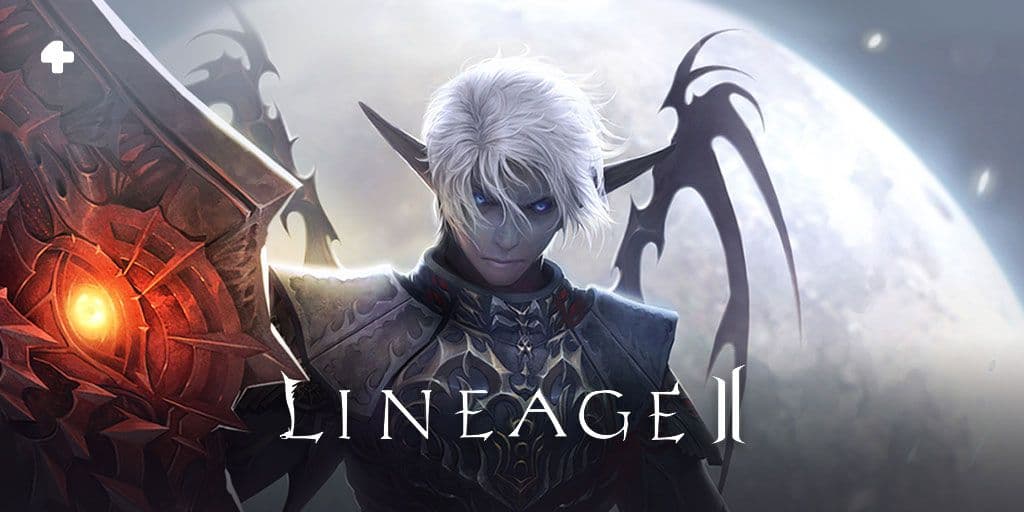
Aden's castles never stay in the same hands for long, and Lineage II has built an entire twenty-three-year…
Civilization collapsed generations ago, and EVE Frontier hands survivors nothing but a ship, a signal from three black holes, and the very real job of building whatever comes next. It's a blockchain-b...
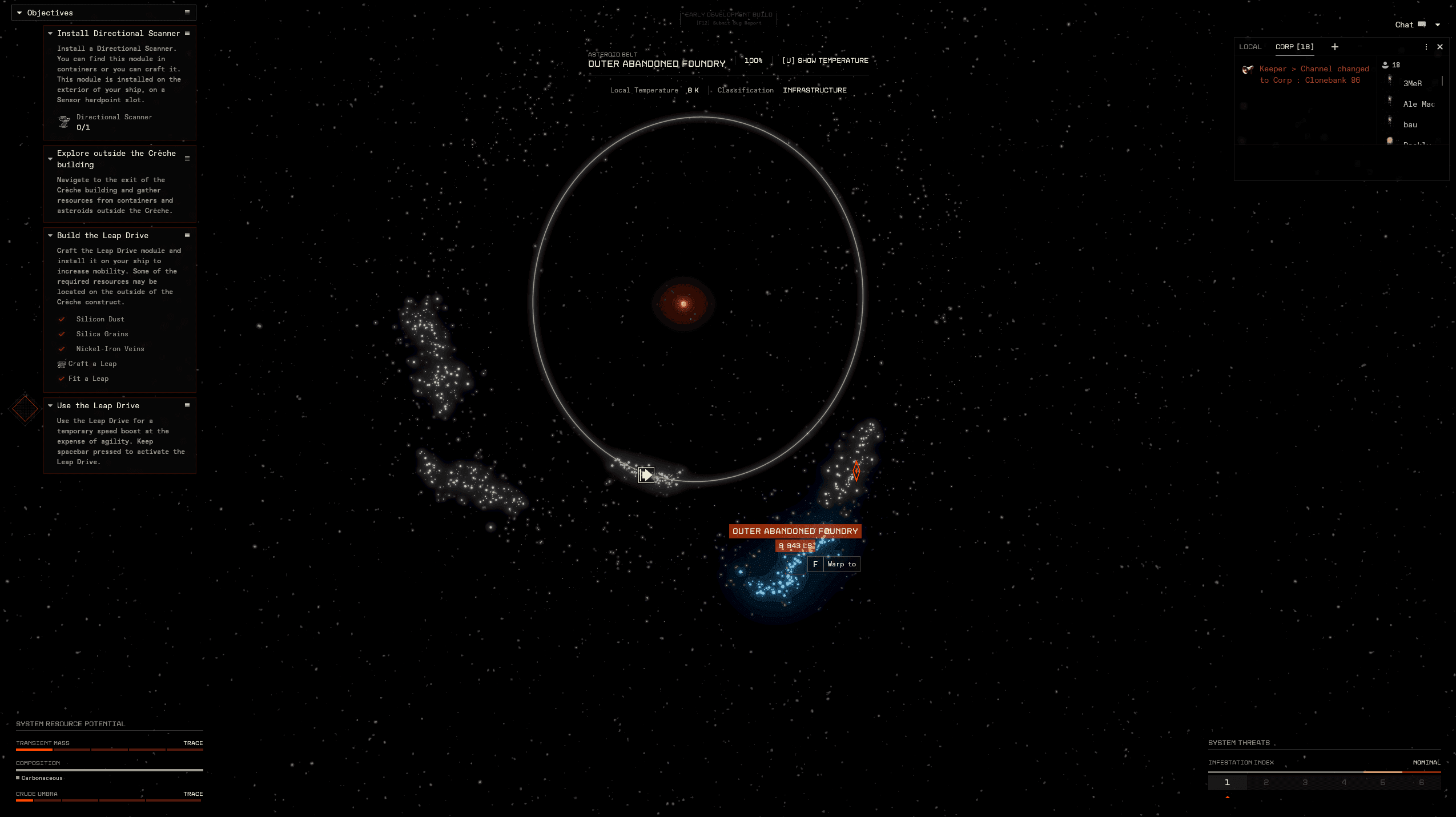
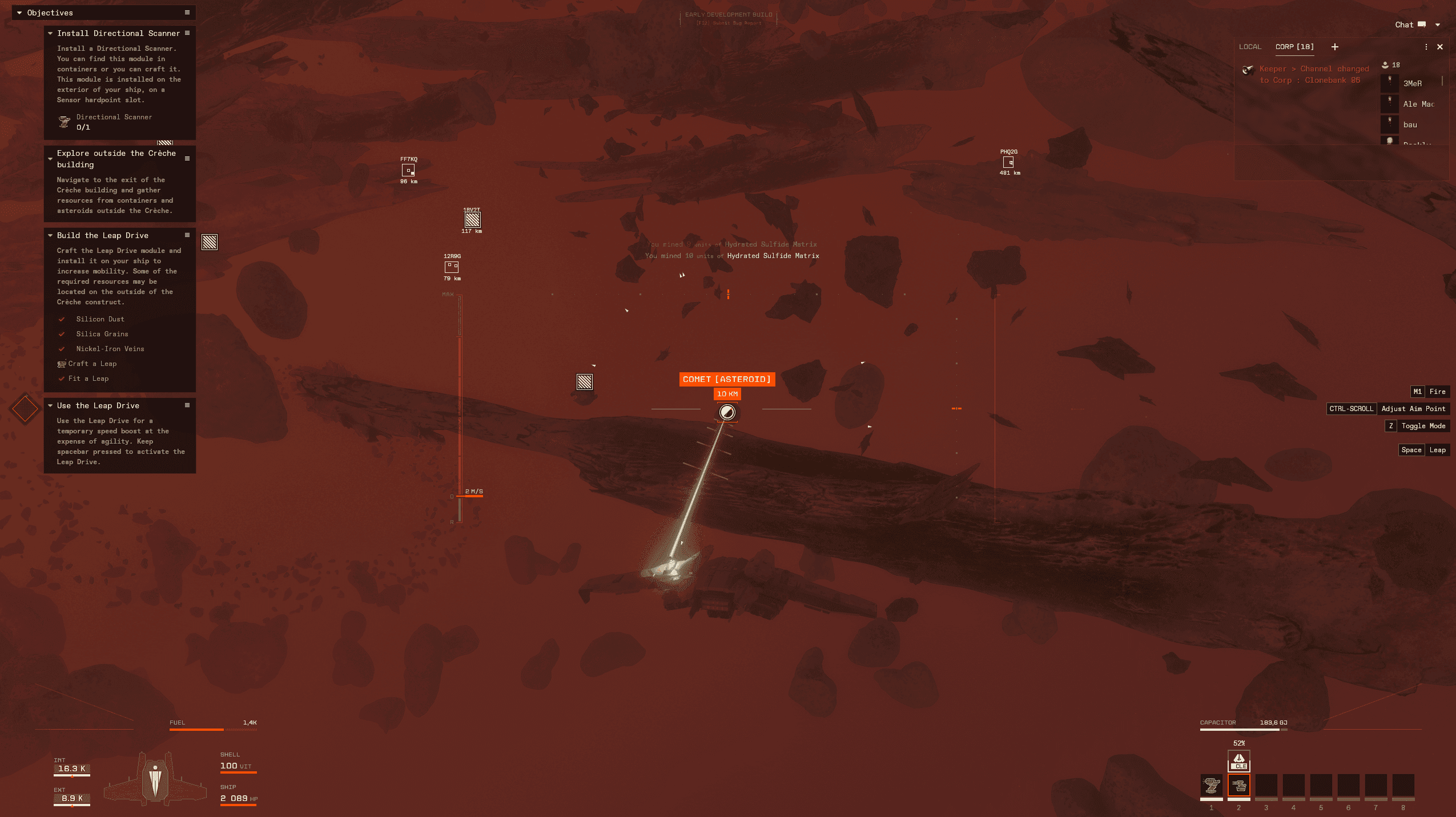
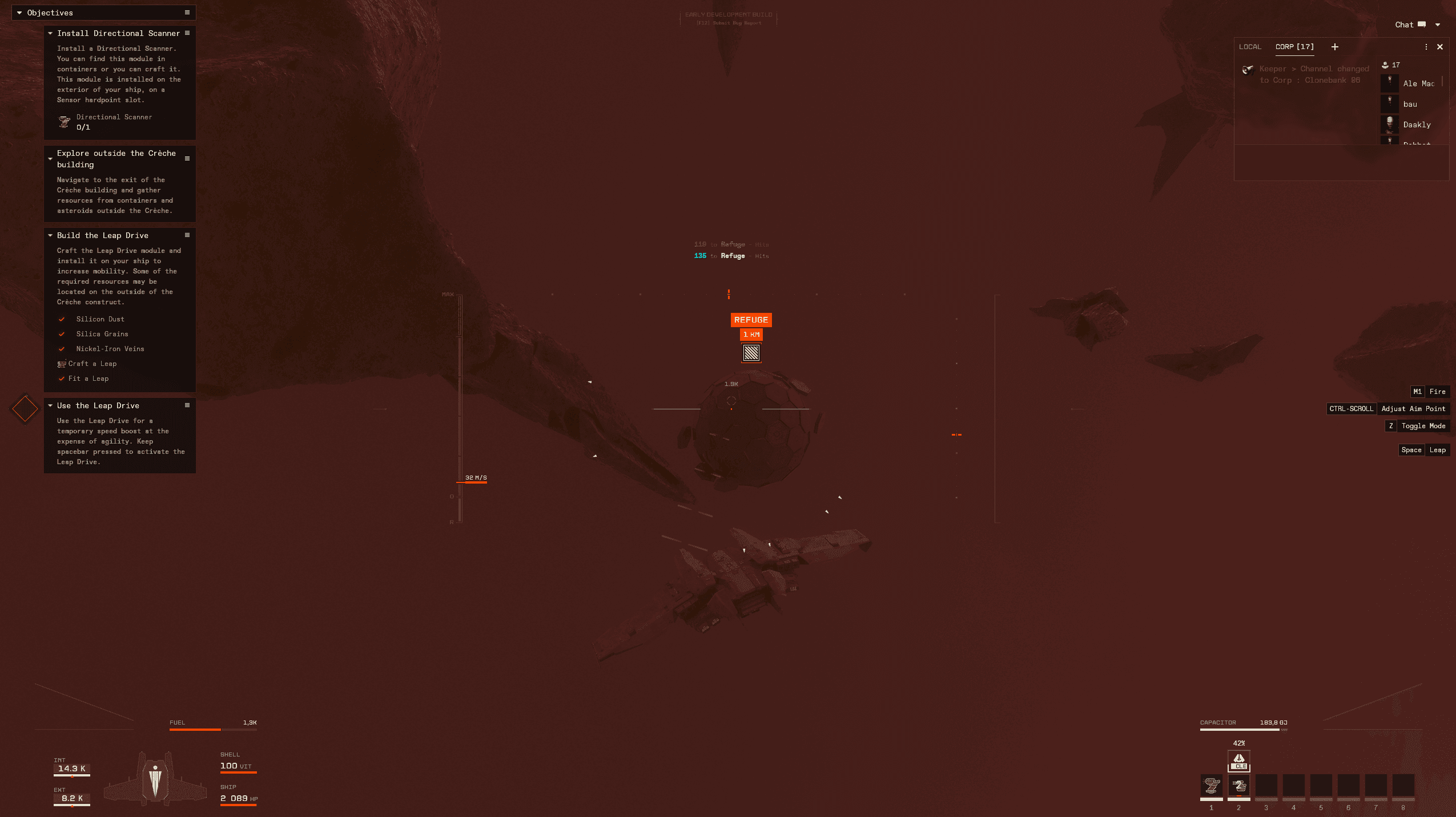
EVE Frontier is a blockchain-based space survival sandbox from Fenris Creations, the Icelandic studio formerly known as CCP Games, in open pre-launch testing since December 2024. Ships, structures, and much of the in-game economy live on the Sui blockchain rather than a conventional game server, and players are meant to eventually program and govern large parts of the world themselves through code. As of Cycle 6: Sanctuary in August 2026, there is still no announced release date.
Before getting into what EVE Frontier plays like today, it's worth pinning down what the studio is actually promising, because the current build is closer to a construction site than a finished game. Fenris Creations wants to eventually step back from running the galaxy directly and become, in their own words, just another service provider inside a world players govern. Stations, storage depots, and turrets in EVE Frontier are called Smart Assemblies — not decorative props, but programmable objects whose behavior players write themselves. Tribes are meant to mint their own currencies, gate their own territory, and eventually run entire regional economies with no developer intervention.
That vision runs on a specific technical stack: the Carbon engine, Fenris Creations' proprietary tech, paired with MUD, an on-chain framework built by Lattice. The whole thing originally ran on Ethereum through the Redstone layer-2; since Cycle 4, it runs on the Sui blockchain instead, chosen for cheaper and faster transactions. The studio is candid about the catch: if too few players are willing to write smart contracts rather than just fly and shoot, the decentralization pitch stalls out. That's an honest admission, and also the single biggest open question hanging over the whole project.
The practical payoff of that pitch is easiest to see in the marketplace. In a typical MMO, prices and trade history live on a publisher's server, and they vanish the moment that server gets shut down. In EVE Frontier, ships, structures, and trade records live on the blockchain instead — in principle, they'd outlast the studio itself. Community sites already lean on this: independent tools pull kill data and market activity straight from on-chain records, with no official API and no need for Fenris Creations' cooperation. For a game still charging for alpha access, that's an unusually concrete example of a transparency promise already paying off, rather than sitting on a roadmap slide.
EVE Frontier answers the "why does this experiment exist" question through its fiction. The setting is the Frontier, a shattered galaxy pinned in the gravity of three black holes collectively called the Trinary. Players wake up as Riders — fragments of a lost civilization, pulled from forgotten data graves by a mysterious system called the KEEP, with no memory and no ship but the one they're bound to. Scavenger drones patrol the wreckage of the old world, certain stars are hostile enough to overheat and destroy a ship that lingers too long, and proximity to black holes triggers a desync effect that degrades a pilot's own health, not just their hull.
Partially, and the honest answer matters because early onboarding has been one of the loudest community complaints. One veteran player's blog, updated as recently as this August, describes being flatly "defeated by the tutorial" in Cycle 6 — an overloaded interface and none of the genre's usual hand-holding. Fenris Creations clearly heard some version of that criticism: rewriting the new-player flow was one of Sanctuary's stated priorities, and the basic survival loop is now easier to follow than in earlier Cycles.
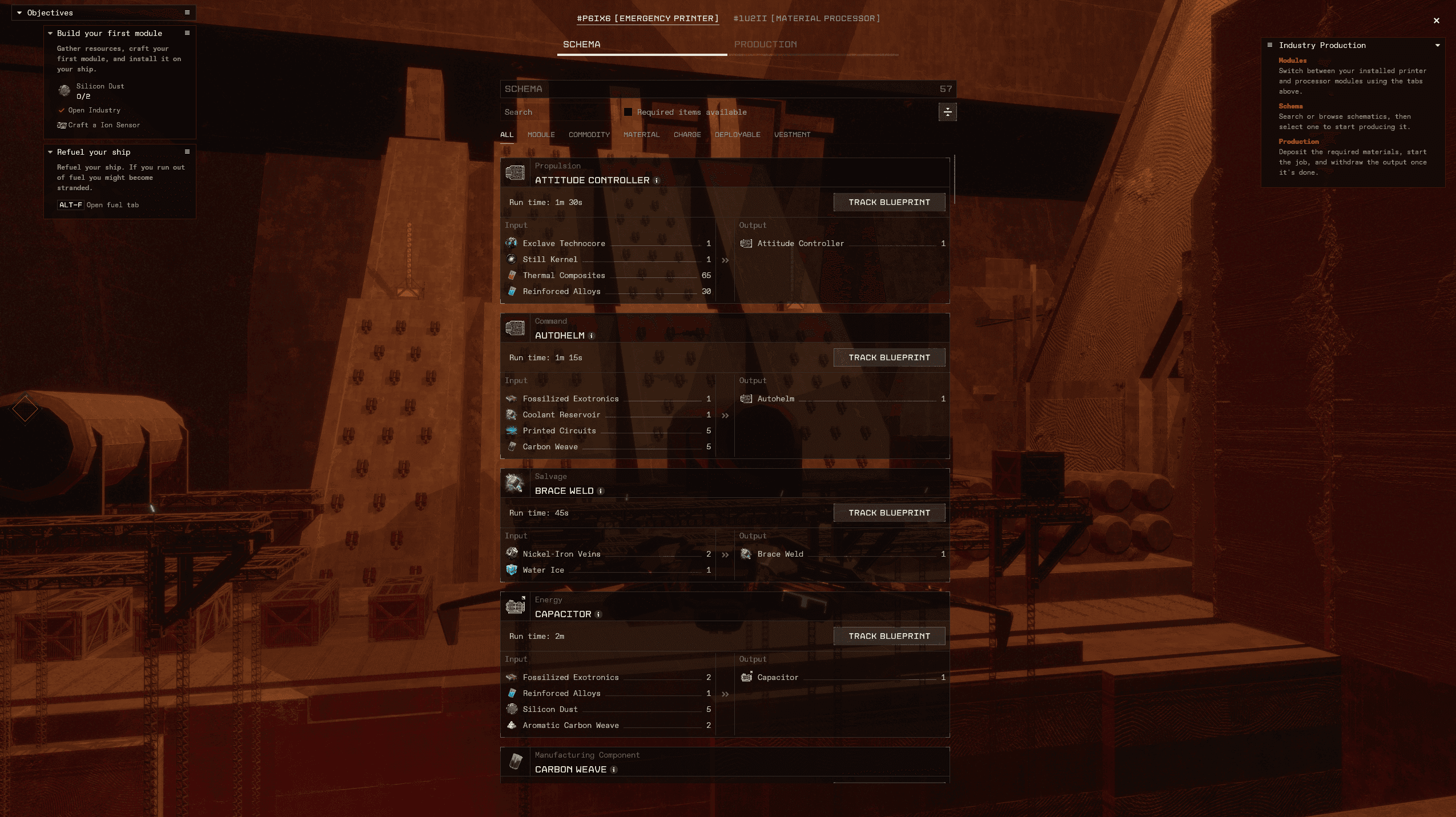
What that loop actually looks like: no map, no quest markers, no NPC with an exclamation point over its head. Just a damaged ship, a thin cushion of fuel and energy, and the job of figuring out which nearby wreck or asteroid can be turned into repair material. Mine raw ore → refine it into components → print modules at a base printer → patch the ship back together well enough to risk pushing further out. It's unforgiving by design, and that design choice alone will filter out a chunk of the audience before they see anything the game is actually proud of.
Mostly yes, though it's still finding its footing. EVE Frontier drops the tab-target system that defines its parent game, EVE Online, in favor of direct third-person control on WASD, with aiming and physics built around positioning rather than clicking a name in a target list. It's playable on a gamepad too — Fenris Creations has openly talked about getting the game onto Steam Deck as a side priority. Even players who like the direction call the current combat feel rough: the muscle memory of clicking a target instead of aiming at one doesn't disappear overnight, and early fights can look clumsier than the tactical dogfights the marketing implies. It's also playable with a mouse alone, though positioning matters enough that treating it as a point-and-click shooter will get a Rider killed against anyone who's actually practiced flying.
Recent patches are chipping away at that roughness. A light, maneuverable hull called Reiver arrived alongside a portable turret and pressure-resistant suits, giving pilots more than one way to approach a fight for the first time in a while. It's a small arsenal by MMO standards, but it's growing patch by patch instead of staying static for a year at a time.
Every Rider starts with a Seed — a bare-minimum hull, not a finished ship — and expands it by acquiring, evolving, and slotting in new modules over time. Cycle 6's modular ship system turned this from a mostly fixed asset into something closer to a real build: engines, armor, and other components are now independent pieces that can be swapped or upgraded without scrapping the whole vessel. There's no traditional class system layered on top of any of this. A player's role comes entirely from the ship they've assembled — a scout rigged for sensors plays nothing like a heavy hull bristling with turrets, even though it's the same amnesiac pilot behind the controls either way.
Because progression lives in the ship rather than the character, losing an expensive one in a fight doesn't just cost gear — it resets a chunk of accumulated specialization. That's exactly why cautious flying is already a habit among the current player base, even in a test build nobody's paying real stakes on yet. It also means the modular ship system carries more weight than it might in another game: swapping a single burnt-out module is cheap, but replacing the whole vessel is not.
The name Sanctuary is more literal than it sounds. Cycle 6 launched with a full server reset specifically to level the playing field between new arrivals and players who'd spent the previous Cycle building up an advantage — a reasonable call for a testing model that resets this often, since carrying six months of accumulated edge into a fresh Cycle would make the reset pointless for anyone joining late.
Progression here doesn't work like a normal persistent MMO. Instead of one continuous world, EVE Frontier runs in Cycles, and nearly every Cycle ends with a full or near-full wipe of ships, bases, and stockpiled resources. That's a hard sell on its face — why build anything if it gets erased in a few months? The studio's answer is Grace, a currency earned through missions and activity that converts into permanent EVE Points at the end of each Cycle, and those points survive every reset. What EVE Points will actually be worth hasn't been detailed; Fenris Creations says only that they'll become "more meaningful" over time, which is either a genuine long-term plan or a placeholder promise, and there's currently no way to tell which from the outside.
Cycle length has at least stabilized. Since December 2025 each Cycle runs roughly three months instead of the more frequent resets used earlier in testing, and Cycle 6: Sanctuary launched on June 25, 2026 with another full server reset alongside the modular ship overhaul and a set of new Dormant Gates leading into unexplored regions.
More than marketing copy, though not yet the full picture Fenris Creations describes. Because ship, structure, and trade data live on-chain, independent sites already run kill trackers and tribe leaderboards pulled straight from blockchain records, with no need for an official API or the developer's blessing. For a game still in paid alpha, that's a rare case where a transparency pitch is already delivering something a player can actually go look at, rather than a promise parked in a roadmap.
The crafting loop underneath it is fairly conventional for the genre: mine ore and salvage from wrecks, refine it into usable components, print modules — a recent patch bumped printer batch sizes up to five modules at once, cutting down on some of the early repetition. Gates and warp points got tougher in a late-July update too, hinting that chokepoints between systems may end up mattering more as the economy matures.
Grinding is still very much part of the loop, and Fenris Creations doesn't pretend otherwise — hauling ore and running repeated salvage runs remains the backbone of an early Cycle. The Grace-to-EVE Points conversion at least gives that repetition a claim to permanence beyond the current wipe cycle, even if what that permanence actually buys is still an open question the studio hasn't answered in public.
Solo play is possible, but EVE Frontier clearly wants players in Tribes — its term for guilds. Since Cycle 4, groups can coordinate base construction directly, splitting roles and pooling resources instead of leaving one member holding every access key. The clearest demonstration so far was staged rather than organic: Cycle 5's "Shroud of Fear" event put two Tribes, each led by CCP staff, into a scripted war over territory that regular players could join on either side. It was closer to a live-action tutorial than genuine emergent conflict, but it signals where the studio wants this to go — territorial wars that run without a script once enough players are actually fighting over resources that matter to them.
PvP itself isn't just a talking point. The same third-party kill trackers mentioned above show tribe rankings updating regularly, meaning fights over systems happen outside of staged events too. What's still missing is a mature territorial control layer — most current conflicts are tied to specific resource nodes rather than a persistent ownership map like the one EVE Online has spent two decades building.
There's no free-to-play tier yet and no Steam listing — the client downloads directly from evefrontier.com. Access runs through three tiers of Founder Access priced between $39.99 and $99.99, each bundling a chunk of post-launch premium subscription time, early access to new builds, and a reserved character name. Roughly every three to four months, usually timed to a new Cycle, the studio opens a short free trial window instead — Cycle 6 shipped with a five-day trial that's set to run through December 9, 2026. Fenris Creations has stated the eventual launch model will be free-to-play with an optional subscription, though it hasn't attached a date to that plan in any public material.
Buying into EVE Frontier's Founder Access today isn't paying for a game — it's paying to watch one get built, one three-month Cycle and one server wipe at a time, and most players simply aren't signing up for that transaction. The free trial windows exist precisely because the studio knows this; five unpaid days will tell a curious player more about where EVE Frontier is headed than any amount of marketing copy about decentralized economies.
What tips this from a curiosity into something worth actually watching is the studio behind it. Fenris Creations bought its own independence back from Pearl Abyss for $120 million in May 2026 and picked up a Google DeepMind research partnership in the same announcement, which means the biggest threat to an ambitious, expensive, multi-year experiment like this one — a parent company losing patience and pulling the funding — is off the table for now. That doesn't make EVE Frontier good yet. It makes the bet on where it's going considerably less reckless than it looked a year ago.
Not currently. Access requires either a Founder Access pack ($39.99–$99.99) or one of the periodic free trial windows tied to new Cycles; Fenris Creations has said the eventual launch model will be free-to-play with an optional subscription.
Yes, though it's uneven. Independent kill trackers already show regular tribe-versus-tribe activity, and Cycle 5 featured a staged tribe war event, but there's no mature territorial control system yet.
Only for players drawn to watching an ambitious system take shape rather than a finished product — expect server wipes, rough ship combat, and placeholder-grade station art alongside genuinely interesting economic design.
No. It's in paid, open pre-launch testing under a Cycle system with periodic server-wide wipes, and no release date has been announced.