 F2P · Live
Lineage 2
Aden's castles never stay in the same hands for long, and Lineage II has built an entire twenty-three-year…
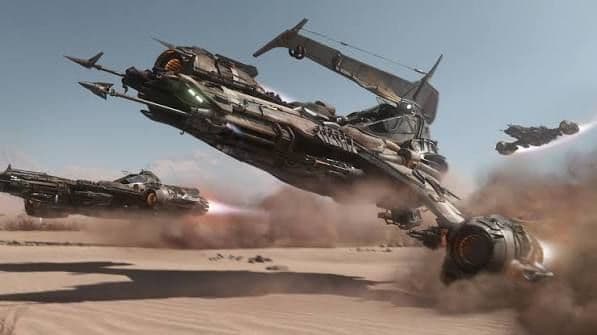
Backed by more than a billion dollars from players since 2012, Star Citizen is the most heavily crowdfunded game ever made and still runs as an alpha. Three star systems, cargo you load by hand, ship ...
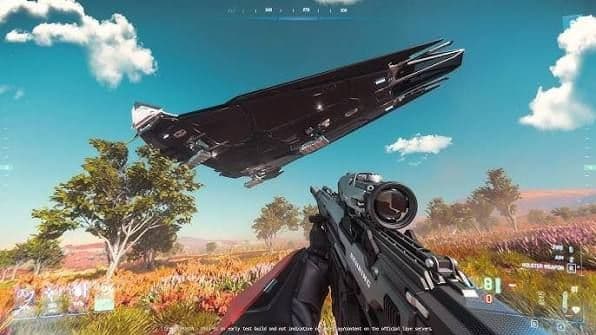
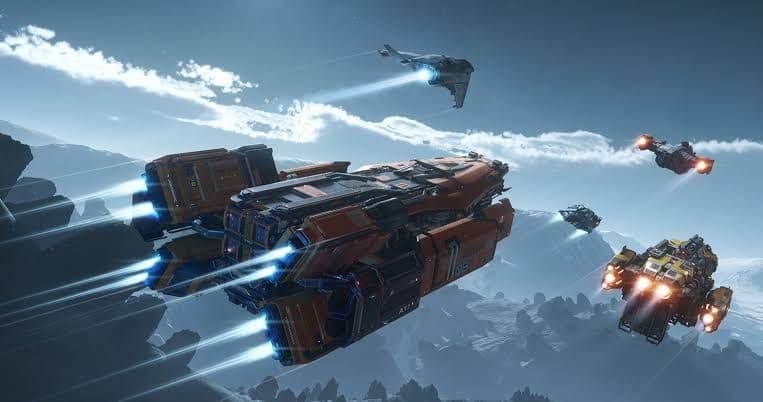
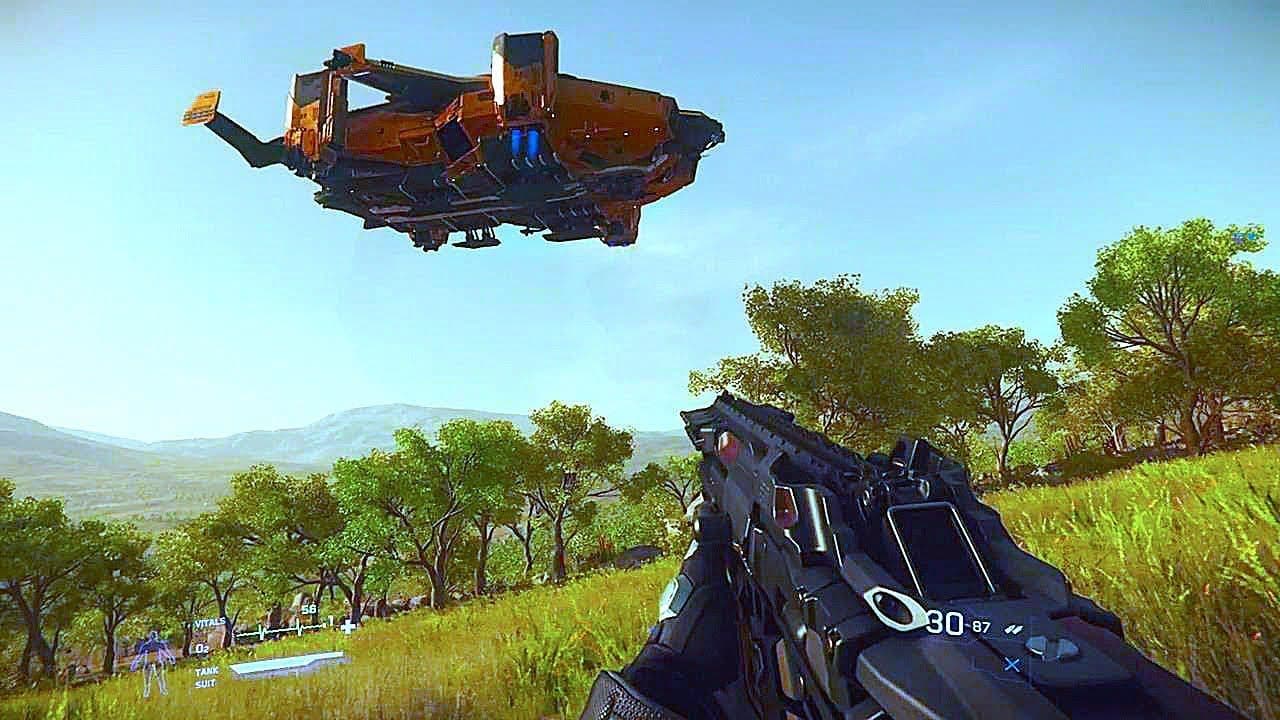
Star Citizen is a space simulator built on MMO sandbox systems, developed by Cloud Imperium Games under Chris Roberts, the designer behind the Wing Commander series. It has been funded directly by players since October 2012, when a Kickstarter campaign pulled in $2.1 million against a $500,000 goal and promised a 2014 launch. In May 2026 the pledge tracker on the official site passed one billion dollars, the largest sum ever raised by crowdfunding for a video game. The project is still officially an alpha.
What actually runs on a PC in August 2026 is more interesting than that summary suggests. Three star systems, flight from a station bunk to a planet surface without a single loading screen, roughly a dozen careers, cargo you load by hand, ship components you repair under fire, and a crafting system that ties mining output to weapon stats. The current build is Alpha 4.9 "Frontier Tensions", released 15 July 2026; Alpha 4.10 has been on the public test servers since late July without a live date.
The setting is the thirtieth century, and the map is currently split between civilisation and the frontier. Humanity spread across dozens of systems under the United Empire of Earth, a bureaucracy with a navy, a police force and a tax office. Beyond the settled worlds, imperial patrols show up in time to catalogue the wreckage. Alien species share the galaxy: the trader Banu, the militant Tevarin, and the Vanduul, a raider culture whose war with humanity provides the background to everything.
Stanton is the corporate showcase — four planets owned outright by companies, landing cities the size of small countries, working security response and a criminal record system that follows you around. Shoot a peaceful hauler here and you acquire a crimestat, lose station access, and become the target of the same bounty contracts you used to take. Pyro, added in December 2024, inverts all of it. The system has no communication arrays, which means no way to report a crime, which means no law in any functional sense. Nyx arrived in late 2025 and has been filling with content nearly every patch since, including the QV Breaker stations in the Keeger Belt. Two more systems, Castra and Terra, are promised for the 1.0 release.
Scale inside each system rests on honest geometry rather than a long list of markers. Planets are spheres hundreds of kilometres across, and the game charges you real minutes to cross one even at quantum speed. A delivery contract that looks trivial on the map can eat twenty minutes of travel each way.
New players wake up in a habitation capsule and receive no instruction whatsoever. On your wrist is the mobiGlas, a forearm computer holding contracts, inventory, maps and the ship request interface. Flying anywhere requires finding an ASOP terminal, requesting your ship, waiting for a hangar assignment, riding a lift or a tram to that hangar, and then working out which of the cockpit controls raises the landing gear. The first session is mostly logistics. The second is usually spent learning that the freight elevator has its own opinions.
There are no classes and no experience bar. A character is a set of equipment, a reputation score with several factions, and whatever sits in the personal hangar. Appearance customisation is detailed, with slider-level control over facial structure. Progression runs through reputation: complete contracts for one employer and harder, better-paying work opens up, along with rare crafting blueprints tied to specific mission pools. Nobody grinds mobs for a number in the corner of the screen, which removes the usual MMO treadmill and replaces it with a different one — the slow accumulation of knowledge about how the game's systems behave.
That knowledge gap is the real barrier to entry. Veterans move through a station in four minutes because they know which lift jams, when to request a ship, and to set a respawn point at a medical bed before leaving. Nothing in the interface teaches any of this. Community guides and organisation voice chat carry a workload that the game itself should be handling, and Cloud Imperium has acknowledged onboarding as an outstanding problem for years without solving it.
Flight splits into two modes on a single keybind. Navigation mode reaches hundreds of metres per second with shields and weapons offline. Combat mode drops speed sharply and brings the full loadout online — shields, guns, missiles, manoeuvring thrusters. The design intent is to keep dogfights at distances where you can see the other ship rather than a radar contact. It arrived in 2024, and the community has argued about it since; one camp says the change restored readable combat, the other says it stripped pilots of escape options and made every engagement a committed fight.
The flight model itself takes mass, inertia and thruster placement seriously. A loaded freighter turns like a loaded freighter. A light fighter will happily enter a flat spin if you overcommit a manoeuvre. Alpha 4.8 tied g-force tolerance to flight suit equipment, so an aggressive turn in the wrong armour will grey you out mid-fight. Power distribution between shields, engines and weapons matters, as does the choice between ballistics with finite ammunition and energy weapons that overheat.
Ground combat runs in parallel. Bunkers, derelict stations and boarded ships are cleared on foot with cover, grenades and weapon handling that has weight to it. It is the weakest of the game's major systems by a clear margin — hit registration and animation responsiveness lag well behind dedicated shooters, and the developers have said as much in their own feature updates. Alpha 4.9 added clearer combat feedback, which helps without closing the gap.
Yes, and it is the system that separates Star Citizen from every other space game on the market. Ships are not models with a health bar; they are interiors you walk through, and since the engineering update those interiors have working machinery. Power routes through fuses that blow and need replacing by hand from a spares crate. Incoming fire penetrates shields, then armour, then damages a specific component. A hit to the wrong place starts a fire that spreads through the ship if nobody puts it out.
On a single-seat fighter this means the pilot handles everything, which mostly means dying with a warning light on. On anything larger it becomes a job for a specific person. An Aegis Reclaimer running full salvage needs three players minimum: one holding the ship steady, one working the disintegration beam, one clearing the filler stations before they overflow and dump the haul. Solo operation is possible and takes roughly three times as long.
This is where multicrew stops being a marketing word. "Someone get to engineering" is a sentence with a literal meaning here, and the ships that reward coordination are the ships that make the game's best sessions. It also cuts the other way: if your usual play window is ninety minutes alone on a weeknight, a large hull is dead weight.
Mining starts with scanning. You sweep a planetary surface or an asteroid belt, mark deposits, close to laser range, and then play a balancing game — heat the rock to the point of instability without overshooting into an explosion that costs you the deposit. Fragments get pulled into the hold with a tractor beam, hauled to a refinery, and processed through a method you choose between fast with losses and slow with full yield. A ground vehicle handles smaller surface deposits.
Salvage works in reverse. You find an abandoned or disabled ship, scrape the hull with a wide beam that converts plating into recycled material, then switch to structural salvage and break the frame apart for intact components. Those components go onto your own ship or onto the market. Derelict stations and wrecked hulls function as open dungeons — guards inside, locked rooms, loot containers, and reasonable odds that another crew arrived first.
Hauling is the most accessible career and the most nerve-wracking. Cargo is physical: containers occupy space in the hold, get called to a freight elevator, and are moved by tractor beam. A full hold of expensive commodities makes you a target on any route through Pyro, which is why escorted convoys are standard organisation practice rather than roleplay. Medicine rounds it out — downed players can be stabilised, carried to a medical bed and returned to the fight with their gear intact, and hospital ships fly recovery contracts into active combat zones. Bounty hunting lets you take targets alive and deliver them to prison.
Crafting arrived in March 2026 with Alpha 4.7 and connected systems that had spent years running in parallel. Blueprints are the entry point: a few come with every account, and the rest drop from mission contracts, with employers holding their own pools. Rare weapon blueprints sit behind work for Pyro's criminal factions, which gives lawless space a purpose beyond ambush odds.
Production runs through an Item Fabricator, a physical machine costing roughly 95,000 aUEC that you deploy in a personal hangar or, if the hold is large enough, inside a ship for manufacturing on the move. The system's defining rule is that every resource now carries a quality value, and that value feeds directly into the statistics of what you build. The same rifle assembled from mediocre and from premium stock does not perform the same. That single change converts mining and salvage from money-printing into equipment-sourcing.
The system is visibly unfinished, and Cloud Imperium says so in its own feature guides. Alpha 4.7 covered personal weapons and armour; 4.8 added ship components and backpacks. Ore refining, which has existed for years, still does not connect meaningfully to production — refined metal has nowhere to go except a commodity terminal. Closing the full chain from extraction through refining to manufacture and eventually base construction is the stated plan, with no date attached to any of it.
Dying costs time rather than progress. Your character respawns at the last medical bed you registered, and everything carried in personal inventory stays on the corpse for anyone to loot. The ship comes back through insurance: file a claim at a terminal, wait out a timer, receive the hull in stock configuration. Upgraded components are gone. The hull itself returns at no charge while the policy holds.
Described that way it sounds forgiving. In practice, losing a loaded freighter on final approach erases two hours of work and adds a claim timer plus the travel back. No mechanism exists to shorten any part of that, which produces a risk profile most MMO players have not encountered.
Player conflict in Star Citizen is gated by location rather than by a toggle. Stanton makes aggression expensive through crimestat, station lockouts and bounty pressure. Pyro removes every one of those consequences, which is why the best rewards, the rarest blueprints and the highest-risk contracts live there. Flying into the system is the closest thing the game has to opting into PvP.
Contested zones concentrate the pressure. These are large derelict installations packed with valuable loot, run as a mixed PvE and PvP scramble: fight through the guards, find the vault, and discover on the way out that another team has been shadowing you the whole time. Extraction is physical — the loot has to reach your ship, and your ship has to leave. Alpha 4.10 brings back the Siege of Orison as an instanced encounter, which points at how Cloud Imperium intends to run large set-piece events without them collapsing under population. For players who want combat without loss, Arena Commander handles dogfighting and racing while Star Marine covers infantry matches, both in consequence-free instances.
For most of the project's life the defining number was one hundred — the maximum players on a single server. Server meshing went live with Alpha 4.0 in December 2024, letting several servers cover one shard between them while players cross the boundaries without loading screens or visible transitions. The cap moved immediately to 500 players per shard. The practical result was that Cloud Imperium shipped two new star systems in roughly a year after eight years confined to Stanton, and reported average daily users up 45% year on year for 2025.
The technology did not fix everything. The 30k disconnect remains, though sessions now recover instead of dropping players entirely. Elevators and trams, a running joke in the community for years, work far more often than they used to and still occasionally refuse. Each major patch resets a certain amount of muscle memory, and experienced players treat the first week after an update as a period to avoid expensive contracts. That rhythm — real capability arriving alongside fresh breakage — is the honest shape of the project.
Not in the sense the phrase usually carries, though the monetisation deserves scrutiny anyway. Entry is a one-time purchase: the Citizen Starter Pack costs $45 and includes permanent alpha access, an RSI Aurora Mk II and 10,000 in-game credits. A step up at around $70 buys an Avenger Titan with a cargo bay and a bed. Bundles including the single-player campaign run near $120. Free Fly events open the game to everyone several times a year.
Beyond that entry point sit the ship sales that generate the headlines. A package containing every ship in the game was priced at $48,000 in 2025. The Anvil Odin, a battlecruiser concept roughly a kilometre long, went on sale on 24 May 2026 starting at $5,000. Those sales produced the billion-dollar milestone — the final $100 million arrived in six months.
The qualifier matters. Every ship sold for cash can also be bought with in-game currency, no ship provides capability unavailable through play, and progress is periodically wiped anyway. What money buys is time. A player who spent a thousand dollars joins industrial operations immediately; a player with the $45 pack works toward the same hull for months. Part of the community treats this as voluntary development funding, part treats it as selling advantage, and the argument has run on the official forums for a decade without resolution. Players raised pointed objections to the Odin sale in particular, noting that the $600 Ironclad released earlier was reportedly still not functioning correctly.
Squadron 42 is the single-player campaign built alongside the sandbox, casting the player as a naval recruit and featuring Mark Hamill, Gary Oldman and Henry Cavill. Cloud Imperium declared it feature complete in October 2023, named a 2026 window at CitizenCon 2024, and stated in late 2025 that the campaign plays start to finish across more than forty hours. In May 2026 Chris Roberts said the team was aiming for the end of the year without guaranteeing it, citing the competitive release calendar.
This matters to the multiplayer game because the campaign team moves onto Star Citizen 1.0 once it ships. The public roadmap lists what 1.0 requires — player base building, player-performed ship repair, expanded faction systems — without dates against any of it. Independent trackers following the project's pace put a 1.0 release well beyond 2028. Anyone buying in today should treat the current alpha as the product.
Star Citizen in 2026 is the most technically ambitious thing in its genre and the least finished, and those two facts are the same fact. No other game lets you walk from a bunk to a cockpit, fly to a planet without a loading screen, land in a canyon, scrape a derelict hull for components, put out an electrical fire in your own engine room on the way home, and manufacture a rifle from what you recovered. That chain of activity exists nowhere else, and the parts of it that work are genuinely excellent.
The costs are equally real. Fourteen years of development and a billion dollars have produced three of the hundred systems originally pitched, an onboarding process that offloads its job onto community guides, ground combat that trails the market, and a monetisation model built on selling spacecraft for more than the price of a car. Several systems central to the design — base building, player ship repair, a closed industrial loop — remain plans rather than features.
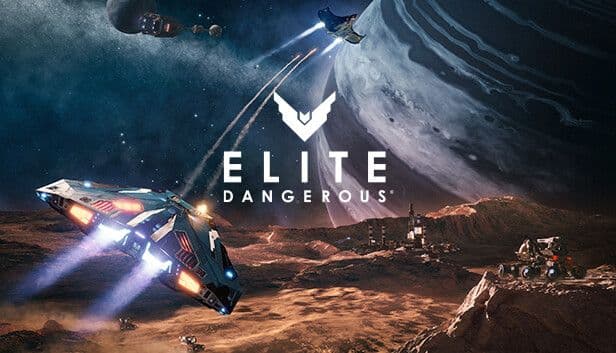
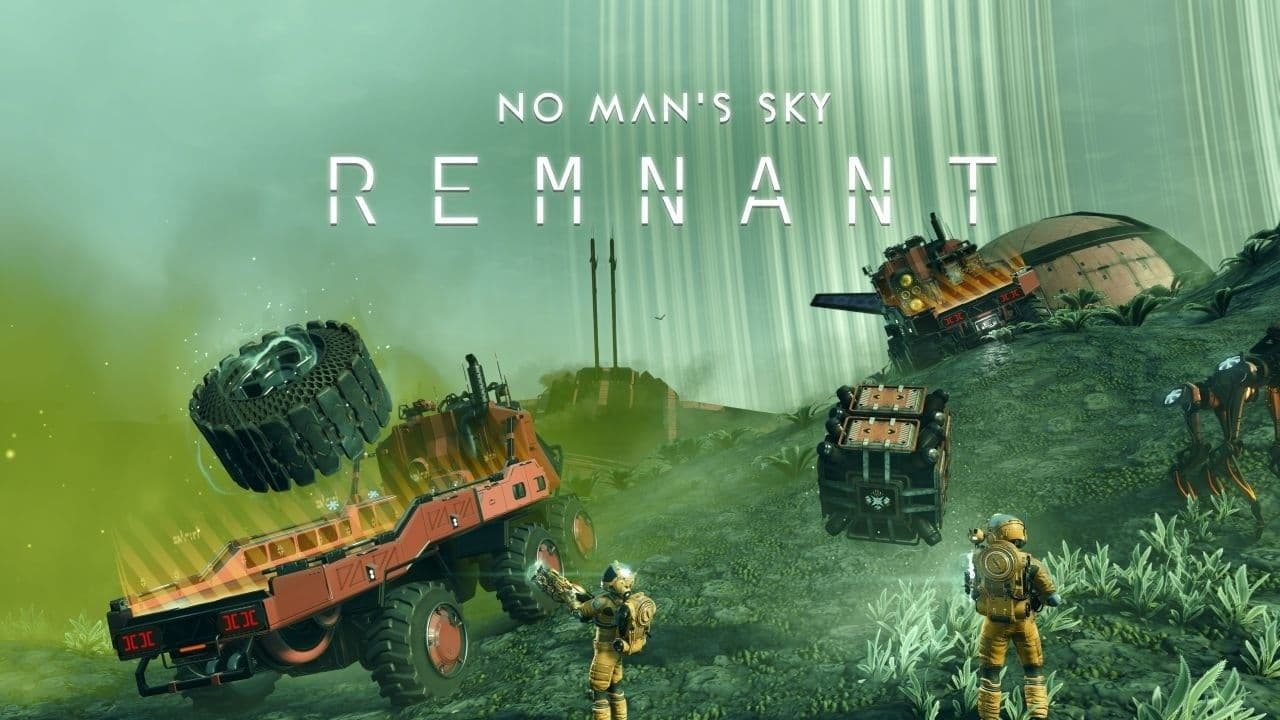
The reasonable position sits between the two camps that shout at each other about this project. Star Citizen is neither a scam nor a finished game, and treating it as either produces bad expectations. It is a $45 ticket to an unfinished simulation that does things nothing else does, sold by a studio with a demonstrated inability to estimate its own schedule. If that trade appeals, the last eighteen months are the strongest stretch of delivery the project has managed — two systems, crafting, engineering and a working meshing layer. If it does not, Elite Dangerous and No Man's Sky offer finished space without the caveats, and there is no shame in waiting for a version number that starts with a one.
No. A game package starting at $45 grants permanent access, with no subscription required afterwards. Free Fly events run several times a year and let anyone play at no cost for a limited window.
For players who want simulation depth and can tolerate alpha instability, yes — the 4.x patch series has added more playable content than the several years preceding it. For players who want polish and reliability, waiting remains the sensible option.
Yes. Delivery contracts, bounty hunting, small-ship mining, light salvage and derelict exploration all work alone and pay adequately. The largest hulls and the most profitable industrial operations require a crew.
Cloud Imperium has not announced a date. Squadron 42 is targeted at 2026, with the studio shifting resources to 1.0 afterwards; independent trackers monitoring development pace consider a 1.0 launch before 2028 unlikely.