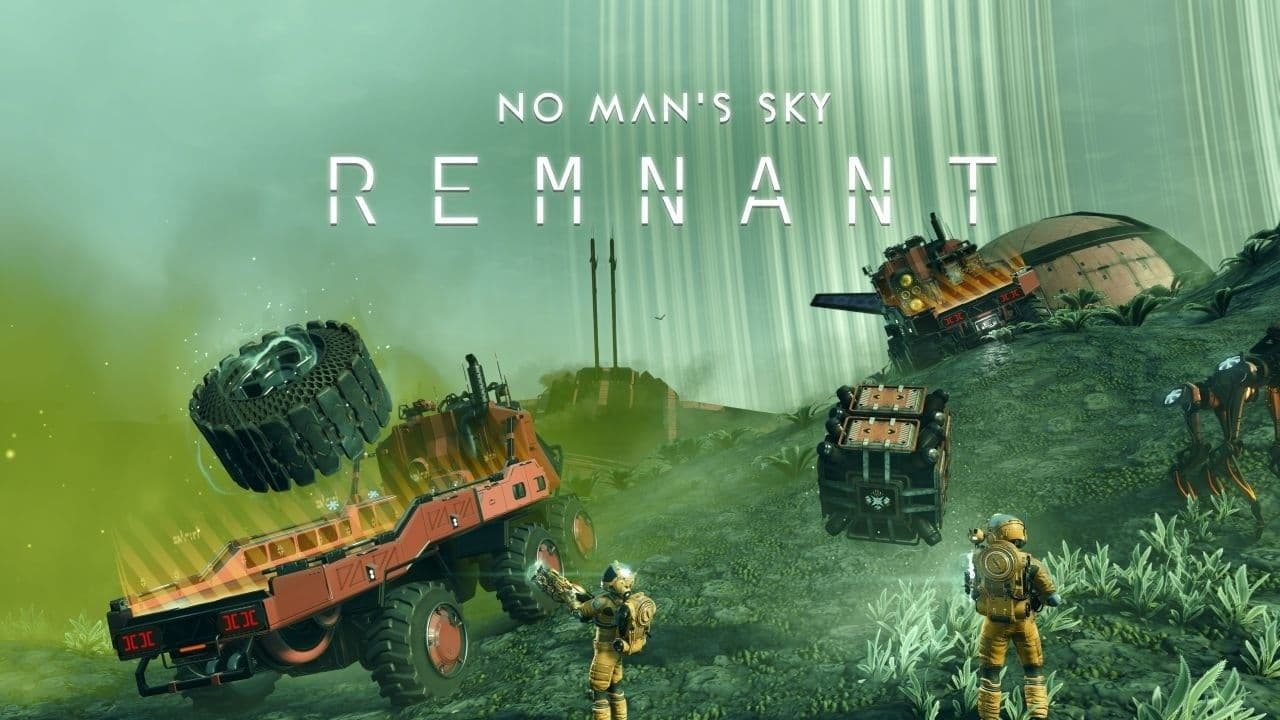
No Man's Sky: How to Build a Corvette — Blueprints, Modules, Assembly
No Man's Sky has one ship class you can't buy ready-made or find sitting on a planet: the Corvette. It's the only ship in the game assembled entirely by hand out of individual modules — landing gear, hull sections, habitation modules, engines, weapons, and dozens of purely decorative pieces. Every other ship in the fleet is a fixed model with a fixed look; the Corvette is a kit, and what you end up with depends entirely on what you put into it.
The mechanic itself isn't new to the latest anniversary update — it arrived a full year earlier, in the Voyagers expansion. It's back in the spotlight because of Cosmos, but that update doesn't reinvent Corvette building — it adds exactly one new part and fixes some long-standing bugs. If you've already built a Corvette and just want to know what's different, skip straight to the last section. If this is your first build, everything below runs in order, from finding the Workshop to the finer points of how stats add up.
Finding the Corvette Workshop
Every inhabited station has a Corvette Workshop, but it's easy to miss on the first pass — it sits physically outside the ordinary trading hall your ship lands next to. Walk out through the station's main exit toward the landing pads outside: to the left of the main passage are four identical blue teleporters. Any of them drops you on a separate construction platform with the Workshop terminal — the platform floats apart from the station itself, out among the stars, and exists purely for building.
When to Start, and How the Shared Stash Works
The first time you pick up a Corvette module off the ground, or the first time you interact with the Workshop terminal, the game automatically kicks off a short tutorial — it walks you through the minimum set of parts you need and doesn't require hunting that information down separately. Still, it's worth checking the list below ahead of time so you're not making extra trips back to the Workshop for one missing piece.
One timing detail worth knowing up front: Corvette building is available from your very first minutes in the game, well before you've unlocked exosuit slots or upgraded your starting ship at all. Don't put it off until you've finished the main story, the way it's tempting to — a chunk of what the finished ship gives you is easier to grab early than to catch up on dozens of hours later. The Workshop's parts stash is shared across every station, too: parts you find on planets can be dropped off at any Workshop terminal and picked up again at a completely different station — a real help early on, when exosuit inventory space is brutally tight.
Minimum Parts for a First Build
The terminal won't let you finalize a build until a specific set of functional modules is in place — the missing-parts tracker in the top-right corner of the build screen shows exactly what's still needed, updating live as you build.
| Module | Minimum |
|---|---|
| Landing Gear | 2 |
| Main Engine | 1 |
| Cockpit | 1 |
| Access Module / Landing Bay | 1 |
| Habitation Module | 1 |
| Reactor | 1 |
| Weapon System | 1 |
Buying that whole minimum straight from the Workshop, using the cheapest parts available, runs somewhere around 8–10 million units — a real number, but a manageable one by the mid-game, especially once you've got an income source going. For a first build it's reasonable to cover the minimum with straight purchases and switch to better, rarer modules as you find them — the Workshop keeps your finished Corvette on file and lets you go back and reconfigure it at any point, with no need to start over from scratch.
How the Build Actually Works: Two Separate Passes
The exterior shell comes first: drop a pair of Landing Gear on the platform, build the hull out around them — habitation modules, connectors, the cockpit — then add engines, a reactor, and weapons wherever they look right against the silhouette. Symmetry doesn't matter for handling at all: the ship flies exactly the same whether it's a neat mirror build or completely lopsided, the difference is purely visual. Once the exterior shape is finished and confirmed, walk up to the now-parked ship and step inside — a separate button press opens a second, independent menu that handles the interior layout: furniture, partitions, and the decor of the rooms you just built the shell for.
The overall build cap is 160 parts at once. That's a generous budget, but decorative panelling, partitions, and hull cladding eat into it faster than it looks at the start — a large three-story build with a fully decorated interior can bump up against the ceiling without much trouble. It's more efficient to lock in every functional module first and spend whatever's left of the limit on decoration, rather than the other way around — decorate too early and you can hit the ceiling before the ship is even functional.
The Three Style Families
Cockpits, habitation modules, and connectors come in three visual lines, and most of the remaining decorative parts are designed to match them — mixing lines is allowed, nothing stops you, but sticking to one usually reads better as a coherent shape.
| Line | Character |
|---|---|
| Thunderbird | Rough and weathered, smuggler-adjacent — exposed wiring and pipework, a "workhorse" look |
| Ambassador | Sleek, polished silhouette, leans toward maneuverability |
| Titan | Heavy and armoured, distinctly military, leans toward boost and defense |
The difference isn't purely cosmetic: the specific cockpit you pick directly affects the ship's maneuverability, not just the view through the windshield. Choose a line with more than taste in mind — think about what kind of Corvette you're actually building, a nimble scout or a heavy combat hauler — because swapping the cockpit out later means reworking part of the technology slots from scratch.
Where Modules Come From
Basic parts are sold straight from the Workshop for units — the simplest option, and the most expensive, with a selection limited to ordinary variants and no rare lines. Better, more unusual modules come from four other routes, and each works differently.
- Trading at the Workshop lets you pick the exact module you want instead of relying on luck, but it costs one to three spare parts of the same type in return — this route only pays off once you've already got a surplus of something you don't mind giving up.
- Digging up buried scrap on planets is the cheapest option in raw units: the analysis visor highlights Corvette module deposits right on a planet's surface whenever the game has placed them in that system, and the terrain manipulator on an ordinary Multi-Tool pulls them out for free — the specific set you get is random every time.
- Loot from destroyed pirate ships is another source, tied to the ordinary space combat you're probably already doing on the way between systems anyway.
- Derelict freighters, frigate expeditions, and mission rewards drop the rarest variants from time to time — this is where to expect the unusual cockpits and habitation modules that never show up in the Workshop's regular stock.
Module Classes and How Stats Add Up
Every individual part, like a whole ship, carries a letter quality class from C to S, and it upgrades the same way an ordinary starship does — through the outfitting terminal at a station, paid for in Nanites. One non-obvious economics point worth knowing: upgrading a part that's already installed up to S-class costs noticeably more than buying a ready-made S-class part at build time. It's worth budgeting for that gap before you start building rather than leaving the class question for later — paying to upgrade after the fact can end up costing several times more than the gap between an ordinary part and an S-class one to begin with.
A separate wrinkle covers how same-type modules add up into ship stats. Only the first three installed modules of a given type count toward the technology slots — a fourth Reactor, say, is purely decorative and does nothing for your stats. The first, second, and third copy of a type don't give an identical boost either — install order matters, not just the fact that you've got three of them. Weapons follow a similar but not identical rule: you can freely mix different weapon types, but the technology slot always lists a Photon Cannon regardless of what's physically bolted to the hull — calculate weapon stats by that rule, not by what's visibly mounted outside. Once you're done building, it's worth hitting the auto-sort key in the module menu — it rearranges already-placed parts so neighbouring technologies boost each other under the game's own rules (a cockpit and reactor sitting next to each other buff one another, for instance) instead of leaving that up to chance.
Interior Tech and What It's Actually For
A finished Corvette is worth more than just a ride between systems — the interior can hold a set of technology modules unique to this ship class, and each one covers its own specific job.
- The Mission Radar opens up local co-op missions: crew who've boarded with you can sign on for a job and work the objectives together with you right there in the current star system, earning rewards and standing along the way.
- The Refiner Unit is functionally the highest tier of refiner in the game, built for three-ingredient recipes, and unlike the portable version it needs no fuel at all — it's crafted from 20 Platinum and 1 Hydraulic Wiring, and mounts along the wall of a habitation module.
- The nutrition unit is a ready-to-use cooking station with its own 50-slot storage, letting you cook food recipes right on board instead of making a trip to a planetary base.
- Cargo containers come available with all ten storage slots unlocked from the start, with none of the Nanite or Salvaged Data cost normally needed to open them up. These aren't a separate stash either — they're the exact same containers synced to your ground base and freighter, one shared pool accessible from anywhere, and combined with exterior cargo modules the total can reach up to 120 slots.
- Medical Pods clear status effects and restore health, and Teleporters give a quick jump between the bridge and the rest of the ship or its outer hatches, instead of running the length of the hull on foot.
Bunks and living quarters carry a passive rest buff that boosts experience gain while your character is physically standing inside the ship — an easy detail to miss, since nothing outside hints that the buff is active, which is exactly why it's worth decorating the habitation modules for more than just the view.
The onboard computer can fly the ship on autopilot to any planet or station marked on the map — while the Corvette flies itself, you're free to wander the interior, sort inventory, or refine resources on the way without touching the controls. A Corvette isn't limited to station landing pads either — modern landing gear modules let it set down on any reasonably flat patch of a planet's surface, ground-level trading posts, and even a freighter's own hangar bay, so the ship ends up taking a single slot in your overall starship collection while functionally covering several types of transport at once.
Things to Watch For While Building
- Hull height: building too tall starts blocking the view from the cockpit during flight — three floors is usually already the practical ceiling before handling gets awkward purely from visibility, regardless of stats.
- Weapon symmetry: mounting more than one of the same weapon type in asymmetric spots on the hull can leave the aim not converging on one point, with part of the salvo missing the target — it's safer to keep weapons strictly symmetric along the ship's axes, or stick to one active firing point per weapon type.
What Changed for Corvettes in Cosmos 7.0
Cosmos doesn't reinvent the building system itself, but two changes directly affect Corvette owners.
- A new hull part, the Tractor Beam, showed up at the Workshop, built specifically for stripping abandoned ship hulks in open space: it pulls physical salvage straight into the hold, and without it that new loot type is simply out of reach.
- The patch also cleared out a batch of long-standing bugs: VR recolouring, stats displaying incorrectly, hull judder during flight, tech randomly shuffling position on a jump between galaxies, and the ability to actually land a Corvette at a station or the Space Anomaly — which, before this patch, sometimes just didn't work at all.
For more on the Tractor Beam, hulk salvaging, and the rest of what's new in Cosmos, see the dedicated guide: No Man's Sky Cosmos: How to Claim a Space Station and Build in Deep Space.