 F2P · Live
Lineage 2
Aden's castles never stay in the same hands for long, and Lineage II has built an entire twenty-three-year…
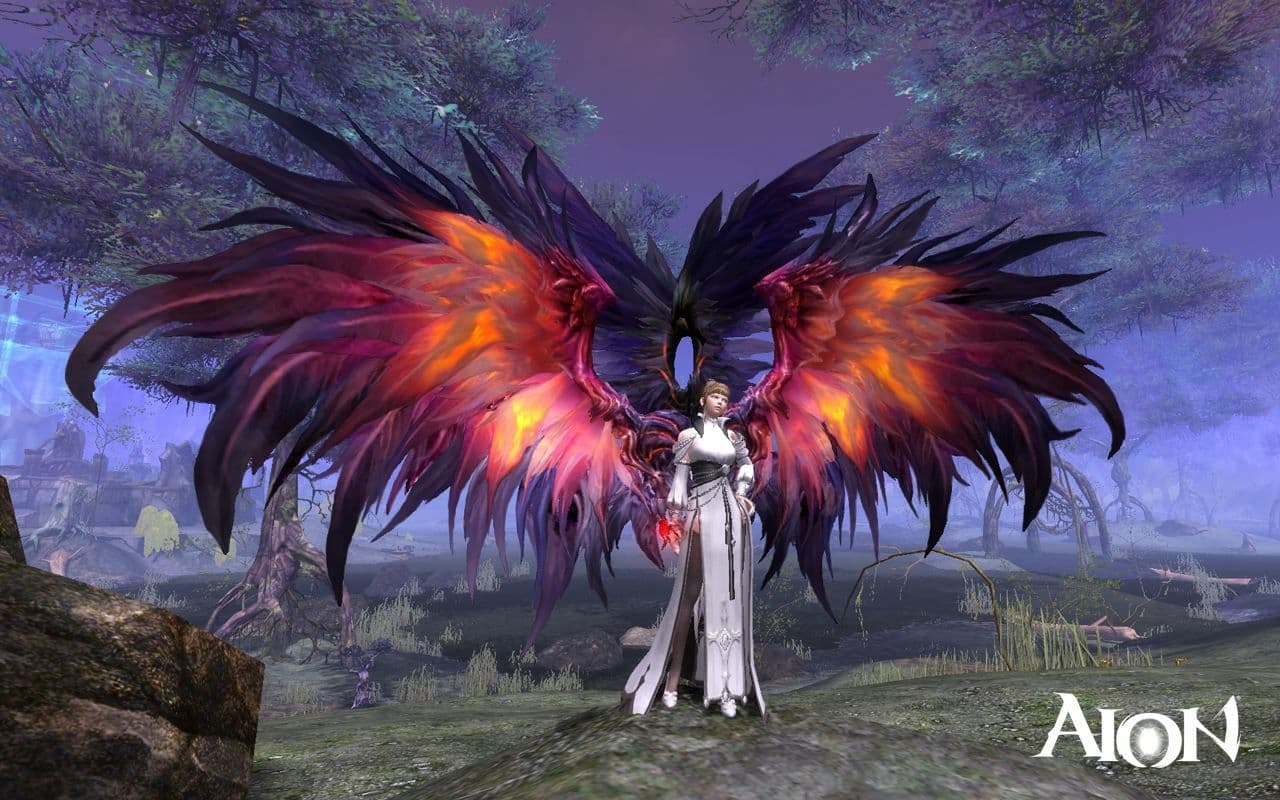
Aion is NCSoft's long-running fantasy MMORPG, set in the shattered world of Atreia where the winged Daeva of the Elyos and Asmodian factions fight an endless war for territory and control of the skies...
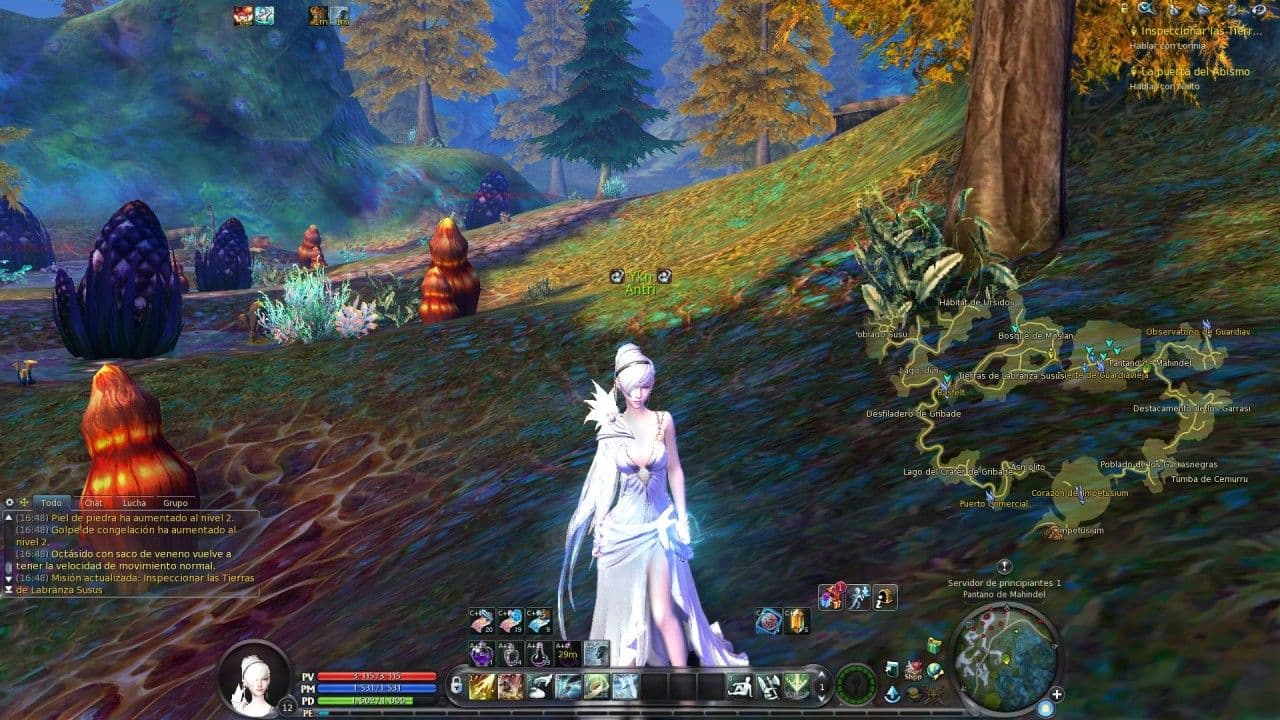
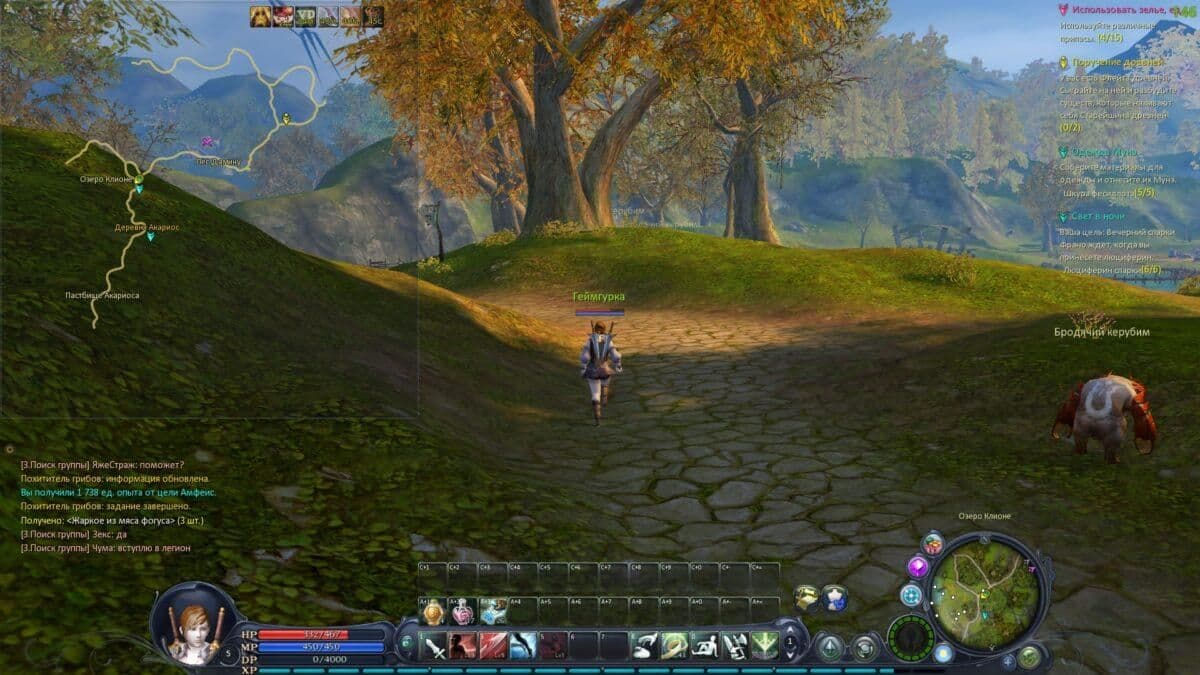
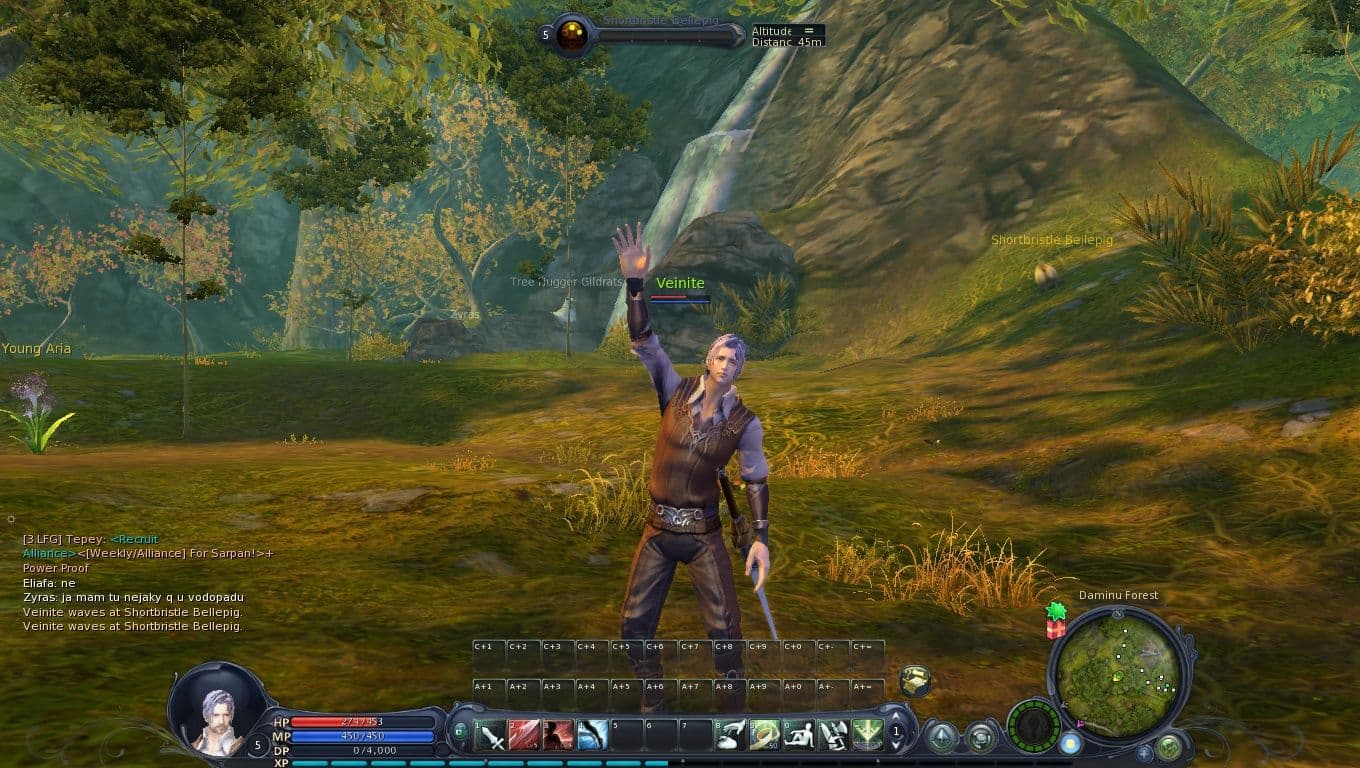
Aion is a fantasy MMORPG developed by the South Korean studio NCSoft, released in Korea in November 2008 and in North America and Europe in September 2009, built on CryEngine and known above all for giving every player a set of wings. Seventeen years later it is still patched, still free to play, and still running the same faction war between Elyos and Asmodians — though in the West it now exists as three separate services rather than one.
This review covers the live version, usually called Aion Live or retail: the modern build sitting at a level 85 cap, published by NC in North America and by Gameforge in Europe. It is not Aion Classic, not the newer Ascend server, and not Aion 2, the Unreal Engine 5 sequel launching globally in September 2026. That distinction matters more here than in most franchises, because the three versions of the game play almost nothing alike.
Quick take: Aion's live service still has the best aerial combat in the genre and a faction war with real territorial stakes, but its power ceiling now runs through low-probability upgrades rather than playtime. Committed PvP players who accept that trade will find a working endgame at level 85. Anyone arriving out of curiosity ahead of Aion 2 should start on Classic or Ascend instead.
Aphsaranta is where the live version of Aion spends essentially all of its content budget, and any honest assessment of the game starts there rather than at level 1. Introduced with update 8.0 in 2021 alongside the raise to a level 85 cap, it is a contested zone for characters level 81 and up, structured around faction reputation, lord-aligned questlines and a seasonal ladder that gets wiped and restarted with each major patch.
The March 2026 update, 8.6 "Raksha's Revenge", is a clean example of how that cycle works. Gameforge's announcement for the European service confirms a full reset of all lord progress, with Ariel and Azphel entering as the new lords, existing lord quests, items and reputation cleared, and progression systems retuned so both factions restart from the same position. Venerated Daeva Celebration Tokens were removed outright in the same pass.
The headline addition was Burning Blood Fortress, a level 85 instance for two to six players carrying a 40-minute clear timer with reward tiers based on time remaining. Fast, clean runs pay better than slow ones, which pushes groups toward optimised compositions rather than experimentation. Around that instance sit the older pillars of Aion endgame: fortress sieges, where legions fight NPC defenders and the opposing faction simultaneously for control of a keep — the PvPvE loop NCSoft built the game around, and the tax income and vendor discounts that come with holding one.
Long-running players will notice what is missing from that list. The original Abyss — the floating central zone that gave the game its identity, its ranking ladder and its best aerial fights — was cut from the live build in the 6.0 update in early 2018, along with six other maps and the High Daeva system. Aphsaranta inherited the faction-war role; it did not inherit the vertical geography.
Yes, and it remains the single strongest argument for trying Aion. No MMORPG since has integrated flight into combat this thoroughly, and the reason is a design constraint most modern games would refuse to accept: flight is metered, starting at 60 seconds and extended by wings, gear, titles and potions. Because the resource is scarce, being airborne is a decision with a cost rather than a default travel state.
In practice this splits movement into two systems. Full flight works only inside designated flight zones, where fights become genuinely three-dimensional — altitude matters, positional skills land differently, and running out of flight time mid-duel drops you into whatever is waiting below. Gliding works nearly everywhere, uses a different budget, and turns terrain into something you read for launch points rather than paths.
The wings themselves are also the game's coming-of-age moment. You do not start with them; you earn them at level 10 through the Ascension campaign quest that turns your character into a Daeva. Seventeen years of MMO design later, that gate still does more emotional work than most cinematic openings.
Aion's opening hours are conventional themepark questing, and the live version does very little to disguise it. Elyos characters begin in Poeta, Asmodians in Ishalgen, working through campaign quests that carry the story and ordinary quests that fill the gaps between them. You kill local wildlife, run errands for named NPCs, and hit level 10 quickly enough that the pacing rarely becomes an obstacle.
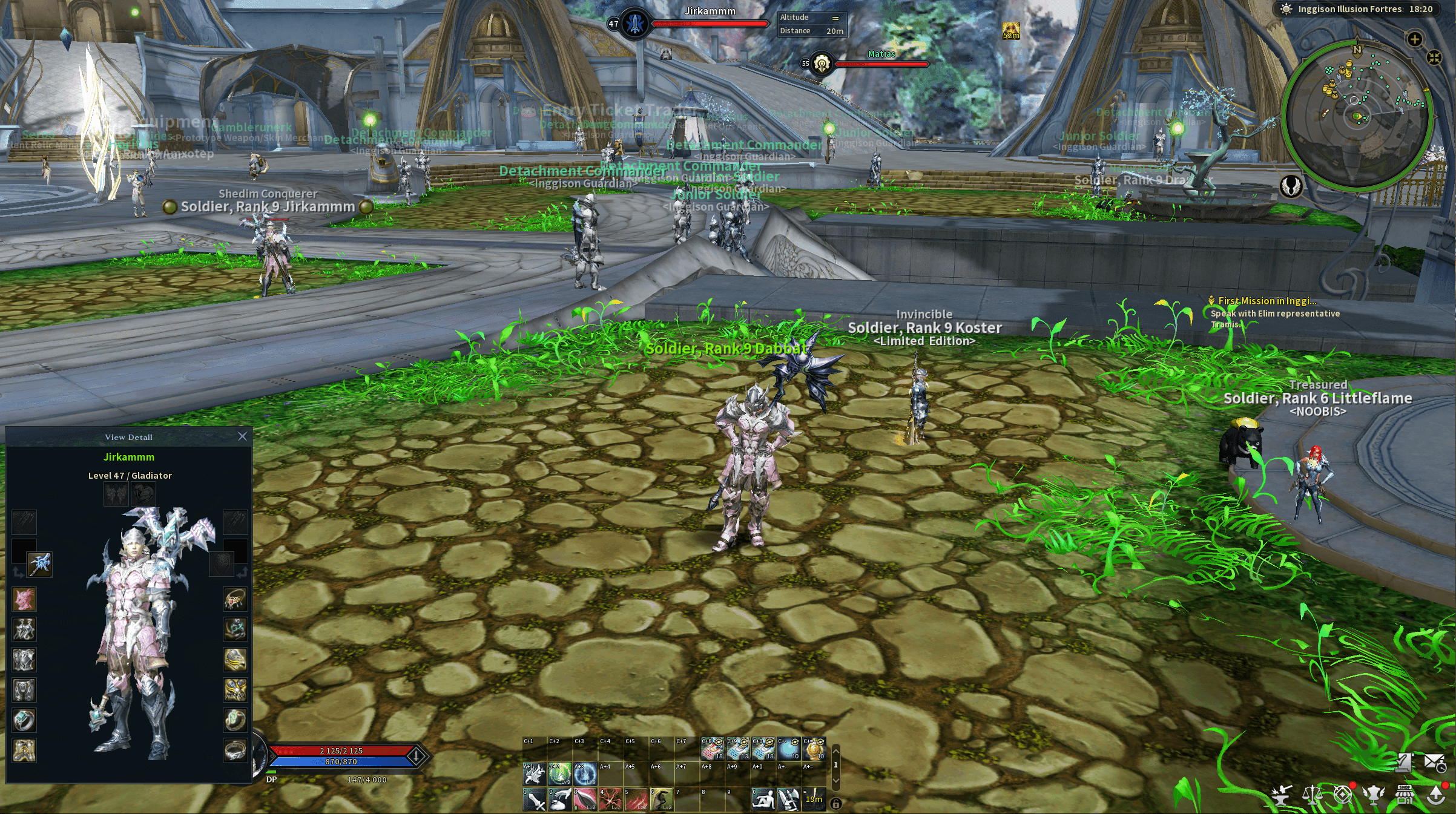
The structural decision that still shapes everything is class selection. You pick from six base classes that branch into twelve specialisations at level 10: Warrior becomes Templar or Gladiator, Mage becomes Sorcerer or Spiritmaster, Scout becomes Assassin or Ranger, Priest becomes Cleric or Chanter, Technist becomes Gunslinger or Aethertech, and Muse becomes Songweaver or Vandal. The split arrives at the same moment as Ascension, so the wings and the identity land together.
Beyond that point, the climb to 85 is where the live service shows its age most clearly. NC and Gameforge have both layered acceleration on top of the old levelling curve — XP boosts, campaign shortcuts, event scrolls — because the original grind was tuned for a subscription game with a much larger population. The result works, but it means the middle of the game is now something to be crossed rather than played.
Aion's combat is tab-target with a chain-skill layer, and that layer is what separates it from its contemporaries. Many skills only fire as follow-ups to a specific preceding skill, so a rotation is less a priority list than a branching sequence: an opener enables two possible continuations, each of which enables its own, and mistiming a link drops you back to the start of the chain.
Stigma stones add the customisation on top. These are socketed skills sitting outside the standard class kit, limited by available slots, and they are where two Gladiators of identical level end up playing differently. Advanced stigma tiers and Daevanion skills extend the same idea at endgame, with the corresponding upgrade costs.
The animations have aged better than the systems around them. Character models, armour design and the deliberate weight of the attack animations were what got Aion a 76 on Metacritic and an 8.5 from IGN at launch, and the art direction holds up in a way the 2009 interface conventions do not.
Crafting in Aion is broad but deliberately capped. There are seven professions — weaponsmithing, armoursmithing, handcrafting, tailoring, alchemy, cooking and construction — and while a character can learn all seven, they can reach Expert in only two and Master in exactly one. Progress runs on Work Orders, a separate quest category that exists purely to feed skill points into a profession.
Materials come from gathering nodes, extraction, vendors and the broker, Aion's auction house, which is also where most of the endgame economy actually lives. Kinah, the base currency, is the medium for nearly everything a group needs to keep functioning, and the broker is where the pressure between free players and spending players becomes visible in price terms rather than gear terms.
The system that most defines the live version's texture, though, is the one it added in 2020: auto-hunting has been a built-in feature since update 7.6. You configure a skill set, mark a hunting area, and the client grinds mobs without you. Community reaction on Gameforge's own forums split hard at the time — some players welcomed it as relief from a farming curve built for people with more hours than they had, others read it as an admission that the grind was no longer worth performing manually. Both readings are still visible in the zones today.
Aion scales group content further than most themepark MMOs and always has. Six players form a standard group, four groups form an alliance of 24, and eight alliances form a league of 192 — the format that fortress sieges are built around. Legions, the game's guilds, are the units that hold territory, coordinate siege timing and distribute the income a captured fortress generates.
PvP ranking has changed hands over the years. The original Abyss Point ranking, which fed a server-wide ladder with a fixed number of high-rank slots, was replaced in the 4.5 patch by Glory Points, which decay daily at a rate tied to your rank. Abyss Points survive as a currency. The practical consequence is that rank now measures recent activity rather than accumulated career, which suits a smaller population better than the original design did.
Aion's live version sells power indirectly, and the honest answer is that a free player can reach the endgame but will hit a competitive ceiling that paying players clear through volume. The mechanism is the transformation system introduced in 6.0. Transformations replaced the old wing-based movement buffs with timed forms that carry substantial combat stats, and they are acquired through Transformation Contracts sold by Gold Sand Traders, dropped in endgame instances, offered through the Luna shop and stocked in the cash shop.
Two features make the system contentious. Contracts are randomised, and higher grades are produced by combining lower ones, so the path to a top-tier transformation is a probability curve rather than a checklist. Using one also consumes a Transformation Scroll each time, with Transparent Scrolls sold separately for players who would rather keep their character's appearance than walk around as a fox in adventurer's clothing.
Layered on top is the standard Korean-MMO stack: enchantment attempts with failure penalties, premium account passes sold as Gold Packs in Europe, and Luna as a secondary premium currency tied to its own instanced content. None of it locks the game behind a paywall. All of it means the gap between a well-funded veteran and a returning player is measured in months of accumulated luck.
Choosing between the live service, Classic and Ascend is now the most consequential decision a new Aion player makes, and it happens before character creation. Live is the version described above: level 85, transformation-driven, heavily accelerated in its mid-game. Aion Classic rewinds the game to its early patches and progresses forward on its own schedule — the European service reached update 4.5 "Ignite" in early 2026, adding the Phoenix class and dropping the legacy base-class system so new characters start directly as their advanced class.
Ascend is the newest and, for many returning players, the most interesting. Launched on the North American service in August 2025 and running on the Classic client, it consolidates three Korean servers and rebuilds Classic around modern pacing: flight from level 1, quadrupled XP, doubled dungeon rewards, improved enchantment odds and progression routed through Kinah rather than the cash shop. Both Classic and Ascend received the Dread Blade, described by NC as Aion's first hybrid class, in April 2026.
Nobody outside NC and Gameforge knows, and anyone quoting a precise figure is guessing. Neither publisher releases concurrent-player data, and the usual third-party proxy does not apply cleanly: the European client migrated off Steam login to the Gameforge launcher in 2023, while the North American service runs through NC's PURPLE launcher, so Steam charts measure a fraction of an already fragmented playerbase.
What can be stated is thinner but real. Around 43% of Aion's English-language Steam reviews are positive across roughly 1,200 of them, with the last thirty days drawing a single-digit handful — low traffic rather than a verdict. Population is also unevenly distributed: sieges and instance queues on the live service depend on organised legions rather than open-world density, which is why the game can feel empty in the field and busy at siege time. The parallel private-server scene remains sizeable, with one directory currently tracking 54 separate Aion projects, most of them running patch versions between 1.2 and 5.8.
Seventeen years of updates have optimised away most of the reasons people fell for this game and preserved the one that mattered most. The Abyss is gone, the levelling curve has been rendered vestigial, and the client will grind mobs on your behalf while you do something else — but the moment you earn wings at level 10 and drop into a flight zone still does something no competitor has replicated, and the faction war at Aphsaranta still produces fights worth losing sleep over.
The recommendation depends on what you want from it. For a player who has never flown in Atreia, Ascend is the better entry point in 2026: it preserves the original structure with the friction sanded down, and it does not ask you to solve a transformation lottery to stay competitive. For a returning veteran with a geared character sitting on a live server, 8.6's seasonal reset is a legitimate re-entry point, and the fortress cycle has not lost its shape. For anyone waiting on Aion 2, the live service is the wrong place to form an impression of what the sequel is inheriting — the game NC is building on is the 2009 one, and Classic is closer to it than retail has been in a decade.
Yes. Aion has been free to play since April 2012, with no level or content restrictions on the base game. Revenue comes from a cash shop, premium passes such as Europe's Gold Pack, and the Luna currency.
For flight-focused PvP and organised siege play, yes — provided you accept that competitive endgame gear depends heavily on randomised upgrades. Players who want the classic experience are generally better served by Aion Classic or the Ascend server.
Aion Live is the current build at level cap 85 with transformations and Aphsaranta endgame. Classic replays the game's early patches on their own progression schedule. Ascend runs on the Classic client with accelerated pacing, flight from level 1 and Kinah-based progression instead of cash-shop reliance.
Yes. Elyos and Asmodian players fight in contested zones including Aphsaranta, and legions compete for fortress control in scheduled sieges supporting leagues of up to 192 players. Same-faction combat is restricted to duels and arena content.
No closure has been announced for any Aion service as of August 2026. Aion 2 is a separate game on a separate engine with its own servers, and NC continues to patch the original across its live, Classic and Ascend services.