 F2P · Live
Lineage 2
Aden's castles never stay in the same hands for long, and Lineage II has built an entire twenty-three-year…
World of Warcraft: Midnight brings Blizzard's flagship MMORPG back to Quel'Thalas, where Xal'atath's void armies threaten the Sunwell and a rebuilt Silvermoon City stands as its new cross-faction hear...
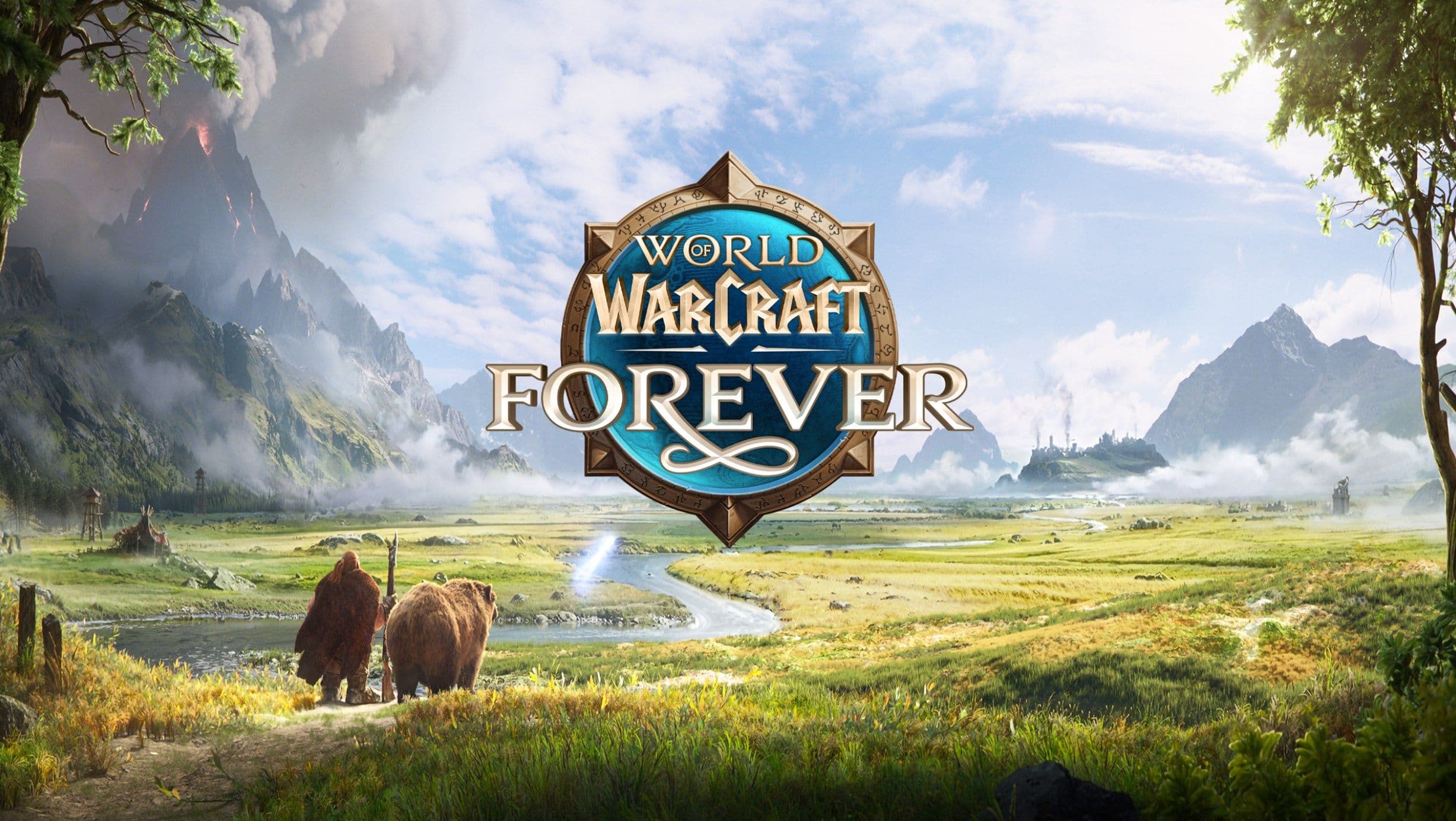
World of Warcraft is the fantasy MMORPG Blizzard Entertainment launched in November 2004, and it remains the genre's commercial and structural benchmark two decades later. Its eleventh expansion, Midnight, went live on March 2, 2026 as the second chapter of the three-part Worldsoul Saga, rebuilding the elven capital of Silvermoon, raising the level cap to 90, and adding player housing to the game for the first time in its history. Whether a subscription MMO this old still earns a slot in your 2026 backlog — or a returning trip to Azeroth — is what this review sets out to answer honestly.
Start where the game actually lives, because for most of WoW's player base, the campaign is a formality on the way to the weekly reset. Season 1 of Midnight opened the week of March 17, and it structures the week around a familiar rhythm: log in Tuesday, check the Great Vault for the loot your previous week's activity earned you, then decide where to spend your time before the timer resets. That decision usually splits three ways.
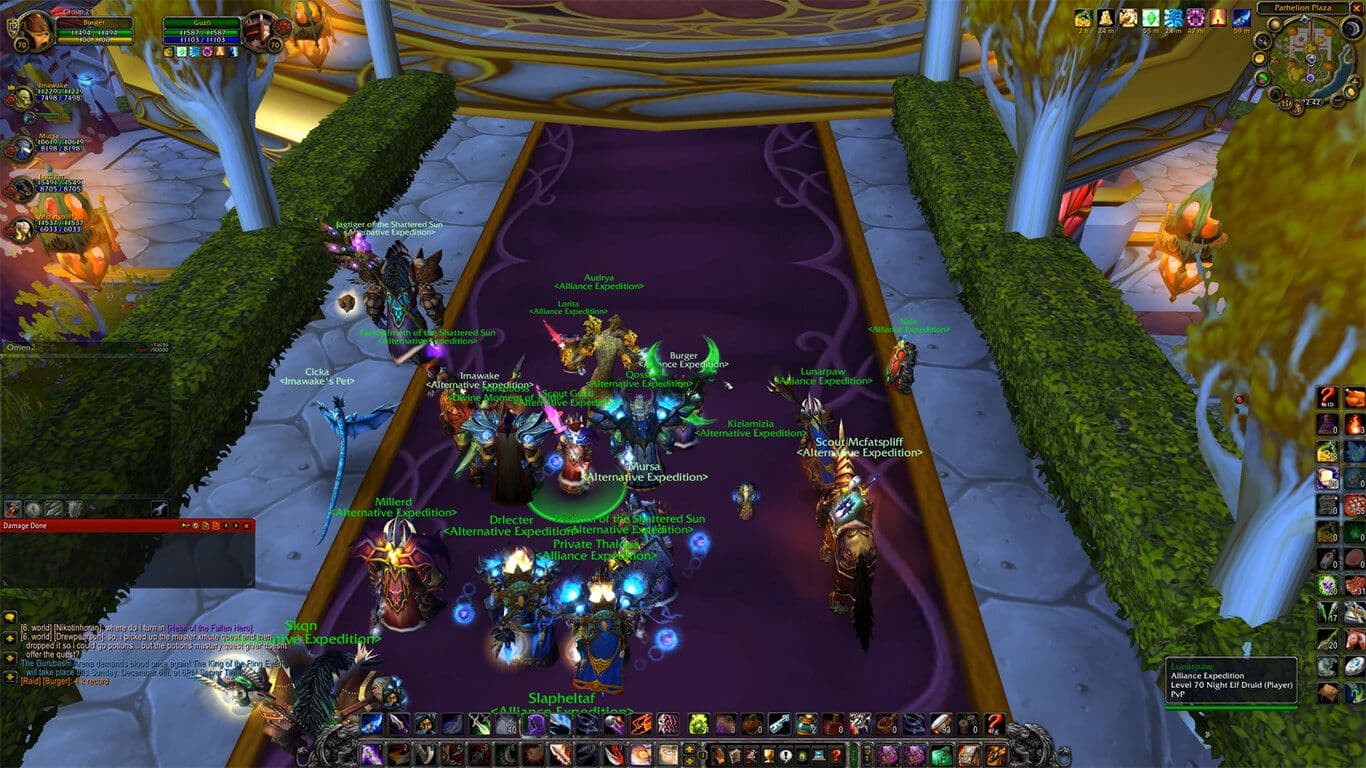
Raiders have three tiers to clear across nine bosses total: the six-boss Voidspire inside Xal'atath's Voidstorm stronghold, the single-boss Dreamrift, and the two-boss March on Quel'Danas that closes out the season's story. Mythic+ pushers rotate through eight new dungeons alongside returning favorites like Pit of Saron, Skyreach, Algeth'ar Academy, and Seat of the Triumvirate, keying up or down depending on how last week's run went and chasing a timer that Blizzard has actually softened this expansion — Mythic Plus deaths no longer eat the clock the way they used to. PvP players have Battleground Blitz running as a permanent rated mode alongside the new 40-versus-40 Slayer's Rise battleground, a genuinely chaotic scale of fight the game hasn't offered in years.
The addition that matters most for anyone who isn't chasing a raid title, though, is Delves — soloable dungeon content that scales for one to five players and pairs you with an AI companion instead of four strangers you have to schedule around. Midnight ships eleven of them, ten standard plus a harder Nemesis-tier delve, and they've become popular enough that Blizzard is building out an even larger "Labyrinth" mega-version in a coming patch. It's the clearest evidence yet that Blizzard has accepted a chunk of its audience will never raid, and built a real endgame ladder for them instead of a consolation prize.
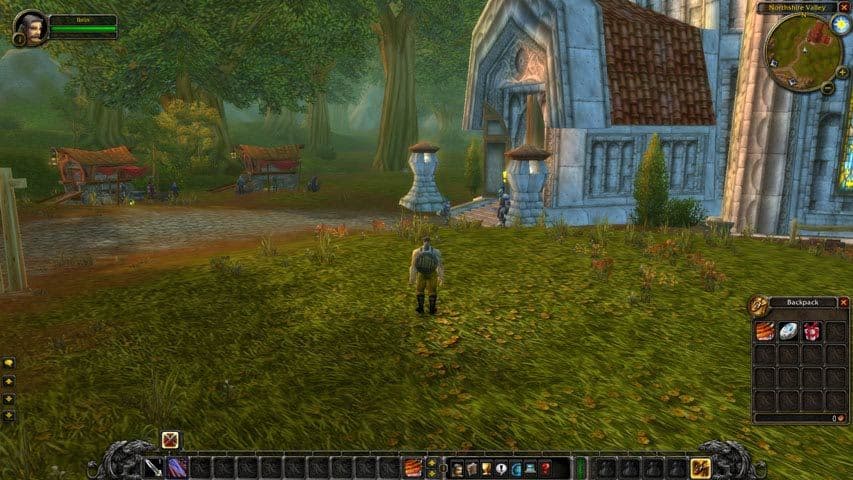
New and returning players don't experience any of that on day one, and the road to it has been reshaped almost beyond recognition from the WoW of a decade ago. A fresh character starts in Exile's Reach, a self-contained ten-level tutorial zone, then gets funneled into Dragonflight's story through level 70 rather than dropped into whichever old expansion happens to be nearest. From there it's the War Within zones to 80, and finally Midnight's four launch zones — Eversong Woods, Zul'Aman, Harandar, and Voidstorm — to the new level 90 cap.
Alts skip that entire funnel. Warbands, the account-wide system introduced a couple of expansions back, means every character shares a bank, most currencies, mount and pet collections, and reputation progress, and can pick Chromie Time to level through any past expansion at a scaled difficulty instead. A returning player who quit mid-Dragonflight can expect a free gear set from the Midnight campaign to hit item level 220 within four to six hours, heroic-dungeon-ready gear within eight to twelve, and a raid-viable character inside about forty hours — numbers that would have sounded like fantasy during the multi-week catch-up grinds of a decade ago.
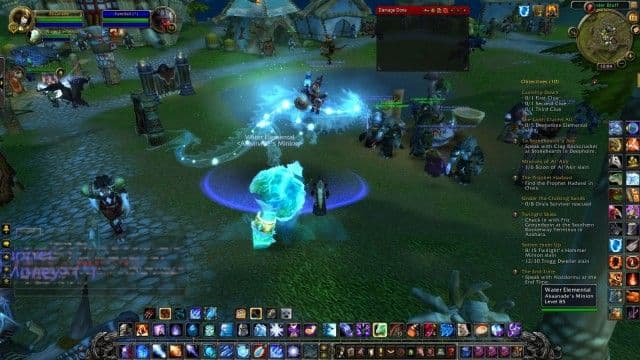
Combat itself is still built on the class-and-spec skeleton WoW has run for twenty years — pick a class, pick one of its two or three specializations, and build a rotation around cooldowns, resource management, and positioning. What's changed is the layer stacked on top of it. Hero Talents give every spec a third talent tree alongside the usual class and spec trees, letting you pick from two or three thematic identities that reshape roughly fifteen abilities at once. Midnight adds a further layer on top of that with Apex talents, capstone nodes powerful enough that several class reviewers have flagged them as a soft requirement rather than a real choice — a Preservation Evoker skipping the Apex node that turns Reversion into an AoE heal, for instance, is giving up a piece of the kit the rest of the season is tuned around. It's a legitimate design wrinkle in an expansion that otherwise leans hard on player choice.
The one genuinely new toy is the Devourer specialization for Demon Hunters, a void-themed ranged DPS spec built around harvesting souls from fallen enemies — the first new spec Midnight has added, and a sign that Blizzard is still willing to expand old classes rather than only adding new ones.
If Midnight has one headline feature, it's this one. Player housing has been requested since roughly the game's second year, and Blizzard finally shipped it — public and private neighborhoods themed to Horde or Alliance aesthetics, with more than two thousand decor items to unlock through achievements, world content, or straightforward vendor purchases. Early access opened back in December 2025 through the Midnight prologue, well ahead of the expansion proper, which meant a meaningful chunk of the player base had already decorated a house before the void invasion in the main campaign even started. It isn't a deep player-housing sim in the Star Wars Galaxies sense — there's no crafting economy built around it — but as a long-promised piece of long-term account investment, it's the kind of system that quietly extends how long a player sticks around between content patches.
Midnight's story picks up shortly after The War Within's Manaforge Omega raid, with Xal'atath — the sentient, scheming blade who's been the story's antagonist across two expansions now — turning her void armies on the Sunwell, the last major bastion of Light energy on Azeroth. The Blood Elves and their allies, joined by the Army of Light, mount the defense, and the new Haranir allied race and the reclaimed Amani trolls of a rebuilt Zul'Aman round out the cast. Silvermoon itself gets rebuilt as a genuinely shared hub rather than a Horde-only city, which continues a trend Blizzard has been leaning into for a few expansions now: loosening the strict Horde-versus-Alliance separation that used to define the whole game.
The zones carrying that story are a mix of old and new — Eversong Woods returns healed from its Scourge-era wounds, Zul'Aman expands from a single dungeon into a full ancestral troll homeland, and Harandar introduces a primordial fungal jungle nobody's set foot in before. Critics who've spent real time in the campaign have generally praised the moment-to-moment writing and the Silvermoon rebuild while flagging the open-world content around it as the expansion's weaker half — a fair split verdict for a game whose story has always mattered less than the systems built around it.
Guilds still anchor most of the serious raiding and Mythic+ pushing scenes, largely unchanged in structure from the WoW you might remember, but the world around them keeps getting friendlier to cross-faction play — shared hubs like the new Silvermoon, cross-faction grouping tools, and a general design push toward putting more players in the same physical space rather than splitting them down the middle. WoW has never had a real player economy the way a sandbox MMO does, but its Auction House remains deep enough to support a genuine secondary hobby in gold-making, gear flipping, and crafting materials for anyone who wants one.
The core structure hasn't changed in years and isn't likely to: a subscription runs $14.99 a month, dropping to somewhere near $13 on a six-month plan, and it covers every version of the game at once — Retail, Classic, and everything Blizzard maintains alongside them. On top of that sits the Midnight expansion itself, priced at $49.99 for the base edition, $69.99 for Heroic, and $89.99 for Epic, with every prior expansion now bundled in for free with either purchase or an active subscription. The WoW Token lets players convert roughly twenty real dollars into a chunk of in-game gold, or convert farmed gold the other way into thirty days of subscription time, entirely within Blizzard's own terms of service.
So, is World of Warcraft pay to win? No, not in the sense that phrase usually means. Nothing sold in the shop grants raw combat power — mounts, pets, and transmog are cosmetic, and a Character Boost skips leveling without touching gear quality once you're at max level. The honest criticism sits elsewhere: server transfers, faction changes, and name changes run $25 to $30 each, a boost runs about $60, and a subscription-plus-expansion year lands somewhere around $180 to $230 before you've spent a cent on any of that. It's not predatory the way a gacha shop is, but it is a steady accumulation of small convenience fees that a twenty-year veteran with multiple characters across multiple servers can feel over time.
Midnight currently holds a Metacritic score of 82 across seven critic reviews, a solid launch by the standard of a franchise now old enough to have outlived most of its early competitors. Outlets that reviewed it generally described a Blizzard studio taking real risks with its systems rather than coasting — the Silvermoon rebuild and the new dungeon pool draw particular praise — while acknowledging rough edges in bugs and open-world pacing that kept the score short of a perfect launch. For an MMO in its twenty-second year, landing an expansion this well-received is closer to the exception than the rule.
If you've never played and want to know whether a twenty-year-old subscription game still holds up, Midnight is about as good an entry point as WoW has offered in a decade — the leveling funnel is faster than it's ever been, and you'll be raid-ready inside a couple of days rather than a couple of months. If you quit sometime during Shadowlands or Dragonflight and the "WoW is dying" narrative is the last thing you remember hearing about it, that narrative hasn't matched the numbers for a while now, and Warbands mean your old characters are more useful today than when you left them. If what you actually want is a fast, low-commitment session you can walk away from without a subscription clock running, this isn't that game, and it was never going to pretend to be. World of Warcraft in 2026 is still asking for your time and your monthly card payment in exchange for one of the most complete progression systems anyone has ever built for the genre — and for a large share of its audience, that trade still pays off.