 F2P · Live
Lineage 2 Essence
Lineage 2 Essence is NCSoft's free-to-play take on the classic Korean MMORPG Lineage II, built around faster…
Final Fantasy XIV treats its MMO story like a mainline Final Fantasy game rather than an afterthought, letting one character master every job in the game instead of committing to a single class foreve...
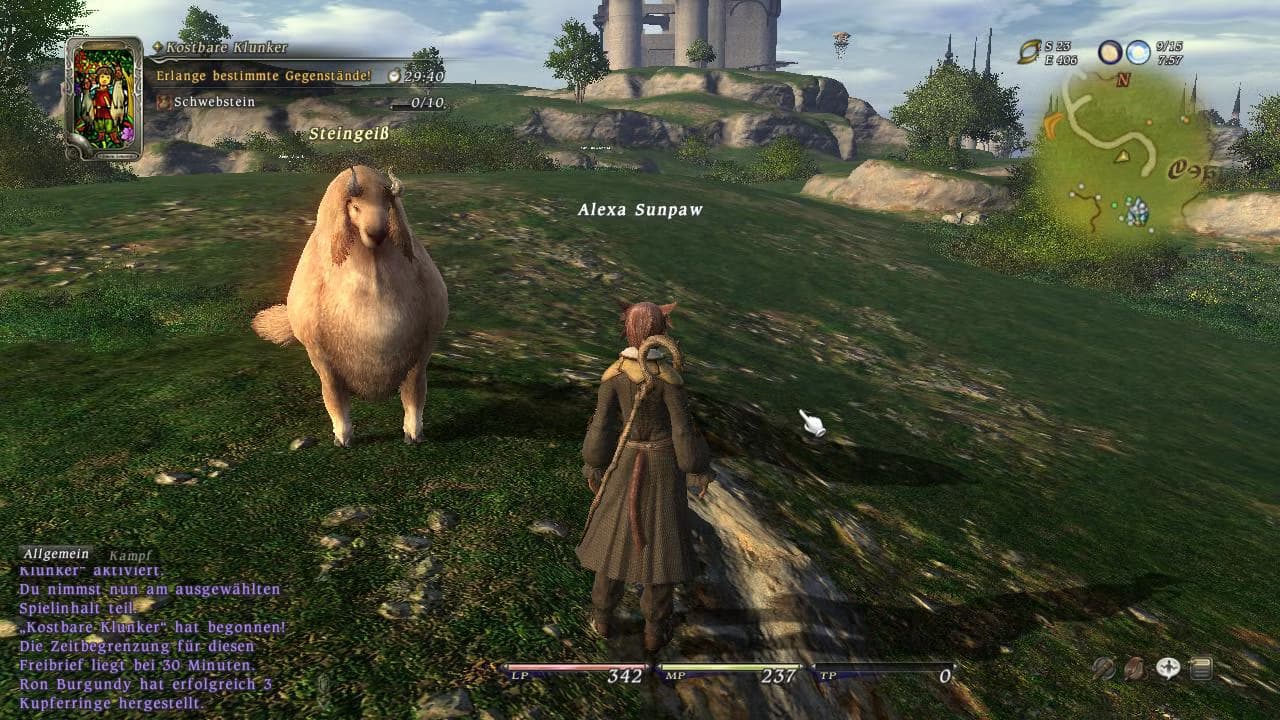
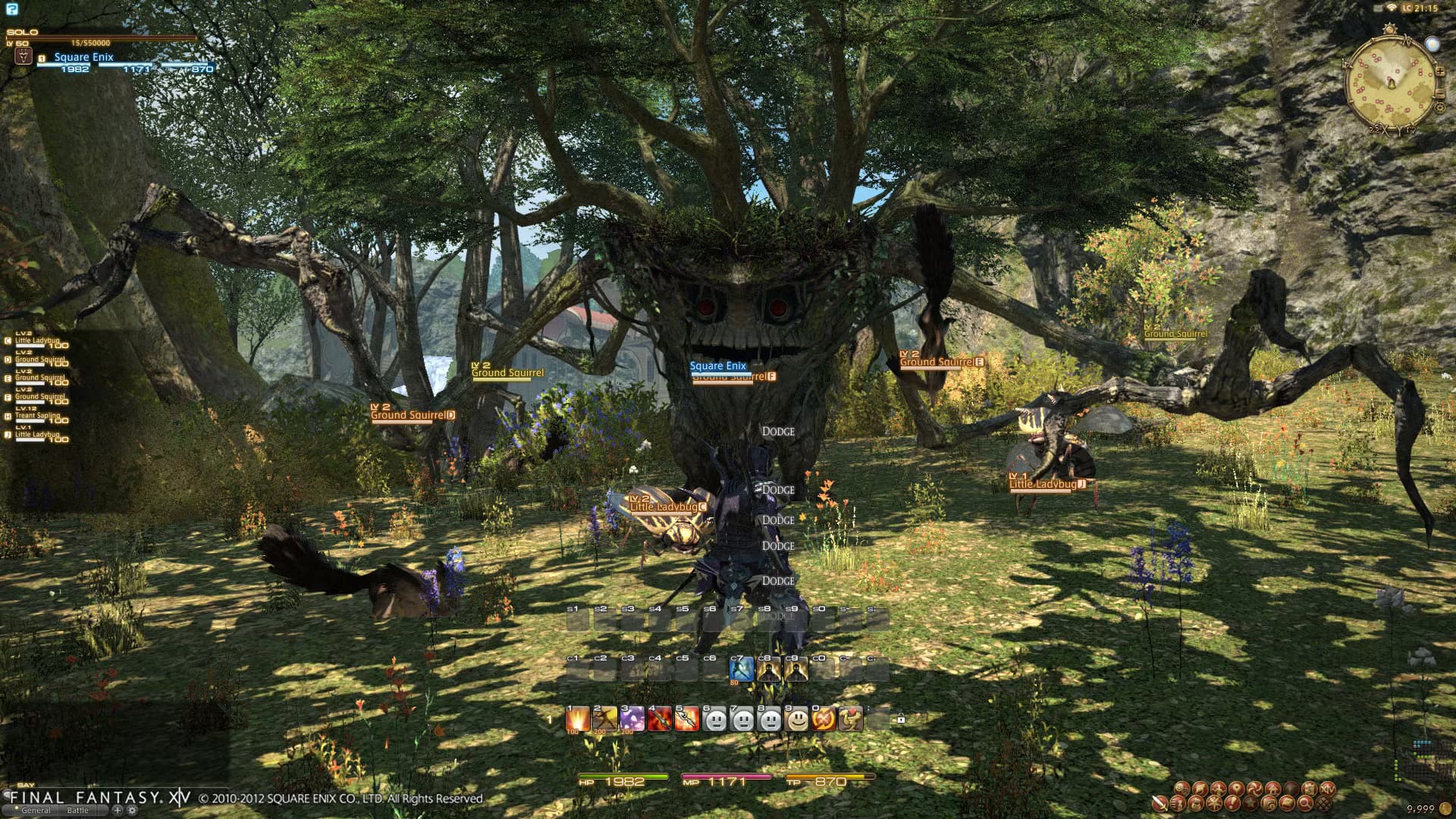
Final Fantasy XIV is Square Enix's long-running subscription MMORPG, rebuilt from a notoriously broken 2010 launch into A Realm Reborn in August 2013 and now five expansions deep with Dawntrail, released in July 2024. It's currently mid-way through the Dawntrail patch series — Patch 7.5, "Trail to the Heavens," has been rolling out new content since April, with 7.55 arriving July 28 and the expansion's story closing out in September ahead of the next expansion, Evercold. A Nintendo Switch 2 version is in beta ahead of an August 2026 launch, putting the game on six platforms at once. This Final Fantasy XIV review looks at where the game stands right now, for both the players who never left and the ones still deciding whether to start.
Start at the top, because that's where the game's identity actually lives. Every raid tier in Final Fantasy XIV ships in three flavors of the same fight: Normal, tuned for a story-completionist party using the in-game Duty Finder; Savage, an eight-person remix with tighter enrage timers and mechanics that punish a single misstep; and, a few times per expansion, Ultimate — the hardest content the game produces, with zero difficulty adjustments, no loot beyond a title and a weapon glow, and clear times that stretch into dozens of hours for a coordinated static. Patch 7.51 shipped the latest of these, the Dancing Mad Ultimate, built around a refought version of Kefka Palazzo, and static groups had spent the run-up to June theorycrafting cooldown plans off nothing but trailer footage and datamined logs.
Below Ultimate sits a rotating cast of Extreme trials and the Chaotic alliance raid tier, both aimed at players who want a real fight without the multi-week commitment. And running alongside all of it is the Occult Crescent, a large-scale open field zone introduced this patch series that behaves nothing like a dungeon queue — up to 48 players share the same map, fighting Fate-style critical encounters, hunting for Phantom Job unlocks, and pushing a shared Knowledge level that gates deeper areas. The North Horn expansion to the Crescent lands July 28 alongside the last of the Phantom weapon upgrades, timed to land right after the Fan Festival crowds in Berlin go home still talking about it.
This is the part of the game that gets clipped for YouTube and argued about on r/ffxiv — parse logs, world-first races, the occasional wipe compilation. Static groups form months in advance through the Party Finder or a dedicated Discord, split responsibilities down to individual buttons pressed on individual seconds, and treat a clean Ultimate clear less like a raid and more like a rehearsed performance. It's also the part a brand-new player is, correctly, nowhere near on day one. Getting there is most of the game.
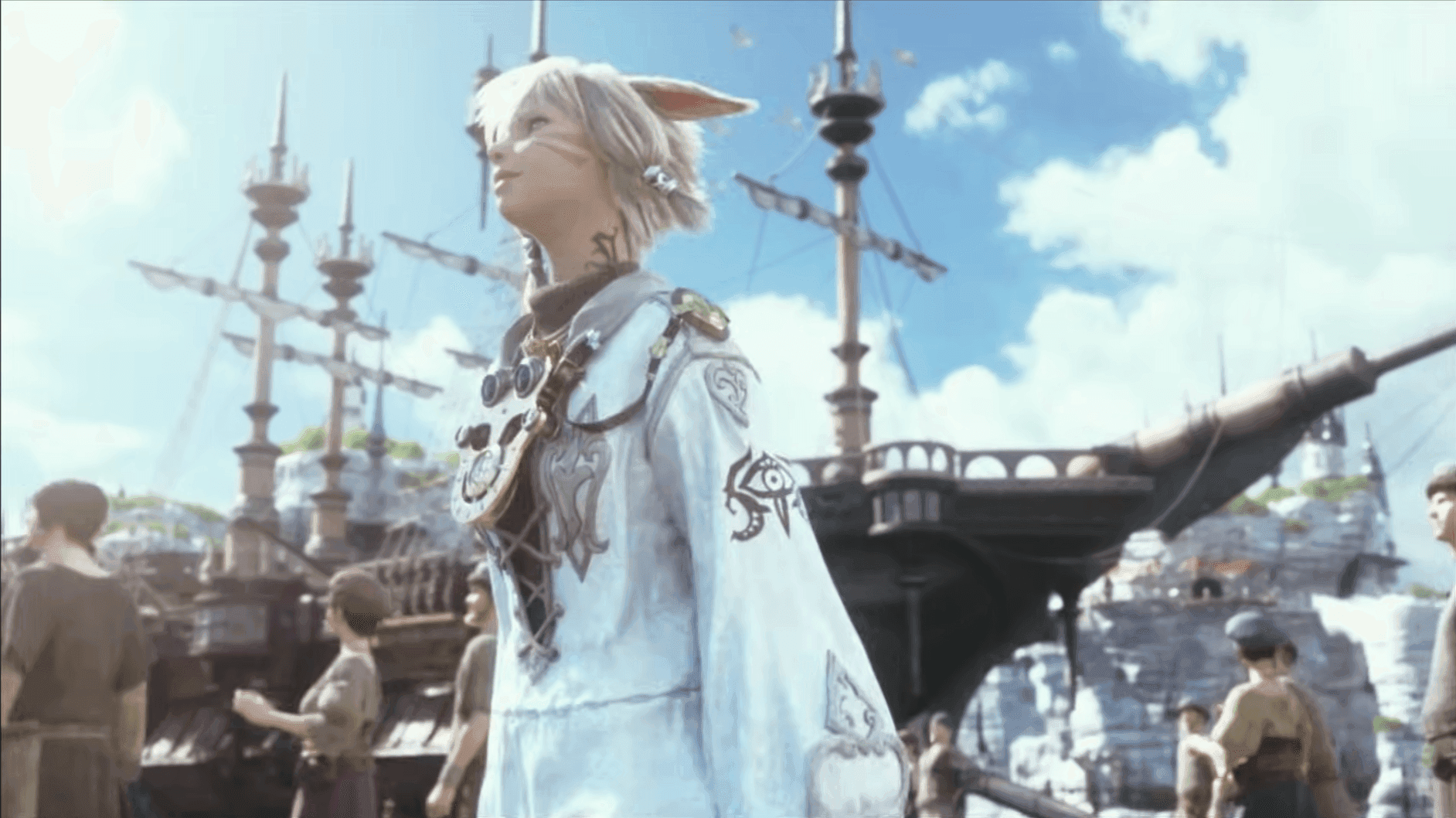
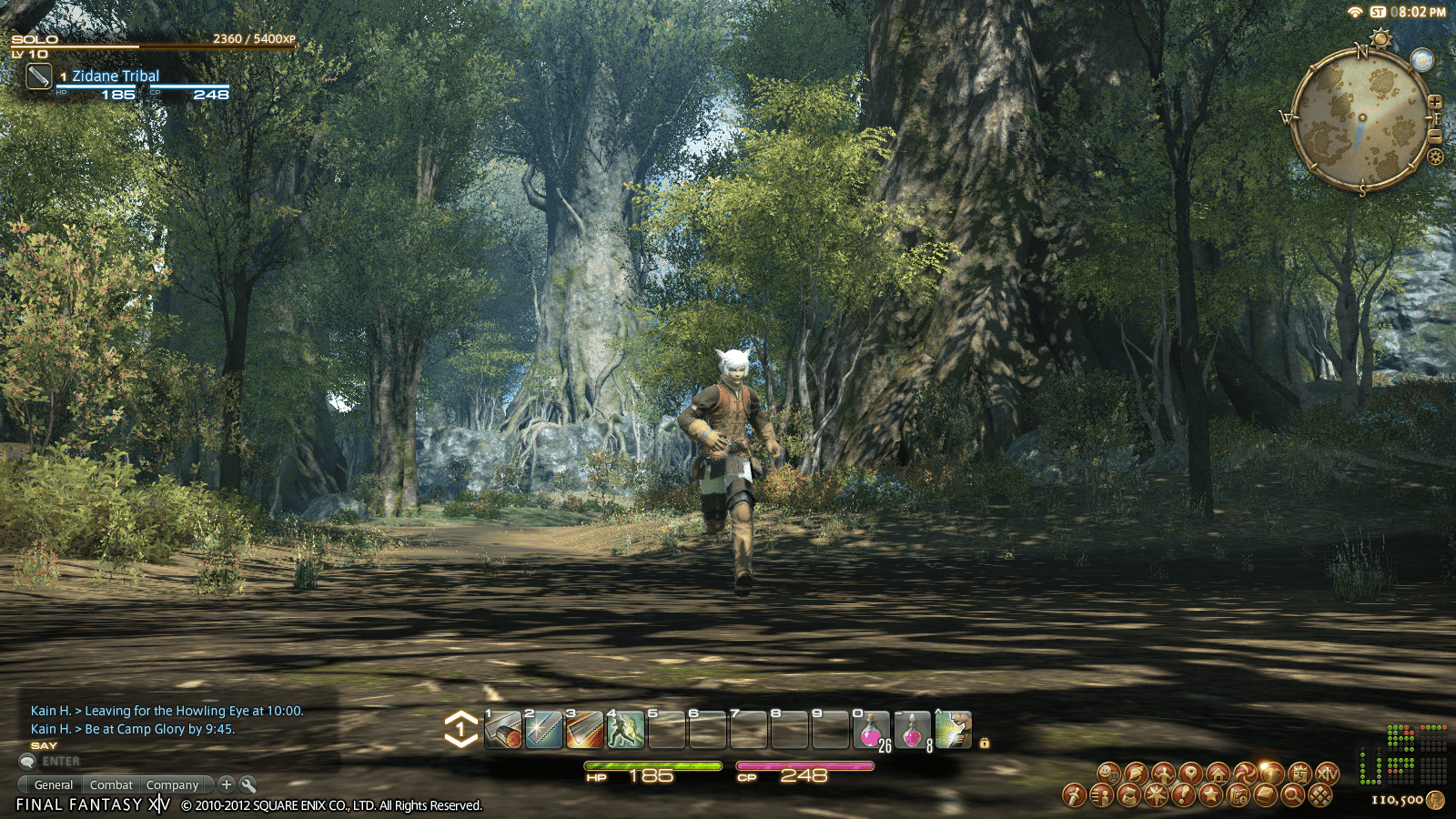
A fresh character in FFXIV starts with a class choice — Gladiator, say, or Lalafell-sized Thaumaturge — and immediately falls into the game's real backbone: the Main Scenario Quest, a continuous storyline that runs from your first steps in Limsa Lominsa or Gridania all the way through Dawntrail's current chapters. There is no skipping it. Endgame systems, higher-level jobs, whole zones — nearly everything unlocks by quest, not by level number alone, and the MSQ is the spine everything else hangs off.
What makes that bearable for a solo player is the Duty Support system: story dungeons and trials can be cleared with AI-controlled party members instead of a live group, so a new player working through A Realm Reborn at 11pm on a Tuesday isn't stuck waiting on a queue pop. It's a genuinely unusual concession for the genre — most MMOs assume you'll always have four strangers on tap — and it quietly removes the single biggest early-game friction point competitors like it still have.
The free trial is generous enough to make the "how much does this cost me before I decide" question almost moot: it now covers the base game plus Heavensward, Stormblood, and Shadowbringers, over 400 hours of content and every job those expansions add, playable to level 80, with no time limit and no credit card required. Only once you're ready to chase Endwalker and Dawntrail does a subscription actually become necessary — and by then you've had long enough with the game to know if you want to.
The world starts small and gets enormous. Eorzea — the three city-states of Limsa Lominsa, Gridania, and Ul'dah — is where A Realm Reborn keeps you, but every expansion since has added a full continent with its own politics, cast, and visual identity: the dragon-haunted spires of Ishgard in Heavensward, the Far Eastern-inflected nation of Doma in Stormblood, the light-drowned First in Shadowbringers, the interdimensional stakes of Endwalker, and Dawntrail's Tural, a Meso-American-coded land built around a succession crisis and a literal race across the continent. Shadowbringers in particular gets cited constantly, and fairly, as one of the better-written stretches of story in mainstream gaming — it slows down, commits to a genuinely dark premise, and pays it off without flinching.
Dawntrail took a swing at something the series hadn't really tried before: Tural's central conflict is a succession race between five would-be rulers, each backed by a distinct in-world culture, and the writing spends real time on characters players aren't necessarily supposed to root for. It split the community harder than any expansion since Stormblood — some players found the slower, more personal character work refreshing after Endwalker's world-ending stakes, others missed the momentum — which is itself a sign the writers were taking a genuine risk rather than repeating a formula that had already worked twice.
It's worth naming the tradeoff plainly: A Realm Reborn's early chapters are the game's most-cited weak point, padded with fetch quests and a plot that takes its time finding momentum. Square Enix has trimmed a meaningful chunk of that filler over the years, but the first ten or so hours still ask for patience before the story earns the reputation it eventually gets.
FFXIV's job system is the mechanical idea the whole game is built around: there's no permanent class choice. Your single character can pick up a sword and shield as Paladin one afternoon and switch to slinging black magic as Black Mage the next, gear and abilities swapping along with the weapon in your hand. Across the current roster of over twenty jobs split between Tank, Healer, Melee DPS, Physical Ranged DPS, and Magical DPS, that means one character can eventually experience the entire combat design space rather than committing to a single role for the life of the account.
The trinity itself is orthodox — tanks hold aggro and eat big hits, healers keep the party alive, DPS burns the clock — but the mechanics layered onto boss fights are where the design earns its reputation: stack markers that punish players standing too close together, spread mechanics that do the opposite, tethers that need to be intercepted by a specific role, and timed team-wide damage patterns that require healers to pre-position cooldowns rather than react. Combat has been steadily pared down since Endwalker's "job pruning" pass, trimming filler buttons so each job's identity reads more clearly in a busy raid frame — a change that split the community when it landed but has mostly won people over as fights have gotten more mechanically dense to compensate.
Take a Dragoon rotation as a concrete example of what that looks like in practice: open with a positional combo that demands standing behind the target for a damage bonus, weave in oGCD jumps between global cooldowns to keep DPS flowing without breaking the combo chain, then time a Life of the Dragon burst window around the raid's shared buff windows so every hard-hitting cooldown lands while damage multipliers are stacked. Miss that timing by a few seconds and the loss compounds across an entire eight-minute fight. That's the texture underneath "the combat has depth" — not abstract complexity, but a genuinely tight window for optimal play that top-end players chase for its own sake.
Alongside the eight combat roles sit eight Disciples of the Hand and Land — crafters and gatherers with their own leveling tracks, gear, and rotations. A Culinarian doesn't just click "craft"; you're managing a resource bar across a sequence of actions — Basic Synthesis to build progress, Waste Not to stretch your materials, a Byregot's Blessing finisher to push quality over the line before durability runs out — and getting it wrong produces a lower-grade item instead of a hard fail. Botanists and Miners feed that pipeline by gathering nodes that rotate by time and location, sometimes chasing a specific high-yield node with a narrow spawn window.
Everything crafters and gatherers produce flows into the Market Board, a fully player-driven auction house shared across every world on a data center. It's a real economy in miniature — prices swing with patch cycles and new-BiS gear pushes — and it's one of the clearest ways FFXIV lets non-combat players matter to the raiding scene without ever queuing for a dungeon.
Underneath the raid tiers described earlier sits a much larger everyday ladder. Story dungeons arrive roughly every other major patch, four-person instances that take twenty to thirty minutes and usually introduce a new mechanic type the surrounding content will build on. Alliance Raids scale that up to 24 players split into three light parties, often telling a side story that runs parallel to the MSQ — the current series pays tribute to Final Fantasy XI's Vana'diel, closing out this patch with content built specifically for longtime series fans rather than newcomers.
For players who want a break from scripted fights, the Deep Dungeons — Palace of the Dead, Heaven-on-High, and the more recent Eureka Orthos — offer procedurally arranged floors climbed solo or in a small group, gear resetting each run, which plays closer to a roguelike than anything else in the game. Variant and Criterion Dungeons split the difference again, offering branching, replayable four-person content with a genuine difficulty option for groups who've outgrown normal queue content but aren't chasing Savage. And housing, while not combat content, eats an enormous number of hours on its own — personal apartments are unlimited, but full houses and plots are gated by an infamous lottery system that remains one of the community's longest-running points of frustration.
Square Enix doesn't publish live concurrent-player counts, but the surrounding signals all point the same direction: the game has passed 30 million lifetime registered accounts, Fan Festivals still sell out arenas the size of a mid-size convention center, and the jump to a sixth platform with Nintendo Switch 2 is a bet on an audience Square Enix believes is still growing rather than one it needs to win back. None of that answers "how many people are logged in right now" precisely, but a decade-plus into its life, Final Fantasy XIV reads as an MMO in steady health rather than one coasting on nostalgia.
PvP has never been where FFXIV's reputation is made, and the developers seem at peace with that. Crystalline Conflict, a 5v5 mode with normalized stats and a simplified PvP-only action set per job, is the low-commitment entry point — quick matches, a fresh arena added this patch (Archeia Harmonias), and none of the gear grind that scares casual players off competitive modes elsewhere. Frontline is the larger-scale option, a 72-player objective mode across three factions, while Rival Wings adds vehicle-style mechanics on top for players who want something stranger. None of it is mandatory, and the game never pretends otherwise — PvP here reads as a side dish for a mostly PvE-focused game, not a second pillar.
Social structure runs through Free Companies — FFXIV's answer to guilds, complete with shared housing, buffs, and company chat — and Linkshells, which function more like standing group chats than formal organizations, including cross-world versions for staying in touch with friends on other servers. The Party Finder tool now spans an entire region rather than a single data center, letting players form static groups or pick-up raids with anyone nearby regardless of which of the dozens of individual worlds they rolled on. For a subscription MMO with no open-world PvP and light guild obligations, that region-wide reach does a lot of quiet work keeping the population feel bigger than any single server would suggest on its own.
The straightforward answer: no, and not by a wide margin. FFXIV runs on the model the genre mostly abandoned — buy the game, then pay a monthly subscription, currently around $12.99 for the single-character Entry tier or $14.99 for the multi-character Standard tier in North America, with regional pricing elsewhere. Expansions are sold separately on top of that, typically around $40 at launch. There's a cosmetic cash shop on the side — mounts, glamour outfits, character-boost items — but none of it touches combat power, raid clear speed, or gear quality. The subscription itself is the entire monetization pitch; nothing in the item shop closes a gap a subscribed player's own play time can't.
That subscription structure is also the model's biggest practical objection: unlike a buy-to-play MMO you can shelve for six months at zero cost, an FFXIV subscription lapses into an actual monthly bill if you keep playing casually without canceling. It's the honest tradeoff of a sub-based game rather than a hidden one, but it's worth knowing before committing past the trial.
If you want a story-first MMO that treats its main questline as seriously as a single-player RPG, if you'd rather learn one character deeply across every role than reroll for each new class, and if you don't mind a subscription in exchange for zero pay-to-win pressure, Final Fantasy XIV earns the hours it asks for. If your priority is open-world PvP, a sandbox economy, or a game you can walk away from for months without a bill following you, this isn't that game, and nothing about Dawntrail's current patches will change your mind. For everyone in between, the free trial answers the question better than any review can — four expansions and hundreds of hours cost nothing, and by the time Shadowbringers' story lands, you'll already know which side of that split you're on.