 F2P · Live
Lineage 2 Essence
Lineage 2 Essence is NCSoft's free-to-play take on the classic Korean MMORPG Lineage II, built around faster…
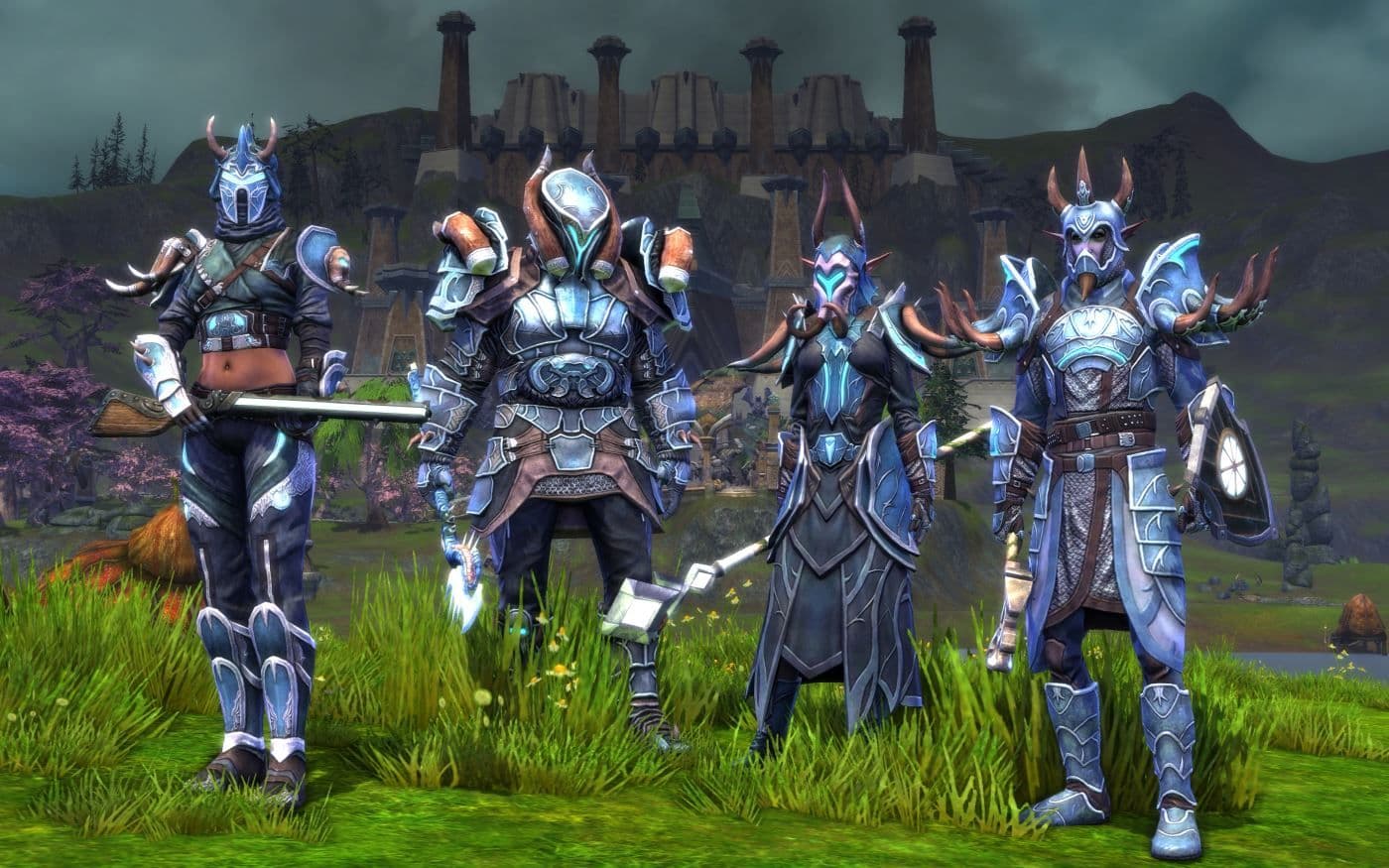
Rifts tear open across the sky at random, spilling elemental invaders into Telara and forcing nearby players to drop what they're doing and fight them off — the mechanic RIFT built its entire identity...
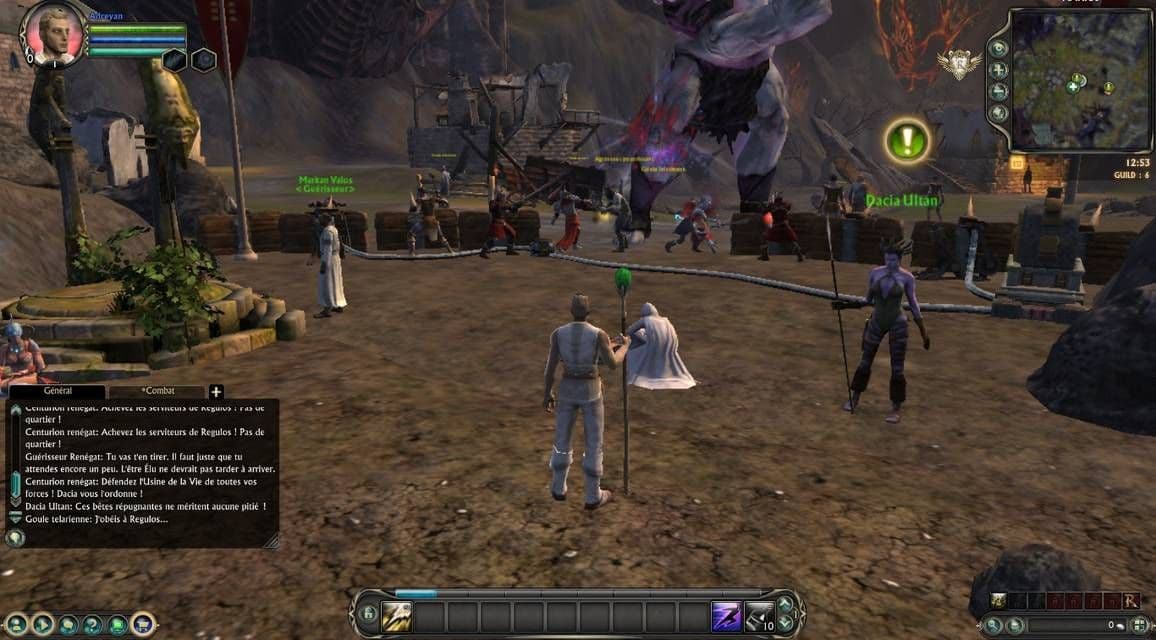
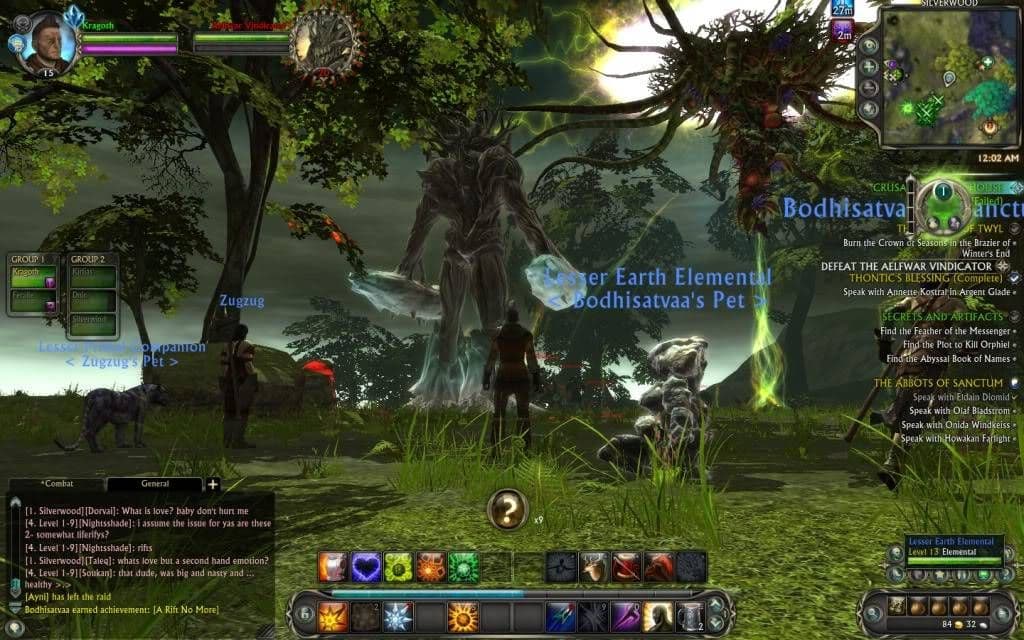
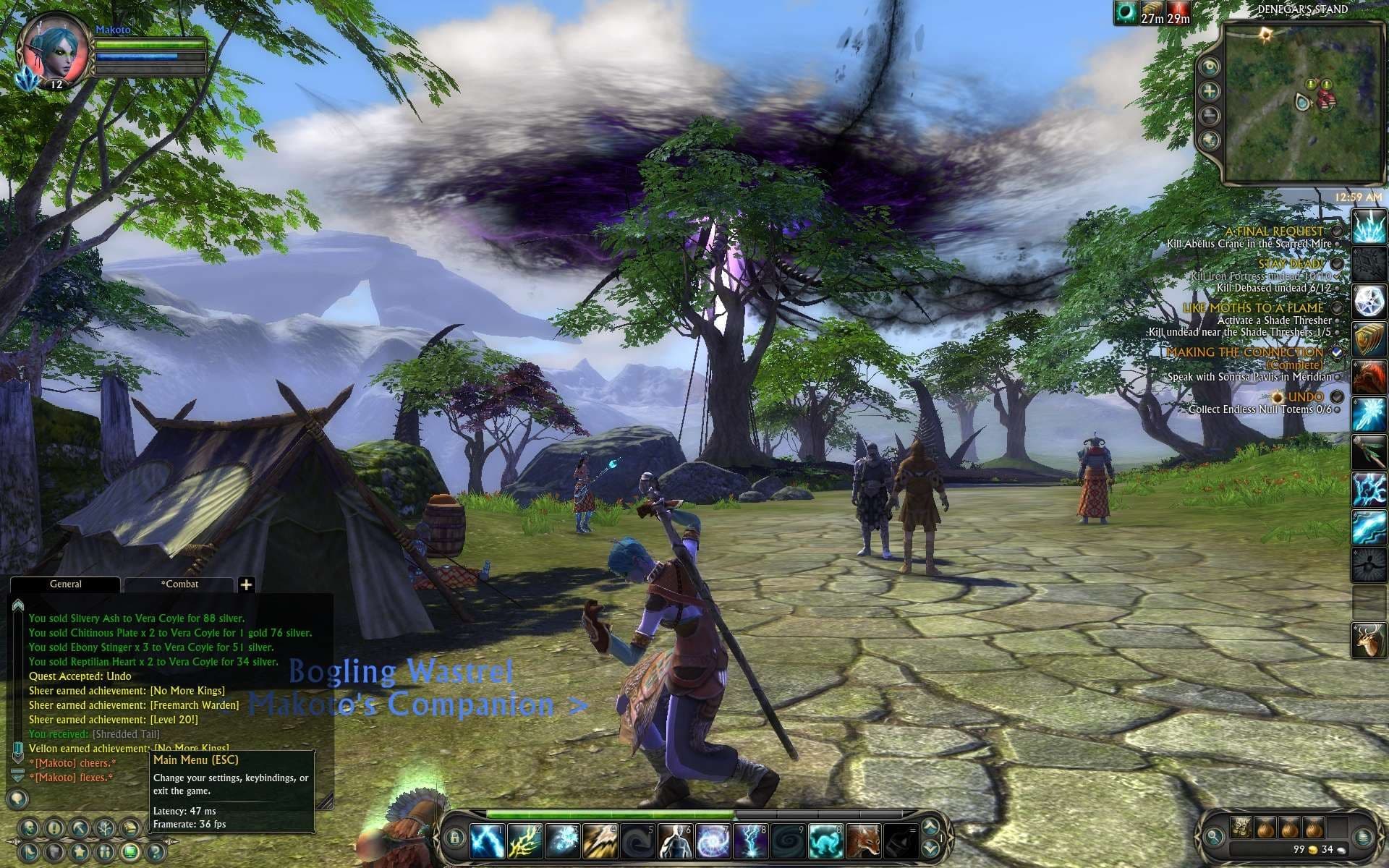
RIFT is a fantasy MMORPG originally built by Trion Worlds and released on March 1, 2011, now maintained by Gamigo after it acquired Trion's remaining assets in 2018. It made its name on two ideas that were genuinely fresh for a WoW-era theme park: a soul-based multiclass system that let one calling play a dozen different roles, and dynamic rift events that could tear open mid-quest and drag every nearby player into an impromptu fight. For most of the last decade RIFT has been a game people assumed was already dead. It isn't, quite — 2025 and 2026 brought the first real string of updates since 2022, and the best way to answer whether it's worth playing right now is to walk through what an actual login looks like today, from character select to logout.
Telara sits at the crossroads of six elemental planes — Air, Water, Earth, Fire, Life, and Death — and the setup that got the game its name is simple: Regulos, a dragon god of extinction, wants the planet gone, and the planar forces he commands can rip a hole in the sky anywhere, anytime. You play an Ascended, a soul pulled back from death to fight for one of two factions, the loyalist Guardians or the pragmatic Defiant, and the six planes give every zone a rotating cast of elemental threats instead of one static villain. It's a well-worn structure by 2026 standards, but the zone design has aged better than the marketing ever suggested it would — Trion's artists leaned into distinct biomes per plane-aligned region, and a decade-plus of patches never touched the core leveling zones enough to make them feel dated in the way some contemporaries' launch content does.
Boot up RIFT today and the first thing you notice isn't a splash screen about new content — it's a character-select list quietly telling a story about the last four years. NA and EU shards have been folded together repeatedly since 2022; Faeblight, Hailol, and Seastone are gone, merged into Greybriar, Laethys, and Wolfsbane. If your main lived on one of the closed shards, Gamigo spent 2026 running a recovery program that lets you file a support ticket and get those characters restored to a live server — a genuinely unusual move for a publisher this far into a game's decline, and a small signal that someone at Gamigo still cares whether returning players have anything to log back into.
Pick a character, and the loading screen drops you into whatever event is currently running. As of this writing that's the Carnival of the Ascended, a recurring seasonal event stitched together from years of older festival content, alongside the fourth run of a Battle Pass system that hands out mounts and dimension items for completing daily and weekly objectives through early August. None of this is new; it's the same reward loop RIFT has leaned on since 2019. But it's active, it's populated by the returning-player wave the game has clearly been chasing, and — this matters more than it sounds — the servers are actually up and taking a load test's worth of new infrastructure without falling over.
Where RIFT still separates itself from the genre pack is the Ascended Soul system. You pick one of five callings — Warrior, Cleric, Mage, Rogue, or Primalist — and that calling unlocks access to eight to ten souls, each a complete subclass with its own skill tree. A Warrior can be a tanky Paladin, a pet-summoning Beastmaster, or a dual-wielding Riftblade, and critically, you're not locked into one: you can slot up to three souls simultaneously and split points between them, then save that combination as a Role and swap to a second Role — say, a healing-focused Cleric build — with a couple of clicks. There are, on paper, 336 possible soul combinations per calling. Most players settle on two or three proven builds, but the depth is real, and it's still one of the more flexible class systems any MMO has shipped.
Step outside a hub city and the second signature system announces itself without warning: a rift tears open in the sky, planar mobs start pouring out, and a "Join the invasion" prompt pops up whether you were questing, gathering, or just walking past. These are still genuinely fun in the way they were in 2011 — no group finder queue, no commitment, just a scaling fight that ends in fifteen minutes and drops currency toward gear and Planarite crafting mats. Instant Adventures do something similar for solo-averse leveling: the game strings together nearby objectives — kill this, escort that, close a rift two zones over — into a loosely guided quest chain, which is a genuinely clever answer to the "what do I even do next" problem that plagues aging leveling content.
Once the honeymoon of rediscovering the soul system wears off, the loop settles into familiar shape: level through zones built around Storm Legion, Nightmare Tide, and Starfall Prophecy content, gear up through five-player dungeons, and eventually queue into twenty-man raids like the Prophecy of Ahnket-era Rise of the Phoenix or the older Frozen Tempest — content that still requires the kind of coordinated pull-planning and role-swapping RIFT was built to reward, even if the raider population left to run it is a fraction of what it was in 2013. Gathering and crafting run on a parallel track: professions like Runecrafting, Outfitting, and Artificing turn zone materials into gear, dyes, and consumables, and while nobody is getting rich off the current player-driven market, the auction house on merged shards still moves enough volume to make crafting worth the time investment rather than a vestigial system nobody touches.
Dimensions, RIFT's instanced housing system, are where a lot of the game's most dedicated remaining players actually spend their time. Players can claim entire zone-sized plots and decorate them with thousands of unlockable items — furniture, structures, even functional puzzle rooms other players can visit and solve — and the January 2026 patch added a cross-shard dimension search tab specifically because Gamigo noticed how much of the current playerbase is building rather than raiding. It's a small feature, but a telling one: it points to where the energy in this community actually lives right now, and it's not the same place it lived a decade ago.
The honest caveat belongs here, not buried in a footnote: the systems built on top of that leveling loop haven't moved since Prophecy of Ahnket capped characters at level 70 in late 2016. There's no new raid tier to chase, no new soul to unlock, no fresh zone waiting past the one you remember. An EXPAC lock feature — letting new and returning players skip straight to endgame content without wading through nine years of prior expansions — was promised for early 2026 and then quietly pushed back over unresolved bugs. Whether that ships this year or joins the pile of features Trion and Gamigo have shelved over the last decade is genuinely an open question.
RIFT's PvP layer splits into instanced Warfronts — capture-the-flag and domination-style battlegrounds pulled straight from the WoW playbook — and the more ambitious Conquest, a three-faction open-world zone where Guardians, Defiants, and a neutral Nightfall Realm faction fight over resource nodes across a shared map. Conquest is still the more interesting design of the two, mixing PvE objectives into open PvP the way few modern MMOs bother to anymore. The problem is one of arithmetic rather than design: a three-faction mode needs three factions' worth of concurrent players to actually feel alive, and on most shards today that's a tall order outside of scheduled event windows. Warfronts queue faster and more reliably simply because they need fewer bodies to fire.
Is RIFT still alive in 2026? Yes, in the specific sense that matters: shards are up, matches queue, and events run on schedule. Third-party tracking sites estimate RIFT's concurrent population in the low thousands, with July 2026 figures hovering around 1,400 to 1,600 players and a documented 2025 peak near 2,800 during a returning-player spike — numbers that should be read as rough community estimates rather than official figures, since Gamigo doesn't publish concurrent player counts for the game. That's enough to keep merged shards functional for questing, Instant Adventures, and Warfronts, but not enough to make open-world Conquest reliably feel like the three-faction war it's designed to be outside of event weekends.
RIFT has been free-to-play since June 2013, and the core loop — leveling, questing, most dungeons — is fully accessible without spending a cent. Monetization runs through two channels: a Patron subscription that boosts experience, currency, and mount speed gains and unlocks convenience features like frequent fast travel, and Credits, a premium currency spent in the RIFT Store on cosmetics, character services, dimension items, and the occasional mount. Is RIFT pay-to-win? Not meaningfully — Patron speeds up progress rather than gating power, gear comes from playing content rather than buying it, and nothing in the store hands a paying player a stat advantage a free one can't eventually match. The 2018 experiment with Rift Prime, a subscription-only progression server with a minimal cash shop, proved Trion understood the difference between fair and predatory monetization even as the broader game around it was losing staff; that server closed in April 2019, but the restraint it represented largely carried over to how the base game monetizes today.
By the time you close the client, the picture RIFT paints of itself is a specific and slightly unusual one: a game whose core systems remain some of the smartest ideas the genre produced in the early 2010s, running on infrastructure that a skeleton crew is visibly trying to keep alive rather than expand. The soul system, the rifts, Instant Adventures — none of that needed a single new zone to still feel good in 2026, and that's precisely why the lack of new content stings less here than it would in a game whose hooks were always about the next patch rather than the moment-to-moment play.
Here's the blunt version: RIFT earns its continued existence entirely on the strength of a decade-old class system that nobody in the genre has meaningfully topped since, and it survives despite a publisher that has spent most of the last eight years doing the bare minimum to keep the lights on. That's not a contradiction — it's the whole story of this game in one sentence. If Gamigo's 2025–2026 patch cadence is the start of something, the returning-player numbers suggest there's still an audience willing to reward it. If it's a last flicker before the next long silence, the soul system and the rifts will still be worth the handful of hours it takes to remember why this game mattered in the first place. Either way, go in expecting a museum with excellent exhibits and no gift shop expansion in sight, not a live-service comeback story — and you won't be disappointed by what's actually there.