 Free To Play
Ragnarok Online
MMORPGReleased
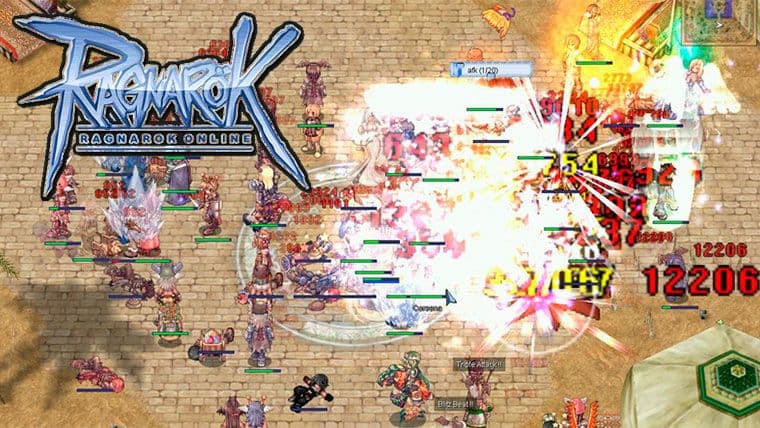
Ragnarok Online has been running since 2002, and the card system it introduced — socketing monster drops into weapons and armor — is still one of the ...
If your PC can run this game, you'll also be able to play these:
Free To PlayRagnarok Online has been running since 2002, and the card system it introduced — socketing monster drops into weapons and armor — is still one of the ...
 Free To Play
Tibia is the 1997 fantasy MMORPG that never stopped shipping updates — nearly 29 years in and still adding new classes, new bosses, and new content. F...
RIFT runs on Gamebryo, the same engine family that powered Oblivion and Fallout 3 before Trion Worlds adapted it for a persistent online world. The requirements below reflect a game engineered in 2009–2010 around one very specific stress case: a dynamic rift can tear open anywhere on the map with no warning, and within seconds the game has to spawn dozens of planar mobs and pull in every nearby player, all fighting in the same square meter of terrain at once. Everything else about the client — the zone art, the UI, the six-elemental-plane setting — was built to stay light enough that this one unpredictable spike never breaks the experience.
The minimum GPU bar sits low even by 2011 standards because RIFT's zone art was never chasing cutting-edge fidelity — Trion's artists built distinct biomes per plane rather than pushing polygon counts, which is why even a card as old as the GeForce FX 5900 could push a walkable frame rate through most of the leveling zones. What actually taxes a graphics card here is a rift event or a Conquest skirmish: a soul-based combat system built on stacked buffs, debuffs, and area-effect abilities means a dozen or more Ascended characters can each be running several particle effects simultaneously, and that overdraw is where a weak card chokes long before the base terrain would ever be a problem. The jump from the minimum tier's Radeon X300-class cards to the recommended GeForce GTS 250 exists almost entirely to keep frame rates from collapsing the moment a rift invasion turns into a fifteen-person brawl.
RIFT's soul system is the reason the CPU column matters more here than the GPU column suggests it should. Every Ascended character can slot up to three souls at once, and each soul carries its own tree of buffs, debuffs, and cooldown-tracked abilities — multiply that by a full raid or a rift invasion, and the client is constantly resolving dozens of simultaneous effect timers, threat calculations, and animation states well before a single frame gets drawn. A dual-core minimum was a reasonable floor in 2011 specifically because RIFT's combat, while busy, is tab-target rather than physics-driven: the CPU load comes from bookkeeping many simultaneous ability states, not from simulating collision or projectile trajectories. That's also why the recommended tier only asks for a modestly faster dual-core chip rather than jumping to quad-core — the 2016 Prophecy of Ahnket update did add a 64-bit client with proper multicore support, but the published spec sheet itself was never updated to reflect that a modern multi-core CPU meaningfully smooths out large-scale rift and raid encounters today.
As a persistent client-server MMO, RIFT's most demanding network moments are the ones the game is named after: a rift invasion can summon a crowd of players into the same location with no scheduling or warning, and Conquest — the three-faction open-world PvP mode — needs dozens of players from three separate factions synchronized across a shared map at once. Warfronts, the instanced battlegrounds, are comparatively gentle on the network since they cap participants at a fixed, small number per side. None of this demands unusual bandwidth; a standard broadband connection handles the data volume fine. What matters is stability during those unscheduled crowd moments — a connection that drops packets during a sudden thirty-person rift fight will show up as rubber-banding and missed ability casts in a way it never would while solo questing.
Two to four gigabytes looks modest by 2026 standards, and it is — but it matches an engine built before persistent open-world MMOs commonly kept large in-memory item and ability databases resident at once. RIFT's memory load comes from breadth: hundreds of possible soul-and-ability combinations across five callings, a crafting and gathering system spanning multiple professions, guild and Dimension housing data, and an auction house UI that stays active alongside the 3D world. The step from 2 GB to 4 GB in the recommended tier mostly exists to keep that overhead from competing with zone-streaming memory during the busiest moments — a raid roster with a dozen active soul combinations, or a Dimension packed with player-placed items, being the realistic worst case the recommended figure is protecting against.