 F2P · Live
Lineage 2 Essence
Lineage 2 Essence is NCSoft's free-to-play take on the classic Korean MMORPG Lineage II, built around faster…
No holy trinity, no static quest hubs, and no subscription — Guild Wars 2 built its identity on dynamic events that reshape entire zones and combat that lets any profession fill any role. ArenaNet's M...
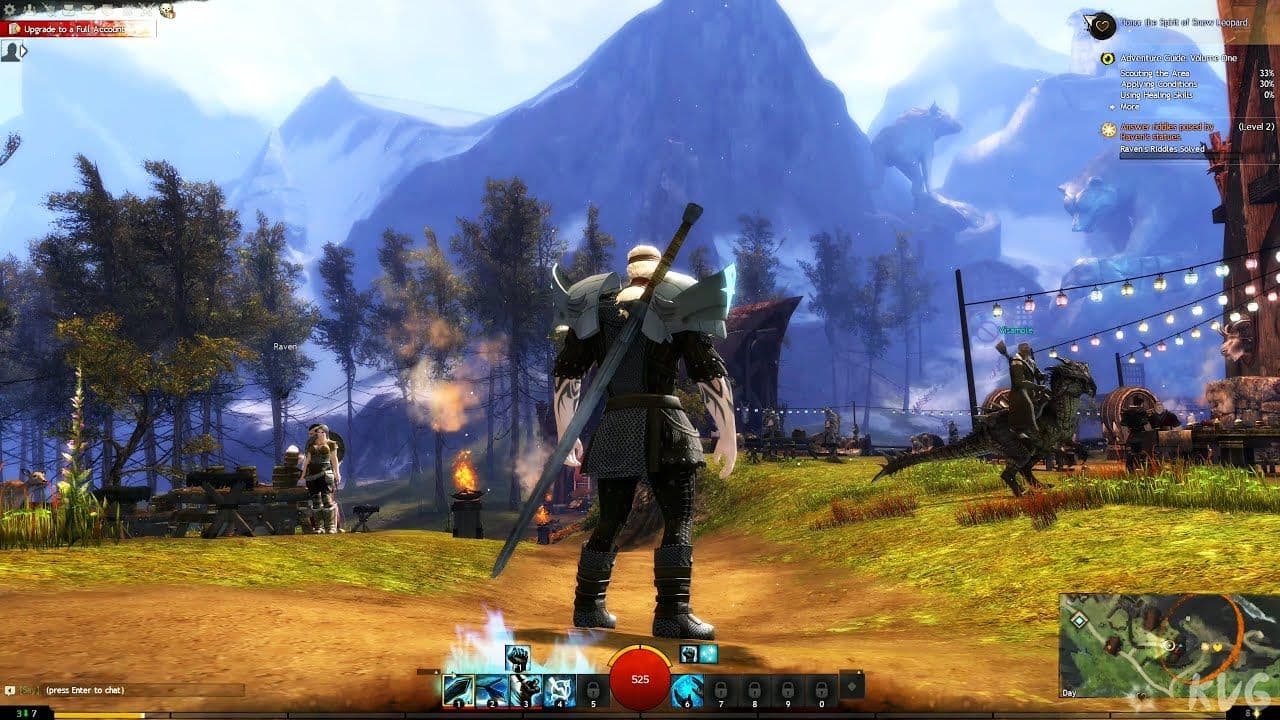
Guild Wars 2 is ArenaNet's fantasy MMORPG, released in August 2012 and brought to Steam a decade later in 2022. It's best known for two design choices that were unusual then and remain unusual now: combat built around dodging and weapon-swapping rather than a static hotbar, and a buy-to-play model that has never once asked for a monthly fee. Fourteen years and six expansions later, the game just entered its most eventful stretch in years — the sixth expansion, Visions of Eternity, is mid-rollout, and ArenaNet has simultaneously confirmed a third entry in the franchise while promising Guild Wars 2 isn't going anywhere. This Guild Wars 2 review looks at what that means for someone deciding whether to install it today.
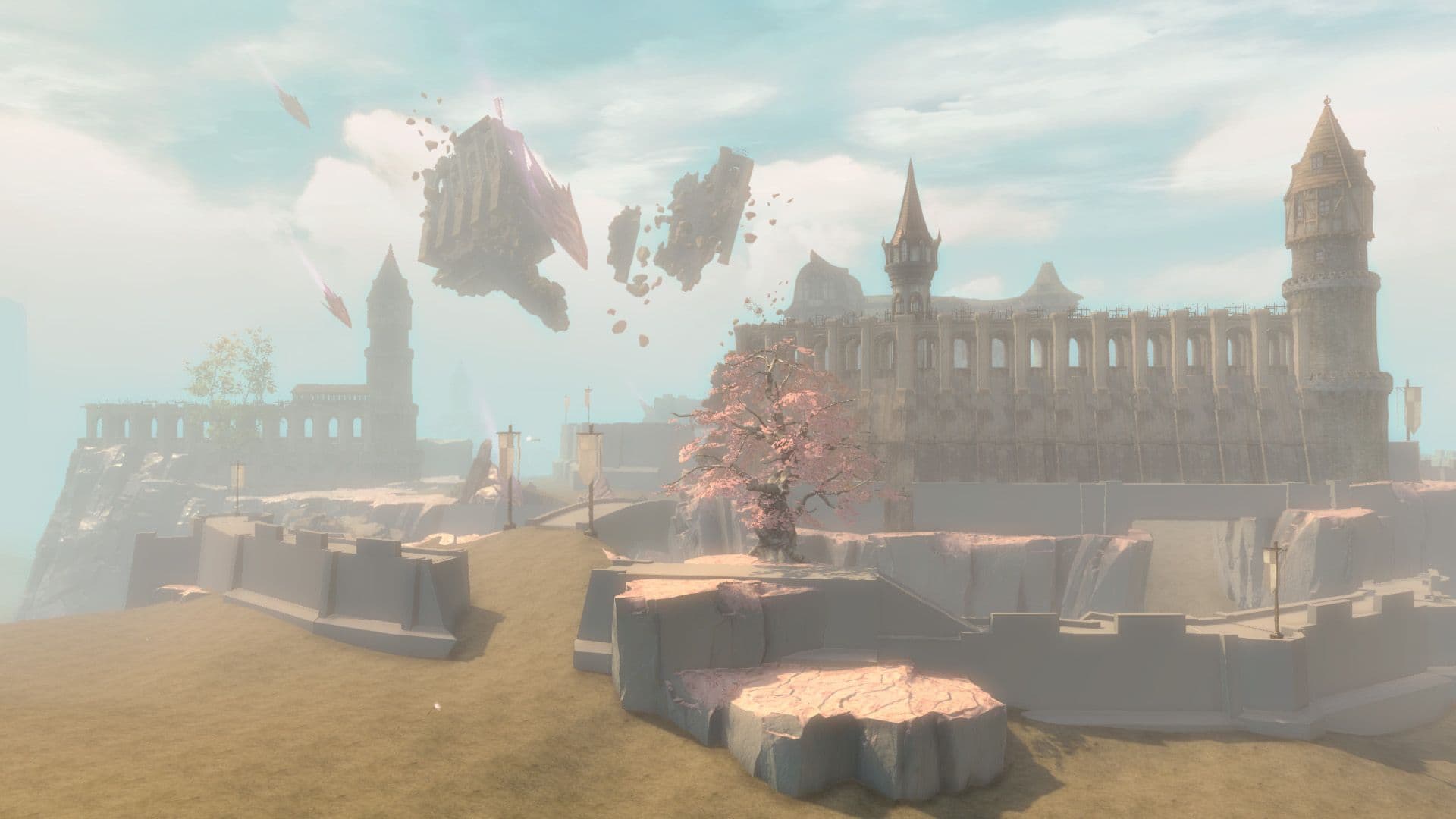
Tyria is the kind of setting that rewards long residence. The original game's Elder Dragon storyline wrapped up years ago, and the last several expansions — Secrets of the Obscure, Janthir Wilds, and now Visions of Eternity — have moved the plot into stranger territory: sky-realms, haunted alliances, and now the mist-shrouded island of Castora, where a shadowy order of researchers called the Inquest is hunting for ley-line magic the Tyrian Alliance would rather they didn't find. None of that backstory is required reading. Character creation still opens with one of five races — human, charr, asura, sylvari, or the tall, war-scarred norn — and the game's five original starting zones remain a gentler on-ramp than anything the expansions throw at you later.
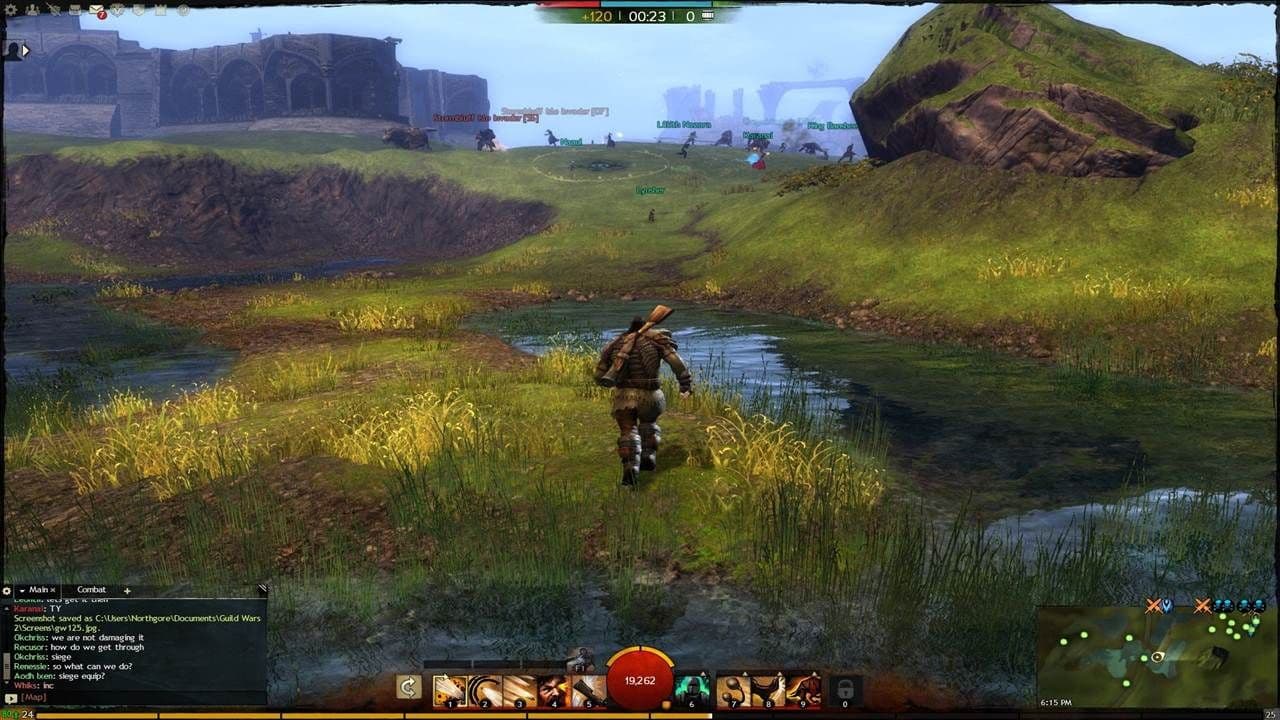
What holds the world together, more than lore, is texture. Divinity's Reach feels like a functioning capital rather than a hub screen. The Heart of Maguuma's vertical jungle canopies still look unlike anything else in the genre over a decade after Heart of Thorns introduced them. And the game's commitment to dynamic events — world-state changes that shift based on what players actually do, rather than a quest marker resetting the moment you walk away — means a given zone can look meaningfully different depending on whether the local defenders are winning or losing when you arrive.
A new character's first hour is unusually calm for the genre: pick a race and profession, run a short personal-story tutorial tuned to your background, and land in an open zone with dynamic events already running around you — a farm under bandit attack, a supply caravan that needs an escort, a lost NPC to walk home. None of it is gated behind a quest-giver standing still; you simply run into it. Leveling to the level-80 cap is fast by design and almost incidental — stats stop mattering nearly as much as build and gear once you're there, which is the game's way of saying the real onboarding hasn't started yet.
That real onboarding is the mastery system, unlocked once a character hits max level. Rather than more numbers, masteries hand out account-wide abilities: gliding, mounts, underwater breathing upgrades, and dozens of smaller unlocks tied to specific maps and expansions. Getting your first mount — usually the springer, prized for its double-jump — typically happens within a few hours of starting Path of Fire content, and from there the traversal options only expand: a raptor for ground speed, a skimmer for water, a jackal for short-range teleports, and eventually the skyscale, a flying mount whose unlock chain is one of the longest and most beloved scavenger hunts in the game. This is horizontal progression in practice — you're not chasing bigger numbers so much as new verbs for interacting with the map.
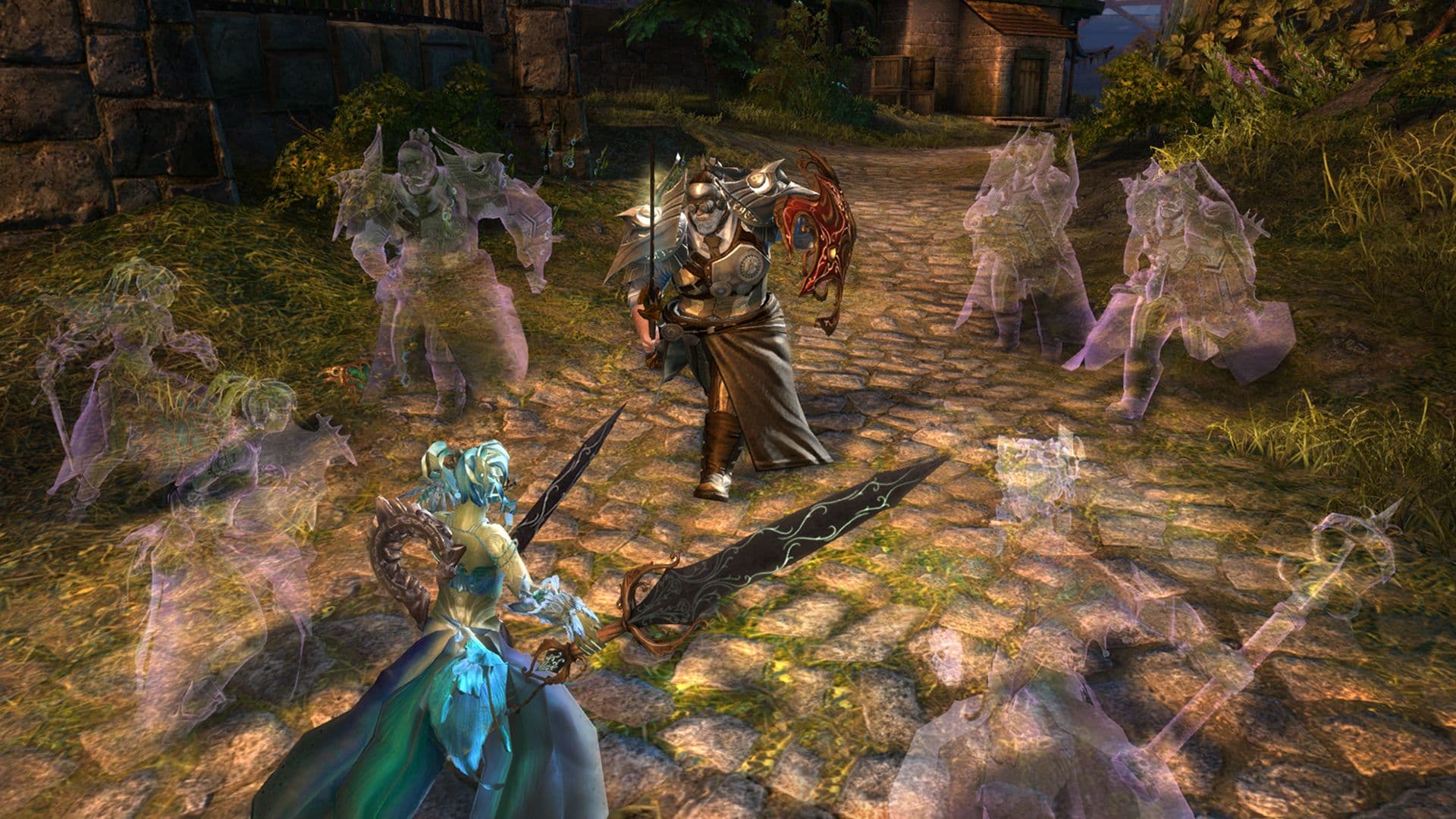
Combat is where Guild Wars 2 still feels distinct from most of its competitors. There's no dedicated tank-healer-DPS structure; every one of the nine professions can bring some mix of damage, support, and survivability depending on build, and dodging matters more than gearing around raw defense stats. The signature mechanic is weapon swap: most professions carry two equipped weapon sets and can flip between them mid-fight with a single keybind, instantly replacing the first five skills on the bar. A warrior with a greatsword for burst damage and a hammer for crowd control isn't switching loadouts between fights — they're switching mid-combo.
Layered on top of that are elite specializations, unlocked one per owned expansion, which don't just tweak numbers the way a talent tree might — they hand a profession an entirely new weapon type and rebuild its identity around it. A guardian becomes a firebrand wielding a torch and axe-flung tomes of law; a ranger becomes a untamed, fighting alongside an unleashed pet in a stance that trades control for raw aggression. Visions of Eternity added a sixth elite specialization for every profession, which — combined with a feature called Weaponmaster Training that lets any character use elite-specialization weapons without committing to that spec's trait line — means the number of viable weapon-and-build combinations by 2026 is genuinely large. It's a lot to take in at once, but nothing about it is mandatory reading; most players settle into one or two builds they like and only branch out for specific content.
Crafting sits closer to a supporting system than a headline feature. Eight disciplines — including weaponsmithing, armorsmithing, tailoring, and cooking — let you gather materials from the open world and refine them up a tiered chain into usable gear, and a character can hold two disciplines at once, swappable at any time for a small fee. The payoff is mostly practical: crafted gear fills early-to-mid-level gaps cheaply, and certain high-end trinkets and legendary components are craft-gated rather than drop-gated.
The real economic engine is the Trading Post, Guild Wars 2's global auction house, where every account — even free ones — can browse and, with restrictions, trade. Free accounts face real limits here: several categories of goods are locked out entirely, and buying any expansion is what lifts those walls, with a short waiting period afterward as an anti-bot measure. For anyone who does own an expansion, the Trading Post functions as a single unified market across the entire player base rather than being split by server, which keeps prices sane and items easy to find even years after they stopped being commonly farmed.
Open-world PvE never really stops mattering here the way it does in games where max level is where the story starts. Map-wide meta-events — coordinated pushes that can pull in fifty or more strangers with zero prior organizing — remain some of the best pure spectacle in the genre, and World Boss Rush events like the one running this summer exist specifically to funnel players back toward them. Past that, Fractals of the Mists are five-player instanced dungeons with four difficulty tiers and a recently added quickplay queue that the community has embraced for taking the friction out of group-finding.
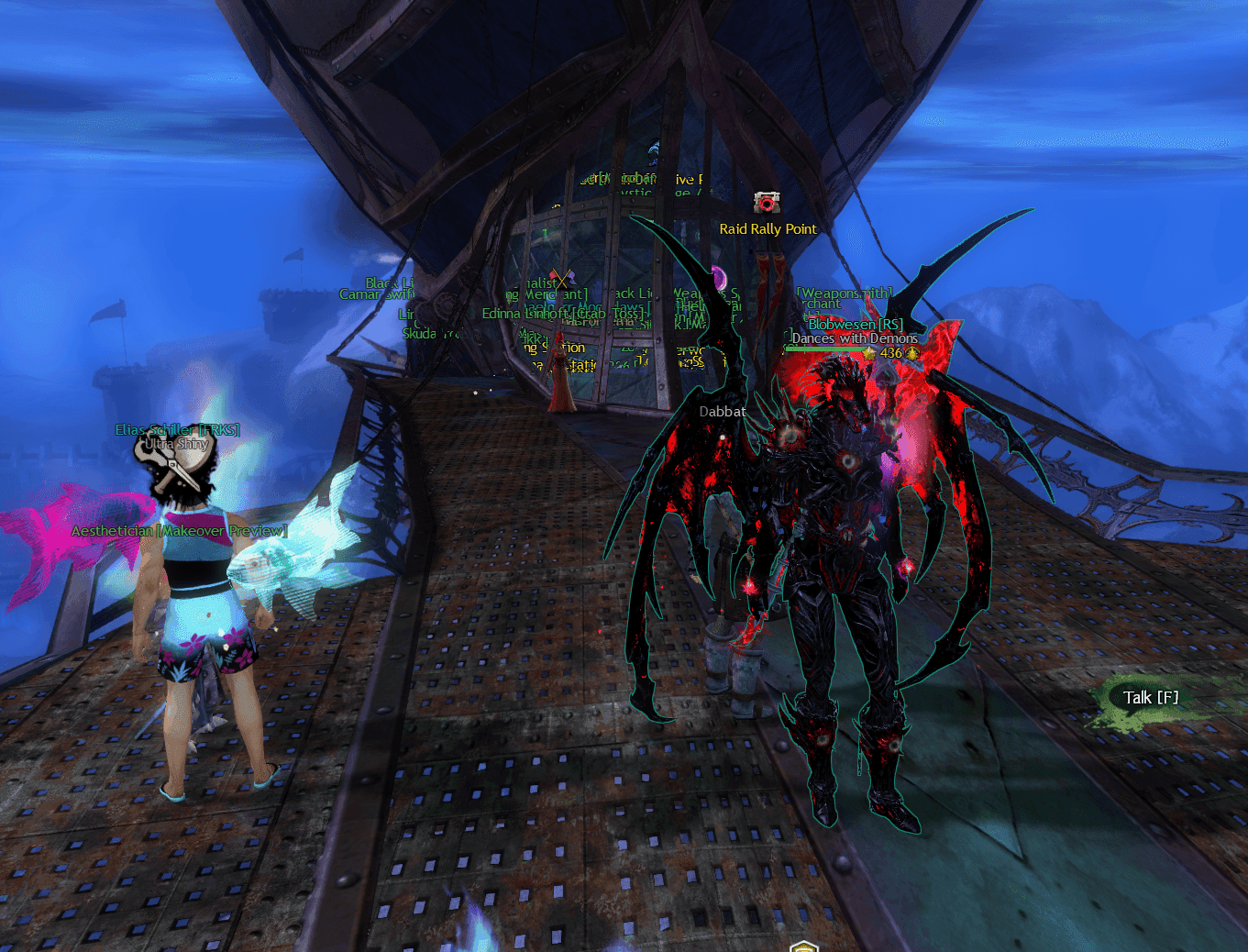
Raids sit above that as the sharpest challenge in the game: ten-player squad content demanding real coordination, hosted out of the Lion's Arch Aerodrome, and historically intimidating enough that ArenaNet spent 2026 folding Strike Missions and raids into a single unified system with shared matchmaking, specifically to smooth the on-ramp for players who'd otherwise never set foot in one. World vs. World is the other pillar — a persistent three-way war across a set of always-live maps, fought with siege weapons, supply lines, and full squads, and one of the few large-scale PvP modes in the genre that's stayed essentially unchanged in spirit since launch. A new borderlands map is in beta testing for late 2026, the first significant WvW map addition in years. Structured PvP, by contrast, is tightly scoped: 5v5 conquest matches where every player is normalized to identical stats, meaning new accounts compete on build knowledge and mechanical skill rather than gear.
Strike Missions, the single-boss encounters that sit between open-world content and full raid wings, remain the intended bridge for players who want raid-style mechanics without committing to a ten-person squad for an hour — fights like Shiverpeaks Pass or the Voice of the Fallen are built to teach specific mechanics, like tight stacking or split-damage phases, that show up again in harder form once a player is ready to move on. Fractals scale that same idea by difficulty tier instead of by boss, layering optional instabilities on top of familiar five-player instances so a group can dial the challenge up or down without switching content entirely.
Whether the endgame feels rich or aimless depends heavily on what you're used to. There's no weekly gear-reset treadmill pulling you back in; horizontal progression means the ceiling is mostly cosmetic, legendary-tier, or purely skill-based. Players coming from a game built around a weekly raid lockout sometimes bounce off that lack of structure before they realize it's a deliberate design choice, not an absence of content.
Guild Wars 2's guild system is built for flexibility rather than exclusivity — a single account can belong to up to five guilds simultaneously, useful for splitting WvW, raiding, and casual social circles into separate spaces instead of forcing one group to be everything. Guild halls provide a shared base with unlockable amenities, arenas, and decorations funded through guild-wide resource pooling.
Housing arrived comparatively late to the franchise in the form of Homestead, a personal instance for decoration and resource nodes, and Visions of Eternity expands it further for accounts that also own Janthir Wilds, unlocking an additional homestead map. It's a lighter system than the base-building found in survival MMOs, closer to a decorative sandbox than a functional settlement — but it gives long-term players somewhere to put the thousands of cosmetic unlocks the game hands out over a decade of play.
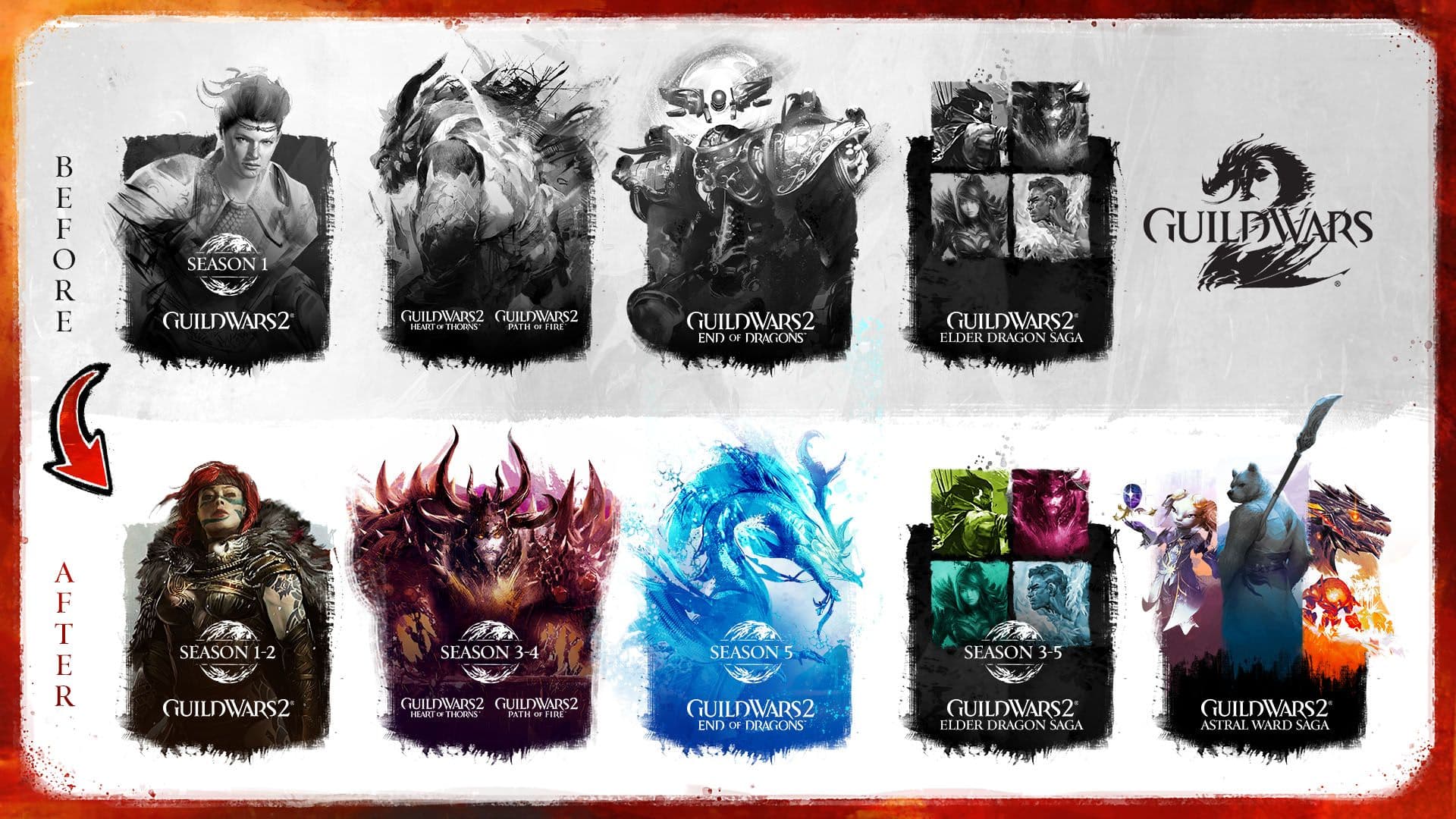
The core answer to is Guild Wars 2 free to play is: partially, and by design. The base game and its very first Living World season are free forever, no trial period, no forced expiration. Everything past that — the five earlier expansions, Visions of Eternity, and each Living World season released between them — is a one-time purchase, either with real money or with gems converted from in-game gold, which means a patient free player can theoretically buy their way into paid content without ever spending a cent, just time.
The Gem Store itself, ArenaNet's only other revenue channel, sells almost exclusively cosmetics and convenience: character slots, bag and bank space, mount skins, outfits, and services like instant waypoint travel to a friend. None of it affects combat stats directly, and there's no subscription tier of any kind — a distinction worth underlining since Guild Wars 2 is sometimes lumped in with subscription MMOs by people who haven't checked in years. The one real friction point is structural rather than predatory: owning "the whole game" means piecing together six expansions and several Living World seasons, and the purchase flow — separate expansion bundles, separate gem-store story packs, occasional Steam bundle mismatches — is genuinely confusing for a brand-new player trying to figure out what they actually need to buy.
ArenaNet spent June 2026 confirming what the community had suspected for years: Guild Wars 3 is real, announced at Summer Game Fest with a beta targeted for fall 2027, built on Unreal Engine 5, heading to PC and PlayStation 5, and set more than a thousand years before the original Guild Wars. That announcement could easily have read as a countdown clock on the current game. ArenaNet's own messaging pushed back on that reading directly, with the studio stating it intends to keep developing all three Guild Wars titles at once rather than winding one down to fund another, and confirming Guild Wars 2 will return to a proper annual expansion cadence once Visions of Eternity's remaining content lands later this year. The announcement window itself saw a real bump in players logging back in, which suggests the news generated curiosity rather than an exodus.
Visions of Eternity, meanwhile, is still mid-release. February's update added a new raid wing at Guardian's Glade with a challenge-mode version following shortly after; May's "The Only Way" update opened the Eternity's Garden map along with new masteries, relics, and legendary accessories; one further major update is planned to close out the story before the expansion's content cycle wraps.
None of that would matter much if the current audience weren't sticking around to see it. Steam's review aggregate sits at "Very Positive" across more than 18,000 English-language reviews, holding around 88% positive lifetime and 81% positive over the last thirty days — numbers that, for a fourteen-year-old MMO with a storefront this fragmented, suggest the friction isn't driving people away once they're past the first purchase. ArenaNet's own marketing puts the lifetime account count above 16 million, and while that figure says nothing about how many people log in on a given night, the combination of a healthy review score, a real post-announcement login spike, and a sixth expansion still mid-rollout points toward a game being actively played rather than quietly maintained.
If you want combat that rewards movement and timing over gear checks, an open world that reacts instead of resetting, and a monetization model that will never once ask for a monthly card charge, Guild Wars 2 remains one of the strongest arguments in the genre for exactly that kind of play — and the price of finding out is zero dollars and however many hours you're willing to give the tutorial zones. If what you actually want is a structured weekly gear chase with clear vertical power growth, or a storefront you can understand in five minutes without a wiki tab open, look elsewhere; the horizontal-progression model and the fragmented expansion-and-Living-World purchase path are real friction, not just first impressions. For everyone in between, the timing is arguably good: Visions of Eternity still has one more major update coming, and ArenaNet has now said in public, on stage, that this game isn't being quietly retired in favor of the next one.