 F2P · Live
Lineage 2
Aden's castles never stay in the same hands for long, and Lineage II has built an entire twenty-three-year…
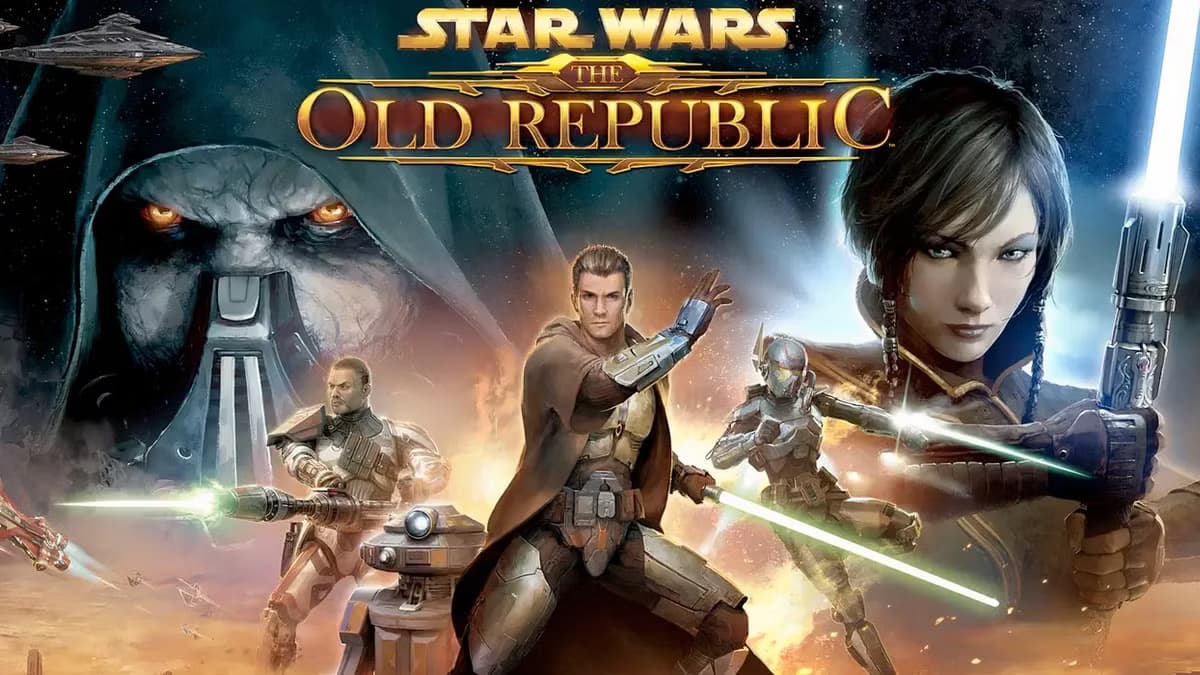
Star Wars: The Old Republic is the MMORPG built around eight fully voiced class stories set 3,600 years before the films, where every choice shapes companions, romances, and the fate of the galactic w...

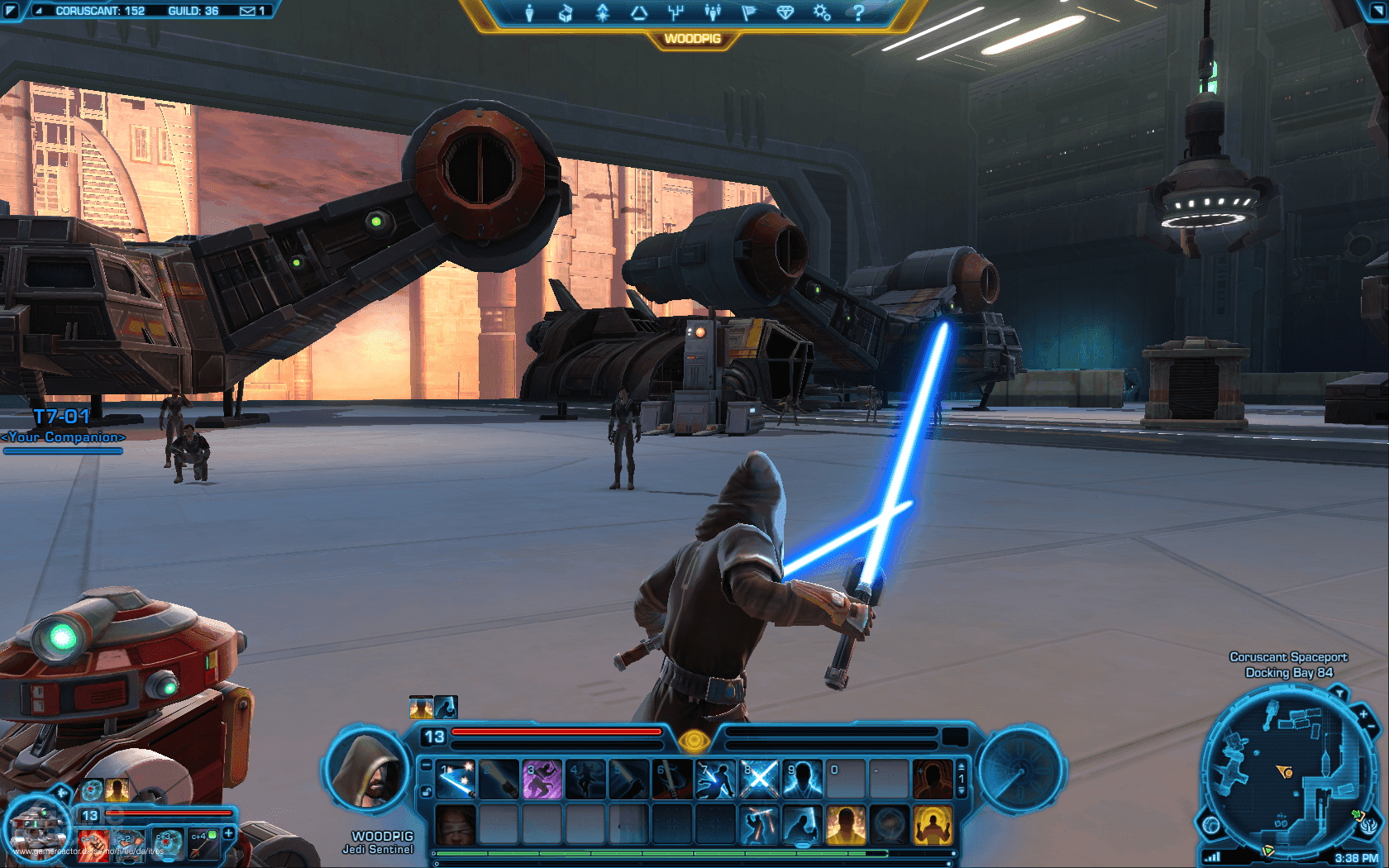
Star Wars: The Old Republic is a story-driven MMORPG set roughly 3,600 years before the films, built around eight fully voiced class storylines split between the Galactic Republic and the Sith Empire. BioWare launched it in December 2011; Broadsword Online Games took over day-to-day development in late 2023 under a license transfer, with Electronic Arts still holding publishing rights. Fifteen years in, the game is finishing its Legacy of the Sith story arc with Update 7.9 and preparing an 8.0 expansion that raises the level cap for the first time in years.
Quick take: SWTOR is one of the few MMOs where the story alone justifies a subscription — eight class stories still hold up as some of the best scripted content the genre has produced. The combat and the underlying engine haven't aged as gracefully, and the drip-feed of new story content tests a subscriber's patience more than it used to. New players get a genuinely complete free game; veterans are waiting on an 8.0 expansion that's still months from release.
The setting is what separates SWTOR from every other Star Wars game: it plays out roughly 3,600 years before Luke Skywalker was born, in a galaxy locked in a cold war between the Galactic Republic and a reborn Sith Empire. Eight original class stories — four per faction — each cast the player as a specific archetype: Jedi Knight, Smuggler, Sith Warrior, Bounty Hunter, Trooper, Imperial Agent, Jedi Consular, and Sith Inquisitor, with a fully voiced storyline built around that role rather than a shared generic plot shared by everyone on the server.
Planets range from the Republic capital of Coruscant, all skyscrapers and speeder traffic, to the Sith homeworld Korriban, a wasteland of ancient tombs and buried holocrons. The galaxy has kept expanding well past launch — the upcoming 8.0 expansion adds Ryloth, the Twi'lek homeworld, as a new zone with its own storyline. Because the timeline sits centuries before the films, familiar factions and technology appear in earlier, rougher forms: the Sith Empire is a real galactic superpower here, fielding fleets and holding territory, not a scattered remnant hiding in the outer rim, and the writing takes genuine advantage of that freedom to tell stories the film canon never could.
The Republic-versus-Empire framing isn't cosmetic, either — it shapes which planets a character sees first, which NPCs treat them as an ally or a threat, and how the same galactic event reads from opposite sides of the war. A Sith player and a Jedi player experiencing the same story beat, say a fleet skirmish or a Senate crisis, often come away with genuinely different impressions of who was in the right, which is a level of factional storytelling most theme-park MMOs don't bother building.
A brand-new player and a decade-old subscriber are effectively playing different games, and that gap is the single most important thing to understand about SWTOR before installing it. A newcomer creates a character, picks a class story, and gets a linear, voiced campaign that plays almost like a single-player BioWare RPG with other players occasionally visible in the background — full companions with their own arcs and romance options, full dialogue wheels, choices that shift how NPCs treat that character dozens of hours later. All eight original class stories, plus the game's first two expansions, are free with no subscription required, which is an unusually generous on-ramp for a fifteen-year-old MMO.
A veteran, meanwhile, isn't chasing that story anymore — most of them cleared it years ago, some multiple times across different characters. What keeps a long-term subscriber around in 2026 is the newer content layered on top: the ongoing Legacy of the Sith arc, endgame Operations, ranked PvP seasons, and Conquest, the game's rotating server-wide competitive event. That split matters for anyone weighing whether to try SWTOR. Judged purely as a newcomer's story-driven RPG, it's still excellent and still free. Judged as a live-service MMO chasing a veteran's weekly attention, the pace of new systems and raid-scale content is noticeably slower than it was a decade ago, and the 7.9 update finally wrapping up Legacy of the Sith has been years in the telling. Neither perspective is wrong here — they're answering two different questions about the same game.
Companions are where SWTOR's writing does its most work, and it's worth explaining why in concrete terms rather than as a general claim about quality. Each class recruits between five and seven companions over the course of its story, and most of them carry a full personal arc, opinions on the player's choices, and a romance option gated behind approval level rather than a simple menu toggle. A Sith Warrior's exchanges with Vette or Quinn shift measurably depending on whether the player leans ruthless or merciful, and companions can leave, betray, or die outright based on decisions made dozens of hours earlier — not just react with a generic approval-bar tick.
That density of writing is also SWTOR's most fragile asset: it depends on a stable voice-acting and narrative pipeline, and the 2024 SAG-AFTRA video game performers' strike stalled new recorded story content for close to a year, a gap players felt directly in the update cadence at the time. Broadsword has kept the class-story format alive since — most recently in the "Master's Enigma" chapter that shipped with Update 7.8.1 in March 2026 — but the strike is a useful reminder of how much of SWTOR's appeal rests on ongoing voice work rather than systems that would keep functioning fine without it.
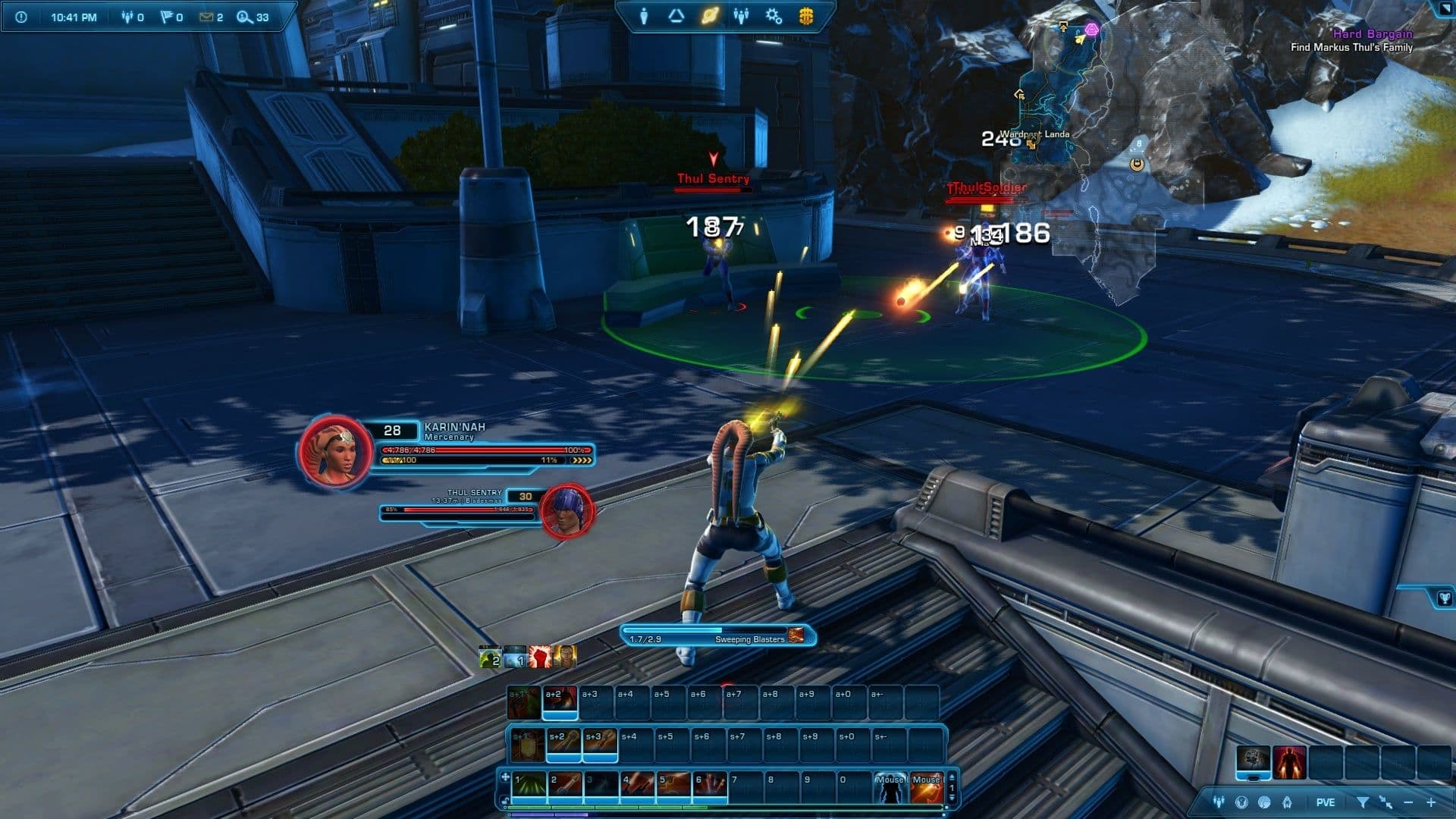
Combat in SWTOR is tab-target with a hotbar of class abilities, closer in feel to a 2011-era MMO than to the action combat that's become the genre default since. Since Update 7.0, class and combat style were split apart: a player now picks an origin story separately from a combat style, decoupled from class — Jedi Guardian, Sith Assassin, Vanguard, and so on — and can switch that combat style on the same character rather than rerolling from scratch. It's a genuinely useful change for anyone who wants to try tanking, healing, or DPS without abandoning a story they've already invested forty hours into.
Rotations run four to six abilities deep depending on discipline, with resource systems — Force, Rage, Ammo, Energy — that vary by combat style rather than following one universal template across every class. Combat won't win praise for skill-based precision; there's no dodge-roll, no active blocking, and positioning matters far less than in newer action-combat MMOs. What carries it instead is presentation: full voice acting on ability barks, cinematic finishers on class-defining attacks, and companion banter mid-fight that most competitors don't bother scripting at all.
Class balance patches land every few updates rather than constantly, which means a discipline can sit noticeably strong or weak for months at a stretch — a real consideration for anyone chasing ranked PvP rating rather than casual Warzones, where the gap matters less.
Crafting in SWTOR runs almost entirely through companions rather than the player standing at a bench. A character picks up to three Crew Skills — one Gathering skill, one Crafting skill, one Mission skill — then sends a companion off on a timed mission to fetch materials or produce gear while the player keeps questing somewhere else on the map. Synthweaving turns fabric into armor for Force users, Biochem produces stims and reusable medpacs, Cybertech builds droid parts and weapon modifications: the system rewards picking a profession that actually supports whichever combat style a player runs, rather than a generic catch-all crafting skill.
The Galactic Trade Network, SWTOR's auction house, is where most players actually acquire their gear rather than crafting it personally — undercutting, flipping mission drops, and speculating on cosmetic prices is its own small side game for the economically minded. Augment slots and stat modifications keep crafting professions relevant at endgame instead of going obsolete the moment leveling ends, which is more than a lot of MMO crafting systems manage after a decade and a half of content patches. Diplomacy and Investigation, two of the most-run Mission skills, send companions after companion gifts and reputation rewards rather than raw materials, which is why plenty of subscribers keep one Mission skill active purely for gift farming regardless of what they actually craft.
Endgame in SWTOR splits cleanly into three tracks, and a returning or new subscriber can mix and match rather than committing to just one. Flashpoints are four-player instanced dungeons with a Story Mode and a harder Veteran or Master Mode; Operations are the raid-scale content, eight or sixteen players against multi-phase boss fights with mechanics that genuinely punish a sloppy pull or an under-geared group. PvP runs through Warzones — objective-based skirmishes — Arenas for small-team deathmatches, and a ranked season structure: PvP Season 10, "Honor in Battle," launches alongside the 7.9 update in 2026.
Dynamic Encounters, added and expanded over the past two years, scatter smaller open-world events across planets like Tython, Korriban, Hutta, and Coruscant, giving players something to do between scheduled group content rather than standing around a fleet waiting on a queue pop. None of this is deep in the way a genre-defining raid tier is deep, but the range of formats means a player who dislikes raiding entirely still has somewhere meaningful to put a subscription.
Operations run through Story, Veteran, and Master difficulty tiers, and clearing the current top-end fight on Master Mode remains a genuine gear and coordination check for an eight or sixteen-player group, even years after earlier tiers went on farm. A rotating weekly loot-lockout schedule keeps raid night meaningful instead of letting a guild clear everything once and move on to the next game.
Guild life in SWTOR centers on two systems most MMOs don't combine: player housing and a recurring competitive event. Strongholds are large customizable player-housing spaces — an entire starship, a Coruscant penthouse, a Tatooine homestead — decorated with unlockable furniture and hooks, and guilds can pool member Strongholds into a shared guild flagship visible to everyone in the roster. Conquest runs on a rotating weekly schedule where guilds compete on a chosen planet by completing objectives for points, with rewards scaled to how the guild finishes relative to others on the same server.
It's a lighter-weight social hook than a traditional raid-attendance guild structure, and it's part of why SWTOR's server population, however hard to pin down precisely, still supports active group finder queues for Flashpoints years past the game's original launch peak. Recent server merges have helped concentrate what population remains onto fewer, busier worlds instead of spreading it thin.
Yes, more so than most MMOs that slap the label on a heavily gated demo. A free player can create characters, play all eight original class stories plus the earliest two expansions, and run group content without spending a cent — SWTOR's free tier is unusually complete by 2026 standards, closer to a genuinely free game than a trial. The catch sits one tier up: "Preferred" status, unlocked by spending any amount of real money at all, and full Subscriber status remove caps on credits earned and items equipped, unlock the later expansions, and lift restrictions on things like Crew Skill slots and Quick Travel cooldowns.
The Cartel Market is the cash shop layer — cosmetics, mounts, and convenience unlocks purchasable with Cartel Coins, which also come bundled monthly with an active subscription. None of it amounts to pay-to-win in the sense of buying finished raid gear outright, but a subscription is functionally required to play SWTOR as a modern, ongoing MMO rather than as a single-player RPG with occasional multiplayer scenes bolted on. A standard monthly subscription runs close to $15, with a better effective rate on longer commitments and Cartel Coins bundled into every cycle — worth weighing against the subscription-free MMOs competing for the same hour of a player's week.
SWTOR earns its subscription price on writing alone, and that's not a small claim for an MMO engine built in 2011. The class stories remain the best reason to install it, full stop — nothing else currently running in the genre offers eight distinct, fully voiced campaigns with choices that carry real weight later on. Where the game asks more patience is everything layered on top of that foundation: combat that hasn't kept pace with newer releases, an update cadence that tests long-term subscribers, and an 8.0 expansion that's still more promise than product as of mid-2026. Play SWTOR for the story it's already told, not for the raid tier it keeps promising to ship.
Yes — all eight original class stories and the first two expansions are playable at no cost, though later expansions and several quality-of-life features require Preferred or Subscriber status.
For the story content alone, yes: a new player gets a complete, voiced RPG campaign for free before ever having to weigh a subscription decision.
Yes, through Warzones, Arenas, and ranked seasons — Season 10, "Honor in Battle," launches alongside Update 7.9 in 2026.
No, though its exact population is genuinely hard to verify from the outside; Broadsword has kept a regular update cadence and confirmed an 8.0 expansion for later in 2026.
Update 7.9, "Legacy Reborn," closes out the Legacy of the Sith storyline in mid-2026, followed later in the year by the 8.0 expansion, which raises the level cap to 85 and adds the planet Ryloth.