 Buy To Play
SpiritVale
MMORPGEarly access
SpiritVale is a class-based action MMORPG from Australian indie studio Baikun Interactive, set in the fractured world of Nevaris. Choose from seven cl...
Minimum and recommended PC specs to run the game
← Back to game reviewIf your PC can run this game, you'll also be able to play these:
Buy To PlaySpiritVale is a class-based action MMORPG from Australian indie studio Baikun Interactive, set in the fractured world of Nevaris. Choose from seven cl...
 Buy To Play
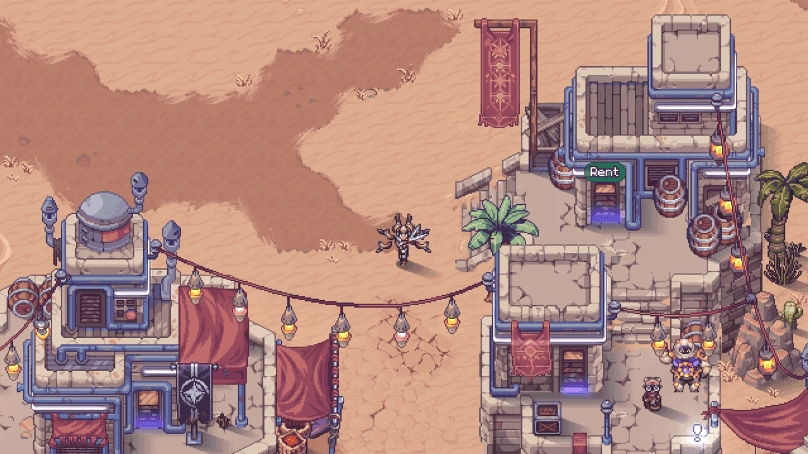
Soulbound: Online is a pixel-art action MMO where fast bullet-heaven dungeon runs sit alongside a peaceful overworld of mining, fishing, cooking and c...
 Free To Play
MapleStory is a free-to-play 2D side-scrolling MMORPG from Nexon that has run continuously since 2003, now home to more than 260 million registered ac...
RuneScape 4 represents a profound technological paradigm shift for the British franchise, discarding the historical Java runtime legacy and proprietary clients in favor of a modern multiplatform pipeline powered by Unreal Engine. Transitioning to a contemporary engine fundamentally alters the hardware load profile, requiring full hardware compliance with modern DirectX 12 and Vulkan graphic APIs rather than vintage instruction sets.
First, the Central Processing Unit (CPU). Unlike legacy iterations whose game loops were bottlenecked by single-threaded execution on one core bound to a rigid 600ms server tick rate, the modern multiplatform architecture effectively parallelizes simulation threads across multiple processor cores. A modern 6-core processor such as the Ryzen 5 3600 or Core i5-10400 forms the operational minimum. In densely populated trading centers around the Grand Exchange, during massive open-world boss encounters, or while calculating high-density AoE particle physics, CPU instruction throughput (IPC) and large L3 cache pools—such as AMD's 3D V-Cache architecture—deliver critical frame-time pacing stability.
Second, Graphics Processing and Video Memory (VRAM). Replacing tile-based isometric grids with continuous 3D environments, Lumen dynamic illumination, and high-fidelity Nanite geometry sets a demanding graphical threshold. Running the game smoothly at 1080p requires GPUs equipped with at least 6–8 GB of VRAM, comparable to a GeForce RTX 2060 or Radeon RX 6600. For native 1440p or 4K ultra settings—where multi-layered player armors, dynamic cloaks, and hundreds of spell particles populate the camera frustum—a tier like the RTX 4070 with 12 GB of VRAM is essential to prevent texture mipmap popping during swift camera rotations.
Third, System Memory (RAM). A vast, seamless sandbox world streaming hundreds of unique player assets in real time demands ample memory capacity. While 16 GB of RAM suffices for baseline exploration across Ashenfall's wilderness, configuring a dual-channel 32 GB kit represents the recommended standard. This provides ample headroom to buffer regional asset caches and completely eliminates hitching when transitioning into crowded metropolitan squares.
Finally, Storage and Drive Architecture. Deploying RuneScape 4 onto a high-speed NVMe SSD is a mandatory operational prerequisite. Continuous background streaming of high-density environmental geometry, instantaneous dungeon transitions, and seamless regional travel without immersion-breaking loading screens cannot function on legacy mechanical hard drives (HDDs), which would inevitably trigger severe asset hitching and delayed actor pop-in.