 F2P · Live
Lineage 2 Essence
Lineage 2 Essence is NCSoft's free-to-play take on the classic Korean MMORPG Lineage II, built around faster…
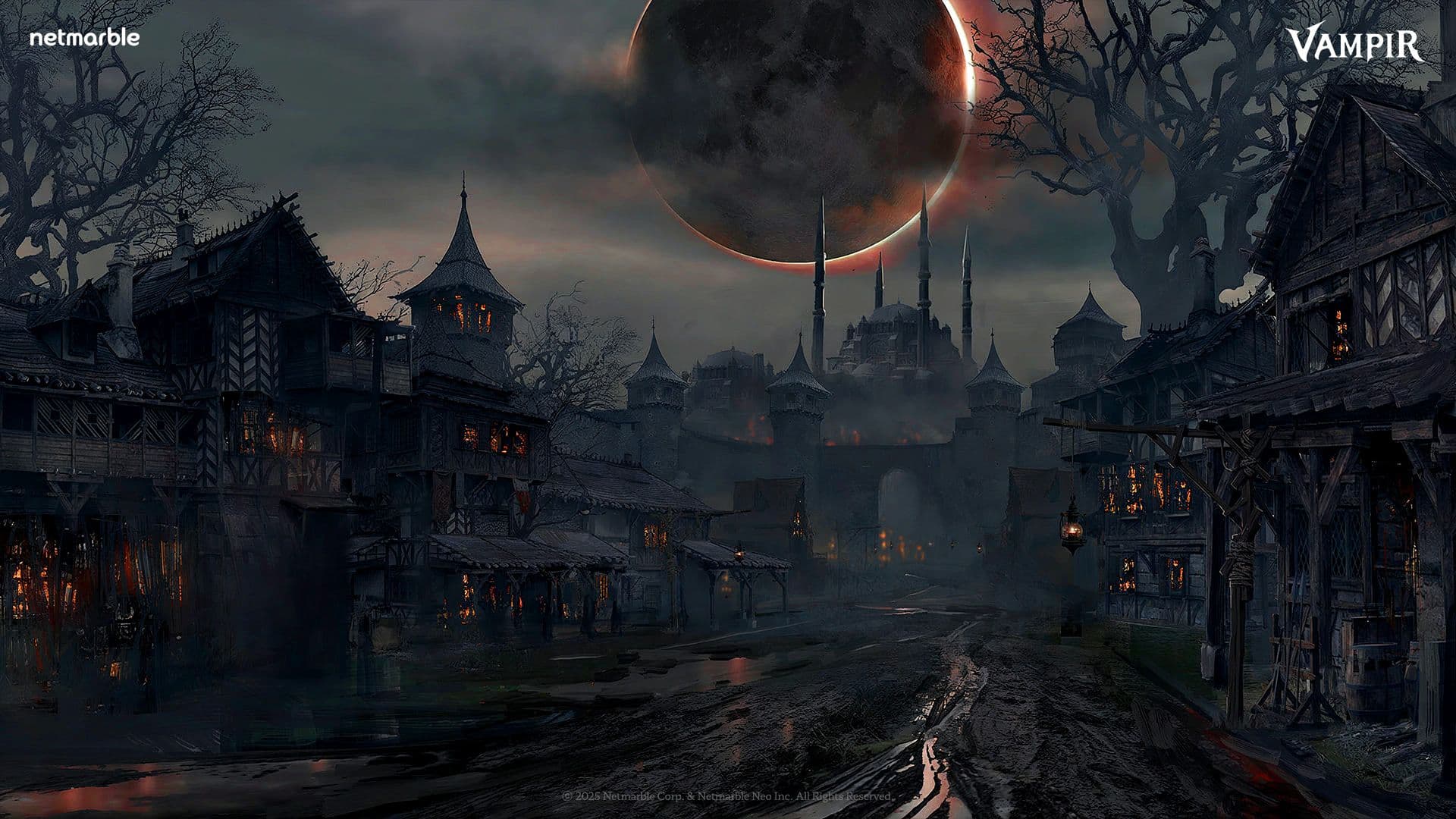
A grim cross-platform MMORPG powered by Unreal Engine 5, steeped in mature gothic horror. In a world where the ancient vampire hegemony was crushed by a fanatical holy order, survival relies on abando...
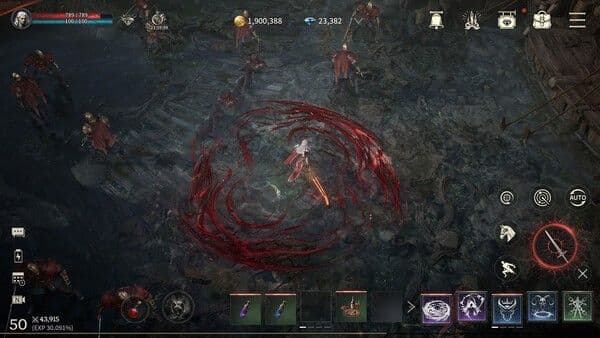
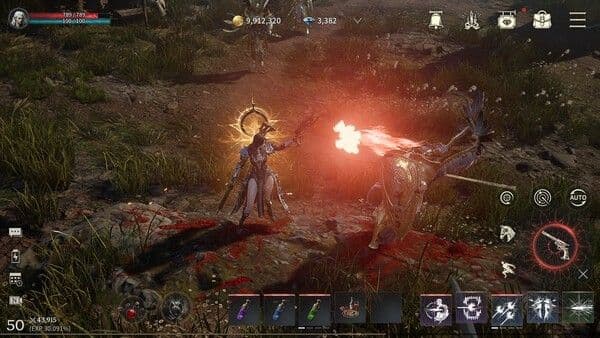
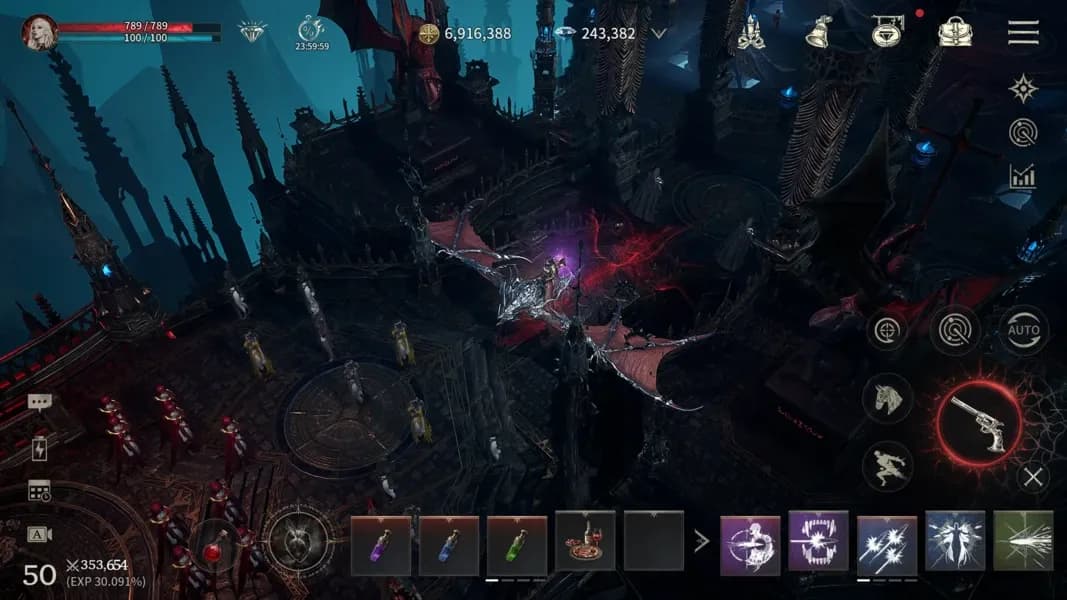
Quick take:VAMPIR: Heir of Blood is a grim cross-platform MMORPG powered by Unreal Engine 5 from South Korean studio Netmarble Neo, packaging the traditional lineage-like auto-battler formula into an uncompromising, mature gothic horror aesthetic. Its primary combat calling card is the total elimination of dedicated healing classes in favor of selfish life-drain mechanics and visceral executions. Beneath its high-budget presentation lies the familiar, punishing grind of modern mobile-desktop hybrids: strict mathematical accuracy gates, cross-server territorial friction in Gehenna, gacha-driven avatar progression, and heavy monetization offset by seasonal server shuffling.
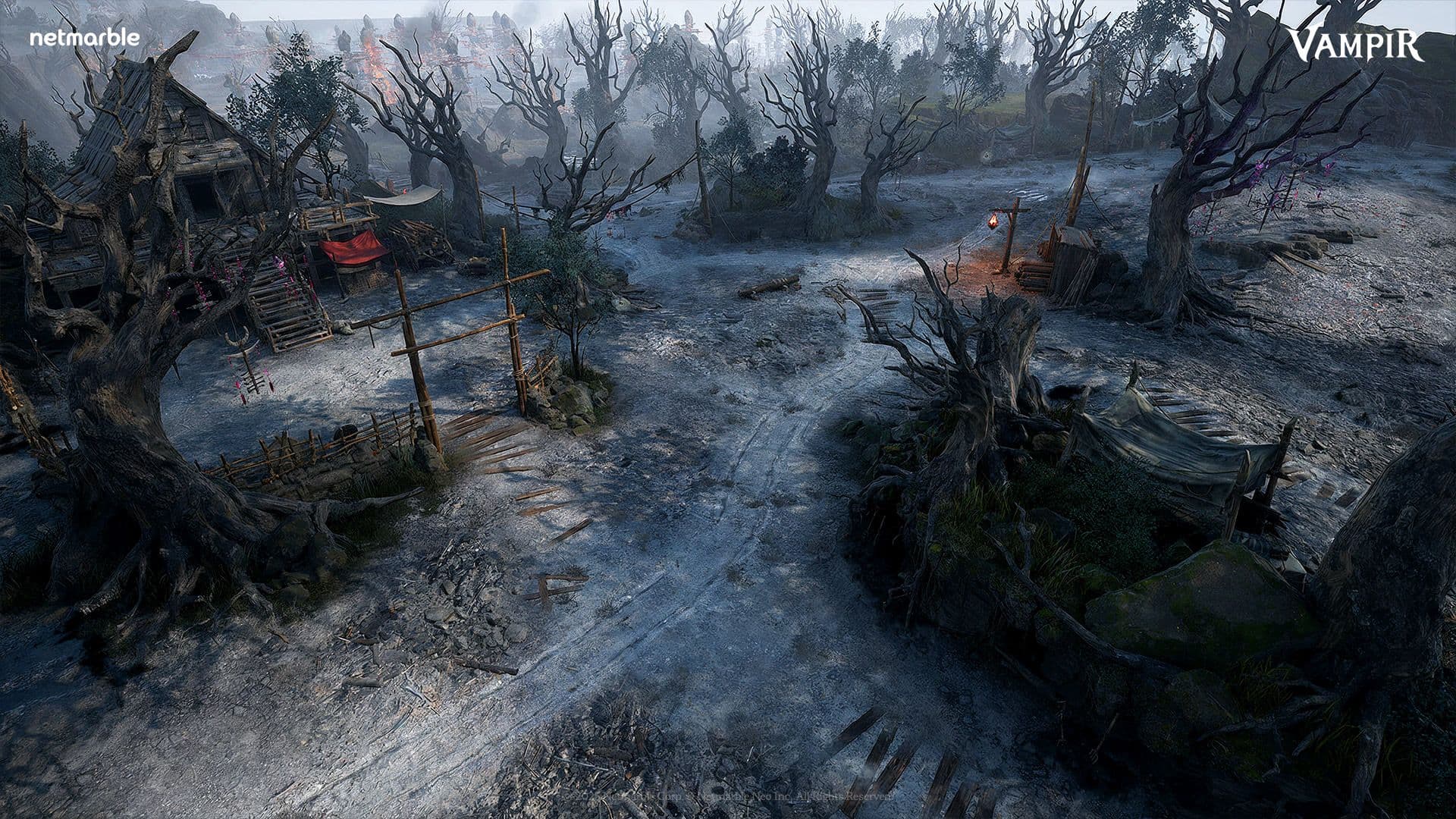
South Korean publishing powerhouse Netmarble has spent over a decade refining big-budget online formulas, but VAMPIR immediately attempts to distance itself from conventional high-fantasy tropes. There are no cheerful anime mascots, gleaming paladin plate sets, or idyllic pastures here. The title leans aggressively into mature gothic grimdark: overcast storm skies, rain-drenched basalt cathedrals, vampires crucified upon iron pikes, and crimson gore spraying from ruptured arteries. The narrative positions players within a fallen predatory race, driven from dominion into subterranean shadows.
The lore reinterprets biblical and apocryphal mythos. Nocturnal mother Lilith, having ingested the forbidden fruit of the Tree of Life, bestowed her primordial bloodline upon the exiled Cain, forging the first immortal progenitor. Alongside his trusted human vizier Ryley, Cain established Nocturne, an empire of eternal night that dominated the continent for centuries. That hegemony crumbled when the winged archon Semangelof rallied humanity under a militant inquisitorial faith: the Church of Adria. Undone by the madness and betrayal of Ryley, Nocturne was purged in fire, forcing surviving vampires into the secluded mountainous sanctuary of Krvna. The player awakens in inquisitorial irons, only for an ancient prophecy to ignite their dormant bloodline, transforming a tortured captive into the prophesied Heir of Blood.
The most radical departure from traditional party-based MMORPGs lies in the complete abolition of the support archetype. The game features no dedicated clerics, protective shield-casters, or backline cleansers. Combat survival hinges entirely on proactive offensive aggression. Every archetype sustains its health pool through Blood Drain: vitality only regenerates when cold steel or dark sorcery tears into enemy flesh. Stringing together consecutive hits fills a vampiric thirst gauge, unlocking cinematic Blood Finishers that dismember targets while granting temporary adrenaline surges and burst movement speed.
This design decision carries a profound systemic catch familiar to seasoned MMO veterans. Eliminating healers reduces party synergy into a cold mathematical gear check. As long as your offensive stats outscale the camp, your vampire can sustain endless combat through sheer life-leech volume. However, stepping into hunting grounds marginally above your current gear threshold instantly shatters this loop. Once incoming monster defense causes your attacks to miss, Blood Drain fails to trigger, and health pools evaporate in seconds with zero external salvation. Beneath its cinematic violence, the game swiftly reveals its true identity: a stat-driven progression loop governed by unforgiving character thresholds.
The class roster of VAMPIR launches with four distinct archetypes, each interpreting the vampiric condition through a specific martial discipline and lethality profile. With dedicated support roles intentionally excised, all four classes are balanced around self-sufficient offensive momentum and aggressive sustain.
Mechanically, combat utilizes a hybrid tab-target foundation supported by automated target acquisition and customizable priority queues. The central combat loop revolves around feeding the vampiric frenzy meter. Connecting with baseline weapon skills gradually fills the blood reservoir, eventually unleashing cinematic Blood Finishers. Triggering an execution snaps the camera close, tearing the adversary apart in an explosion of gore while conferring temporary sprint buffs and instantaneous resource surges.
Yet beneath these dynamic flourishes and cinematic takedowns lies the familiar mechanical routine of eastern auto-battlers. In practice, the distinctive playstyles of each class begin to homogenize shortly after completing the introductory campaign. Class progression is strictly tethered to tiered skill grimoires spanning common volumes to elusive heroic and legendary tomes dropped exclusively by high-tier world bosses or locked behind high-roller cash shop bundles.
A second friction point emerges within the mana (MP) economy. High-damage ability sequences and wide-area nukes drain character mana pools within a few short rotations. Without substantial stat investments into passive mana regeneration through crafted accessory sets and permanent codex completion, high-tier Grim Reapers and Vipers left to farm unattended quickly stall into basic auto-attacks. Long-term progression ultimately rewards spreadsheet optimization over tactical reflex, tasking players with fine-tuning ability priority toggles to avoid catastrophic resource starvation.
The single greatest structural malady afflicting PvP-centric MMORPGs is server stagnation. Within weeks of launch, a dominant pay-to-win mega-alliance inevitably subjugates the local hierarchy, corners every contested world boss, levies punitive market taxes, and establishes an unyielding monopoly. Casual players scatter, opposition guilds collapse, and the realm descends into apathy. In VAMPIR, developers at Netmarble Neo tackle this systemic vulnerability directly through an automated bracket framework termed the Shuffling System.
This matchmaking architecture operates across recurring competitive seasons. By continuously measuring realm-wide combat ratings, active guild participation, and cross-server combat efficiency, the engine categorizes servers into three competitive divisions: Diamond, Platinum, and Gold. At the conclusion of each campaign cycle, the system triggers a comprehensive reshuffle, pairing servers into fresh one-on-one competitive matchups. The prospect of an entrenched ruling guild resting on its laurels indefinitely is systematically dismantled: every few weeks, players are thrust into open warfare against an adversary of comparable collective power and financial backing.
The primary battleground hosting these clashes is Gehenna, a sprawling inter-server PvPvE borderland. This scarred wasteland completely dissolves the boundary between open-world monster farming and open-season faction slaughter. The zone houses the most rewarding elite camps, hosts paramount world bosses, and yields the coveted high-tier progression catalyst known as Trinity. Opponents from paired sister realms automatically display hostile crimson nameplates, and open-world execution carries zero alignment or karma penalties.
Securing seasonal dominance awards victors sweeping geopolitical leverage. Ruling guilds extract lucrative tariff cuts from inter-server trade exchanges, gain the authority to calibrate boss spawn windows to align with their preferred evening prime time, and unlock the ability to impose temporary global chat mutes on vanquished realms. To prevent mass attrition among the defeated, the architecture dispenses tiered participation packages and damage contribution dividends, providing losing factions with baseline resources to stage future rebellions.
Yet this competitive design masks a brutal reality for low-spend and solo adventurers. While the Shuffling System prevents internal server stagnation, it transforms Gehenna into an abattoir for unaligned players. When heavily invested guild alliances clash over territorial dominance, the fallout sweeps across entire sectors. Independent players entering the zone for basic materials find themselves treated as collateral honor points. In high-stakes brackets, aggressive guild blockades routinely encamp safe-zone respawn points, obliterating under-geared wanderers the moment they cross the sanctuary threshold.
Once the dramatic narrative campaign of vengeance against the Church of Adria concludes, VAMPIR lays bare its true structural core: an unforgiving conveyor belt of perpetual automated grinding. The daily gameplay loop unmistakably reflects its eastern design heritage, wherein 95% of an avatar's existence is spent not in bespoke manual trials, but running cyclical automated hunting routes through designated monster camps.
The integrated automation suite is exceptionally granular. The internal auto-battle interface allows players to calibrate patrol boundaries, refine target priority logic (filtering aggressive mobs, focusing elite quarry, or immediately retaliating against hostile players), establish automated potion consumption thresholds, and program activation cadences for active spells. To liberate users from desktop tethering, Netmarble incorporates its proprietary Netmarble Connect ecosystem. This utility syncs mobile devices directly with active PC client instances: smartphones receive push notifications regarding bag overfills, potion shortages, or open-world PK deaths, permitting remote respawn and spot redeployment via one-tap cloud streaming.
However, this veneer of automated ease eventually collides with an impenetrable wall of mathematical stat gates, where Hit Rate / Accuracy reigns as the supreme operational metric. In this damage calculation paradigm, accuracy functions as a binary switch: if your hit rating falls beneath an adversary's internal defense threshold, attacks miss entirely. Within a combat ecosystem where survival hinges on Blood Drain, missed strikes represent an immediate death sentence. A vampire possessing immense theoretical attack power but deficient accuracy will consistently whiff against higher-tier quarry, losing all self-sustain and collapsing within seconds.
The secondary linchpin multiplier is Attack Speed. This attribute compresses animation cast frames, accelerates vampiric thirst generation, and directly multiplies the frequency of life-drain procs delivered per second. Pushing these metrics to competitive thresholds requires feeding the voracious maw of the Item Codex collection system. This mechanic demands heavy resource sacrifices: players enchant low-tier equipment up to volatile risk thresholds, permanently disintegrating the items into the codex interface to secure marginal, unstrippable account-wide bonuses such as +1 Accuracy or +0.8% Attack Speed.
The fundamental catch is the rapid dissolution of the game's dynamic action facade. The experience quickly transitions into an exercise in inventory accounting and spreadsheet management. Engagement revolves around balancing potion payload economics, managing weight restrictions to avoid health regeneration penalties, and systematically feeding truckloads of mundane mob loot into codex registers. Those seeking a tactile gothic slasher governed by reflexive parries will find a cold reality: long-term supremacy belongs entirely to those who engineer the most mathematically optimized 24/7 background farm engine.
The economic framework of VAMPIR is anchored to a time-tested eastern MMO paradigm: an interdependent symbiosis linking the surplus time of free-to-play grinders with the disposable capital of high-rolling spenders. The developers at Netmarble Neo heavily market this dynamic as a player-driven economy, pitching a structure wherein diligent non-paying participants can secure premium commodities through raw gameplay effort. This market loop pivots around three foundational pillars: base crafting components, the high-tier catalyst Trinity, and the premium cash currency, Diamonds.
The resource Trinity serves as the lifeblood of end-game gear progression. It is harvested exclusively across deep, volatile sectors of the inter-server territory Gehenna from elite field predators and world bosses. Fabricating any piece of equipment above Heroic grade requires substantial stockpiles of Trinity, as does initiating crucial guild research tiers. Because affluent spenders rarely wish to invest grueling hours farming hostile zones under constant gank threat, they generate sustained, massive buy-side demand on the central marketplace.
All central auction transactions are denominated strictly in Diamonds. For non-paying players, this exchange represents the sole legitimate conduit for converting hundreds of grinding hours into premium store currency. By listing tradeable enhancement scrolls, refined ingots, concentrated blood vials, and surplus Trinity, dedicated farmers can accumulate formidable diamond reserves. These earnings are subsequently redirected toward purchasing battle passes, expanding inventory capacities, and acquiring essential high-tier skill grimoires without direct financial outlay.
This market structure is further reinforced by internal guild auctions. When an organized clan brings down a contested raid boss, high-value spoils bypass the guild master and enter a closed bidding window. Guild members submit competitive bids in diamonds, and the total winning sum is automatically divided and disbursed as equal dividend payouts to every registered raid participant. This dividend structure provides tangible financial incentive for mid-tier guild members to maintain high attendance across late-night boss calls.
Yet this idealized economic machine operates with severe frictions. First, auction transactions are sapped by steep house taxes ranging from 10% to 15%, with a hefty percentage funneled straight into the treasury of the alliance controlling the regional fortress. Second, commodity markets suffer aggressive deflationary decay: as servers mature, mid-tier equipment and standard crafting goods crash toward price floors, while the cost of apex gear inflates out of reach. Finally, botting networks and multi-account farming rings continually depress raw material margins, progressively narrowing the window of profitability for legitimate solo players and concentrating economic dominance among armed territorial cartels.
Operating as a solitary predator in VAMPIR is an exercise in guaranteed obsolescence. The game makes its design philosophy immediately apparent: without active alignment within an organized clan, players are effectively barricaded from the overwhelming majority of end-game progression. The broader social fabric is structured around a ruthless feudal hierarchy, transforming guilds from casual social circles into militarized corporate entities.
Leveling a clan unlocks substantial passive combat enhancements for its entire roster: percentage-based reductions to incoming PvP damage, supplemental critical strike probabilities, accelerated mana regeneration, and critical baseline accuracy ratings. Active membership grants access to instanced guild dungeons, private practice bosses, and daily donation repositories where members deposit gold and surplus materials to earn clan tokens, which are subsequently redeemed for exclusive high-tier skill grimoires.
The primary catalysts for conflict across the open world and contested borderlands are world bosses — grotesque bio-mechanical abominations born of inquisitorial experimentation, fallen inquisitor generals, and corrupted seraphim. These gargantuan adversaries feature immense health reservoirs, lethal telegraphed area-of-effect cascades, and tight enrage timers. However, the true tactical threat never stems from the scripted mechanics of the monster itself, but from hostile guild raids converging on the perimeter.
Boss encounters rapidly devolve into positional siege warfare involving hundreds of combatants. Battle lines are rigid and unforgiving: vanguard Bloodstains erect interlocking defensive bastions around the lair, while Vipers choke ingress corridors beneath waves of necrotic decay, allowing stealth-phased Grim Reapers to flank and assassinate clustered Carnage sharpshooters. A favored competitive tactic involves intentionally manipulating boss aggro to drag wide-arc cleaves straight through enemy formations, wiping an entire raid moments before the killing blow to secure first-loot contribution rights.
The reigning alliance commanding a competitive division wields unprecedented imperial leverage. Beyond harvesting market tariffs, victorious leaders gain the administrative authority to shift field boss spawn schedules into preferred evening windows, effectively locking out rivals operating across differing timezones. This hegemony culminates in the psychological humiliation of imposing server-wide chat silences upon vanquished competitors.
Beneath this political grandeur, however, lies the heavy toll of mandatory commitment. Top-tier guilds enforce garrison-like discipline: field bosses spawn on rigid, around-the-clock timers, routinely disrupting late-night or early-morning schedules. Failure to answer an emergency mobilization ping broadcast through Netmarble Connect or voice comms frequently results in unceremonious expulsion, forfeiting accumulated guild perks. In the end, competitive play closely mirrors a demanding secondary profession, trading atmospheric roleplay for logistical regimentation and cutthroat loot distribution disputes.
While VAMPIR strives to present an unconventional facade through its gothic presentation and the elimination of healing roles, its financial architecture adheres unyieldingly to the most aggressive traditions of the Korean MMORPG sector. Operating under a Free-to-Play distribution model, the barrier to entry is nonexistent, yet behind that accessible threshold lies a multifaceted pay-to-win infrastructure that monetizes baseline progression and sells raw mathematical power directly.
The centerpiece of this monetization framework is the Blood Forms system — a collection of character transformation cards acquired through traditional gacha banners. These are far from cosmetic skins. Ranging across tiered rarities from common and uncommon grades up to elusive epic, legendary, and mythic manifestations, high-tier forms fundamentally reshape an avatar's combat effectiveness. Equipping a legendary form bestows massive stat multipliers, ramping attack speed by over +120%, shaving cooldown timers, accelerating cast frames, and injecting dozens of points of vital accuracy and defense penetration directly into the character sheet.
Crucially, this system is deeply intertwined with account-wide codex synthesis. Cards not actively deployed in combat are permanently logged into the collection registry upon acquisition. Unlocking a suite of rare forms yields a permanent bonus to attack power; completing a legendary patriarch set permanently shaves incoming PvP damage across the entire account. Operating in tandem is a secondary gacha layer for combat familiars (blood bats and gargoyles), which delivers a supplementary tier of stat multipliers and essential bag weight allowances.
Gear enhancement introduces a second persistent friction point. Equipment features strict safe-enchantment thresholds, typically capping at +6 for armaments and +4 for defensive armor. Pushing past these boundaries carries a brutal probability of permanent item destruction. To navigate this volatility, the cash shop offers consumable insurance scrolls, blessed enhancement stones, and success rate catalysts packaged within expensive weekly recurring bundles.
The system's true severity becomes unmistakable once players reach the mid-game soft cap. The initial 45 to 50 levels provide a smooth, rewarding progression curve: storyline milestones shower users with upgrade materials, introductory summon tickets supply functional rare forms, and early monster zones melt under baseline abilities. Beyond this threshold, however, difficulty curves scale exponentially, presenting severe accuracy, penetration, and sustain checks that cannot be bridged on free hunting grounds within any reasonable timeframe.
On the battlefield, this disparity establishes insurmountable power divides. A heavily invested player possessing top-tier blood forms and saturated codex completion does not simply hold an advantage; they inhabit a different tier of reality. Leveraging blistering attack speeds and magnified Blood Drain multipliers, a single high-tier spender can stand motionless amidst a coordinated enemy squad, sustaining through incoming burst by sheer life-leech volume while retaliatory cleaves decimate the opposition. For the dedicated free-to-play grinder, this dynamic dictates an unyielding ceiling: either resign oneself to farming low-tier zones for tradeable raw commodities, or accept a permanent role as background cannon fodder in high-stakes guild warfare.
The technical presentation of VAMPIR stands as one of the title's most compelling accomplishments. Leveraging the modern capabilities of Unreal Engine 5, the development team at Netmarble Neo extracts maximum visual impact from its dark gothic horror aesthetic. Dynamic global illumination casts atmospheric moonlight through rolling storm clouds, inquisitorial torches reflect off pooling blood upon rain-slicked cobblestones, and the intricate masonry of dilapidated cathedrals displays crisp geometric fidelity without distracting level-of-detail pop-in.
The provision of a dedicated, native Windows client distributed through the Netmarble Launcher and the Epic Games Store firmly elevates the experience beyond simple mobile emulation. This is a fully realized desktop build offering native 4K rendering, unlocked framerates reaching 120 FPS, comprehensive 21:9 ultrawide monitor support, and fully rebindable keyboard and mouse controls. Mouse-and-keyboard input vastly outperforms touchscreens: instantaneous target cycling in tab-targeting, responsive strafe-kiting via WASD, and split-second hotkey gear swapping confer massive tactical advantages in competitive engagements.
Nonetheless, large-scale territorial clashes and world boss skirmishes within Gehenna inevitably subject the engine to punishing workloads. When over a hundred combatants converge on a single choke point, saturating the screen with wide-area curses and multi-layered Blood Finishers, GPU compute pipelines encounter heavy particle saturation. The client mitigates this through aggressive performance toggles: users can selectively suppress enemy spell effects, truncate character draw distances, or convert foreign player models into low-overhead silhouettes, successfully preserving 60+ FPS stability during chaotic sieges.
Network infrastructure exhibits dependable resilience. Built-in position interpolation masks minor packet jitter, and the hybrid tab-target combat system maintains operational fluidity even under cross-region latencies ranging between 100 ms and 140 ms. Position desyncs and micro-teleportation glitches remain rare, ensuring reliable spatial tracking during tight defensive standoffs.
In final appraisal, VAMPIR: Heir of Blood should not be mistaken for a revolutionary savior of traditional party-driven MMORPGs. It represents a lavishly produced, technologically refined evolution of the contemporary Asian cross-platform auto-battler. The game takes the proven structural foundation of lineage-style territorial warfare, discards traditional support roles in favor of aggressive vampiric sustain, and encases the entire experience in a sumptuous gothic presentation driven by dynamic server-shuffling architecture.
The title will undeniably resonate with enthusiasts of mature dark fantasy, devotees of deep guild politics, and players who relish cyclical progression loops combining automated background PC farming with mobile companion oversight. However, those seeking complex manual ability rotations, skill-based PvP unburdened by monetization, or an immersive solo sandbox will find little reason to linger within these blood-soaked lands.