 F2P · Live
Lineage 2 Essence
Lineage 2 Essence is NCSoft's free-to-play take on the classic Korean MMORPG Lineage II, built around faster…
Forsaken World's original PC and mobile servers shut down in November 2022 after more than a decade of operation, but the game didn't fully disappear: a dedicated private server scene, including proje...
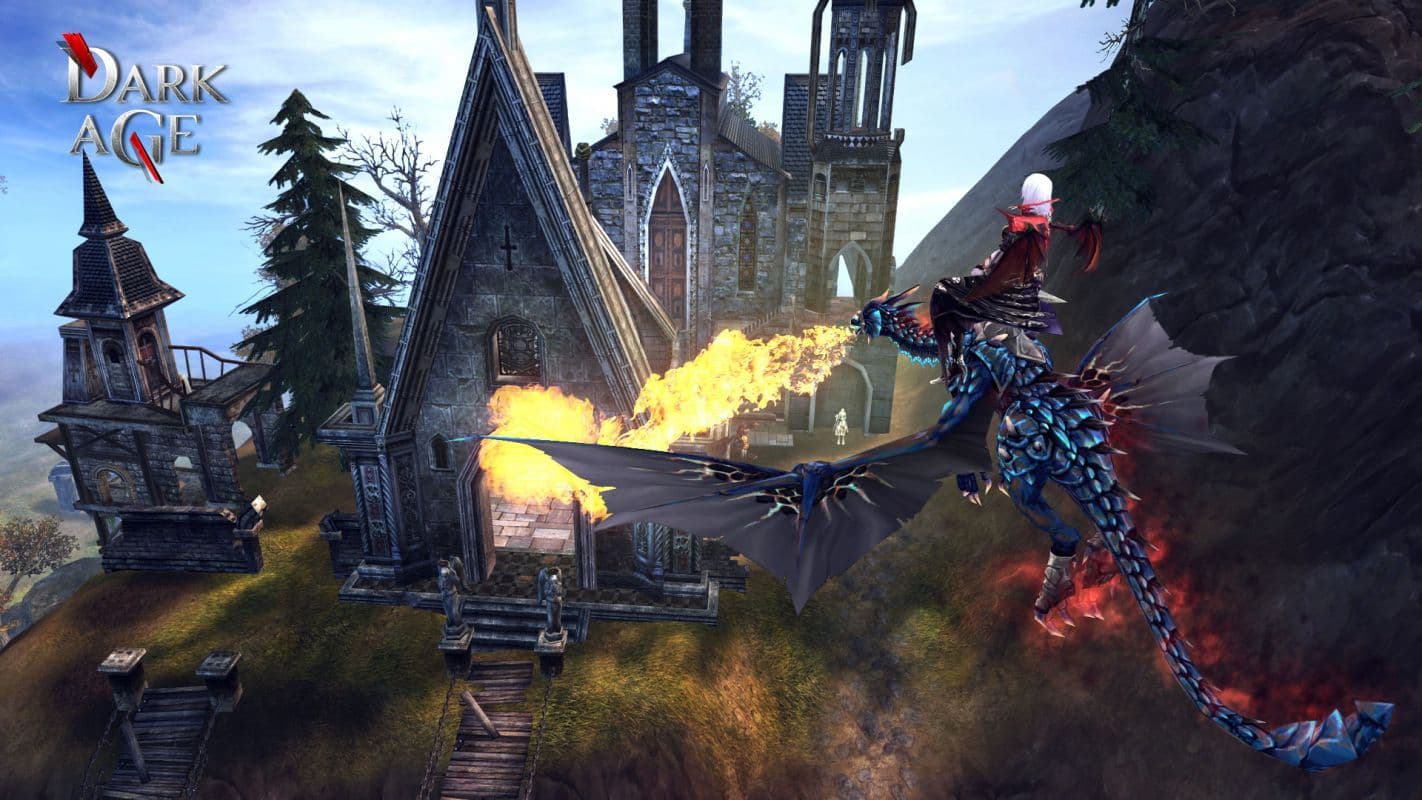
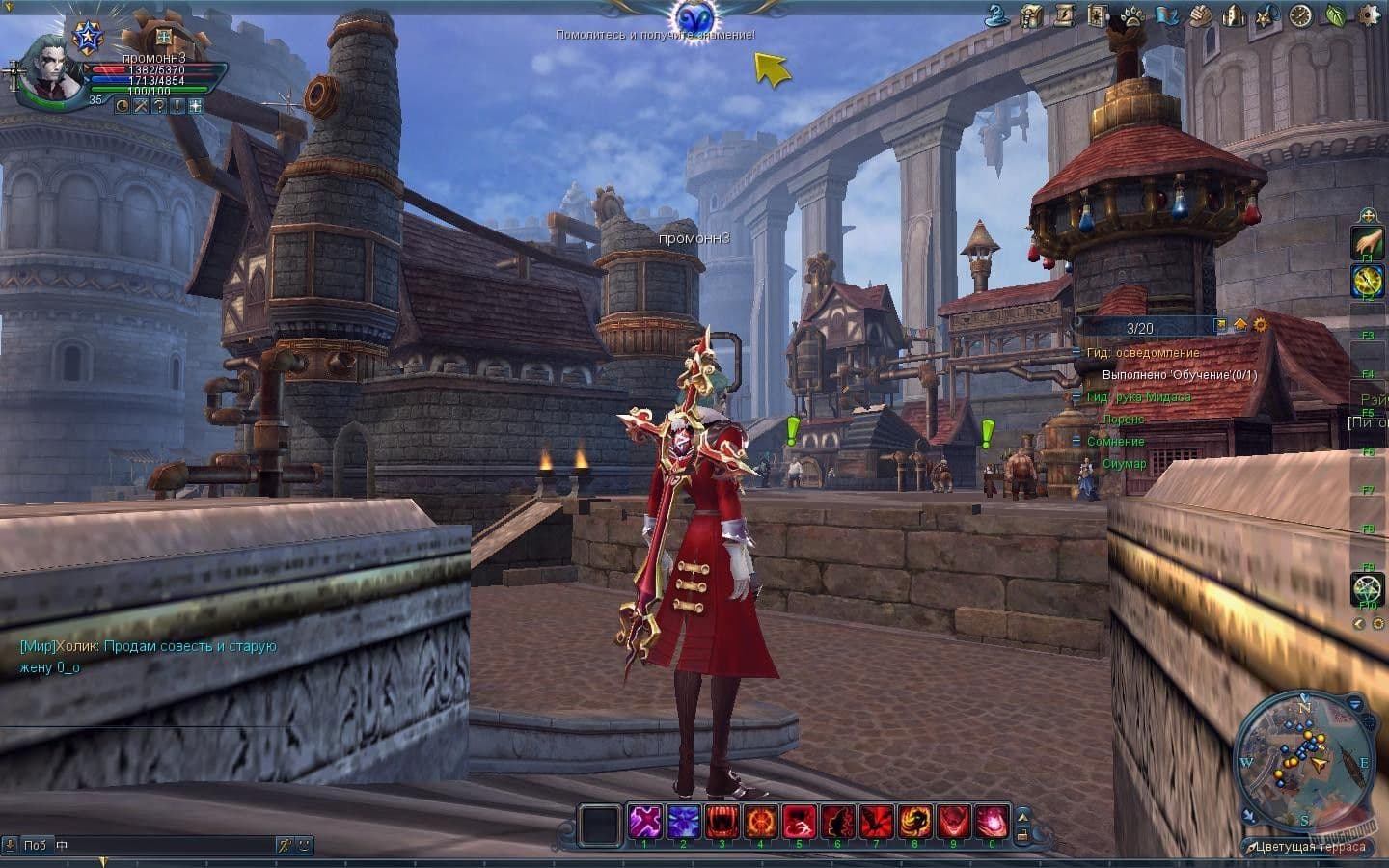
Forsaken World is a 3D fantasy MMORPG developed by Perfect World Beijing, launched in China in September 2010 and brought to North America and Europe under Perfect World Entertainment in open beta on March 9, 2011. Built on Perfect World's proprietary Angelica engine, it blended Western fantasy tropes — vampires, bards, flying mounts — with the studio's Chinese MMORPG DNA of guild sieges, race-locked classes, and occupation-based crafting. It ran for over a decade before Gearbox Publishing, which had absorbed the title along with Perfect World Entertainment's back catalog, shut its official servers down for good on November 30, 2022. Nothing about that sentence is a secret to anyone who searches the game's name today, and it's the reason this Forsaken World review has to be read a little differently than the others in this series: there is no live official game left to score. What follows looks at it from both sides — the decade Perfect World actually ran it, and the private-server afterlife that has kept Eyrda technically playable ever since.
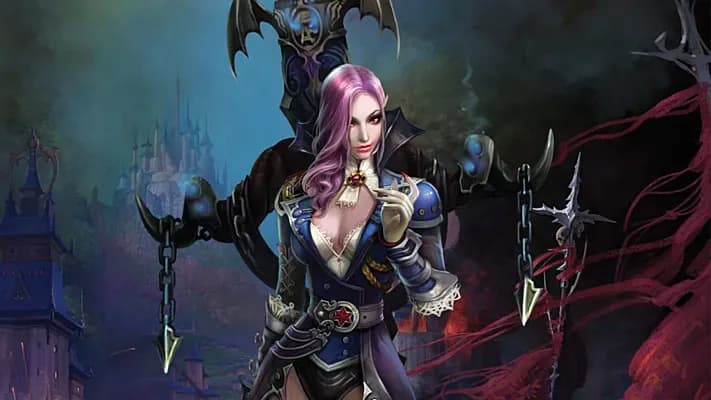
Forsaken World set itself apart from the moment Perfect World Entertainment started marketing it in the West by leading with a playable vampire class — bat-form transformation, blood-siphoning skills, and all — in a genre that mostly stuck to human paladins and elven archers. Five races anchored the roster at launch: Humans, Elves, Dwarves, Stonemen, and the Kindred (vampires), each locked to a specific subset of the game's eight classes. A Stoneman could only be a tanky Protector; a Dwarf was permanently a Marksman; only Humans and Elves could become a Priest. That race-class coupling meant two characters sharing a class label rarely played identically, since racial passives and starting stat spreads pushed a Human Warrior and an Elf Warrior toward different builds by design.
The world of Eyrda leaned into a mash-up the Chinese MMORPG scene had rarely attempted for a Western release: astrology-driven zodiac gods you could pray to for buffs, an "ages" system where server-wide player milestones nudged the in-game timeline forward, and lore that borrowed as freely from European myth as from the studio's own Mythical Continent source material back home. The zodiac system in particular was an unusual hook — your character's in-game birthday tied you to a specific god, and praying regularly built up a favor meter that translated into small but real combat buffs, giving even the most casual players a reason to log in daily beyond quest chains. It read as ambitious rather than derivative at the time, and reviewers in 2011 generally agreed the presentation — smooth animations, colorful zones, a genuinely large character-customization suite that let players fine-tune everything from facial tattoos to hairstyle — held up well against Aion and Allods Online, its two closest contemporaries.
Mounts extended that ambition into traversal. Beyond the expected ground horses, Forsaken World shipped flying mounts early for a Western-facing title, plus naval vessels for the game's ocean regions — a land-air-sea spread that few of its 2011 competitors matched at launch. Pet-taming sat alongside mounts as its own collection layer, with the Tamer occupation specifically built around capturing and raising companion creatures rather than treating pets as a cash-shop afterthought.
The veteran's memory of a fresh Forsaken World account starts with a starter island tutorial, a race-and-class pairing decision that actually mattered, and a levelling curve built to funnel you toward your first flying mount and your guild's first territory skirmish within a few weeks. Occupations — eleven of them, from Armorsmith and Bladesmith to Astrologist and Tamer — layered a genuine crafting economy on top of combat leveling, and a server's material trade in the early 2010s was lively enough that dedicated gatherers and refiners could make a living without ever queuing for a dungeon.
The newcomer's reality in 2026 is almost the opposite experience wearing the same skin. Installing Forsaken World today means picking one of several fan-run private servers — Dragon Hearts and FW Wizard are the two with the longest continuous track records since the 2022 shutdown — each running its own rate multipliers, its own merged population, and its own promise that donations stay cosmetic. The core client is unchanged: same races, same classes, same zones. What's different is the social fabric around it. A server with a few hundred concurrent players, even a healthy one by private-server standards, produces a much thinner economy and a much smaller pool of guilds fighting over territory than the game had at its official peak, and a new player today is joining a maintained museum piece rather than a growing world.
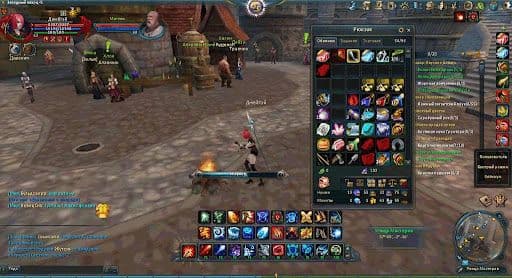
Combat runs on the tab-target, hotbar-skill model standard for its era — no dodge-rolling, no directional blocking, just cooldown management and positioning against telegraphed boss patterns. What gave it staying power wasn't mechanical depth so much as build variety: eight classes split across race-specific variants meant a serious PvP guild needed to understand roughly a dozen distinct playstyles rather than eight, and the Vampire's stance-swapping between melee bat form and ranged blood magic gave it one of the more genuinely unusual kits the genre had at the time.
The occupation system deserves more credit than most retrospectives give it. Rather than bolt crafting on as an afterthought, Forsaken World built eleven distinct professions that fed directly into gear refinement, guild business ownership, and even non-combat social roles like the Socialite and Collector paths, which existed almost entirely to generate server events and community activity rather than raw stat gains. Armorsmiths and Bladesmiths fed the gear economy directly, Botanists and Alchemists ran the potion and consumable supply chain, and an Astrologist's readings could buff an entire raid group before a siege — each profession genuinely mattered to at least one other part of the playerbase, rather than existing in isolation. It's the kind of system-level ambition that shows Perfect World Beijing was trying to build a genuine economy simulator underneath the combat game, not just a loot treadmill with a crafting menu bolted on.
Later expansions, most notably 2016's Awakening update, added higher level caps, reworked skill trees, and new endgame instances without touching the fundamental race-class architecture — a sign the original systems design held up well enough that Perfect World never felt the need to replace it outright in over a decade of live service.
Guild-versus-guild territory sieges were Forsaken World's clearest claim to genre relevance. Guilds captured resource nodes and fortified holdings that fed directly back into that guild's economy and standing, open-world PvP flagged zones sat alongside structured arenas and duels for players who wanted competition without full-loot stakes, and the "ages" progression system tied server-wide milestones to collective guild achievement rather than any single player's grind. On a populated server, that structure produced exactly the kind of emergent server drama — alliance betrayals, contested farming grounds, a guild's territorial reputation actually meaning something — that themepark MMOs with instanced PvP rarely manage.
The honest caveat, and it applies as much to the game's official years as to its private-server present: sieges and territory control only work when enough guilds are fighting over the same scarce resources. A private server today running a merged, modest population can absolutely still stage a siege, but it's a smaller-scale echo of what fifteen years of official servers built toward at launch, not a recreation of it.
Officially, Forsaken World ran free-to-play with a cash shop covering cosmetics, convenience items, and — as the game aged and Perfect World Entertainment leaned harder on its item-mall economics — gear-refinement boosters that gave paying players a real edge in PvP gear checks. It wasn't the most predatory title in Perfect World's Western catalog, but it followed the same broad pattern as its stablemates: free to start, increasingly monetized at the high end, with refinement and enhancement systems that could eat real money fast if a player chased server-topping gear.
Is Forsaken World pay to win today? That question no longer has an official answer, because there's no official version left to judge. What exists instead is a scattered field of private servers, several of which explicitly market themselves as donation-supported rather than pay-to-win, with cosmetic-only shops and rate multipliers standing in for a real cash-shop economy. Take those claims with the same skepticism you'd apply to any unofficial project: there's no oversight, no published terms, and no guarantee a server running today will still be running in a year. The safest framing is that Forsaken World's private-server scene runs on trust in whichever small team currently operates the shard you've picked, not on any enforceable monetization policy.
Gearbox Publishing, which had inherited Perfect World Entertainment's Western catalog, announced the shutdown in late April 2022 and closed the servers for good at the end of November that year — one more entry in a long list of Perfect World-published MMORPGs (Perfect World International's own Arc Games service has been running on comparatively skeletal maintenance for years) that eventually outlived their publisher's willingness to keep the lights on. The community's response was immediate rather than mournful: a Dragon Hearts private server was already up and drawing displaced players within days of the announcement, and the scene has continued rotating through new projects ever since, with FW Wizard the current server citing continuous operation since 2024.
That speed says something real about the size of the game's remaining loyal base even at the end — this wasn't a title nobody cared enough to preserve. But it also means every claim about "Forsaken World in 2026" is really a claim about one specific fan-run server's current health, not about a single persistent game world the way it would be for a title still under active publisher support. Population figures you'll find floating around — a few dozen concurrent on some trackers, "hundreds daily" by a server's own marketing copy — reflect that fragmentation and should be read as exactly that: unverifiable, server-specific, and subject to change the moment any one project loses its operator.
Forsaken World earned its place in MMORPG history honestly — a race-class system with real texture, a crafting economy that mattered, and territory sieges that gave guild membership actual stakes — and none of that disappeared when Gearbox pulled the plug. What did disappear is any accountability. Playing it in 2026 means handing your time and possibly your money to whichever small team currently keeps a shard online, with no publisher, no terms of service worth the name, and no promise the server survives the year. If a specific private project has an active Discord, visible patch history, and a community that vouches for it, Forsaken World is still a genuinely well-built game underneath the uncertainty. If you want a world that will still exist next year without you checking first, this isn't that world anymore — and no amount of nostalgia for Eyrda changes that math.